



Plant Profile & Key Characteristics
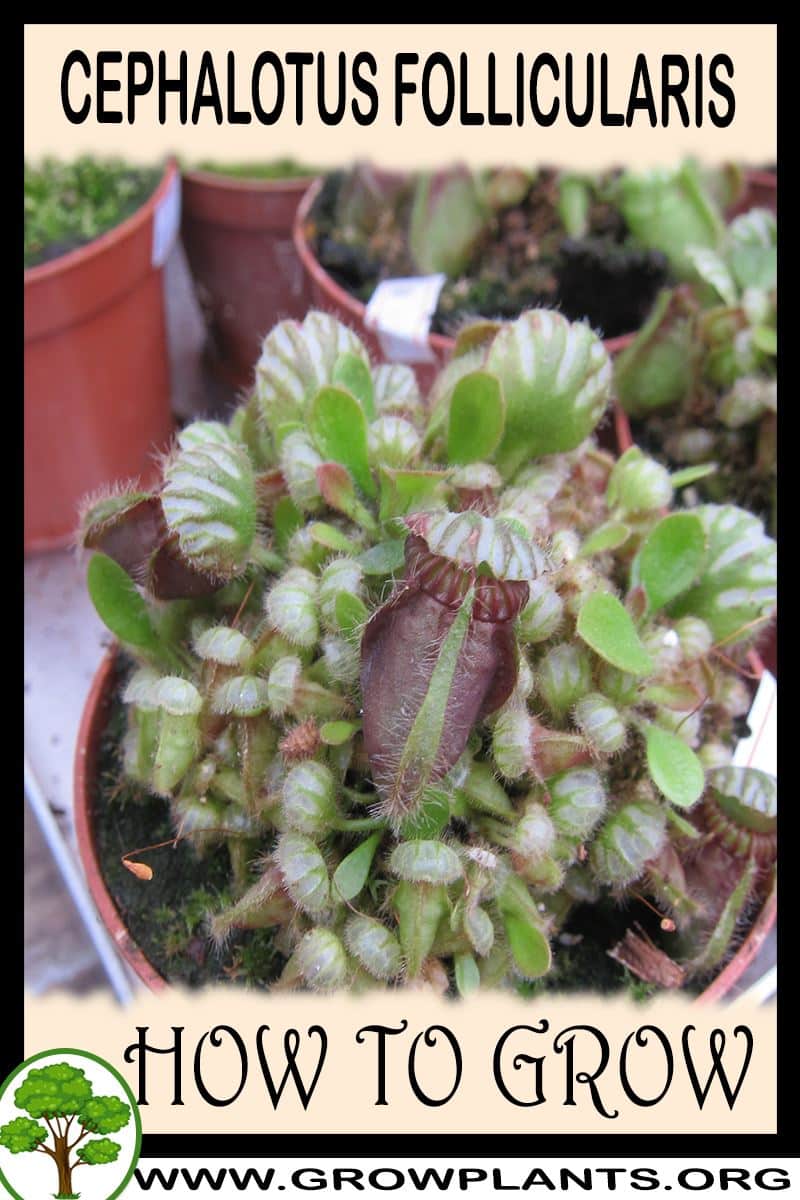
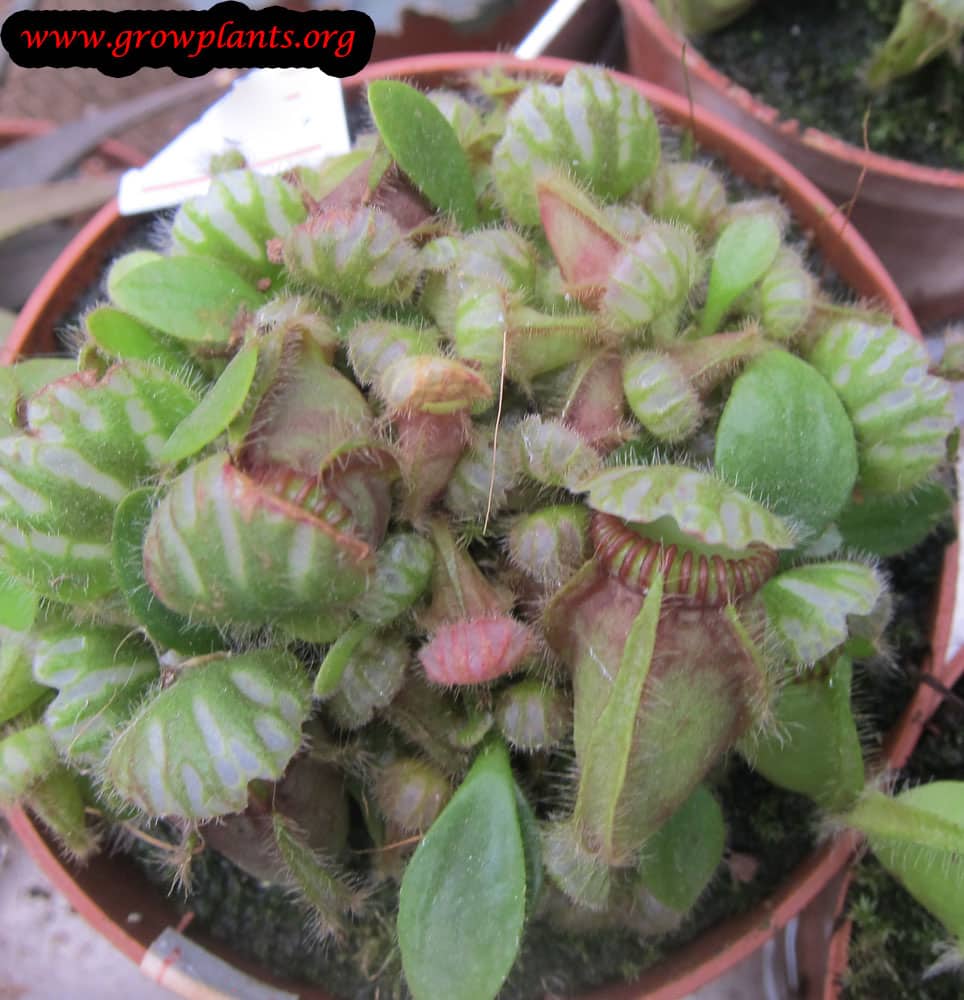
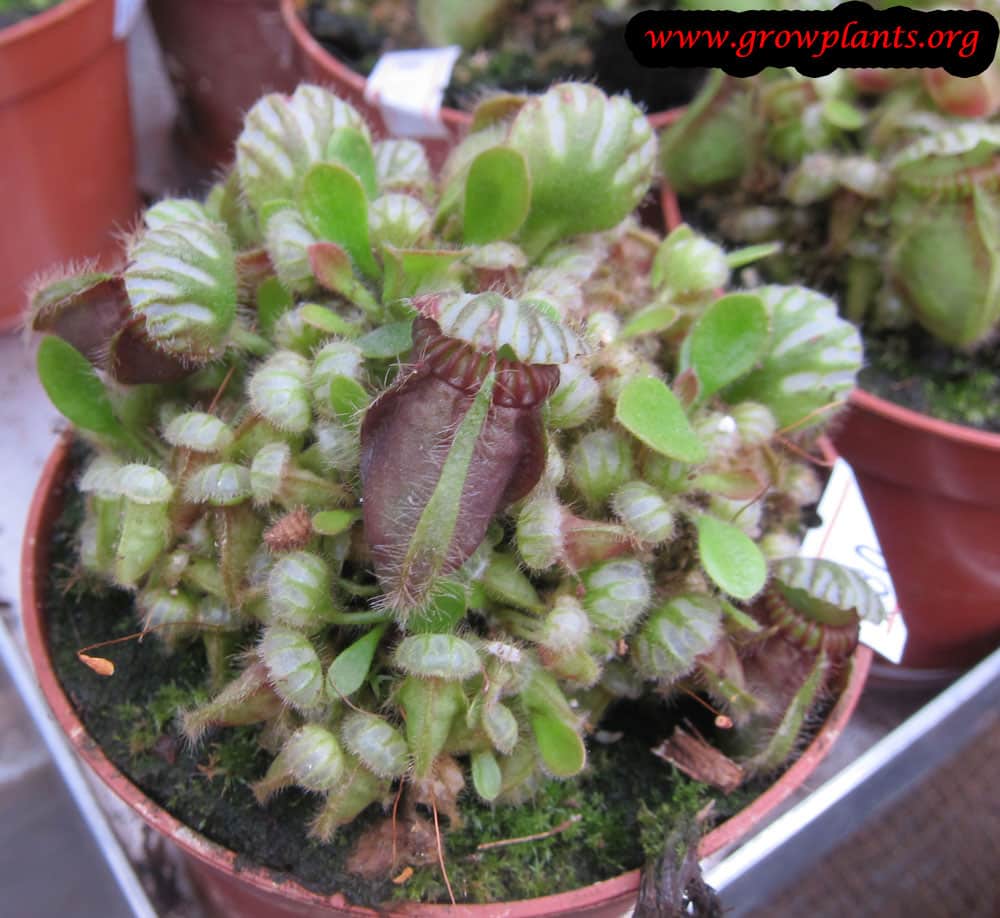
Overview: Cephalotus follicularis (Australian pitcher plant) is a small carnivorous evergreen perennial, only 5-15 cm (2-6 in) tall, that traps insects in modified pitcher-shaped leaves. It is grown as an ornamental curiosity and houseplant in high humidity with mineral-free soil and water.
Quick Specifications
| Specification | Attribute |
|---|---|
| Plant Type / Life Cycle | Perennial (carnivorous herb) |
| Foliage Type | Evergreen |
| Mature Size | 5-15 cm tall (2-6 in) |
| Growth Rate | Slow to moderate |
| Root System | Rhizomatous. |
| Toxicity | Non-toxic to people and pets. |
| Hardiness | USDA zones 11+ |
Growth Form & Structure
- Height & Spread: A miniature plant of just 5-15 cm (2-6 in), ideal for terrariums, pots and windowsills.
- Growth Habit & Form: Low, clumping carnivorous rosette spreading by rhizomes.
- Lifespan & Maturity: Slow- to moderate-growing, long-lived perennial.
Anatomy & Physical Features
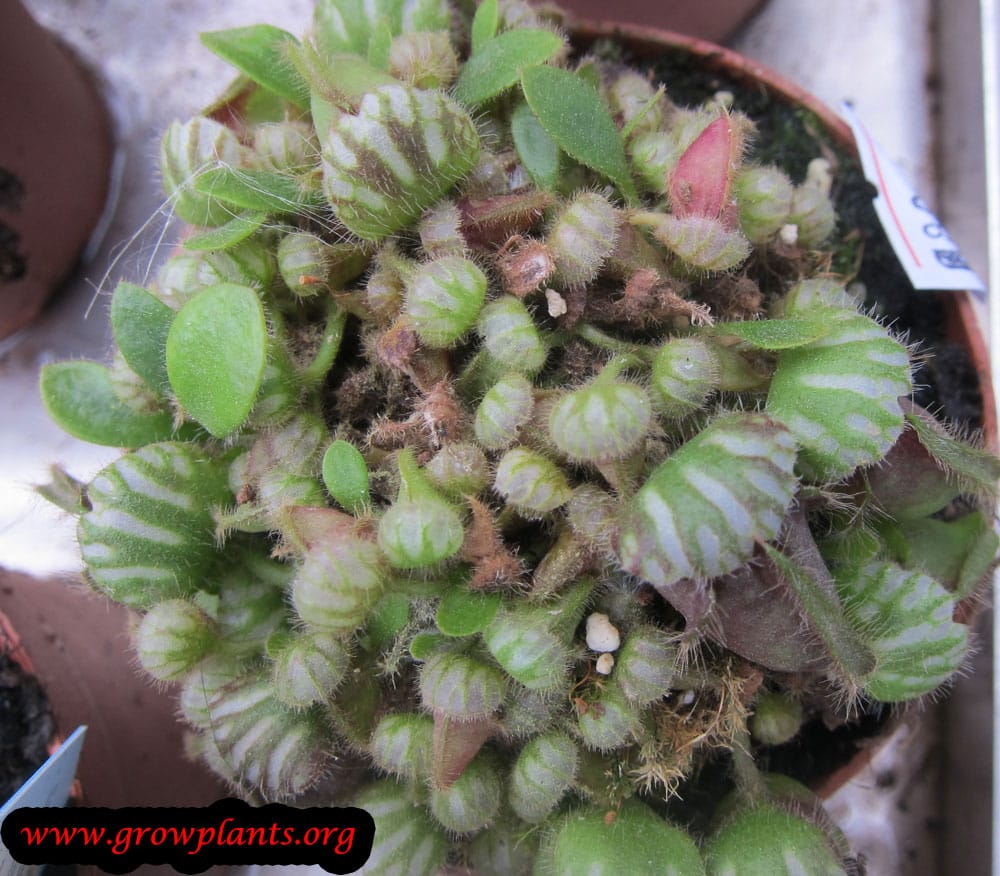
- Leaves & Foliage: Two leaf types: flat non-trapping leaves and cup-shaped pitchers with a hairy, lidded rim; pitchers can be green, red, orange, purple, brown, white or yellow and hold water to trap and digest insects.
- Flower Characteristics: Small white six-petalled flowers borne on a tall stem in spring to summer.
Primary Uses & Landscape Value
- Functional & Ornamental Roles: Ornamental carnivorous houseplant and collector’s plant for terrariums and bright, humid conditions.
Care Guide: Planting, Soil & Watering
Overview: The Australian pitcher plant is a small, slow-growing carnivorous perennial for warm, humid conditions (hardiness zone 11+) or a terrarium/windowsill, wanting bright but shaded light. It must grow in a mineral-free, acidic, peat-based mix kept damp with pure water – never ordinary soil or fertiliser.
Quick Care Requirements
| Requirement | Ideal Condition |
|---|---|
| Planting Season | In spring through autumn during active growth |
| Growth Rate | Slow to moderate |
| Soil Type | Mineral-free, acidic peat/perlite carnivorous mix |
| Soil pH | Acidic, low-nutrient (no fertiliser or mineral-rich soil) |
| Water Need | Moderate – keep the mix damp with rain, distilled or RO water; never let it dry out or use tap water |
Planting & Establishment
- Best Planting Season: Pot or divide in spring through autumn while in active growth.
- How to Plant:
- Hole Preparation: Plant into a pot of carnivorous mix; a plastic pot helps keep the roots cool and moist.
- Soil Amendments: Use only a peat (or peat-substitute) and perlite mix – no compost, fertiliser or lime, which will kill it.
- Planting Depth: Set the crown at the surface so the little pitchers sit above the mix; do not bury it.
- Growth Speed & Expectations: A slow to moderate grower, staying small at just 5-15 cm (2-6 in).
Soil, Watering & Drainage Care
- Soil Mix & Drainage Needs: Grow in a mineral-free, acidic, airy peat/perlite mix; stand the pot in a little pure water so it stays evenly damp but not stagnant.
- Watering Schedule & Technique:
- Young / Newly Planted: Keep the mix constantly damp with pure water and high humidity while establishing.
- Established: Keep the mix permanently moist using rain, distilled or RO water; the pitchers should hold a little water. Avoid tap or mineral water.
- Seasonal Adjustments: Slightly drier and cooler in a winter rest, but never bone dry; warm and humid in the growing season.
Climate, Light & Hardiness
The Australian pitcher plant is a small, frost-tender carnivorous perennial from mild, humid subtropical and Mediterranean conditions, also grown indoors and in terrariums. It wants bright but not scorching light (half shade to full shade with good light) and steady warmth, and is kept above about 5 °C (41 °F).
Quick Climate Specifications
| Climate Zones | Subtropical, Mediterranean and tropical; also grown as a houseplant / terrarium plant |
| USDA Hardiness Zones | Site lists zone 11+ – a frost-free outdoor limit |
| Optimal Temp Range | Mild, humid conditions of roughly 18–25 °C (64–77 °F), with cooler nights |
| Cold Damage Begins | Growth suffers as temperatures fall below about 5 °C (41 °F), the site's stated care minimum |
| Approx. Survival Minimum | Keep above roughly 5 °C (41 °F); near-freezing cold and frost are damaging |
| Frost Tolerance | Very Low |
| Light Conditions | Half shade to full shade with strong light |
Sunlight & Light Exposure
Optimal Light Setup
Give it bright light without harsh, prolonged midday sun; strong indirect light or gentle sun brings out red pitcher colour while avoiding scorch.
Shade & Heat Management
Protect it from intense afternoon sun and dry heat, which can burn the small pitchers; ventilation matters in warm spells.
Best Exposure / Orientation
Indoors, a bright window with filtered sun suits it; outdoors in warm climates a lightly shaded, humid spot is best.
Temperature Extremes & Hardiness
USDA Hardiness & Regional Limits
The zone 11+ listing marks a frost-free outdoor limit; below that it is grown under cover. It appreciates a mild seasonal dip (cooler winter nights) but not freezing.
Cold Damage & Winter Protection
Sustained cold below its roughly 5 °C (41 °F) minimum checks growth and risks damage; keep it frost-free and give a cool, bright, barely-growing rest in winter.
Frost Sensitivity
Frost is damaging - treat it as frost-tender and never expose it to freezing air.
Extreme Heat Tolerance
Prolonged high heat combined with dry air stresses it; it prefers mild warmth with humidity rather than extremes.
Wind, Humidity & Microclimate
Humidity Preferences
It needs consistently high humidity, which is why it does well in enclosed or terrarium conditions.
Dry-Air Tolerance
Low - dry indoor air can desiccate the pitchers, so pair warmth with moisture in the air.
Microclimate Recommendations
A humid, brightly-lit, frost-free micro-spot - terrarium, humid windowsill or sheltered patio in warm climates - matches its needs best.
Growing in Pots, Balconies & Indoors
The Australian pitcher plant is a compact carnivore that makes an excellent small houseplant, thriving in a bright terrarium or on a humid windowsill. In a pot it wants only mineral-free water and a lean, peaty mix – never garden soil or feed.
Quick Details
- Container Size: Small – a 10-13 cm (4-5 inch) pot suits this little rosette
- Indoor Suitability: A genuine houseplant given strong light and steady humidity
- Best Spot: Bright light with some direct sun; a terrarium or sunny sill is ideal
- Soil & Drainage: A lean, nutrient-free carnivorous mix – sphagnum peat with perlite or lime-free sand; never ordinary potting soil, compost, fertilizer, or lime.
- Watering in Pots: Only mineral-free water – rainwater, distilled, or reverse-osmosis – never hard tap water, whose minerals build up and harm the plant. Stand the pot in a shallow tray of that water so the mix stays constantly wet.
Indoors & On the Windowsill
- A real houseplant: Cephalotus grows happily indoors in a bright, humid spot – a terrarium or a well-lit windowsill. Give it plenty of light for compact, well-coloured pitchers.
- Care indoors: Keep the peat mix wet with mineral-free water via a tray, hold up humidity, and let it enjoy a slightly cooler, drier winter rest.
On a Balcony or Patio
- Light & wind: A bright, sheltered outdoor spot suits it in the warm season; keep the water tray topped up, as pots in sun and wind dry out fast, and shelter it from drying wind.
- Practicalities: Use rainwater for topping up; a filled tray adds weight, so make sure shelving or railings can take it.
Choosing the Pot, Soil & Long-Term Care
- Pot & water tray: Use a plastic or glazed pot (terracotta leaches minerals and dries too fast); unusually for a potted plant, keep it standing in a shallow water tray rather than letting it drain dry.
- Potting mix: Nutrient-free only – sphagnum peat blended with perlite or lime-free sand. Ordinary compost or feed will kill the roots.
- Feeding: Do not fertilize – these plants draw their nutrients from the insects they catch, so rich soil or feed will scorch the roots.
- Repotting: Refresh the peat mix every year or two in the warmer months, before the old mix breaks down and turns sour.
Growing this plant in a greenhouse
A greenhouse can give cephalotus follicularis frost protection, cold protection, humidity control and extra warmth. In the right climate it may also be kept growing through winter, depending on how much warmth and light are provided.
Greenhouse at a glance
| Greenhouse suitability | Conditional - depends on your climate |
|---|---|
| Main benefits | frost protection, cold protection, humidity control, extra warmth |
| Season extension | earlier spring & later autumn |
| Protect when air drops below | about 7°C - note this is an air guide; pond/water temperature is what really governs an aquatic plant |
| Maintain greenhouse minimum | around 10°C for active growth |
| Suitable types | heated greenhouse, glass greenhouse |
| Heating | Heating is recommended in cold climates for continuous growth. |
Related greenhouse guides
- Greenhouses: How to Choose the Right Greenhouse
- Best Greenhouse Heaters
- Greenhouse Climate Control: Temperature, Ventilation and Humidity
Fertilizing & Feeding
These plants evolved in nutrient-poor bogs and feed themselves by trapping insects; they are very light feeders whose roots are easily damaged by fertilizer and mineral salts, so external feeding stays minimal.
Quick Fertilizing Specs
| Feeding Level | light |
|---|---|
| Main Nutrient Priority | Nutrients come mainly from captured prey, not soil fertilizer |
| Best Feeding Period | Warm active growing season |
| Reduce/Stop Feeding | Stop any feeding during the winter dormancy or rest period |
| Soil pH | Acidic, low-mineral medium such as peat or sphagnum with perlite |
| Organic Options | Mineral-free medium; nutrition supplied by trapped insects |
| Micronutrients | Not supplied by fertilizer; mineral salts are harmful |
Feeding by Growth Stage
Active growth season
Support new traps, pitchers, and leaves during the growing season, with most nutrition coming from captured prey.
| Nutrient direction | Very low external nutrients – nutrition comes mainly from trapped insects, so the roots rarely need feeding and are easily harmed by fertilizer salts. |
|---|---|
| Timing | Through the warm growing season when new traps form. |
| Frequency | Fed mainly by captured insects; keep any soil feeding minimal and infrequent. |
| Fertilizer types | Captured insects are the primary nutrient source, When prey is scarce, offer small insects to the traps rather than fertilizing the roots |
| Precautions | Use only rain, distilled, or other mineral-free water; ordinary fertilizer and hard tap water leave salts that can kill the roots. |
Cool-season rest
Let the plant rest as growth and prey capture slow; nutrient demand falls away.
| Nutrient direction | None – withhold all feeding during the rest period. |
|---|---|
| Timing | During the cooler, lower-light months when growth slows. |
| Frequency | No feeding at this stage. |
| Fertilizer types | No feeding at this stage; do not fertilize while the plant rests. |
| Precautions | Do not fertilize; keep the medium moist with mineral-free water only until active growth resumes. |
Nutrient Deficiency Signs & Corrections
Leaf and trap tips brown and die back, and the plant declines after fertilizing or using hard water.
| Possible causes | Fertilizer salts in the medium, Hard or mineral-rich tap water, Overfeeding the roots |
|---|---|
| Appears first on | Leaf and trap tips |
| What to check | Water source and its mineral content, Any fertilizer added to the medium, Mineral or salt crust on the surface |
| Possible correction | Flush the medium repeatedly with rain or distilled water and switch to mineral-free water, avoiding all soil fertilizer. |
Weak, pale growth with small or few traps when the plant catches little prey.
| Possible causes | Too few insects available to trap, Grown indoors away from prey, Traps not triggered or unable to close |
|---|---|
| Appears first on | New growth, seen as small, pale traps |
| What to check | Whether the plant is catching insects, Light levels, Trap function |
| Possible correction | Offer suitable small insects to the traps or improve access to prey and light, rather than adding soil fertilizer. |
Pruning, Training & Seasonal Maintenance
The Australian pitcher plant (Cephalotus follicularis) is a carnivorous rosette only 5–15 cm across, growing slowly from a single crown on a rhizome. It does not tolerate pruning in any structural sense: there is nothing to shape or cut back, and the only maintenance is grooming — removing fully spent pitchers and leaves and managing the flower stalk.
Because it is so small and slow, the emphasis is on removing only what is genuinely dead and on protecting the crown; any attempt to “prune” the plant itself sets it back.
Quick Pruning & Maintenance Specs
| Pruning Tolerance | Very low — grooming only, no structural pruning |
| Primary Maintenance Window | Year-round, as pitchers and leaves age |
| Typical Frequency | Occasional grooming; flower stalk removed once when it appears |
| Main Objective | Remove spent pitchers and leaves; manage flowering |
| Best Tool Type | Precision snips or fine scissors |
| Avoid Heavy Pruning During | Any time — never cut into the crown or rhizome |
Pruning by Plant Age & Size
Newly Established
Let a young plant settle undisturbed and remove only clearly dead pitchers; there is no formative pruning.
Young / Formative
No training applies. The plant slowly forms a clump of pitchers and flat leaves; simply keep it groomed.
Mature / Established
Groom spent growth and, when the plant outgrows its pot, renew it by dividing the rhizome at repotting rather than by any cutting back.
Seasonal Pruning Schedule
Ongoing (sanitary): remove pitchers and leaves only once they have fully browned; the plant continually replaces them. Winter rest: growth slows and more pitchers brown off in the cool season — remove them once dead, but leave anything still partly green and functional, as it continues to feed the plant.
Special Growth to Remove
Cut fully blackened pitchers and dead flat leaves at their base with fine snips. On such a tiny, slow plant the tall flower scape — which rises far above the rosette — is often removed as it emerges to conserve energy, unless the plant is well established and you specifically want seed. Never pull dead parts off by hand, which tears the rhizome, and never remove pitchers that are still green and working.
Tools
Precision snips or fine scissors are the only tool needed; the cuts are tiny and selective. No secateurs, loppers, or saw have any role on a plant this small.
Tool Hygiene & Disease Risk
Increased. Aphids and scale are the recorded pests and dead carnivorous tissue can harbour mould in the humid conditions this plant needs, so use clean, sharp blades and clear spent material promptly; a quick blade wipe between plants is sensible when grooming a collection.
Heavy Pruning & Rejuvenation
Not tolerated. There is no cutting back to rejuvenate this plant. A tired or crowded specimen is renewed by good culture and by dividing and repotting the rhizome, never by hard pruning.
Post-Pruning Care
After grooming, keep the plant in its usual bright, humid conditions with mineral-free water; no feeding or special aftercare is prompted by removing dead parts. Watch fresh pitchers for aphids and scale.
Common Pruning Mistakes
- Cutting green, functional pitchers instead of only fully dead ones.
- Pulling dead leaves off by hand and tearing the shallow rhizome.
- Leaving the tall flower stalk on a small, weak plant and exhausting it.
When NOT to Prune
Do not remove pitchers or leaves that are still partly green, and never cut into the crown or rhizome except when deliberately dividing the plant at repotting.
Recommended Tools (by task)
- precision_snips — for cleanly removing spent pitchers, dead leaves, and the flower stalk on this tiny plant.
Propagation Guide
The Australian pitcher plant is most reliably increased vegetatively — by dividing established clumps and by leaf and root cuttings — which keeps the exact form of a chosen plant. Seed is possible but slow and needs a cold period, so vegetative methods are preferred where a particular clone is wanted. A moderately slow plant to propagate.
Quick Propagation Specs
| Best Propagation Method | Division of clumps; leaf and root cuttings |
| Alternative Methods | Seed (slow) |
| Propagation Difficulty | Moderate |
| Seed True-to-Type | Variable — propagate vegetatively to keep a particular form |
| Vegetative True-to-Type | Yes — divisions and cuttings reproduce the parent clone |
| Best Propagation Season | Spring to autumn (active growth) |
Growing from Seed
Seed Handling & Germination
Sow onto a mineral-free peat-and-perlite surface kept moist with rainwater; a cool/cold period before or during germination helps, and germination is slow and uneven — expect a wait and grow seedlings on patiently. Seed-raised plants vary, so use seed for numbers rather than to reproduce a specific plant.
Leaf & Root Cuttings
Both leaf types — the flat non-trap leaves and the pitchers — and sections of root can be used. Set a leaf with a little of its base, or lay a root section, on damp mineral-free medium under high humidity; new plantlets form from the base over time. Use rainwater or other mineral-free water throughout.
Division
Established plants form clumps that can be teased apart in the growing season, keeping roots on each division, and potted individually into peat/perlite kept humid while they re-establish.
Bloom & Flower Guide
Quick Details
- Bloom Season: Late spring into summer
- Time to First Bloom: Only on mature plants, which can take several years
- Flower Appearance: Small white, six-petalled flowers on a tall inflorescence
- Edibility: A carnivorous ornamental; not eaten
Detailed Blooming Overview
The Australian pitcher plant (Cephalotus follicularis) carries small white flowers high on a long, branched stalk, held well above the pitchers so that visiting pollinators are not caught by the traps.
Flower Characteristics
- Small, star-like white flowers with six tepals, clustered on a tall inflorescence.
- Held on a long stem, well clear of the foliage and the pitcher traps.
Bloom Care & Thinning
- Managing the bloom: Flowering takes energy, so some growers remove the stalk on young or weak plants to steer strength into pitchers; leave it in place if you want seed.
- Conditions: Bright light, pure (low-mineral) water and cool nights support healthy flowering.
Pests, Diseases & Troubleshooting
The Albany pitcher plant is a small carnivorous species that is sensitive to water quality and stagnant warmth: its main threats are root and crown rot from overwarm, mineral-rich or stagnant water and grey mould in cool, damp, still air, plus the usual soft-bodied greenhouse pests. Management centres on pure water, airflow, cool roots and careful, mineral-free watering rather than fertiliser or heavy spraying.
Quick Troubleshooting Overview
| Issue / Pest | Main Symptom | Primary Solution |
|---|---|---|
| Crown / root rot | Blackening crown, collapsing pitchers/leaves, decline | Pure water; airflow; cooler roots; avoid stagnation |
| Botrytis (grey mould) | Fuzzy grey mould on pitchers/crown in cool damp still air | Remove affected parts; ventilate; reduce humidity |
| Aphids | Distorted new growth and pitchers, honeydew | Rinse off; insecticidal soap (carnivore-safe rates) |
| Root mealybug | Poor growth; white insects on roots at repotting | Rinse roots; horticultural soap drench; fresh mix |
| Fungus gnats | Small flies from wet peat; larvae in the mix | Sticky traps; slightly drier surface; avoid stagnation |
| Mineral burn | Browning, dying pitchers from tap/hard water | Use rainwater or distilled/RO water only |
Common Pests & Management
- Aphids (Aphididae):
- Symptoms: Small soft aphids cluster on tender new leaves, developing pitchers and lids, distorting growth, stunting pitchers and leaving honeydew; they can build up quickly in an enclosed environment.
- Prevention & Control: Rinse or wipe off small colonies; treat with a dilute insecticidal soap at carnivore-safe strength, or dunk affected growth; encourage or introduce ladybirds and lacewings in a greenhouse; isolate infested plants and check new acquisitions.
- Root mealybug (Rhizoecus spp.):
- Symptoms: Sluggish, stalled growth and small pitchers despite good conditions; white, cottony insects and waxy residue are found on the roots and around the crown when the plant is unpotted.
- Prevention & Control: Unpot and inspect roots at any decline; rinse the root system and remove infested media; drench with a dilute horticultural soap or an appropriate systemic labelled as safe, then repot into fresh media; quarantine and inspect incoming plants.
- Fungus gnats (Bradysia spp.):
- Symptoms: Small dark flies over the peat surface; their larvae live in the constantly moist media and can damage fine roots and young plants.
- Prevention & Control: Use yellow sticky traps to catch adults; keep the surface slightly drier and ensure the standing-water tray is not permanently stagnant and warm; a top-dressing of sand or grit discourages egg-laying; the carnivorous pitchers themselves trap some adults.
- Scale and mealybugs (Coccidae / Pseudococcus spp.):
- Symptoms: Brown bumps or white cottony masses on leaf bases, pitchers and the crown, sucking sap and leaving honeydew; less common but persistent when they appear.
- Prevention & Control: Dab with an alcohol swab or wipe off; treat carefully with dilute horticultural oil or insecticidal soap at carnivore-safe rates, spot-testing first; remove badly affected parts; isolate the plant.
Diseases & Fungal Issues
- Crown and root rot (Pythium / Phytophthora spp.):
- Symptoms: Blackening and softening at the crown, collapsing pitchers and leaves and general decline, driven by warm, stagnant, waterlogged or mineral-rich water-especially in hot, still, over-wet conditions or winter overwatering.
- Treatment & Management: Prevent by keeping roots cooler and water fresh and moving rather than hot and stagnant; use only pure (rain/distilled/RO) water; reduce watering and tray depth in winter dormancy; improve airflow; remove rotted crowns and repot healthy divisions into fresh open carnivorous mix.
- Botrytis (grey mould) (Botrytis cinerea):
- Symptoms: Fuzzy grey-brown mould on old pitchers, dying leaves and the crown in cool, damp, still conditions, spreading into healthy tissue.
- Treatment & Management: Remove dead and dying pitchers and leaves promptly; improve ventilation and reduce humidity and stagnant air, particularly in cool weather; avoid overcrowding; space plants and keep the crown from sitting wet.
- Fungal pitcher and leaf spot (Colletotrichum / Cercospora spp.):
- Symptoms: Brown or black spots and blotches on pitchers and leaves in humid, stagnant conditions.
- Treatment & Management: Improve airflow and reduce leaf wetness and stagnation; remove affected pitchers and leaves; avoid overhead misting in still cool air; sulphur can help persistent cases but use cautiously on carnivores.
Growing Difficulties & Abiotic Problems
- Mineral / hard-water damage:
- Cause & Symptoms: Cephalotus is intolerant of dissolved minerals; tap or hard water builds up salts that brown and kill pitchers and roots.
- Correction Strategy: Water only with rainwater, distilled or reverse-osmosis water; never use tap, mineral or softened water; flush occasionally with pure water; keep fertiliser away from the roots.
- Overwarm, stagnant water and winter overwatering:
- Cause & Symptoms: Hot, still, waterlogged conditions and deep standing water-especially in a warm greenhouse or in winter-cook and rot the roots and crown.
- Correction Strategy: Keep roots cool and the water fresh, using a shallow tray and letting it draw down between top-ups; provide airflow; reduce watering markedly in winter dormancy and never leave the crown sitting in warm water.
- Poor colour and small pitchers in low light:
- Cause & Symptoms: Too little light gives lanky green growth with small, pale, poorly coloured pitchers.
- Correction Strategy: Provide bright light (strong, filtered sun or good grow-lights); the best red pitcher colour comes with high light plus cool nights; increase light gradually to avoid scorch.
What Helps — Products & Tools
Care is specialised and cultural: pure (rain/RO/distilled) water, cool fresh-not-stagnant conditions, airflow and bright light. Pests are handled gently-dilute insecticidal soap and carnivore-safe horticultural oil for aphids, scale and mealybugs, yellow sticky traps for fungus gnats, and root rinsing plus fresh open carnivorous mix for root mealybug. Sanitation and ventilation control Botrytis; avoid strong chemical fertilisers and insecticides that harm carnivorous plants.