

Plant Profile & Key Characteristics
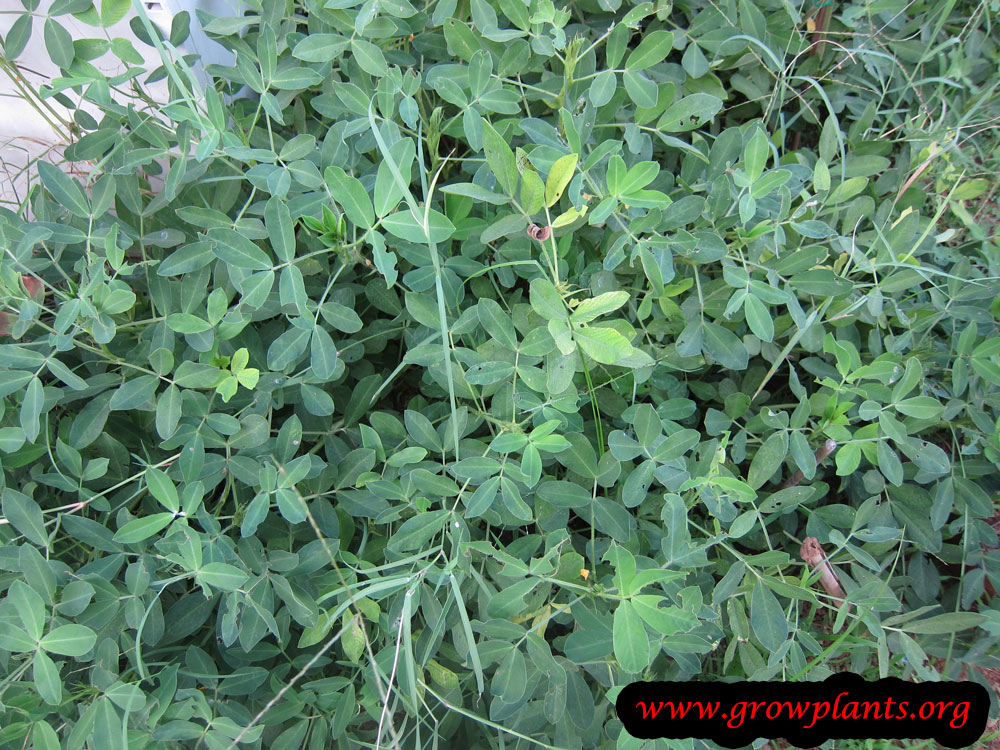
Overview: Peanut is a fast-growing herbaceous annual legume 20-50 cm tall, with pinnate leaves and yellow pea flowers. It is grown as an edible crop for its seeds, which ripen in pods underground.
Quick Specifications
| Specification | Attribute |
|---|---|
| Plant Type / Life Cycle | Annual (legume) |
| Foliage Type | Deciduous (herbaceous, dies back) |
| Mature Size | 20-50 cm (8-20 in) |
| Growth Rate | Fast to Moderate |
| Root System | Taproot with nitrogen-fixing nodules |
| Toxicity | Non-toxic / edible seeds |
| Hardiness | USDA zone 7+ |
Growth Form & Structure
- Height & Spread: 20-50 cm (8-20 in), needing plenty of room for a good crop; can be grown in containers.
- Growth Habit & Form: Low, spreading herbaceous legume whose flower stalks bend down to push developing pods into the soil.
- Lifespan & Maturity: Completes its cycle in one season; seeds are ready about 140-150 days after sowing.
Anatomy & Physical Features
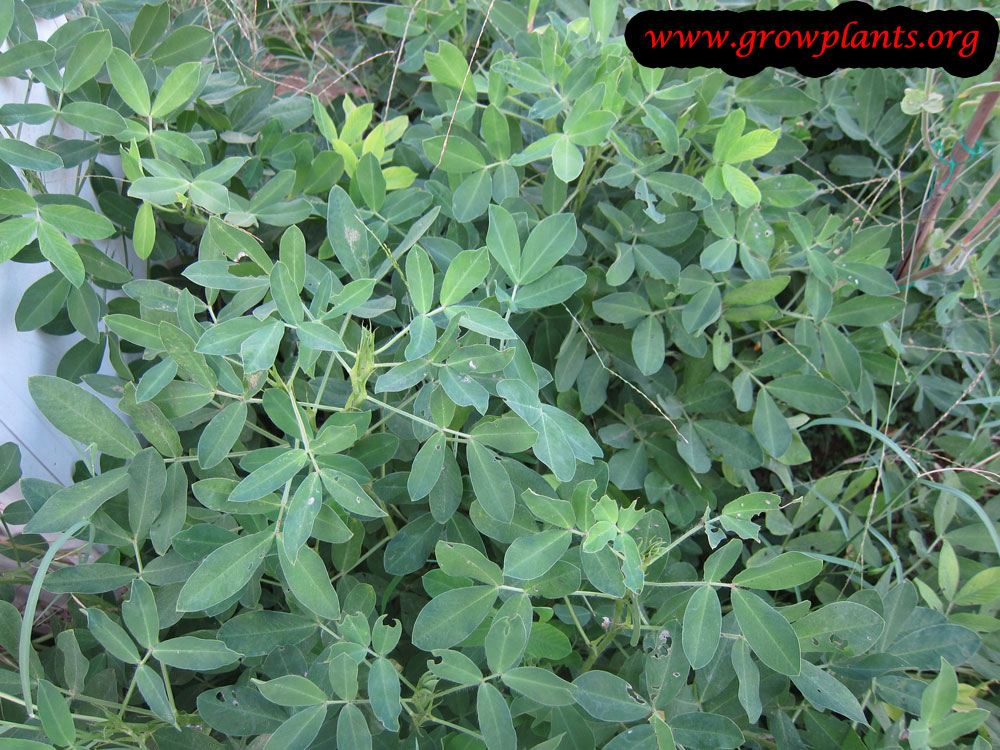
- Leaves & Foliage: Green, elliptic leaves in a pinnate arrangement (young leaves are edible cooked).
- Flower Characteristics: Yellow pea-shaped flowers pollinated by bees (see the Bloom accordion).
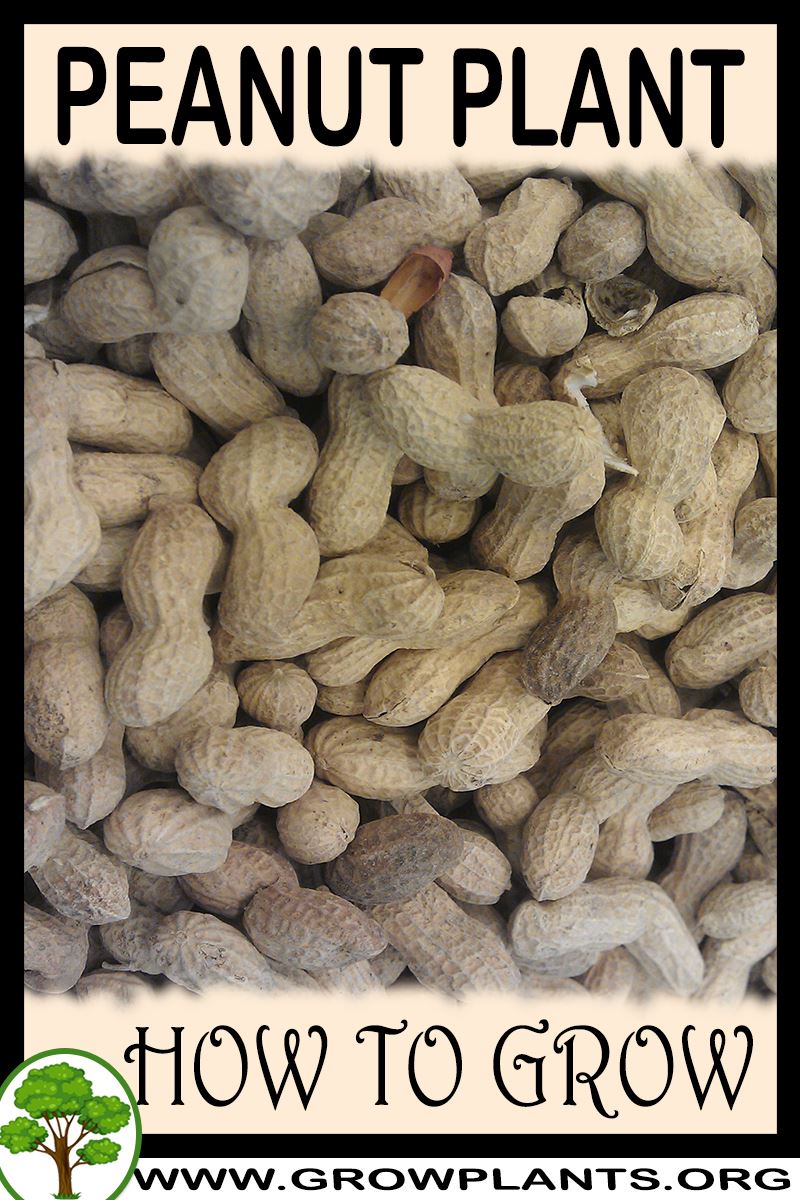
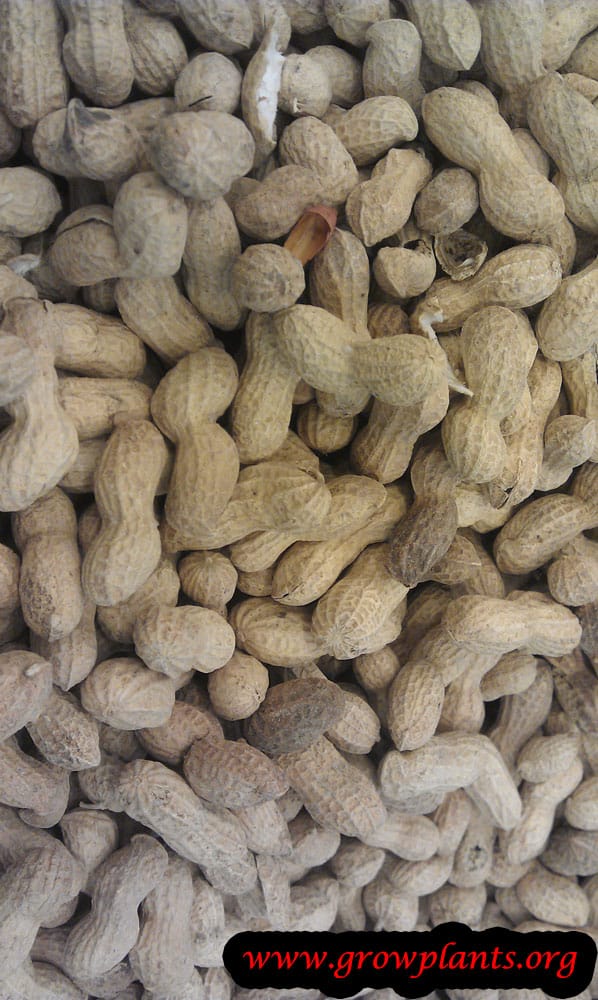
- Fruit Profile: Brown pods that develop underground, usually with two edible seeds, eaten after roasting (see the Fruit accordion).
Primary Uses & Landscape Value
- Edible Uses: Seeds eaten roasted or made into spreads; young leaves are edible cooked.
- Functional & Ornamental Roles: Grown as an edible crop; also planted ornamentally and valued as a nitrogen-fixing legume.
Care Guide: Planting, Soil & Watering
Overview: Peanut is a warm-season annual legume that grows in loose, sandy, well-draining soil in full sun. It needs warmth and space, with moderate to high water while growing and drier soil as the pods mature.
Quick Care Requirements
| Requirement | Ideal Condition |
|---|---|
| Planting Season | Spring, after the last frost and once the soil is warm |
| Growth Rate | Moderate to Fast |
| Soil Type | Loose, sandy, well-draining |
| Soil pH | Slightly acidic |
| Water Need | Moderate to High (steady during flowering and pegging, drier toward harvest) |
Planting & Establishment
- Best Planting Season: Plant in spring, after the last frost, once the soil has warmed.
- How to Plant:
- Hole Preparation: Sow or set plants into loose, warm, sandy soil; keep the ground crumbly and open.
- Soil Amendments: Work in a little compost to keep the soil light – loose, sandy ground lets the pegs enter to form pods; avoid heavy clay.
- Planting Depth: Sow seed about 3–5 cm deep, or set transplants with the root collar at soil level.
- Growth Speed & Expectations: Moderate to fast, taking roughly 140–150 days from planting to a mature crop.
Soil, Watering & Drainage Care
- Soil Mix & Drainage Needs: Loose, sandy, well-draining soil is essential so the pegs can push into the ground and pods develop cleanly.
- Watering Schedule & Technique:
- Young / Newly Planted: Keep the soil evenly moist to establish the young plants.
- Established: Water regularly through flowering and pegging when moisture matters most.
- Seasonal Adjustments: Ease off as the pods mature toward harvest so they can dry down.
Climate, Light & Hardiness
Peanut is a warm-season annual legume for tropical, Mediterranean, subtropical and desert climates, grown in full sun. The dataset gives roughly zone 7+, reflecting annual culture: it is frost-tender and needs a long, warm, frost-free season (about 140–150 days) to mature its underground pods.
Quick Climate Specifications
| Climate Zones | Tropical, subtropical, Mediterranean, desert (warm-season) |
|---|---|
| USDA Hardiness Zones | Approximately 7+ as a warm-season annual (per dataset) |
| Optimal Temp Range | Approximately 21–30 °C / 70–86 °F |
| Cold Damage Begins | Growth checks below roughly 15 °C / 59 °F; chilling injury in cool weather |
| Approx. Survival Minimum | Frost kills the plant near 0 °C / 32 °F |
| Frost Tolerance | None–Very Low |
| Light Conditions | Full sun |
| Wind Tolerance | Moderate (low, bushy habit) |
Sunlight & Light Exposure
Optimal Light Setup
Full sun and warm soil are essential for flowering and for the pegs to bury and fill pods underground.
Temperature Extremes & Hardiness
USDA Hardiness & Regional Limits
Grown as an annual from about zone 7 upward, it is sown after the soil warms in spring and harvested before autumn frost. Cold does not just slow it - it prevents pod fill and ends the crop.
Cold Damage & Frost Sensitivity
Cool weather stalls growth and frost kills the plant, so it depends entirely on the warm season.
Frost-Free Growing Season
A long frost-free stretch of warm weather (roughly 140–150 days) is needed to ripen the crop, so short-summer regions must choose early types or start plants under warmth.
Wind, Humidity & Microclimate
Humidity Preferences
Grows well in warm conditions across a range of humidities, from humid tropics to hot dry regions with irrigation.
Microclimate Recommendations
The warmest, sunniest site with light, warm soil makes the most of the season and helps the pods develop underground.
Growing in Pots, Balconies & Indoors
The peanut is a fun, compact crop for a deep pot on a sunny balcony, patio or bright windowsill – it needs loose soil for its pegs to bury into. It is not a houseplant, but its small size suits a very sunny sill.
Quick Details
- Container Size: A deep pot, 15-30 L (4-8 gal); depth matters so the pegs can reach the soil
- Indoor Suitability: Not a deep-indoor houseplant; compact enough to fruit on a very sunny sill
- Best Spot: Full sun – the sunniest balcony, patio or windowsill you have
- Soil & Drainage: Aerated, organic-rich mix – peat or coir with perlite or vermiculite; must drain freely
- Watering in Pots: Keep the mix evenly moist while flowering and pegging down, then ease off as the pods mature; never waterlogged
Indoors & On the Windowsill
- Houseplant limits: Not a true houseplant – it needs strong direct sun a room cannot supply.
- Windowsill growing: On the brightest, sunniest sill a deep pot can raise a small crop; use loose, sandy mix so the pegs can bury into it.
On a Balcony or Patio
- Light, heat & wind: Give it the sunniest spot you can. Walls, railings and paving reflect heat, so pots dry quickly – check moisture daily in warm weather, and shelter tall growth from wind. A drip irrigation kit with a timer can take over that watering check automatically.
Choosing the Pot, Soil & Long-Term Care
- Pot & drainage: A deep 15-30 L pot with strong drainage holes; skip a standing water saucer to avoid root rot. Terracotta breathes and dries fast; glazed or plastic holds moisture longer.
- Potting mix: Use a loose, sandy, free-draining mix – the flowering pegs must be able to push down into it to form pods.
- Feeding: Potted plants lose nutrients as watering leaches them, so feed more often than in open ground. As a legume it fixes much of its own nitrogen, so favour a low-nitrogen feed richer in phosphorus and potassium.
- Annual crop: Grown fresh each season – harvest, then clear the pot and replant rather than repotting.
Growing this plant in a greenhouse
A greenhouse can give peanut plant frost protection, cold protection, humidity control and extra warmth.
Greenhouse at a glance
| Greenhouse suitability | Conditional - depends on your climate |
|---|---|
| Main benefits | frost protection, cold protection, humidity control, extra warmth |
| Season extension | earlier spring & later autumn |
| Outdoor protection advisable below | about 15°C |
| Maintain greenhouse minimum | around 15°C for active growth |
| Suitable types | heated greenhouse, polycarbonate greenhouse |
| Heating | Heating is recommended in cold climates for continuous growth. |
Related greenhouse guides
- Greenhouses: How to Choose the Right Greenhouse
- Best Greenhouse Heaters
- Greenhouse Climate Control: Temperature, Ventilation and Humidity
- Polycarbonate Greenhouses: What to Look for Before Buying
Fertilizing & Feeding
As a nitrogen-fixing legume, Peanut plant is a light feeder: it supplies much of its own nitrogen through root nodules, so it needs only modest, balanced nutrition and responds poorly to heavy nitrogen. A fertilizer formulated for tomatoes and vegetables supports that feeding pattern through harvest.
Quick Fertilizing Specs
| Feeding Level | Light; a modest feeder thanks to nitrogen fixation. |
|---|---|
| Main Nutrient Priority | Balanced nutrition with restrained nitrogen; potassium and phosphorus support flowering and pods. |
| Best Feeding Period | During early growth and again as flowering begins. |
| Organic Options | Compost and other organic matter suit this legume well and reduce the need for concentrated fertilizer. |
| Soil pH | Prefers slightly acidic to near-neutral soil. |
| Reduce/Stop Feeding | Ease off feeding as pods mature and the plant winds down. |
Feeding by Growth Stage
Establishment
Help young Peanut plant plants settle in and build an early root system and first true leaves.
| Nutrient direction | Modest, balanced nutrition to support early root and shoot growth; as a legume this crop partners with soil bacteria to supply much of its own nitrogen, so keep nitrogen restrained. |
|---|---|
| Timing | From germination or transplanting through the first weeks of growth. |
| Frequency | A single light feeding as growth begins is usually enough on decent soil. |
| Fertilizer types | A balanced complete garden fertilizer used lightly, Compost or other organic matter worked into the bed before planting |
| Precautions | Avoid heavy nitrogen, which pushes soft leafy growth, can discourage nodulation, and delays flowering. |
Vegetative growth
Build a healthy, vigorous canopy of stems and leaves ahead of flowering.
| Nutrient direction | Steady, balanced nutrition with a light hand on nitrogen; because this legume fixes its own nitrogen, extra nitrogen mostly favors foliage over flowers and pods. |
|---|---|
| Timing | Through the main leafy growth phase before flowers appear. |
| Frequency | Feed sparingly during active growth on poor soil; rich, well-composted soil rarely needs more. |
| Fertilizer types | A balanced complete fertilizer used sparingly, A light compost side-dressing |
| Precautions | Too much nitrogen makes plants lush but unproductive and can delay pod set. |
Flowering and podding
Support strong flowering and the filling of pods and seeds.
| Nutrient direction | Shift the emphasis toward potassium and phosphorus support for flowering and pod fill while keeping nitrogen modest. Peanuts set their pods underground and benefit from adequate calcium in the pegging zone. |
|---|---|
| Timing | From the start of flowering through pod and bean development. |
| Frequency | A light feeding as flowering begins can support a heavier pod set on lean soil. |
| Fertilizer types | A balanced or slightly potassium-leaning complete fertilizer used lightly |
| Precautions | Keep nitrogen in check during flowering so the plant invests in pods rather than more leaves. |
Nutrient Deficiency Signs & Corrections
Older, lower leaves fade from green to pale yellow and overall growth is slow and weak.
| Possible causes | Poor nodulation, so the plant’s root bacteria are fixing little nitrogen, Cold or waterlogged soil that limits root and bacterial activity, Genuinely low soil nitrogen where no active nodules have formed |
|---|---|
| Appears first on | Older, lower leaves. |
| What to check | Whether the roots carry healthy pinkish nodules, Soil drainage and temperature, Recent history of organic matter and any nitrogen inputs |
| Possible correction | Improve drainage and soil warmth, make sure the right rhizobia are present (inoculate the seed if needed), and give a light balanced feeding only if nodulation is clearly poor. |
The youngest leaves yellow between the veins while the veins themselves stay green.
| Possible causes | High soil pH reducing the availability of iron or manganese, Cold or waterlogged roots that cannot take micronutrients up, A genuine iron or manganese shortage in the soil |
|---|---|
| Appears first on | New, upper leaves. |
| What to check | Soil pH, Drainage and whether roots are sitting wet, Whether only the newest growth is affected |
| Possible correction | Correct soil pH and drainage first; if the pattern persists, apply a chelated iron or manganese product according to its label. |
Plenty of leafy growth but few flowers or pods actually form.
| Possible causes | Excess nitrogen pushing foliage at the expense of flowering, Heat or uneven moisture stress during flowering, Low potassium limiting flowering and pod fill |
|---|---|
| Appears first on | Flowering shoots and developing pods. |
| What to check | Recent nitrogen inputs and overall soil richness, Temperature and watering steadiness during bloom, General balance of the fertility program |
| Possible correction | Ease off nitrogen, keep watering steady through flowering, and support the plant with a balanced to potassium-leaning feed. |
Pruning, Training & Seasonal Maintenance
The peanut (Arachis hypogaea) is a low, spreading annual legume of 20–50 cm that is grown for its pods — and those pods form underground. After the yellow pea flowers are pollinated, each sends down a stalk (a peg) that pushes into the soil, where the pod then develops. This unusual habit is the whole reason peanuts are not pruned: cutting or shortening the plant removes flowers and pegs and directly reduces the crop, and disturbing the soil around the plant breaks the pegs on their way down.
Maintenance is therefore limited to removing the occasional diseased or dead leaf; the plant is otherwise left entirely alone to flower, peg and fill.
Pruning & the Edible Harvest
The peanut is grown for its underground seeds, and its whole growth habit is why it is not pruned: after the flowers are pollinated they push pegs down into the soil to form the pods, so cutting the plant removes flowers and pegs and disturbing the soil around it breaks the pegs — every structural cut costs yield.
The seeds are the main crop, but the young leaves and the flowers are also edible; picking leaves or flowers competes with pod fill, so take them only sparingly if you want a full nut harvest.
Quick Pruning & Maintenance Specs
| Pruning Tolerance | Low – effectively not pruned (cutting removes flowers/pegs) |
| Primary Pruning Window | None – sanitary leaf removal only, as needed |
| Typical Frequency | Rarely; only to remove diseased leaves |
| Main Objective | Keep the plant intact so it can flower and peg freely |
| Young Plant Priority | None – let it grow undisturbed |
| Mature Plant Priority | Protect the pegging zone; remove only diseased foliage |
| Best Tool Type | Precision snips (for the rare leaf removal) |
| Avoid Heavy Pruning During | Always – especially flowering and pegging |
Pruning by Plant Age & Size
Newly Established
Do nothing but remove damaged growth. Young leaves may be picked sparingly for the pot, but the plant is left to bulk up.
Young / Formative
No training or formative pruning of any kind. Shortening or pinching the spreading stems would only cut off potential flowering and pegging sites.
Mature / Established
Leave the plant undisturbed through flowering, pegging and pod fill. The only cuts are removal of diseased or dead leaves, and even the surrounding soil should be left unhoed so descending pegs are not broken.
Seasonal Pruning Schedule
Growing season (sanitary only): the single legitimate task is to snip out diseased or damaged leaves to slow pests such as aphids and borer; keep every flowering stem and peg. There is no dormant, structural or renewal stage — the plant is harvested whole at the end of its 140–150-day cycle.
Structural Pruning & Training
None. The peanut has no framework to shape and no vertical growth to control; it is a self-managing spreading annual.
Special Growth to Remove
Nothing vigorous should be treated as unwanted here. In particular, do not remove or disturb the pegs — the flower stalks driving into the ground — because each one is a developing pod. Leave low shoots and creeping stems in place.
Container & Small-Space Pruning
In a deep, wide container the same rule holds: do not prune to keep it small, because compactness is not the goal — underground pod room is. Give it space rather than trying to trim it back.
Tools
Only precision snips are ever needed, and only for the rare removal of a diseased leaf. No heavier tool has any use on this plant.
Tool Hygiene & Disease Risk
Increased when removing diseased leaves. Because the few cuts you make are usually to take out disease- or pest-affected foliage, clean the blades and remove that material from the bed rather than dropping it; for a healthy plant no cutting is done at all.
Cut Placement & Technique
When taking off a diseased leaf or picking a young one, snip cleanly at the leaf stalk without disturbing the stems or the soil around the plant. Avoid any technique that involves shortening or heading the plant.
Heavy Pruning & Rejuvenation
Not applicable and actively harmful. A peanut is never cut back to rejuvenate it — hard pruning removes the flowers and pegs that are the entire crop.
Post-Pruning Care
Since almost no cutting is done, aftercare is simply the plant’s normal routine: warm conditions, steady moisture through pod fill, and an undisturbed soil surface so pegs can enter and pods can develop.
Common Pruning Mistakes
- Trimming or “tidying” the spreading stems — this removes flowers and pegs and cuts the harvest.
- Hoeing or cultivating close to the plant, snapping the descending pegs before they can form pods.
- Pinching for bushiness as one might a herb — unnecessary and counter-productive on a geocarpic crop.
When NOT to Prune
Essentially always: never prune during flowering or pegging, never shorten the plant for shape, and avoid disturbing the soil around it. The only exception is removing clearly diseased leaves.
Recommended Tools (by task)
- precision_snips — the only tool warranted, used solely to remove the occasional diseased or dead leaf without disturbing the plant.
Propagation Guide
Peanut is grown only from seed — sow the raw, un-roasted kernels with their papery skin intact, since split or skinned seed will not sprout. It is self-pollinating and comes true, and after flowering the fertilised "peg" bends down and pushes into the soil, where the pods ripen underground, so a warm, loose, slightly acid soil matters as much as the sowing itself.
Quick Propagation Specs
| Best Propagation Method | Seed — raw, whole kernels |
| Propagation Difficulty | Easy |
| Seed True-to-Type | Yes — self-pollinating |
| Best Propagation Season | Spring, into warm soil |
| Germination Temperature | Warm, roughly 18–30°C (64–86°F) |
| Seed Sowing Depth | About 3–5 cm (1–2 in) |
Growing from Seed
Seed Handling & Viability
Use fresh, raw kernels with the seed coat (testa) intact; roasted, split or de-skinned seed is dead and will not germinate.
Germination Conditions
Sow into warm, loose soil; the plant is frost-tender. Keep the soil open so that, after flowering, the pegs can drive down and bury the developing pods (geocarpy).
Bloom & Edible Flower Guide
Quick Details
- Bloom Season: Summer
- Time to First Bloom: Roughly four to six weeks after the plant is up and growing
- Flower Appearance: Small yellow pea-shaped flowers held close to the base of the plant
- Edibility: The buds and flowers are edible
Detailed Blooming Overview
The peanut has one of the most remarkable flowering tricks in the garden. Its cheerful little yellow pea flowers open above ground, but once pollinated the flower stalk bends downward, pushes into the soil, and the pod, the peanut, forms and ripens underground. The buds and flowers themselves are edible, a small bonus while the real crop develops out of sight below.
Flower Characteristics
- Small yellow flowers in the classic pea shape.
- Carried low, near the base of the plant.
- Edible as buds and open flowers.
Bloom Care & Thinning
- Pollination: Largely self-pollinating, with bees also visiting.
- Let the pegs reach soil: After flowering, keep the soil around the plant loose and lightly mounded so the flower stalks can bury themselves and set pods.
- Harvesting flowers: Take only a few flowers or buds for the kitchen and leave the rest to form the underground crop.
Fruit & Uses
Peanut is grown for its seeds (groundnuts), which develop in pods underground and are eaten after roasting. The young leaves and the flower buds and flowers are also edible.
Quick Edible Specs
| Edible Parts | Seeds (nuts); young leaves; flowers and buds |
|---|---|
| Main Use(s) | Roasted nuts and nut spread; young leaves cooked as a green |
| Eaten Raw or Cooked | Seeds roasted; leaves cooked |
| Preparation Required | Roast the seeds; cook the leaves |
| Harvest Season | Seeds in summer to autumn (dug from the ground); young leaves in spring to summer |
| Safety/Toxicity Caveat | Roast before eating; peanuts are a common and sometimes serious food allergen |
Seeds, Pods & Nuts
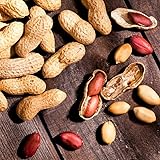
The brown pods form underground, usually with two seeds each. Lift the whole plant and collect the pods from the soil. The white-brownish seeds, with their brown skins, are eaten after a light roast — whole or as a spread.
Leaves & Greens
The green, pinnate young leaves are harvested in spring to summer and cooked as a green.
Flowers & Flower Buds
The yellow, pea-shaped buds and flowers are also edible, though the site notes they are nothing special culinarily.
Preparation, Uses & Safety
Roast the seeds before eating, and cook the young leaves. Note that peanuts are a common and sometimes severe allergen. Raw peanuts are also prone to mould, so roasting is preferred.
Pests, Diseases & Troubleshooting
Overview: Peanut (groundnut) is a legume whose most damaging problems are the fungal leaf spots (early and late) and rust, which defoliate the crop, and the aphid- and thrips-borne rosette and bud-necrosis viruses, so vector control is disease control. Soil-borne stem rot (Sclerotium), aflatoxin-forming Aspergillus on stressed pods, and a range of caterpillars, leaf miners and soil grubs round out the pressures. Its defining abiotic issue is calcium in the pegging zone — too little gives empty pods — so even moisture, calcium and rotation underpin a healthy crop.
Quick Troubleshooting Overview
| Issue / Pest | Main Symptom | Primary Solution |
|---|---|---|
| Aphids / thrips (virus vectors) | Curled or streaked young leaves; stunting, mottling | Control vectors early, resistant varieties, rogue infected plants |
| Leaf miner | Mined, webbed, scorched leaflets | Parasitoids, monitoring, targeted treatment |
| Early & late leaf spot | Brown-to-black leaf spots, defoliation | Resistant cultivars, rotation, protective fungicide |
| Peanut rust | Orange pustules on leaf undersides | Resistant varieties, rotation, fungicide |
| Stem rot / white mould | Wilting, white strands & sclerotia at base | Rotation, bury debris, drainage |
| Calcium deficiency | Empty pods / ‘pops’ | Gypsum in pegging zone, even moisture |
Common Pests & Management
- Aphids (groundnut aphid) (Aphis craccivora):
- Symptoms: Dark colonies on shoot tips, flower buds and undersides of young leaves, causing curling, stunting and honeydew; critically, they transmit groundnut rosette disease, so even small numbers matter.
- Prevention & Control: Encourage ladybirds, lacewings and parasitic wasps, avoid excess nitrogen, and control weeds that host the virus; treat early with insecticidal soap or neem where rosette is a risk, since virus spread is the real threat.
- Thrips (Frankliniella / Scirtothrips spp.):
- Symptoms: Silvery streaking, flecking and distortion of young leaves; thrips also transmit peanut bud necrosis / spotted wilt virus, making them a key vector pest.
- Prevention & Control: Foster predatory mites and pirate bugs, use blue sticky traps, and keep plants vigorous; treat early with spinosad or neem where the viruses are a threat, focusing on protecting young plants.
- Groundnut leaf miner (Aproaerema modicella):
- Symptoms: Larvae first mine the leaflets then web and fold them together, feeding inside; heavy attack browns and ‘scorches’ whole fields, cutting yield.
- Prevention & Control: Encourage parasitic wasps, remove alternate hosts, and monitor with pheromone traps; where mining is heavy, a targeted biological or approved insecticide protects the crop, timed to early infestation.
- Armyworms, cutworms & pod borers (Spodoptera / Helicoverpa / Agrotis spp.):
- Symptoms: Defoliating caterpillars chewing leaves, seedlings cut at soil level, and larvae boring into developing pods; damage ranges from ragged foliage to hollowed pods.
- Prevention & Control: Cultivate to expose soil pupae, hand-pick or use pheromone traps to monitor, encourage natural enemies, and apply Bacillus thuringiensis (Bt) or spinosad against young caterpillars.
- White grubs & wireworms (Scarabaeidae / Elateridae larvae):
- Symptoms: Soil-dwelling larvae that chew roots, pegs and developing pods underground, causing patchy wilting and hollowed or scarred pods.
- Prevention & Control: Rotate crops, cultivate before sowing to expose grubs to birds, and manage soil moisture; entomopathogenic nematodes or an approved soil treatment help where grubs are chronic.
Diseases & Fungal Issues
- Early leaf spot (Passalora arachidicola (Cercospora arachidicola)):
- Symptoms: Reddish-brown to dark spots with a yellow halo on the leaflets, appearing earlier in the season; heavy spotting causes defoliation and yield loss.
- Treatment & Management: Grow resistant varieties, rotate away from peanut, remove crop debris, and avoid dense canopies; protective fungicides (chlorothalonil-type or copper) on a schedule manage severe pressure.
- Late leaf spot (Nothopassalora personata (Cercosporidium personatum)):
- Symptoms: Darker, near-black spots (often without a yellow halo) with pustules on the leaf underside, appearing later and causing heavy defoliation.
- Treatment & Management: Use the same integrated approach as early leaf spot — resistant cultivars, rotation, sanitation — with scheduled protective fungicide where defoliation threatens yield.
- Peanut rust (Puccinia arachidis):
- Symptoms: Orange-brown powdery pustules on leaf undersides that rupture and shed spores; combined with leaf spot it defoliates and shrivels pods.
- Treatment & Management: Grow resistant varieties, rotate, and destroy volunteers and debris; fungicide applied with the leaf-spot programme controls it under pressure.
- Stem rot / white mould (Sclerotium rolfsii (Athelia rolfsii)):
- Symptoms: Wilting and death of plants with white fungal strands and tiny mustard-seed-like sclerotia at the stem base and on the soil; pods and pegs rot.
- Treatment & Management: Rotate with non-hosts (cereals), bury debris deeply, avoid throwing soil onto stems at cultivation, and improve drainage; biological controls and fungicides help in high-risk fields.
- Aspergillus / aflatoxin (Aspergillus flavus / parasiticus):
- Symptoms: A yellow-green mould on pods and kernels, especially on drought-stressed or damaged, poorly dried nuts; produces aflatoxin, a serious food-safety hazard.
- Treatment & Management: Avoid end-of-season drought stress and mechanical/pest damage, harvest at proper maturity, and dry and store kernels quickly to a safe low moisture; discard mouldy or damaged nuts.
- Groundnut rosette & bud necrosis viruses ((aphid- and thrips-transmitted)):
- Symptoms: Rosette causes stunting with chlorotic or dark-green mottled, bunched leaves; bud necrosis (spotted wilt) causes ring spots, necrosis and stunting — both devastate yield.
- Treatment & Management: There is no cure once infected, so control the aphid and thrips vectors early, remove infected plants (roguing), use resistant varieties, and sow at optimal density and time to reduce spread.
Growing Difficulties & Abiotic Problems
- Calcium deficiency — ‘pops’ & empty pods:
- Cause & Symptoms: Peanuts absorb calcium directly through the developing pods in the pegging zone; low calcium there gives unfilled ‘pops’, empty pods and darkened plumules.
- Correction Strategy: Ensure adequate calcium (gypsum) in the pegging zone at flowering, maintain even soil moisture so calcium stays available, and keep the pegging soil loose and well-limed.
- Boron / micronutrient deficiency:
- Cause & Symptoms: Boron shortage causes ‘hollow heart’ — a hollow, darkened cavity in the kernel — and other micronutrient shortfalls dull growth.
- Correction Strategy: Correct boron and micronutrients based on soil tests and balanced feeding; avoid both deficiency and toxic excess of boron.
- Drought & heat stress:
- Cause & Symptoms: Water stress during flowering and pod fill cuts yield and, critically, predisposes pods to aflatoxin-forming moulds.
- Correction Strategy: Maintain steady moisture through flowering and pod fill, especially late in the season, to protect both yield and food safety.
- Poor pegging / pod set:
- Cause & Symptoms: Hard, crusted or dry soil in the pegging zone stops pegs entering the ground, so flowers fail to form pods.
- Correction Strategy: Keep the pegging-zone soil loose, moist and well-structured; light cultivation and adequate calcium encourage strong peg penetration and pod set.
What Helps — Products & Tools
Integrated tools include resistant varieties, crop rotation, gypsum for pegging-zone calcium, and clean storage/drying to prevent aflatoxin. Suitable product types are insecticidal soap or neem for aphids, spinosad for thrips, Bacillus thuringiensis (Bt) or spinosad for caterpillars, pheromone traps and entomopathogenic nematodes for borers and grubs, and protective fungicides (chlorothalonil-type or copper) on a schedule for leaf spot and rust. Controlling aphid and thrips vectors early is the key to the viral diseases.