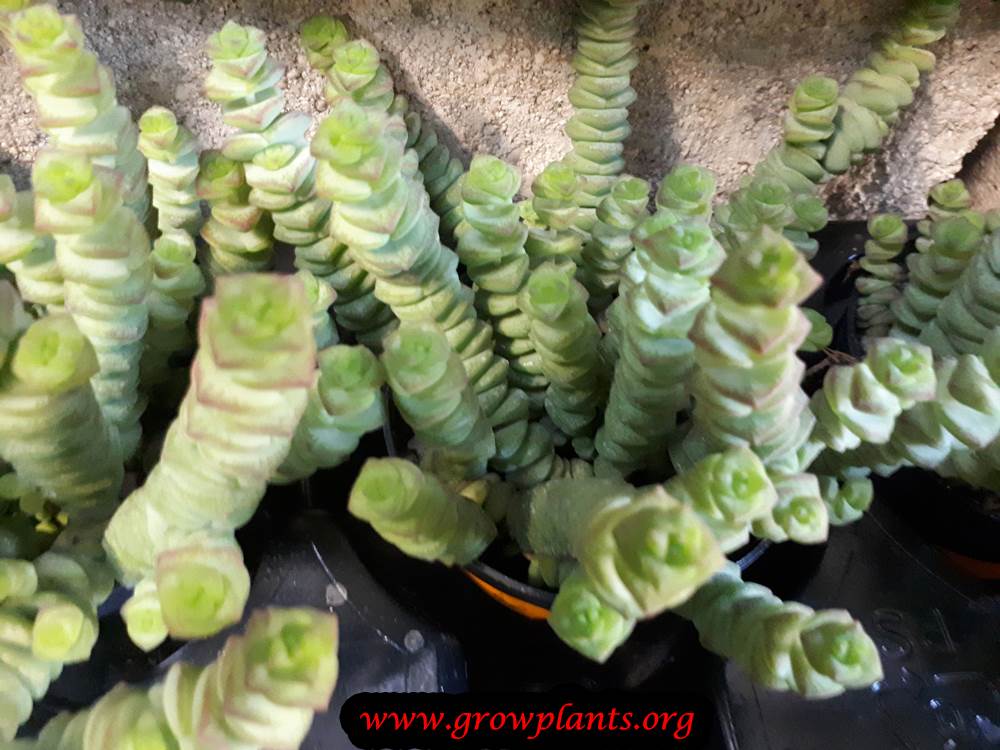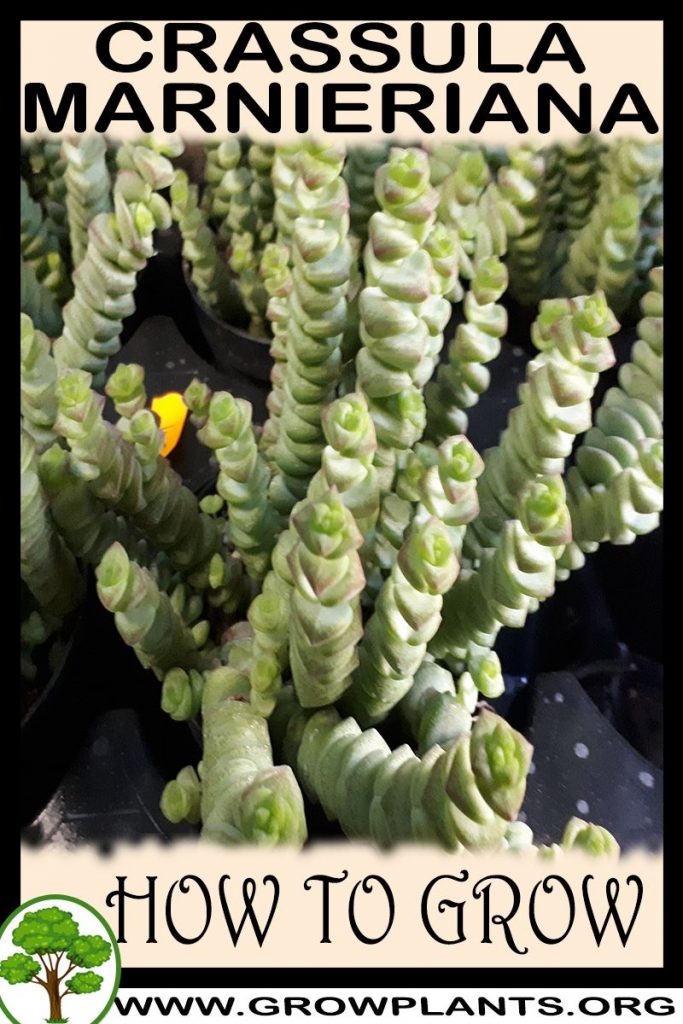
Plant Profile & Key Characteristics
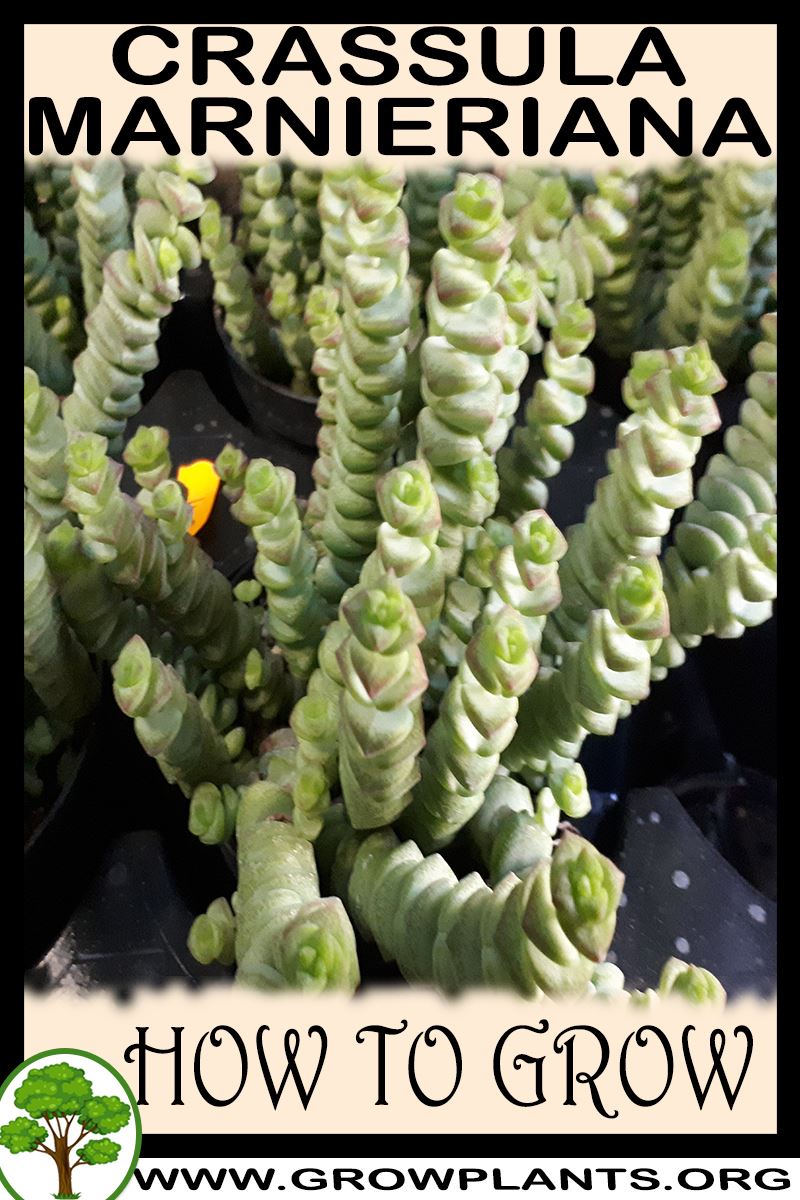
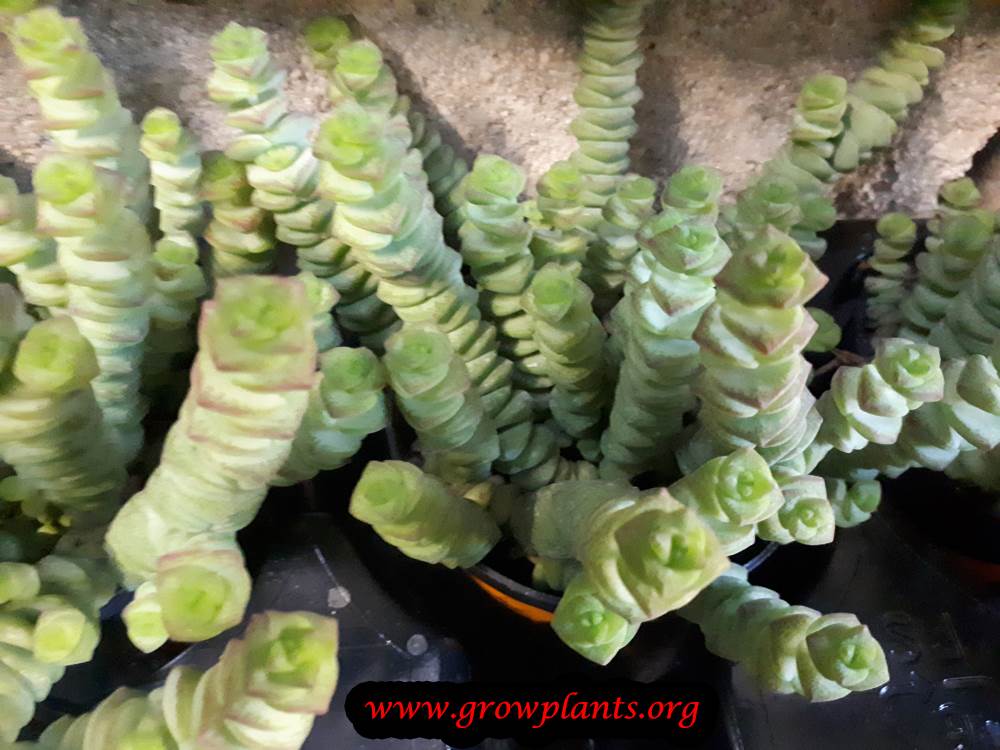
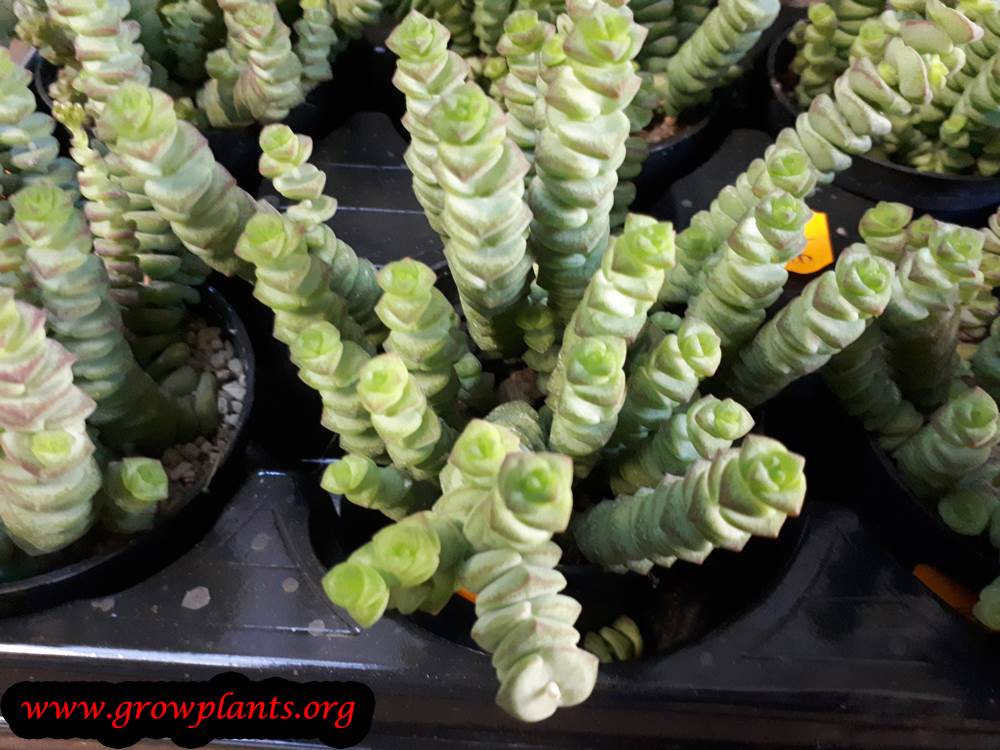
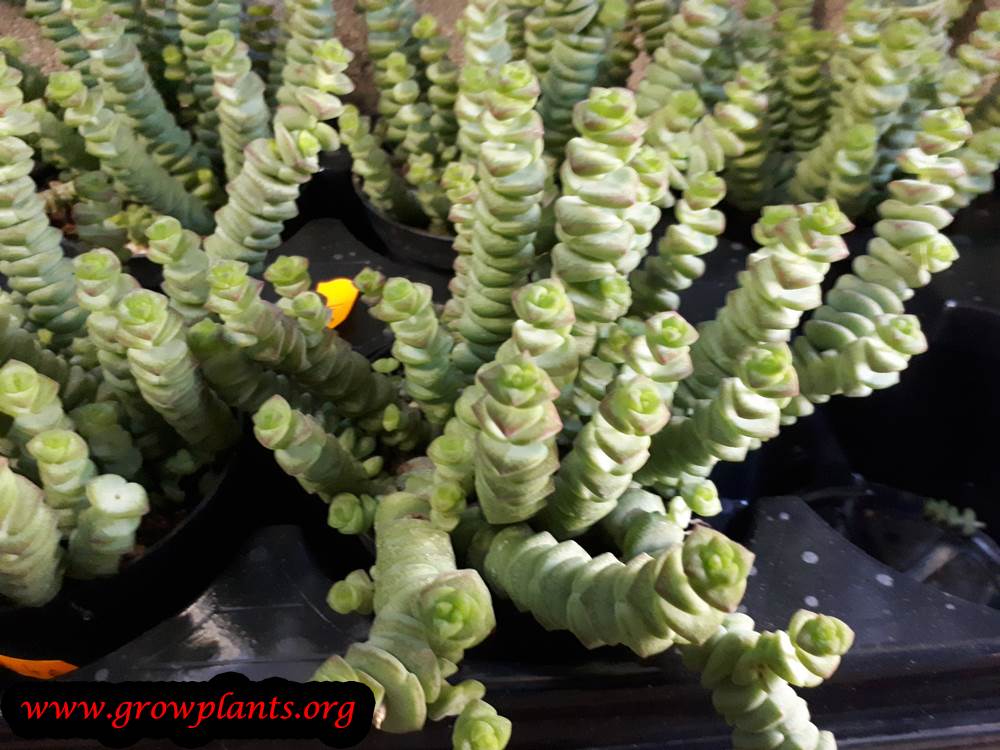
Overview: Crassula marnieriana (Jade Necklace / Chinese Pagoda) is a compact evergreen succulent subshrub reaching about 10–20 cm (4–8 in) tall, with green to red leaves with red margins, triangular and stacked in fours like beads along the stem. It is a slow-growing perennial grown as a drought-tolerant ornamental in rockeries and containers, or as a houseplant.
Quick Specifications
| Specification | Attribute |
|---|---|
| Plant Type / Life Cycle | Perennial succulent subshrub |
| Foliage Type | Evergreen |
| Mature Size | 10–20 cm (4–8 in) tall |
| Growth Rate | Slow |
| Root System | Shallow, fibrous |
| Toxicity | Toxic to pets (dogs, cats and horses) |
| Hardiness | USDA zones 10b+ |
Growth Form & Structure
- Height & Spread: Stays small at 10–20 cm (4–8 in) tall both in the ground and in pots; in a container use one at least 30% wider than the root ball and re-pot only every few years.
- Growth Habit & Form: Trailing to arching succulent with tightly stacked bead-like leaves, ideal for hanging displays.
- Lifespan & Maturity: Long-lived perennial; slow to establish, especially while young.
Anatomy & Physical Features
- Leaves & Foliage: Green to red leaves with red margins, triangular and stacked in fours like beads along the stem.
- Flower Characteristics: Small white to pink flowers in clusters at the stem tips in spring to summer.
Primary Uses & Landscape Value
- Functional & Ornamental Roles: Ornamental drought-tolerant succulent for rock gardens, succulent bowls, containers and as an easy indoor houseplant.
Care Guide: Planting, Soil & Watering
Overview: Crassula marnieriana is a hardy, drought-tolerant succulent that thrives in bright light and sharply drained, gritty soil, and it stores water in its fleshy leaves so it needs very little at the roots. Give it an airy, sandy or well-aerated mix that never stays wet, and let it dry out fully between waterings.
Quick Care Requirements
| Requirement | Ideal Condition |
|---|---|
| Planting Season | Year-round in frost-free climates; in cooler areas plant in spring through summer and avoid the cold of winter |
| Growth Rate | Slow — especially while the plant is young |
| Soil Type | Light, sandy, sharply drained succulent or cactus mix; add grit or perlite for aeration |
| Water Need | Low — let the soil dry out between waterings and never overwater |
Planting & Establishment
- Best Planting Season: Plant into warm soil during the warm season; in frost-free areas it can go in almost year-round, while in cooler climates plant in spring through summer and avoid winter cold and wet.
- How to Plant:
- Hole Preparation: Choose a spot with excellent drainage and dig a hole just wider than the root ball; in rainy locations grow on a raised bed or mound so the roots never sit in a puddle, which can quickly rot and kill the plant.
- Soil Amendments: Work in coarse sand, lava grit or perlite to open up the soil; keep organic matter light and place inert grit at the base so water drains freely.
- Planting Depth: Set the plant so the crown sits at the soil surface and keep the fleshy stem and lower leaves above soil level — burying them invites rot.
- Growth Speed & Expectations: Expect slow, compact growth, especially in the first years; steady bright light keeps the rosettes tight and well coloured.
Soil, Watering & Drainage Care
- Soil Mix & Drainage Needs: Use a light, sandy, fast-draining succulent mix; in wetter climates grow it in a pot with lava grit or another inert material at the bottom so water runs straight through and the roots stay dry. Sharp drainage is the single most important factor in preventing root rot.
- Watering Schedule & Technique:
- Young / Newly Planted: Water lightly after planting and keep only slightly moist while it settles in, letting the surface dry between waterings.
- Established: Water sparingly — only once the soil has dried out completely, and ideally when the leaves start to feel soft; overwatering is the most common cause of death.
- Seasonal Adjustments: Give a little more in prolonged heat and much less in cool or wet weather; keep it nearly dry through a cold winter.
Climate, Light & Hardiness
Crassula marnieriana (Jade Necklace) is a drought-tolerant succulent suited to subtropical, Mediterranean, and dry tropical climates, or grown indoors as a houseplant elsewhere. It prefers bright light with well-drained soil and is best kept frost-free, as it has little tolerance for freezing temperatures.
Quick Climate Specifications
| Climate Zones | Subtropical, Mediterranean, and dry tropical climates, or indoors as a houseplant |
|---|---|
| USDA Hardiness Zones | Approximately zone 10b and warmer |
| Optimal Temp Range | Warm, generally frost-free conditions |
| Cold Damage Begins | Foliage can be damaged as temperatures approach freezing |
| Approx. Survival Minimum | Site guidance describes the plant as better kept frost free, indicating little margin below 0°C (32°F) |
| Frost Tolerance | Low |
| Light Conditions | Full Sun to Full Shade with ample ambient light |
Sunlight & Light Exposure
Optimal Light Setup
Bright light, from full sun to a well-lit shaded spot, keeps the necklace-like foliage compact and well colored.
Direct Sun Requirement
Tolerates and generally benefits from direct sun; in very hot desert-like exposure, a little midday shade can help prevent scorch.
Shade & Heat Management
Full shade is tolerated only where light levels remain high, such as bright indoor spots; deep, dim shade leads to weak, stretched growth.
Best Exposure / Orientation
A sunny, south- or west-facing position outdoors, or a bright windowsill indoors, suits this succulent well.
Temperature Extremes & Hardiness
USDA Hardiness & Regional Limits
Site data places this plant at roughly zone 10b and warmer, reflecting genuine cold sensitivity rather than just a lifecycle habit; outside that range it is best grown in containers that can be moved indoors before frost.
Cold Damage & Winter Protection
Move container specimens indoors or under cover before frost; outdoor plantings in marginal areas benefit from a sheltered microclimate.
Frost Sensitivity
Low frost tolerance; the recommended practice is to keep it essentially frost-free.
Extreme Heat Tolerance
Handles heat and dry conditions well once established, as expected of a drought-tolerant succulent.
Wind, Humidity & Microclimate
Dry-Air Tolerance
Tolerates dry air comfortably, consistent with its succulent, drought-tolerant nature.
Rainfall & Seasonal Moisture
Prefers a drier climate pattern; excess rain and poor drainage are more likely to harm it than winter cold alone.
Microclimate Recommendations
Raised beds, pots with excellent drainage, or a sheltered container spot indoors during cold snaps all support healthy growth.
Growing in Pots, Balconies & Indoors
Crassula marnieriana (jade necklace) is a charming, compact trailing succulent, and the grower confirms it grows well as a houseplant. Give it a bright spot and lean, fast-draining soil and it is one of the easier succulents to keep indoors or in a container.
Quick Details
- Container Size: A pot only about 30% larger than the root ball – do not over-pot; step up gradually every few years (grower’s guidance)
- Indoor Suitability: A good houseplant in a bright position
- Best Spot: Full sun to half shade; tolerates shade if the light is strong, and a grow light is one way to provide that strength
- Soil & Drainage: Sandy, fast-draining mix – lava grit at the base, sandy soil on top, or perlite with peat; plenty of holes
- Watering in Pots: Small amounts – let it dry between waterings; overwatering will kill it
Indoors & On the Windowsill
- A good houseplant: The grower rates it as a genuine houseplant – it does well indoors given enough light. A ready-made cactus and succulent soil mix provides that structure without mixing it yourself.
- Light: Place it in the brightest spot you can; with strong light it even copes with some shade, but poor light makes it leggy.
- Overwintering: Keep it frost-free indoors over the cold season; it is not hardy.
- Safety: Crassula (jade family) is mildly toxic to cats and dogs if chewed, so keep it out of pets’ reach indoors.
On a Balcony or Patio
- Light & shelter: A bright balcony or patio suits it; it enjoys sun but appreciates some shelter from relentless rain.
- Drying pots: In containers the mix dries fast in heat – but with this plant, dry is safer than wet.
Choosing the Pot, Soil & Long-Term Care
- Pot & drainage: Use a pot only about 30% bigger than the root ball – too large is not useful; it is better to step up to a bigger pot every few years than to start big. Make sure there are enough drainage holes.
- Potting mix: Choose by rainfall – wetter conditions need sharper drainage. A sandy mix with a little organic matter, lava grit in the base and sandy soil on top works well; perlite with peat is another option.
- Feeding: Light and occasional – it is a lean feeder in a pot.
- Repotting: Mix loses structure over time, so refresh it every few years; with sandy, free-draining soil and no overwatering you can stretch this to five years or more.
Fertilizing & Feeding
A slow-growing succulent, Jade Necklace needs only occasional, light, low-nitrogen feeding during active growth; a source note about feeding it yearly is best read as ‘feed lightly and infrequently’ rather than a strict interval, and no feeding at all is needed once growth slows.
Quick Fertilizing Specs
| Feeding Level | Light feeder |
|---|---|
| Main Nutrient Priority | A low-nitrogen fertilizer formulated for succulents, used sparingly |
| Best Feeding Period | During the active growing season |
| Organic Options | A gritty, fast-draining succulent mix rather than rich organic matter |
| Reduce/Stop Feeding | Feeding stops once growth slows in cooler weather |
| Micronutrients | Rarely an issue given this slow, light-feeding growth habit |
| Soil pH | Prefers well-drained, gritty soil |
Feeding by Growth Stage
Active-season growth
Support slow, steady growth of the necklace-like trailing stems without pushing soft tissue.
| Nutrient direction | An occasional light, low-nitrogen feeding is enough for this slow-growing succulent; there’s no benefit to feeding on a strict fixed schedule. |
|---|---|
| Timing | During the plant’s active growing period. |
| Frequency | Feed sparingly – an occasional light feeding suits this slow grower better than a set routine. |
| Fertilizer types | A low-nitrogen fertilizer formulated for succulents, diluted well, A gritty, fast-draining mix as the primary growing medium |
| Precautions | Avoid frequent or rich feeding, which can cause soft, stretched growth and increase the risk of rot; hold back on watering until the leaves show they need it. |
Slow-season rest
Let the plant rest without pushing new growth when growth naturally slows.
| Nutrient direction | None – withhold fertilizer while growth is minimal. |
|---|---|
| Timing | During cooler weather or whenever growth visibly stalls. |
| Frequency | No feeding is needed at this stage. |
| Fertilizer types | No feeding at this stage while growth is slowed. |
| Precautions | Do not fertilize a resting plant; feeding without active growth can build up salts in the mix. |
Nutrient Deficiency Signs & Corrections
New stem segments are unusually small and pale, and growth all but stops even in the growing season.
| Possible causes | Very low available nutrients in an old, unrefreshed succulent mix, An extended stretch with no feeding at all, Roots that are pot-bound and can no longer take up nutrients well |
|---|---|
| Appears first on | Newest stem tips |
| What to check | Age of the growing mix, Feeding history, Whether the plant is due for repotting |
| Possible correction | Apply a diluted, low-nitrogen succulent fertilizer during active growth. |
New growth looks pale yellow instead of its normal green-and-red coloring.
| Possible causes | High, alkaline pH in the growing mix limiting iron availability, Waterlogged or poorly drained mix restricting root uptake, Alkaline irrigation water |
|---|---|
| Appears first on | Newest growth |
| What to check | Mix and water pH if testable, Drainage of the growing mix, Irrigation water source |
| Possible correction | Improve drainage, consider a less alkaline water source, and apply a chelated iron product per its label if the pattern continues. |
Leaf tips shrivel or blacken even though the plant has been watered appropriately.
| Possible causes | Fertilizer salt buildup from feeding more often than this light feeder needs, Mineral buildup from hard irrigation water, A growing mix that no longer drains freely |
|---|---|
| Appears first on | Leaf and stem tips |
| What to check | Recent fertilizer amount and frequency, Irrigation water quality, Drainage of the growing mix |
| Possible correction | Ease off feeding, flush the mix thoroughly with water, and resume only light, infrequent feeding. |
Pruning, Training & Seasonal Maintenance
Jade Necklace is a low, trailing succulent subshrub whose stems carry stacked, bead-like leaf pairs; it tolerates only light grooming, not heavy structural pruning. Cuts are mainly cosmetic and propagative – removing dead leaves, spent flower stems, and occasionally shortening an overlong trailing stem to keep the clump full rather than bare at the base. Because it stays evergreen and non-dormant in its safe growing zones, light trims can be made through most of the active season rather than a single fixed window, though the plant’s own slow growth (especially when young) means recovery from any cut is gradual.
Quick Pruning & Maintenance Specs
| Pruning Tolerance | Low–Moderate – light trims only, not a hard-pruning succulent |
| Primary Pruning Window | Active growth period (spring–summer) |
| Secondary Maintenance Window | After bloom, remove spent flower stalks |
| Typical Frequency | About once a year, plus spot-grooming as needed |
| Main Objective | Remove dead/shriveled leaves and spent bloom stalks, control trailing legginess |
| Young Plant Priority | Pinch tips to encourage branching and denser chains |
| Mature Plant Priority | Shorten or remove the oldest, most stretched-out trailing stems |
| Best Tool Type | Precision snips |
| Avoid Heavy Pruning During | Summer drought stress or right after transplant/repot |
Pruning by Plant Age & Size
Newly Established
Remove only any damaged leaves from transplant; let roots settle in before any shaping cuts.
Young / Formative
No formal training system applies; pinch stem tips to push branching low so the necklace-like chains fill out compactly rather than growing as a few long, sparse strands.
Mature / Established
Periodically shorten or remove the oldest, most stretched trailing stems to keep the clump full instead of leggy and bare-based; use removed material for propagation.
Seasonal Pruning Schedule
Ongoing Sanitary / Shaping
Objective: tidy appearance and generate propagation material. Remove dead or shriveled lower leaves and spent flower stems after bloom, and shorten overlong or bare trailing stems. Do not remove more than a small portion of a stem at once, since growth is naturally slow, especially in young plants. Response is a gradual rebranching rather than a fast flush; removing a spent bloom stalk does not affect the next round of flowering, since new blooms arise from stem tips rather than fixed old wood.
Special Growth to Remove
- Dead or shriveled leaves, cut or gently pulled at the base.
- Spent flower stems, once the white or pink clusters have finished.
Container & Small-Space Pruning
This species is grown mainly in pots or as a houseplant. Pinch and shorten trailing stems to keep the clump in proportion to its container; because growth is slow, especially when young, avoid frequent hard cutbacks that would set the plant back further – favor small, regular trims over one large cut.
Tools
Precision snips for all cuts – the thin, bead-like stems and dead leaves on a 10–20 cm (4–8 in) subshrub do not call for anything larger.
Tool Hygiene & Disease Risk
Routine – clean, sharp snips are sufficient. No significant transmissible disease is noted; the pest pressure listed (snails, slugs, aphids, mealybug) is not spread by pruning cuts.
Cut Placement & Technique
Pinch or cut just above a leaf pair or node so the stem can branch from that point. Take stem or leaf-base cuttings from removed material, since this species propagates readily from either, per its own propagation notes.
Heavy Pruning & Rejuvenation
Does not tolerate heavy rejuvenation pruning well, given its naturally slow growth, especially while young. Renew an overgrown, leggy plant gradually over a season or two rather than cutting the whole specimen back at once, or simply take cuttings from the best growth to start a fresh, denser plant.
Post-Pruning Care
Hold off watering immediately after a cut so the wound can dry slightly before the next watering, consistent with this plant’s own care guidance to water only once the leaves show they need it. Keep cut material out of standing moisture, and watch fresh regrowth for the mealybugs and aphids already noted as pest pressure.
Common Pruning Mistakes
- Cutting back hard and expecting a fast rebound on a naturally slow grower.
- Watering right after a fresh cut, inviting rot at the wound.
- Leaving spent flower stalks on through the season instead of removing them.
When NOT to Prune
Avoid pruning right after transplanting or repotting, until the plant re-establishes. Avoid heavy cutting during summer heat/drought stress or in cold, damp winter conditions when wounds are slow to callus.
Recommended Tools (by task)
Precision snips – the single tool needed for dead-leaf removal, spent bloom stems, shaping pinches, and taking propagation cuttings on this small, thin-stemmed succulent.
Propagation Guide
Crassula marnieriana (Jade Necklace) is easiest and most reliable from leaf or stem cuttings, per the site’s own care notes, though seed is also viable for this species and comes reasonably true-to-type. Propagation overall is easy, typical of Crassula succulents. Offsets (‘pups’) can also be used to start new plants. When taking leaf or stem cuttings, let them dry in a shaded spot for a few days before inserting them into the mix.
Quick Propagation Specs
| Best Propagation Method | Leaf or stem cuttings |
| Alternative Methods | Seed |
| Propagation Difficulty | Easy |
| Seed True-to-Type | Usually true-to-type |
| Vegetative True-to-Type | Yes |
| Best Propagation Season | Spring to summer |
| Seed Germination Time | 3–6 weeks |
| Germination Temperature | 23–27°C (73–80°F) |
| Seed Sowing Depth | 0.5cm (0.25in) |
Growing from Seed
Seed Handling & Viability
Store seed in a dry, dark place at room temperature until sowing.
Sowing Season
Spring after the last frost in hardiness zone 10a; spring to summer in zone 10b; spring to autumn in zone 11; possible all year in zone 12.
Sowing Depth & Orientation
Sow about 0.5cm (0.25in) deep in a light, sandy or well-ventilated, well-drained soil mix; overwatering at this stage can cause germination problems.
Germination Conditions
Keep the soil slightly moist but not saturated, in bright light (not necessarily direct sun), at around 23–27°C (73–80°F).
Germination Time
About 3–6 weeks.
Seedling Care
Keep seedlings in bright light with lightly moist, well-ventilated soil; space transplants roughly 2x2cm (1x1in) apart.
Stem Cuttings
Cutting Type
Short stem sections, cut from the middle of a stem.
Cutting Preparation
After cutting, let the piece rest a few days in a shaded spot to dry and callus slightly before inserting into soil.
Rooting Setup
Plant the callused cutting in soil and water lightly – keep moist but do not overwater.
Rooting Hormone
Not necessary; this Crassula roots readily from cuttings without it.
Rooting Time
Not specified on-site; allow a cautious few weeks for roots to establish, as is typical for Crassula stem cuttings.
Leaf & Root Cuttings
Cutting Preparation
Individual leaves can also be used – cutting at the base of the leaf tends to work better than cutting through the middle of the leaf.
Rooting Setup
As with stem cuttings, let the leaf dry and callus a few days in shade before placing it on or into the soil, then water lightly, keeping the mix moist but never waterlogged.
Regeneration & Limitations
New growth forms from the callused base of the leaf; avoid overwatering, which can rot the leaf before it roots.
Bloom & Flower Guide
Quick Details
- Bloom Season: Spring into summer
- Time to First Bloom: On mature plants only – this is grown mainly for its foliage and flowers shyly
- Flower Appearance: Small white or pink flowers gathered in clusters at the stem tips
- Edibility: Not edible – jade-type Crassula is toxic to cats and dogs; grown as an ornamental only
Detailed Blooming Overview
Crassula marnieriana (Jade Necklace or Chinese Pagoda) is grown above all for its stacked, bead-like leaves, but a settled, mature plant can top its stems with small flowers in spring. The blooms are little and starry, white to soft pink, and gather into neat clusters at the ends of the trailing stems. Flowering is a bonus here rather than the main event – the sculptural foliage is the draw.
Flower Characteristics
- Small, starry flowers in white or pink.
- Carried in clusters at the tips of the stems.
Bloom Care & Thinning
- Encouraging bloom: Bright light, snug roots and a cool, drier winter rest give the best chance of flowers on a mature plant.
- After flowering: Pinch off spent clusters to keep the plant looking neat.
- Safety: Keep the plant out of reach of cats and dogs, as jade-type Crassula is toxic to pets if chewed.
Pests, Diseases & Troubleshooting
Overview: Crassula are tough, drought-adapted succulents whose troubles are overwhelmingly cultural rather than pest-driven – the great majority of losses trace back to overwatering and poor drainage, not insects. The few pests that do matter (mealybug, including root mealybug, plus scale and mites) are sap-suckers that colonise leaf axils and roots. Manage this plant on the dry side, give it bright airy conditions, and inspect leaf joints and the root ball regularly.
Quick Troubleshooting Overview
| Issue / Pest | Main Symptom | Primary Solution |
|---|---|---|
| Mealybug | White cottony fluff in leaf axils; sticky honeydew, sooty mould | Dab with alcohol; isolate; horticultural oil / insecticidal soap |
| Root mealybug | Weak, stalled plant; white waxy deposits on roots at repotting | Bare-root, wash roots, refresh gritty mix, drench root zone |
| Soft scale | Brown limpet bumps on stems/leaves; honeydew | Scrape off; horticultural oil |
| Spider mite | Fine stippling, faint webbing, dull leaves in hot dry air | Raise humidity/airflow; insecticidal soap or oil |
| Root & stem rot | Soft, translucent, blackening base; leaves drop | Cut to firm tissue, dry, re-root; water far less |
| Edema | Corky brown blisters on undersides of leaves | Reduce watering; improve light and airflow |
Common Pests & Management
- Mealybug (Pseudococcus / Planococcus spp.):
- Symptoms: Slow-moving, soft insects hidden in the protected leaf axils and under lower leaves, coated in white cottony wax. They excrete sticky honeydew that turns black with sooty mould. Colonies sap vigour and cause puckered, distorted new growth. Do not confuse the natural chalky farina (bloom) on some Crassula with mealybug wax – mealybug wax is fibrous and clustered.
- Prevention & Control: Isolate the plant on discovery. Spot-treat individual insects by touching them with a cotton bud dipped in rubbing alcohol. For wider infestations, wet the whole plant with insecticidal soap or a light horticultural/neem oil, repeating every 7–10 days to catch hatchlings; get spray right down into the axils. Encourage good airflow and avoid over-feeding with nitrogen, which fuels soft, susceptible growth.
- Root mealybug (Rhizoecus spp.):
- Symptoms: An easily-missed underground relative that lives on the roots. Above ground the plant simply looks tired, refuses to grow, or wilts despite correct watering. Tip it out of the pot and you find white waxy ‘mould-like’ deposits and insects clinging to roots and the inner pot wall.
- Prevention & Control: Bare-root the plant, wash all soil off the roots under a tap, and discard the old mix and ideally the pot (or wash it in hot soapy water). Repot into fresh, sharply-drained gritty mix. A soil drench of insecticidal soap or a systemic at the roots gives extra security. Quarantine any newly-bought succulents and check their roots – this pest travels in nursery soil.
- Soft brown scale (Coccus hesperidum):
- Symptoms: Small, flat to domed brown discs stuck firmly to stems and leaf surfaces; they don’t move. Like mealybug they produce honeydew and sooty mould. Heavy scale causes yellowing and slow decline.
- Prevention & Control: Physically scrape or rub scale off with a fingernail or alcohol-dipped bud. Follow up with horticultural oil, which smothers the protected insects; two or three applications spaced out are usually needed. Keep the plant uncrowded so you can see and reach all surfaces.
- Spider mites (Tetranychus urticae):
- Symptoms: A hot, dry, still-air problem. Leaves lose their gloss and show fine pale stippling; in bad cases you’ll see gossamer webbing between leaves and mites like moving dust on the undersides. Indoor plants over winter heating are most at risk.
- Prevention & Control: Improve airflow and lift humidity a little (mites hate it). Rinse the plant or wipe leaves, then treat with insecticidal soap or a light oil, repeating to break the fast life-cycle. Avoid dusty, stagnant windowsills.
- Slugs & snails (Gastropoda):
- Symptoms: Mostly an outdoor/greenhouse issue in mild wet spells: irregular chewed notches on leaf margins and slime trails, worst on soft new growth and low leaves near the soil.
- Prevention & Control: Keep the surface of the pot clean and free of debris where they shelter, water in the morning so surfaces dry by night, and use barriers such as grit or copper tape around pots. Hand-pick after dark or use iron-phosphate bait sparingly. Damage is usually cosmetic on a healthy succulent.
Diseases & Fungal Issues
- Root, crown & stem rot (Pythium, Phytophthora, Fusarium, Erwinia):
- Symptoms: The number-one killer of Crassula. The base of the stem or the roots turn soft, brown-to-black, translucent and foul; lower leaves yellow, go mushy and drop at a touch. It follows soggy soil, cold-wet conditions, or water sitting in the crown.
- Treatment & Management: Prevention is everything: fast-draining gritty mineral mix, pots with drainage holes, and a strict ‘dry out fully between waterings’ regime, especially in cool weather when the plant is barely growing. If rot appears, cut back into clean firm green tissue with a sterile blade, dust the cut, let it callus, and re-root the healthy top as a cutting. Discard badly-collapsed plants and their soil.
- Powdery mildew (Erysiphaceae):
- Symptoms: A dusty white coating on leaves and stems, sometimes with distortion, in humid, crowded, poorly-ventilated conditions. Less common than rot but seen on stressed indoor plants.
- Treatment & Management: Space plants for airflow, cut humidity, and remove affected leaves. A potassium-bicarbonate or sulphur-based fungicide, or a light horticultural oil, clears mild cases. Correct the crowding/humidity so it doesn’t recur.
- Botrytis (grey mould) (Botrytis cinerea):
- Symptoms: Fuzzy grey-brown mould on damaged, dead or congested tissue in cool damp air; spreads from spent leaves into living stems.
- Treatment & Management: Remove dead leaves and faded flower stalks promptly, improve ventilation, and avoid overhead watering late in the day. Cut out affected tissue into clean growth.
Growing Difficulties & Abiotic Problems
- Overwatering / poor drainage:
- Cause & Symptoms: By far the commonest problem. Constantly moist soil suffocates roots and invites rot; leaves become yellow, soft, translucent and swollen, then drop. Cool, low-light periods make it far worse.
- Correction Strategy: Grow in a gritty, free-draining mineral mix in a pot with holes. Water thoroughly then let the soil dry out completely before the next drink; water even less in cool or dark spells. When in doubt, wait.
- Edema (oedema):
- Cause & Symptoms: Corky, rusty-brown blisters and raised bumps, mainly on leaf undersides, caused by roots taking up water faster than the leaves can transpire it – typically over-watering in cool, humid, low-light conditions.
- Correction Strategy: Reduce watering, increase light and air movement, and the plant will grow out of it. Existing blisters are permanent but new growth will be clean.
- Etiolation (stretching):
- Cause & Symptoms: In too little light the plant stretches, with pale, widely-spaced leaves and a weak, leaning stem that loses its compact form and colour.
- Correction Strategy: Move to the brightest position available (bright indirect to some direct sun, acclimatised gradually). Leggy stems can be cut back and the tips re-rooted to restart a tight plant.
- Sunburn / scorch:
- Cause & Symptoms: Whitish, tan or brown dry patches appear when a plant kept in shade is moved abruptly into intense direct sun, or is scorched behind hot glass.
- Correction Strategy: Acclimatise to stronger light over one to two weeks. Provide light shade during the fiercest midday sun in hot climates. Scorched patches are permanent scars, not disease.
- Cold & frost damage:
- Cause & Symptoms: These are tender succulents; frost turns leaves translucent, then black and mushy as the cells rupture.
- Correction Strategy: Keep above freezing; bring under cover before frost. Let lightly-touched plants dry and warm, then remove collapsed tissue and allow regrowth from surviving stems.
What Helps – Products & Tools
For this plant, reach first for physical and cultural fixes – a cotton bud and rubbing alcohol for spot mealybug, a repot into fresh gritty mix for root pests or rot, and better light and airflow for most abiotic troubles. Where a product is warranted, suitable types are insecticidal soap and light horticultural or neem oil for mealybug, scale and mites; a soil drench for root mealybug; and a sulphur or potassium-bicarbonate fungicide for the rare powdery mildew. Grit or copper barriers deter slugs. Spray oils in the cool of evening to protect the plant and pollinators.