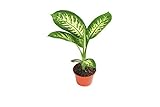


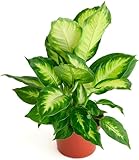



Plant Profile & Key Characteristics
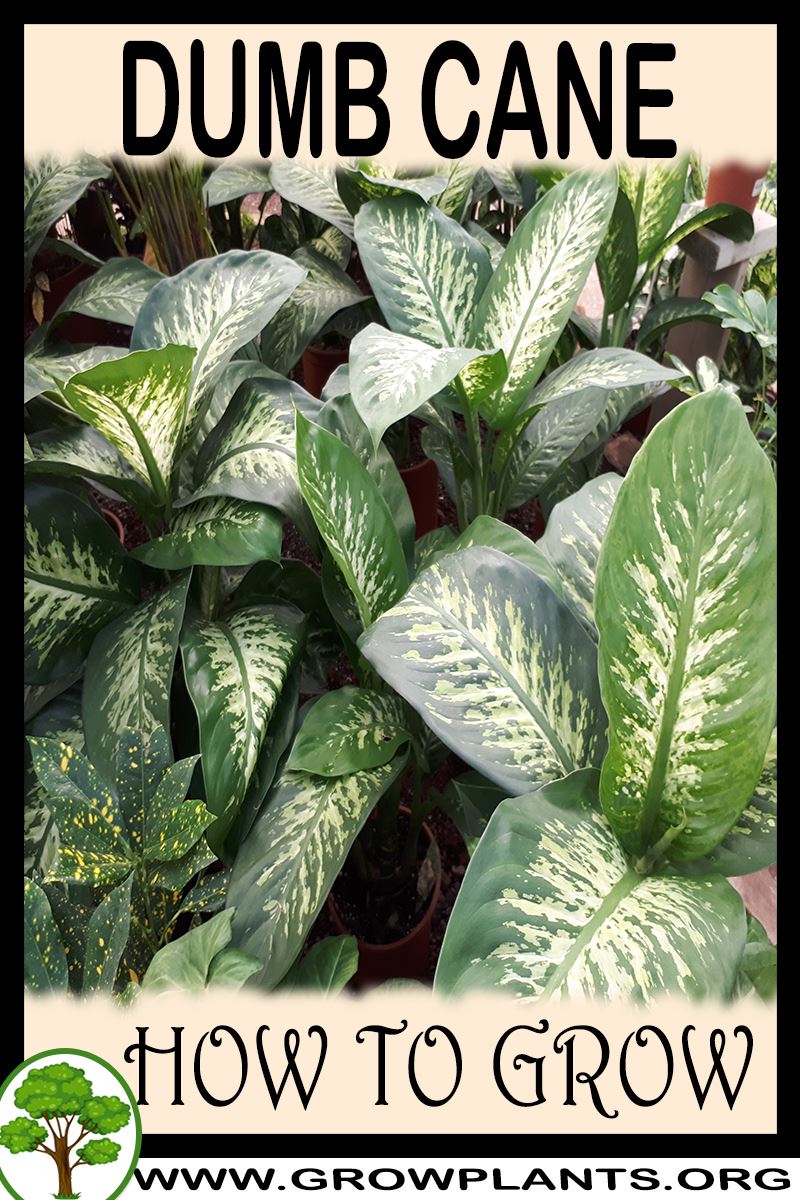
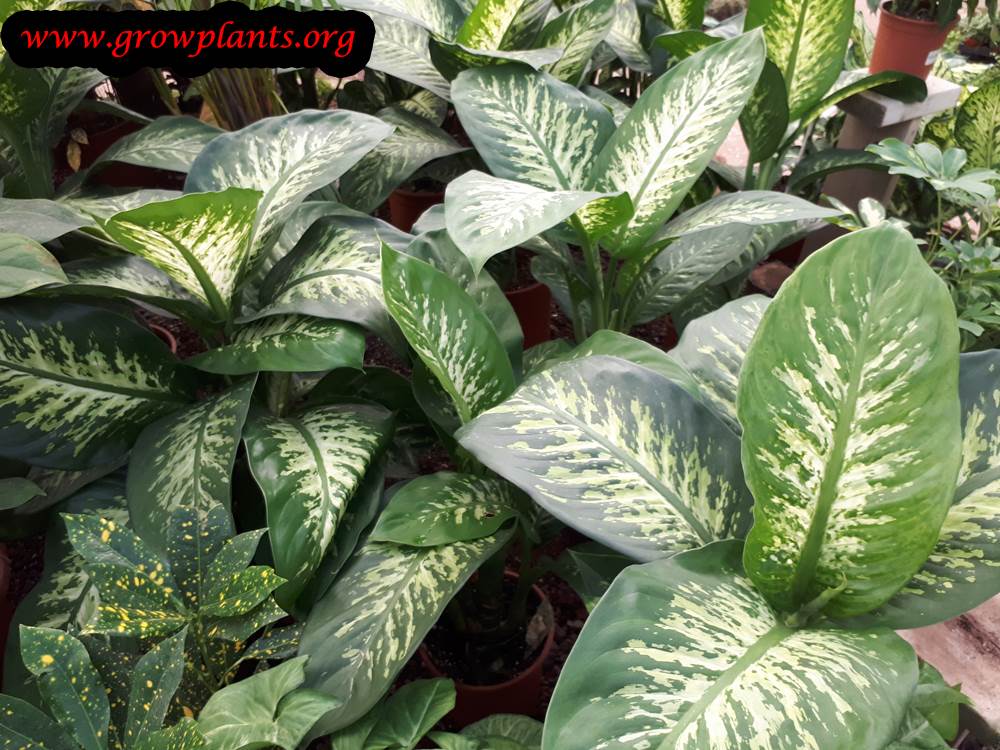
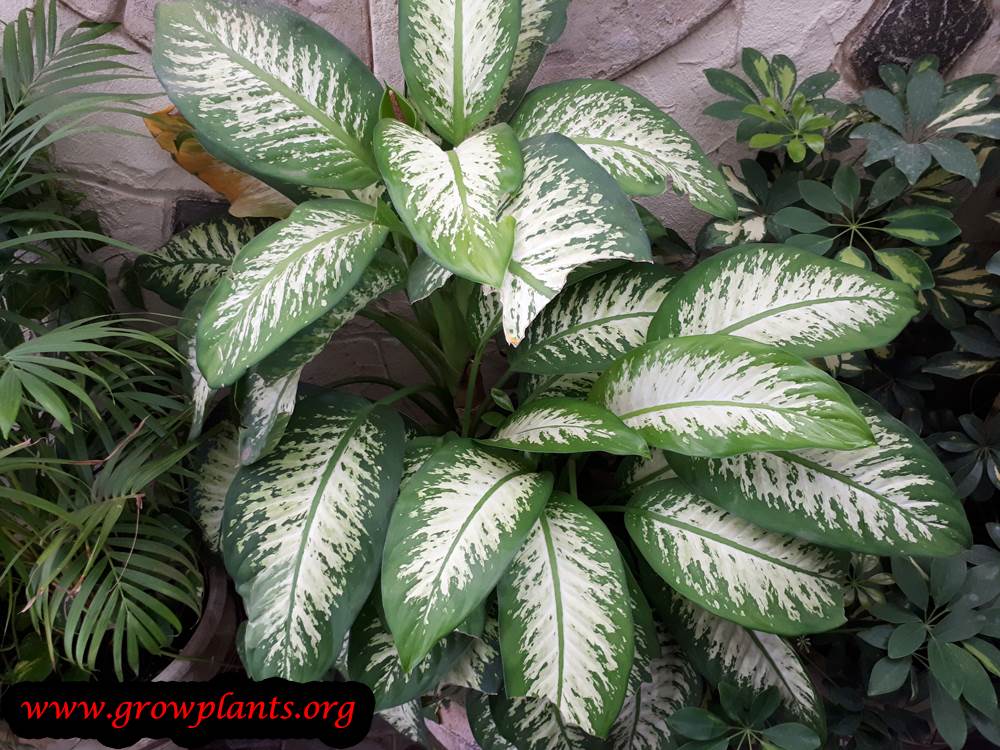
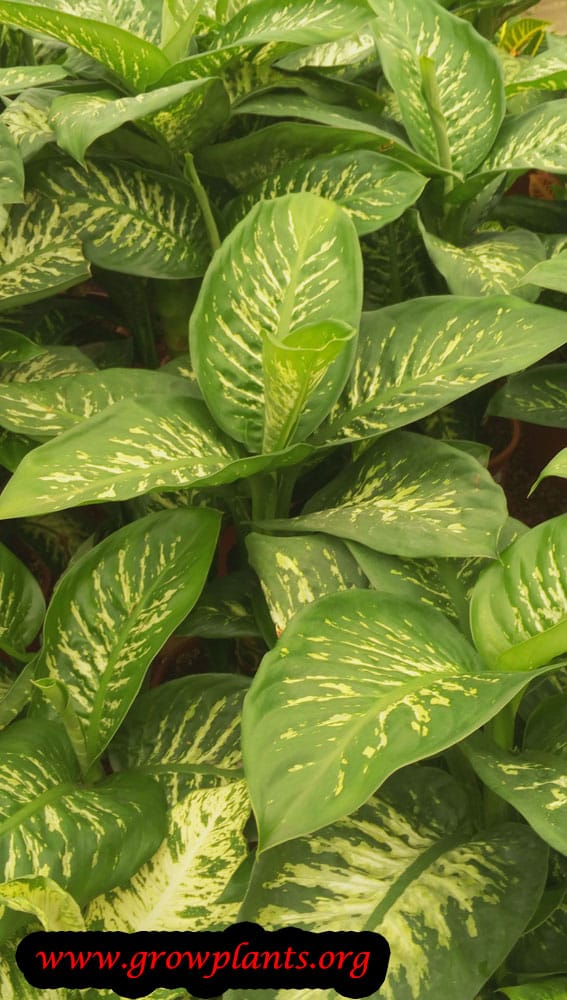
Overview: Dumb cane (Dieffenbachia) is an evergreen herbaceous perennial reaching 0.5-1.5 m (20-60 in), grown as a popular ornamental foliage houseplant for its large variegated leaves. Its sap contains calcium oxalate that numbs the mouth if chewed, giving the common name, and it should be kept from children and pets.
Quick Specifications
| Specification | Attribute |
|---|---|
| Plant Type / Life Cycle | Perennial (herbaceous) |
| Foliage Type | Evergreen |
| Mature Size | 0.5-1.5 m tall (20-60 in) |
| Growth Rate | Slow |
| Toxicity | Toxic (sap contains calcium oxalate raphides; numbs mouth and throat) |
| Hardiness | USDA zone 10+ (usually grown indoors) |
Growth Form & Structure
- Height & Spread: Reaches 0.5-1.5 m (20-60 in); commonly grown indoors and in containers.
- Growth Habit & Form: Upright, cane-like stems topped with a crown of broad leaves; stems become bare and cane-like with age.
- Lifespan & Maturity: Long-lived, slow-growing foliage plant.
Anatomy & Physical Features
- Leaves & Foliage: Large green leaves boldly variegated with pink, yellow or white, the plant’s main ornamental feature.
- Flower Characteristics: Aroid inflorescence of a white-green spadix within a pale bract, produced only on old plants and not the reason it is grown.
Primary Uses & Landscape Value
- Functional & Ornamental Roles: Ornamental indoor foliage plant and container specimen for shaded, warm positions.
Care Guide: Planting, Soil & Watering
Overview: Dumb cane is a tropical foliage plant grown in shade or as a houseplant, needing warmth above about 7C and consistently moist, rich soil. It likes moderate, even watering and some humidity.
Quick Care Requirements
| Requirement | Ideal Condition |
|---|---|
| Planting Season | Year-round in warmth |
| Growth Rate | Slow |
| Soil Type | Rich, moisture-retentive, well-drained soil |
| Water Need | Moderate – keep evenly moist, not soggy |
Planting & Establishment
- Best Planting Season: Plant or pot up at any time of year, keeping it above about 7C.
- How to Plant:
- Hole Preparation: Dig a hole matching the root ball, or pot into a container a size up from the roots.
- Soil Amendments: Use a rich, organic, moisture-retentive but free-draining mix.
- Planting Depth: Set at the original soil level, keeping the stem base at the surface.
- Growth Speed & Expectations: A slow grower reaching 0.5-1.5 m; it rarely flowers and is grown mainly for its variegated leaves.
Soil, Watering & Drainage Care
- Soil Mix & Drainage Needs: Use a peat-based or rich potting mix that stays moist yet drains, provide some humidity, and never let it stand in water.
- Watering Schedule & Technique:
- Young / Newly Planted: Keep the soil evenly moist while it establishes.
- Established: Water when the top of the soil begins to dry, keeping it consistently moist but not waterlogged.
- Seasonal Adjustments: Water less in cool winter months and more in warm active growth; mist or raise humidity in dry air.
Climate, Light & Hardiness
Dumb cane (Dieffenbachia) is a tropical evergreen foliage plant grown outdoors in tropical, subtropical and mild Mediterranean climates and widely as a shade-loving houseplant. It is frost tender, with the site setting a warmth floor above about 7°C (45°F).
Quick Climate Specifications
| Climate Zones | Tropical, subtropical, mild Mediterranean; elsewhere a houseplant |
|---|---|
| USDA Hardiness Zones | 10+ (site data) |
| Optimal Temp Range | Approx. 18–27°C (64–81°F) |
| Cold Damage Begins | Below about 10–12°C (50–54°F) growth slows and foliage suffers |
| Approx. Survival Minimum | Keep above roughly 7°C (45°F) (site data); no frost tolerance |
| Frost Tolerance | None |
| Light Conditions | Half shade to full shade (bright, indirect light) |
Sunlight & Light Exposure
Optimal Light Setup
Bright, indirect light in half to full shade keeps the variegation strong without scorching.
Shade & Heat Management
Direct sun burns the leaves; filtered light or shade is best.
Best Exposure / Orientation
Indoors, an east- or north-facing window; outdoors, dappled shade under trees or a covered patio.
Temperature Extremes & Hardiness
USDA Hardiness & Regional Limits
Site data places it in zone 10 and warmer outdoors. This is the outdoor cold limit - relevant in warm climates - while cooler regions grow it as a houseplant.
Cold Damage & Winter Protection
Growth stalls below about 10–12°C (50–54°F), and the site sets a practical floor near 7°C (45°F); below that, chilling damages the foliage and stems. Keep it away from cold winter draughts and glass.
Frost Sensitivity
No frost tolerance - any freeze is fatal.
Extreme Heat Tolerance
Good in warm, humid heat with shade and steady soil moisture.
Wind, Humidity & Microclimate
Humidity Preferences
Prefers moderate to high humidity; the site notes it likes a little humidity and moist soil.
Dry-Air Tolerance
Moderate; dry air browns leaf edges.
Wind Tolerance
Low; the large soft leaves tear and dry in wind and draughts.
Microclimate Recommendations
A warm, humid, brightly shaded and draught-free spot kept above the site's warmth floor is ideal.
Growing in Pots, Balconies & Indoors
Dumb cane is a popular leafy houseplant – the grower rates it for both indoors and pots. It brings bold, variegated foliage to a bright but shaded room.
Quick Details
- Container Size: A medium pot for a 0.5-1.5 m (20-60 in) plant
- Indoor Suitability: Yes – a classic foliage houseplant
- Best Spot: Half to full shade – bright, indirect light
- Soil & Drainage: Airy, free-draining mix
- Watering in Pots: Average – let the top dry between waterings
Indoors & On the Windowsill
- A foliage houseplant: Give bright, indirect light – direct sun scorches and deep shade weakens it; turn it so it grows evenly.
- Warmth & humidity: Keep it warm and away from cold draughts; it enjoys a little humidity.
- Safety: Its common name is a warning – the sap is strongly irritant and causes painful mouth swelling if chewed. Keep well away from children and pets.
On a Balcony or Patio
- Warm shade: Only for a warm, shaded, sheltered spot outdoors – no direct sun and no cold.
- Water: Keep it lightly moist with good drainage.
Choosing the Pot, Soil & Long-Term Care
- Pot & mix: A pot with strong drainage and an airy mix; no standing saucer water.
- Feeding: Feed lightly through the growing season – pots leach faster.
- Repotting: Refresh the mix every year or two; leggy canes can be cut back or air-layered.
Growing this plant in a greenhouse
A greenhouse can give dumb cane frost protection, cold protection, humidity control and extra warmth. In the right climate it may also be kept growing through winter, depending on how much warmth and light are provided.
Greenhouse at a glance
| Greenhouse suitability | Good - clearly useful |
|---|---|
| Main benefits | frost protection, cold protection, humidity control, extra warmth |
| Season extension | earlier spring & later autumn |
| Outdoor protection advisable below | about 12°C |
| Maintain greenhouse minimum | around 12°C for active growth |
| Suitable types | heated greenhouse, polycarbonate greenhouse |
| Heating | Heating is recommended in cold climates for continuous growth. |
Related greenhouse guides
- Greenhouses: How to Choose the Right Greenhouse
- Best Greenhouse Heaters
- Greenhouse Climate Control: Temperature, Ventilation and Humidity
- Polycarbonate Greenhouses: What to Look for Before Buying
Fertilizing & Feeding
A light to moderate feeder: feed with a balanced fertilizer only while the plant is in active growth, and hold off in low light or cool conditions. A slow-growing warm-room houseplant in moist mix; keep feeding light and dilute during active growth and hold back in cool, dim conditions.
Quick Fertilizing Specs
| Feeding Level | Light to moderate feeder |
|---|---|
| Main Nutrient Priority | Balanced feeding with adequate nitrogen for healthy foliage |
| Best Feeding Period | Spring through the warm, brighter active growing season |
| Organic Options | Compost or worm castings worked into the potting mix, plus a diluted complete liquid feed |
| Reduce/Stop Feeding | Hold off feeding in low light, cool weather, and right after repotting |
| Micronutrients | Usually supplied by a complete fertilizer; correct only diagnosed iron or manganese shortages |
| Soil pH | Slightly acidic to near neutral |
Feeding by Growth Stage
Settling in after potting or repotting
Let fresh roots establish in new mix before any feeding begins.
| Nutrient direction | None – withhold fertilizer while the plant is not in active growth. |
|---|---|
| Timing | The first weeks after potting up or repotting into fresh mix. |
| Frequency | No feeding at this stage; resume only when active growth returns. |
| Fertilizer types | No feeding at this stage; hold off fertilizing until active growth resumes. |
| Precautions | Withhold fertilizer now; feeding a plant that is not actively growing wastes nutrients and risks salt buildup in the root zone. |
Warm-season active growth
Support steady, well-colored foliage while the plant is actively growing.
| Nutrient direction | A balanced complete fertilizer with adequate nitrogen to fuel leafy growth, kept dilute for a containerized plant. |
|---|---|
| Timing | Through the warm, brighter part of the year when new leaves are forming. |
| Frequency | Light, regular feeding spread across the active growing season. |
| Fertilizer types | A balanced complete liquid fertilizer, applied dilute, Compost or worm castings top-dressed into the mix |
| Routine trace nutrients | iron, manganese |
| Precautions | Keep feeding light and always water first; overfeeding a containerized foliage plant scorches roots and dulls leaf color. |
Low-light or cool-season slowdown
Let the plant coast through low light or cool conditions without pushing weak growth.
| Nutrient direction | None – withhold fertilizer while the plant is not in active growth. |
|---|---|
| Timing | During short winter days, low indoor light, or cool spells when growth stalls. |
| Frequency | No feeding at this stage; resume only when active growth returns. |
| Fertilizer types | No feeding at this stage; hold off fertilizing until active growth resumes. |
| Precautions | Withhold fertilizer now; feeding a plant that is not actively growing wastes nutrients and risks salt buildup in the root zone. |
Nutrient Deficiency Signs & Corrections
Older, lower leaves fade to pale green or uniform yellow and overall growth slows.
| Possible causes | low available soil nitrogen, nitrogen leaching from heavy watering or rain, thin, low-organic-matter soil |
|---|---|
| Appears first on | older, lower leaves |
| What to check | recent feeding history, soil organic matter, watering and drainage |
| Possible correction | Apply a nitrogen-containing complete fertilizer and build soil organic matter, then water evenly. |
New leaves yellow between the veins while the veins themselves stay green.
| Possible causes | low available iron, high soil pH locking up iron, cold or waterlogged roots limiting uptake |
|---|---|
| Appears first on | youngest leaves |
| What to check | soil pH, drainage and root health, whether symptoms are on new growth |
| Possible correction | Correct soil pH and improve drainage, then apply a chelated iron product per its label if new growth stays chlorotic. |
Leaf margins and tips brown or scorch and growth stalls despite adequate watering.
| Possible causes | fertilizer salt buildup in the root zone, under-watering that concentrates salts, excessive or too-frequent feeding |
|---|---|
| Appears first on | leaf margins and tips |
| What to check | recent fertilizer amounts, watering consistency, drainage, especially in containers |
| Possible correction | Ease off feeding, water thoroughly to flush accumulated salts from the root zone, then return to lighter feeding. |
Pruning, Training & Seasonal Maintenance
Dumb cane is an evergreen aroid grown as an upright cane foliage plant; over time it drops its lower leaves and becomes bare and top-heavy, so the main pruning job is a rejuvenating cut-back that forces fresh shoots from the remaining stem (the cut sections also re-root readily). Otherwise it is simple grooming of dead leaves. Above all, this plant demands hygiene caution for the operator: its sap contains calcium oxalate crystals that cause intense mouth, skin and eye irritation — the very trait that gives it the name “dumb cane.”
Quick Pruning & Maintenance Specs
| Pruning Tolerance | High — resprouts strongly after cane cut-back |
| Primary Pruning Window | Warm growing months for cane cut-back |
| Secondary Maintenance Window | Ongoing grooming year-round |
| Typical Frequency | Occasional cut-back as the cane goes leggy; routine leaf grooming |
| Main Objective | Rejuvenate a leggy cane; remove old leaves; propagate |
| Young Plant Priority | Remove damaged leaves only |
| Mature Plant Priority | Cut back leggy cane to force basal/nodal shoots |
| Best Tool Type | Bypass secateurs / precision snips; a sterile knife for clean cane cuts |
| Avoid Heavy Pruning During | Cool, low-light periods when regrowth is slow |
Pruning by Plant Age & Size
Newly Established
Remove only damaged leaves while it establishes.
Young / Formative
No structural training — let the single cane build. Groom the odd yellowing lower leaf.
Mature / Established
When the cane grows tall and bare, cut it back to about 10–15 cm above the soil; new shoots break from the remaining nodes and the base. The removed top can be cut into node sections and rooted to make new plants.
Seasonal Pruning & Ongoing Maintenance
Evergreen and non-seasonal indoors — groom dead leaves whenever they appear and time the rejuvenating cane cut-back for warm, bright months for the fastest, strongest reshoot.
Structural Pruning & Training
The one structural technique is topping (beheading) a leggy cane to force lower shoots, optionally re-rooting the top to double the plant. It flowers only after many years; remove any spathe to keep energy in the foliage.
Special Growth to Remove
Remove dead and yellowing leaves and any rare spent spathe. Basal offsets can be kept for a fuller clump or divided off. There is no woody suckering to manage.
Container & Small-Space Pruning
Always potted: use the periodic cane cut-back to keep a compact, leafy plant instead of a bare stalk, and pot up rooted tops or divisions to refresh the display.
Tools
Precision snips for leaves; bypass secateurs or a clean, sharp knife for the cane cut-back and for slicing node sections to propagate.
Tool Hygiene & Disease Risk
Increased — but the primary risk here is chemical, not microbial. The copious sap is a hazardous irritant: wear gloves and eye protection, avoid touching your face, keep offcuts away from children and pets, and wash blades, surfaces and your hands thoroughly afterwards. Keep the blade sharp and clean so cuts are quick and clean.
Cut Placement & Technique
Cut the cane cleanly just above a node so shoots can break from the nodes below; do not cut so low that no nodes remain. Let the wet cut end air-dry (callus) before the plant is over-watered.
Heavy Pruning & Rejuvenation
Well tolerated — a hard cut-back is the standard way to rejuvenate a leggy dumb cane, and it reliably resprouts from the retained stem and base. This is its main pruning event, done every few years as needed.
Post-Pruning Care
Keep the cut plant warm, in bright indirect light, and on the drier side until new shoots appear, so the fresh wound does not rot. No feeding is needed to trigger regrowth.
Common Pruning Mistakes
- Pruning without gloves and eye protection and suffering the caustic sap.
- Cutting the cane so low that no nodes remain to resprout.
- Over-watering the freshly cut stump and rotting it.
When NOT to Prune
Avoid cutting back in cold, dim conditions when it will not reshoot, and never prune where the sap could reach children or pets without protection in place.
Recommended Tools (by task)
- bypass_secateurs — the cane cut-back on a leggy plant.
- precision_snips — routine leaf grooming.
- grafting_knife — a clean, sterile blade for smooth cane cuts and node sections when propagating.
Propagation Guide
Dumb cane is propagated vegetatively from tip cuttings or leafless cane sections laid on a moist medium, with air layering to rejuvenate a leggy stem and division of basal offsets; seed is rarely used. Wear gloves — the sap is a severe irritant — and propagation is easy.
Quick Propagation Specs
| Best Propagation Method | Stem / cane cuttings |
| Alternative Methods | Air layering; division |
| Propagation Difficulty | Easy |
| Seed True-to-Type | Variable |
| Vegetative True-to-Type | Yes |
| Best Propagation Season | Warm conditions, year-round indoors |
| Cutting Rooting Time | Several weeks in warmth |
Stem Cuttings
Cutting Type
Tip cuttings, or sections of leafless cane about 5–8 cm, each with a node.
Cutting Preparation
Wear gloves and avoid the toxic sap; let the cut surface dry briefly.
Rooting Setup
Lay cane sections horizontally, half-buried in a warm, moist medium, or set tip cuttings upright; keep humid.
Rooting Hormone
Optional.
Rooting Time
Usually several weeks under warmth.
Air & Ground Layering
For a tall, bare stem, girdle it below the leafy top, wrap the wound in moist moss, and sever below the new roots after several weeks.
Division, Offsets, Pups & Suckers
Separate rooted basal offsets from the parent and pot them individually.
Growing from Seed
Seed is seldom available or used, and seedlings are variable; vegetative methods are far more practical.
Bloom & Flower Guide
Quick Details
- Bloom Season: Can bloom at any time of year, but only on old, mature plants
- Time to First Bloom: After many years
- Flower Appearance: A greenish or cream-white spathe partly wrapping a spadix
- Edibility: Not edible – the sap contains calcium oxalate raphides that cause intense burning and swelling of the mouth and throat
Detailed Blooming Overview
Grown for its bold foliage, dumb cane blooms only occasionally and after many years, producing a modest green-to-cream spathe around the spadix.
Flower Characteristics
- Spadix wrapped by a green or white-to-cream spathe.
Bloom Care & Thinning
- Managing the bloom: The bloom is usually removed to keep energy in the leaves.
- Safety: Handle with care and always wash your hands – the sap is strongly irritant and the name “dumb cane” comes from the throat swelling it can cause.
Pests, Diseases & Troubleshooting
Overview: Dumb cane (Dieffenbachia) is a popular tropical foliage aroid grown indoors. Its usual pests are the indoor sap-suckers – spider mites in dry air, mealybugs, scale, aphids and thrips – while its most damaging diseases are bacterial: leaf spot and a fast soft rot in warm, wet, overwatered conditions. Most everyday complaints, though, are abiotic: brown tips and yellowing from watering, humidity and light. Note the sap contains calcium-oxalate crystals that burn the mouth and skin.
Quick Troubleshooting Overview
| Issue / Pest | Main Symptom | Primary Solution |
|---|---|---|
| Bacterial leaf spot / soft rot | Water-soaked, foul-smelling collapsing tissue | Reduce leaf wetness, remove infected parts, dry culture, copper |
| Spider mites | Fine stippling and webbing in dry air | Raise humidity, wipe/hose leaves, oil/soap |
| Mealybugs | White cottony tufts in axils and undersides | Alcohol swab, horticultural oil, isolate |
| Scale | Brown bumps on stems/leaves, honeydew | Scrape off, horticultural oil |
| Thrips / aphids | Silvery streaks or sticky distorted growth | Sticky traps, insecticidal soap |
| Brown leaf tips | Tips brown from low humidity/salts/fluoride | Raise humidity, flush salts, low-fluoride water |
Common Pests & Management
- Spider Mites (Tetranychus urticae):
- Symptoms: Fine pale stippling giving a dull, greyish cast, with delicate webbing beneath, in the dry air of heated rooms; leaves fade and drop.
- Prevention & Control: Raise humidity, wipe or hose the leaf undersides, and isolate new plants. Horticultural oil or insecticidal soap, repeated, for active infestations.
- Mealybugs (Planococcus, Pseudococcus spp.):
- Symptoms: White cottony tufts in leaf axils, on undersides and among roots; honeydew, sooty mould and stunted, distorted growth.
- Prevention & Control: Dab with an alcohol-tipped swab, wipe leaves, and drench roots if infested; horticultural oil or insecticidal soap repeated at intervals, and quarantine new plants.
- Scale Insects (Coccus, Aspidiotus spp.):
- Symptoms: Brown or tan limpet-like bumps along stems and leaf midribs; honeydew and yellowing.
- Prevention & Control: Scrape off gently, prune badly infested leaves, and apply horticultural oil to smother crawlers; repeat.
- Thrips (Frankliniella, Heliothrips spp.):
- Symptoms: Silvery flecking and streaking with dark frass specks on leaves; distorted new growth and a virus-spreading risk.
- Prevention & Control: Blue/yellow sticky traps to monitor, remove badly affected leaves, and spray insecticidal soap or spinosad; isolate infested plants.
- Fungus Gnats (Bradysia spp.):
- Symptoms: Small black flies running over the soil surface; larvae in constantly wet, peaty mix nibble roots and weaken young plants.
- Prevention & Control: Let the top of the mix dry between waterings, use yellow sticky traps and a Bti (mosquito-bit) drench or a sand top-dressing to break their cycle.
Diseases & Fungal Issues
- Bacterial Leaf Spot & Soft Rot (Erwinia (Pectobacterium), Xanthomonas, Pseudomonas):
- Symptoms: Water-soaked, translucent spots with yellow halos that enlarge fast, and a mushy, foul-smelling rot of stems and leaves in warm, wet, overwatered conditions – the most serious dumb-cane disease.
- Treatment & Management: No cure once advanced: cut out infected tissue well into healthy growth with a sterile blade, reduce watering and leaf wetness, improve airflow, and isolate the plant. A copper spray slows leaf-spot spread; discard plants with a rotted crown.
- Anthracnose & Fungal Leaf Spot (Colletotrichum, Myrothecium, Cephalosporium spp.):
- Symptoms: Brown-to-tan spots, often with dark or yellow margins and concentric rings, starting at leaf tips and margins; spread by splashing water.
- Treatment & Management: Avoid overhead watering, remove spotted leaves, and improve airflow; a copper or labelled fungicide protects new growth under heavy pressure.
- Root Rot (Pythium, Phytophthora):
- Symptoms: Yellowing, wilting and a soft, blackened stem base and roots in soggy, poorly drained mix.
- Treatment & Management: Water only when the top of the mix dries, use a free-draining aroid mix and a pot with drainage, and repot out of sodden soil; remove rotted roots.
- Dasheen Mosaic Virus (Dasheen mosaic potyvirus (aphid-vectored)):
- Symptoms: Feathery pale-green/yellow mosaic, streaking and mild distortion of leaves; incurable and spread by aphids and propagation.
- Treatment & Management: No cure – control aphids, do not propagate from symptomatic plants, and discard badly affected ones; buy clean stock.
Growing Difficulties & Abiotic Problems
- Brown Leaf Tips & Margins:
- Cause & Symptoms: Low humidity, salt/fertiliser build-up, or fluoride and chlorine in tap water scorch the leaf tips and edges brown.
- Correction Strategy: Raise humidity, flush the pot periodically to leach salts, feed lightly, and use rain, filtered or low-fluoride water; trim dead tips to a natural shape.
- Yellowing from Over/Under-watering:
- Cause & Symptoms: Overwatering yellows and drops lower leaves and rots roots; drying out wilts and browns them.
- Correction Strategy: Water when the top few centimetres are dry, ensure free drainage, and keep evenly – not constantly – moist; empty saucers of standing water.
- Cold Draughts & Sunburn:
- Cause & Symptoms: Below ~13C or in cold draughts leaves yellow and drop; sudden strong direct sun bleaches and scorches the foliage.
- Correction Strategy: Keep warm (above ~16C) and out of draughts, and give bright indirect light – acclimatise gradually if increasing light.
- Irritant Sap (handling caution):
- Cause & Symptoms: Calcium-oxalate crystals in the sap burn the mouth, throat and skin – the source of the name ‘dumb cane’.
- Correction Strategy: Keep away from children and pets, and wear gloves when cutting; wash any sap off skin promptly.
What Helps – Products & Tools
Indoors, favour gentle tools: horticultural oil and insecticidal soap (and alcohol swabs) for mites, mealybugs and scale, sticky traps and spinosad for thrips, Bti and drying the mix for fungus gnats, and a copper spray plus a sterile blade for bacterial and fungal leaf spots. A humidity tray and low-fluoride water fix most brown-tip complaints. Handle the irritant sap with gloves.