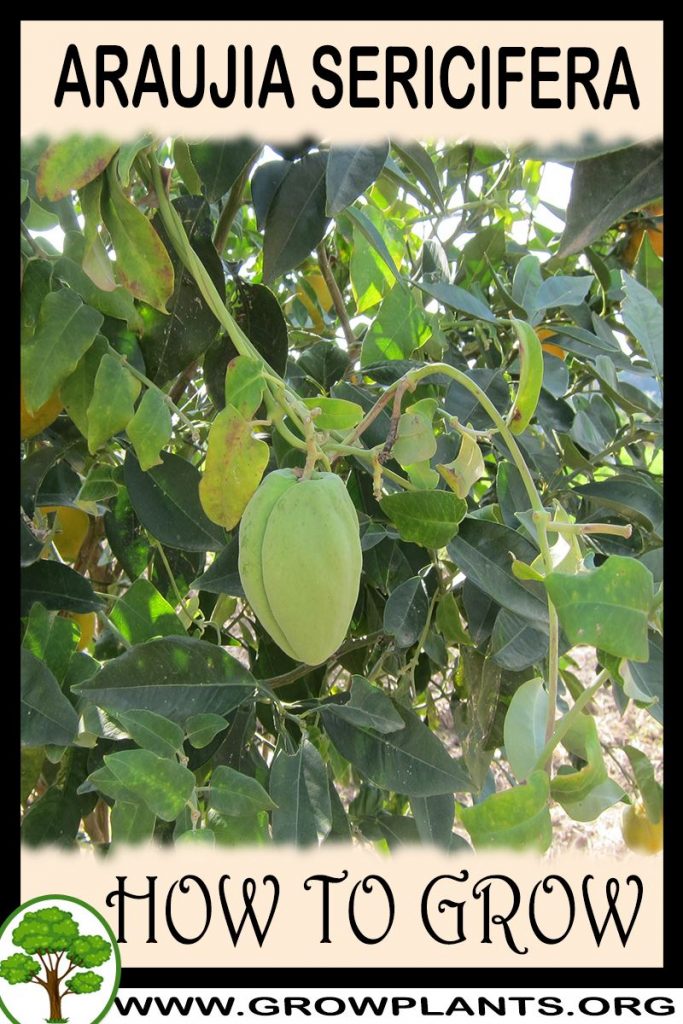
Plant Profile & Key Characteristics
Overview: Araujia sericifera (moth plant) is an evergreen perennial vine reaching 1-3 m (3-10 ft), grown as an ornamental, drought-tolerant hedge or screening climber. It is a fast, twining plant that can become invasive and carries a milky latex; its green fruit is poisonous.
Quick Specifications
| Specification | Attribute |
|---|---|
| Plant Type / Life Cycle | Perennial (vine) |
| Foliage Type | Evergreen |
| Mature Size | 1-3 m (3-10 ft) climbing |
| Growth Rate | Fast |
| Toxicity | Toxic (milky latex; fruit poisonous) |
| Hardiness | USDA zone 10+ |
Growth Form & Structure
- Height & Spread: Climbs 1-3 m (3-10 ft) in the ground and can also be grown in containers.
- Growth Habit & Form: Vigorous twining vine that clothes supports and hedges; can escape and become invasive.
- Lifespan & Maturity: Perennial and fast to fill its space once established.
Anatomy & Physical Features
- Leaves & Foliage: Green, egg-shaped to elliptic leaves; broken stems exude a milky white latex.
- Flower Characteristics: White-and-pink five-petalled flowers in clusters that trap visiting moths, giving the common name.
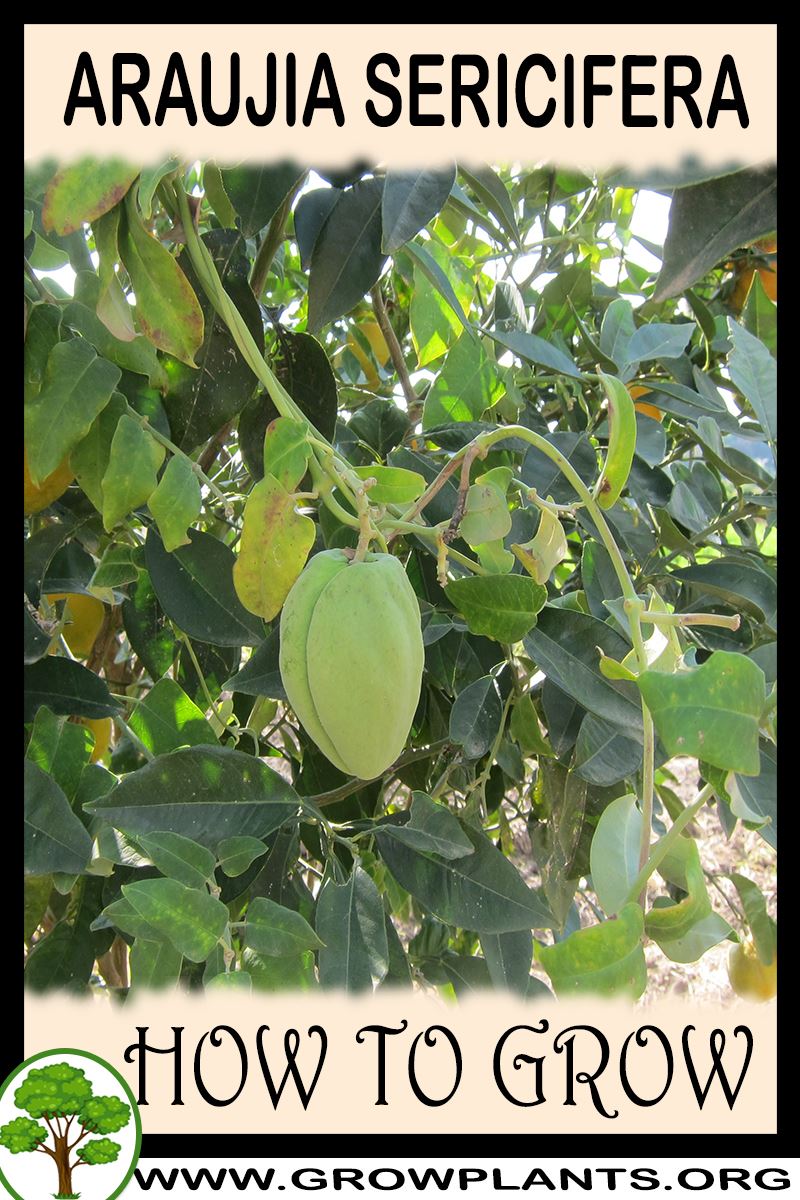
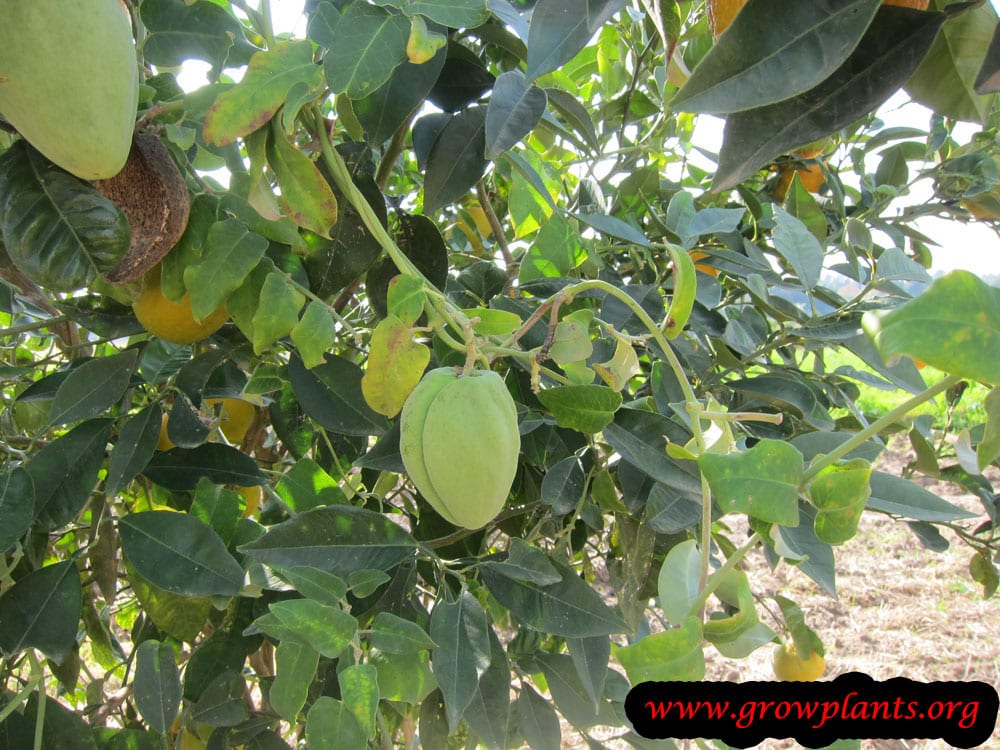
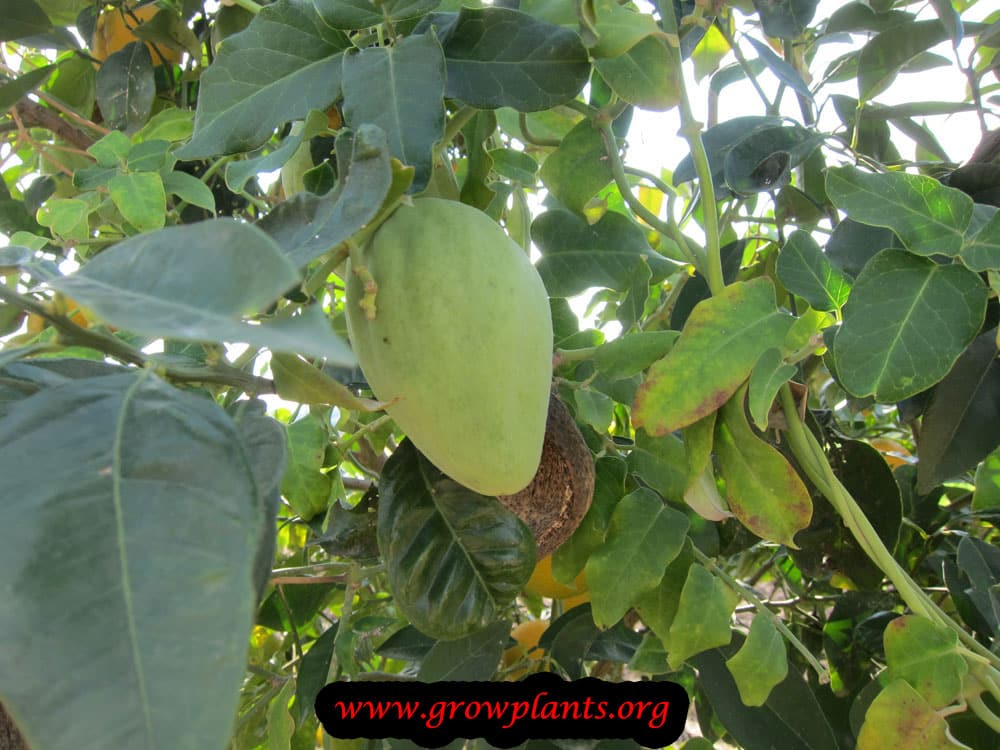
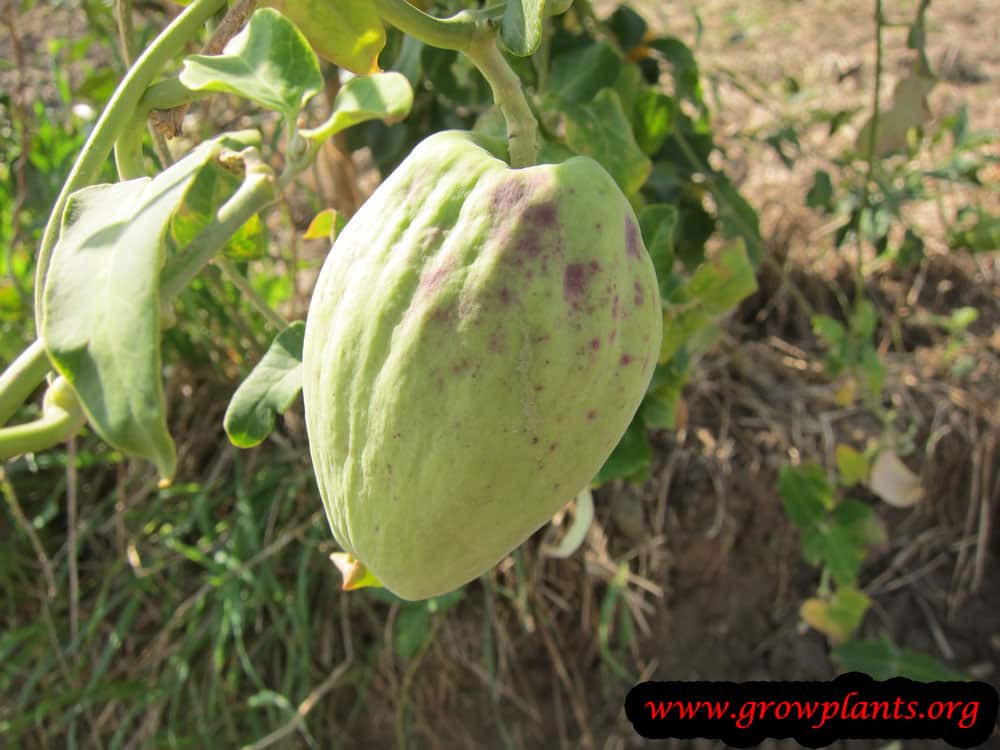
- Fruit Profile: Large egg-shaped green pod containing silky-tufted seeds; poisonous.
Primary Uses & Landscape Value
- Functional & Ornamental Roles: Ornamental screening or hedge climber and traditional medicinal plant; best sited with care because of its invasive tendency.
Care Guide: Planting, Soil & Watering
Overview: Araujia sericifera is a vigorous, drought-tolerant evergreen vine that grows in full sun to part shade and needs only well-drained soil. It is undemanding, wanting low to moderate water once established.
Quick Care Requirements
| Requirement | Ideal Condition |
|---|---|
| Planting Season | In the mild season – autumn, winter or spring in frost-free zones (10+) |
| Growth Rate | Fast |
| Soil Type | Well-drained soil, undemanding |
| Water Need | Low to Moderate – let the soil dry between waterings |
Planting & Establishment
- Best Planting Season: Plant in the milder months (autumn to spring) in its frost-free range so it settles before summer heat.
- How to Plant:
- Hole Preparation: Dig a hole about the width of the root ball on free-draining ground and provide a support for it to climb.
- Soil Amendments: Little enrichment is needed; just make sure the soil drains freely.
- Planting Depth: Set the plant at its original soil level, keeping the stem base at the surface.
- Growth Speed & Expectations: A fast grower reaching 1-3 m and quickly covering a support.
Soil, Watering & Drainage Care
- Soil Mix & Drainage Needs: Almost any well-drained soil suits it; in a container use a free-draining mix. It grows readily, so give it room.
- Watering Schedule & Technique:
- Young / Newly Planted: Water regularly during establishment.
- Established: Once settled it is drought-tolerant – water sparingly, letting the soil dry between waterings.
- Seasonal Adjustments: A little more in prolonged summer drought; minimal in cool weather.
Climate, Light & Hardiness
Araujia sericifera (moth plant) is a vigorous evergreen climbing vine of warm subtropical, Mediterranean and desert-fringe climates, growing in full sun to half shade. It is drought-tolerant and heat-hardy but frost-tender, so it is limited to essentially frost-free areas.
Quick Climate Specifications
| Climate Zones | Tropical, subtropical, Mediterranean and desert margins |
| USDA Hardiness Zones | Approx. 10+ |
| Optimal Temp Range | Warm, roughly 18–30°C (64–86°F) |
| Cold Damage Begins | Around 2–5°C (36–41°F) |
| Approx. Survival Minimum | Near 0°C (32°F) briefly; hard frost kills top-growth |
| Frost Tolerance | Very Low |
| Light Conditions | Full sun to half shade |
| Wind Tolerance | Moderate |
Sunlight & Light Exposure
Optimal Light Setup
It flowers and climbs most vigorously in full sun but also grows in half shade, which is one reason it establishes and spreads so readily.
Temperature Extremes & Hardiness
USDA Hardiness & Regional Limits
Reliable outdoors only in roughly zone 10 and warmer, where winters are essentially frost-free. Its vigour and self-seeding make it invasive in mild climates, so the cold limit is also a useful natural check.
Cold Damage & Winter Protection
Cool weather slows it, chilling injury begins around 2–5°C (36–41°F), and frost cuts back or kills the soft top-growth; an established root may resprout after a light frost in marginal areas.
Frost Sensitivity
Frost tolerance is very low - it belongs to frost-free gardens or the warmest, most sheltered corners of marginal ones.
Extreme Heat Tolerance
It is thoroughly heat-tolerant and, being drought-adapted, keeps growing through hot, dry spells that check less rugged climbers.
Wind, Humidity & Microclimate
Dry-Air Tolerance
As a drought-tolerant species it copes well with dry air and low humidity.
Microclimate Recommendations
A warm, sunny, frost-free wall or fence suits it; in cooler areas the warmest sheltered microclimate is essential, though note its potential to escape and spread.
Growing in Pots, Balconies & Indoors
Araujia (cruel plant or moth vine) is a vigorous evergreen climber with milky sap, reaching 1-3 m. It is not a houseplant, but it can be grown in a large pot against a sunny wall or trellis. It can be an invasive weed in mild climates, so contain it and remove the seed pods.
Quick Details
- Container Size: A large pot, roughly 15-30 L (4-8 gal), with a trellis (general guide)
- Indoor Suitability: Not a houseplant – a vigorous climber that wants full sun
- Best Spot: Full sun to half shade, with support to climb
- Soil & Drainage: Free-draining mix; it is fairly drought-tolerant
- Watering in Pots: Water sparingly to moderately – let the top dry between waterings
Indoors & On the Windowsill
- Houseplant: The grower’s answer is No – it is a fast, twining climber, not a room plant.
- Windowsill growing: Not suitable; it quickly outgrows a sill and needs a trellis outdoors.
On a Balcony or Patio
- Light & wind: Give it a sunny, sheltered wall or railing with a trellis to climb; it copes with some shade. Pots dry fast in sun but it tolerates dryness well.
- Practicalities: Provide sturdy support and cut off the large seed pods to stop it self-seeding and spreading.
Choosing the Pot, Soil & Long-Term Care
- Pot & drainage: A large pot with a trellis and strong drainage; Use a pot with strong drainage holes and skip a standing-water saucer to avoid root rot; terracotta breathes and dries out faster, while glazed or plastic pots hold moisture longer.
- Potting mix: Fill with a well-aerated, organic-rich medium – a quality potting mix, or peat/coir blended with perlite or vermiculite for free drainage.
- Feeding: Feed sparingly – it is naturally vigorous; Potted plants use up their soil quickly because watering leaches nutrients away, so feed a little more often than plants in open ground through the growing season.
- Repotting: Top up fresh mix each season and renew the soil or pot up about every couple of years, lightly trimming the root ball and top growth of established plants.
- Safety: The milky sap is an irritant and the plant is toxic if eaten – keep the sap off skin and eyes and keep it away from children and pets.
Growing this plant in a greenhouse
A greenhouse can give araujia sericifera frost protection, cold protection and protection from rain.
Greenhouse at a glance
| Greenhouse suitability | Conditional - depends on your climate |
|---|---|
| Main benefits | frost protection, cold protection, protection from rain |
| Season extension | earlier spring & later autumn |
| Outdoor protection advisable below | about 5°C |
| Maintain greenhouse minimum | around 5°C for active growth |
| Suitable types | unheated greenhouse, polycarbonate greenhouse, lean-to |
| Heating | Heating is optional - useful mainly for winter growing in cold areas. |
Related greenhouse guides
- Greenhouses: How to Choose the Right Greenhouse
- Best Lean-To Greenhouses
- Polycarbonate Greenhouses: What to Look for Before Buying
Fertilizing & Feeding
A light feeder: a modest starter feeding and an occasional light balanced feeding through the warm season are plenty for this vigorous, drought-tolerant vine.
Quick Fertilizing Specs
| Feeding Level | Light feeder |
|---|---|
| Main Nutrient Priority | Balanced feeding; this vigorous vine needs little |
| Best Feeding Period | Spring through the warm growing season |
| Organic Options | Compost and organic matter |
| Reduce/Stop Feeding | Stop feeding through the cool season |
| Micronutrients | Usually met by a complete fertilizer; correct only diagnosed issues |
| Soil pH | Slightly acidic to near neutral; tolerates a range |
Feeding by Growth Stage
Establishment
Get the young vine rooted and starting to climb.
| Nutrient direction | A balanced complete fertilizer to establish roots and early shoots. |
|---|---|
| Timing | At planting and as the vine establishes. |
| Frequency | A modest starter feeding at establishment. |
| Fertilizer types | A balanced complete fertilizer, Compost worked into the planting area |
| Precautions | Keep early feeding moderate; this vigorous vine needs little encouragement once established. |
Warm-season active growth
Support healthy climbing growth and foliage through the warm season.
| Nutrient direction | Light balanced feeding sustains the vine without forcing rampant growth. |
|---|---|
| Timing | Through the warm active growing season. |
| Frequency | An occasional light feeding during active growth. |
| Fertilizer types | A balanced complete fertilizer, A light compost top-dressing |
| Precautions | Go easy; this is a fast, drought-tolerant vine that can grow aggressively when overfed. |
Cool-season slowdown
Let the vine coast through cool weather without pushing new growth.
| Nutrient direction | None – withhold fertilizer while the plant is not in active growth. |
|---|---|
| Timing | During the cool-season slowdown. |
| Frequency | No feeding at this stage. |
| Fertilizer types | No feeding at this stage; hold off fertilizing until active growth resumes. |
| Precautions | Do not fertilize during the cool-season lull; feed again when warm-season growth returns. |
Nutrient Deficiency Signs & Corrections
Older, lower leaves fade to pale green or uniform yellow and overall growth slows.
| Possible causes | low available soil nitrogen, nitrogen leaching from heavy watering or rain, thin, low-organic-matter soil |
|---|---|
| Appears first on | older, lower leaves |
| What to check | recent feeding history, soil organic matter, watering and drainage |
| Possible correction | Apply a nitrogen-containing complete fertilizer and build soil organic matter, then water evenly. |
The youngest leaves turn pale or yellow between green veins while older leaves stay greener.
| Possible causes | high or alkaline soil pH locking up iron, waterlogged or poorly aerated roots, genuinely low available iron |
|---|---|
| Appears first on | new, youngest leaves |
| What to check | soil pH, drainage and root health, whether symptoms favor the newest growth |
| Possible correction | Correct soil pH toward the plant’s preferred range and apply a chelated iron product per its label. |
Leaf margins brown or scorch and growth stalls despite adequate watering.
| Possible causes | fertilizer salt buildup in the root zone, under-watering that concentrates salts, excessive or too-frequent feeding |
|---|---|
| Appears first on | leaf margins and tips |
| What to check | recent fertilizer amounts, watering consistency, drainage, especially in containers |
| Possible correction | Ease off feeding, water thoroughly to flush accumulated salts, then return to lighter feeding. |
Pruning, Training & Seasonal Maintenance
Moth plant is a vigorous evergreen twining vine that tolerates hard cutting well, so pruning has two aims: keeping the tangle contained and trained on its support, and — critically — removing the pods before they ripen, because this is a declared invasive whose parachute seeds spread on the wind. It flowers on the current season’s new growth, and the plant bleeds a milky, irritant sap, so gloves and eye care matter more than cut timing.
Quick Pruning & Maintenance Specs
| Pruning Tolerance | High — resprouts vigorously from hard cuts |
| Primary Pruning Window | Early spring, before the new flush, to shape and contain |
| Secondary Maintenance Window | After flowering, to strip developing pods |
| Typical Frequency | Ongoing containment; at least one hard cut a year |
| Main Objective | Contain size and prevent seeding |
| Young Plant Priority | Select and tie in a few main stems on the support |
| Mature Plant Priority | Thin tangled growth; remove all seed pods |
| Best Tool Type | Bypass secateurs; loppers for thick old stems |
| Avoid Heavy Pruning During | Not timing-critical, but avoid when sap contact is unavoidable near eyes |
Pruning by Plant Age & Size
Newly Established
Remove only broken shoots and begin directing the twining stems onto the trellis or wire.
Young / Formative
Training is by cane selection and tying-in: choose a few strong leaders to clothe the support and remove weak, crossing whippy growth. Pinching side shoots keeps it bushy rather than running.
Mature / Established
Once established the priority shifts to containment — thin out the congested interior, cut wayward runners back to the framework, and clear every pod. Left alone it smothers hosts and seeds prolifically.
Seasonal Pruning Schedule
Early spring (pre-growth): cut back to the trained framework to control size before the vine surges; expect strong regrowth and abundant flowering on the new shoots.
Summer canopy management: shorten runaway runners to keep it in bounds.
Post-flowering: the key sanitary task — remove the green egg-shaped pods before they split, or the plant reseeds widely.
Flowering & Fruiting Wood
Flowers form on the current season’s new growth in spring and summer, so a hard cut in late winter or early spring does not sacrifice bloom — it drives the fresh flowering wood. The reproductive concern is the pod: because it flowers on new growth you can prune freely, but you must then follow up to strip the resulting pods.
Structural Pruning & Training
Select a small number of main stems, remove crossing and inward tangles, and keep height and spread checked on the support. Thinning helps — an open framework is easier to inspect for pods than a dense mat.
Special Growth to Remove
- Seed pods: remove every one before ripening — the single most important cut on this plant for containment.
- Runaway runners: cut back to the framework; the vine is own-root, so there are no rootstock suckers to police.
Container & Small-Space Pruning
Growing it in a pot helps limit spread. Keep it compact by regular pinching and shortening, but it stays vigorous — a container does not tame its seeding, so pod removal is still essential.
Tools
Bypass secateurs handle the leafy stems; loppers deal with thick woody bases on an old vine. Soft ties and stakes are used to train the leaders. No saw or hedge shears are appropriate.
Tool Hygiene & Disease Risk
Disease transmission risk is routine — clean, sharp blades suffice. The real hazard is the copious milky latex, which irritates skin and eyes: wear gloves and eye protection and wash sap off tools and hands, but this is protective equipment, not a disinfection issue.
Cut Placement & Technique
Use thinning cuts back to a junction or main stem for containment; where you want bushier regrowth, cut just above an outward-facing node.
Heavy Pruning & Rejuvenation
Fully tolerated — an overgrown vine can be cut back hard and will resprout strongly. Follow any hard cut with vigilant pod removal on the vigorous regrowth.
Post-Pruning Care
Water is rarely needed on this drought-tolerant vine. Dispose of prunings and pods in general waste, not the compost heap, to avoid spreading seed. Wash off the sap.
Common Pruning Mistakes
- Leaving pods to ripen — guarantees a fresh crop of seedlings.
- Hard-pruning for control without following up, which simply produces more vigorous growth to seed.
- Handling it bare-handed and getting caustic sap in the eyes.
When NOT to Prune
Timing is not critical on this evergreen in mild climates, but avoid cutting in a way that flings sap toward your face, and never leave cut pods lying where seed can escape.
Recommended Tools (by task)
- bypass_secateurs — clean cuts on the twining leafy stems and pod stalks.
- loppers — for the thicker woody base of an established vine.
- soft_ties_stakes — to train the selected leaders onto the support.
Pruning Troubleshooting
| Problem | Possible Cause | What to Check | Corrective Action |
| Explosive regrowth after cutting | Hard pruning on a vigorous vine | How much old wood was removed at once | Expected; keep on top of it and strip pods from the new growth |
| Seedlings appearing nearby | Pods allowed to ripen and split | Whether pods were removed before drying | Remove all pods pre-ripe; bin, do not compost |
| Dense, tangled, unmanageable mat | No framework selection or thinning | Interior congestion on the support | Thin to a few main stems; keep an open, inspectable habit |
Propagation Guide
Araujia (moth plant) is readily grown from its plumed, wind-borne seed, which germinates easily, and also from stem cuttings. It is a vigorous, self-sowing vine that is invasive in many warm regions, so propagate it with care. It is Easy.
Quick Propagation Specs
| Best Propagation Method | Seed |
| Alternative Methods | Semi-hardwood or softwood stem cuttings |
| Propagation Difficulty | Easy |
| Seed True-to-Type | Comes true as a species; the silky-plumed seed is wind-dispersed and self-sows freely |
| Vegetative True-to-Type | Yes (cuttings reproduce the parent) |
| Best Propagation Season | Spring; warmth speeds germination |
Growing from Seed
Seed Handling & Viability
Large pods split to release many silky-plumed seeds; sow fresh, as it germinates readily and quickly. To prevent unwanted spread, remove pods before they split.
Sowing Season
Sow in spring; warmth speeds germination.
Germination Conditions
Keep the seedbed moist and warm; seedlings appear readily.
Stem Cuttings
Cutting Type & Timing
Take semi-hardwood or softwood stem cuttings during the warm part of the growing season.
Rooting Setup
Set in a moist, well-drained medium; let the cut milky sap dry briefly before inserting the cutting. Rooting hormone is optional. Note the sap is poisonous, so handle with care.
Bloom & Flower Guide
Quick Details
- Bloom Season: Spring to summer
- Time to First Bloom: Once the vine is established (perennial)
- Flower Appearance: White-and-pink five-petalled flowers borne in clusters
- Edibility: ⚠️ Not edible – the plant is toxic (the fruit is poisonous); grown as an ornamental only
Detailed Blooming Overview
The moth plant is a vigorous evergreen vine that carries fragrant white-and-pink, five-petalled flowers in clusters through spring and summer. It is grown ornamentally, but note it can become invasive in warm climates.
Flower Characteristics
- Appearance & habit: Five-petalled white-and-pink flowers in clusters along the climbing stems.
- Safety: Ornamental only – all parts are toxic and the fruit is poisonous; keep away from children and pets.
Bloom Care & Pollination
- Pollination: Night-flying moths (the flowers can temporarily trap a visiting moth by its tongue until it works free – the origin of the name “moth plant”).
Pests, Diseases & Troubleshooting
Overview: The cruel plant (Araujia sericifera) is a rampant Apocynaceae vine with milky sap, and like its milkweed relatives it is bothered mainly by the oleander aphid plus occasional milkweed bugs, mites and whitefly. It is far more likely to be a weed than a victim – its real ‘problem’ is uncontrolled, smothering growth. Disease is minor.
Quick Troubleshooting Overview
| Issue / Pest | Main Symptom | Primary Solution |
|---|---|---|
| Oleander aphid | Yellow aphid colonies on shoots, honeydew, sooty mould | Water jet, beneficials, insecticidal soap |
| Milkweed bugs | Orange-black bugs sucking pods and seed | Tolerate/hand-pick; rarely need control |
| Spider mites | Stippled, bronzed leaves with webbing | Raise humidity, hose foliage, horticultural oil |
| Whiteflies | Clouds of tiny white flies, honeydew, sooty mould | Yellow sticky traps, soap/oil sprays |
| Fungal leaf spot | Brown spots in humid weather | Airflow, remove leaves, copper if severe |
| Invasive vigour | Smothering, self-seeding growth | Prune hard, remove seed pods before they burst |
Common Pests & Management
- Oleander / Milkweed Aphid (Aphis nerii):
- Symptoms: Dense colonies of bright yellow-orange aphids with black legs on new shoots, buds and flower stalks; sticky honeydew and black sooty mould. Almost universal on Apocynaceae.
- Prevention & Control: Blast off with water and encourage ladybirds, lacewings and parasitic wasps (mummified brown aphids show they are working). Insecticidal soap or horticultural oil for heavy colonies; avoid excess nitrogen that fuels soft growth.
- Milkweed Bugs (Oncopeltus / Lygaeus-type bugs):
- Symptoms: Orange-and-black sap-sucking bugs cluster on the inflated seed pods and stems, feeding on developing seed; mostly cosmetic on such a vigorous vine.
- Prevention & Control: Hand-pick or tolerate; removing spent pods (also wise to curb self-seeding) takes their food away. Control is rarely warranted.
- Spider Mites (Tetranychus urticae):
- Symptoms: Fine pale stippling turning leaves dull bronze, with delicate webbing beneath in hot, dry air; heavy attack scorches and drops leaves.
- Prevention & Control: Raise humidity and hose down foliage, conserve predatory mites, and treat hot-spots with insecticidal soap or horticultural oil on the undersides.
- Whiteflies (Trialeurodes, Bemisia spp.):
- Symptoms: Clouds of tiny white flies rise when foliage is disturbed; nymphs on leaf undersides excrete honeydew that blackens with sooty mould.
- Prevention & Control: Hang yellow sticky traps, encourage Encarsia parasitoids and lacewings, and spray insecticidal soap or horticultural oil on the undersides.
- Caterpillars (Lepidoptera larvae):
- Symptoms: Chewed leaves; being a milkweed relative it can host specialist larvae, generally causing only cosmetic defoliation.
- Prevention & Control: Hand-pick, encourage birds and parasitic wasps, and use Bt on young larvae if damage is heavy.
Diseases & Fungal Issues
- Fungal Leaf Spot (Cercospora, Alternaria, Phyllosticta spp.):
- Symptoms: Brown or grey rounded spots, sometimes with yellow halos, on leaves in warm, humid, wet-leaf conditions; heavy spotting causes leaf drop.
- Treatment & Management: Improve airflow, avoid overhead watering, and remove spotted and fallen leaves. A copper fungicide protects new growth under persistent wet pressure.
- Powdery Mildew (Erysiphales):
- Symptoms: White powdery patches on leaves in crowded, humid, shady growth late in the season.
- Treatment & Management: Improve airflow and light, thin the tangle of stems, and remove affected leaves; sulfur or potassium bicarbonate if persistent.
- Root Rot (Phytophthora, Pythium):
- Symptoms: Wilting and yellowing with blackened roots in heavy, waterlogged soil.
- Treatment & Management: Plant in free-draining soil, avoid waterlogging, and remove badly affected plants; improve drainage.
Growing Difficulties & Abiotic Problems
- Invasive, Smothering Growth:
- Cause & Symptoms: This vine grows explosively and self-seeds prolifically, swamping shrubs and structures; in many regions it is a declared weed.
- Correction Strategy: Site it where it can be contained, prune hard and often, and – importantly – remove the large seed pods before they split and release wind-borne silky seed.
- Frost Damage:
- Cause & Symptoms: Soft top-growth is cut back by hard frost, though established roots often resprout.
- Correction Strategy: Grow in a sheltered spot in cold areas or treat as a cut-back plant; tidy damaged growth after the last frost.
- Irritant Milky Sap:
- Cause & Symptoms: The copious white latex can irritate skin and eyes when stems are cut.
- Correction Strategy: Wear gloves and eye protection when pruning, and keep the sap off skin.
What Helps – Products & Tools
Because it is so vigorous, tools here are minimal: insecticidal soap or horticultural oil for aphids, whitefly and mites, yellow sticky traps for whitefly, Bt for caterpillars, and a copper fungicide only if leaf spot is bad. Secateurs to control its spread are the most-used ‘product’.