
Plant Profile & Key Characteristics
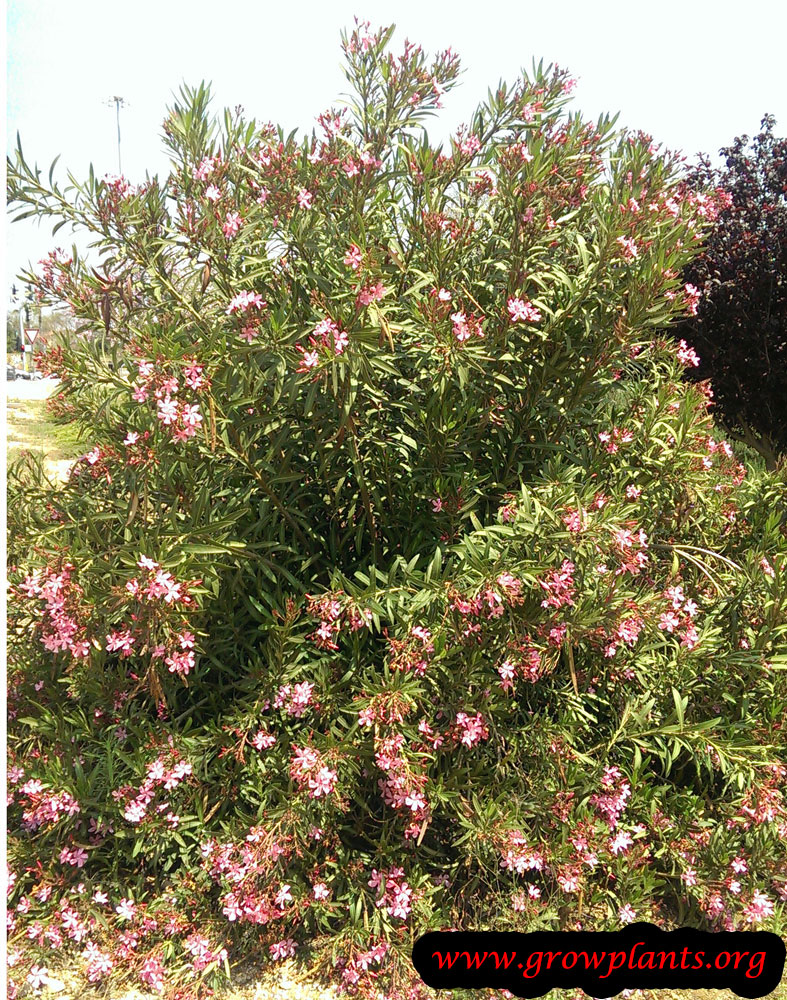
Overview: Oleander (Nerium oleander) is an evergreen shrub or small tree of 1-4 m (3-12 ft), grown as a tough, drought-tolerant ornamental with a long season of showy flowers. Every part of the plant is highly toxic, so it is best kept away from children and grazing animals.
Quick Specifications
| Specification | Attribute |
|---|---|
| Plant Type / Life Cycle | Perennial (shrub / small tree) |
| Foliage Type | Evergreen |
| Mature Size | 1-4 m tall (3-12 ft) |
| Growth Rate | Moderate to fast |
| Toxicity | Highly toxic (all parts; cardiac glycosides) and allelopathic |
| Hardiness | USDA zone 8+ |
Growth Form & Structure
- Height & Spread: Reaches 1-4 m (3-12 ft) in the ground and grows well in containers.
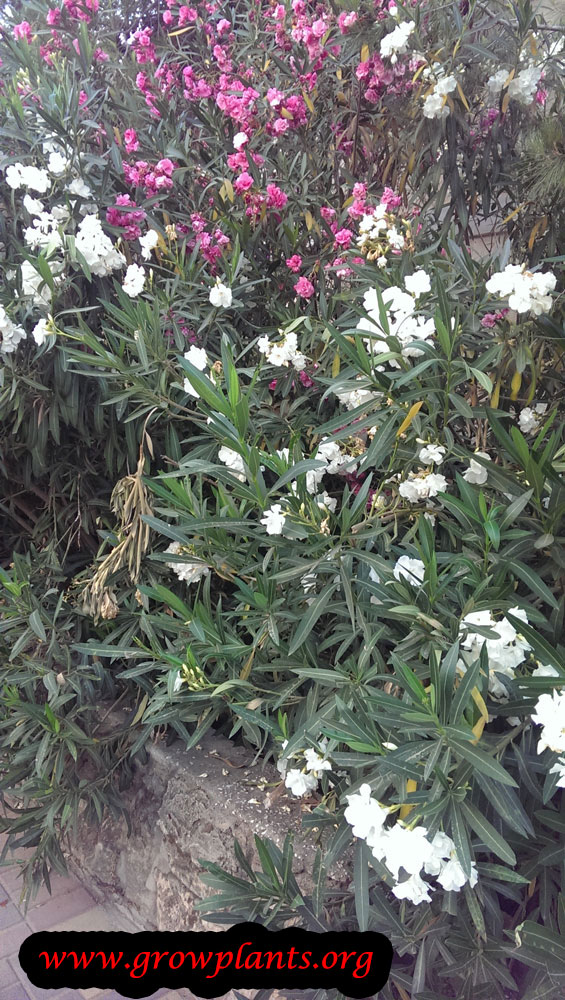
- Growth Habit & Form: Multi-stemmed, upright to rounded shrub, readily pruned into a screen, hedge or small standard tree.
- Lifespan & Maturity: Long-lived and vigorous, tolerating heat, drought and coastal conditions.
Anatomy & Physical Features
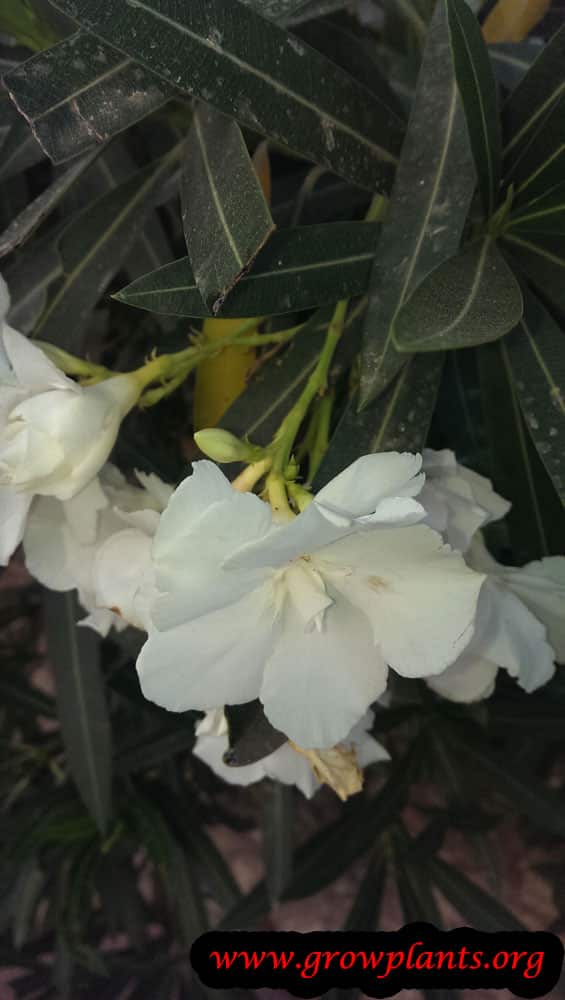
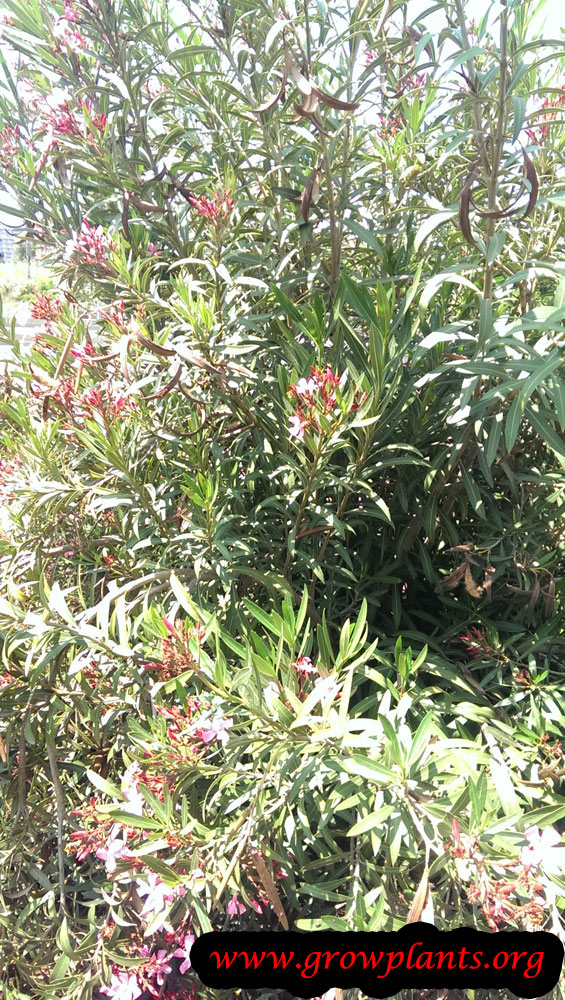
- Leaves & Foliage: Leathery, elliptic (lance-shaped) deep green leaves.
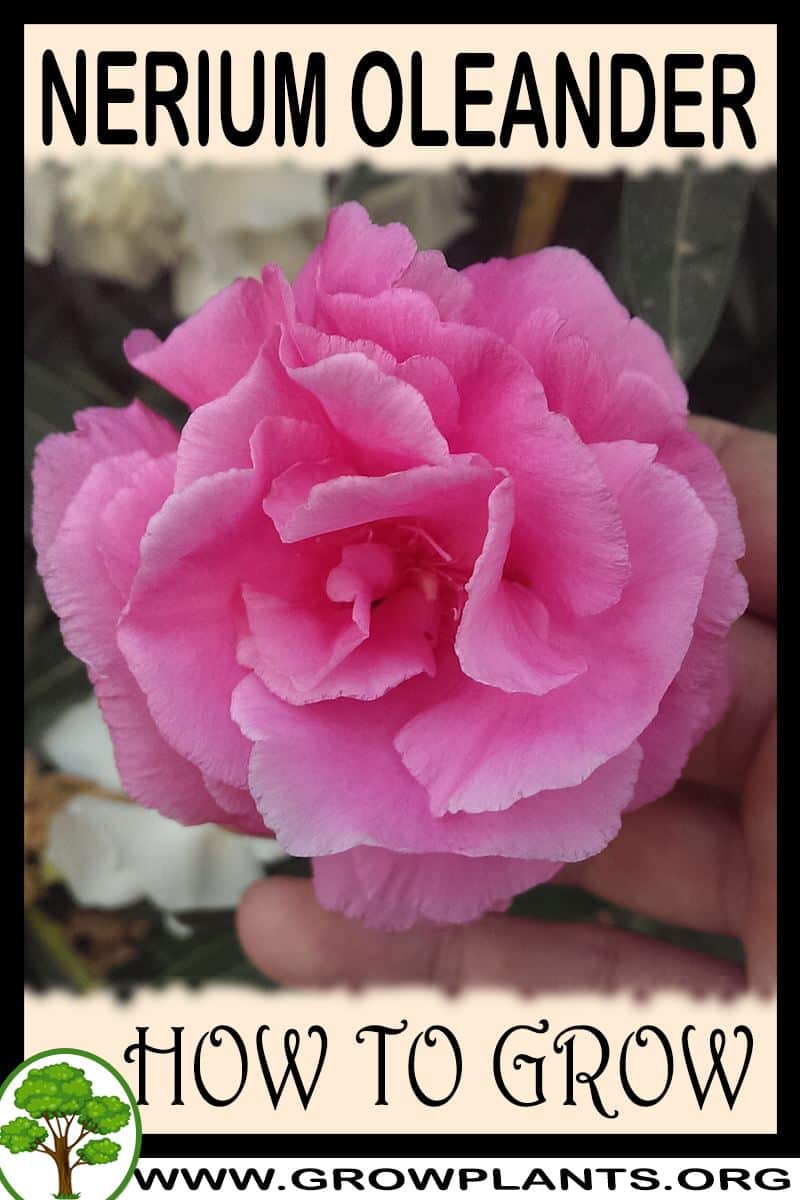
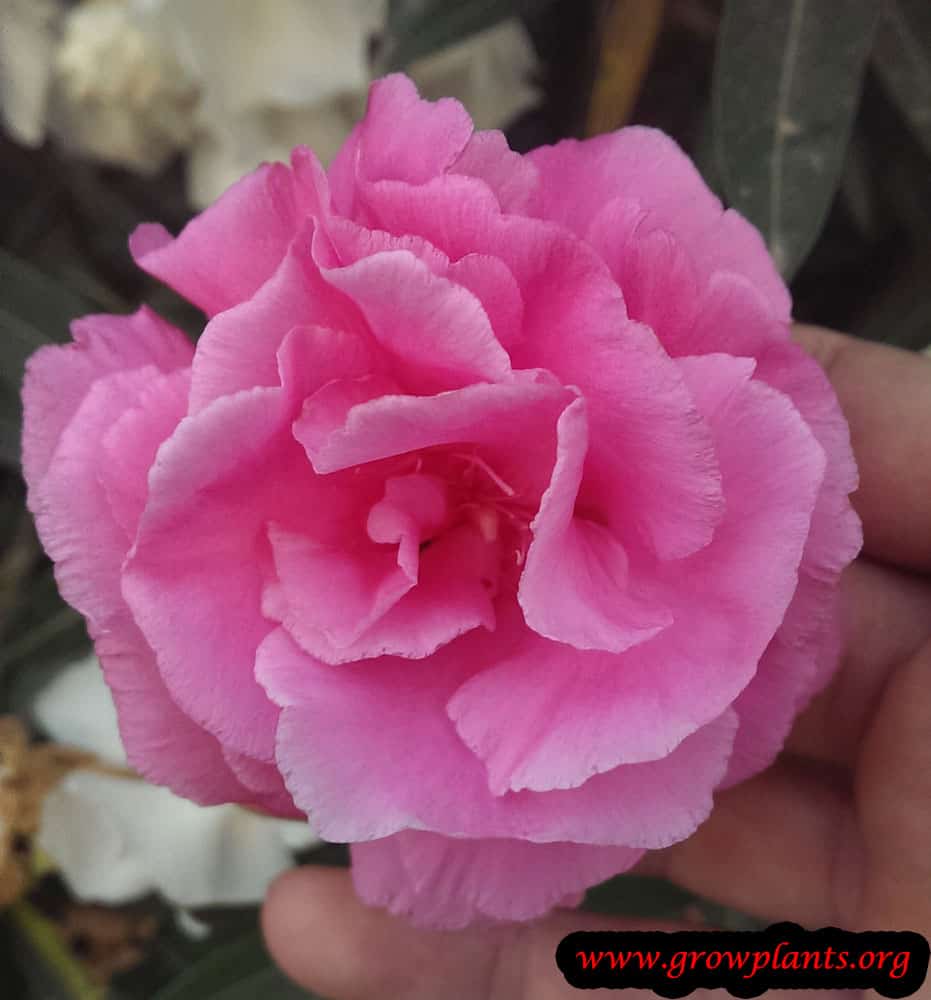
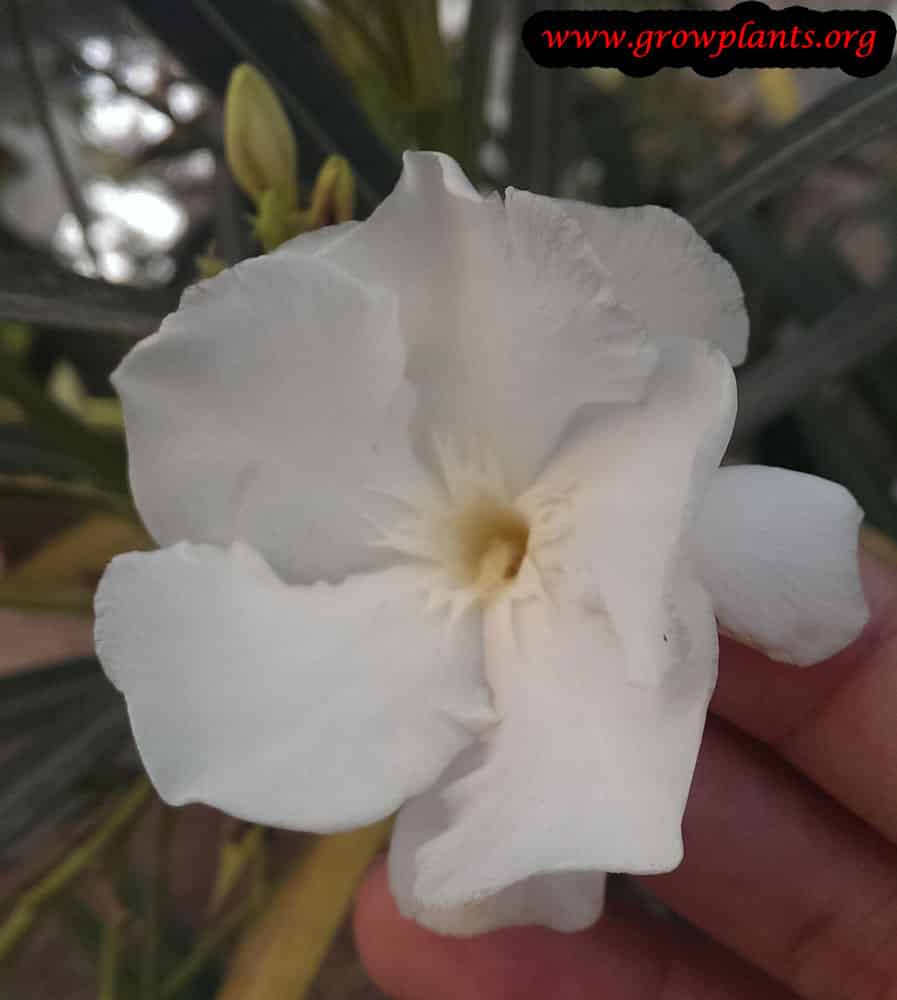
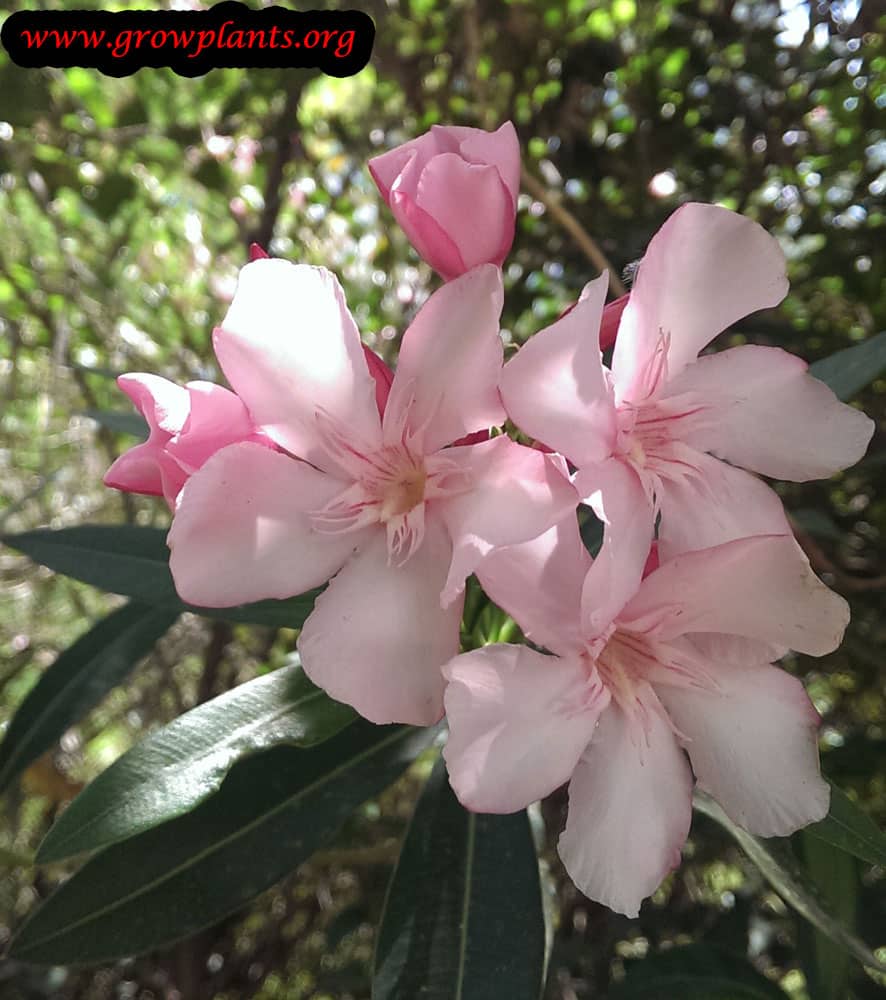
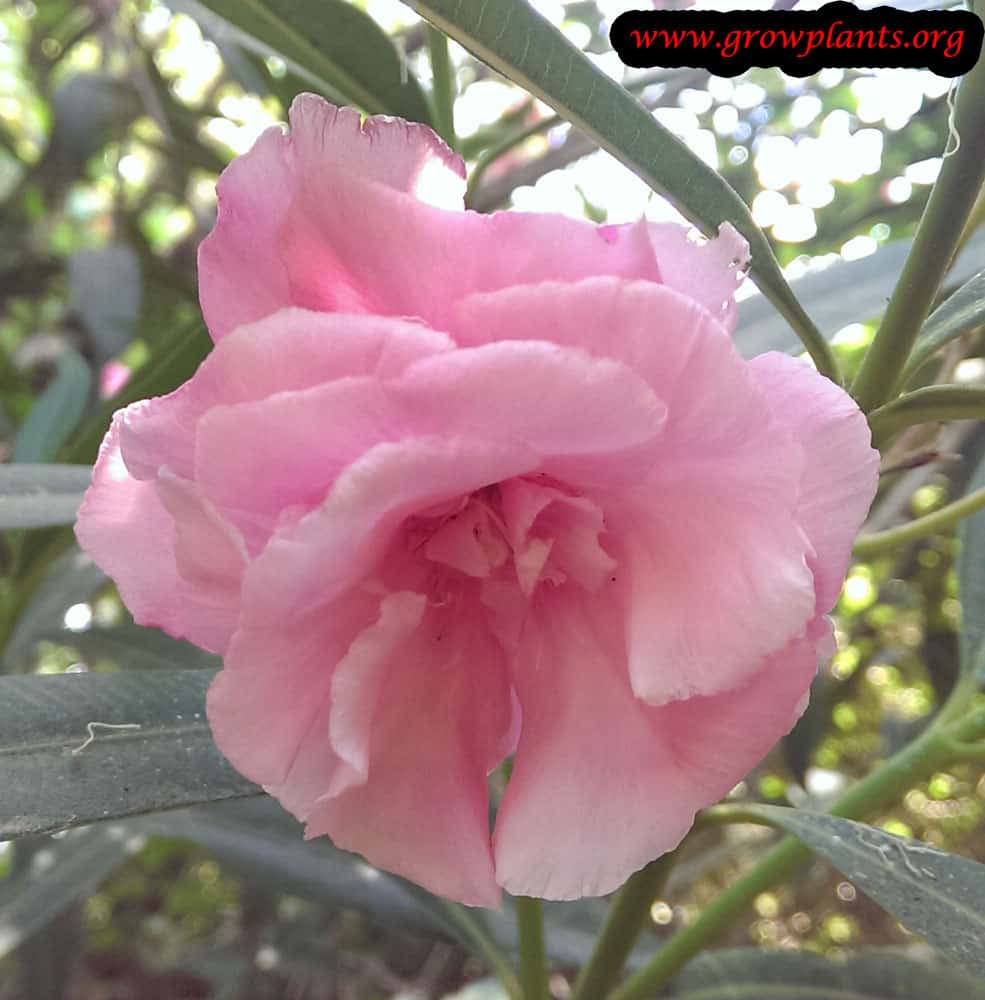
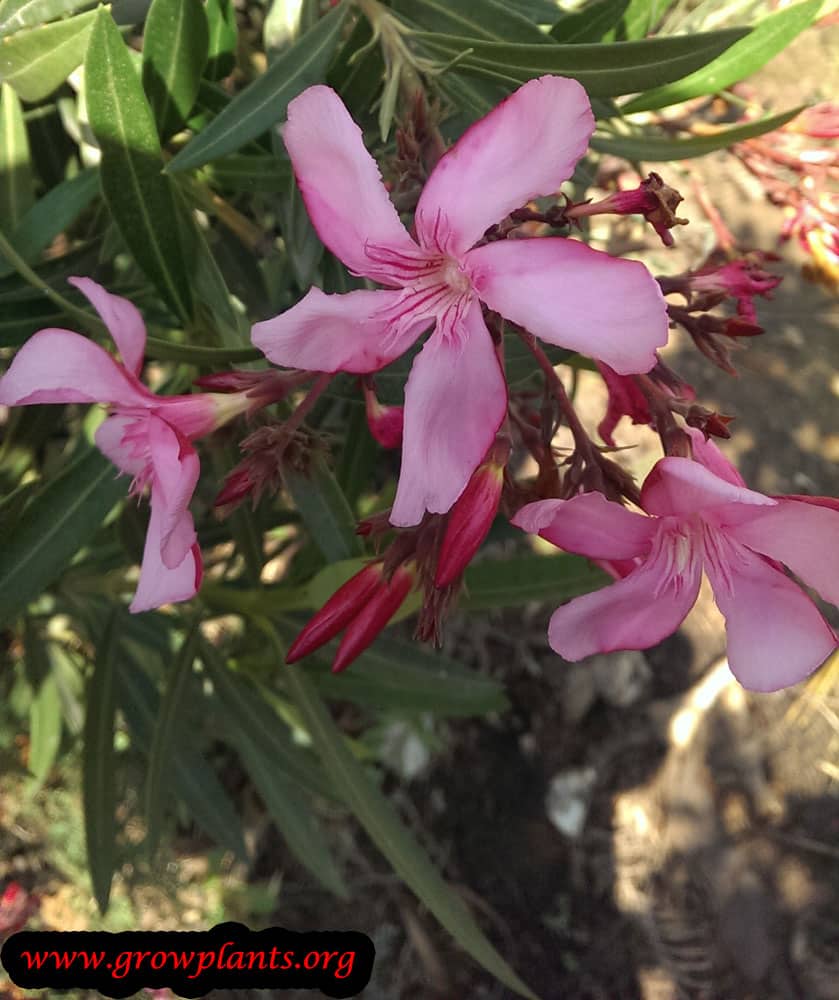
- Flower Characteristics: Clusters of white, pink, yellow or red flowers 3-6 cm across, single to double, some cultivars fragrant, over most of the year.
Primary Uses & Landscape Value
- Functional & Ornamental Roles: Drought-tolerant ornamental for screens, hedges and roadside or coastal planting.
Care Guide: Planting, Soil & Watering
Overview: Oleander is a tough, drought-tolerant evergreen shrub that grows in almost any well-drained soil in full sun to part shade. It is undemanding and needs only low to moderate water once established.
Quick Care Requirements
| Requirement | Ideal Condition |
|---|---|
| Planting Season | Spring or autumn in the mild season |
| Growth Rate | Moderate to Fast |
| Soil Type | Adaptable, well-drained soil |
| Water Need | Low to Moderate – drought-tolerant once established |
Planting & Establishment
- Best Planting Season: Plant in spring or autumn so it can root in mild weather (hardy zone 8+).
- How to Plant:
- Hole Preparation: Dig a hole about twice the width of the root ball and as deep, on free-draining ground.
- Soil Amendments: It is not fussy; a little compost helps but rich soil is not required.
- Planting Depth: Set the shrub at its original soil level, keeping the stem base at the surface.
- Growth Speed & Expectations: A moderate-to-fast grower reaching 1-4 m and flowering through much of the year.
Soil, Watering & Drainage Care
- Soil Mix & Drainage Needs: Tolerates poor and dry soils as long as they drain, and grows well in large containers. Avoid constant wetness.
- Watering Schedule & Technique:
- Young / Newly Planted: Water regularly through the first season to establish.
- Established: Once established it is drought-tolerant – water sparingly, deeply and infrequently.
- Seasonal Adjustments: A little more in prolonged summer heat and minimal in winter.
Climate, Light & Hardiness
Oleander is a tough, sun-loving evergreen shrub for Mediterranean, desert, subtropical, temperate and tropical climates, prized for heat, drought and salt tolerance. It is the most cold-hardy member of its group, tolerating light freezes and often resprouting from the base after harder cold.
Quick Climate Specifications
| Climate Zones | Mediterranean, desert, subtropical, temperate, tropical |
|---|---|
| USDA Hardiness Zones | 8+ (site data) |
| Optimal Temp Range | Approx. 20–35°C (68–95°F) |
| Cold Damage Begins | Around −3 to −5°C (27 to 23°F); leaves and flower buds first |
| Approx. Survival Minimum | Established plants may survive brief dips near −9 to −10°C (16 to 14°F), often resprouting from the roots |
| Frost Tolerance | Moderate |
| Light Conditions | Full sun to half shade |
| Wind Tolerance | High |
| Salt / Coastal Tolerance | High |
Sunlight & Light Exposure
Optimal Light Setup
Full sun gives the densest growth and heaviest, longest bloom.
Direct Sun Requirement
Direct sun is genuinely required for best flowering; half shade is tolerated but reduces bloom and can make the shrub leggy.
Shade & Heat Management
Thrives in reflected heat along walls and pavements; no heat protection is needed.
Best Exposure / Orientation
A hot, open, south- or west-facing site is ideal.
Temperature Extremes & Hardiness
USDA Hardiness & Regional Limits
Site data rates it hardy to zone 8, notably tougher than most subtropical shrubs. Cold tolerance varies by cultivar, plant age, exposure duration and conditions, so borderline-zone growers should choose proven hardy selections.
Cold Damage & Winter Protection
Foliage and buds are damaged by hard frost from roughly −3 to −5°C (27 to 23°F); after a severe freeze the top may be killed while the roots survive and regrow. Mulching the root zone helps in borderline areas.
Frost Sensitivity
Moderately frost tolerant for a broadleaf evergreen - it takes light freezes in stride, unlike the tender Tabernaemontana and Pachypodium.
Extreme Heat Tolerance
Excellent; one of the best shrubs for very hot, dry, reflected-heat sites.
Wind, Humidity & Microclimate
Humidity Preferences
Indifferent to humidity; performs in both dry and humid climates.
Dry-Air Tolerance
Very high - a classic dry-climate and roadside shrub.
Wind Tolerance
High; widely used as a windbreak and highway screen.
Coastal / Salt Tolerance
High tolerance of salt spray and coastal exposure, making it a reliable seaside shrub.
Microclimate Recommendations
In cold-margin gardens, a warm, sheltered, sunny wall base improves winter survival and bloom.
Growing in Pots, Balconies & Indoors
Oleander (Nerium oleander) is a tough, sun-loving flowering shrub, 1-4 m – not a houseplant, but a classic large-container plant for a hot patio or balcony that can be overwintered under cover in cold climates. Every part is highly poisonous.
Quick Details
- Container Size: A large tub, roughly 20-50 L (5-13 gal) (general guide)
- Indoor Suitability: Not a houseplant – too large, sun-hungry and toxic for a room
- Best Spot: Full sun to half shade; loves heat
- Soil & Drainage: Free-draining mix; it tolerates poor soil and drought
- Watering in Pots: Water sparingly to moderately once established; drought-tolerant
Indoors & On the Windowsill
- Houseplant: No – it needs full sun and is far too toxic and large for a living room.
- Windowsill growing: Not suitable as a sill plant.
- Overwintering: A key reason to pot it – in cold climates keep it in its tub and overwinter it in a cool, bright, frost-free place (a porch, garage window or unheated conservatory), kept nearly dry.
On a Balcony or Patio
- Light & wind: Give it the hottest, sunniest spot; it shrugs off heat, drought and wind and thrives on reflected wall warmth. It flowers best baked in full sun.
- Practicalities: A big tub is heavy – use a pot trolley to move it under cover for winter, and site it away from where children or pets pass.
Choosing the Pot, Soil & Long-Term Care
- Pot & drainage: A large tub with strong drainage; Use a pot with strong drainage holes and skip a standing-water saucer to avoid root rot; terracotta breathes and dries out faster, while glazed or plastic pots hold moisture longer.
- Potting mix: Fill with a well-aerated, organic-rich medium – a quality potting mix, or peat/coir blended with perlite or vermiculite for free drainage.
- Feeding: Potted plants use up their soil quickly because watering leaches nutrients away, so feed a little more often than plants in open ground through the growing season.
- Repotting: Pot up or refresh the mix every couple of years and prune to shape after flowering (wear gloves).
- Safety: Extremely poisonous – every part is dangerous if eaten, and the sap and even smoke from burning prunings are harmful. Never grow it where children or pets could reach it, wear gloves to prune, and wash your hands afterwards.
Fertilizing & Feeding
A moderate feeder: balanced feeding through spring and the bloom season supports flowering, with feeding eased off during cool-season rest. Balanced nutrition beats high-phosphorus bloom boosters.
Quick Fertilizing Specs
| Feeding Level | Moderate feeder |
|---|---|
| Main Nutrient Priority | Balanced feeding with adequate nitrogen and potassium; not high phosphorus |
| Best Feeding Period | Spring through the flowering season |
| Organic Options | Compost and other organic matter |
| Reduce/Stop Feeding | Ease off feeding during cool-season rest |
| Micronutrients | Usually met by a complete fertilizer; correct only diagnosed issues such as iron chlorosis in alkaline soil |
| Soil pH | Slightly acidic to near neutral; tolerates a range |
Feeding by Growth Stage
Spring flush of growth
Fuel the spring flush of stems and foliage that will carry the season’s flowers.
| Nutrient direction | A balanced complete fertilizer with adequate nitrogen to build healthy growth ahead of bloom. |
|---|---|
| Timing | As new growth resumes in spring. |
| Frequency | A feeding as growth begins, repeated lightly as the flush continues. |
| Fertilizer types | A balanced complete fertilizer, Compost or other organic matter worked into the root zone |
| Precautions | Favor steady, balanced feeding over pushing lush growth, which can come at the expense of flowers. |
Flowering period
Support a long, healthy bloom without forcing soft growth.
| Nutrient direction | Continue balanced feeding; adequate nitrogen and potassium support flowering better than a high-phosphorus bloom booster. |
|---|---|
| Timing | Through the main flowering period in the warm season. |
| Frequency | Light, steady feedings across the bloom period. |
| Fertilizer types | A balanced complete fertilizer, A light organic top-dressing |
| Precautions | Skip high-phosphorus bloom products; balanced nutrition and good light drive flowering. |
Cool-season rest
Let the plant rest through cool weather without pushing tender growth.
| Nutrient direction | None – withhold fertilizer while the plant is not in active growth. |
|---|---|
| Timing | During cool-season dormancy or slowed winter growth. |
| Frequency | No feeding at this stage. |
| Fertilizer types | No feeding at this stage; hold off fertilizing until active growth resumes. |
| Precautions | Do not fertilize a resting plant; wait until active growth returns in spring. |
Nutrient Deficiency Signs & Corrections
Older, lower leaves fade to pale green or uniform yellow and overall growth slows.
| Possible causes | low available soil nitrogen, nitrogen leaching from heavy watering or rain, thin, low-organic-matter soil |
|---|---|
| Appears first on | older, lower leaves |
| What to check | recent feeding history, soil organic matter, watering and drainage |
| Possible correction | Apply a nitrogen-containing complete fertilizer and build soil organic matter, then water evenly. |
The youngest leaves turn pale or yellow between green veins while older leaves stay greener.
| Possible causes | high or alkaline soil pH locking up iron, waterlogged or poorly aerated roots, genuinely low available iron |
|---|---|
| Appears first on | new, youngest leaves |
| What to check | soil pH, drainage and root health, whether symptoms favor the newest growth |
| Possible correction | Correct soil pH toward the plant’s preferred range and apply a chelated iron product per its label. |
Leaf margins brown or scorch and growth stalls despite adequate watering.
| Possible causes | fertilizer salt buildup in the root zone, under-watering that concentrates salts, excessive or too-frequent feeding |
|---|---|
| Appears first on | leaf margins and tips |
| What to check | recent fertilizer amounts, watering consistency, drainage, especially in containers |
| Possible correction | Ease off feeding, water thoroughly to flush accumulated salts, then return to lighter feeding. |
Pruning, Training & Seasonal Maintenance
Oleander is a tough evergreen shrub that tolerates pruning well, including hard renewal. It flowers on the current season’s new shoots at the branch tips and blooms for much of the year in warmth, so the safest structural pruning is in late winter or right after a bloom flush, which both shapes the plant and drives fresh flowering wood. It produces basal shoots that let you renew old canes over several years. Every part is highly toxic — sap, foliage and even the smoke — so wear gloves, never burn the clippings, and keep them away from pets, children and edible beds.
Quick Pruning & Maintenance Specs
| Pruning Tolerance | High — tolerates shaping and hard rejuvenation |
| Primary Pruning Window | Late winter / early spring |
| Secondary Maintenance Window | After a bloom flush; ongoing deadheading |
| Typical Frequency | Annual shaping plus staged cane renewal |
| Main Objective | Shape, control size, renew canes, sustain bloom |
| Young Plant Priority | Select 3–5 main canes; tip to bush (or train a single-trunk standard) |
| Mature Plant Priority | Renew oldest canes; thin, deadhead, control height |
| Best Tool Type | Bypass secateurs, loppers, saw for old trunks |
| Avoid Heavy Pruning During | Before frost; peak bloom (if flowers wanted); extreme heat |
Pruning by Plant Age & Size
Newly Established
Remove only damaged wood and begin tipping shoots to encourage branching. Decide early whether you want a multi-caned shrub or a single-trunk small tree.
Young / Formative
For a shrub, select three to five strong main canes and pinch their tips to build a bushy, well-furnished framework. For a standard, retain one leader and clear lower shoots. This is multi-leader (or single-trunk) formative training.
Mature / Established
Adopt renewal pruning: each late winter remove roughly the oldest third of canes at the base, letting basal shoots replace them, then shape and deadhead. This keeps the plant flowering low and prevents a bare-legged, top-heavy bush.
Seasonal Pruning Schedule
Late winter (structural / renewal): remove old canes, thin the interior, and control height before the growth surge. Expect vigorous flowering regrowth.
After a bloom flush: light shaping and deadheading encourage repeat bloom.
Ongoing sanitary: take out dead canes and spent flower heads. Do not make heavy cuts heading into frost.
Flowering & Fruiting Wood
Flowers form on new shoots of the current season at the shoot tips, so light tip pruning increases the number of flowering shoots. Time your main cut for late winter or straight after a flush so you are not removing shoots that are about to bloom — shear at the wrong moment and you cut off the developing flower buds.
Structural Pruning & Training
Remove crossing and rubbing stems, thin a congested interior for light and air, and control height and spread. The core mature technique is cane renewal from the base rather than repeated topping.
Special Growth to Remove
- Basal shoots / suckers: retain a few as replacement canes for renewal, and remove the surplus to check spread and keep the base tidy.
- Dead canes at any time.
Container & Small-Space Pruning
Oleander is a good large container plant and takes hard pruning to stay compact. Control height by shortening canes and renew the oldest ones just as in the ground; it responds to hard cuts with fresh growth.
Tools
Bypass secateurs for shoots, loppers for old canes, and a pruning saw for the thick trunks of a mature multi-caned plant. Hedge shears only where it is grown as a screening hedge, but selective cuts give better flowering.
Tool Hygiene & Disease Risk
General pruning-disease risk is routine, but the human-toxicity precautions are non-negotiable: gloves, no burning (the smoke is toxic), and no composting into edible areas. Where oleander leaf scorch (a xylem-limited bacterial disease spread by insects) occurs, treat it as high-risk and disinfect tools between plants to avoid moving it.
Cut Placement & Technique
Cut to an outward-facing bud or take whole old canes right back to the base. Use thinning cuts for renewal, and stage the removal of large limbs to avoid tearing bark.
Heavy Pruning & Rejuvenation
Fully tolerated: an overgrown oleander can be cut back to roughly 30 cm from the ground in late winter and will resprout vigorously. This sacrifices the early bloom that season but restores a dense, low-flowering habit.
Post-Pruning Care
Water the regrowth and watch for oleander aphids colonising the soft new shoots. Sunburn risk is minor on this sun-lover. Wash sap from tools and skin, and dispose of clippings as toxic waste.
Common Pruning Mistakes
- Burning the clippings — the smoke is poisonous.
- Shearing at the wrong time and cutting off the developing flower buds.
- Handling it without gloves, or composting the toxic prunings near edibles.
- Topping repeatedly instead of renewing canes, leaving a bare-legged bush.
When NOT to Prune
Do not make heavy cuts before frost, during extreme heat stress, or in peak bloom if you want to keep the flowers.
Recommended Tools (by task)
- bypass_secateurs — tip pruning, deadheading and shaping of current shoots.
- loppers — cutting out the oldest canes at the base for renewal.
- pruning_saw — for the thick basal trunks of a mature multi-caned plant.
Pruning Troubleshooting
| Problem | Possible Cause | What to Check | Corrective Action |
| Lush leaves, few flowers | Pruned off flowering shoots, or overfeeding | Timing of cuts; nitrogen inputs | Prune late winter or after a flush; ease off high-nitrogen feed |
| Bare-legged, top-heavy bush | Repeated topping instead of cane renewal | Whether old canes are ever removed at the base | Remove oldest third of canes yearly; let basal shoots replace them |
| Dense, shaded, weak interior | No thinning | Congestion and airflow inside the canopy | Thin crossing stems for light and air |
| Branch dieback / scorched margins | Cold damage or oleander leaf scorch | Recent frost; disease symptoms and insect vectors | Cut back to live wood; if scorch, disinfect tools between plants |
Propagation Guide
Oleander roots so readily from stem cuttings — even in a jar of water — that this is the standard method and the only way to keep a named cultivar, since seed-grown plants are variable. Propagation is easy; wear gloves, as all parts and the sap are toxic.
Quick Propagation Specs
| Best Propagation Method | Stem cuttings |
| Alternative Methods | Seed (species/variable); air layering |
| Propagation Difficulty | Easy |
| Seed True-to-Type | Variable; cultivar offspring vary |
| Vegetative True-to-Type | Yes |
| Best Propagation Season | Warm months (spring/autumn planting) |
| Cutting Rooting Time | Roots within a few weeks in warmth (water or mix) |
Stem Cuttings
Cutting Type
Semi-hardwood shoots about 15–20 cm.
Best Timing
Warm months, typically summer.
Cutting Preparation
Remove lower leaves; handle with gloves because the sap is poisonous.
Rooting Setup
Stand in a glass of water or insert in a gritty, free-draining mix; keep warm.
Rooting Hormone
Unnecessary — cuttings root freely without it.
Rooting Time
Roots form within a few weeks in warm conditions.
Growing from Seed
Seed Handling & Viability
Seed comes from the long slender pods and carries a tuft of fluff; sow fresh.
Sowing Depth & Orientation
Sow on the surface or barely cover, kept warm.
Germination Conditions
Warm and moist; germination is reasonably prompt but seedlings are variable and will not match a parent cultivar.
Air & Ground Layering
An easy alternative on established branches, though rarely needed given how freely cuttings root.
Bloom & Flower Guide
Quick Details
- Bloom Season: Most of the year in warm climates
- Time to First Bloom: Once the shrub is established (evergreen perennial)
- Flower Appearance: Showy flowers 3–6 cm across in white, pink, yellow or red, single to double
- Edibility: ⚠️ Not edible – oleander is highly poisonous in every part; never ingest, and wash hands after handling
Detailed Blooming Overview
Oleander is one of the longest-flowering shrubs for warm, dry gardens, carrying showy 3–6 cm blooms – white, pink, yellow or red, single or double – through most of the year. It is grown purely for those flowers.
Flower Characteristics
- Appearance & habit: Clusters of 3–6 cm five-petalled to double flowers at the branch tips.
- Safety: Every part is highly toxic if eaten; keep well away from children and pets, and don’t burn prunings.
Bloom Care & Pollination
- Pollination: Visited by bees and butterflies, though it sets little seed.
Pests, Diseases & Troubleshooting
Overview: Oleander (Nerium oleander) is a rugged, heat- and drought-tolerant Apocynaceae shrub. Its everyday problems are the bright yellow oleander aphid and armoured oleander scale (with the sooty mould their honeydew feeds), plus the defoliating oleander caterpillar in the Americas. Its most serious threat is the bacterial disease oleander leaf scorch (Xylella). Note: every part is highly poisonous.
Quick Troubleshooting Overview
| Issue / Pest | Main Symptom | Primary Solution |
|---|---|---|
| Oleander aphid | Yellow aphid colonies on new shoots, honeydew | Water jet, beneficials, insecticidal soap |
| Oleander scale | White/brown crusts on leaves and stems | Prune out, horticultural oil at crawler stage |
| Oleander caterpillar | Orange caterpillars skeletonising leaves | Hand-pick (gloves), Bt, remove egg masses |
| Leaf scorch (Xylella) | Marginal leaf scorch, branch-by-branch decline | No cure; prune out, remove dying plants, control hoppers |
| Bacterial knot/gall | Warty galls on stems, flowers, leaves | Prune out in dry weather, sterilise tools |
| Sooty mould | Black film over honeydew | Control aphids/scale, wash off |
Common Pests & Management
- Oleander / Milkweed Aphid (Aphis nerii):
- Symptoms: Dense colonies of bright yellow-orange aphids with black legs on new shoots, buds and flower stalks; sticky honeydew and black sooty mould. Almost universal on Apocynaceae.
- Prevention & Control: Blast off with water and encourage ladybirds, lacewings and parasitic wasps (mummified brown aphids show they are working). Insecticidal soap or horticultural oil for heavy colonies; avoid excess nitrogen that fuels soft growth.
- Oleander (Armoured) Scale (Aspidiotus nerii):
- Symptoms: Circular white-to-grey or brown scale crusts thickly coating leaves and stems; yellow spotting, reduced vigour and dieback under heavy infestation.
- Prevention & Control: Prune out badly encrusted wood, encourage parasitic wasps and lady beetles, and apply horticultural oil timed to the mobile crawler stage; repeat to catch successive generations.
- Mealybugs (Planococcus, Pseudococcus spp.):
- Symptoms: White cottony tufts in leaf axils, shoot tips and among roots of potted plants; honeydew, sooty mould and stunted, distorted growth.
- Prevention & Control: Dab with an alcohol-tipped swab, drench roots if infested, and isolate affected plants. Horticultural oil or insecticidal soap repeated at intervals; quarantine new arrivals.
- Oleander Caterpillar (Syntomeida epilais):
- Symptoms: Groups of orange caterpillars with black hair tufts skeletonise leaves, sometimes defoliating whole branches (mainly in the Americas).
- Prevention & Control: Scout for egg masses and young larvae on leaf undersides and prune them out, hand-pick with gloves, and spray Bt on young caterpillars for selective control.
- Spider Mites (Tetranychus urticae):
- Symptoms: Fine pale stippling turning leaves dull bronze, with delicate webbing beneath in hot, dry air; heavy attack scorches and drops leaves.
- Prevention & Control: Raise humidity and hose down foliage, conserve predatory mites, and treat hot-spots with insecticidal soap or horticultural oil on the undersides.
Diseases & Fungal Issues
- Oleander Leaf Scorch (Xylella fastidiosa (sharpshooter-vectored)):
- Symptoms: The most serious oleander disease: leaf margins yellow then brown and ‘scorch’, branch by branch, as the bacterium blocks the water-conducting vessels; the plant declines over one to a few seasons and usually dies.
- Treatment & Management: No cure. Remove and destroy affected plants to protect neighbours, prune out early symptomatic branches well below the scorch, disinfect tools, and manage the leafhopper/sharpshooter vectors. Avoid propagating from symptomatic stock.
- Bacterial Knot / Gall (Pseudomonas savastanoi pv. nerii):
- Symptoms: Rough, warty galls and cankers on stems, leaves and flowers, sometimes with distorted, blackened blooms; spreads in wet, splashy weather and through wounds.
- Treatment & Management: Prune out galls in dry weather well into clean wood, sterilise tools between cuts, avoid overhead irrigation, and remove infected debris; copper offers some protection.
- Sooty Mould (Capnodium and allied fungi):
- Symptoms: A black, soot-like film coating leaves and stems, growing on the honeydew excreted by aphids, scale, mealybugs and whitefly; blocks light and disfigures.
- Treatment & Management: It is a symptom, not the cause – control the sap-sucking insects producing the honeydew and the mould weathers away. Wash off heavy deposits with soapy water.
- Botryosphaeria Dieback (Botryosphaeria spp.):
- Symptoms: Sudden wilting and death of individual branches, with dark cankers, often on drought- or cold-stressed plants.
- Treatment & Management: Prune dead and cankered wood back to healthy tissue, sterilise tools, and keep plants unstressed with steady water and mulch.
Growing Difficulties & Abiotic Problems
- Frost / Cold Damage:
- Cause & Symptoms: Hard frost blackens and kills soft growth and can cut plants to the ground, though established roots often resprout.
- Correction Strategy: Grow in a sheltered spot in marginal areas, or as a container plant moved under cover; cut back frost-damaged wood after the last frost.
- Yellowing from Overwatering / Poor Drainage:
- Cause & Symptoms: Despite loving water, oleander yellows and its roots rot in constantly waterlogged soil.
- Correction Strategy: Plant in free-draining soil; oleander is very drought-tolerant once established and prefers deep, infrequent watering to constant sogginess.
- Toxicity (handling caution):
- Cause & Symptoms: All parts are extremely poisonous if eaten, and smoke from burning wood and the sap are hazardous.
- Correction Strategy: Never burn prunings or use stems as skewers, keep well away from children and livestock, and wear gloves when pruning.
What Helps – Products & Tools
An oleander kit: horticultural oil for scale (timed to crawlers) and mealybugs, insecticidal soap for aphids, Bt for oleander caterpillar, copper for bacterial knot, and disinfectant plus sharp secateurs for cutting out Xylella-scorched and cankered wood. There is no spray cure for leaf scorch – sanitation and vector control only. Handle the toxic sap with gloves.