
Plant Profile & Key Characteristics
Overview: Tithonia rotundifolia (red / Mexican sunflower) is a tall, fast-growing daisy-family plant reaching 1-2 m (40-80 in), grown as a bold ornamental and cut flower. It is grown as a warm-climate perennial or as a summer annual and is notably drought tolerant.
Quick Specifications
| Specification | Attribute |
|---|---|
| Plant Type / Life Cycle | Perennial in frost-free zones; grown as an annual elsewhere |
| Foliage Type | Evergreen where perennial |
| Mature Size | 1-2 m x bushy (40-80 in) |
| Growth Rate | Moderate to fast |
| Hardiness | USDA zone 10+ as a perennial; zone 5+ grown as an annual |
Growth Form & Structure
- Height & Spread: Reaches 1-2 m (40-80 in) tall and bushy in the ground; can be grown in a large container but is not an indoor plant
- Growth Habit & Form: Tall, upright, branching shrubby herb that forms a substantial bush in one season
- Lifespan & Maturity: Very fast; reaches full size and flowers within a single growing season
Anatomy & Physical Features
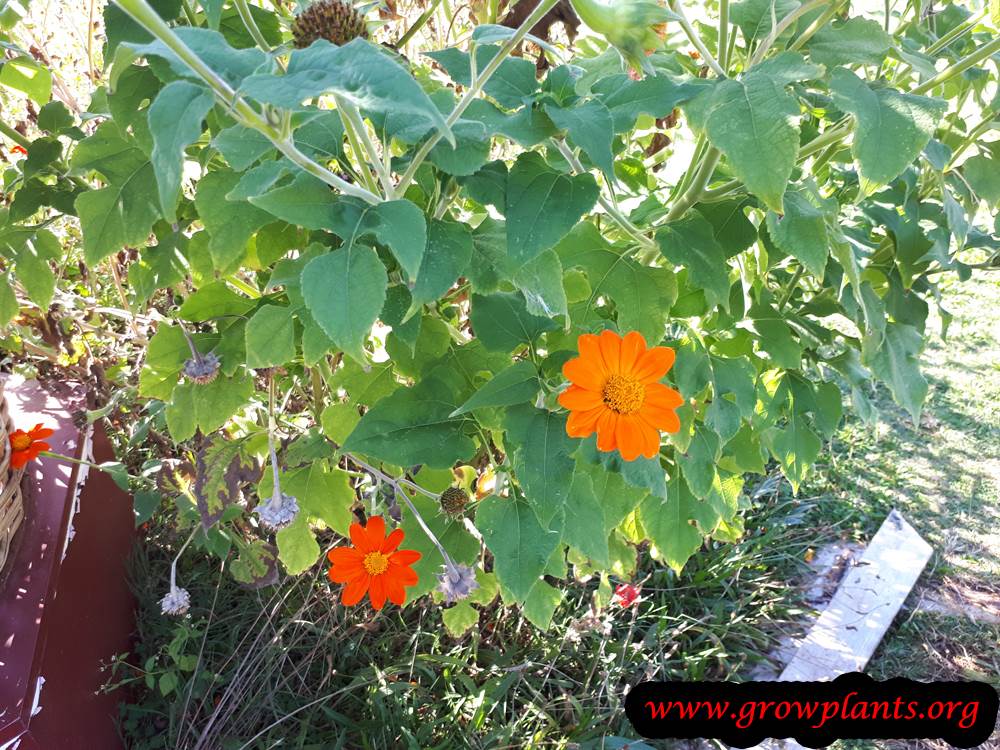
- Leaves & Foliage: Green, lobed leaves with 3-5 lobes
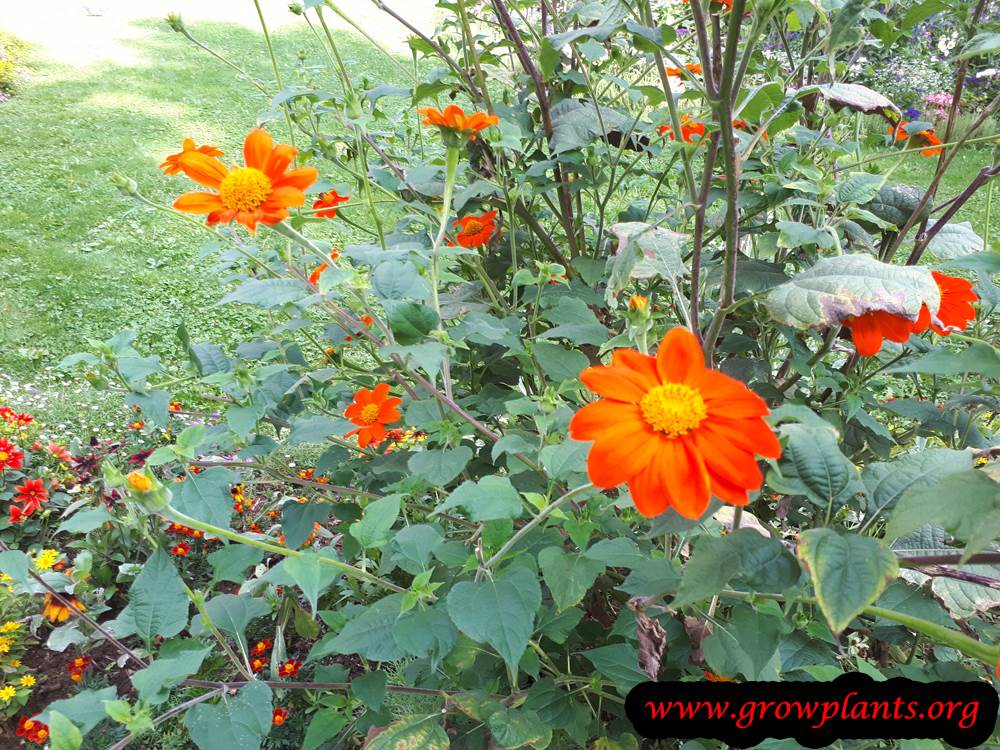
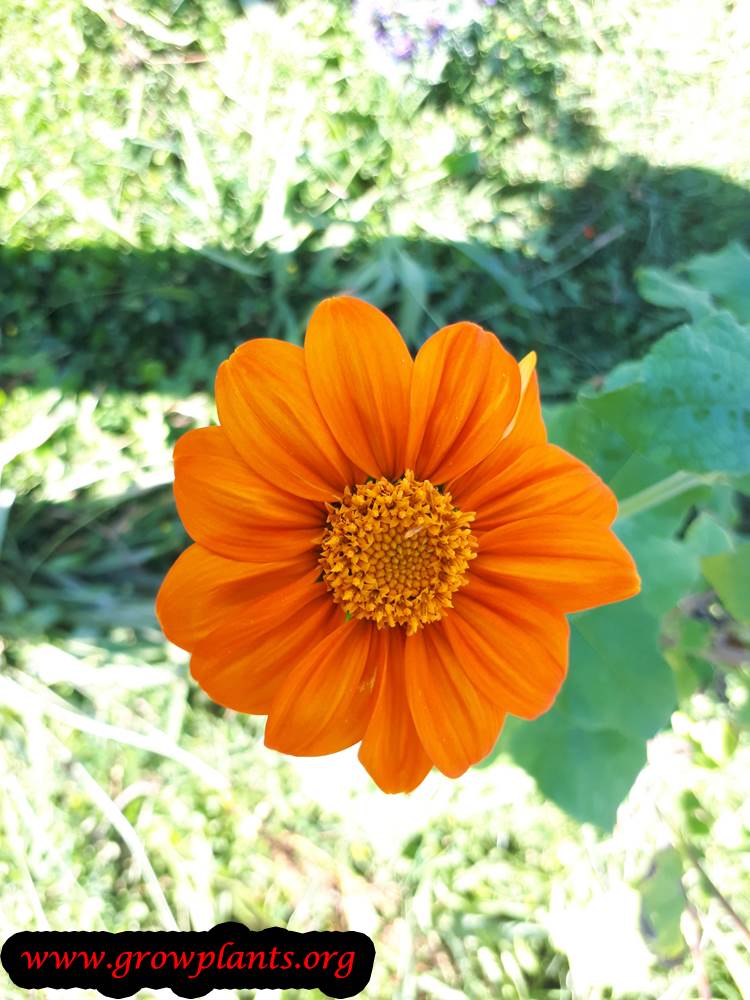
- Flower Characteristics: Large red, orange or yellow daisy-like flowers, excellent for cutting and for pollinators
Primary Uses & Landscape Value
- Functional & Ornamental Roles: Bold ornamental for borders and screens, cut flower, drought-tolerant summer colour, and a strong butterfly/pollinator magnet
Care Guide: Planting, Soil & Watering
Overview: Tithonia rotundifolia (Mexican or red sunflower) is a big, fast-growing, sun-loving plant grown as an annual in cold areas (hardiness zone 5+) or a tender perennial in frost-free zones (10+). It is easy and drought-tolerant once established, thriving in full sun and ordinary, well-drained soil.
Quick Care Requirements
| Requirement | Ideal Condition |
|---|---|
| Planting Season | In spring after the last frost, through summer |
| Growth Rate | Fast |
| Soil Type | Ordinary, well-drained soil; tolerates poor, dry ground |
| Water Need | Low to moderate; drought-tolerant once established |
Planting & Establishment
- Best Planting Season: Plant out in spring once frost has passed and the soil has warmed; it can go in through summer and, in frost-free zones, on into autumn.
- How to Plant:
- Hole Preparation: Dig a hole a little wider than the root ball; it grows tall (1-2 m), so allow space and some shelter from strong wind.
- Soil Amendments: It performs well even in poor soil – a little compost helps, but avoid over-rich, wet ground that encourages floppy growth.
- Planting Depth: Set the root ball level with the surrounding soil and firm gently.
- Growth Speed & Expectations: A fast, vigorous grower reaching 1-2 m in a single season and flowering profusely – note that it can self-seed and become invasive.
Soil, Watering & Drainage Care
- Soil Mix & Drainage Needs: The one essential is good drainage; it dislikes soggy soil and thrives on the lean side. In containers use a free-draining potting mix.
- Watering Schedule & Technique:
- Young / Newly Planted: Water regularly to establish the young plant.
- Established: Once established it is drought-tolerant and needs watering only in extended dry spells.
- Seasonal Adjustments: More in prolonged summer heat, much less in cool weather; frost kills the top growth.
Climate, Light & Hardiness
Tithonia rotundifolia is a heat-loving, frost-tender plant suited to full sun across tropical, desert, and warm temperate climates. It behaves as a true perennial only where winters stay frost-free, and is grown as a fast annual much further north.
Quick Climate Specifications
| Climate Zones | Tropic, mediterranean, desert, subtropical, temperate |
|---|---|
| USDA Hardiness Zones | 10+ as a perennial; grown as an annual from zone 5 up |
| Light Conditions | Full sun to half shade |
| Frost Tolerance | Low – top growth is killed by frost |
Sunlight & Light Exposure
Optimal Light Setup
Full sun produces the strongest stems and heaviest daisy-flower display; half shade is tolerated with reduced flowering.
Extreme Heat Tolerance
Drought-tolerant once established, it handles hot summer conditions well.
Temperature Extremes & Hardiness
USDA Hardiness & Regional Limits
Reliably perennial only in USDA zone 10 and warmer frost-free climates; commonly grown as an annual from about zone 5 upward, where the plant completes its cycle before cold arrives rather than surviving outdoors.
Frost Sensitivity
Frost-tender – foliage and stems are damaged or killed at the first freeze.
Wind, Humidity & Microclimate
Humidity Preferences
Adapts to a wide humidity range, from arid to humid tropical conditions.
Wind Tolerance
Tall stems can benefit from a somewhat sheltered spot, though the plant is not particularly wind-sensitive.
Growing in Pots, Balconies & Indoors
This red-orange Mexican sunflower is a tall, fast annual – not a houseplant, but a bold full-sun container plant for a large pot on a patio or balcony.
Quick Details
- Container Size: A large pot – it is a tall, vigorous annual
- Indoor Suitability: Not a true houseplant; grows best outdoors
- Best Spot: Full sun; some tolerance of light shade
- Soil & Drainage: Aerated, organic-rich mix (peat or coir with perlite or vermiculite); must drain freely
- Watering in Pots: Water generously in heat but let the surface dry slightly between drinks; fairly drought-tolerant once established
Indoors & On the Windowsill
- Houseplant limits: It is too big and sun-hungry for indoor culture and needs strong outdoor sun to flower.
On a Balcony or Patio
- Light & wind: Give it the sunniest spot and stake the tall stems on windy balconies. Walls and paving reflect heat, so pots dry quickly – check moisture often in hot weather.
- Practicalities: Set the pot where drainage runoff won’t stain, and remember a full, wet container is heavy to move.
Choosing the Pot, Soil & Long-Term Care
- Pot & drainage: A container with strong drainage holes and no standing-water saucer, to avoid root rot; terracotta breathes and dries faster, glazed or plastic holds moisture longer.
- Potting mix: A well-aerated, organic-rich mix – peat or coir with perlite or vermiculite.
- Feeding: Potted plants exhaust their soil quickly – feed a little more often, since watering leaches nutrients away.
- Repotting: Refresh the top of the mix each year and pot on every couple of years, trimming the root ball lightly.
Fertilizing & Feeding
This fast-growing red-flowered Tithonia is a moderate feeder – steady balanced feeding through its long summer bloom season keeps up cut-flower production without needing a heavy fertilizing program.
Quick Fertilizing Specs
| Feeding Level | moderate |
|---|---|
| Main Nutrient Priority | Balanced feeding for steady growth and continuous bloom, not phosphorus-heavy |
| Best Feeding Period | Warm active growing season while flowering |
| Reduce/Stop Feeding | Stop feeding as frost approaches or growth slows for the season |
| Soil pH | Tolerates a wide range in well-drained soil |
| Organic Options | Compost or aged organic matter worked in at planting |
| Micronutrients | Not usually needed beyond a complete balanced fertilizer |
Feeding by Growth Stage
Spring establishment and early growth
Establish strong roots and vigorous branching after planting or germination, ahead of the summer flower display.
| Nutrient direction | A balanced, complete fertilizer supports steady vegetative growth without producing weak, overly soft stems. |
|---|---|
| Timing | From planting or germination through late spring. |
| Frequency | A light feeding at planting, followed by modest regular feedings as the plant establishes. |
| Fertilizer types | A balanced, complete garden fertilizer, Compost or aged organic matter worked into the planting area |
| Precautions | Avoid heavy nitrogen feeding, which can produce tall, floppy stems that need staking. |
Summer-to-autumn bloom and cut-flower production
Sustain the bright red-orange daisy flower display and continued branching for cut-flower stems.
| Nutrient direction | Continue a balanced fertilizer with adequate nitrogen; extra phosphorus is not needed to drive flowering. |
|---|---|
| Timing | Through summer into autumn while the plant is actively flowering. |
| Frequency | Light, regular feedings support continuous bloom; ease off if growth becomes floppy or overly lush. |
| Fertilizer types | A balanced, complete fertilizer, Diluted liquid feed for container-grown plants |
| Precautions | Overfeeding can favor foliage over flowers and weaken the tall stems that support the blooms. |
Frost dieback or seasonal decline
Let growth wind down naturally as the growing season ends, whether the plant is killed by frost as an annual or declines seasonally in frost-free zones.
| Nutrient direction | None – withhold fertilizer as growth slows and the season ends. |
|---|---|
| Timing | Autumn frost, or the cooler months in frost-free climates. |
| Frequency | No feeding at this stage. |
| Fertilizer types | No feeding at this stage; do not fertilize as the plant declines. |
| Precautions | Do not fertilize going into dormancy or after frost damage; wait for new spring growth before feeding again. |
Nutrient Deficiency Signs & Corrections
Pale, yellowing lower leaves and slow stem growth.
| Possible causes | Nitrogen deficiency in poor soil, Waterlogged roots limiting nutrient uptake, Compacted or depleted soil |
|---|---|
| Appears first on | Older, lower leaves |
| What to check | Soil richness and drainage, Recent feeding history, Root health |
| Possible correction | Work in a balanced, nitrogen-containing fertilizer or compost and correct any drainage problems. |
New leaves turn yellow while the veins stay green.
| Possible causes | High soil pH limiting iron availability, Waterlogged or compacted soil, Root stress from recent disturbance |
|---|---|
| Appears first on | Newest growth |
| What to check | Soil pH, Drainage, Recent root disturbance |
| Possible correction | Correct pH toward the plant’s preferred range and apply a chelated iron product per its label if the soil is alkaline. |
Leaf margins scorch or brown and tall stems flop or lodge.
| Possible causes | Potassium deficiency, Excess nitrogen producing soft growth, Drought or wind stress |
|---|---|
| Appears first on | Older leaf edges and overall stem strength |
| What to check | Feeding balance, Recent watering, Staking or support needs |
| Possible correction | Shift toward a more balanced or potassium-aware fertilizer and avoid excess nitrogen. |
Pruning, Training & Seasonal Maintenance
Tithonia rotundifolia is a fast-growing, soft-stemmed shrub or herbaceous plant grown for its bright daisy flowers and use as a cut flower. Pruning is light and mostly cosmetic – shaping and deadheading rather than framework-building – and where it’s grown as an annual, “pruning” ends with removing the frost-killed plant rather than renewing it.
Quick Pruning & Maintenance Specs
| Pruning Tolerance | Moderate |
| Primary Pruning Window | Autumn/winter cutback, mainly where grown as a perennial (zone 10+) |
| Secondary Maintenance Window | Continuous deadheading through the spring–autumn bloom season |
| Typical Frequency | Regular deadheading; one shaping pass per season |
| Main Objective | Prolong bloom, keep an upright habit on a tall fast-growing plant, supply clean cut stems |
| Young Plant Priority | Pinch the growing tip once established to build branching before it reaches its full 1–2m height |
| Mature Plant Priority | Deadhead continuously; cut back hard at season’s end where grown as a perennial |
| Best Tool Type | Bypass secateurs/precision snips; stakes for support |
| Avoid Heavy Pruning During | Peak summer bloom flush |
Pruning by Plant Age & Size
Newly Established
Pinch the growing tip once the young plant has a few leaf sets, to build a branched, sturdier base rather than one tall stem – important given its fast growth to 1–2m.
Young / Formative
No formal training system; light pinching plus staking in exposed sites, since the combination of soft stems and eventual 1–2m height makes it prone to flopping.
Mature / Established
Deadhead spent flowers continuously (stated directly in the source as an all-season task) to keep the plant flowering rather than setting seed, and to supply clean cut stems.
Seasonal Pruning Schedule
| Stage | Objective | Remove | Note |
| Dormant / Autumn–Winter | Renewal (perennial specimens only) | Cut hard back after flowering finishes and frost browns the top growth | Where grown as an annual, remove the whole frost-killed plant instead |
| Ongoing Sanitary | Prolong bloom, limit self-seeding | Spent flower heads, continuously through spring–autumn | Source flags the species as potentially invasive via seeding |
Special Growth to Remove
- Spent flower heads – deadhead continuously, per the source.
- Any single dominant leggy stem on young plants, pinched out to force branching.
Container & Small-Space Pruning
Tolerates pot culture. Keep it more compact with earlier, more frequent pinching than an in-ground planting, since a container won’t support the full 1–2m height as well without added support.
Tools
- Bypass secateurs or precision snips for deadheading and pinching soft, non-woody stems.
- Soft ties/stakes for taller stems, which can flop under fast growth.
Tool Hygiene & Disease Risk
Routine – only aphids are noted as a pest concern, with no systemic disease risk documented; clean tools are sufficient.
Cut Placement & Technique
Deadhead just above the next leaf node or bud to encourage branching and a fresh flower; pinch the growing tip cleanly without tearing the soft stem.
Heavy Pruning & Rejuvenation
Where grown as a tender perennial, a hard cutback at the end of the bloom season is tolerated and typical. Where grown as an annual, the plant is simply replaced rather than rejuvenated.
Post-Pruning Care
Stake regrowth after any hard cutback given the soft, fast-growing stems; water normally, no special feeding required.
Common Pruning Mistakes
- Growing it tall and single-stemmed without an early pinch, leading to a leggy, flop-prone plant.
- Skipping deadheading and letting it self-seed more than wanted, given its documented invasive tendency.
- Treating a perennial-zone specimen as needing hard woody-shrub pruning it doesn’t have the structure for.
When NOT to Prune
Avoid a hard cutback mid-summer during peak bloom – it sacrifices the display and cut-flower supply for the sake of shape.
Recommended Tools (by task)
- precision_snips – deadheading and pinching soft new growth.
- bypass_secateurs – end-of-season cutback of thicker basal stems where grown as a perennial.
- soft_ties_stakes – supporting tall, fast-growing flowering stems prone to flopping.
Propagation Guide
This species is almost always grown from seed as a fast, easy annual bedding plant – the site confirms grafting/vegetative propagation isn’t necessary. Where a plant needs to be cloned or overwintered in a frost-free garden as a perennial, stem cuttings work as an alternative. Overall difficulty: Easy.
Quick Propagation Specs
| Best Propagation Method | Seed |
| Alternative Methods | Stem cuttings (for perennial/frost-free use) |
| Propagation Difficulty | Easy |
| Seed True-to-Type | Usually true-to-type (species) |
| Vegetative True-to-Type | Yes |
| Best Propagation Season | Spring, after frost danger has passed |
| Seed Germination Time | Typically 1–2 weeks in warm soil |
| Cutting Rooting Time | Usually a few weeks under warm, humid conditions |
| Germination Temperature | 21–27°C (70–80°F) |
| Seed Sowing Depth | Shallow – just covered, a few millimeters (about 1/4 inch) |
Growing from Seed
Sowing Season
Spring, once frost danger has passed, matching the plant’s spring–summer–autumn planting season.
Sowing Depth & Orientation
Sow shallowly, lightly covering the seed. This species can resent root disturbance, so direct sowing outdoors or starting in individual biodegradable pots for transplanting is often preferred over bare-root transplanting.
Germination Conditions
Warm soil in full sun; keep evenly moist until seedlings emerge.
Germination Time
Generally quick, often within one to two weeks in warm conditions.
Seedling Care
Thin or space seedlings as needed; this is a fast, vigorous grower that can self-seed and become weedy if left unmanaged.
Stem Cuttings
Cutting Type
Softwood tip cuttings from actively growing shoots.
Best Timing
Spring to summer, during active growth.
Cutting Preparation
Take a short tip cutting with a couple of leaf nodes and remove the lower leaves.
Rooting Setup
Insert into a moist, free-draining rooting medium and keep warm and humid until roots form.
Rooting Hormone
Not required but may improve rooting speed and consistency.
Rooting Time
Usually a few weeks.
Bloom & Flower Guide
Quick Details
- Bloom Season: Spring through autumn (chiefly summer to autumn, until the first frost when grown as an annual)
- Time to First Bloom: A fast annual – typically flowers from mid to late summer from a spring sowing
- Flower Appearance: Bold, daisy-like flowerheads in red, orange or yellow with a central disc
- Edibility: Grown as an ornamental and cut flower
Detailed Blooming Overview
Mexican sunflower is a warm-season powerhouse, throwing out vivid orange-red daisies on tall, branching stems. It flowers non-stop through the heat and is one of the finest butterfly and pollinator plants you can grow.
Flower Characteristics
- Daisy-form flowerheads in red, yellow or orange, as the grower describes.
- Held on sturdy, well-branched stems that suit cutting.
Bloom Care & Thinning
- Keep it flowering: Deadhead regularly for a continuous run of bloom.
- For the vase: Cut in the cool of the morning as flowers open.
- Support: Tall stems may need staking in exposed spots.
Pests, Diseases & Troubleshooting
Overview: The Mexican sunflower is a vigorous, heat-loving annual that is refreshingly tough and largely trouble-free, drawing butterflies and bees rather than serious pests. Its issues are the everyday sap-suckers and chewers of the daisy family plus a few foliar fungi in humid or crowded plantings. Grown in full sun with good spacing and lean soil, it mostly looks after itself.
Quick Troubleshooting Overview
| Issue / Pest | Main Symptom | Primary Solution |
|---|---|---|
| Aphids | Sticky, curled new growth; ants tending colonies | Water blast; encourage beneficials; soap if needed |
| Whiteflies | Clouds of tiny white flies, sooty mould | Sticky traps; insecticidal soap to undersides |
| Spider mites | Stippled, bronzed leaves, webbing in heat/drought | Rinse; raise humidity; insecticidal soap/oil |
| Caterpillars / beetles | Chewed, holed leaves and flowers | Hand-pick; Bt for caterpillars; tolerate light damage |
| Powdery mildew | White coating on leaves late season | Space plants; airflow; sulfur/bicarbonate spray |
| Floppy / lodging | Tall stems bending or breaking | Stake; pinch young; avoid rich soil and overwatering |
Common Pests & Management
- Aphids (Aphidoidea):
- Symptoms: Clusters of green, black or grey soft insects on new shoots and flower buds, with sticky honeydew, curled tips, sooty mould and attendant ants.
- Prevention & Control: Blast off with water and pinch out badly infested tips. Encourage ladybirds, lacewings and hoverflies – Tithonia’s flowers themselves draw these predators. Treat only stubborn colonies with insecticidal soap or light neem oil in the evening.
- Whiteflies (Trialeurodes / Bemisia spp.):
- Symptoms: Tiny white moth-like flies rising in clouds when foliage is disturbed, with yellowing sticky leaves and sooty mould.
- Prevention & Control: Hang yellow sticky traps, encourage parasitic wasps, and spray insecticidal soap or horticultural oil to leaf undersides, repeating to catch successive hatchings.
- Spider Mites (Tetranychus urticae):
- Symptoms: Fine pale stippling, a bronzed, dull cast and delicate webbing, worst in hot, dry spells and on drought-stressed plants.
- Prevention & Control: Keep plants adequately watered, hose foliage, and encourage predatory mites. Treat persistent infestations with insecticidal soap or horticultural oil, covering leaf undersides.
- Caterpillars & Leaf Beetles (Lepidoptera larvae / Chrysomelidae):
- Symptoms: Chewed, holed or skeletonised leaves and nibbled flowers from various caterpillars and beetles; usually cosmetic on such a vigorous plant.
- Prevention & Control: Hand-pick larger caterpillars and beetles, encourage birds and predatory insects, and apply Bacillus thuringiensis (Bt) for heavy caterpillar pressure. Tolerate light damage.
- Slugs & Snails (Gastropoda):
- Symptoms: Ragged holes and shredded seedlings with slime trails, chiefly on young plants in damp conditions.
- Prevention & Control: Protect seedlings with grit or diatomaceous-earth barriers, hand-pick at night, remove hiding places, and use iron-phosphate bait where needed. Established plants outgrow the threat.
Diseases & Fungal Issues
- Powdery Mildew (Erysiphales):
- Symptoms: White powdery coating on leaves, mostly late in the season or on crowded, shaded plants, causing yellowing and early leaf loss.
- Treatment & Management: Space plants generously in full sun for airflow, avoid overhead watering, and treat with a sulfur or potassium-bicarbonate fungicide if it takes hold.
- Leaf Spot (Alternaria / Septoria / Cercospora spp.):
- Symptoms: Brown or black spots and blotches, sometimes with yellow haloes, in warm humid weather or where foliage stays wet.
- Treatment & Management: Avoid wetting foliage, improve air movement, and clear fallen debris. Remove affected leaves; copper fungicide helps where it recurs.
- Rust (Puccinia spp.):
- Symptoms: Orange-brown pustules on leaf undersides with yellow spotting above, in humid conditions.
- Treatment & Management: Remove and destroy affected leaves, improve airflow, and avoid overhead watering; a suitable fungicide can be used in severe cases.
- Root / Stem Rot (Sclerotinia / Rhizoctonia / Pythium spp.):
- Symptoms: Wilting, basal browning and collapse in wet, poorly drained soil, sometimes with white mould at the stem base.
- Treatment & Management: Plant in well-drained soil, avoid overwatering and overcrowding, and remove and destroy collapsed plants promptly.
Growing Difficulties & Abiotic Problems
- Flopping & Lodging:
- Cause & Symptoms: Tall, fast growth – especially in rich soil, shade or after storms – leaves stems weak and prone to bending or snapping.
- Correction Strategy: Pinch young plants to encourage branching, grow in full sun and lean soil, avoid excess nitrogen and water, and stake tall varieties or plant them in supportive groups.
- Self-Seeding / Invasiveness:
- Cause & Symptoms: A prolific seeder that can spread and re-appear widely, becoming weedy in mild climates.
- Correction Strategy: Deadhead before seed sets to control spread, and pull unwanted seedlings while young.
- Root Rot from Overwatering:
- Cause & Symptoms: Rich, wet soil produces soft, disease-prone growth and can rot the roots of this drought-tolerant plant.
- Correction Strategy: Grow lean and on the dry side once established; ensure sharp drainage and let soil dry between waterings.
- Poor Flowering in Shade / Rich Soil:
- Cause & Symptoms: Too much shade or nitrogen gives lush leaves but few flowers.
- Correction Strategy: Site in full sun and avoid heavy feeding; poor-to-average soil produces the best bloom.
What Helps – Products & Tools
Tithonia needs little chemical help. Organic tools cover the pests – a water rinse, insecticidal soap and neem or horticultural oil for aphids, whitefly and mites, Bacillus thuringiensis (Bt) for caterpillars, and iron-phosphate bait with diatomaceous earth for slugs on seedlings. For foliar fungi, keep sulfur or potassium-bicarbonate and a copper fungicide on hand, plus stakes for tall stems.