
Plant Profile & Key Characteristics
Overview: A deciduous ornamental tree of the genus Prunus, 5-10 m (16-33 ft) tall, the double-flowered ‘Kanzan’ Japanese flowering cherry, grown for its spectacular spring blossom and also suited to bonsai. It is a hardy temperate flowering cherry rather than a fruit tree.
Quick Specifications
| Specification | Attribute |
|---|---|
| Plant Type / Life Cycle | Deciduous tree (perennial) |
| Foliage Type | Deciduous |
| Mature Size | 5-10 m (16-33 ft) tall |
| Growth Rate | Moderate |
| Toxicity | As with all Prunus, the seeds, leaves and bark contain cyanogenic compounds |
| Hardiness | USDA zones 5-9 |
Growth Form & Structure
- Height & Spread: 5-10 m (16-33 ft) tall in the ground; can also be grown in a large container and is often trained as a bonsai.
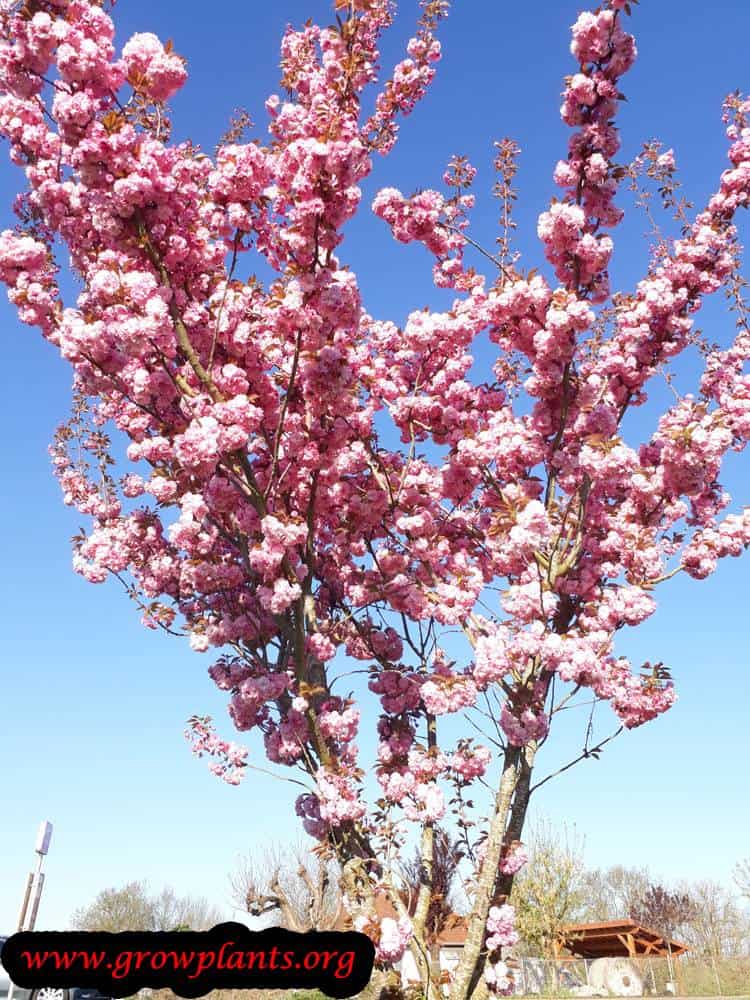
- Growth Habit & Form: Upright deciduous tree with a spreading crown, prized for its flowering display.
- Lifespan & Maturity: A long-lived ornamental cherry that reaches flowering size within several years.
Anatomy & Physical Features
- Leaves & Foliage: Green to reddish (bronze when young) elliptic leaves that drop in winter.
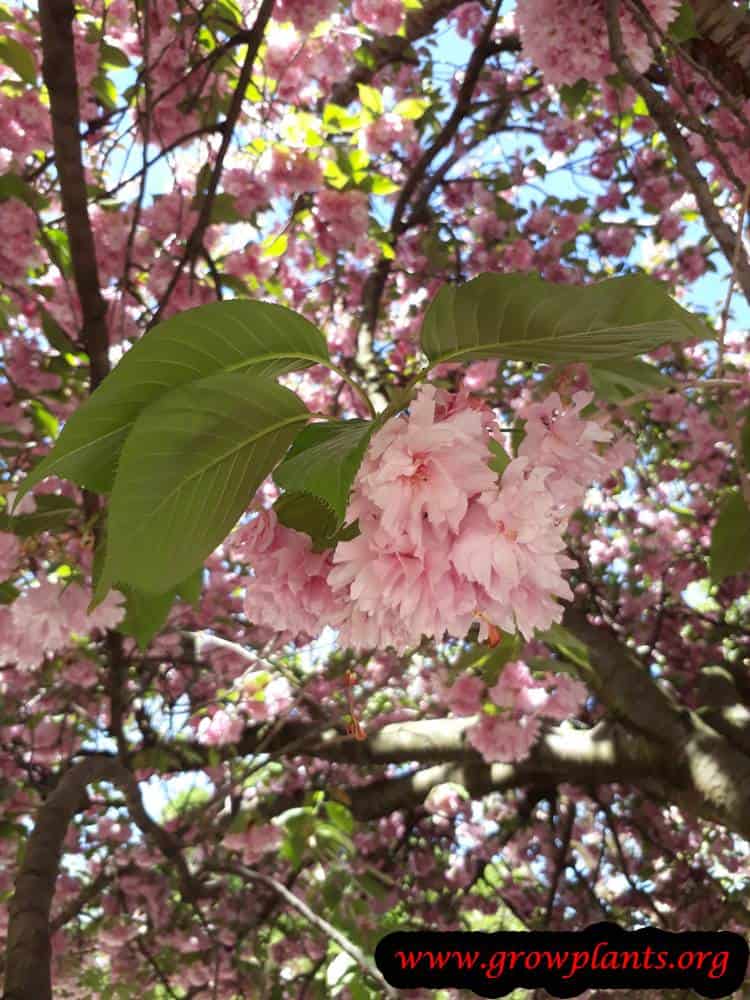
- Flower Characteristics: Showy pink or white flowers ranging from five-petalled to fully double, borne in clusters in spring.
- Fruit Profile: Small red cherries about 1-3 cm across may follow, but they are bitter and not worth eating.
Primary Uses & Landscape Value
- Functional & Ornamental Roles: Grown as a flowering ornamental and specimen tree for its spring blossom, and popular for bonsai.
Care Guide: Planting, Soil & Watering
Overview: The Kanzan flowering cherry is a deciduous ornamental tree grown for its spring blossom, needing a spell of winter chill and a sunny, sheltered spot in deep, fertile, well-draining soil. It takes a moderate to generous supply of water through the growing season and demands good drainage to avoid root problems.
Quick Care Requirements
| Requirement | Ideal Condition |
|---|---|
| Planting Season | While dormant in late winter to early spring, before the buds break |
| Growth Rate | Moderate |
| Soil Type | Deep, fertile, well-draining soil |
| Water Need | Moderate to High — water deeply through the growing season, letting the topsoil dry between waterings |
Planting & Establishment
- Best Planting Season: Plant while the tree is dormant, in late winter to early spring before growth resumes; bare-root trees establish best set out in this window.
- How to Plant:
- Hole Preparation: Dig a hole two to three times the width of the root ball and no deeper than it, so the roots can spread into firm, undisturbed soil.
- Soil Amendments: Loosen the backfill and mix in a little compost if the soil is poor, but keep drainage sharp — these trees dislike wet, heavy ground.
- Planting Depth: Set the tree at the depth it grew in the nursery, keeping the graft union well above soil level and never burying the trunk.
- Growth Speed & Expectations: Expect a moderate pace, the tree building its flowering canopy over the first few years.
Soil, Watering & Drainage Care
- Soil Mix & Drainage Needs: Sharp drainage is essential — plant in well-draining soil, on a slight mound if your ground is heavy, since waterlogging causes root rot. It also takes well to container and bonsai culture in a free-draining mix.
- Watering Schedule & Technique:
- Young / Newly Planted: Water young trees regularly through their first seasons to keep the root zone moist while they establish.
- Established: Water deeply but let the topsoil dry between waterings, giving steady moisture through the growing season.
- Seasonal Adjustments: Increase watering in hot, dry weather and cut right back over the dormant winter months.
Climate, Light & Hardiness
Kanzan Japanese flowering cherry is a cold-hardy ornamental tree needing a real winter chill for its dramatic double-flowered spring bloom, though it can also succeed in some Mediterranean and subtropical gardens. It grows best in full sun with good general cold hardiness once dormant.
Quick Climate Specifications
| Climate Zones | Temperate, cold; some Mediterranean or subtropical areas |
|---|---|
| USDA Hardiness Zones | 5–9 |
| Frost Tolerance | High (dormant tree); flowers more frost-sensitive |
| Light Conditions | Full Sun |
Sunlight & Light Exposure
Optimal Light Setup
Full sun gives the strongest growth and the fullest spring bloom; avoid shaded planting sites.
Shade & Heat Management
The tree tolerates full-sun exposure across its temperate-to-subtropical climate range without special shading needs.
Temperature Extremes & Hardiness
USDA Hardiness & Regional Limits
This cultivar is hardy in USDA zones 5–9, spanning cold temperate winters through milder Mediterranean and subtropical conditions.
Cold Damage & Winter Protection
Mature, dormant trees handle winter cold well within their rated zones; if the tree is attacked going into winter, clearing fallen leaves and fruit and pruning out infected branches helps it recover through the cold season.
Frost Sensitivity
Open blossoms are considerably more frost-sensitive than the dormant tree, so a late spring frost can shorten or damage the ornamental bloom.
Chilling Requirement
Winter chilling hours are noted as important for this cherry; without sufficient cold dormancy, spring flowering suffers.
Wind, Humidity & Microclimate
Microclimate Recommendations
A sunny site with good air movement, away from frost pockets, best protects the spring blossom display.
Growing in Pots, Balconies & Indoors
Prunus serrulata ‘Kanzan’ is a full-sun, deciduous flowering cherry of 5-10 m (15-30 ft). The grower marks it as not a houseplant – it needs a winter chill to rest and strong sun to flower well. The grower confirms it can be grown in a container – practical while the tree is young or on a dwarfing rootstock.
Quick Details
- Container Size: A large tub or half-barrel (40-60 L+); a container home only while young or on a dwarf rootstock
- Indoor Suitability: Not a houseplant – too large, needs full sun and a cold winter rest
- Best Spot: Full sun, outdoors
- Soil & Drainage: Rich, free-draining mix
- Watering in Pots: Average to generous while in leaf; pots dry fast
Indoors & On the Windowsill
- Not a houseplant: The grower marks it unsuitable indoors. It needs a period of winter cold to go dormant and strong outdoor sun to flower and fruit – conditions a room cannot provide.
- Why grow it potted then: A container simply lets you grow a tree where there is no open ground, or keep a dwarf form on a patio – it still lives outdoors year-round.
- Safety: Like all stone-fruit relatives, the seeds/pits and wilted leaves contain natural cyanide compounds – keep prunings and fallen pits away from pets and grazing animals.
On a Balcony or Patio
- Light & wind: Give it the sunniest, most open spot; stake young trees and shelter them from strong wind, and remember walls and paving reflect heat that dries pots quickly.
- Weight & drainage: A fruiting tree in a full tub is heavy – set it on castors or its final position, and make sure drainage runoff has somewhere to go on a balcony.
- Cold rest: Leave the pot outdoors through the cold season so the tree gets the winter chill it needs to flower and fruit.
Choosing the Pot, Soil & Long-Term Care
- Pot & drainage: Use the largest practical tub with strong drainage holes; skip a standing-water saucer to avoid root rot. Terracotta breathes and dries out faster, while glazed or plastic holds moisture longer.
- Potting mix: A well-aerated, organic-rich mix – peat or coir blended with perlite or vermiculite – keeps roots oxygenated in a pot.
- Feeding: Potted plants need feeding a little more often than those in open ground, as regular watering leaches nutrients from the mix. Feed through the growing season for good flowering and fruit.
- Repotting & pruning: Refresh the mix and root-prune every couple of years, and prune the top to keep a compact, productive shape in scale with the tub.
- Long term: Containers suit it only while young or on a dwarfing rootstock; a standard tree ultimately needs the open ground.
Fertilizing & Feeding
A moderate feeder valued for its profuse, full spring flower clusters: balanced feeding supports the post-bloom leaf flush, kept restrained since this vigorous cultivar can put on more wood than bloom if overfed.
Quick Fertilizing Specs
| Feeding Level | Moderate feeder |
|---|---|
| Main Nutrient Priority | Balanced feeding, kept restrained, that favors flower bud formation over this cultivar’s naturally vigorous wood growth |
| Best Feeding Period | Right after the spring bloom fades, as new leaves expand |
| Organic Options | Compost or aged manure worked into the root zone, or into the container mix if grown as bonsai or in a planter |
| Reduce/Stop Feeding | Hold off on late-season feeding so growth can harden before this cold-requiring tree goes dormant |
| Micronutrients | Iron and potassium-related nutrition are the main concerns for this genus; correct only a diagnosed deficiency with a targeted product |
| Soil pH | Slightly acidic to near neutral, in well-drained soil |
Feeding by Growth Stage
Post-bloom leaf flush
Support the flush of new leafy growth that follows this cultivar’s full, showy spring bloom.
| Nutrient direction | A balanced complete fertilizer, used with restraint, supports steady leafy growth without amplifying this cultivar’s already vigorous habit. |
|---|---|
| Timing | Right after the spring bloom fades, as new leaves expand. |
| Frequency | A single balanced feeding as growth resumes is usually enough for garden trees; a bonsai or container specimen often needs lighter, more frequent feeding. |
| Fertilizer types | A balanced complete fertilizer, applied moderately, Compost or aged manure worked into the soil or container mix |
| Precautions | This tree is noted as very sensitive to pests and disease, and it is naturally vigorous; avoid pushing further soft, nitrogen-heavy growth that draws aphids and borers or overwhelms the bloom with foliage. |
Building next season’s flower buds
Support flower bud formation during the growing season so next spring’s full flower clusters are abundant.
| Nutrient direction | Continued, restrained balanced feeding through the growing season favors flower bud set over this cultivar’s naturally strong wood growth. |
|---|---|
| Timing | Through the summer growing season, well before the next bloom and the bees that pollinate it. |
| Frequency | At most one additional light feeding if growth looks weak; established, vigorous trees usually need none. |
| Fertilizer types | A balanced complete fertilizer, used sparingly, Organic matter as a soil-building mulch |
| Precautions | Avoid a second heavy feeding late in the season, which can push soft new growth instead of flower buds and delay hardening before the chilling period this tree needs. |
Autumn and winter dormancy
Let the plant harden off and rest through its dormant, chilling-hour season without pushing new growth.
| Nutrient direction | None – withhold fertilizer while the plant is dormant. |
|---|---|
| Timing | Autumn through winter, once leaves drop and growth stops. |
| Frequency | No feeding during dormancy; resume only when spring growth begins. |
| Fertilizer types | No feeding at this stage; do not fertilize a dormant plant. |
| Precautions | Do not fertilize now – feeding a dormant plant does not help it and can encourage untimely soft growth ahead of frost or cold snaps. |
Nutrient Deficiency Signs & Corrections
New leaves turn yellow between dark green veins, most visible on the newest growth.
| Possible causes | high soil pH limiting iron availability, poorly drained or waterlogged soil, root stress from recent transplanting or root damage |
|---|---|
| Appears first on | youngest leaves at branch tips |
| What to check | soil pH and drainage, recent root disturbance or waterlogging, whether yellowing is interveinal or uniform |
| Possible correction | Correct soil pH where practical and apply a chelated iron product per its label if the deficiency is confirmed. |
Overall pale, light-green foliage and noticeably reduced vigor for a cultivar normally known for strong growth.
| Possible causes | low soil nitrogen, nitrogen loss from heavy rain or irrigation, competition from grass or weeds around the root zone |
|---|---|
| Appears first on | older, lower leaves |
| What to check | recent feeding history, weed or turf competition near the trunk, overall growth compared with this cultivar’s usual vigor |
| Possible correction | Apply a balanced fertilizer during the growing season and keep the root zone free of competing vegetation. |
Leaf margins scorch or curl on older leaves as the season progresses.
| Possible causes | low soil potassium, sandy soil that leaches nutrients readily, an imbalance from consistently heavy nitrogen feeding |
|---|---|
| Appears first on | margins of older leaves |
| What to check | soil texture and drainage, recent feeding balance between nitrogen and other nutrients, whether scorch tracks with the most vigorous growth |
| Possible correction | Rebalance feeding toward a fertilizer with adequate potassium rather than a strongly nitrogen-heavy product. |
Pruning, Training & Seasonal Maintenance
‘Kanzan’ is a vigorous, upright-spreading flowering cherry cultivar (5–10m) prized for its double pink blossom, commonly grown as a street or park tree. It tolerates moderate pruning, mainly directed at correcting its known weak point: strongly ascending scaffold branches that develop narrow crotch angles and included bark if not managed while young, a well-documented structural issue for this specific cultivar. Flowers form on one-year and older wood, opening before/with the leaves, so the safest, most effective window is summer, right after bloom – not the dormant winter period, since Kanzan shares the wider species’ vulnerability to silver leaf disease and bacterial canker through winter wounds.
Quick Pruning & Maintenance Specs
| Pruning Tolerance | Moderate |
| Primary Pruning Window | Summer, shortly after flowering, while in leaf |
| Secondary Maintenance Window | None scheduled – sanitary removal as soon as damage is seen |
| Typical Frequency | Light-moderate in youth (structural correction), light thereafter |
| Main Objective | Correct narrow/included-bark scaffold unions while young; sanitary removal later |
| Young Plant Priority | Widen effective branch spacing; remove codominant/narrow-angle competitors early |
| Mature Plant Priority | Sanitary removal; monitor previously corrected unions |
| Best Tool Type | Loppers/saw for young structural cuts; bypass secateurs for small wood |
| Avoid Heavy Pruning During | Dormant autumn–winter–early spring (disease risk and bloom-bud loss) |
Pruning by Plant Age & Size
Newly Established
Minimal – remove only damaged growth from transplant stress.
Young / Formative
This is the critical window for Kanzan: its vigorous, strongly upright branching habit readily produces codominant stems and narrow crotch angles that trap bark and become long-term failure points. Select well-spaced scaffold branches with the widest available angles and remove competing codominant leaders early, while cuts are still small.
Mature / Established
Mostly sanitary; periodically inspect previously corrected unions and any older narrow crotches for early signs of bark inclusion or cracking, addressing them while still manageable.
Seasonal Pruning Schedule
| Stage | Objective | Remove | Do Not Remove | Response / Flowering Impact |
| Post-Flowering (Summer) | Structural correction (young trees) and sanitary cuts | Codominant/narrow-angle competing shoots, dead or crossing wood | Healthy wood not needed for structure | Wounds close well in active summer growth; no bloom loss, since next year’s buds haven’t yet formed |
| Ongoing Sanitary | Limit disease spread and catch early union failure | Storm damage, dieback, or a union showing early bark inclusion | — | Early correction is far less disruptive than removing a large failed limb later |
Flowering & Fruiting Wood
Flowers open on spurs of one-year and older wood, before or with leaf-out; Kanzan’s double flowers set little to no fruit. Pruning between late summer and spring removes flowers in proportion to what’s cut; summer pruning after bloom avoids this.
Structural Pruning & Training
The defining structural task for this cultivar is early correction of narrow, included-bark scaffold unions on its vigorous ascending branches – addressing this while the tree is young prevents the limb splitting Kanzan is known for as it matures. Otherwise, remove crossing/rubbing wood as usual.
Special Growth to Remove
Kanzan is a grafted cultivar – remove rootstock suckers from below the graft union promptly. Remove watersprouts that arise from summer pruning cuts, especially near any corrected union.
Container & Small-Space Pruning
Only practical while young and small, given its eventual 5–10m size and vigorous growth rate; plan to plant out before container culture becomes limiting.
Tools
- Bypass secateurs – small wood and spur cuts
- Loppers – young-tree codominant-shoot removal
- Pruning saw – larger structural cuts on an established tree
Tool Hygiene & Disease Risk
Increased/High-risk: shares the species’ susceptibility to silver leaf and bacterial canker. Disinfect blades between cuts on diseased or previously failed wood; prune only in dry weather.
Cut Placement & Technique
Cut just outside the branch collar; when removing a codominant competitor, cut cleanly back to the trunk or main scaffold rather than leaving a stub; stage-remove any larger limb to prevent bark tear.
Heavy Pruning & Rejuvenation
Limited tolerance for hard rejuvenation. If a poorly angled union has already failed or split, remove the damaged portion cleanly and reassess the remaining framework rather than attempting a single large corrective cut.
Post-Pruning Care
Monitor cut sites and any corrected union into autumn for gumming/oozing or cracking; no extra feeding needed after routine pruning; water normally.
Common Pruning Mistakes
- Skipping young-tree structural correction, letting narrow crotch angles set in
- Pruning in winter (disease entry plus lost bloom)
- Leaving stubs when removing competing codominant stems
When NOT to Prune
Avoid dormant autumn–winter–early spring, during active flowering, in wet weather at any time, and right after transplanting.
Recommended Tools (by task)
| Task | Tool Category | Why |
| Young-tree codominant/narrow-angle correction | loppers | Handles the medium-diameter competing shoots that must be removed while structural correction is still easy |
| Larger structural or sanitary cuts on an established tree | pruning_saw | Needed once scaffold or corrected-union wood exceeds lopper capacity |
| Small spur and sanitary wood cuts | bypass_secateurs | Routine summer maintenance on thin wood |
| Between-cut hygiene on diseased or failed wood | blade_disinfectant | Real silver leaf/bacterial canker risk on ornamental Prunus |
Pruning Troubleshooting
| Problem | Possible Cause | What to Check | Corrective Action |
| Limb splitting or cracking at a branch union | Narrow crotch angle with included bark, left uncorrected when young | Union angle and bark inclusion on major scaffolds | Remove or cable the weaker member; correct remaining narrow unions early on any younger replacement growth |
| Gumming or oozing at a cut site | Bacterial canker entering a dormant-season wound | Timing of last pruning versus season | Prune only in summer going forward; remove infected wood into healthy tissue, disinfecting tools |
| Reduced bloom the following spring | Heavy structural pruning done in dormant winter | Timing versus bloom season | Shift structural work to immediately post-bloom next year |
Propagation Guide
Kanzan is a named, vigorous double-flowered cherry selection, so it is propagated by grafting or budding to keep its exact double pink flowers and growth habit; the site lists only ‘Plant’ as the starting method here, with no seed option. This is a Specialist propagation task, standard for nurseries but demanding for an inexperienced home grower.
Quick Propagation Specs
| Best Propagation Method | Grafting or budding onto a flowering-cherry rootstock |
| Alternative Methods | Softwood or semi-hardwood cuttings under mist (variable success, not standard) |
| Propagation Difficulty | Specialist |
| Seed True-to-Type | No – not offered by the site as a starting method |
| Vegetative True-to-Type | Yes |
| Best Propagation Season | Late winter for dormant grafting; mid-to-late summer for chip- or T-budding, historically the standard commercial method for this cultivar |
| Cutting Rooting Time | When attempted, often several weeks under mist, with inconsistent success |
Stem Cuttings
Semi-hardwood cuttings under mist with a rooting hormone are occasionally attempted, but success is inconsistent; budding onto rootstock is the long-established, reliable route for this cultivar.
Grafting & Budding
Why Grafting Is Used
Grafting or budding preserves Kanzan’s double-flowered form and vigorous growth habit; the site indicates this is necessary and lists no seed-starting method here.
Preferred Grafting Methods
Whip-and-tongue or cleft grafting while dormant; chip- or T-budding in summer, historically the standard commercial method for this cultivar.
Rootstock
Most commonly grafted onto Prunus avium (wild cherry/gean) seedling rootstock, sometimes Prunus mahaleb; exact choice varies by nursery and region.
Scion Selection
Healthy, dormant one-year wood from a verified Kanzan tree.
Best Grafting Season
Late winter (dormant grafting) or summer (budding).
Graft Aftercare
Kanzan is a vigorous grower, so shoots arising from the rootstock below the graft union should be removed promptly so they don’t outcompete the scion.
Bloom & Edible Flower Guide
Quick Details
- Bloom Season: Spring
- Time to First Bloom: Grafted trees usually begin flowering within a few years of planting
- Flower Appearance: Full, deep-pink double flowers, many-petalled, borne in heavy clusters
- Edibility: The blossoms are edible in the traditional sakura sense – Kanzan’s double flowers are the classic ones salted or pickled for teas and sweets; enjoy in moderation
Detailed Blooming Overview
Kanzan is the best known of the double-flowered Japanese cherries, smothering its branches in showy, many-petalled pink pompoms in spring. These full double blossoms are exactly the ones traditionally salted to make pickled sakura for teas and confections, enjoyed in small amounts.
Flower Characteristics
- Pink flowers, five to many petals – Kanzan is strongly double
- Flowers carried in generous clusters along the branches
- Prized above all for their ornamental spring display
Bloom Care & Thinning
- Thinning: in the first years, thinning the bloom helps the young tree build strength.
- Pollination: pollinated by bees.
- Harvesting blossoms: if you gather the double flowers for culinary use, pick clean, freshly opened blooms.
Bloom Health & Protection
- Brown rot / blossom blight (Monilinia): damp spring weather can brown and collapse the flowers. Good airflow, clearing away mummified blooms, and a sulfur-based fungicide around bloom help.
Fruit & Uses
The edible part of this ornamental flowering cherry is the flower, not the fruit: Kanzan’s large, double pink blossoms are the classic cultivar salt-cured in Japan for sakura-zuke, then used for sakurayu (salted cherry-blossom tea) and to flavor sweets. The small red fruit that follows the bloom is technically edible but the grower notes for this plant describe it as bitter and not recommended for eating, so it should be left for ornamental interest and wildlife rather than eaten.
Quick Edible Specs
| Edible Parts | Flowers (the fruit is not recommended) |
|---|---|
| Main Use(s) | Traditional Japanese salted-blossom tea and confectionery flavoring (culinary); tree is otherwise grown purely as an ornamental |
| Eaten Raw or Cooked | Flowers are salt-cured, not eaten fresh off the tree |
| Preparation Required | Salt-curing (with a little plum vinegar) for the flowers |
| Harvest Season | Spring, at bloom |
| Storage | Salted blossoms keep, preserved in salt, for later use |
| Safety/Toxicity Caveat | Fruit is bitter and not recommended for eating; only use blossoms from trees grown without pesticide spraying; as with all Prunus, avoid eating pits, seeds or chewed bark/leaves, which can contain cyanogenic compounds |
Flowers & Flower Buds
Kanzan’s dense, double pink flowers open in mid-spring. Picked just as they open and free of spray residue, they can be layered in salt (traditionally with a touch of plum vinegar) to make sakura-zuke, then later steeped in hot water for a pale pink ceremonial tea or used to flavor sakura-mochi and other confections. This is a long-standing Japanese culinary tradition tied to large double-flowered cherry cultivars like this one, not a claim made for the fruit.
Fruit (not recommended)
A small, red drupe about 1–3 cm follows the bloom. The site’s own grower notes describe it as edible but bitter and specifically advise against eating it, so it is best treated as an ornamental curiosity or left for birds rather than harvested as food.
Preparation, Uses & Safety
Only the flowers have an established food use here, and only when the tree has not been sprayed with pesticides. The fruit should not be relied on as food given its documented poor palatability. As with other Prunus species, avoid eating the pit and don’t chew leaves or bark, which can contain cyanogenic compounds.
Pests, Diseases & Troubleshooting
Overview: Ornamental flowering cherries and plums are generally tough but share the genus ’s familiar troubles: aphids curling the new growth, caterpillars, scale and clearwing borers, plus fungal and bacterial problems such as blossom wilt (brown rot), shot-hole, silver leaf and bacterial canker that enter through wounds. The golden rule is to prune Prunus only in dry summer weather, keep trees vigorous and manage problems culturally first.
Quick Troubleshooting Overview
| Issue / Pest | Main Symptom | Primary Solution |
|---|---|---|
| Aphids | Curled, sticky new shoots; sooty mould | Dormant oil; insecticidal soap; beneficials |
| Borers / twig borer | Wilting shoot tips, gummy trunk holes | Vigour, sanitation, dormant oil, nematodes |
| Brown rot | Wilted blossom, rotting fruit, mummies | Remove mummies; thin; sulfur/copper at bloom |
| Shot-hole / leaf curl | Peppered holes or curled red leaves | Copper at leaf-fall and bud-swell; rake leaves |
| Bacterial canker / silver leaf | Oozing cankers; silvered leaves; dieback | Prune only in dry summer; cut below infection |
| Gummosis / chlorosis | Gum oozing; yellowing between veins | Fix stress/drainage; chelated iron on alkaline soil |
Common Pests & Management
- Aphids (Aphidoidea):
- Symptoms: Colonies of small green, black or grey aphids cluster on the undersides of new leaves and shoot tips in spring, tightly curling and puckering the young foliage. They coat growth in sticky honeydew that blackens with sooty mould, and they can transmit viruses.
- Prevention & Control: Encourage ladybirds, lacewings, hoverflies and parasitic wasps, and avoid over-feeding with nitrogen, which pushes soft, aphid-prone growth. Blast small colonies off with water and prune out badly curled tips. A dormant-season horticultural oil smothers overwintering eggs; in the growing season use insecticidal soap or neem on leaf undersides, treating in the evening to spare pollinators.
- Caterpillars & tent caterpillars (Malacosoma & other Lepidoptera):
- Symptoms: Silk tents in branch forks and colonies of caterpillars that strip leaves in spring, sometimes defoliating whole branches of ornamental cherries and plums; leaves are chewed to the veins.
- Prevention & Control: Prune out and destroy the silken tents and egg bands by hand, and encourage birds and parasitic wasps. Bacillus thuringiensis is very effective against young caterpillars and spares beneficials; reserve broader sprays for severe, repeated defoliation.
- Peachtree / clearwing borer (Synanthedon exitiosa & related):
- Symptoms: Clear-winged moths lay at the trunk base; larvae tunnel under the bark near the soil line, pushing out gummy, sawdust-mixed frass. Girdled young trees weaken, and cankers and dieback follow.
- Prevention & Control: Keep trees vigorous and avoid wounding the lower trunk, since borers target stressed, damaged bark. Remove weeds and mulch from the crown, probe and dig out larvae from the entry holes, and paint trunks white to deter egg-laying and sunscald. Pheromone traps monitor flight, and beneficial nematodes drenched into the tunnels help.
- San Jose & other scale (Quadraspidiotus perniciosus):
- Symptoms: Tiny grey, circular armoured scales encrust bark, twigs and fruit, each feeding site often ringed with a reddish halo on the fruit. Heavy infestations cause bark cracking, dieback and reduced vigour.
- Prevention & Control: Conserve parasitic wasps and predatory beetles, which usually hold scale in check. Prune out heavily encrusted wood. The mainstay is a thorough dormant-season horticultural oil spray to smother overwintering scale, repeated as needed and targeting the mobile crawler stage in the growing season.
- Spider mites (Panonychus ulmi & Tetranychus urticae):
- Symptoms: Fine pale stippling and bronzing of the leaves in hot, dry, dusty summers, with tiny mites and light webbing on the undersides; badly affected leaves yellow and drop, weakening the tree.
- Prevention & Control: Avoid dust and drought stress, hose down foliage, and conserve predatory mites by avoiding broad-spectrum sprays that flare mite numbers. A dormant oil kills overwintering eggs; in summer treat hot-spots with horticultural oil or insecticidal soap on the leaf undersides.
Diseases & Fungal Issues
- Brown rot (Monilinia fructicola / laxa):
- Symptoms: Blossoms brown and wilt (blossom blight), twigs develop cankers with gum, and ripening fruit shows fast-spreading brown, sunken rot topped with tan, powdery spore tufts. Rotted fruit shrivels into hard ‘mummies’ that hang on the tree.
- Treatment & Management: The key stone-fruit disease: remove all mummified fruit and blighted twigs, thin fruit so they do not touch, and open the canopy for fast drying. Avoid wounding fruit at harvest. Protective sprays — sulfur or copper, and where needed a labelled fungicide — are timed to blossom and again as fruit ripens in wet seasons.
- Shot hole / Coryneum blight (Wilsonomyces carpophilus):
- Symptoms: Small purple-red spots on leaves whose centres drop out to leave a ‘shot-hole’ peppered look; buds, twigs and fruit can also develop spots and gumming. Spread by wet, splashing conditions.
- Treatment & Management: Prune out infected twigs and buds, rake up fallen leaves, and avoid overhead watering. A copper fungicide at leaf-fall and again at bud-swell protects new growth in wet climates; keep the canopy open so foliage dries quickly.
- Powdery mildew (Podosphaera pannosa / Sphaerotheca):
- Symptoms: A white, powdery coating on young leaves, shoots and sometimes fruit (as rusty, roughened patches on peaches); shoots distort and growth is checked. Favoured by warm days, cool nights and crowded, shaded canopies.
- Treatment & Management: Prune for an open, airy canopy, remove badly infected shoots, and avoid excess nitrogen. Sulfur or potassium-bicarbonate sprays, or horticultural oil, check active mildew; choosing resistant ornamental varieties reduces the problem.
- Silver leaf (Chondrostereum purpureum):
- Symptoms: A silvery sheen develops on the leaves of affected branches, which later die back; a cut branch shows a brown-purple stain in the wood. The fungus enters through pruning wounds, mainly in the dormant, wet season.
- Treatment & Management: Prune Prunus only in dry summer weather when wounds seal fast and spores are scarce, never in wet winter. Cut out affected limbs well below the wood staining, disinfect tools, and remove dead wood and bracket fungi that release spores. Keep trees vigorous; there is no chemical cure.
- Bacterial canker & gummosis (Pseudomonas syringae):
- Symptoms: Sunken, dark cankers on branches and trunk that ooze amber gum, dying buds and spurs, and blackened, wilting shoots in spring; whole limbs may be girdled and killed. Cherries and apricots are especially prone.
- Treatment & Management: Prune out cankers in dry weather in summer (not wet spring), cutting well below the infection and disinfecting tools, and seal or leave clean wounds to callus. Keep trees vigorous, avoid trunk injuries, and manage frost damage that opens entry points. Autumn copper sprays give some protection; choose resistant rootstocks where the disease is chronic.
- Phytophthora root & crown rot (Phytophthora spp.):
- Symptoms: Slow decline, sparse pale foliage, dieback and sometimes sudden collapse, with dark, decayed roots and a discoloured, oozing crown at the soil line. Typical of heavy, waterlogged soils and deep planting.
- Treatment & Management: Plant on well-drained ground or a raised berm, keep the graft union and crown above soil, and water deeply but infrequently. Improve drainage, use tolerant rootstocks, and avoid piling mulch against the trunk; there is no cure once the crown is destroyed.
Growing Difficulties & Abiotic Problems
- Gummosis (gum exudation):
- Cause & Symptoms: Amber, sticky gum oozes from bark wounds, cracks or borer holes — a general stress response to injury, borers, canker disease, sunscald or waterlogging rather than a disease in itself.
- Correction Strategy: Find and fix the underlying cause: control borers and canker, avoid trunk wounds and mower/strimmer damage, prevent sunscald, and correct waterlogging. Keep trees vigorous with sound watering and feeding; healthy bark gums far less.
- Iron chlorosis:
- Cause & Symptoms: On alkaline or waterlogged soils the youngest leaves yellow between green veins as iron becomes unavailable; growth weakens and, if chronic, shoots die back.
- Correction Strategy: Improve drainage and add organic matter, avoid over-liming, and apply chelated iron (as a soil drench or foliar spray) for a quick correction while addressing soil pH for the long term.
- Frost damage to blossom:
- Cause & Symptoms: These early-flowering trees often bloom before the last frosts; a cold snap blackens open flowers and young fruitlets, causing crop loss and, at the trunk, sunscald/frost cracks.
- Correction Strategy: Site in a spot that is not a frost pocket, choose later-flowering or locally adapted varieties, and protect small trees with fleece on frosty nights. Whitewashing trunks reduces winter sunscald and bark splitting.
- Sunscald & poor drainage:
- Cause & Symptoms: Exposed bark on young trunks scalds and cracks in strong sun and winter cold, while waterlogged roots suffocate and predispose the tree to crown rot.
- Correction Strategy: Paint young trunks with white tree-paint or wrap them, plant on free-draining ground or a mound, and water deeply but avoid standing water. Mulch (kept off the trunk) keeps roots cool and evenly moist.
What Helps — Products & Tools
Good orchard practice does most of the work: an open, airy canopy, prompt removal of mummified fruit and prunings, clean fallen fruit, and pruning only in dry summer weather to keep canker and silver leaf out of wounds. Useful tools include dormant-season horticultural oil for aphids, scale and mite eggs, insecticidal soap or neem in the growing season, pheromone traps and mating disruption plus spinosad or Bacillus thuringiensis for the fruit and shoot moths, and copper or sulfur fungicides for brown rot, leaf curl and shot-hole. Use chelated iron for chlorosis and spray oils in the evening to protect bees.