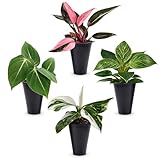


Plant Profile & Key Characteristics
Overview: A climbing evergreen philodendron hybrid whose stems reach 1-5 m (3-16 ft), grown for its large, deeply cut heart-shaped foliage. It is an ornamental foliage plant for warm gardens and indoor culture.
Quick Specifications
| Specification | Attribute |
|---|---|
| Plant Type / Life Cycle | Perennial (evergreen climbing aroid) |
| Foliage Type | Evergreen |
| Mature Size | Stems climbing 1-5 m (3-16 ft) |
| Growth Rate | Moderate to slow |
| Root System | Climbing aerial roots at the nodes |
| Toxicity | Toxic if chewed — all parts contain insoluble calcium oxalate crystals that irritate the mouth and skin of people and pets |
| Hardiness | USDA zone 10b+; grown as a houseplant elsewhere |
Growth Form & Structure
- Height & Spread: Climbing stems reach 1-5 m (3-16 ft) up a support, staying more compact in a pot; suits a moss pole or a large container.
- Growth Habit & Form: Climbing aroid that grips its support with aerial roots produced at the nodes.
- Lifespan & Maturity: A long-lived perennial vine, readily propagated from cuttings or air-layering.
Anatomy & Physical Features
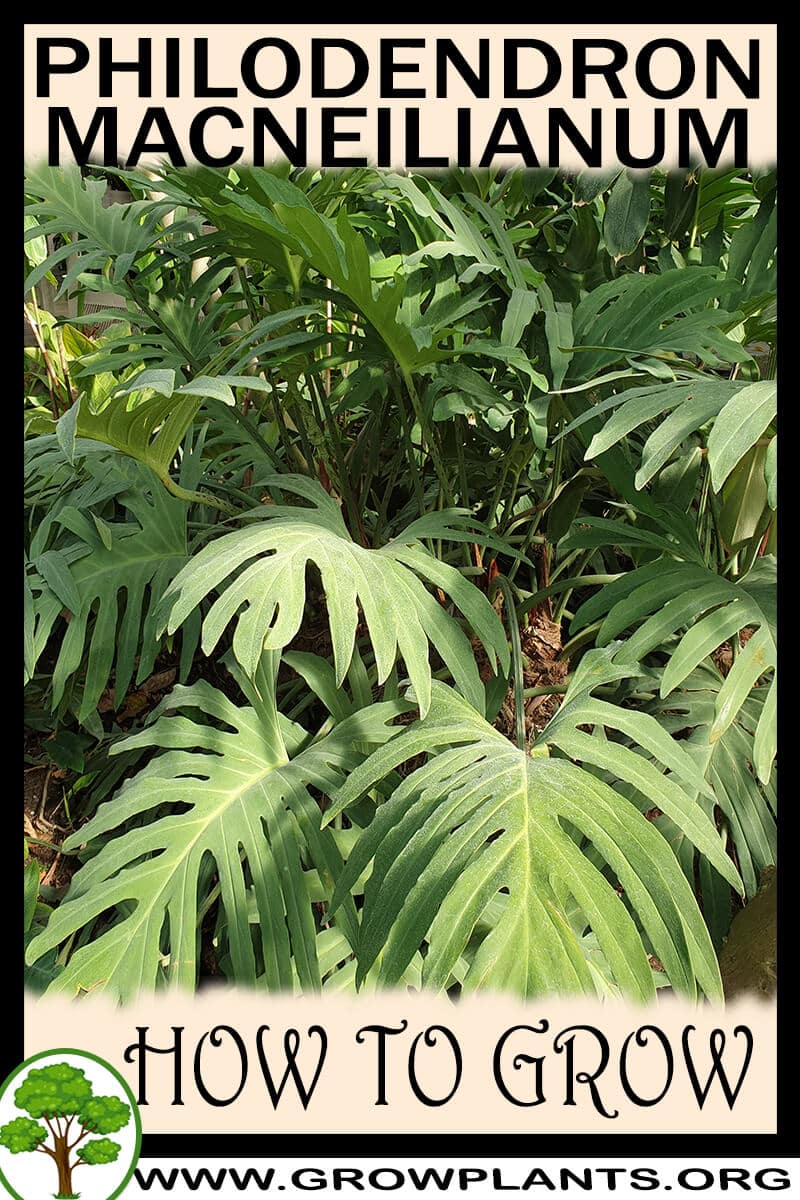
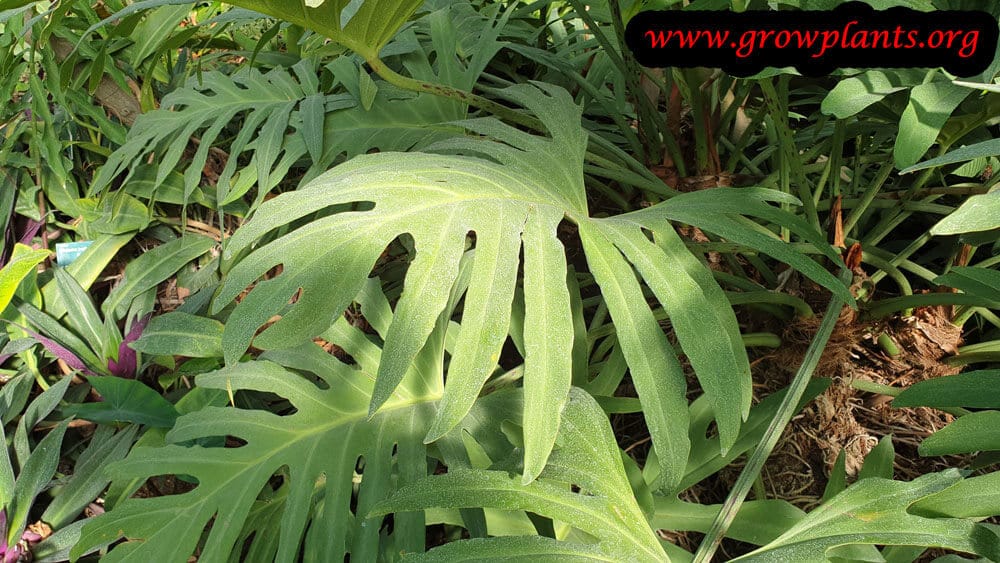
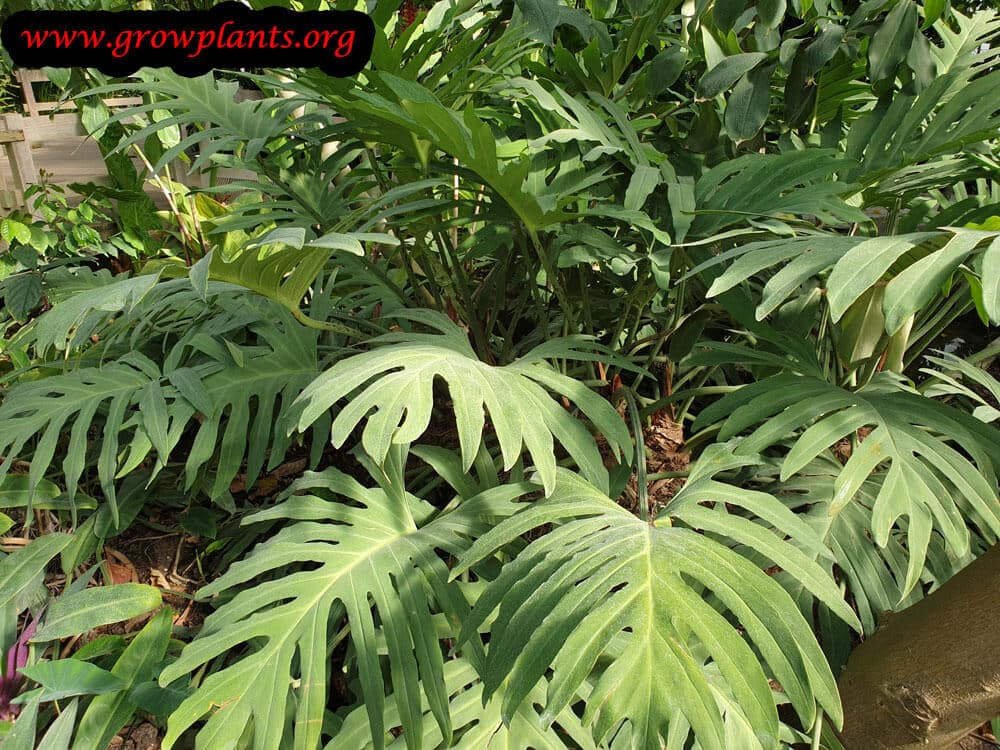
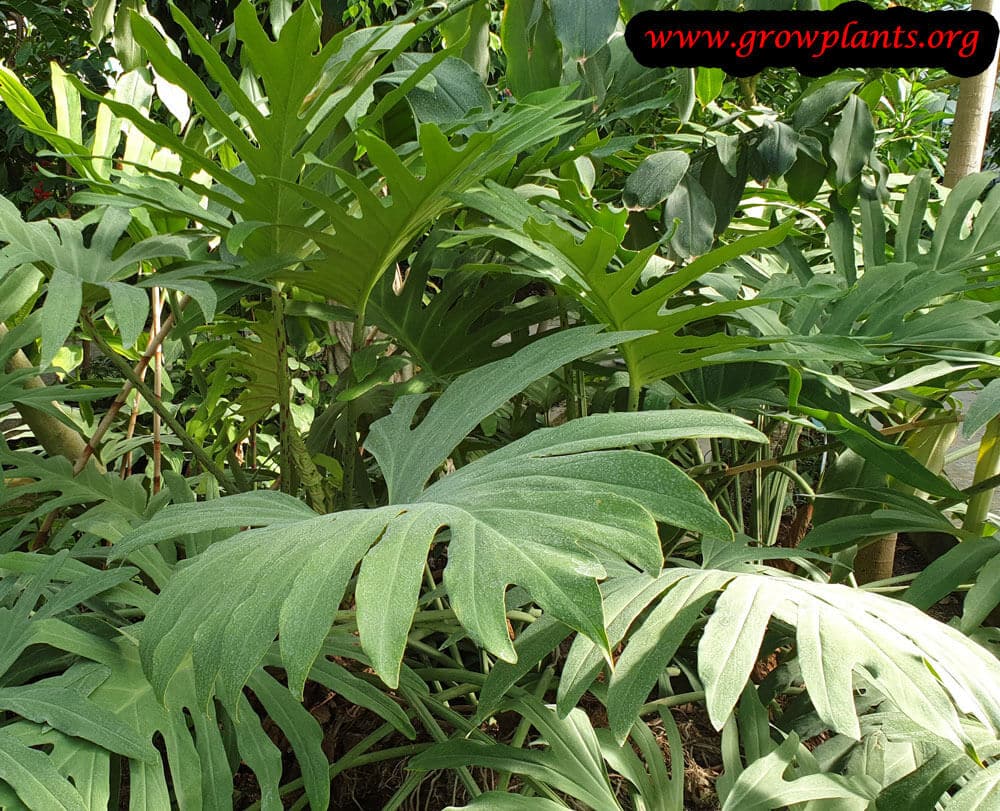
- Leaves & Foliage: Large glossy green heart-shaped leaves, deeply lobed and dissected.
- Flower Characteristics: A white-yellowish spathe, rarely produced in cultivation.
Primary Uses & Landscape Value
- Functional & Ornamental Roles: Grown as an ornamental climbing foliage plant for warm shaded gardens, large containers and indoor moss-pole displays.
Care Guide: Planting, Soil & Watering
Overview: This philodendron is a warm-climate aroid that thrives in bright, indirect light in rich, moisture-retentive but well-drained soil. It likes steady moisture and warmth and is sensitive to cold and harsh direct sun. As a climber it appreciates a moss pole or trellis.
Quick Care Requirements
| Requirement | Ideal Condition |
|---|---|
| Planting Season | Spring, summer or autumn in warm conditions; year-round indoors |
| Growth Rate | Slow to moderate |
| Soil Type | Rich, well-draining, moisture-retentive aroid mix |
| Water Need | Moderate to high — keep evenly moist, letting the surface dry slightly |
Planting & Establishment
- Best Planting Season: Plant in spring, summer or autumn during warm weather; indoors it can be potted year-round.
- How to Plant:
- Hole Preparation: Dig a hole about as deep as and a little wider than the root ball, and set a moss pole or trellis for climbing stems.
- Soil Amendments: Enrich the soil with compost and coarse organic matter so it holds moisture yet drains freely and stays airy.
- Planting Depth: Set the root ball level with the surface, keeping the crown and stem base at soil level rather than buried.
- Growth Speed & Expectations: Expect slow-to-moderate growth, reaching 1–5 m in ideal warm, humid conditions.
Soil, Watering & Drainage Care
- Soil Mix & Drainage Needs: Use a chunky, aerated aroid mix (with bark or perlite) that stays moist but drains fast; sharp drainage prevents root rot in the fleshy roots.
- Watering Schedule & Technique:
- Young / Newly Planted: Keep newly planted or potted plants evenly moist in a warm, humid, sheltered spot out of harsh sun.
- Established: Water when the top few cm of soil begin to dry, then water thoroughly and let excess drain away.
- Seasonal Adjustments: Water more in warm active growth and cut back in cool weather; protect from cold, which it resents.
Climate, Light & Hardiness
Philodendron MacNeilianum, a Philodendron fosterianum × macneilianum hybrid vine, shares its parent genus's love of warm, humid, frost-free conditions and grows outdoors year-round only in tropical, subtropical, or mild Mediterranean climates. It tolerates a broad range of light from fairly bright to shaded positions but is sensitive to harsh direct sun, and has no meaningful cold hardiness below USDA zone 10b.
Quick Climate Specifications
| Climate Zones | Tropical, subtropical, mild Mediterranean (or houseplant) |
|---|---|
| USDA Hardiness Zones | 10b+ |
| Light Conditions | Bright indirect to medium/low light (tolerates full sun to full shade, but harsh direct sun is best avoided) |
| Frost Tolerance | None |
Sunlight & Light Exposure
Optimal Light Setup
Grows well across a wide light range from bright indirect light down to fairly low light, which suits both shaded outdoor positions and typical indoor rooms.
Shade & Heat Management
Sensitive to full, direct sun despite its shade tolerance – the deeply lobed leaves can scorch or bleach in harsh exposure, so filtered or part-shaded light is the safer choice, especially in hot climates.
Best Exposure / Orientation
An east-facing or filtered exposure works well; avoid unobstructed south- or west-facing sun, particularly through a magnifying window pane indoors.
Temperature Extremes & Hardiness
USDA Hardiness & Regional Limits
Reliable, year-round outdoor growth is limited to zone 10b and warmer; elsewhere it is best grown as a houseplant, since it has no tolerance for outdoor winter cold.
Cold Damage & Winter Protection
Explicitly noted as sensitive to cold – keep it away from cold draughts, unheated rooms, and cold windowsills in winter, and maintain a consistently warm environment.
Frost Sensitivity
High – frost or near-freezing conditions are likely to cause significant damage.
Wind, Humidity & Microclimate
Humidity Preferences
Prefers consistently moist, humid conditions, reflecting its warm tropical/subtropical parentage.
Dry-Air Tolerance
Moderately tolerant of typical indoor air but can lose leaf quality in very dry, heated winter conditions – occasional misting or a humidity tray helps.
Microclimate Recommendations
Best sited in a warm, humid, draught-free spot with filtered light rather than direct hot sun.
Growing in Pots, Balconies & Indoors
Philodendron is one of the most popular houseplants of all, and the grower confirms it: a trailing or climbing aroid (stems can reach 1-5 m / 3-16 ft, but easily kept smaller) that thrives indoors in anything from bright shade to lower light. It needs no sunny window and is happy well inside a room.
Give it a moss pole or let it trail, keep it evenly moist, and it is about as forgiving as a houseplant gets – just site it away from curious children and pets.
Quick Details
- Container Size: A medium pot sized to the roots; pot up as it grows, or keep compact by trimming.
- Indoor Suitability: An excellent, very popular houseplant.
- Best Spot: Bright indirect light to shade; tolerant of lower light, out of harsh direct sun.
- Soil & Drainage: Light, aerated, organic mix – potting soil or peat/coir with perlite; free-draining.
- Watering in Pots: Keep evenly moist; let the top settle between waterings and never leave it waterlogged.
Indoors & On the Windowsill
- Genuine houseplant: Yes – a classic, easy indoor plant. It climbs a moss pole or trails from a shelf and copes with fairly low light.
- Safety: The leaves and sap contain calcium oxalate and are toxic if chewed – keep it out of reach of children and pets, and wash hands after pruning.
- Windowsill: Bright, filtered light is ideal; keep it off hot, sun-baked glass.
On a Balcony or Patio
- Light & shelter: In warm, frost-free weather it enjoys a shaded, sheltered balcony out of direct sun and wind; bring it in before cold nights.
- Container reality: Pots dry faster in reflected heat, so check moisture often and give it something to climb.
Choosing the Pot, Soil & Long-Term Care
- Pot & drainage: A medium pot with room to grow, plus a moss pole for the climbing stems. Give it strong drainage holes and skip a standing-water saucer to avoid root rot; terracotta breathes and dries faster, while glazed or plastic pots hold moisture longer.
- Potting mix: A light, aerated, organic-rich mix – potting soil, or peat/coir with perlite, enriched with a little humus or compost.
- Feeding: Potted plants use up their food faster because nutrients wash out with every watering, so feed lightly but more regularly than plants growing in open ground.
- Repotting: Refresh the mix and pot up every couple of years; trim long stems to keep it bushy and propagate the cuttings easily.
Fertilizing & Feeding
A light feeder grown mainly for its dramatic, deeply lobed leaves: feeding is held after planting or repotting, then kept light and balanced through active growth to support strong leaf form without forcing weak, floppy growth.
Quick Fertilizing Specs
| Feeding Level | Light feeder |
|---|---|
| Main Nutrient Priority | Balanced feeding with adequate nitrogen to support large, well-formed foliage |
| Best Feeding Period | Warm-season active growth in bright indirect light |
| Organic Options | Compost-based potting mix amendments where practical for container growing |
| Reduce/Stop Feeding | Reduce or pause feeding when light is low or growth clearly slows |
| Micronutrients | Usually supplied by a complete fertilizer; correct only a diagnosed deficiency |
| Soil pH | Prefers a slightly acidic, well-drained potting mix |
Feeding by Growth Stage
Establishment after planting or repotting
Let the root system recover and settle into fresh potting mix before adding fertilizer.
| Nutrient direction | None – fresh potting mix carries the plant through this settling-in period. |
|---|---|
| Timing | The weeks immediately following planting or repotting. |
| Frequency | No feeding at this stage; wait for a clear new leaf before starting to feed. |
| Fertilizer types | No feeding at this stage; fresh potting mix supports the plant while roots recover. |
| Precautions | Do not fertilize disturbed roots right after repotting; wait until new growth confirms recovery. |
Active foliage growth
Support the development of large, deeply lobed leaves with good color and substance.
| Nutrient direction | A balanced fertilizer with adequate nitrogen supports full, well-shaped new leaves. |
|---|---|
| Timing | Through the warm-season active growth period, especially in bright indirect light. |
| Frequency | A light, regular feeding while new leaves are actively unfurling. |
| Fertilizer types | A balanced complete houseplant fertilizer, A diluted liquid feed suited to container growing |
| Routine trace nutrients | iron, manganese |
| Precautions | Keep feeding light; a large-leaved philodendron in a container can accumulate fertilizer salts quickly. |
Low-light or cool-season slowdown
Avoid feeding beyond what the plant can use when leaf production slows.
| Nutrient direction | None – with new leaves not actively forming, added fertilizer just accumulates as salts. |
|---|---|
| Timing | Indoors during shorter, duller days or wherever light is limited. |
| Frequency | No feeding while leaf production has stalled; resume once a new leaf is clearly forming. |
| Fertilizer types | No feeding at this stage; withhold fertilizer until active growth resumes. |
| Precautions | Withhold fertilizer during slow growth; unused nutrients build up in the pot rather than being taken up. |
Nutrient Deficiency Signs & Corrections
New leaves emerge smaller and less deeply lobed than expected, and older leaves fade to pale green.
| Possible causes | low available nitrogen in exhausted potting mix, infrequent feeding or repotting, root crowding limiting nutrient uptake |
|---|---|
| Appears first on | new leaves and older, lower foliage |
| What to check | how long since the last feeding or repotting, root crowding in the pot, leaf size trend over recent growth |
| Possible correction | Resume a light, balanced feeding schedule and consider refreshing the potting mix if it is old. |
New leaves show yellowing between the veins while the veins themselves stay green.
| Possible causes | iron or manganese deficiency, often from an overly alkaline potting mix, cold, waterlogged, or compacted soil limiting root uptake, root rot restricting nutrient movement |
|---|---|
| Appears first on | newest leaves |
| What to check | potting mix pH and drainage, roots for rot or compaction, recent watering and temperature conditions |
| Possible correction | Improve drainage and root health first, then apply a chelated iron or manganese product per its label if the deficiency persists. |
Leaf edges and tips turn brown or crisp even with consistent watering.
| Possible causes | fertilizer salt buildup in a confined pot, under-watering that concentrates salts around the roots, tap water high in dissolved minerals |
|---|---|
| Appears first on | leaf margins and tips |
| What to check | recent feeding amount and frequency, watering consistency, any crust or residue on the soil surface or pot rim |
| Possible correction | Ease off feeding, flush the pot thoroughly with plain water to leach salts, then return to lighter feeding. |
Pruning, Training & Seasonal Maintenance
This philodendron hybrid (P. fosterianum × macneilianum) is a climbing vine with large, deeply lobed, almost shredded-looking leaves, and – as with most climbing philodendrons – leaf size and the degree of lobing increase once the vine is climbing a support rather than trailing loose. Pruning is about training and vine management rather than any structural framework: encourage branching by pinching, guide the vine onto a support to develop its full mature leaf form, and remove tired growth. Spring through summer, while it is warm and actively growing, is the safest and most effective time to cut back; the plant is noted as cold-sensitive, so avoid hard pruning heading into cool weather.
Quick Pruning & Maintenance Specs
| Pruning Tolerance | High – regrows readily from cuts and pinches |
| Primary Pruning Window | Spring to summer (active growth) |
| Secondary Maintenance Window | Early autumn light tidy, before cool weather sets in |
| Typical Frequency | Pinch/trim as needed through the growing season |
| Main Objective | Train onto a support for full mature leaf form; control legginess |
| Young Plant Priority | Attach young growth to a moss pole/support early |
| Mature Plant Priority | Cut back bare or wayward vines to a node; remove old leaves |
| Best Tool Type | Precision snips (thin, soft stems) |
| Avoid Heavy Pruning During | Cold weather / low light periods |
Pruning by Plant Age & Size
Newly Established
Let a new plant settle in before cutting; remove only damaged or yellowing leaves. If it is to be grown climbing (recommended for this hybrid’s best leaf form), set up a moss pole or support from the start rather than retrofitting one later.
Young / Formative
Pinch the growing tip early to build a branching base, and tie or guide young stems onto the support so the vine climbs rather than sprawls – climbing stems on this hybrid produce larger, more deeply cut leaves than trailing growth.
Mature / Established
Cut bare or overly long vines back to a node to force fresh branching low on the plant, and continue guiding new growth onto the support. Remove spent or yellowing leaves as they occur.
Seasonal Pruning Schedule
Pre-Growth / Early-Spring: cut back any winter-leggy growth to strong nodes before the main flush; response is vigorous new branching and climbing growth.
Ongoing Sanitary: remove individual dead or damaged leaves at any time; this species is not grown for flower, so it has no bearing on bloom.
Structural Pruning & Training
The defining training decision for this hybrid is climbing support: tie or clip new growth to a moss pole or trellis so it climbs, since the large, deeply lobed mature leaves this plant is grown for typically only develop fully on climbing stems. Pinch to build branching from the base, cut back any bare or etiolated (pale, stretched) stems, and remove crossing growth that tangles on the support.
Special Growth to Remove
Remove old, yellowing or damaged leaves as they occur. Aerial roots can be left to help the vine grip its support, or trimmed lightly for tidiness.
Container & Small-Space Pruning
In a pot, pair a sturdy moss pole with regular pinching to keep growth climbing upward and compact rather than sprawling; cut a leggy, low-light specimen back hard and it will reshoot from the remaining nodes.
Tools
Precision snips are sufficient for every cut on this soft-stemmed vine.
Tool Hygiene & Disease Risk
Routine. No significant tool-borne disease is noted for this hybrid; keep snips clean, especially when taking cuttings for propagation.
Cut Placement & Technique
Cut just above a leaf node so the next shoot and any aerial roots break from that point; when tying to a support, position ties loosely enough not to bind the stem as it thickens.
Heavy Pruning & Rejuvenation
Tolerated well: a bare, leggy vine can be cut back hard to a few strong nodes near the support and will reshoot densely. Do this at the start of the growing season for the fastest recovery.
Post-Pruning Care
Keep the plant warm and away from cold drafts after cutting back, and maintain normal watering and humidity; no extra feeding is needed simply because it was pruned.
Common Pruning Mistakes
- Growing it without a climbing support, which produces smaller, less-lobed leaves than the plant is capable of.
- Cutting mid-internode instead of just above a node, leaving a stub that will not reliably resprout.
- Hard-pruning heading into cold weather, when this cold-sensitive plant recovers slowly.
When NOT to Prune
Avoid heavy cutbacks during cold weather or right after a stressful repot; prune while it is warm and actively growing.
Recommended Tools (by task)
- precision_snips – pinching tips, cutting back bare vines to a node, and taking cuttings for propagation.
- soft_ties_stakes – attaching climbing stems to a moss pole/support so the mature, deeply lobed leaf form develops.
Propagation Guide
Philodendron MacNeilianum (Philodendron fosterianum x macneilianum) is a hybrid, so cuttings are the method that reliably preserves its distinctive deeply lobed, fully shredded leaf form; it roots readily from stem or node cuttings, making this by far the easiest and most common way to propagate it at home. Overall propagation is Easy.
Quick Propagation Specs
| Best Propagation Method | Stem/node cuttings |
| Alternative Methods | Air layering (for older, thicker stems); seed (uncommon and unreliable for this hybrid) |
| Propagation Difficulty | Easy |
| Seed True-to-Type | Hybrid offspring vary (seedlings will not reliably show the parent’s deeply lobed leaf form) |
| Vegetative True-to-Type | Yes |
| Best Propagation Season | Spring, once there is no risk of cold weather |
| Cutting Rooting Time | A few weeks up to a few months, depending on conditions |
Growing from Seed
As a hybrid between Philodendron fosterianum and P. macneilianum, seed-grown offspring (where produced) would not reliably reproduce the parent’s leaf form, so seed is not a practical way to propagate this plant.
Stem Cuttings
Cutting Type
Stem or node cuttings, each including at least one node.
Best Timing
Spring, when there is no fear of cold weather.
Rooting Setup
Moist medium (or water), warm temperatures, and shaded conditions.
Rooting Hormone
Not required for this easy-rooting vine; optional and may only modestly speed rooting.
Rooting Time
Depends on conditions – typically a few weeks up to a few months.
Air & Ground Layering
An alternative for longer, more mature stems: wrap a node in moist medium while it is still attached to the parent plant and keep it humid until roots form, then sever and pot up. Rooting takes a similarly variable few weeks to a few months.
Bloom & Flower Guide
Quick Details
- Bloom Season: Late spring into summer; in warmer climates as early as late winter
- Flower Appearance: A large (about 10-30 cm) white to yellowish aroid bloom – a fleshy spike (spadix) wrapped by a hood-like spathe, honeycombed within
- Edibility: Toxic – like other philodendrons it contains calcium oxalate crystals and should not be eaten; grown as an ornamental
Detailed Blooming Overview
As an aroid, this Philodendron’s “flower” is not a single bloom but an inflorescence: a fleshy central spike (the spadix) cradled by a hood-like bract (the spathe), with the tiny true flowers packed over the spike so its inner surface looks like a honeycomb. On this plant the structure is large – up to about 30 cm – and white to yellowish. Flowering is uncommon on plants grown indoors.
Flower Characteristics
- A large white-to-yellowish inflorescence, about 10-30 cm.
- A fleshy spike (spadix) enclosed by a hood-like spathe.
- The interior is packed with tiny flowers, giving a honeycomb look.
Bloom Care & Thinning
- Encouraging bloom: Mature plants in warm, humid, brightly lit (indirect) conditions are the likeliest to flower; it rarely blooms indoors.
- Pollination: In the wild the flowers are pollinated by beetles drawn to their warmth and scent.
- Safety: All parts contain calcium oxalate and are toxic if chewed – keep away from children and pets.
Pests, Diseases & Troubleshooting
Overview: Philodendrons are famously tough aroids, and the great majority of their problems are cultural rather than pest-driven – the brown leaf edges people notice come from dry air, fertiliser salts, tap-water fluoride/chloride or overwatering. When insects do appear they are the usual houseplant sap-suckers: aphids, mealybugs, scale, spider mites and thrips. Their main disease risk is root and stem rot from a soggy mix.
Quick Troubleshooting Overview
| Issue / Pest | Main Symptom | Primary Solution |
|---|---|---|
| Brown leaf edges/tips | Crisp brown margins and tips | Raise humidity, flush salts, use filtered water |
| Root rot | Yellow lower leaves, mushy stem base | Let mix dry, improve drainage, repot |
| Mealybugs | White fluff in leaf axils | Alcohol swab, horticultural oil, isolate |
| Spider mite | Fine stippling, webbing in dry air | Raise humidity, rinse leaves, horticultural oil |
| Scale | Brown bumps on stems and midribs | Scrape off, horticultural oil |
| Fungus gnats | Flies over constantly damp mix | Let surface dry, sticky traps, top-dress grit |
Common Pests & Management
- Aphids (Aphidoidea spp.):
- Symptoms: Small soft-bodied green, black or grey insects clustered on new leaves and unfurling growth; causes curled, distorted foliage, sticky honeydew and sooty mould. Look-alikes: whitefly (which flies up when disturbed).
- Prevention & Control: Encourage ladybirds, lacewings and parasitic wasps; blast colonies off with a firm jet of water; remove badly infested tips. Persistent outbreaks respond to insecticidal soap or a light horticultural oil applied to leaf undersides in the cool of the evening to protect pollinators.
- Mealybugs (Pseudococcidae spp.):
- Symptoms: White cottony masses in leaf axils, on stems and around the crown; feeding causes yellowing, stunting and honeydew with sooty mould.
- Prevention & Control: Dab individual colonies with a cotton bud dipped in surgical spirit; isolate affected plants; keep humidity moderate. For wider spread use insecticidal soap or horticultural oil, repeating every 7–10 days to catch newly hatched crawlers.
- Scale insects (Coccidae & Diaspididae spp.):
- Symptoms: Immobile brown or tan bumps along stems and leaf veins, often with sticky honeydew and sooty mould; slow decline and yellowing.
- Prevention & Control: Scrape off light infestations by hand or with a soft toothbrush; prune out heavily encrusted stems. Smother remaining scale with horticultural oil, targeting the mobile crawler stage with repeat applications.
- Two-spotted spider mite (Tetranychus urticae):
- Symptoms: Fine pale stippling on leaves, faint webbing on undersides and leaf axils, and a dusty bronzed look in warm dry conditions. Tiny moving specks visible with a hand lens.
- Prevention & Control: Raise humidity and hose foliage regularly, as mites thrive in hot dry air; introduce predatory mites (Phytoseiulus persimilis) under cover. Treat hotspots with insecticidal soap or horticultural oil, ensuring thorough coverage of leaf undersides.
- Thrips (Thysanoptera spp.):
- Symptoms: Silvery streaks and flecking on leaves and petals, black frass specks, and distorted new growth; slender fast-moving insects.
- Prevention & Control: Use blue sticky traps for monitoring; remove weeds and spent flowers that harbour them; encourage predatory mites and pirate bugs. Spot-treat with insecticidal soap or spinosad-type products following the label.
- Fungus gnats (Bradysia spp.):
- Symptoms: Small dark flies drifting over the soil; larvae in constantly wet mix feed on fine roots and organic matter, weakening young plants.
- Prevention & Control: Let the top of the mix dry between waterings, top-dress with grit or sand, and use yellow sticky traps; a Bacillus thuringiensis israelensis (Bti) drench for persistent larvae.
Diseases & Fungal Issues
- Root & stem rot (Pythium / Phytophthora spp.):
- Symptoms: Yellowing lower leaves, a soft mushy stem base and a plant that wilts in wet soil, from overwatering or a compacted airless mix.
- Treatment & Management: Let the mix dry appropriately, improve drainage and repot into fresh chunky aroid mix, cutting away any blackened roots and stem; do not leave the pot standing in water.
- Bacterial leaf spot / blight (Erwinia / Xanthomonas spp.):
- Symptoms: Dark, water-soaked, sometimes yellow-haloed spots that spread fast and may smell, especially with wet leaves and warm stagnant air.
- Treatment & Management: Remove affected leaves with a sterile blade, keep foliage dry, improve airflow and isolate the plant; avoid overhead watering. Copper products give limited help.
- Fungal leaf spot (Colletotrichum / Cercospora spp.):
- Symptoms: Brown or tan spots, sometimes with a yellow halo, in humid conditions.
- Treatment & Management: Remove spotted leaves, keep foliage dry and improve ventilation; a copper fungicide for stubborn cases.
Growing Difficulties & Abiotic Problems
- Brown leaf edges & tips:
- Cause & Symptoms: The plant’s classic complaint: low humidity, fertiliser-salt build-up, or fluoride/chloride in tap water scorches leaf margins and tips crisp brown.
- Correction Strategy: Raise humidity, flush the pot with clean water every so often to leach salts, ease off feeding, and use filtered, distilled or rainwater on sensitive plants.
- Yellowing leaves:
- Cause & Symptoms: Overwatering (soggy roots) is the usual cause; underwatering, low light or nutrient shortage can also yellow leaves.
- Correction Strategy: Check the roots and let the mix dry appropriately; give bright indirect light and a balanced feed in the growing season.
- Leggy, small-leaved growth:
- Cause & Symptoms: Insufficient light makes stems stretch with widely spaced, undersized leaves.
- Correction Strategy: Move to brighter indirect light and provide a moss pole for climbing types to encourage larger mature foliage.
What Helps – Products & Tools
Because most philodendron problems are cultural, the best ‘products’ are filtered water, a chunky free-draining aroid mix and a moss pole. For the occasional pest, use surgical spirit or light horticultural oil for mealybugs and scale, insecticidal soap for aphids, mites and thrips, and yellow sticky traps plus a Bti drench for fungus gnats. Copper fungicide is reserved for stubborn leaf spot.