




Plant Profile & Key Characteristics
Overview: Muscari aucheri White magic is a compact bulbous perennial reaching only 10-30 cm (4-12 in) tall, grown chiefly as an ornamental for its dense spring spikes of small, grape-like flowers (white). The grassy foliage arises from an underground bulb and dies back after flowering, and the bulbs are edible when cooked.
Quick Specifications
| Specification | Attribute |
|---|---|
| Plant Type / Life Cycle | Perennial (bulbous geophyte) |
| Foliage Type | Deciduous (dies back to the bulb after flowering) |
| Mature Size | 10-30 cm (4-12 in) tall |
| Growth Rate | Moderate to fast |
| Root System | Bulbous (true bulb) |
| Hardiness | USDA zones 6-9 |
Growth Form & Structure
- Height & Spread: Reaches 10-30 cm (4-12 in) tall in the ground, forming spreading clumps as the bulbs multiply by offsets; equally suited to pots and window boxes, where bulbs are best planted in generous groups.
- Growth Habit & Form: Low, clump-forming bulbous perennial with a basal tuft of narrow leaves and upright, leafless flower stalks.
- Lifespan & Maturity: Long-lived perennial bulb that naturalises readily and returns to flower every spring.
Anatomy & Physical Features
- Leaves & Foliage: Narrow, linear, grass-like green leaves that emerge from the bulb and die back by summer.
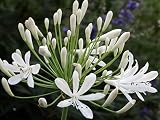
- Flower Characteristics: Dense terminal raceme of tiny urn-shaped florets crowded like a bunch of grapes, white, carried on a leafless stalk in spring.
Primary Uses & Landscape Value
- Edible Uses: The bulbs are edible when cooked and have traditionally been used in soups and stews.
- Functional & Ornamental Roles: A classic spring bulb for borders, rockeries, edging, containers and naturalising in grass; excellent for mass planting and small posies.
Care Guide: Planting, Soil & Watering
Overview: Muscari aucheri ‘White Magic’ is a small spring-flowering bulb (grape hyacinth) that grows in full sun to part shade and needs a cold winter to flower well (hardiness zone 6–9). It thrives in light, free-draining soil kept moderately moist during growth, then drier through its summer dormancy.
Quick Care Requirements
| Requirement | Ideal Condition |
|---|---|
| Planting Season | Autumn for bulbs; spring for potted plants |
| Growth Rate | Moderate |
| Soil Type | Light, free-draining |
| Water Need | Moderate in growth; dry during summer dormancy |
Planting & Establishment
- Best Planting Season: Plant bulbs in autumn so they get the winter chill they need to bloom; container-grown plants can go in during spring.
- How to Plant:
- Hole Preparation: Plant bulbs about 8–10 cm deep, roughly two to three times their own height, pointed end up.
- Soil Amendments: Work a little grit and compost into heavy ground to sharpen drainage and stop the bulbs rotting.
- Planting Depth: Rest the bulb base on firm, well-drained soil; for potted plants, keep the crown at soil level.
- Growth Speed & Expectations: Moderate; bulbs establish quickly and multiply over the years into spreading clumps.
Soil, Watering & Drainage Care
- Soil Mix & Drainage Needs: Sharp drainage is essential – grape hyacinths rot in wet, heavy soil, so use a gritty, free-draining mix in beds and pots alike.
- Watering Schedule & Technique:
- Young / Newly Planted: Water in after autumn planting to settle the soil, then keep it lightly moist as roots and shoots develop.
- Established: Keep the soil moderately moist through growth and flowering, and avoid overwatering.
- Seasonal Adjustments: Withhold water during summer dormancy and let the bulbs rest dry; natural rainfall usually suffices in the cold season.
Climate, Light & Hardiness
Muscari aucheri White magic is a cold-hardy, deciduous spring bulb for temperate, subtropical, and mediterranean climates that grows in full sun to half shade and needs a genuine winter chill to flower well. The bulb itself easily survives winters within USDA Zones 6–9, going summer-dormant once flowering and leaf growth finish.
Quick Climate Specifications
| Climate Zones | temperate, subtropical, and mediterranean |
| USDA Hardiness Zones | Zones 6–9 |
| Optimal Temp Range | Approximately 5–18°C (41–64°F) during its autumn–spring growth cycle |
| Cold Damage Begins | Approximately −2 to 0°C (28–32°F) for emerged foliage and open flowers during a late hard frost; the dormant bulb itself is far hardier |
| Approx. Survival Minimum | Roughly −23 to −18°C (−10 to 0°F) for the dormant bulb, in line with USDA Zones 6–9 |
| Frost Tolerance | High (bulb) / Moderate (emerged foliage and flowers) |
| Light Conditions | Full Sun / Half Shade |
| Wind Tolerance | Moderate |
Sunlight & Light Exposure
Optimal Light Setup
Full sun during its autumn-to-spring growth cycle gives the strongest flowering, though half shade is also well tolerated.
Shade & Heat Management
Because the bulb finishes its cycle and goes dormant before the height of summer heat, it grows well under deciduous trees and shrubs that only leaf out and shade the ground later in the season.
Best Exposure / Orientation
Open beds, rock gardens, and naturalized plantings under deciduous canopy all suit it well.
Temperature Extremes & Hardiness
USDA Hardiness & Regional Limits
Reliably hardy through USDA Zones 6–9; the dormant summer bulb tolerates winter cold well beyond what its emerged spring foliage and flowers can handle.
Cold Damage & Winter Protection
No winter protection is normally needed within its hardy zones; a late, hard spring frost after growth has emerged can nip foliage tips and open flowers, though the bulb itself is unaffected and usually recovers.
Frost Sensitivity
The dormant bulb is highly frost-hardy; actively growing spring foliage and flower spikes are more sensitive and can show damage from a hard late frost.
Chilling Requirement
Needs a real period of winter cold (chilling hours) to flower properly the following spring; in warm-winter climates milder than its stated hardiness range, flowering can be sparse or delayed unless pre-chilled bulbs are used.
Extreme Heat Tolerance
The bulb is dormant through the hottest part of summer, avoiding heat stress altogether; well-drained soil is what matters most at that time so the resting bulb does not sit in warm, wet ground.
Wind, Humidity & Microclimate
Humidity Preferences
Adaptable to the humidity levels typical of temperate, subtropical, and mediterranean climates.
Dry-Air Tolerance
Good, particularly helpful during its dry summer dormancy.
Wind Tolerance
Moderate; its short, low-growing habit is rarely damaged by wind.
Rainfall & Seasonal Moisture
Naturally suited to climates with cool, moister autumns and springs followed by a drier summer rest period, matching its active-growth-then-dormancy cycle.
Microclimate Recommendations
Open beds or the light seasonal shade under deciduous trees and shrubs both work well, since the bulb's growth cycle finishes before summer shade or heat becomes an issue.
Growing in Pots, Balconies & Indoors
Muscari aucheri White Magic is a small spring bulb (10-30 cm / 4-12 in), not a year-round houseplant, but it is excellent in pots, troughs and window boxes – and the bulbs can even be brought to a bright windowsill to flower early (“forced”) for a temporary indoor display. Outdoors it wants full sun to half shade.
Quick Details
- Container Size: Small – a shallow pot, pan or trough; plant the bulbs in generous clusters for the best show.
- Indoor Suitability: Not a permanent houseplant, but bulbs can be potted and flowered on a cool, bright windowsill for a while.
- Best Spot: Full sun to half shade outdoors; a bright, cool sill indoors while forcing.
- Soil & Drainage: Free-draining, gritty potting mix – bulbs rot in soggy soil.
- Watering in Pots: Water while in leaf and flower (they enjoy moisture then); keep much drier once the foliage dies back and the bulb is dormant.
Indoors & On the Windowsill
- Houseplant limits: The grower notes it is not a houseplant – after flowering the foliage dies back and the bulb needs a cool, dry dormant rest, so it will not live happily as a year-round room plant.
- Forcing on a windowsill: Pot the bulbs in autumn, give them a cool, dark spell to root, then bring them to a bright, cool sill to flower early indoors – a lovely temporary display. A cool spot (and cool nights) makes the blooms last longer.
- Overwintering: The bulbs are hardy and generally need no winter protection; in pots they can simply stay outdoors and are best kept cool rather than warm.
- Safety: Grape-hyacinth bulbs can cause stomach upset if eaten – keep pots out of reach of young children and pets, and do not treat any part as edible.
On a Balcony or Patio
- Light & exposure: Happy in full sun to half shade; ideal for balcony troughs, window boxes and the front of larger pots. Small pots dry quickly in reflected wall heat, so check moisture while they are in growth.
- Practicalities: Light and easy to move; combine them with other spring bulbs for a layered “bulb lasagne” pot.
Choosing the Pot, Soil & Long-Term Care
- Pot & drainage: Any small pot or pan with good drainage holes; no standing water saucer, as bulbs rot easily.
- Potting mix: A free-draining potting mix with added grit or perlite.
- Feeding: A light feed as the leaves grow and again after flowering helps build the bulb for next year – useful in pots, where the mix holds little reserve.
- Long-term: They multiply freely; lift and divide crowded clumps every few years while dormant and refresh the mix.
Growing this plant in a greenhouse
A greenhouse can give muscari aucheri white magic frost protection, cold protection, a longer growing season and winter growing.
Greenhouse at a glance
| Greenhouse suitability | Good - clearly useful |
|---|---|
| Main benefits | frost protection, cold protection, a longer growing season, winter growing |
| Season extension | can grow through winter |
| Outdoor protection advisable below | about 0°C |
| Suitable types | unheated greenhouse, polycarbonate greenhouse |
| Heating | No added heat is normally needed. |
Related greenhouse guides
- Greenhouses: How to Choose the Right Greenhouse
- Polycarbonate Greenhouses: What to Look for Before Buying
- Greenhouse Propagation Equipment
Fertilizing & Feeding
‘White Magic’ is a white-flowered form of the compact Muscari aucheri group, sharing its species’ light feeding needs. The bulb stores most of its own nutrition, so feeding matters most as a light boost during active leaf growth, not as an ongoing program.
Quick Fertilizing Specs
| Feeding Level | Light feeder, consistent with other Muscari aucheri cultivars |
|---|---|
| Main Nutrient Priority | Balanced feeding while the foliage is green and growing, supporting the current bloom and next year’s bud formation |
| Best Feeding Period | From early leaf emergence through the end of its spring flowering |
| Soil pH | Adaptable to most well-drained garden soils |
| Reduce/Stop Feeding | Feeding is no longer useful once the white flowers fade and foliage begins to decline |
| Organic Options | A light compost amendment worked in around planting time gives the bulbs gentle, steady nutrition |
| Micronutrients | No routine micronutrient program is generally needed beyond a complete fertilizer’s usual minor nutrients |
Feeding by Growth Stage
Autumn planting and rooting in
Support strong root formation after planting, ahead of spring’s foliage and bloom
| Nutrient direction | Balanced feeding weighted toward root establishment over top growth |
|---|---|
| Timing | At planting time in autumn, as roots begin developing before winter |
| Frequency | A single light feeding worked into the planting area is generally enough for this stage |
| Fertilizer types | Compost or a balanced bulb fertilizer mixed into the planting hole, A gentle, slow-release complete fertilizer |
| Precautions | Keep any concentrated fertilizer from direct contact with the bulb to prevent root injury |
Spring growth and white bloom
Support the compact foliage and white flower spikes while the bulb rebuilds its reserves for next season
| Nutrient direction | Balanced feeding through leaf emergence and flowering, kept light so leaf growth stays in proportion to the bloom |
|---|---|
| Timing | From early leaf emergence through the close of spring flowering |
| Frequency | A light feeding during this window generally covers what an established planting needs |
| Fertilizer types | A balanced, complete bulb or all-purpose fertilizer applied sparingly around the foliage |
| Routine trace nutrients | iron |
| Precautions | Keep feeding modest; heavier applications can push foliage growth at the expense of a full bloom |
Post-bloom die-back
Let the foliage complete its natural die-back so the bulb can rest through summer undisturbed
| Nutrient direction | None – withhold fertilizer once flowering has finished |
|---|---|
| Timing | After bloom ends, as the leaves yellow toward summer dormancy |
| Frequency | No feeding at this stage |
| Fertilizer types | No feeding at this stage – the bulb relies on reserves it has already stored |
| Precautions | Do not fertilize during die-back or dormancy, and allow the foliage to yellow fully before removing it |
Nutrient Deficiency Signs & Corrections
A visibly smaller or paler flower display compared to previous seasons
| Possible causes | Nitrogen deficiency in soil that has never been amended, Bulbs planted too shallow or into compacted soil limiting root growth, Overcrowding after several seasons of natural bulb multiplication |
|---|---|
| Appears first on | Overall bloom and foliage vigor across the planting |
| What to check | Planting depth and soil condition, How long since the clump was last divided, Whether the bed has had compost or fertilizer in recent years |
| Possible correction | Work compost or a balanced bulb fertilizer into the soil in autumn, and divide overcrowded clumps when dormant |
New leaves showing yellowing between the veins while veins remain green
| Possible causes | Iron deficiency associated with alkaline or high-pH soil, Waterlogged soil reducing root oxygen and function, Root stress from heavy or poorly drained soil |
|---|---|
| Appears first on | The most recently emerged foliage |
| What to check | Drainage in the planting area, General soil pH, Root and bulb condition if a clump can be inspected |
| Possible correction | Improve drainage first, then apply a chelated iron product per its label if chlorosis persists |
Pruning, Training & Seasonal Maintenance
Muscari aucheri ‘White Magic’ is a compact, early-flowering bulb with no woody growth. Like other M. aucheri forms it blooms earlier than M. armeniacum, so both the deadheading step and the foliage-clearing step come earlier in the year than for later-blooming grape hyacinths.
Quick Pruning & Maintenance Specs
| Pruning Tolerance | High for spent flowers and dried foliage only; no structural framework exists |
| Primary Pruning Window | Late winter to early spring, right after the early flower spike fades |
| Secondary Maintenance Window | Mid-to-late spring, once foliage is fully dried |
| Typical Frequency | Once per annual bloom cycle |
| Main Objective | Tidiness and moderate self-seeding control |
| Young Plant Priority | None beyond removing planting-damaged leaf tips |
| Mature Plant Priority | Deadhead; clear dried foliage; divide congested clumps in dormancy if bloom thins |
| Best Tool Type | Fine precision snips or garden scissors |
| Avoid Heavy Pruning During | While leaves are still green, or during any autumn leaf flush |
Pruning by Plant Age & Size
Newly Established
No cutting the first season beyond trimming planting-damaged leaf tips.
Young / Formative
No structural training applies; decide whether to deadhead to limit self-sown seedlings around the clump.
Mature / Established
Continue annual deadheading and foliage clearing; declining bloom after several years signals it’s time to lift and divide, not cut harder.
Seasonal Pruning Schedule
Post-Flowering (Late Winter–Early Spring)
Objective: tidy the plant. Remove: the flower stalk at its base once color fades. Do not remove: green leaves. Expected response: neater bed, fewer volunteers. Flowering impact: none this season.
Post-Foliage Die-Back (Mid-Late Spring)
Objective: clear spent foliage ahead of the earlier-arriving summer dormancy. Remove: leaves only once fully dried. Do not remove: green tissue. Flowering impact: cutting green leaves reduces next year’s bloom.
Special Growth to Remove
- Spent flower stalks – deadhead for tidiness and to limit seed set.
- Fully dried foliage – clear once it detaches easily.
- Occasional self-sown seedlings – hand-pull if unwanted.
Container & Small-Space Pruning
Deadhead promptly in pots for a clean display. Let foliage die back fully before storing dormant bulbs or repotting; expect to divide congested container clumps every 2–3 years.
Tools
Fine precision snips or garden scissors only.
Tool Hygiene & Disease Risk
Routine: clean, sharp snips suffice. Wipe blades after cutting foliage showing leaf-spot or slug damage.
Cut Placement & Technique
Cut the flower stalk near its base at the leaf cluster, avoiding nearby green leaves; remove dried leaves with a gentle tug or base-level cut once loose.
Heavy Pruning & Rejuvenation
Not applicable – no woody framework exists. Overcrowded clumps are renewed by lifting and dividing in summer dormancy.
Post-Pruning Care
No fertilizing after cutting; keep soil drier once foliage dies back, and watch for slugs on the next cycle’s new growth.
Common Pruning Mistakes
- Cutting green leaves early because the early bloom already looks finished.
- Using shrub-scale tools on this fine, compact growth.
- Trying to fix thinning bloom by cutting harder instead of dividing.
When NOT to Prune
- While foliage is still green after the early bloom.
- During any autumn leaf flush ahead of winter.
- When soil is frozen or waterlogged.
Recommended Tools (by task)
- Deadheading and dried-leaf removal: precision_snips – the only cut this bulb needs.
Propagation Guide
Muscari aucheri White magic is best propagated using bulb offsets / division when the goal is to preserve the current plant form.
Quick Propagation Specs
| Preferred Method | Bulb offsets / division |
| Seed | Seed may vary and is not preferred for preserving the named cultivar |
Bulb Offsets
Separate naturally formed offsets from the parent bulb when they are sufficiently developed, and replant them in well-drained soil at an appropriate bulb depth.
Seed Propagation
Seed may vary and is not preferred for preserving the named cultivar. When seed is used, sow mature viable seed in a clean, free-draining medium.
Aftercare
Protect newly propagated plants from severe drought, heat and waterlogging until new roots and shoots are established.
Bloom & Flower Guide
Quick Details
- Bloom Season: Spring
- Time to First Bloom: The first spring after autumn planting, once the bulbs have had a cold winter
- Flower Appearance: Dense spikes of tiny, urn-shaped white flowers clustered like a miniature bunch of grapes on a leafless stalk
- Edibility: Ornamental – the flowers are grown for show, not for eating
Detailed Blooming Overview
Grape hyacinths are among the cheeriest of the early-spring bulbs. Each short, leafless stalk carries a tight cluster of small, white, urn-shaped flowers packed together like a miniature bunch of grapes – the look that gives Muscari its common name. The blooms often carry a soft, musky-sweet scent, and they are a valuable early nectar source for bees emerging in spring.
Flower Characteristics
- Tight, cone-shaped spikes of tiny white urn-shaped bells nodding on a bare stem.
- Often lightly fragrant, with a musky-sweet scent (the source of the name Muscari, from the Greek for musk).
- Among the earliest flowers to open in spring, drawing bees and other early pollinators.
Bloom Care & Thinning
- Getting the best bloom: Plant the bulbs in autumn in a sunny or lightly shaded spot with free-draining soil – a cold winter is what triggers spring flowering.
- After flowering: Let the leaves die back naturally to feed next year’s bulb; you can snip off spent flower stalks once they fade.
- Naturalizing: Grape hyacinths multiply readily by offsets and self-sown seed and make lovely drifts – lift and divide congested clumps once the leaves have died down.
Fruit & Uses
‘White magic’ is a named ornamental selection of Muscari aucheri grown for its white flower spikes, and its only documented edible part is the bulb, which growplants.org lists as edible and cooked into soups and stews. This is a marginal food use: the bulb needs cooking and, per general grape-hyacinth sources, is bitter unless the cooking water is changed several times to remove a saponin-like compound.
Quick Edible Specs
| Edible Parts | Bulb (marginal use only) |
|---|---|
| Main Use(s) | Traditional/foraged cooked use (soups, stews); not grown or selected as a food crop |
| Eaten Raw or Cooked | Cooked only – do not eat raw |
| Preparation Required | Cook; traditionally the water is changed several times to remove bitterness |
| Harvest Season | Summer, once the foliage has died back |
| Time to First Harvest | Bulbs need at least one full growing season to bulk up to a usable size |
| Storage | Lifted bulbs store like other spring bulbs, in a cool, dry, well-ventilated place |
| Safety/Toxicity Caveat | Bulbs contain comisic acid, a bitter saponin-like compound that can cause mild stomach upset if eaten raw or in quantity; keep away from children and pets |
Bulbs, Corms & Rhizomes
The bulb is small (2–3 cm), drop-shaped, yellowish outside and white inside. Site information lists it as edible and used cooked in soups and stews, harvested in summer once the plant has finished flowering and the foliage has died back. As with other grape hyacinths, bitterness limits the bulb to occasional, well-prepared use, and this selection is bred and sold for its ornamental white flowers rather than for eating.
Preparation, Uses & Safety
If used, peel and boil the bulb, changing the cooking water once or twice to leach out the bitter, saponin-like compound before using it in soups or stews. Do not eat raw. Treat any culinary use of this cultivar’s bulb as a minor curiosity rather than a reliable food source, and keep bulbs out of reach of children and pets, as ingesting a quantity can cause mild gastrointestinal upset.
Pests, Diseases & Troubleshooting
Overview: Grape hyacinths are among the toughest, most trouble-free spring bulbs, and the vast majority of problems trace to excess moisture (bulb and basal rot) rather than to insects. They are largely deer- and rodent-resistant. Manage them culturally first: plant in sharply drained soil, keep good airflow, avoid summer irrigation while the bulbs are dormant, and lift and inspect stock if rot appears. Individual species differ mainly in vigour and self-seeding, not in which pests they attract.
Quick Troubleshooting Overview
| Issue / Pest | Main Symptom | Primary Solution |
|---|---|---|
| Slugs & snails | Ragged holes and slime trails on new foliage in damp weather | Hand-pick at dusk, use grit/copper barriers, iron-phosphate bait |
| Aphids | Sticky, distorted new growth on leaves and flower stalks; virus spread | Blast with water, encourage ladybirds, insecticidal soap if needed |
| Bulb & root mites | Weak, stunted growth; bulbs that feel soft and crumble | Buy firm clean bulbs, discard damaged ones, avoid waterlogging |
| Basal / bulb rot | Bulbs fail to emerge; soft, brown, mouldy basal plate | Sharp drainage, dry summer rest, discard any soft bulbs |
| Gray mould (Botrytis) | Grey fuzzy patches on leaves and spent flowers in wet spells | Improve airflow, remove faded flowers and dead foliage |
Common Pests & Management
- Slugs & Snails (Gastropoda):
- Symptoms: The most common nuisance – irregular holes chewed in emerging leaves and flower spikes, with tell-tale silvery slime trails, worst in cool wet weather and shady, mulch-heavy spots. Distinguish from caterpillar damage by the slime and the absence of frass.
- Prevention & Control: Keep the crown area open and free of decaying mulch; water in the morning so foliage is dry by night. Hand-pick after dark, set beer traps, and ring clumps with sharp grit, crushed shell or copper tape. If pressure is high, scatter iron-phosphate pellets, which are safe around pets and wildlife.
- Aphids (Aphidoidea, incl. tulip bulb aphid Dysaphis tulipae):
- Symptoms: Small green, grey or brown insects clustering on flower stalks and tender new leaves, causing sticky honeydew, sooty mould and puckered growth; the tulip bulb aphid also colonises bulbs in storage. Aphids are the main way viruses move between bulbs.
- Prevention & Control: Dislodge light infestations with a firm jet of water and support ladybirds, lacewings and hoverflies. Wipe bulbs clean before storing them cool and dry. For persistent colonies use insecticidal soap or a light horticultural oil, spraying in the evening to protect pollinators.
- Bulb Mites (Rhizoglyphus spp.):
- Symptoms: Tiny, pearly-white, slow-moving mites that feed on the basal plate and roots of damaged or already-rotting bulbs, opening the door to secondary fungal decay and producing weak, stunted plants.
- Prevention & Control: Prevention is everything: plant only firm, unblemished bulbs, avoid mechanical bruising, and never leave bulbs sitting in cold, wet soil. Discard any soft or infested bulbs rather than replanting them, and rotate planting sites.
- Narcissus Bulb Fly (Merodon equestris):
- Symptoms: A bee-like fly whose single fat, grey larva tunnels into the bulb and hollows it out, so the plant either fails to appear or throws only thin, grassy leaves with no flowers. Damage is usually found when a soft bulb is lifted.
- Prevention & Control: Firm soil over the necks as foliage dies down so females cannot lay at the bulb, or cover with fine mesh during the flying period. Lift and destroy soft, infested bulbs; encourage natural predators and avoid leaving bare, warm soil over dormant clumps.
Diseases & Fungal Issues
- Basal & Bulb Rot (Fusarium oxysporum):
- Symptoms: The most serious disease – a soft brown decay starting at the basal plate, so bulbs collapse, smell sour, and fail to emerge; often triggered by wet, poorly drained soil or waterlogged summer dormancy.
- Treatment & Management: There is no cure once a bulb is rotting – dig and discard affected bulbs with surrounding soil. Prevent it with sharp drainage, raised beds or gritty soil, a dry summer rest, and by never planting damaged stock. Rotate to fresh ground if rot recurs.
- Gray Mould (Botrytis spp.):
- Symptoms: Grey, fuzzy fungal growth with water-soaked or bleached spots on leaves and spent flowers during prolonged cool, damp weather; badly affected foliage yellows and collapses.
- Treatment & Management: Cultural control is key: space clumps for airflow, remove faded flowers and dead leaves promptly, and avoid overhead watering late in the day. A copper-based fungicide can be used as a preventative only where the disease is chronic.
- Storage / Blue Mould (Penicillium spp.):
- Symptoms: Blue-green mould and soft, sunken lesions on lifted bulbs held in humid, poorly ventilated storage, spreading from bruised or already-damaged bulbs.
- Treatment & Management: Cure bulbs before storing and keep them cool, dry and well-ventilated in mesh, not plastic. Inspect regularly and discard any that soften. Handle gently to avoid the bruises that let the mould in.
- Mosaic / Yellowing Viruses (aphid-transmitted):
- Symptoms: Mottled yellow-and-green streaking, distorted leaves and poor, broken flower colour; symptoms persist year to year because viruses live in the bulb and cannot be cured.
- Treatment & Management: Rogue out and destroy visibly infected clumps to protect the rest, and control aphids, which spread the virus. Buy from clean, reputable stock and disinfect tools between plants.
Growing Difficulties & Abiotic Problems
- Bulb Rot from Overwatering / Poor Drainage:
- Symptoms: Cause & Symptoms: Soggy soil, especially during the summer dormant period, suffocates bulbs and invites rot – plants emerge patchily or not at all and lifted bulbs are soft.
- Correction Strategy: Plant in free-draining, gritty soil or raised beds; stop watering once foliage dies back; and in wet climates consider lifting bulbs for a dry summer rest. Never site them in low, waterlogged pockets.
- Non-flowering (‘Blindness’) from Overcrowding:
- Symptoms: Cause & Symptoms: Long-established clumps that produce masses of leaves but few flowers are usually congested and competing for nutrients.
- Correction Strategy: Lift and divide crowded clumps after the foliage yellows, replant the largest bulbs at proper spacing in refreshed soil, and feed lightly with a low-nitrogen bulb fertiliser after flowering.
- Floppy, Over-lush Foliage:
- Symptoms: Cause & Symptoms: Rich soil, too much nitrogen or heavy shade produce long, lax leaves that flop and look untidy, sometimes at the expense of flowers.
- Correction Strategy: Grow in full sun to light shade in lean, well-drained soil, avoid high-nitrogen feeds, and resist tidying the leaves away too early – they must yellow naturally to recharge the bulb.
- Aggressive Self-seeding / Naturalising:
- Symptoms: Cause & Symptoms: Some grape hyacinths (notably M. armeniacum and M. botryoides) seed and offset freely, colonising beds and lawns where they are not wanted.
- Correction Strategy: Deadhead spent spikes before seed sets, lift stray clumps, and site vigorous kinds where spread is welcome (banks, orchards, gravel) rather than in tight borders.
What Helps – Products & Tools
For grape hyacinths the toolkit is deliberately simple and cultural. Keep iron-phosphate slug bait and copper barrier tape on hand for molluscs, insecticidal soap or light horticultural oil for aphids and mites, and a copper-based fungicide only where Botrytis is a recurring problem. Sharp grit for drainage and breathable mesh bags for bulb storage prevent most of the rot issues before they start.