

Care Guide: Planting, Soil & Watering
Overview: Grape hyacinth (Muscari) is a small spring-flowering bulb that needs a cold winter to trigger flowering and grows in full sun to part shade. It likes well-draining soil with moderate moisture during growth and a drier rest once the foliage dies back.
Quick Care Requirements
| Requirement | Ideal Condition |
|---|---|
| Planting Season | Autumn (dormant bulbs planted before the winter chill) |
| Growth Rate | Moderate to Fast |
| Soil Type | Well-draining, average garden soil |
| Water Need | Moderate during growth; drier during summer dormancy |
Planting & Establishment
- Best Planting Season: Plant the dormant bulbs in autumn, before winter — the cold period (chilling) is what drives spring flowering.
- How to Plant:
- Hole Preparation: Plant bulbs a few times their own depth deep and a few centimetres apart, in a hole or drill with loosened, free-draining soil at the base.
- Soil Amendments: Work a little compost and, on heavy ground, some grit into the soil to ensure the sharp drainage bulbs need to avoid rotting.
- Planting Depth: Set bulbs pointed end up, roughly two to three times their height below the surface.
- Growth Speed & Expectations: Moderate to fast — foliage appears in autumn or late winter and flowers follow in spring, and clumps multiply readily over the years.
Soil, Watering & Drainage Care
- Soil Mix & Drainage Needs: Any reasonably fertile, well-draining soil suits it; the bulbs rot in wet, poorly drained ground, so improve drainage where needed.
- Watering Schedule & Technique:
- Young / Newly Planted: Water newly planted bulbs to settle them, then keep the soil lightly moist as roots and shoots develop.
- Established: Provide moderate, even moisture through the growing and flowering season.
- Seasonal Adjustments: Let the soil dry out more once the foliage yellows and the bulbs go dormant in summer; growth and watering resume in autumn.
Climate, Light & Hardiness
Grape hyacinths is a cold-hardy, deciduous spring bulb for temperate, subtropical, and mediterranean climates that grows in full sun to half shade and needs a genuine winter chill to flower well. The bulb itself easily survives winters within USDA Zones 4–10, going summer-dormant once flowering and leaf growth finish.
Quick Climate Specifications
| Climate Zones | temperate, subtropical, and mediterranean |
| USDA Hardiness Zones | Zones 4–10 |
| Optimal Temp Range | Approximately 5–18°C (41–64°F) during its autumn–spring growth cycle |
| Cold Damage Begins | Approximately −2 to 0°C (28–32°F) for emerged foliage and open flowers during a late hard frost; the dormant bulb itself is far hardier |
| Approx. Survival Minimum | Roughly −34 to −29°C (−30 to −20°F) for the dormant bulb, in line with USDA Zones 4–10 |
| Frost Tolerance | High (bulb) / Moderate (emerged foliage and flowers) |
| Light Conditions | Full Sun / Half Shade |
| Wind Tolerance | Moderate |
Sunlight & Light Exposure
Optimal Light Setup
Full sun during its autumn-to-spring growth cycle gives the strongest flowering, though half shade is also well tolerated.
Shade & Heat Management
Because the bulb finishes its cycle and goes dormant before the height of summer heat, it grows well under deciduous trees and shrubs that only leaf out and shade the ground later in the season.
Best Exposure / Orientation
Open beds, rock gardens, and naturalized plantings under deciduous canopy all suit it well.
Temperature Extremes & Hardiness
USDA Hardiness & Regional Limits
Reliably hardy through USDA Zones 4–10; the dormant summer bulb tolerates winter cold well beyond what its emerged spring foliage and flowers can handle.
Cold Damage & Winter Protection
No winter protection is normally needed within its hardy zones; a late, hard spring frost after growth has emerged can nip foliage tips and open flowers, though the bulb itself is unaffected and usually recovers.
Frost Sensitivity
The dormant bulb is highly frost-hardy; actively growing spring foliage and flower spikes are more sensitive and can show damage from a hard late frost.
Chilling Requirement
Needs a real period of winter cold (chilling hours) to flower properly the following spring; in warm-winter climates milder than its stated hardiness range, flowering can be sparse or delayed unless pre-chilled bulbs are used.
Extreme Heat Tolerance
The bulb is dormant through the hottest part of summer, avoiding heat stress altogether; well-drained soil is what matters most at that time so the resting bulb does not sit in warm, wet ground.
Wind, Humidity & Microclimate
Humidity Preferences
Adaptable to the humidity levels typical of temperate, subtropical, and mediterranean climates.
Dry-Air Tolerance
Good, particularly helpful during its dry summer dormancy.
Wind Tolerance
Moderate; its short, low-growing habit is rarely damaged by wind.
Rainfall & Seasonal Moisture
Naturally suited to climates with cool, moister autumns and springs followed by a drier summer rest period, matching its active-growth-then-dormancy cycle.
Microclimate Recommendations
Open beds or the light seasonal shade under deciduous trees and shrubs both work well, since the bulb's growth cycle finishes before summer shade or heat becomes an issue.
Growing in Pots, Balconies & Indoors
Grape hyacinths is a small spring bulb (10-30 cm / 4-12 in), not a year-round houseplant, but it is excellent in pots, troughs and window boxes – and the bulbs can even be brought to a bright windowsill to flower early (“forced”) for a temporary indoor display. Outdoors it wants full sun to half shade.
Quick Details
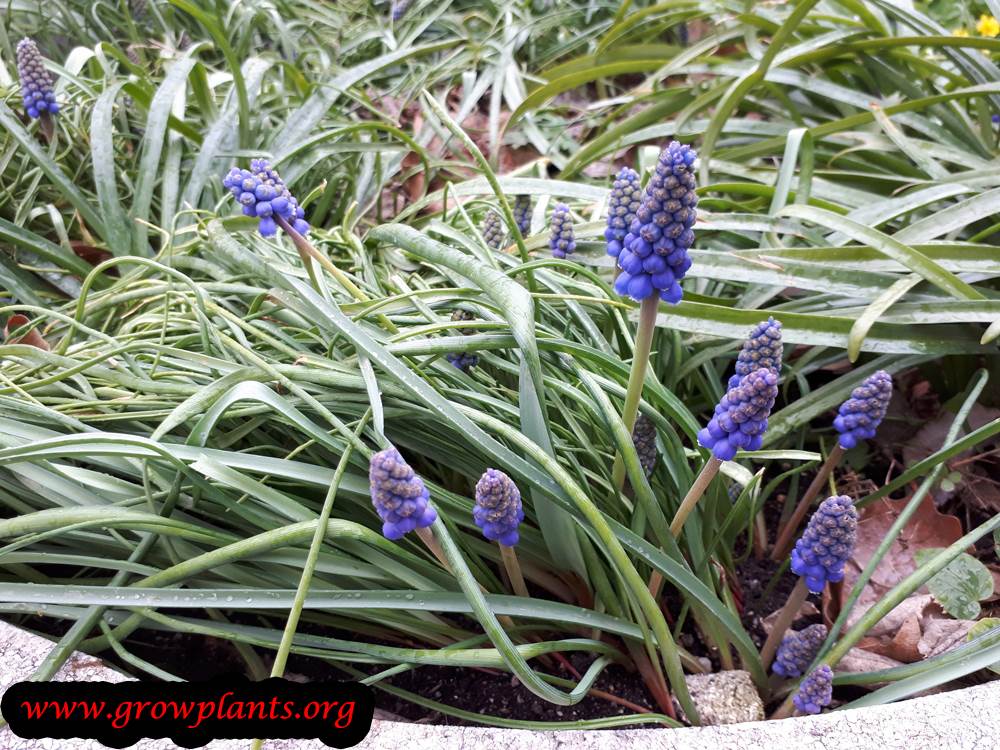
- Container Size: Small – a shallow pot, pan or trough; plant the bulbs in generous clusters for the best show.
- Indoor Suitability: Not a permanent houseplant, but bulbs can be potted and flowered on a cool, bright windowsill for a while.
- Best Spot: Full sun to half shade outdoors; a bright, cool sill indoors while forcing.
- Soil & Drainage: Free-draining, gritty potting mix – bulbs rot in soggy soil.
- Watering in Pots: Water while in leaf and flower (they enjoy moisture then); keep much drier once the foliage dies back and the bulb is dormant.
Indoors & On the Windowsill
- Houseplant limits: The grower notes it is not a houseplant – after flowering the foliage dies back and the bulb needs a cool, dry dormant rest, so it will not live happily as a year-round room plant.
- Forcing on a windowsill: Pot the bulbs in autumn, give them a cool, dark spell to root, then bring them to a bright, cool sill to flower early indoors – a lovely temporary display. A cool spot (and cool nights) makes the blooms last longer.
- Overwintering: The bulbs are hardy and generally need no winter protection; in pots they can simply stay outdoors and are best kept cool rather than warm.
- Safety: Grape-hyacinth bulbs can cause stomach upset if eaten – keep pots out of reach of young children and pets, and do not treat any part as edible.
On a Balcony or Patio
- Light & exposure: Happy in full sun to half shade; ideal for balcony troughs, window boxes and the front of larger pots. Small pots dry quickly in reflected wall heat, so check moisture while they are in growth.
- Practicalities: Light and easy to move; combine them with other spring bulbs for a layered “bulb lasagne” pot.
Choosing the Pot, Soil & Long-Term Care
- Pot & drainage: Any small pot or pan with good drainage holes; no standing water saucer, as bulbs rot easily.
- Potting mix: A free-draining potting mix with added grit or perlite.
- Feeding: A light feed as the leaves grow and again after flowering helps build the bulb for next year – useful in pots, where the mix holds little reserve.
- Long-term: They multiply freely; lift and divide crowded clumps every few years while dormant and refresh the mix.
Growing this plant in a greenhouse
A greenhouse can give grape hyacinths frost protection, cold protection, a longer growing season and winter growing.
Greenhouse at a glance
| Greenhouse suitability | Good - clearly useful |
|---|---|
| Main benefits | frost protection, cold protection, a longer growing season, winter growing |
| Season extension | can grow through winter |
| Outdoor protection advisable below | about 0°C |
| Suitable types | unheated greenhouse, polycarbonate greenhouse |
| Heating | No added heat is normally needed. |
Related greenhouse guides
- Greenhouses: How to Choose the Right Greenhouse
- Polycarbonate Greenhouses: What to Look for Before Buying
- Greenhouse Propagation Equipment
Fertilizing & Feeding
Grape hyacinths are small, low-demand spring bulbs. They store most of what they need inside the bulb itself, so feeding plays a supporting role – helping the bulb rebuild its reserves after bloom rather than driving growth on its own. Light, infrequent feeding is enough for healthy naturalized clumps.
Quick Fertilizing Specs
| Feeding Level | Light feeder typical of small spring bulbs |
|---|---|
| Main Nutrient Priority | Balanced feeding while leaves are actively growing, so the bulb can rebuild its reserves for next year’s bloom |
| Best Feeding Period | From when the foliage emerges through the end of flowering, while leaves are still green and active |
| Soil pH | Tolerant of a wide range of well-drained soils |
| Reduce/Stop Feeding | Feeding stops once flowering finishes and the foliage begins to yellow and die back |
| Organic Options | A topdressing of compost worked lightly around the emerging foliage in autumn or early spring supports steady bulb nutrition |
| Micronutrients | No routine micronutrient program is typically needed for naturalized plantings |
Feeding by Growth Stage
Autumn planting and root establishment
Support new root growth after autumn bulb planting, ahead of spring emergence
| Nutrient direction | Balanced feeding worked into the soil at planting, favoring root development |
|---|---|
| Timing | At planting time in autumn, as bulbs begin forming roots ahead of winter |
| Frequency | A single light feeding worked into the planting hole or bed is generally enough at this stage |
| Fertilizer types | Compost or a balanced bulb fertilizer worked into the planting hole, A slow, gentle-release complete fertilizer |
| Precautions | Avoid placing concentrated fertilizer in direct contact with the bulb itself, which can damage developing roots |
Spring leaf growth and bloom
Support foliage growth and flowering while also feeding the bulb’s recovery for next season
| Nutrient direction | Balanced feeding as leaves emerge and through flowering, keeping the plant’s reserves building alongside the current season’s bloom |
|---|---|
| Timing | From leaf emergence in early spring through the end of flowering |
| Frequency | A light feeding or two during this active window is generally sufficient for naturalized clumps |
| Fertilizer types | A balanced, complete bulb or all-purpose fertilizer applied lightly around the emerging foliage |
| Routine trace nutrients | iron |
| Precautions | Keep feeding light; overfeeding small bulbs like this can encourage excess leaf growth at the expense of flowering |
Post-bloom foliage decline
Let the foliage complete its natural die-back so the bulb can go dormant undisturbed
| Nutrient direction | None – withhold fertilizer once flowering has finished |
|---|---|
| Timing | After flowering ends, while the leaves are yellowing and dying back toward summer dormancy |
| Frequency | No feeding at this stage |
| Fertilizer types | No feeding at this stage – the bulb draws on the reserves it has already built |
| Precautions | Do not fertilize during die-back or summer dormancy; let the foliage yellow naturally rather than removing it early |
Nutrient Deficiency Signs & Corrections
Thin, pale, or weak-looking foliage with fewer flower spikes than expected
| Possible causes | Nitrogen deficiency in depleted soil, Bulbs planted too shallow or in poor, compacted soil restricting root growth, Overcrowded clumps competing for nutrients and space after several seasons without division |
|---|---|
| Appears first on | Overall foliage vigor across the clump, most noticeable at leaf emergence |
| What to check | Planting depth and soil texture around the bulbs, How many seasons since the clump was last divided, Whether the bed has received any feeding or compost in recent years |
| Possible correction | Work compost or a balanced bulb fertilizer into the bed in autumn, and divide overcrowded clumps |
New leaves showing yellowing between the veins while veins stay greener
| Possible causes | Iron deficiency, often linked to alkaline or high-pH soil limiting availability, Waterlogged, poorly drained soil stressing the bulb’s roots, General root stress from planting in heavy, compacted soil |
|---|---|
| Appears first on | Newest emerging leaves |
| What to check | Soil drainage in the planting area, especially after rain, General soil pH of the bed, Bulb and root condition if a clump can be lifted and inspected |
| Possible correction | Improve drainage first, then apply a chelated iron product per its label if chlorosis continues in well-drained soil |
Fewer or smaller flower spikes each year compared to when the bulbs were first planted
| Possible causes | Insufficient feeding during the post-bloom leaf period to rebuild bulb reserves, Foliage cut back too early after flowering, before it has died back naturally, Overcrowding from natural bulb multiplication reducing resources per bulb |
|---|---|
| Appears first on | The whole clump’s flowering display, comparing one season to the next |
| What to check | Whether foliage is being removed or mowed before it yellows on its own, How long since the clump was last divided, Whether any feeding is given during the active leaf-growth window |
| Possible correction | Allow foliage to die back fully before removal, feed lightly during active leaf growth, and divide crowded clumps in the appropriate season |
Pruning, Training & Seasonal Maintenance
Grape hyacinths (Muscari spp.) are small spring-blooming bulb geophytes with no woody structure, so "pruning" here means foliage and bulb-clump maintenance rather than cutting stems. Pruning tolerance is low for the living leaves and high for spent material: the linear leaves must be left to die back naturally after bloom to recharge the bulb, and the safe window for cutting away that fully browned foliage – matching the facts’ own summer pruning season – comes only once it has yellowed on its own. Cutting does not affect the following year’s bloom as long as green foliage is left untouched until it dies back.
Quick Pruning & Maintenance Specs
| Pruning Tolerance | Low for green foliage (must be left to die back) – High for fully browned/dead material |
| Primary Pruning Window | Summer, once foliage has fully yellowed and dried |
| Secondary Maintenance Window | Spring, deadheading spent flower stems after bloom fades |
| Typical Frequency | Once a year, after the foliage cycle completes |
| Main Objective | Tidiness and, via deadheading, limiting unwanted self-seeding |
| Young Plant Priority | Leave newly planted bulbs’ foliage fully undisturbed through its first cycle |
| Mature Plant Priority | Deadhead after bloom; remove foliage only once browned; divide congested clumps |
| Best Tool Type | Precision snips |
| Avoid Heavy Pruning During | While foliage is still green and actively photosynthesizing, from bloom through early summer |
Pruning by Plant Age & Size
Newly Established
Leave a newly planted bulb’s foliage completely alone through its first full growth cycle; removing green leaves early on a young bulb weakens establishment more than on a mature clump with reserves.
Young / Formative
No structural training applies to a small bulb geophyte.
Mature / Established
Deadhead after bloom and remove foliage once it has browned; over several years bulb clumps multiply and become congested, at which point lifting and dividing during summer dormancy is the relevant maintenance task, not cutting.
Seasonal Pruning Schedule
| Post-Flowering | Objective: tidiness and reducing self-seeding. Remove: spent flower stems once bloom fades. Do not remove: any green leaves, which are still feeding the bulb. Response: no effect on next year’s bloom, since the flower has already finished. |
| Summer (foliage die-back) | Objective: seasonal cleanup once the bulb has gone dormant. Remove: leaves only after they have fully yellowed and dried at the base. Do not remove: leaves still green or only partly yellowed. Response: none needed – the bulb is already dormant; removing green leaves early is what would actually reduce next year’s bloom. |
Special Growth to Remove
- Spent flower stems – cut at the base once bloom fades; also limits unwanted self-seeding into surrounding beds.
- Fully yellowed/browned leaves – remove only once dead; never cut green foliage.
Container & Small-Space Pruning
Grows well in pots and planters. Bulb clumps in containers become congested faster than in-ground plantings and need lifting and dividing (into fresh soil) more frequently, on the same summer-dormancy timing as in-ground clumps.
Tools
- Precision snips – the only tool needed, for deadheading spent flower stems and trimming fully dead foliage.
Tool Hygiene & Disease Risk
Routine – slugs and leaf spotting are the noted issues rather than a serious transmissible pathogen; clean, sharp snips are sufficient.
Cut Placement & Technique
Deadhead by cutting the flower stem at its base. Remove dead leaves at the base once fully browned; a light tug will usually release fully dead foliage cleanly, or cut it if it resists.
Heavy Pruning & Rejuvenation
There is no hard-pruning equivalent for this bulb – its renewal task is lifting and dividing overcrowded clumps during summer dormancy, replanting into refreshed soil at the usual autumn planting time.
Post-Pruning Care
No feeding needed after removing spent stems or dead foliage. Once dormant for summer, the bulbs need little to no water until the autumn planting/growth season resumes.
Common Pruning Mistakes
- Cutting or braiding/tidying green foliage right after bloom instead of letting it die back – this is the single biggest mistake and weakens next year’s flowering.
- Mistaking partly yellowed leaves for fully dead and removing them too soon.
- Skipping division on old, congested clumps, which can reduce flowering density over time.
When NOT to Prune
Never remove green, actively photosynthesizing foliage from bloom through early summer – wait until it has fully yellowed and dried on its own.
Recommended Tools (by task)
- precision_snips – deadheading spent flower stems and trimming fully dead foliage; the only cutting tool this plant needs.
- garden_spade – lifting and dividing congested bulb clumps during summer dormancy.
Propagation Guide
Grape hyacinths are most quickly increased by lifting and separating the small bulb offsets that form naturally around the mother bulb, which reproduces the same flower color and gives a flowering-size plant sooner than seed. Seed is also viable and these plants often self-sow in the garden, but seedlings take longer to build up to flowering size, so offset division is preferred when a specific color form matters. Propagation is Easy by either method.
Quick Propagation Specs
| Best Propagation Method | Bulb offset division |
| Alternative Methods | Seed (self-sows readily) |
| Propagation Difficulty | Easy |
| Seed True-to-Type | Usually true-to-type for species types; named color forms may vary from seed |
| Vegetative True-to-Type | Yes |
| Best Propagation Season | Autumn, for lifting/dividing and planting bulbs |
Growing from Seed
Grape hyacinths self-sow readily where happy in the garden. If sowing collected seed, sow in autumn in a sunny to lightly shaded, well-drained spot. Germination is often slow and can be uneven, sometimes not showing until the following growing season, so be patient rather than expecting a set timeline.
Rhizomes, Tubers, Bulbs & Corms
Lift dormant bulb clumps in summer after the foliage has died back. Separate the small offset bulbs that have formed at the base of the mother bulb, keeping each offset intact with its own basal roots where possible, and replant promptly at a similar depth to the parent bulb. Smaller offsets will need a season or two of growth before they reach flowering size.
In a few Muscari species the bulbs have a traditional food use (for example pickled or boiled into soups and stews), but they are bitter and contain saponins raw, so they are only eaten after boiling or pickling, never raw – and this should not be assumed for every Muscari species or confused with the unrelated, toxic common hyacinth (Hyacinthus).
Bloom & Flower Guide
Quick Details
- Bloom Season: Spring
- Time to First Bloom: The first spring after autumn planting, once the bulbs have had a cold winter
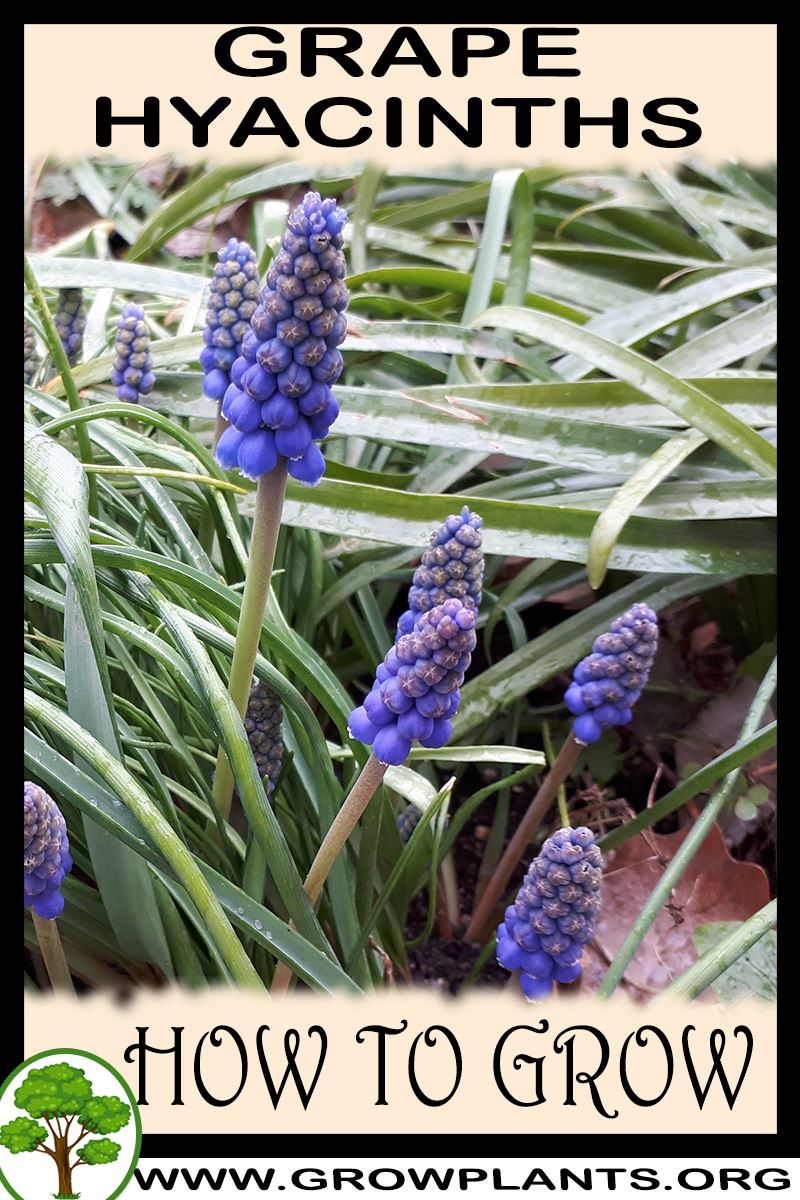
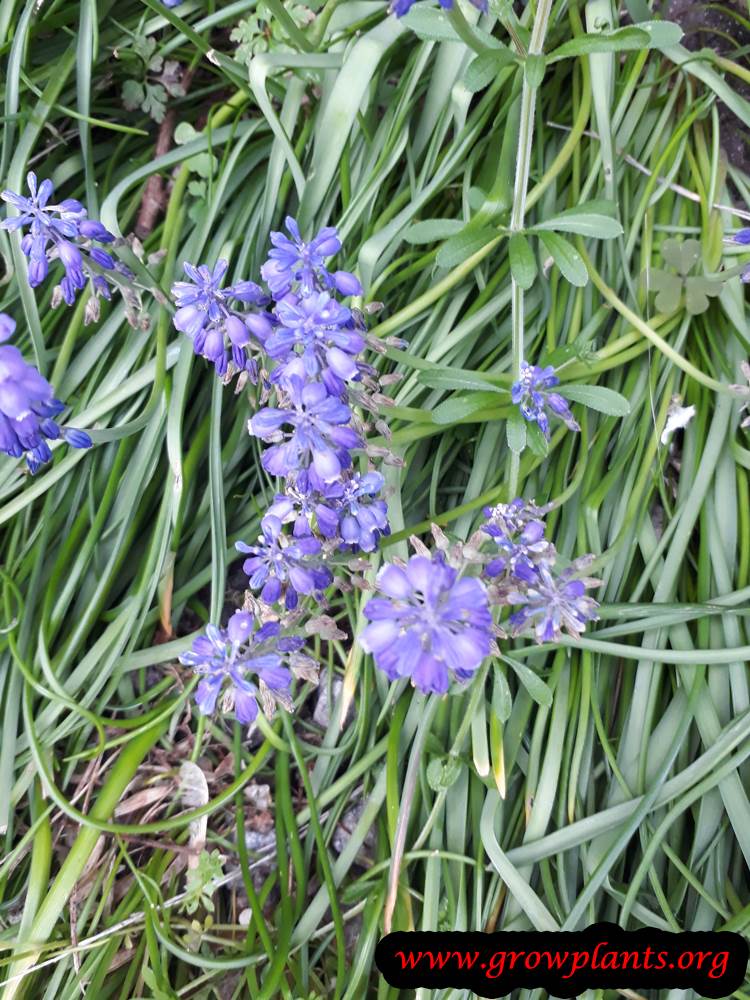
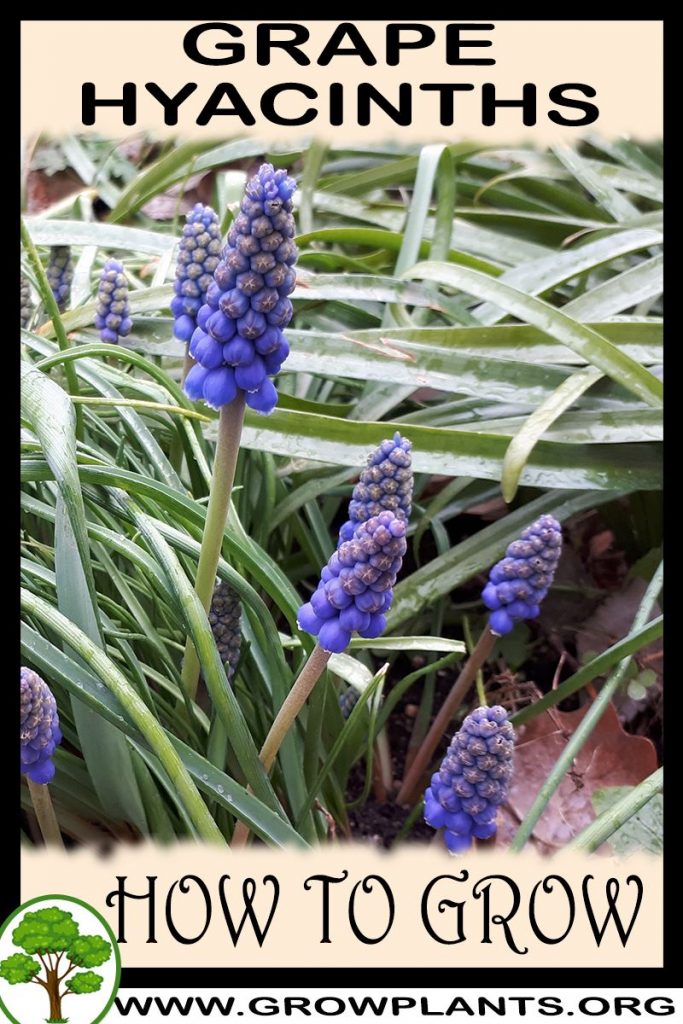
- Flower Appearance: Dense spikes of tiny, urn-shaped blue, purple, white, yellow or pink flowers clustered like a miniature bunch of grapes on a leafless stalk
- Edibility: Ornamental – the flowers are grown for show, not for eating
Detailed Blooming Overview
Grape hyacinths are among the cheeriest of the early-spring bulbs. Each short, leafless stalk carries a tight cluster of small, blue, purple, white, yellow or pink, urn-shaped flowers packed together like a miniature bunch of grapes – the look that gives Muscari its common name. The blooms often carry a soft, musky-sweet scent, and they are a valuable early nectar source for bees emerging in spring.
Flower Characteristics
- Tight, cone-shaped spikes of tiny blue, purple, white, yellow or pink urn-shaped bells nodding on a bare stem.
- Often lightly fragrant, with a musky-sweet scent (the source of the name Muscari, from the Greek for musk).
- Among the earliest flowers to open in spring, drawing bees and other early pollinators.
Bloom Care & Thinning
- Getting the best bloom: Plant the bulbs in autumn in a sunny or lightly shaded spot with free-draining soil – a cold winter is what triggers spring flowering.
- After flowering: Let the leaves die back naturally to feed next year’s bulb; you can snip off spent flower stalks once they fade.
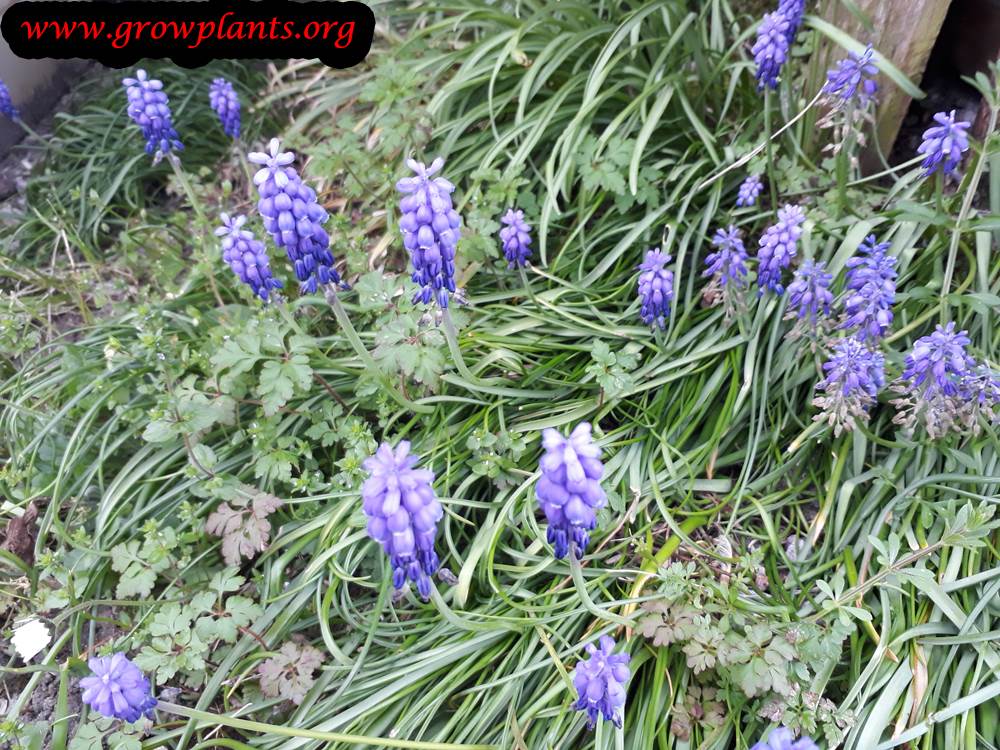
- Naturalizing: Grape hyacinths multiply readily by offsets and self-sown seed and make lovely drifts – lift and divide congested clumps once the leaves have died down.
Pests, Diseases & Troubleshooting
Overview: Grape hyacinth (Muscari) is a small, exceptionally tough spring bulb — not a grapevine despite the common name — and it is one of the most trouble-free plants in the garden, generally ignored by deer and rodents that ravage tulips. Its few problems are almost all linked to soil that stays wet: bulb and basal rots, plus the occasional aphid or bulb pest. Grow in free-draining soil, lift and divide crowded clumps, and interference is rarely needed.
Quick Troubleshooting Overview
| Issue / Pest | Main Symptom | Primary Solution |
|---|---|---|
| Basal / bulb rot | Soft, brown, mouldy bulbs; leaves yellow and collapse | Improve drainage, plant sound bulbs, discard rotten ones |
| Grey mould (Botrytis) | Grey fuzzy mould and spotting on leaves and flowers in wet weather | Improve airflow, remove affected tissue, avoid wet foliage |
| Aphids | Clusters on leaves and flower stalks; can spread viruses | Rinse off, insecticidal soap, control to limit virus spread |
| Bulb mites | Weak, distorted growth; bulbs pitted and secondarily rotting | Plant only firm healthy bulbs; discard infested ones |
| Narcissus bulb fly | Grubs tunnel and hollow the bulb; blind or weak plants | Firm soil over necks after foliage dies; cull soft bulbs |
| Overcrowding | Congested clumps flower poorly; excess leaf, few blooms | Lift and divide after flowering; replant with spacing |
Common Pests & Management
- Aphids (Myzus and related spp.):
- Symptoms: Small green or grey soft-bodied insects on foliage and flower stalks, leaving honeydew. Their main importance is as vectors of bulb viruses rather than the direct feeding damage.
- Prevention & Control: Dislodge with a jet of water and encourage ladybirds and lacewings. Treat lingering colonies with insecticidal soap. Controlling aphids matters chiefly to limit the spread of virus between bulbs.
- Bulb mites (Rhizoglyphus spp.):
- Symptoms: Tiny pale mites that feed on bulb tissue, usually as a secondary invader of bulbs already damaged or rotting. Affected plants are weak and distorted, and bulbs show pitting and decay.
- Prevention & Control: Plant only firm, sound, undamaged bulbs and provide good drainage so bulbs never sit in wet, decaying conditions. Discard soft or infested bulbs rather than replanting them, and avoid injuring bulbs when lifting and dividing.
- Narcissus bulb fly (Merodon equestris):
- Symptoms: A bee-like fly whose single fat grub tunnels into and hollows out the bulb, leaving it soft; plants come up blind, weak or fail to emerge. It attacks a range of spring bulbs including Muscari.
- Prevention & Control: As the foliage dies down, firm the soil over the bulb necks or hill soil over them to deny females an egg-laying site down the wilting leaves. Lift and destroy soft, grub-infested bulbs. Healthy, undisturbed clumps in good soil are rarely troubled.
- Slugs and snails:
- Symptoms: Ragged holes and slime trails on the soft spring foliage and flowers, mainly in damp, shaded, mild conditions. Damage is usually cosmetic on these vigorous bulbs.
- Prevention & Control: Hand-pick at night, remove damp hiding places, and use barriers such as grit or wool pellets around prized clumps. Iron-phosphate baits are a wildlife-safer option if control is needed.
Diseases & Fungal Issues
- Basal / bulb rot (Fusarium, and blue-mould Penicillium in storage):
- Symptoms: Bulbs turn soft, brown and mouldy from the base; foliage yellows early and collapses. In storage, blue-green mould develops on damaged or damp bulbs.
- Treatment & Management: The key is drainage — never plant in wet, heavy soil. Buy and plant only firm, blemish-free bulbs, handle them gently, and store lifted bulbs cool, dry and airy. Discard any soft or rotten bulbs; there is no cure once a bulb rots.
- Grey mould (Botrytis):
- Symptoms: Grey fuzzy mould, spotting and browning on leaves and flowers during prolonged cool, wet weather or in crowded, still plantings.
- Treatment & Management: Remove affected foliage and spent flowers, thin congested clumps to improve airflow, and avoid overhead watering. Rarely serious enough to warrant fungicide in the open garden.
- Viruses (mosaic / bulb viruses) and smut:
- Symptoms: Viruses cause pale mottling, streaking or distortion of leaves and reduced vigour, spread by aphids and by division of infected stock. Smut (Ustilago) is an occasional oddity forming dark spore masses in the flower parts.
- Treatment & Management: There is no cure for virus — rogue out and destroy stunted, mottled plants and control aphids to limit spread; propagate only from healthy clumps. Remove and destroy any smutted flower heads.
Growing Difficulties & Abiotic Problems
- Rot in waterlogged soil:
- Cause & Symptoms: The one real way to kill grape hyacinths — bulbs sitting in cold, wet, poorly drained ground rot rather than establish.
- Correction Strategy: Plant in free-draining soil or raised beds and grit heavy ground. In containers use a gritty mix with drainage holes and avoid standing pots in water.
- Overcrowding and shy flowering:
- Cause & Symptoms: Grape hyacinths naturalise freely and clumps become congested over a few years, producing masses of leaf but fewer flowers.
- Correction Strategy: Lift and divide congested clumps once the foliage has died back, replant with spacing and fresh soil, and thin self-sown seedlings to keep the planting vigorous.
- Untidy autumn foliage:
- Cause & Symptoms: Many Muscari send up leaves in autumn that overwinter and can look tatty or frost-nipped before spring flowering.
- Correction Strategy: This is normal for the genus — leave the foliage to feed the bulb and simply tidy damaged tips. Do not cut leaves back until they yellow naturally after flowering.
What Helps — Products & Tools
Grape hyacinths need almost nothing. Useful items are: insecticidal soap for aphids (chiefly to limit virus spread); iron-phosphate slug bait or barriers where slugs damage foliage; a gritty, free-draining planting mix to prevent bulb rot; and a garden fork for lifting and dividing congested clumps. Chemical intervention is rarely justified — good drainage and sound bulbs do the work. Follow all labels and protect pollinators when treating.