



Plant Profile & Key Characteristics
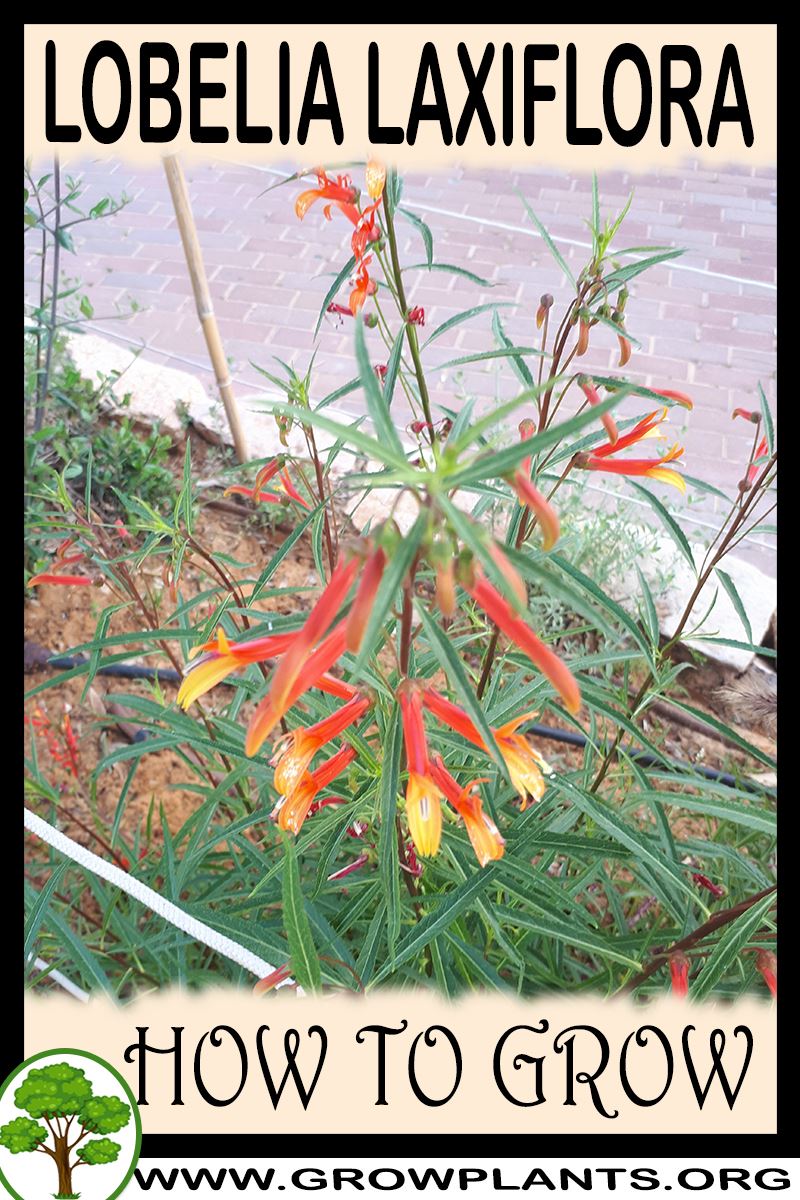
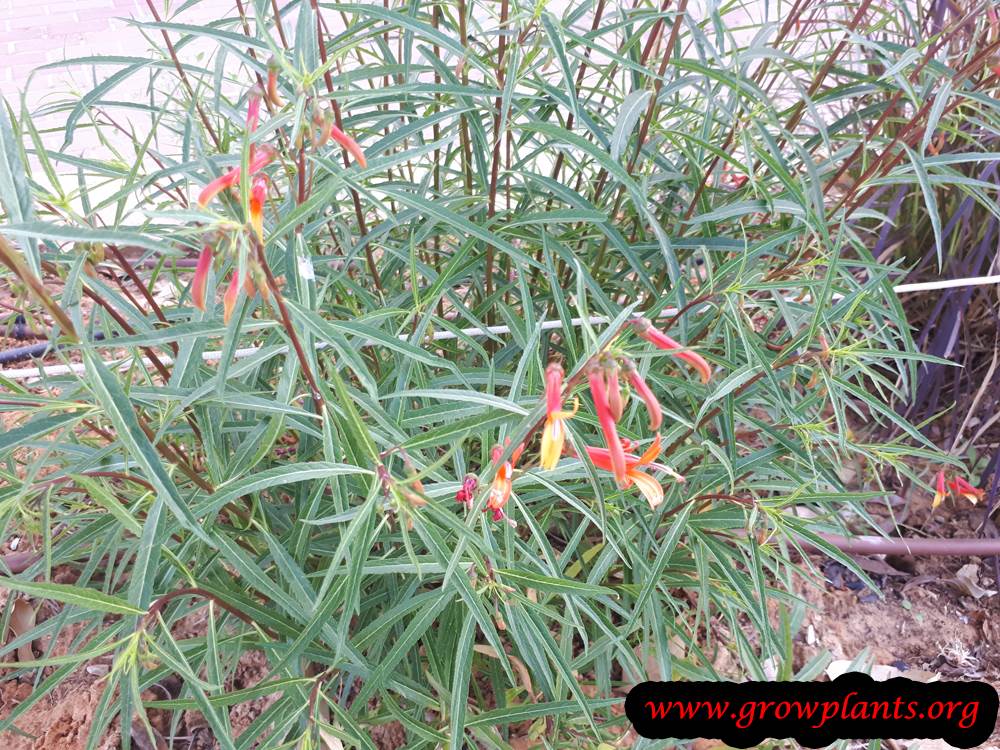
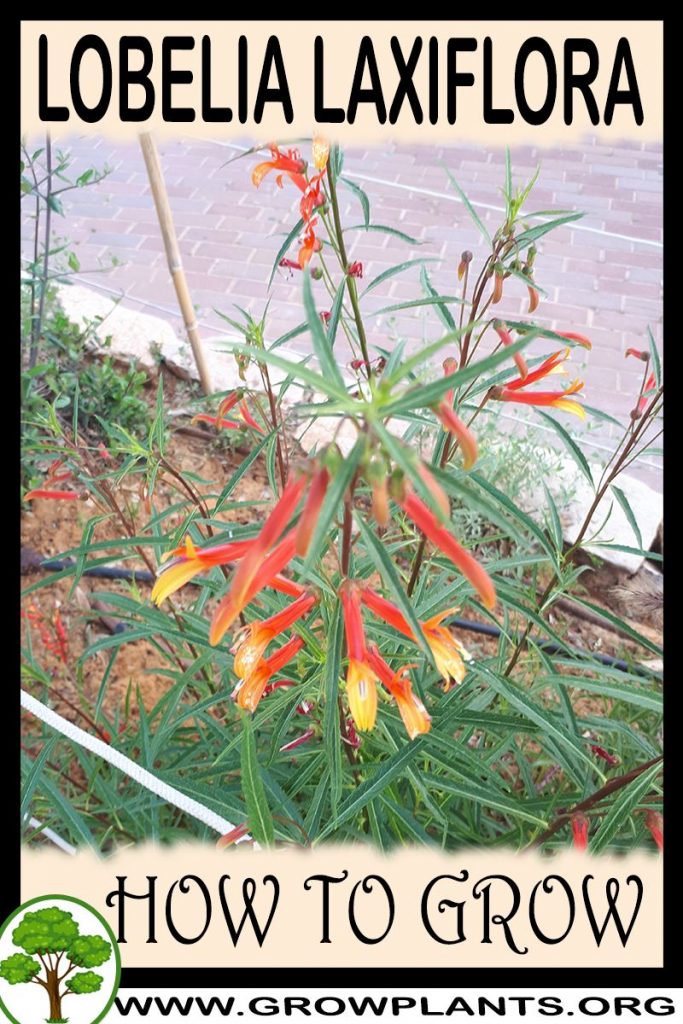
Overview: Lobelia laxiflora (Mexican lobelia) is a spreading, semi-evergreen perennial roughly 0.6-1.2 m tall, bearing tubular red-and-yellow flowers loved by hummingbirds and pollinators. It spreads by rhizomes to form colonies.
Quick Specifications
| Specification | Attribute |
|---|---|
| Plant Type / Life Cycle | Semi-evergreen perennial |
| Foliage Type | Semi-evergreen |
| Mature Size | About 0.6-1.2 m tall (2-4 ft), spreading wider by rhizomes |
| Growth Rate | Fast |
| Root System | Rhizomatous (spreads to form colonies) |
| Toxicity | Toxic if ingested (contains lobeline alkaloids) |
| Hardiness | USDA zones 9-11 as a perennial; 4-9 as an annual |
Growth Form & Structure
- Height & Spread: Upright leafy stems 0.6-1.2 m tall spreading outward by rhizomes; can be contained in pots.
- Growth Habit & Form: Suckering, rhizomatous perennial forming spreading clumps or colonies; useful as a tall groundcover.
- Lifespan & Maturity: Vigorous perennial that establishes and spreads quickly.
Anatomy & Physical Features
- Leaves & Foliage: Green, oval to lance-shaped leaves.
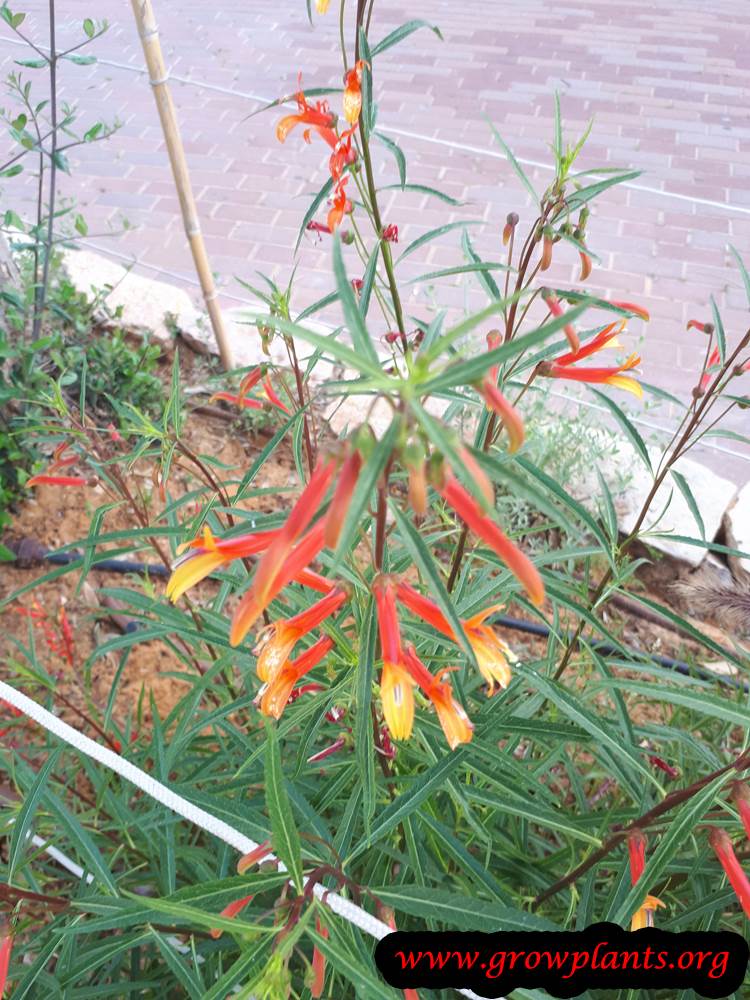
- Flower Characteristics: Tubular red-and-yellow flowers that attract hummingbirds and pollinators.
Primary Uses & Landscape Value
- Functional & Ornamental Roles: Ornamental for borders and slopes, spreading groundcover and hummingbird/pollinator plant.
Care Guide: Planting, Soil & Watering
Overview: Mexican lobelia grows in full sun to half shade in well-drained soil and establishes quickly. It flowers well on moderate watering and dislikes soggy, poorly drained ground.
Quick Care Requirements
| Requirement | Ideal Condition |
|---|---|
| Planting Season | During the warm season, spring through autumn |
| Growth Rate | Fast |
| Soil Type | Well-draining soil |
| Water Need | Moderate — keep the soil lightly moist, letting the surface dry between waterings |
Planting & Establishment
- Best Planting Season: Plant during the warm season, anytime from spring through autumn.
- How to Plant:
- Hole Preparation: Dig a hole a little larger than the root ball and loosen the surrounding soil so young roots can spread easily.
- Soil Amendments: Work in compost or well-rotted organic matter to enrich the bed and improve both fertility and drainage.
- Planting Depth: Set the plant at the same level it grew in its pot, with the root collar at the soil surface — do not bury the stem.
- Growth Speed & Expectations: Expect fast growth in optimal conditions, establishing and reaching full size quickly.
Soil, Watering & Drainage Care
- Soil Mix & Drainage Needs: Provide light, aerated, well-draining soil so water never pools around the roots; in containers use a quality free-draining potting mix and make sure the pot has drainage holes to prevent root rot.
- Watering Schedule & Technique:
- Young / Newly Planted: Water regularly after planting to keep the soil evenly moist while roots establish.
- Established: Water deeply and consistently, letting the surface dry slightly between waterings.
- Seasonal Adjustments: Water more often in summer heat and less in the cooler, wetter months.
Climate, Light & Hardiness
Lobelia laxiflora (Mexican Lobelia) is a semi-evergreen shrub for subtropical, Mediterranean, and temperate climates, performing best in full sun to half shade. In warm climates it persists year-round as a perennial, while colder-zone gardeners commonly grow it as an annual since winter cold ends the growing season.
Quick Climate Specifications
| Climate Zones | Subtropical, Mediterranean, and temperate climates |
|---|---|
| USDA Hardiness Zones | Approximately zone 9–11 as a perennial; commonly grown as an annual in zone 4–9 |
| Optimal Temp Range | Mild to warm growing-season conditions |
| Cold Damage Begins | Foliage dies back with hard freezes outside the perennial zone range |
| Approx. Survival Minimum | Established plants persist through winters typical of zone 9; in colder zones, hard freezes end the growing season for the year |
| Frost Tolerance | Low to Moderate |
| Light Conditions | Full Sun to Half Shade |
Sunlight & Light Exposure
Optimal Light Setup
Full sun to half shade suits this plant well, with the best flowering in sunnier spots.
Direct Sun Requirement
Several hours of direct sun daily support strong, cone-shaped red and yellow flowering.
Best Exposure / Orientation
An open, sunny to lightly shaded bed suits this spreading, ground-cover-like plant well.
Temperature Extremes & Hardiness
USDA Hardiness & Regional Limits
In zone 9–11, Lobelia laxiflora persists as a perennial; where winters bring freezing temperatures (roughly zone 4–9), cold limits it to a single growing season and it is commonly grown as an annual-this reflects genuine outdoor cold survival limits, not merely a cultivation choice.
Cold Damage & Winter Protection
Where grown as a marginal perennial, a sheltered site and mulch can help it survive light frosts and resprout in spring.
Frost Sensitivity
Frost sensitivity is low to moderate; hard freezes typically kill top growth in colder zones.
Extreme Heat Tolerance
Tolerates warm conditions reasonably well, consistent with its subtropical range.
Wind, Humidity & Microclimate
Microclimate Recommendations
A sheltered, sunny to lightly shaded spot extends the growing season in marginal climates and helps perennial specimens overwinter.
Growing in Pots, Balconies & Indoors
Lobelia laxiflora is a sun-loving flowering plant, not a houseplant – the grower confirms it is unsuited to indoor growing. This lobelia is a spreading, tubular-flowered plant that draws hummingbirds and pollinators. It excels in containers, window boxes, and hanging baskets on a sunny balcony or patio.
Quick Details
- Container Size: Moderate – a pot, box, or basket that keeps the roots cool and evenly moist
- Indoor Suitability: Not a houseplant; grow outdoors
- Best Spot: Full sun to half shade (a little afternoon shade helps in hot climates)
- Soil & Drainage: Rich, moisture-retentive but free-draining mix
- Watering in Pots: Average – keep evenly moist; lobelia sulks if it dries out, and pots dry fast
Indoors & On the Windowsill
- Not for indoors: The grower marks it as unsuitable as a houseplant; it needs outdoor light and cool, moist air to flower well.
- Season: Many lobelias are grown as annuals or short-lived perennials; where perennial, protect the pot from winter wet.
On a Balcony or Patio
- Light & moisture: Give it a bright spot with a little shade from harsh midday sun; keep it well watered, as pots and baskets dry quickly and it dislikes drought.
Choosing the Pot, Soil & Long-Term Care
- Pot & drainage: Choose a pot a size or two larger than the root ball, with strong drainage holes; skip a standing water saucer to avoid root rot. Terracotta breathes and dries faster, while glazed or plastic pots hold moisture longer.
- Potting mix: A well-aerated, organic-rich mix – a quality potting mix, or peat/coir blended with perlite or vermiculite.
- Feeding: Potted plants need feeding more often than those in open ground, as frequent watering leaches nutrients away – feed lightly through the growing season.
- Repotting: Refresh the mix or pot up about every two years; for perennials, lightly trim the root ball and top growth at the same time.
Fertilizing & Feeding
A moderate feeder: balanced feeding through the growing season supports this fast-growing, spreading groundcover’s long spring-through-autumn display of red-and-yellow tubular flowers, tapering off as growth slows or the plant declines with cold in colder climates.
Quick Fertilizing Specs
| Feeding Level | Moderate feeder |
|---|---|
| Main Nutrient Priority | A balanced complete fertilizer rather than a phosphorus-heavy ‘bloom booster’; adequate nitrogen alongside the other nutrients supports strong flowering |
| Best Feeding Period | From spring growth through the extended spring-to-autumn bloom period |
| Organic Options | Compost or well-rotted organic matter worked into well-drained soil |
| Micronutrients | Usually supplied by a complete fertilizer; correct a specific deficiency only if it is actually diagnosed |
| Soil pH | Tolerates a wide range; performs best in fertile, well-drained soil |
| Reduce/Stop Feeding | Taper off feeding as blooming winds down or as the plant declines with cold weather where it is grown as an annual |
Feeding by Growth Stage
Spring growth and establishment
Build a full, spreading framework of foliage ahead of the main flowering display.
| Nutrient direction | A balanced complete fertilizer supports steady root and foliage development. |
|---|---|
| Timing | From spring planting or new growth through early stem and leaf development. |
| Frequency | A light, regular feeding through spring growth supports steady development. |
| Fertilizer types | A balanced complete garden fertilizer, Compost or well-rotted organic matter |
| Precautions | Keep soil evenly moist and well drained; avoid letting the root zone dry out or stay waterlogged. |
Extended spring-to-autumn bloom
Sustain the long display of tubular red-and-yellow flowers that attract pollinators, without pushing excess sprawling growth at the expense of flowers.
| Nutrient direction | Continue with a balanced complete fertilizer rather than a phosphorus-heavy ‘bloom booster’; adequate, balanced nutrition is what actually drives strong flowering in this plant. |
|---|---|
| Timing | Through the extended spring-to-autumn flowering period. |
| Frequency | Light, steady feeding through the bloom season, easing off as flowering slows. |
| Fertilizer types | A balanced complete garden fertilizer |
| Precautions | Avoid excess nitrogen during the bloom period, which favors unchecked sprawling growth over flowers on this spreading groundcover. |
Cold-season decline
Let the plant decline naturally with cold weather, where it is grown as an annual, or rest where it persists as a perennial.
| Nutrient direction | None – withhold fertilizer as the plant declines with cold weather or enters its dormant period. |
|---|---|
| Timing | From the onset of cold weather through winter. |
| Frequency | No feeding at this stage. |
| Fertilizer types | No feeding at this stage – the plant is declining or dormant |
| Precautions | Do not fertilize once cold weather sets in and growth is declining; where grown as a perennial, wait for active growth to resume in spring before feeding again. |
Nutrient Deficiency Signs & Corrections
Vigorous, sprawling leafy growth with noticeably fewer flowers than expected.
| Possible causes | excess nitrogen feeding, too little direct sun, overcrowding limiting light and airflow |
|---|---|
| Appears first on | new stem and leaf growth |
| What to check | recent feeding balance, hours of direct sun, plant spacing and spread |
| Possible correction | Shift to a balanced, less nitrogen-heavy fertilizer and ensure the planting gets adequate direct sun. |
New leaves emerge pale yellow while the veins stay distinctly green.
| Possible causes | high soil pH limiting iron availability, waterlogged or compacted soil, root stress from poor drainage |
|---|---|
| Appears first on | the newest leaves |
| What to check | soil pH and drainage, recent watering patterns, root health |
| Possible correction | Improve drainage and, if soil is alkaline, apply a chelated iron product per its label. |
Leaf margins yellow or scorch, stems weaken, and flowers come smaller or fewer than expected.
| Possible causes | low soil potassium, an imbalanced, nitrogen-heavy feeding history, leaching in light, sandy soils |
|---|---|
| Appears first on | older leaf margins |
| What to check | recent feeding balance, soil texture and drainage, flower size and stem strength |
| Possible correction | Shift to a balanced, potassium-adequate complete fertilizer and improve soil organic matter. |
Pruning, Training & Seasonal Maintenance
Lobelia laxiflora (Mexican lobelia) is a rhizomatous, semi-woody subshrub that spreads by underground runners to form colonies, unlike the non-spreading, single-crown Lobelia species. It tolerates a firm annual cutback well, and pruning here serves two purposes: renewing the plant’s vigor and flowering, and controlling how far the colony spreads into surrounding beds. The safest and most effective window for the main cutback is early spring, before new shoots emerge, since the current season’s growth is what produces the tubular red-and-yellow flower spikes.
Quick Pruning & Maintenance Specs
| Pruning Tolerance | Moderate to High (tolerates a firm annual cutback) |
| Primary Pruning Window | Early spring, before new growth emerges |
| Secondary Maintenance Window | Ongoing removal of stray rhizome shoots through the growing season |
| Typical Frequency | One firm cutback per year, plus periodic spread control |
| Main Objective | Renew vigor/flowering and keep the colony within bounds |
| Young Plant Priority | Let the colony establish; only remove damaged growth |
| Mature Plant Priority | Annual renewal cutback plus edging/dividing to contain spread |
| Best Tool Type | Bypass secateurs for stems; spade for severing/dividing rhizomes |
| Avoid Heavy Pruning During | Peak flowering (attracts pollinators/hummingbirds) and summer heat stress |
Pruning by Plant Age & Size
Newly Established
Leave the young colony to establish its root system; remove only damaged or dead growth in the first season.
Young / Formative
No formal training system applies to this rhizomatous subshrub – formative attention is really about deciding and marking the boundary you want the colony to stay within, since it spreads outward from the start.
Mature / Established
Give an annual early-spring cutback near ground level to remove the previous season’s stems and stimulate fresh, floriferous growth; combine this with sod-cutting or digging out rhizomes that have crossed the intended boundary.
Seasonal Pruning Schedule
Pre-Growth/Early-Spring
Objective: renew the plant and reset its size before the new growing season.
Remove: old, weathered stems from the previous season, cut back close to ground level.
Do not remove: the crown or the desirable portion of the rhizome mat.
Expected response: vigorous fresh shoots that will carry the season’s flower spikes.
Flowering impact: positive – flowers form on the current season’s new growth, so this cutback does not sacrifice bloom.
Ongoing Sanitary
Objective: contain spread and remove spent flowers.
Remove: rhizome shoots emerging outside the desired planting area; spent flower spikes if a tidier look is wanted.
Do not remove: shoots within the intended colony area.
Expected response: a contained, tidy stand.
Flowering impact: neutral.
Structural Pruning & Training
Because this species colonizes by rhizome, the main structural task is renewal (the annual cutback above) rather than shaping individual stems; height and spread are controlled far more by rhizome management than by cutting stem tips.
Special Growth to Remove
Rhizome runners/shoots that emerge beyond the intended planting footprint should be dug or cut out at their point of origin; without this, the colony will keep expanding into neighboring plantings.
Container & Small-Space Pruning
In a container, the spreading habit is naturally contained by the pot walls, but the rhizome mat can still fill and congest the root ball; divide and thin the clump at repotting rather than relying on top pruning alone to control density.
Tools
Bypass secateurs for the annual stem cutback; a spade (or sharp edging tool) for cutting through and removing unwanted rhizome runners, which are too tough and below-ground for hand shears.
Tool Hygiene & Disease Risk
Routine: clean tools are sufficient. No major transmissible pruning-borne disease risk is documented for this species.
Cut Placement & Technique
Cut old stems close to ground level during the spring renewal cut; sever rhizome runners cleanly at the point where they cross the desired bed boundary, removing the runner rather than just the top growth so it does not resprout past the line.
Heavy Pruning & Rejuvenation
Tolerated well: an annual hard cutback to near ground level in early spring is the normal renewal practice for this subshrub, producing vigorous new flowering growth for the season without lasting harm to the colony.
Post-Pruning Care
Water normally after the spring cutback; no extra feeding is required. Watch the cleared area for how far the rhizome mat re-emerges, to catch spread early rather than after it has crossed into neighboring beds.
Common Pruning Mistakes
Never cutting back and only removing spent flowers, which leaves old, less floriferous stems building up over years; failing to manage the spreading rhizomes, allowing the colony to overrun neighboring plants; cutting back hard in the middle of the bloom season instead of before growth resumes in spring.
When NOT to Prune
Avoid a hard cutback during active flowering, since it sacrifices the current display for no real benefit, and avoid heavy cutting during summer heat or drought stress, when regrowth will be slower and more stressed.
Recommended Tools (by task)
- bypass_secateurs – for the annual near-ground-level stem cutback in spring.
- garden_spade – for severing and removing rhizome runners that have spread beyond the intended area, and for dividing overcrowded clumps.
Propagation Guide
Lobelia laxiflora spreads by underground rhizomes, so established clumps are easily increased by lifting and dividing rooted sections; it can also be grown from seed or softwood cuttings. Because of this spreading habit – part of why it is noted as potentially invasive – division is usually the fastest and most practical way to get new plants true to the parent.
Quick Propagation Specs
| Best Propagation Method | Rhizome Division |
| Alternative Methods | Seed; Softwood Cuttings |
| Propagation Difficulty | Easy |
| Seed True-to-Type | Usually true-to-type |
| Vegetative True-to-Type | Yes |
| Best Propagation Season | Spring |
Growing from Seed
Sow the fine seed on the surface rather than burying it, and keep conditions warm and consistently moist; germination can be slow and somewhat irregular, as is typical for this genus.
Stem Cuttings
Softwood tip cuttings taken during active growth generally root well in a humid, well-drained mix; a rooting hormone is optional and can help but is not required.
Rhizomes, Tubers, Bulbs & Corms
Rhizome Division: Best done in spring as new growth starts. Lift a spreading section of rhizome that has roots and at least one growth point or shoot attached – not every runner tip will have adequate roots yet, so check before separating. Replant promptly at a similar depth and water in well until new growth resumes.
Bloom & Flower Guide
Quick Details
- Bloom Season: Spring through autumn
- Flower Appearance: Slender, tubular flowers in red with yellow, hanging in loose sprays
- Edibility: Not edible – like other lobelias it contains toxic alkaloids and should not be eaten
Detailed Blooming Overview
Mexican lobelia flowers over a long season, from spring into autumn, carrying loose sprays of slim, tubular red-and-yellow blooms above its foliage. The narrow, nectar-filled tubes are shaped for hummingbirds, and the plant is a reliable magnet for pollinators.
Flower Characteristics
- Tubular flowers in red with yellow, held in airy, nodding clusters.
Bloom Care & Thinning
- Reblooming: Shear back after the main flush to tidy the plant and prompt fresh flowering shoots.
- Handling: All parts are toxic if eaten, so keep it away from children and pets.
Pests, Diseases & Troubleshooting
Overview: Lobelias are prized for their intense flower colour but can be troubled by aphids, spider mites, thrips, whitefly and slugs, and by rust, leaf spot, damping-off, botrytis and crown rot. Lobelia laxiflora is a spreading perennial species with the same general pest and disease profile as its relatives. The core of good management is airflow, steady but not soggy moisture, and prompt removal of tired growth, since most serious problems are fungal and moisture-driven.
Quick Troubleshooting Overview
| Issue / Pest | Main Symptom | Primary Solution |
|---|---|---|
| Aphids | Sticky, curled shoot tips and buds | Water jet, insecticidal soap |
| Spider mites | Fine stippling, bronzing in heat/drought | Rinse, raise humidity, oil |
| Rust | Orange-brown pustules on leaf undersides | Remove leaves, airflow, sulphur |
| Crown / root rot | Wilting and mushy base in wet soil | Improve drainage, ease watering |
| Damping-off | Seedlings collapse at soil line | Clean mix, sow thinly, avoid wet cold |
Common Pests & Management
- Aphids (Aphis spp. & Myzus persicae):
- Symptoms: Dense colonies on tender shoots, buds and leaf undersides with honeydew, sooty mould and distorted growth.
- Prevention & Control: Dislodge with water, apply insecticidal soap or neem to the undersides, and support ladybirds and lacewings; control ants.
- Two-spotted spider mite (Tetranychus urticae):
- Symptoms: Fine pale stippling, dull bronzed foliage and faint webbing on shoot tips, worst on heat-stressed plants in dry air (a common issue on bedding Lobelia erinus in summer).
- Prevention & Control: Rinse foliage, raise humidity, keep plants cool and evenly moist, and treat with horticultural oil or insecticidal soap on the undersides.
- Thrips (Frankliniella occidentalis):
- Symptoms: Silvery flecking and streaking on leaves and petals, deformed buds, and dark frass specks.
- Prevention & Control: Monitor with blue sticky traps, remove spent flowers and weeds, and use spinosad or insecticidal soap for outbreaks.
- Whiteflies (Trialeurodes vaporariorum):
- Symptoms: Small white flying insects rising in clouds when disturbed, with honeydew and sooty mould below.
- Prevention & Control: Hang yellow sticky traps, encourage parasitoids, and spray insecticidal soap or neem repeatedly to break the cycle.
- Slugs and snails (Deroceras & Helix spp.):
- Symptoms: Grazed seedlings and holes in soft foliage with silvery slime trails in cool, damp conditions.
- Prevention & Control: Hand-collect after dark, use grit barriers, and scatter iron-phosphate bait around young plants.
Diseases & Fungal Issues
- Rust (Puccinia spp.):
- Symptoms: Orange to brown powdery pustules on leaf undersides with yellow flecking above, causing leaf yellowing and drop.
- Treatment & Management: Remove and destroy affected leaves, avoid wetting foliage, space plants for airflow, and use a sulphur or appropriate fungicide if it spreads.
- Leaf spot (Septoria / Cercospora spp.):
- Symptoms: Brown or purplish spots that enlarge and merge, sometimes with yellow halos, in wet weather.
- Treatment & Management: Clear infected leaves and debris, water at the base, improve airflow, and apply a copper fungicide only if it persists.
- Botrytis & crown rot (Botrytis cinerea / Rhizoctonia spp.):
- Symptoms: Grey fuzzy mould on flowers and foliage and a soft, blackening crown in cool, wet, crowded conditions.
- Treatment & Management: Increase spacing and airflow, avoid overhead watering, remove faded flowers and debris, and improve drainage; a preventive fungicide helps only with these steps.
- Damping-off (Pythium / Rhizoctonia spp.):
- Symptoms: Fine seedlings collapse at a pinched, water-soaked soil line soon after germination.
- Treatment & Management: Sow the tiny seed thinly on the surface of a clean, free-draining mix, avoid overwatering and cold wet conditions, and give good ventilation.
Growing Difficulties & Abiotic Problems
- Summer heat decline:
- Cause & Symptoms: Bedding lobelias (especially Lobelia erinus) resent heat, browning, thinning and stopping flowering in hot, dry spells.
- Correction Strategy: Give afternoon shade in hot climates, keep the soil evenly moist, and shear leggy plants to encourage a fresh cool-season flush.
- Root and crown rot from overwatering:
- Cause & Symptoms: Constantly wet, poorly drained soil rots the crown and roots, causing wilting even when the soil is moist.
- Correction Strategy: Plant in free-draining soil with steady but not soggy moisture, water at the base, and never let plants stand wet.
- Leggy, sparse growth:
- Cause & Symptoms: Shade, crowding or overfeeding makes plants lax and shy to flower.
- Correction Strategy: Grow in good light with balanced feeding and pinch or shear young plants to promote bushy, floriferous growth.
What Helps – Products & Tools
A modest kit covers Lobelia: insecticidal soap or neem for aphids, thrips and whitefly, horticultural oil for spider mites, iron-phosphate bait for slugs, and a sulphur or copper fungicide for rust, leaf spot or botrytis. Airflow, base watering and clean sowing prevent most of the fungal trouble. Spray in the evening to protect pollinators and follow the label.