Plant Profile & Key Characteristics
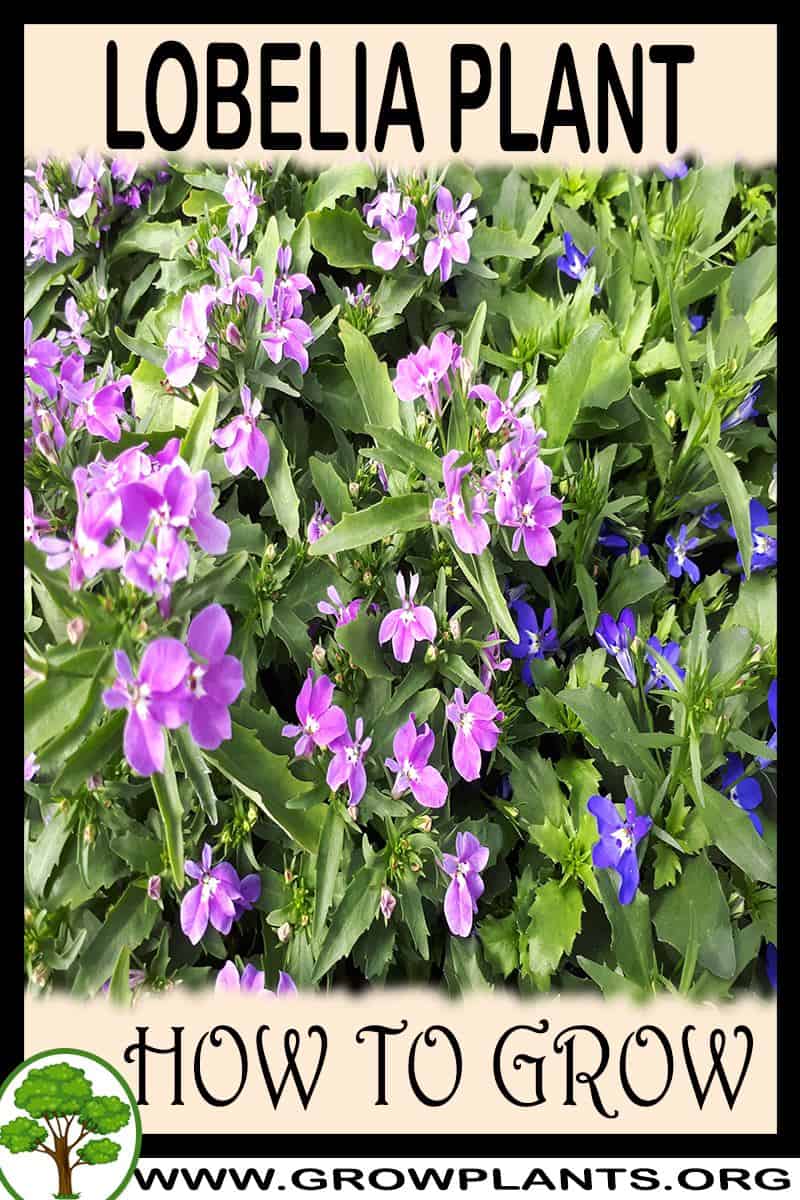
Overview: Lobelia is a genus of herbaceous subshrubs grown as ornamentals, most familiar as the compact edging and basket types about 10-16 cm tall. Grown as a perennial in mild climates and an annual elsewhere, it flowers profusely and attracts pollinators.
Quick Specifications
| Specification | Attribute |
|---|---|
| Plant Type / Life Cycle | Perennial (grown as an annual in cold climates) |
| Foliage Type | Semi-evergreen |
| Mature Size | 10-16 cm (4-7 in) tall (common bedding types) |
| Growth Rate | Fast |
| Root System | Fibrous, shallow |
| Toxicity | Toxic – contains lobeline alkaloids |
| Hardiness | USDA zones 9-11 (perennial) / 4-9 (annual) |
Growth Form & Structure
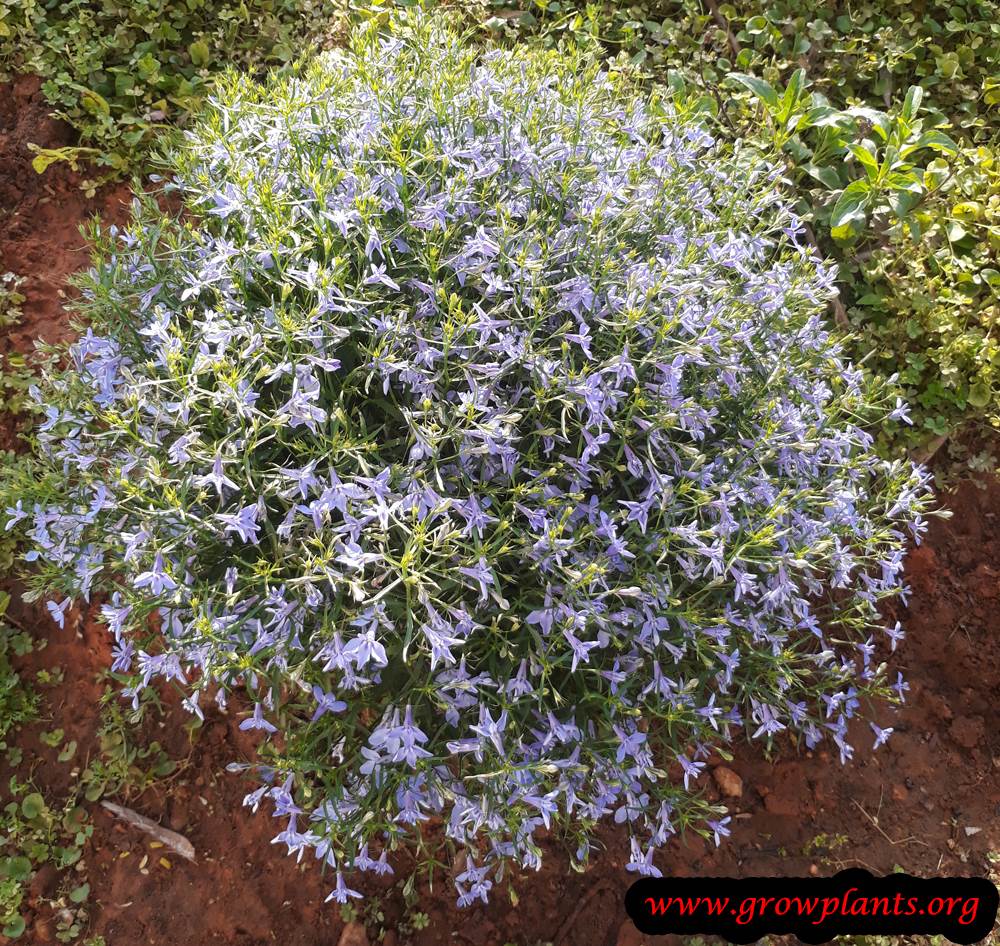
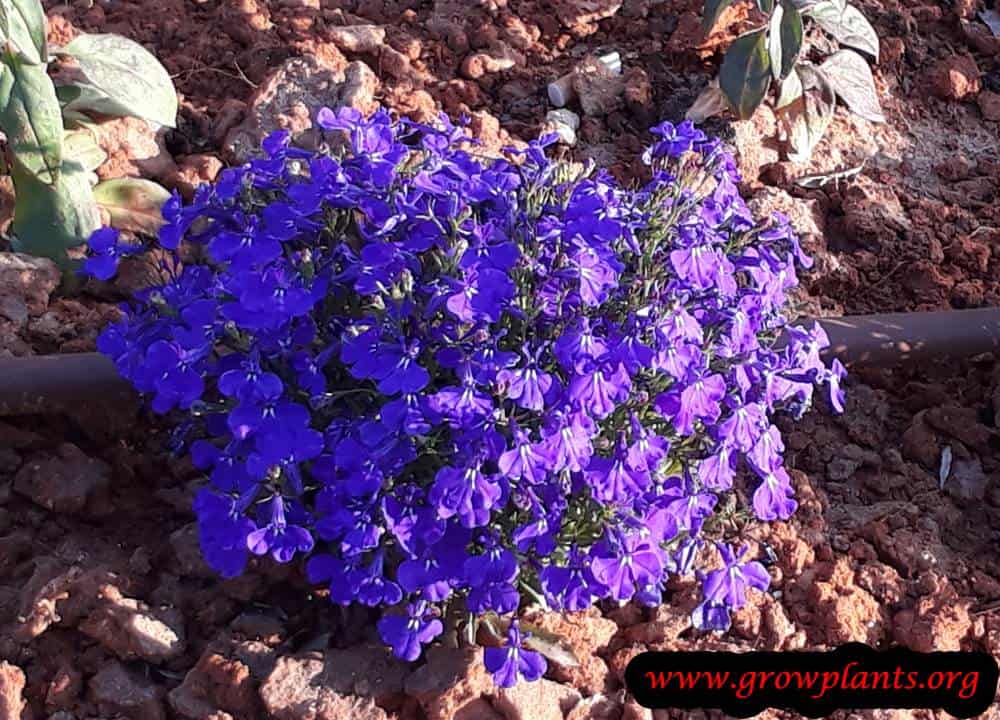
- Height & Spread: Low, 10-16 cm (4-7 in) mounding to trailing in the common edging and basket types; container and edging use is ideal.
- Growth Habit & Form: Compact mounding to trailing herb/subshrub; the genus ranges widely from tiny bedding annuals to tall perennials.
- Lifespan & Maturity: Perennial or annual by climate, with a long bloom from spring through autumn.
Anatomy & Physical Features
- Leaves & Foliage: Green, oval leaves.
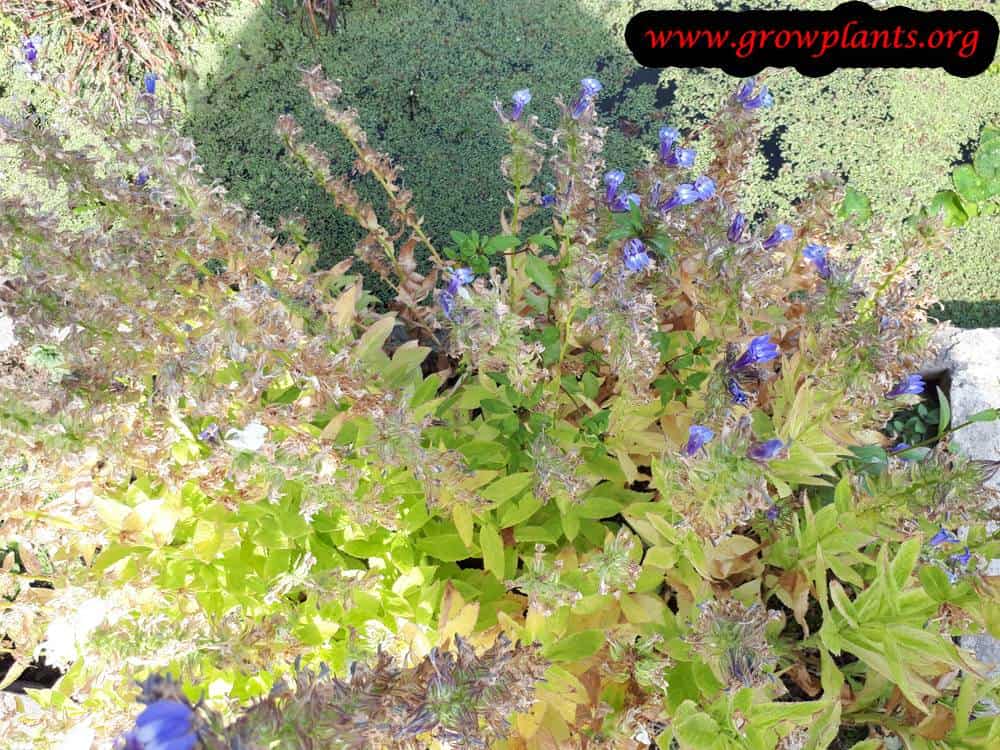
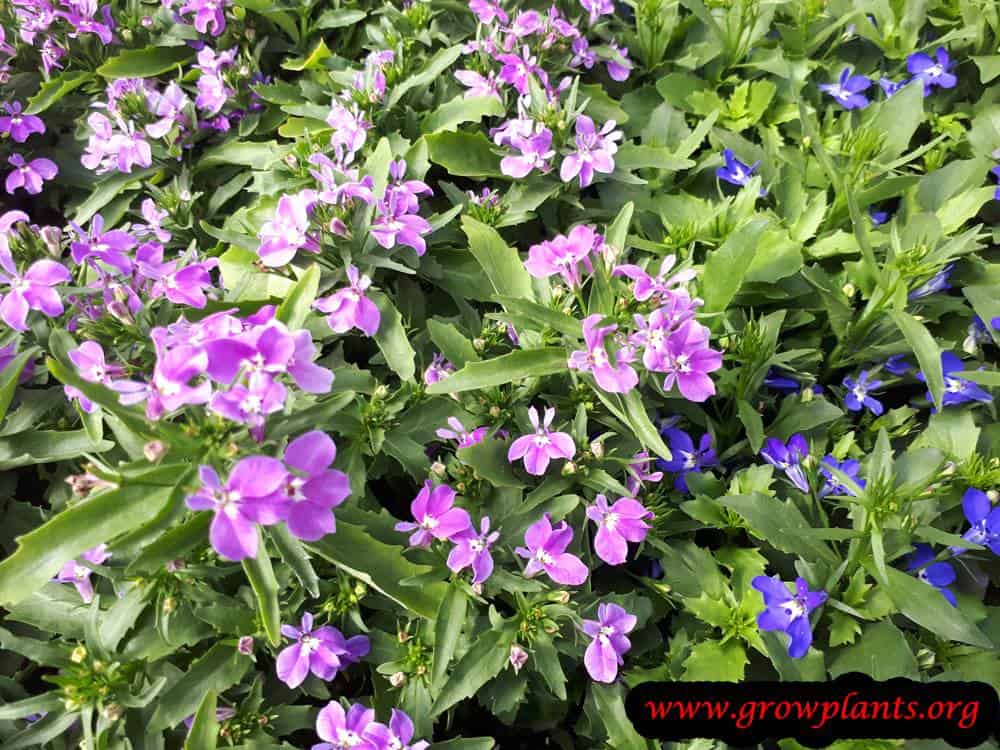
- Flower Characteristics: Two-lipped flowers (three lower lobes and two upper) in blue, purple, red, orange, white or pink.
Primary Uses & Landscape Value
- Functional & Ornamental Roles: Bedding and edging, hanging baskets and containers, close massing as a groundcover-like filler, and pollinator support.
Care Guide: Planting, Soil & Watering
Overview: Lobelia is a compact, floriferous plant grown as a perennial in mild climates and an annual elsewhere, thriving in full sun to part shade in rich, moist but well-drained soil. Keep it evenly moist for continuous flowering — it dislikes drying out.
Quick Care Requirements
| Requirement | Ideal Condition |
|---|---|
| Planting Season | In spring, summer or autumn, after frost |
| Growth Rate | Fast |
| Soil Type | Rich, moist but well-drained soil |
| Water Need | Moderate — keep evenly moist |
Planting & Establishment
- Best Planting Season: Plant in spring through autumn once frost has passed; in cool climates treat it as a warm-season annual.
- How to Plant:
- Hole Preparation: Dig a hole about twice the width of the small root ball; it is ideal for edging, containers and hanging baskets.
- Soil Amendments: Blend compost or organic matter into the backfill to hold moisture and feed the plant.
- Planting Depth: Set the crown level with the soil surface, firm and water in.
- Growth Speed & Expectations: Fast, quickly forming a low 10–16 cm mound that flowers profusely; shear lightly to keep it blooming.
Soil, Watering & Drainage Care
- Soil Mix & Drainage Needs: Provide moisture-retentive but well-drained soil; the plant wants steady moisture yet resents standing water.
- Watering Schedule & Technique:
- Young / Newly Planted: Keep the soil consistently moist while young plants establish.
- Established: Water regularly so the soil never dries out fully — even brief drought checks flowering.
- Seasonal Adjustments: Water more in summer heat; reduce in cool weather.
Climate, Light & Hardiness
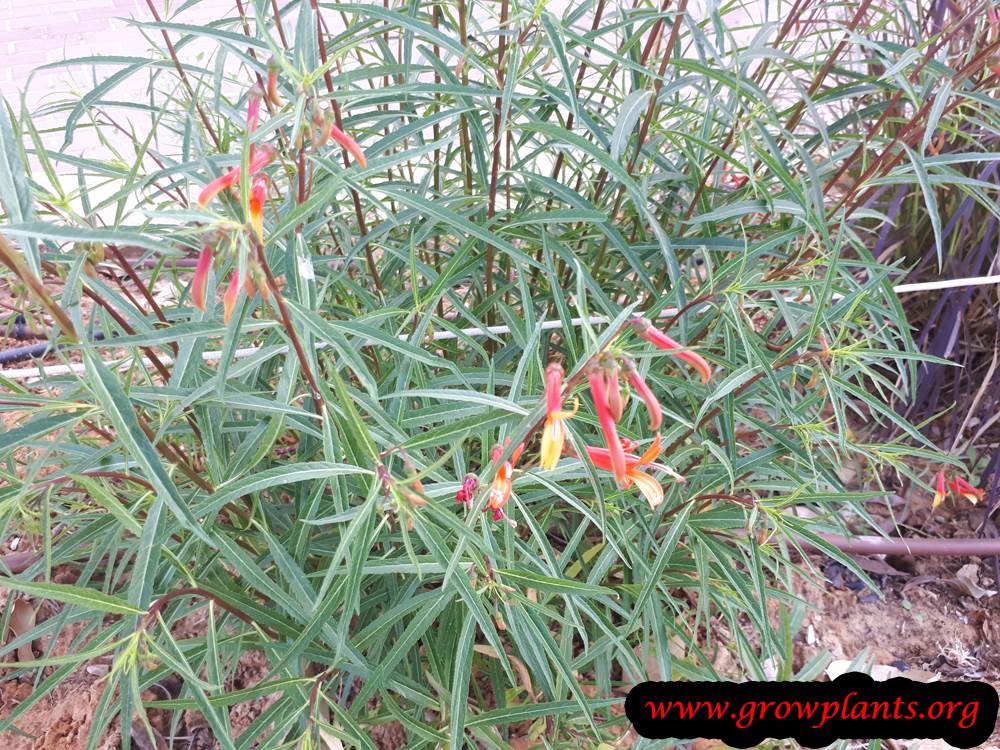
Lobelia species are semi-evergreen subshrubs or shrubs for subtropical, Mediterranean, and temperate climates, performing best in full sun to half shade. In warm climates they persist as perennials, while colder-zone gardeners commonly grow them as annuals since winter cold ends the growing season.
Quick Climate Specifications
| Climate Zones | Subtropical, Mediterranean, and temperate climates |
|---|---|
| USDA Hardiness Zones | Approximately zone 9–11 as a perennial; commonly grown as an annual in zone 4–9 |
| Optimal Temp Range | Mild to warm growing-season conditions |
| Cold Damage Begins | Foliage dies back with hard freezes outside the perennial zone range |
| Approx. Survival Minimum | Established plants persist through winters typical of zone 9; in colder zones, hard freezes end the growing season for the year |
| Frost Tolerance | Low to Moderate |
| Light Conditions | Full Sun to Half Shade |
Sunlight & Light Exposure
Optimal Light Setup
Full sun to half shade suits this genus well, with the best flowering in sunnier spots.
Direct Sun Requirement
Several hours of direct sun daily support strong flowering.
Best Exposure / Orientation
An open, sunny to lightly shaded bed suits most Lobelia species; some can be planted close together as an informal ground cover.
Temperature Extremes & Hardiness
USDA Hardiness & Regional Limits
In zone 9–11, Lobelia persists as a perennial; where winters bring freezing temperatures (roughly zone 4–9) cold limits it to a single growing season and it is commonly grown as an annual-this reflects genuine outdoor cold survival limits, not merely a cultivation choice.
Cold Damage & Winter Protection
Where grown as a marginal perennial, a sheltered site and mulch can help it survive light frosts and resprout in spring.
Frost Sensitivity
Frost sensitivity ranges from low to moderate depending on the species; hard freezes typically kill top growth.
Extreme Heat Tolerance
Tolerates warm conditions reasonably well, though individual species vary and some prefer cooler summers with consistent moisture.
Wind, Humidity & Microclimate
Microclimate Recommendations
A sheltered, sunny to lightly shaded spot with reliable moisture extends the growing season in marginal climates and helps perennial specimens overwinter.
Growing in Pots, Balconies & Indoors
Lobelia is a sun-loving flowering plant, not a houseplant – the grower confirms it is unsuited to indoor growing. This trailing lobelia is a low, mounding/trailing plant, superb in hanging baskets and container edges. It excels in containers, window boxes, and hanging baskets on a sunny balcony or patio.
Quick Details
- Container Size: Moderate – a pot, box, or basket that keeps the roots cool and evenly moist
- Indoor Suitability: Not a houseplant; grow outdoors
- Best Spot: Full sun to half shade (a little afternoon shade helps in hot climates)
- Soil & Drainage: Rich, moisture-retentive but free-draining mix
- Watering in Pots: Average – keep evenly moist; lobelia sulks if it dries out, and pots dry fast
Indoors & On the Windowsill
- Not for indoors: The grower marks it as unsuitable as a houseplant; it needs outdoor light and cool, moist air to flower well.
- Season: Many lobelias are grown as annuals or short-lived perennials; where perennial, protect the pot from winter wet.
On a Balcony or Patio
- Light & moisture: Give it a bright spot with a little shade from harsh midday sun; keep it well watered, as pots and baskets dry quickly and it dislikes drought.
Choosing the Pot, Soil & Long-Term Care
- Pot & drainage: Choose a pot a size or two larger than the root ball, with strong drainage holes; skip a standing water saucer to avoid root rot. Terracotta breathes and dries faster, while glazed or plastic pots hold moisture longer.
- Potting mix: A well-aerated, organic-rich mix – a quality potting mix, or peat/coir blended with perlite or vermiculite.
- Feeding: Potted plants need feeding more often than those in open ground, as frequent watering leaches nutrients away – feed lightly through the growing season.
- Repotting: Refresh the mix or pot up about every two years; for perennials, lightly trim the root ball and top growth at the same time.
Fertilizing & Feeding
A moderate feeder: balanced feeding through the growing season supports this fast-growing, free-flowering plant’s long spring-through-autumn bloom display, tapering off as growth slows or the plant declines with cold in colder climates.
Quick Fertilizing Specs
| Feeding Level | Moderate feeder |
|---|---|
| Main Nutrient Priority | A balanced complete fertilizer rather than a phosphorus-heavy ‘bloom booster’; adequate nitrogen alongside the other nutrients supports strong flowering |
| Best Feeding Period | From spring growth through the extended spring-to-autumn bloom period |
| Organic Options | Compost or well-rotted organic matter worked into well-drained soil |
| Micronutrients | Usually supplied by a complete fertilizer; correct a specific deficiency only if it is actually diagnosed |
| Soil pH | Tolerates a wide range; performs best in fertile, well-drained soil |
| Reduce/Stop Feeding | Taper off feeding as blooming winds down or as the plant declines with cold weather where it is grown as an annual |
Feeding by Growth Stage
Spring growth and establishment
Build a full, bushy framework of foliage ahead of the main flowering display.
| Nutrient direction | A balanced complete fertilizer supports steady root and foliage development. |
|---|---|
| Timing | From spring planting or new growth through early stem and leaf development. |
| Frequency | A light, regular feeding through spring growth supports steady development. |
| Fertilizer types | A balanced complete garden fertilizer, Compost or well-rotted organic matter |
| Precautions | Keep soil evenly moist and well drained; avoid letting the root zone dry out or stay waterlogged. |
Extended spring-to-autumn bloom
Sustain the long flowering display across multiple seasons without pushing excess leafy growth at the expense of flowers.
| Nutrient direction | Continue with a balanced complete fertilizer rather than a phosphorus-heavy ‘bloom booster’; adequate, balanced nutrition is what actually drives strong flowering in this plant. |
|---|---|
| Timing | Through the extended spring-to-autumn flowering period. |
| Frequency | Light, steady feeding through the bloom season, easing off as flowering slows. |
| Fertilizer types | A balanced complete garden fertilizer |
| Precautions | Avoid excess nitrogen during the bloom period, which favors leafy growth over flowers; deadhead spent flowers to help sustain repeat blooming. |
Cold-season decline
Let the plant decline naturally with cold weather, where it is grown as an annual, or rest where it persists as a perennial.
| Nutrient direction | None – withhold fertilizer as the plant declines with cold weather or enters its dormant period. |
|---|---|
| Timing | From the onset of cold weather through winter. |
| Frequency | No feeding at this stage. |
| Fertilizer types | No feeding at this stage – the plant is declining or dormant |
| Precautions | Do not fertilize once cold weather sets in and growth is declining; where grown as a perennial, wait for active growth to resume in spring before feeding again. |
Nutrient Deficiency Signs & Corrections
Lush, leafy growth with noticeably fewer flowers than expected.
| Possible causes | excess nitrogen feeding, too little direct sun, overcrowding limiting light and airflow |
|---|---|
| Appears first on | new stem and leaf growth |
| What to check | recent feeding balance, hours of direct sun, plant spacing |
| Possible correction | Shift to a balanced, less nitrogen-heavy fertilizer and ensure the planting gets adequate direct sun. |
New leaves emerge pale yellow while the veins stay distinctly green.
| Possible causes | high soil pH limiting iron availability, waterlogged or compacted soil, root stress from poor drainage |
|---|---|
| Appears first on | the newest leaves |
| What to check | soil pH and drainage, recent watering patterns, root health |
| Possible correction | Improve drainage and, if soil is alkaline, apply a chelated iron product per its label. |
Leaf margins yellow or scorch, stems weaken, and flowers come smaller or fewer than expected.
| Possible causes | low soil potassium, an imbalanced, nitrogen-heavy feeding history, leaching in light, sandy soils |
|---|---|
| Appears first on | older leaf margins |
| What to check | recent feeding balance, soil texture and drainage, flower size and stem strength |
| Possible correction | Shift to a balanced, potassium-adequate complete fertilizer and improve soil organic matter. |
Pruning, Training & Seasonal Maintenance
This low, mounding Lobelia (10–16 cm) tolerates frequent light trimming and, in fact, needs a mid-season cutback to keep flowering well – plants of this compact, soft-stemmed type commonly stretch out, thin in the center, and slow their bloom by midsummer if never renewed. Pruning here is really about maintenance shearing and deadheading rather than any structural training; the main objective is a full, floriferous mound over as much of the spring–autumn bloom season as possible. Cutting can be done any time growth needs it, but the single most useful cut is a mid-season shear-back once flowering visibly slows.
Quick Pruning & Maintenance Specs
| Pruning Tolerance | Moderate (soft, fast-recovering growth) |
| Primary Pruning Window | Mid-season shear-back once bloom slows or stems get leggy |
| Secondary Maintenance Window | Ongoing deadheading through spring–autumn |
| Typical Frequency | One or two shear-backs per growing season, plus routine deadheading |
| Main Objective | Renew bloom, prevent bare/leggy stems, keep a full mound |
| Young Plant Priority | Pinch tips early to build a bushy, multi-stemmed base |
| Mature Plant Priority | Shear back by roughly a third to half when flowering fades |
| Best Tool Type | Precision snips (soft, thin stems) |
| Avoid Heavy Pruning During | Peak heat/drought stress, or right before an expected frost where grown as a tender perennial |
Pruning by Plant Age & Size
Newly Established
Pinch soft new tips once the plant is settled in, to encourage low branching rather than a single leggy stem.
Young / Formative
No structural training system applies to this small, soft-stemmed mounding plant – formative work is limited to tip-pinching for bushiness.
Mature / Established
Deadhead through the season, and give the whole plant a shear-back once flowering thins out, to force fresh compact growth and a new round of bloom.
Seasonal Pruning Schedule
Summer Canopy Management
Objective: renew a plant that has stretched out or stopped flowering well in the heat.
Remove: the top third to half of all stems, shearing the mound back evenly.
Do not remove: the entire plant down to bare crown – leave enough leafy growth to recover.
Expected response: compact regrowth and a fresh flush of flowers within a few weeks.
Flowering impact: temporary pause, then renewed and often improved bloom.
Ongoing Sanitary
Objective: keep the display tidy and extend flowering.
Remove: dead leaves and spent flowers as they occur.
Do not remove: unopened buds.
Expected response: steadier, longer bloom through the season.
Flowering impact: positive.
Special Growth to Remove
Spent flowers and dead leaves, removed as part of routine deadheading; leggy, thinned-out stems are addressed by the mid-season shear-back rather than by picking out individual shoots.
Container & Small-Space Pruning
In pots or hanging baskets (a very common way this plant is grown), the same mid-season shear-back is especially important, since container plants tend to stretch and thin faster than in-ground plantings; trimming keeps the display compact rather than sparse and trailing bare.
Tools
Precision snips for the thin, soft stems and deadheading – no larger cutting tool is appropriate for a plant this size and texture.
Tool Hygiene & Disease Risk
Routine: clean tools are sufficient. No significant transmissible pruning-borne disease risk is documented for this genus.
Cut Placement & Technique
Shear stems back to just above a set of leaves rather than to bare stem, and deadhead individual spent flowers just below the faded bloom.
Heavy Pruning & Rejuvenation
Where grown as a perennial (zone 9–11), a firmer end-of-season cutback after the last flush can tidy the plant for its next growth cycle; this is a moderate renewal cut rather than hard structural pruning, since the plant has no woody framework to rejuvenate.
Post-Pruning Care
Water normally after a shear-back; a light feed can help push the recovery flush faster on container plants, but is not required for in-ground plantings in reasonable soil.
Common Pruning Mistakes
Letting the plant go leggy and sparse all season without ever shearing it back; cutting so hard that little leafy growth remains to recover from; shearing during a heat wave when the plant is least able to push fast new growth.
When NOT to Prune
Avoid a hard shear-back during peak summer heat or drought stress, and avoid pruning right before an expected frost where the plant is being carried over as a tender perennial.
Recommended Tools (by task)
- precision_snips – for deadheading and the mid-season shear-back on this small, soft-stemmed plant.
Propagation Guide
As a broad genus, most Lobelia are easiest to start from seed – tiny seed that should be surface-sown rather than buried – while the shrubbier, clump-forming species described here can also be increased by softwood cuttings or division. Difficulty ranges from easy to moderate depending on the particular species and method chosen.
Quick Propagation Specs
| Best Propagation Method | Seed |
| Alternative Methods | Softwood Cuttings; Division |
| Propagation Difficulty | Easy to Moderate (species-dependent) |
| Seed True-to-Type | Variable (genus spans many species and hybrids) |
| Vegetative True-to-Type | Yes |
| Best Propagation Season | Spring |
Growing from Seed
Sowing Depth & Orientation
Lobelia seed is typically very fine and needs light to germinate, so surface-sow rather than burying it.
Germination Conditions
Warm, consistently moist conditions with good light; germination can be slow and somewhat irregular.
Seedling Care
Fine seedlings dry out and are lost easily, so keep the surface evenly moist and avoid overcrowding until they are large enough to handle.
Stem Cuttings
For the shrubbier, subshrub-type Lobelia described here, softwood tip cuttings taken during the growing season generally root well in a humid, well-drained mix; a rooting hormone is optional and can help but is not required.
Division, Offsets, Pups & Suckers
Perennial, clump-forming Lobelia can be lifted and divided in spring as new growth begins; replant sections that have healthy roots attached and keep them consistently moist while they re-establish.
Bloom & Flower Guide
Quick Details
- Bloom Season: Spring, summer and autumn
- Flower Appearance: Small two-lipped flowers (three lower lobes, two upper) in blue, purple, red, orange, white or pink
- Edibility: Toxic – Lobelia contains lobeline and related alkaloids; not edible
Detailed Blooming Overview
Lobelia carries masses of small, two-lipped flowers – three lobes forming a lower lip and two up top – so each bloom has the look of a little flying insect or a small cone. Colours range across blue, purple, red, orange, white and pink, and the plant flowers over a long season from spring into autumn. Red-flowered types are particularly good at drawing hummingbirds and other pollinators. All parts contain toxic alkaloids, so the flowers are for show, not eating.
Flower Characteristics
- Small and two-lipped (three lower lobes, two upper)
- Blue, purple, red, orange, white or pink
- Produced in profusion over a long season
Bloom Care & Thinning
- Deadheading: Shearing or trimming spent flowers keeps trailing and bedding types blooming for longer.
- Pollination: Worked by bees; red forms also attract hummingbirds.
- Safety: Keep the plant away from children and pets, as it is toxic if eaten.
Pests, Diseases & Troubleshooting
Overview: Lobelias are mostly easy but share a few weak points: seedlings and cuttings are prone to damping-off, plants rot at the crown in soggy soil, and the popular bedding lobelia (L. erinus) stalls and browns in summer heat. Give them cool roots, even moisture with good drainage, and airflow, and control the sap-suckers and slugs that trouble soft growth, and they flower generously.
Quick Troubleshooting Overview
| Issue / Pest | Main Symptom | Primary Solution |
|---|---|---|
| Damping-off | Seedlings collapse and rot at the soil line | Clean mix; sow thinly; don’t overwater; good airflow |
| Heat stall (L. erinus) | Flowering stops; growth browns in summer heat | Shear back; keep cool and moist; light feed to rebloom |
| Aphids | Sticky curled shoot tips with soft insects | Rinse off; insecticidal soap; conserve predators |
| Spider mites | Fine speckling and bronzing in hot, dry air | Raise humidity; hose foliage; light soap if severe |
| Slugs & snails | Young leaves and shoots rasped and holed | Iron-phosphate bait; clear damp litter |
| Crown/root rot | Plants wilt and rot in wet, heavy soil | Improve drainage; even (not soggy) moisture |
Common Pests & Management
- Aphids (Aphidoidea):
- Symptoms: Soft green or black aphids cluster on tender shoot tips, leaf undersides and flower buds, curling growth and leaving sticky honeydew and sooty mould.
- Prevention & Control: Rinse colonies off with water and conserve ladybirds, lacewings and hoverflies. Insecticidal soap handles heavier colonies; avoid over-feeding with nitrogen.
- Two-spotted spider mite (Tetranychus urticae):
- Symptoms: Fine pale stippling and a dull bronze cast to the leaves in hot, dry conditions, with fine webbing in bad cases; a common problem on heat-stressed bedding lobelia.
- Prevention & Control: Keep plants cool, moist and unstressed and hose down foliage – mites thrive in hot dry air. Conserve predatory mites and use a light soap only if stippling spreads.
- Whitefly (Trialeurodes vaporariorum):
- Symptoms: Tiny white flies rise in a cloud when disturbed; their nymphs on leaf undersides excrete honeydew and weaken the plant, mainly on glasshouse-raised or sheltered plants.
- Prevention & Control: Use yellow sticky traps and spray insecticidal soap to leaf undersides where nymphs feed; good airflow and avoiding soft growth keep numbers low.
- Slugs & snails (Gastropoda):
- Symptoms: Young leaves, shoots and seedlings are rasped and holed, with slime trails, especially in damp shady conditions and on newly planted-out lobelia.
- Prevention & Control: Clear damp hiding places, water in the morning, and use iron-phosphate pellets or traps; established plants outgrow light damage.
- Thrips (Thysanoptera):
- Symptoms: Silvery streaks and pale speckling on leaves and flowers, sometimes distorting blooms; the slender insects hide in buds.
- Prevention & Control: Monitor with blue sticky traps, remove spent flowers, and spray insecticidal soap or spinosad in the evening. Damage is usually cosmetic.
Diseases & Fungal Issues
- Damping-off (Pythium / Rhizoctonia / Fusarium):
- Symptoms: Seedlings and cuttings suddenly keel over, rotting and pinching at the soil line, and whole trays can be lost quickly in cold, wet, overcrowded conditions – a leading problem with the tiny-seeded bedding lobelia.
- Treatment & Management: Sow thinly into clean, free-draining seed mix, water carefully from below, provide good airflow and warmth, and avoid sowing into cold, soggy compost. A biofungicide drench helps on valuable batches.
- Root & crown rot (Pythium / Phytophthora):
- Symptoms: Established plants wilt and collapse as the roots and crown blacken and rot in wet, heavy or overwatered soil, despite the soil looking moist.
- Treatment & Management: Grow in free-draining soil or mix with even (not soggy) moisture, and never let plants stand in water. Remove rotted plants and improve drainage; perennial lobelias especially resent winter wet.
- Rust (Puccinia lobeliae):
- Symptoms: Yellow spots on the upper leaf surface with powdery orange-brown pustules beneath; heavy infection yellows and drops foliage, more of an issue on perennial lobelias.
- Treatment & Management: Remove and destroy infected leaves, improve airflow, and avoid wetting foliage. An approved fungicide controls severe cases on valued perennials.
- Leaf spot & Botrytis (Cercospora / Botrytis spp.):
- Symptoms: Brown leaf spots (Cercospora) or grey fuzzy mould on ageing flowers and crowded damp foliage (Botrytis) in humid conditions.
- Treatment & Management: Improve airflow, avoid overhead watering, remove spotted leaves and spent flowers; good hygiene usually controls both.
Growing Difficulties & Abiotic Problems
- Heat-induced flowering stall:
- Cause & Symptoms: Bedding lobelia (L. erinus) is a cool-season plant that stops flowering, browns and looks exhausted in summer heat, especially in dry soil.
- Correction Strategy: Shear the plant back by half, keep the roots cool and evenly moist (mulch, partial afternoon shade in hot climates), and give a light feed to trigger a fresh flush when temperatures ease.
- Legginess & sparse bloom:
- Cause & Symptoms: Too little light or over-rich conditions make plants stretch and flower poorly.
- Correction Strategy: Grow in full sun to part shade, avoid excess nitrogen, and pinch or shear to keep growth bushy and floriferous.
- Wilting from dry-out:
- Cause & Symptoms: The fine roots dry quickly in containers and hanging baskets, causing rapid wilting and flower drop.
- Correction Strategy: Keep container and basket plants consistently moist (they are thirsty), water in the cool of the day, and use moisture-retentive mixes with reliable drainage.
What Helps – Products & Tools
Lobelias need a light touch: a biofungicide or clean sowing practice against damping-off, insecticidal soap for aphids, whitefly, thrips and mites, iron-phosphate bait for slugs, and an approved fungicide only for rust on valued perennials. For bedding lobelia the real ‘tools’ are shears, mulch and even watering to carry it through summer heat.