

Plant Profile & Key Characteristics
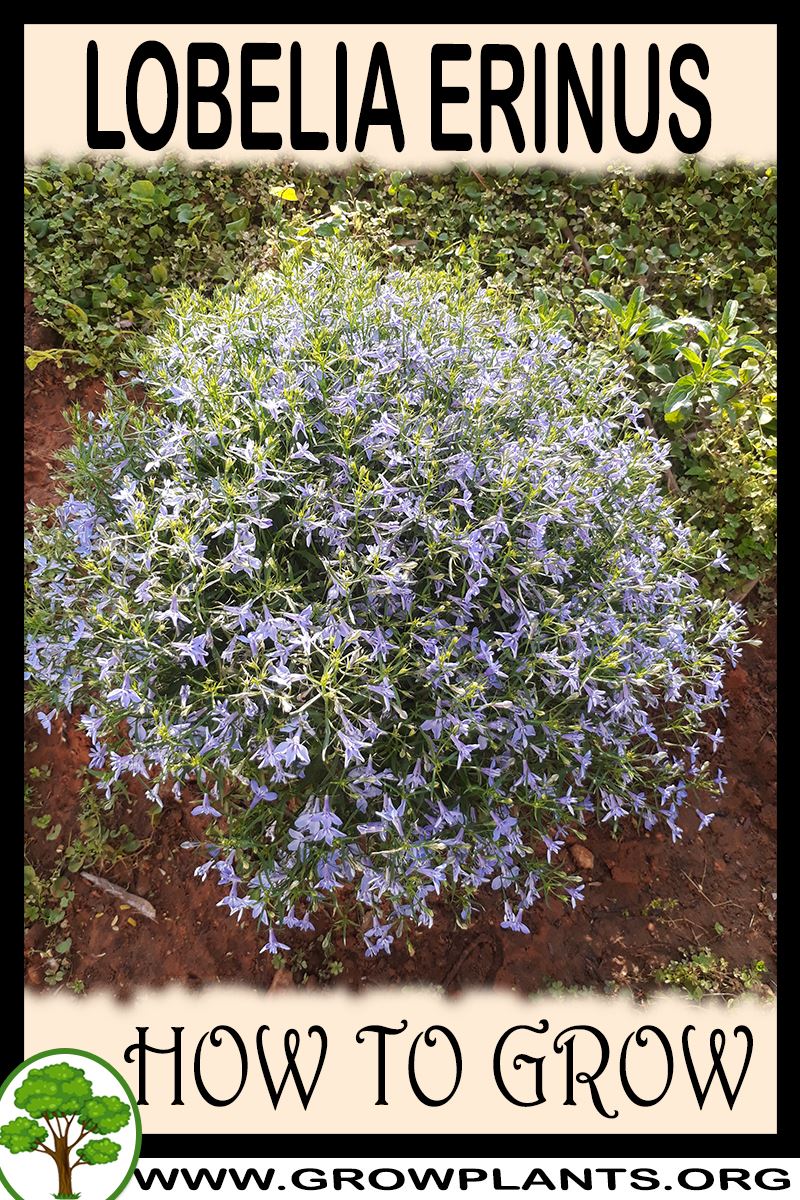
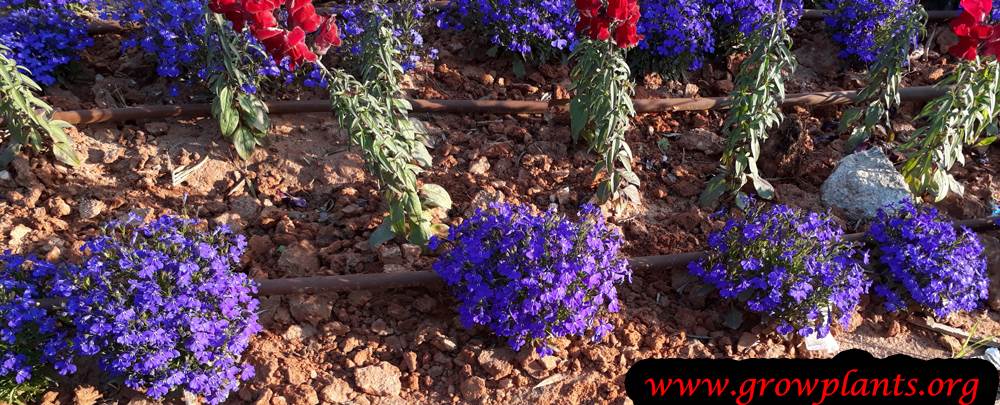
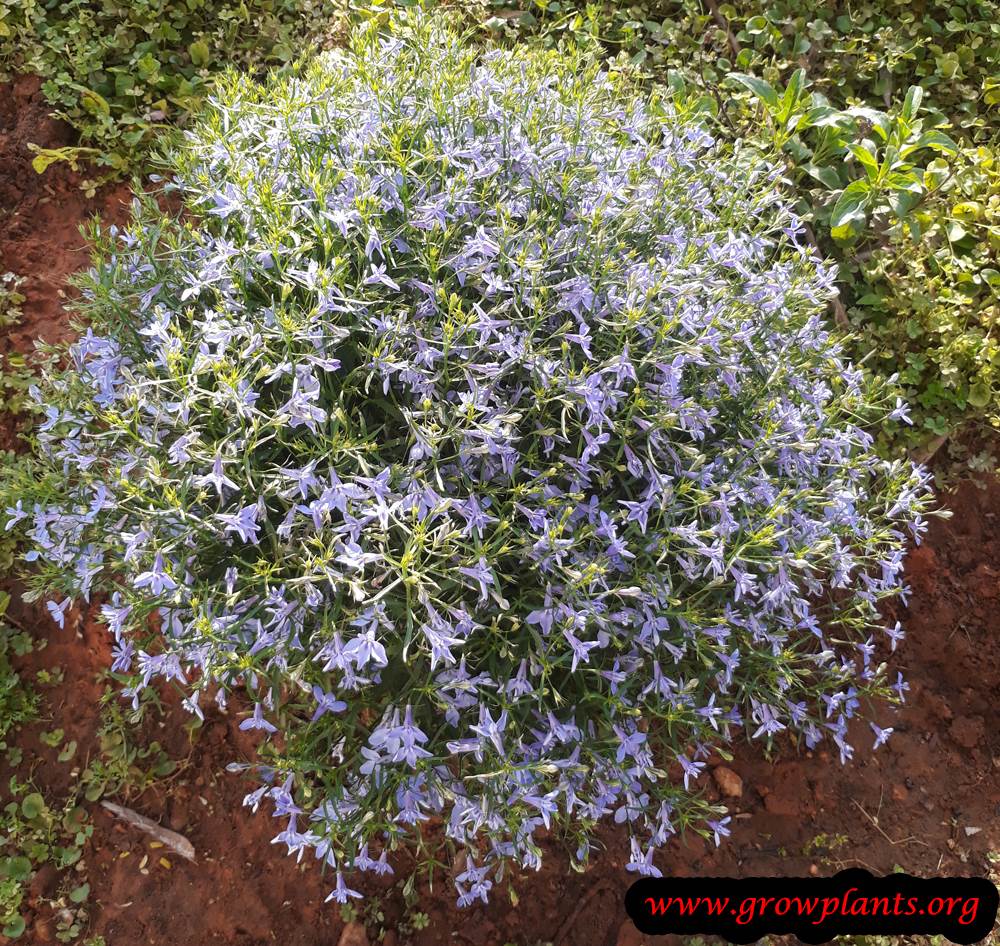
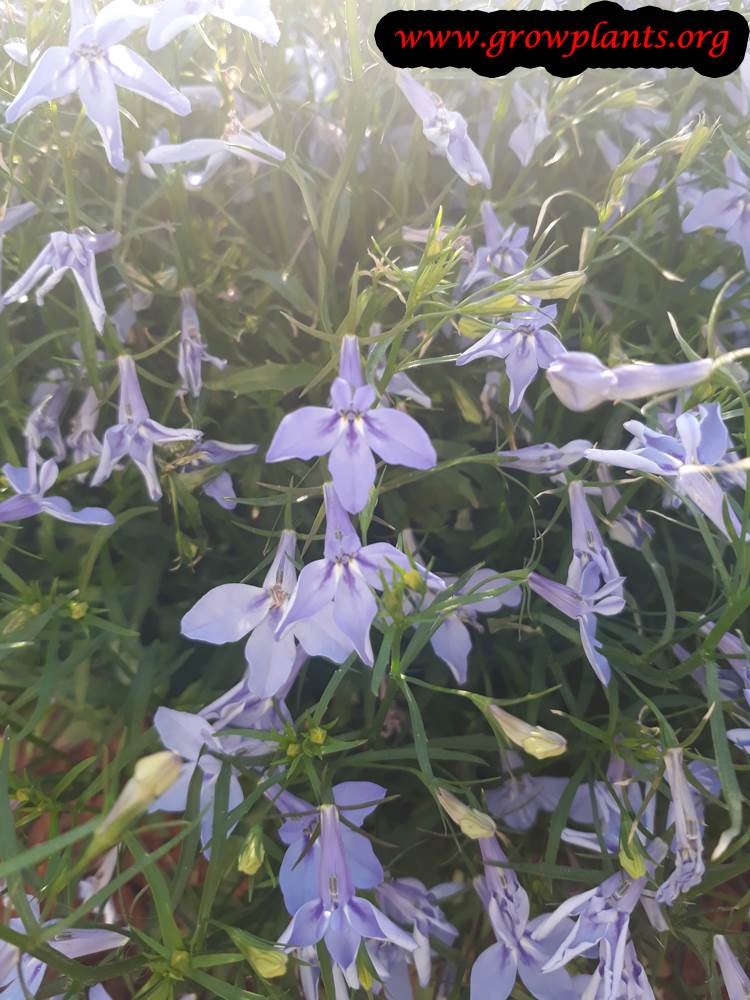
Overview: Lobelia erinus (trailing lobelia) is a low, trailing to mounding sub-shrub about 10-16 cm high, smothered in small blue, purple, white or pink flowers. It is a semi-evergreen perennial usually grown as an annual for bedding, baskets and containers.
Quick Specifications
| Specification | Attribute |
|---|---|
| Plant Type / Life Cycle | Semi-evergreen perennial, usually grown as an annual |
| Foliage Type | Semi-evergreen |
| Mature Size | 10-16 cm tall (3-7 in), trailing/spreading wider |
| Growth Rate | Fast |
| Toxicity | Toxic if ingested (contains lobeline alkaloids) |
| Hardiness | USDA zones 9-11 as a perennial; 4-9 as an annual |
Growth Form & Structure
- Height & Spread: Low mounds 10-16 cm high that trail outward; superb spilling over container and basket edges.
- Growth Habit & Form: Compact, mounding to trailing sub-shrub; not spreading but plants can be set close together as groundcover.
- Lifespan & Maturity: Fast to flower from seed; short-lived and treated as an annual in most climates.
Anatomy & Physical Features
- Leaves & Foliage: Small, green, oval leaves.
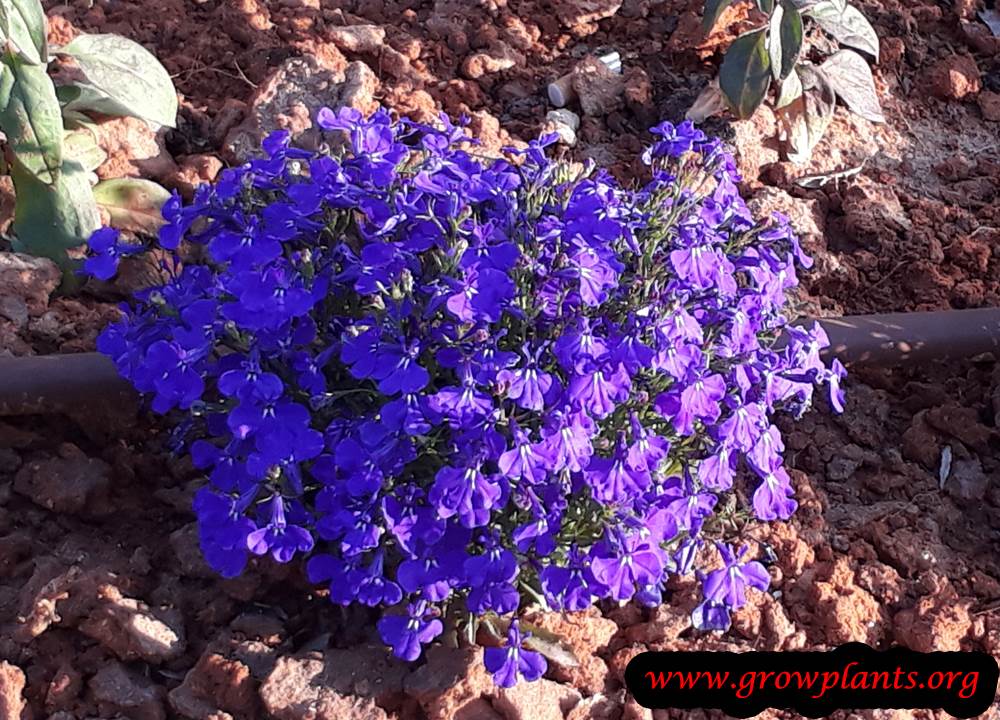
- Flower Characteristics: Tiny two-lipped flowers (three lower and two upper lobes, resembling a small flying insect) in blue, purple, white or pink; attract pollinators.
Primary Uses & Landscape Value
- Functional & Ornamental Roles: Ornamental edging, bedding, hanging baskets and container spiller; pollinator plant.
Care Guide: Planting, Soil & Watering
Overview: Trailing lobelia grows best in full sun to half shade in rich, well-drained soil that stays lightly moist. It flowers freely on moderate watering and is quick to fill a pot or border edge.
Quick Care Requirements
| Requirement | Ideal Condition |
|---|---|
| Planting Season | During the warm season, spring through autumn |
| Growth Rate | Fast |
| Soil Type | Rich, well-draining soil kept lightly moist |
| Water Need | Moderate — keep the soil lightly moist, letting the surface dry between waterings |
Planting & Establishment
- Best Planting Season: Plant during the warm season, anytime from spring through autumn.
- How to Plant:
- Hole Preparation: Dig a hole a little larger than the root ball and loosen the surrounding soil so young roots can spread easily.
- Soil Amendments: Work in compost or well-rotted organic matter to enrich the bed and improve both fertility and drainage.
- Planting Depth: Set the plant at the same level it grew in its pot, with the root collar at the soil surface — do not bury the stem.
- Growth Speed & Expectations: Expect fast growth in optimal conditions, establishing and reaching full size quickly.
Soil, Watering & Drainage Care
- Soil Mix & Drainage Needs: Provide rich, well-draining soil that holds some moisture; in containers use a fertile free-draining potting mix with drainage holes so the roots stay moist but never waterlogged.
- Watering Schedule & Technique:
- Young / Newly Planted: Water regularly after planting to keep the soil evenly moist while roots establish.
- Established: Water deeply and consistently, letting the surface dry slightly between waterings.
- Seasonal Adjustments: Water more often in summer heat and less in the cooler, wetter months.
Climate, Light & Hardiness
Trailing lobelia grows in subtropical, mediterranean, and temperate climates, behaving as a semi-evergreen perennial in mild-winter areas and as a cool-season annual where winters are colder. It prefers full sun to half shade and moderate temperatures, struggling in prolonged heat.
Quick Climate Specifications
| Climate Zones | Subtropical, Mediterranean, temperate |
|---|---|
| USDA Hardiness Zones | 9–11 as a perennial; 4–9 grown as an annual |
| Light Conditions | Full Sun to Half Shade |
Sunlight & Light Exposure
Optimal Light Setup
Full sun to half shade suits this trailing groundcover; afternoon shade helps where summers are very hot.
Temperature Extremes & Hardiness
USDA Hardiness & Regional Limits
Persists as a semi-evergreen perennial in USDA zones 9–11; in colder zones 4–9 it is grown as a warm-season annual since it cannot survive freezing winters outdoors.
Frost Sensitivity
Frost ends the growing season where treated as an annual; established plants in zones 9–11 tolerate the occasional light winter chill typical of those zones.
Growing in Pots, Balconies & Indoors
Trailing lobelia smothers itself in tiny blue, violet or white flowers and is a classic for baskets and window boxes. The grower rates it for containers but not indoors – it needs good outdoor light to flower non-stop.
Quick Details
- Container Size: A basket, window box or trough – superb spilling over the edge
- Indoor Suitability: Not a houseplant (grower); a sun-loving trailer for outdoor baskets and boxes
- Best Spot: Full sun to partial shade; a bright spot with some direct sun is ideal.
- Soil & Drainage: Aerated, organic-rich mix (quality potting mix, or peat/coir with perlite or vermiculite); it must drain freely.
- Watering in Pots: Keep the mix evenly moist, letting the surface dry slightly between waterings; pots dry faster than open ground.
Indoors & On the Windowsill
- Not a houseplant: The grower marks it unsuitable indoors; in weak room light it stretches and stops flowering. It is bred for outdoor baskets and edging.
- Season only: Usually grown as an annual – resow or replant each season rather than overwintering.
On a Balcony or Patio
- Light & exposure: Full sun to part shade suits it; in very hot climates a little afternoon shade keeps it flowering longer. Cascading stems look wonderful from railings and hanging baskets.
- Watering: Keep the mix evenly moist – baskets dry quickly in wind and reflected heat, and lobelia sulks if it dries out.
Choosing the Pot, Soil & Long-Term Care
- Pot & drainage: A basket, box or pot with free drainage; keep the shallow mix from drying out.
- Potting mix: Use a well-aerated, organic-rich mix – quality potting mix, or peat/coir blended with perlite or vermiculite.
- Feeding: Baskets leach fast – feed regularly with a dilute balanced fertiliser for continuous bloom.
- Repotting: Grown as an annual; start with fresh mix each planting.
Fertilizing & Feeding
A moderate feeder for a bedding plant: steady light feeding through its long bloom season keeps this continuous flowerer going, especially in containers and hanging baskets where nutrients wash out quickly.
Quick Fertilizing Specs
| Feeding Level | Moderate feeder for a bedding annual |
|---|---|
| Main Nutrient Priority | Balanced, modest-nitrogen feeding to sustain continuous flowering |
| Best Feeding Period | Through the long spring-to-autumn bloom season |
| Organic Options | A light amount of compost worked into well-drained soil |
| Reduce/Stop Feeding | Feeding eases off if grown as a perennial through its cooler, quieter season |
| Micronutrients | Usually met by a complete fertilizer; correct only diagnosed issues |
| Soil pH | Tolerates a wide range of well-drained soils |
Feeding by Growth Stage
Establishment after sowing or transplanting
Get young plants off to a steady start in well-drained soil, beds, or containers.
| Nutrient direction | A light, balanced feeding supports steady establishment. |
|---|---|
| Timing | At sowing, transplanting, and through early growth. |
| Frequency | A light feeding at planting is usually enough to start it off. |
| Fertilizer types | A balanced complete fertilizer at a gentle rate, A light amount of compost worked into the soil |
| Precautions | Keep young plants evenly watered while roots establish, particularly in containers and baskets. |
Continuous bloom through the growing season
Sustain the long, continuous flush of small flowers valued for beds, borders, and hanging baskets.
| Nutrient direction | Steady, modest-nitrogen, balanced feeding keeps flowering coming without pushing leafy growth at the expense of blooms. |
|---|---|
| Timing | Through the long spring-to-autumn bloom season. |
| Frequency | A light, occasional feeding sustains continuous bloom, more often in containers where watering washes nutrients through quickly. |
| Fertilizer types | A balanced complete fertilizer, diluted lighter for containers and hanging baskets |
| Precautions | Container and basket plantings need more frequent light feeding than in-ground beds since watering leaches nutrients out quickly. |
Nutrient Deficiency Signs & Corrections
Foliage pales and the continuous bloom flush thins out.
| Possible causes | low available soil nitrogen, nitrogen leaching from frequent watering, especially in containers, thin, low-organic-matter soil |
|---|---|
| Appears first on | older, lower leaves |
| What to check | recent feeding history, soil organic matter, watering frequency, especially in containers |
| Possible correction | Apply a light, balanced complete fertilizer, feeding more often for container and basket plantings. |
Interveinal yellowing appears on older leaves while the veins stay green.
| Possible causes | low soil magnesium, leaching from frequent watering in containers, an imbalanced fertilizer heavy in potassium relative to magnesium |
|---|---|
| Appears first on | older, lower leaves |
| What to check | soil or potting mix magnesium status, watering frequency and leaching, recent fertilizer balance |
| Possible correction | Apply a labeled magnesium source such as Epsom salt and rebalance overall feeding. |
Leaf margins brown or scorch, especially in containers and hanging baskets, despite regular watering.
| Possible causes | fertilizer salt buildup, common in containers with limited soil volume, over-fertilizing this modest-nitrogen bedding plant, inconsistent watering that concentrates salts |
|---|---|
| Appears first on | leaf tips and margins |
| What to check | recent fertilizer amounts and frequency, watering consistency, drainage, especially in containers |
| Possible correction | Ease off feeding, water thoroughly to flush accumulated salts, then return to lighter, more diluted feeding. |
Pruning, Training & Seasonal Maintenance
Lobelia erinus is a low, trailing subshrub grown as a bedding or basket annual (or short-lived perennial in frost-free zones). It carries almost no permanent wood, so pruning is really grooming: deadheading, and — the key technique for this species — a mid-season shear-back once the first flush of bloom fades, which prevents the bare, leggy centers this fast, fine-stemmed plant is prone to and triggers a fresh flush of both foliage and flowers.
Quick Pruning & Maintenance Specs
| Pruning Tolerance | Moderate (tolerates a hard shear-back despite its small size) |
| Primary Pruning Window | Ongoing deadheading through bloom, spring-autumn |
| Secondary Maintenance Window | Mid-season rejuvenation shear once the first bloom flush declines or the plant looks leggy |
| Typical Frequency | Deadhead as needed; 1 rejuvenation shear per season is usually enough |
| Main Objective | Prolong bloom, prevent bare/leggy centers |
| Young Plant Priority | Pinch tips early to build a fuller, more branched habit |
| Mature Plant Priority | Shear back by about a third to a half if flowering slows or growth gets sparse/leggy |
| Best Tool Type | Precision snips or small hand shears |
| Avoid Heavy Pruning During | Peak heat stress — wait for a cooler stretch before shearing hard |
Pruning by Plant Age & Size
Newly Established
No pruning needed; let young plants fill in.
Young / Formative
Pinch growing tips once plants have a few sets of leaves to encourage branching and a fuller mound/trail rather than a single thin stem — standard practice for compact bedding and basket plants of this type.
Mature / Established
Deadhead through the bloom season; when the first flush fades or stems get thin and bare-based (common by mid-summer, especially in heat), shear the whole plant back by roughly a third to a half to rejuvenate.
Seasonal Pruning Schedule
Ongoing Sanitary
Objective: tidy appearance, more flowers. Remove: spent flowers and dead/yellowed foliage. Do not remove: unopened buds. Expected response: continued flowering. Flowering impact: positive — deadheading prevents the plant from putting energy into seed set instead of new blooms.
Summer Canopy Management
Objective: rejuvenate a plant that has gone leggy or stopped flowering well, common once summer heat sets in. Remove: shear back about a third to a half of all growth. Do not remove: more than half at once. Expected response: fresh compact growth and a renewed bloom flush within about two to three weeks. Flowering impact: a short pause in bloom, followed by a stronger flush than if left unpruned.
Special Growth to Remove
- Spent flower stems — remove regularly to sustain bloom.
- Dead or yellowed foliage.
- Self-sown seedlings outside the intended planting area, since this species can spread by self-seeding.
Container & Small-Space Pruning
Very commonly grown in hanging baskets and containers for its trailing habit. The same rejuvenation shear is even more important in containers, where the plant can go bare-centered and stringy faster than in the ground; shearing back keeps trailing stems dense rather than thin and sparse.
Tools
- Precision snips — for deadheading and the shear-back; stems are thin and soft throughout, no woody growth to justify heavier tools.
Tool Hygiene & Disease Risk
Routine — keep blades clean; only minor pests (aphids, mites) are noted, no significant disease-transmission risk requiring disinfection between cuts.
Cut Placement & Technique
Deadhead just above the next leaf pair or side shoot. For the rejuvenation shear, cut stems back uniformly to just above a lower set of healthy leaves rather than removing whole stems at the base.
When NOT to Prune
Avoid a hard shear-back during an active heat spike or drought stress — wait for cooler, more favorable conditions so the plant can recover quickly. Avoid pruning newly set transplants before they’ve rooted in.
Common Pruning Mistakes
- Never shearing back mid-season and ending up with a thin, bare-centered plant by late summer.
- Shearing during peak heat, which slows recovery.
- Letting spent flowers set seed heavily, which reduces further bloom and can lead to unwanted self-sown seedlings.
Recommended Tools (by task)
- precision_snips — deadheading and the mid-season shear-back; the only cuts this small, soft-stemmed plant needs.
Propagation Guide
Lobelia erinus is most commonly grown from seed, which is easy though the seed itself is very fine and slow to get going; named trailing or color selections are often kept true instead by cuttings or division. Grafting is not needed, and overall propagation difficulty is easy.
Quick Propagation Specs
| Best Propagation Method | Seed |
| Alternative Methods | Stem cuttings or division, mainly to keep named color selections true |
| Propagation Difficulty | Easy |
| Seed True-to-Type | Variable – the species is reasonably true, but named color strains may not come true from home-saved seed |
| Vegetative True-to-Type | Yes |
| Best Propagation Season | Spring, within the plant's spring–summer–autumn planting window |
| Seed Germination Time | Germination can be slow and somewhat uneven, often taking several weeks |
| Germination Temperature | Roughly 18–24°C (64–75°F) |
| Seed Sowing Depth | Surface-sow or barely cover – the seed is very fine and dust-like |
| Grafting Required | No |
Growing from Seed
Seed Handling & Viability
Seed is very fine and dust-like, so handle it carefully to avoid loss; using relatively fresh seed gives the most reliable results.
Sowing Season
Start in spring, ahead of the plant's wider spring–summer–autumn planting window.
Sowing Depth & Orientation
Surface-sow or press the seed lightly into the mix without burying it.
Germination Conditions
Warm, consistently moist, bright conditions, roughly 18–24°C (64–75°F).
Germination Time
Can be slow and uneven, often taking several weeks.
Seedling Care
Seedlings are tiny and slow to start; thin or prick out into cells before planting out during the spring–summer–autumn window.
Stem Cuttings
Cutting Type
Soft tip cuttings from non-flowering shoots.
Best Timing
During active growth in spring or summer, or in autumn to overwinter a favorite color selection.
Cutting Preparation
Take short tip cuttings and remove the lower leaves.
Rooting Setup
A moist, well-drained mix with high humidity.
Rooting Hormone
Optional – not essential, as this species roots readily.
Rooting Time
Typically a couple of weeks under warm, humid conditions.
Bloom & Flower Guide
Quick Details
- Bloom Season: Spring through autumn
- Flower Appearance: Tiny two-lipped flowers that resemble a little winged insect
- Edibility: Not edible – grown purely as an ornamental; all parts are toxic if eaten
Detailed Blooming Overview
Trailing lobelia smothers itself in small, jewel-toned flowers from spring through autumn, making it a favourite for edging, baskets, and tumbling over walls. The flowers draw in pollinators and keep coming through the season with light care.
Flower Characteristics
- Colours include blue, purple, white, and pink.
- Each flower has one petal split into lobes – three below and two above – giving it the look of a tiny flying insect.
Bloom Care & Thinning
- Encouraging bloom: Trimming spent flowers and leggy growth refreshes the plant and keeps it flowering.
- Safety: Lobelia erinus is toxic if ingested – keep it away from children and pets and treat it strictly as an ornamental.
- Light and water: Full sun to half shade with even, average watering suits flowering.
Pests, Diseases & Troubleshooting
Overview: Lobelias are prized for their intense flower colour but can be troubled by aphids, spider mites, thrips, whitefly and slugs, and by rust, leaf spot, damping-off, botrytis and crown rot. Lobelia erinus is the familiar trailing bedding lobelia, most vulnerable to summer heat stress and the spider mites that follow it. The core of good management is airflow, steady but not soggy moisture, and prompt removal of tired growth, since most serious problems are fungal and moisture-driven.
Quick Troubleshooting Overview
| Issue / Pest | Main Symptom | Primary Solution |
|---|---|---|
| Aphids | Sticky, curled shoot tips and buds | Water jet, insecticidal soap |
| Spider mites | Fine stippling, bronzing in heat/drought | Rinse, raise humidity, oil |
| Rust | Orange-brown pustules on leaf undersides | Remove leaves, airflow, sulphur |
| Crown / root rot | Wilting and mushy base in wet soil | Improve drainage, ease watering |
| Damping-off | Seedlings collapse at soil line | Clean mix, sow thinly, avoid wet cold |
Common Pests & Management
- Aphids (Aphis spp. & Myzus persicae):
- Symptoms: Dense colonies on tender shoots, buds and leaf undersides with honeydew, sooty mould and distorted growth.
- Prevention & Control: Dislodge with water, apply insecticidal soap or neem to the undersides, and support ladybirds and lacewings; control ants.
- Two-spotted spider mite (Tetranychus urticae):
- Symptoms: Fine pale stippling, dull bronzed foliage and faint webbing on shoot tips, worst on heat-stressed plants in dry air (a common issue on bedding Lobelia erinus in summer).
- Prevention & Control: Rinse foliage, raise humidity, keep plants cool and evenly moist, and treat with horticultural oil or insecticidal soap on the undersides.
- Thrips (Frankliniella occidentalis):
- Symptoms: Silvery flecking and streaking on leaves and petals, deformed buds, and dark frass specks.
- Prevention & Control: Monitor with blue sticky traps, remove spent flowers and weeds, and use spinosad or insecticidal soap for outbreaks.
- Whiteflies (Trialeurodes vaporariorum):
- Symptoms: Small white flying insects rising in clouds when disturbed, with honeydew and sooty mould below.
- Prevention & Control: Hang yellow sticky traps, encourage parasitoids, and spray insecticidal soap or neem repeatedly to break the cycle.
- Slugs and snails (Deroceras & Helix spp.):
- Symptoms: Grazed seedlings and holes in soft foliage with silvery slime trails in cool, damp conditions.
- Prevention & Control: Hand-collect after dark, use grit barriers, and scatter iron-phosphate bait around young plants.
Diseases & Fungal Issues
- Rust (Puccinia spp.):
- Symptoms: Orange to brown powdery pustules on leaf undersides with yellow flecking above, causing leaf yellowing and drop.
- Treatment & Management: Remove and destroy affected leaves, avoid wetting foliage, space plants for airflow, and use a sulphur or appropriate fungicide if it spreads.
- Leaf spot (Septoria / Cercospora spp.):
- Symptoms: Brown or purplish spots that enlarge and merge, sometimes with yellow halos, in wet weather.
- Treatment & Management: Clear infected leaves and debris, water at the base, improve airflow, and apply a copper fungicide only if it persists.
- Botrytis & crown rot (Botrytis cinerea / Rhizoctonia spp.):
- Symptoms: Grey fuzzy mould on flowers and foliage and a soft, blackening crown in cool, wet, crowded conditions.
- Treatment & Management: Increase spacing and airflow, avoid overhead watering, remove faded flowers and debris, and improve drainage; a preventive fungicide helps only with these steps.
- Damping-off (Pythium / Rhizoctonia spp.):
- Symptoms: Fine seedlings collapse at a pinched, water-soaked soil line soon after germination.
- Treatment & Management: Sow the tiny seed thinly on the surface of a clean, free-draining mix, avoid overwatering and cold wet conditions, and give good ventilation.
Growing Difficulties & Abiotic Problems
- Summer heat decline:
- Cause & Symptoms: Bedding lobelias (especially Lobelia erinus) resent heat, browning, thinning and stopping flowering in hot, dry spells.
- Correction Strategy: Give afternoon shade in hot climates, keep the soil evenly moist, and shear leggy plants to encourage a fresh cool-season flush.
- Root and crown rot from overwatering:
- Cause & Symptoms: Constantly wet, poorly drained soil rots the crown and roots, causing wilting even when the soil is moist.
- Correction Strategy: Plant in free-draining soil with steady but not soggy moisture, water at the base, and never let plants stand wet.
- Leggy, sparse growth:
- Cause & Symptoms: Shade, crowding or overfeeding makes plants lax and shy to flower.
- Correction Strategy: Grow in good light with balanced feeding and pinch or shear young plants to promote bushy, floriferous growth.
What Helps – Products & Tools
A modest kit covers Lobelia: insecticidal soap or neem for aphids, thrips and whitefly, horticultural oil for spider mites, iron-phosphate bait for slugs, and a sulphur or copper fungicide for rust, leaf spot or botrytis. Airflow, base watering and clean sowing prevent most of the fungal trouble. Spray in the evening to protect pollinators and follow the label.