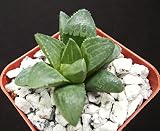



Plant Profile & Key Characteristics
Overview: A small stemless succulent forming a compact rosette just 5-10 cm (2-4 in) across, grown as an evergreen ornamental and easy houseplant. This slow-growing perennial thrives in bright indirect light indoors or in frost-free gardens.
Quick Specifications
| Specification | Attribute |
|---|---|
| Plant Type / Life Cycle | Perennial |
| Foliage Type | Evergreen |
| Mature Size | 5-10 cm tall (2-4 in), forming a rosette |
| Growth Rate | Slow |
| Root System | Fibrous, shallow |
| Toxicity | Non-toxic to people and pets |
| Hardiness | USDA zone 10+ |
Growth Form & Structure
- Height & Spread: Compact ground-level rosette 5-10 cm (2-4 in) across; in a container use a pot about 30% larger than the root ball and step up every few years.
- Growth Habit & Form: Low, clump-forming succulent with leaves in a tight rosette, offsetting into clusters via pups (daughter plants).
- Lifespan & Maturity: Long-lived perennial; slow to establish while young, then persists for many years.
Anatomy & Physical Features
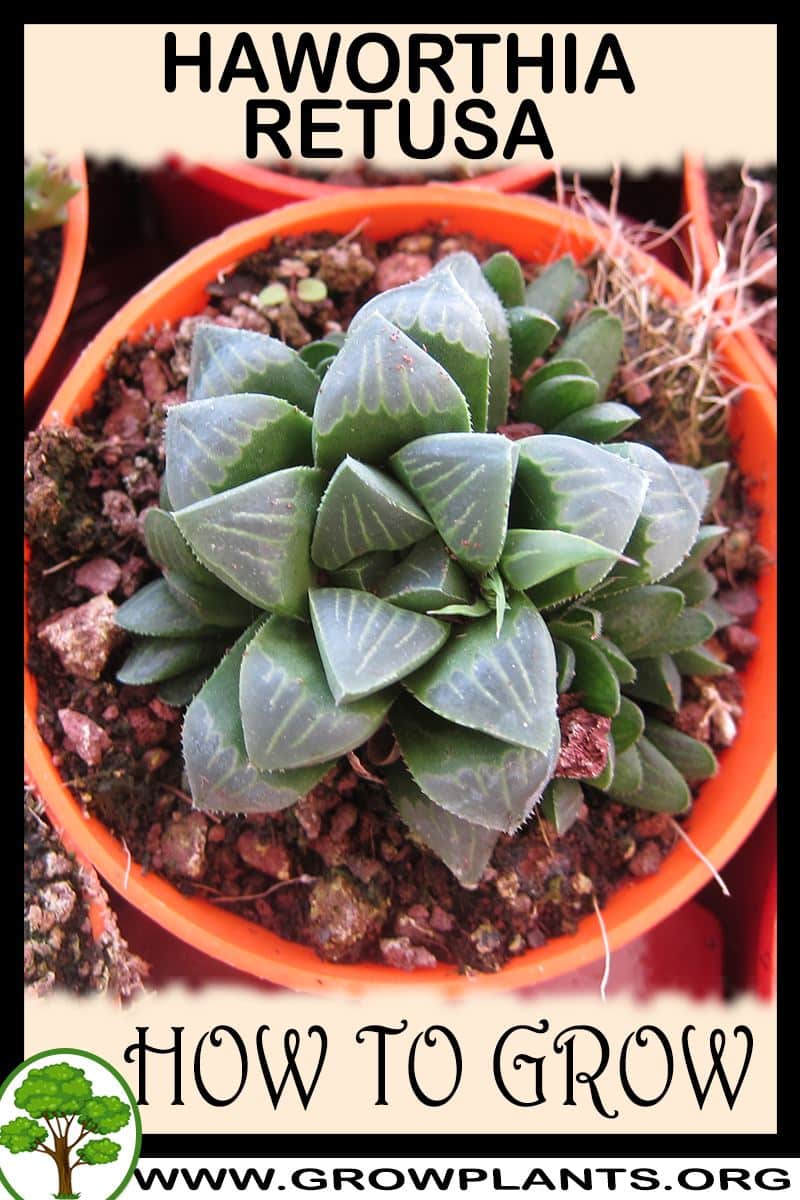
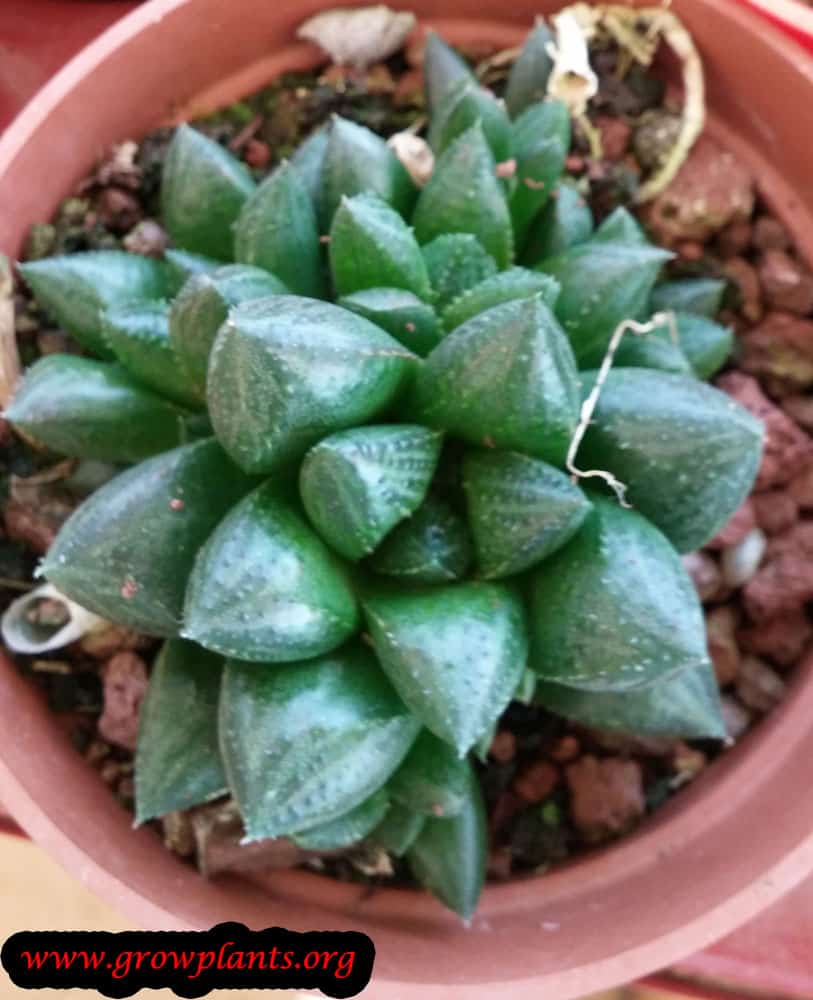
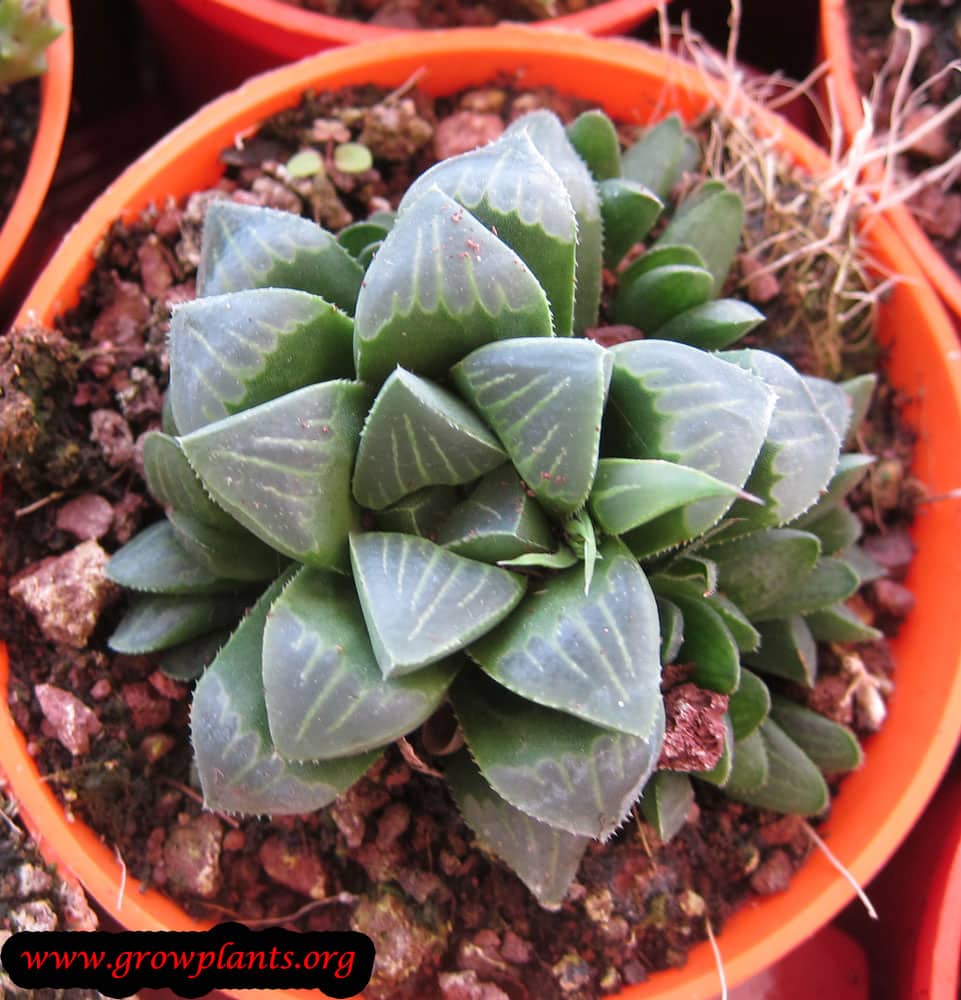
- Leaves & Foliage: Fleshy triangular leaves with pointed tips, green and sometimes variegated white, marked with translucent white vein-like stripes and a slightly transparent window at the tip; arranged in a rosette.
- Flower Characteristics: Small white flowers with brownish stripes, six tepals, borne on a slender stem.
Primary Uses & Landscape Value
- Functional & Ornamental Roles: Ornamental succulent for windowsills, dish gardens and containers; well suited to indoor culture as a houseplant.
Care Guide: Planting, Soil & Watering
Overview: Haworthia retusa are small, slow-growing rosette succulents that prefer bright, indirect light and a gritty, sharply draining soil. Keep them on the dry side — water only sparingly and let the soil dry out fully between waterings, as they rot quickly in wet conditions.
Quick Care Requirements
| Requirement | Ideal Condition |
|---|---|
| Planting Season | Year-round in mild, frost-free zones; spring to summer in zone 10a and spring to autumn in zone 10b |
| Growth Rate | Slow |
| Soil Type | Gritty, sandy, sharply draining cactus / succulent mix |
| Water Need | Low — water sparingly and only once the soil has dried out completely; overwatering is the main cause of death |
Planting & Establishment
- Best Planting Season: Plant in the warm season — year-round in frost-free areas, or spring to summer (zone 10a) and spring to autumn (zone 10b) where winters are cooler; protect from frost.
- How to Plant:
- Hole Preparation: Plant in a spot or container with excellent drainage; in rainy areas grow above ground level or in a raised bed so the plant never sits in a puddle.
- Soil Amendments: Use a gritty, free-draining mix — sandy soil opened up with lava grit or perlite, over a layer of coarse material — and keep organic matter to a minimum.
- Planting Depth: Set the rosette with its base at the soil surface and the crown unburied; firm just enough gritty mix around the roots to hold it steady.
- Growth Speed & Expectations: Growth is slow, especially while young, and it takes time for a plant to establish and offset into a clump.
Soil, Watering & Drainage Care
- Soil Mix & Drainage Needs: Use a sharply draining succulent mix (sandy soil with lava grit or perlite) with coarse grit at the base and ample drainage holes; more rainfall means the drainage must be even sharper, since standing water quickly rots the plant.
- Watering Schedule & Technique:
- Young / Newly Planted: Water lightly and infrequently while the plant roots in, keeping the mix barely moist and never soggy.
- Established: Water thoroughly only once the soil is fully dry — a useful cue is to water when the leaves start to soften — then let it drain and dry out again before the next watering.
- Seasonal Adjustments: Water less in winter, indoors, and in humid conditions, and a little more during warm-season growth; always err on the side of dryness.
Climate, Light & Hardiness
Haworthia retusa is a window-leaved rosette succulent for subtropical and Mediterranean-type climates or life as a houseplant. It prefers half shade to full shade with good ambient light and is frost-tender, doing best where winters stay frost-free and ideally above about 3°C (37°F).
Quick Climate Specifications
| Climate Zones | Subtropics, Mediterranean, tropics (with shelter), or indoor as a houseplant |
| USDA Hardiness Zones | 10+ |
| Approx. Survival Minimum | Best kept frost-free; tolerates brief dips to around 3°C (37°F) but is happier warmer |
| Frost Tolerance | Very Low |
| Light Conditions | Half Shade / Full Shade (with bright indirect light) |
Sunlight & Light Exposure
Optimal Light Setup
The blunt, retuse leaf tips are adapted to filtered light in nature, so bright half shade or full shade with good ambient light works better than harsh direct sun.
Direct Sun Requirement
Direct, unfiltered sun in hot climates can scorch the leaves; filtered or indirect light is preferred.
Shade & Heat Management
In hot-summer regions, avoid intense afternoon sun to prevent leaf stress and burn.
Temperature Extremes & Hardiness
USDA Hardiness & Regional Limits
Outdoor culture is reliable from about USDA zone 10 upward; in colder zones it should be grown as a houseplant.
Cold Damage & Winter Protection
Growth and health are best when kept frost-free and ideally above roughly 3°C (37°F); colder conditions stress the plant even without an outright kill.
Frost Sensitivity
Frost tolerance is very low, so plants in marginal zones need shelter or should come indoors before frost.
Wind, Humidity & Microclimate
Dry-Air Tolerance
As a succulent from arid, rocky habitats, it tolerates dry air well and needs no extra humidity.
Microclimate Recommendations
In rainy climates, grow it above ground level or in gritty, fast-draining soil to avoid standing water, since cold and wet together are far more damaging than either alone.
Growing in Pots, Balconies & Indoors
Haworthia retusa is one of the best succulent houseplants – small (about 5-10 cm / 2-4 in), slow and happy in the bright, indirect light of an ordinary room. The grower recommends it indoors, and it also does well in a pot on a shaded balcony; just keep it out of scorching midday sun and away from radiators.
Quick Details
- Container Size: A snug pot only about 30% bigger than the root ball; pot up a size every few years rather than starting in a large pot
- Indoor Suitability: An excellent houseplant in bright, indirect light – not right beside a heater
- Best Spot: Half to full shade with good light; bright indirect light indoors, filtered light outdoors (avoid harsh midday sun)
- Soil & Drainage: A gritty, sandy mix with lava grit at the base (or perlite with peat) and plenty of drainage holes
- Watering in Pots: Sparingly – let it dry between waterings; overwatering, especially indoors, is what kills it
Indoors & On the Windowsill
- A top houseplant: The grower recommends it as a houseplant. Give it a spot with good light but not right next to a heater, let the soil dry between waterings, and check that the pot is not staying wet.
- Windowsill growing: An east- or north-facing sill with bright, indirect light is ideal; it does not need scorching sun. Water even less in winter.
- Care indoors: Because rooms are warm and light is gentler, water noticeably less than you would outdoors and make sure the pot never stays soggy.
On a Balcony or Patio
- Light: Best in a bright but shaded or filtered-light spot – direct, hot midday sun can scorch the leaves. It is a good choice for a shadier balcony where sun-lovers struggle.
- Rain & drainage: In rainy or tropical spots keep it sheltered from heavy rain and stand the pot on grit so water drains away fast; wet, cold soil rots the roots.
Choosing the Pot, Soil & Long-Term Care
- Pot & drainage: A pot just larger than the roots with plenty of holes; skip a standing saucer of water. Terracotta helps the mix dry between waterings.
- Potting mix: Free draining and gritty – sandy soil with a little organic matter and lava grit at the bottom, sandy mix on top, or perlite mixed with peat.
- Feeding: Very little – a weak succulent feed once or twice in the growing season is enough; potting soil leaches, but these slow plants need almost nothing.
- Repotting: The soil loses structure over time – refresh it every few years (with sharp drainage and no overwatering you can stretch this to 5 years or more), potting up a size when the plant fills its pot.
Grower’s Container Tip
- Right-size the pot: The grower’s rule is a pot only about 30% larger than the root ball – a pot that is too big holds excess wet soil and does more harm than good. Step up to the next size gradually every few years instead of starting big.
Fertilizing & Feeding
A very light feeder: these small rosette succulents need only a little dilute low-nitrogen fertilizer during the warm active season, and none while resting.
Quick Fertilizing Specs
| Feeding Level | Very light feeder |
|---|---|
| Main Nutrient Priority | Light, low-nitrogen feeding; avoid excess nitrogen |
| Best Feeding Period | The warm active growing season only |
| Organic Options | A gritty, fast-draining mix; go easy on rich organic matter |
| Reduce/Stop Feeding | Stop feeding through the rest period |
| Micronutrients | Rarely needed; a complete fertilizer covers trace needs |
| Soil pH | Slightly acidic to near neutral, in a fast-draining mix |
Feeding by Growth Stage
Warm-season active growth
Support slow, steady rosette growth and offsets while keeping leaves firm and well marked.
| Nutrient direction | A dilute, low-nitrogen complete fertilizer; this plant needs only light feeding. |
|---|---|
| Timing | During the warm active growing season. |
| Frequency | An occasional light feeding through the growing season; light feeding is usually enough. |
| Fertilizer types | A dilute low-nitrogen complete fertilizer, A specialized cactus and succulent fertilizer |
| Precautions | Avoid rich or frequent feeding; combined with excess water it encourages soft growth and sudden root rot. |
Warm-summer or cool-season rest
Let the plant coast through its rest period, when growth slows and it needs little water.
| Nutrient direction | None – withhold fertilizer while the plant is not in active growth. |
|---|---|
| Timing | During the plant’s rest period when growth slows. |
| Frequency | No feeding at this stage. |
| Fertilizer types | No feeding at this stage; hold off fertilizing until active growth resumes. |
| Precautions | Do not fertilize while the plant is resting; feed again only when new growth appears. |
Nutrient Deficiency Signs & Corrections
Growth turns soft, pale, and stretched, and the rosette or body loses its compact form.
| Possible causes | excess nitrogen from over-generous feeding, feeding while light is too low to support the growth, a rich, moisture-holding mix instead of a gritty one |
|---|---|
| Appears first on | newest leaves and growing points |
| What to check | how recently and heavily it was fed, light levels, whether the potting mix drains fast |
| Possible correction | Ease off feeding, move to brighter light, and let the plant firm up, then feed only lightly once strong growth resumes. |
Leaf margins or tips brown and scorch and growth stalls despite adequate watering.
| Possible causes | fertilizer salt buildup in the root zone, under-watering that concentrates salts, excessive or too-frequent feeding |
|---|---|
| Appears first on | leaf margins and tips |
| What to check | recent fertilizer amounts, watering consistency, drainage, especially in containers |
| Possible correction | Ease off feeding, water thoroughly to flush accumulated salts, then return to lighter feeding. |
Overall growth pales and stalls, with older leaves losing color first.
| Possible causes | exhausted potting mix with little available nitrogen, nitrogen leaching from repeated watering, no feeding over a long period |
|---|---|
| Appears first on | older, lower leaves |
| What to check | how long since the mix was refreshed or fed, watering frequency, overall vigor and color |
| Possible correction | During the growing season, apply a dilute low-nitrogen complete fertilizer and refresh the mix if it is spent. |
Pruning, Training & Seasonal Maintenance
Haworthia retusa forms a low, compact rosette of translucent, flat-tipped leaves that stay in place as permanent structure, so pruning here is grooming, not shaping. It offsets more slowly than several of its relatives in this batch, so the recurring tasks – removing dried lower leaves and cutting back the spent flower stem – are lighter and less frequent than on faster-clumping Haworthias, with no particular season being unsafe beyond avoiding wet conditions.
Quick Pruning & Maintenance Specs
| Pruning Tolerance | Low (grooming only, not shaping) |
| Primary Maintenance Window | Whenever a dead leaf or spent bloom stem is visible |
| Typical Frequency | A few minutes, a couple of times a year; offset division rarely needed given slow clumping |
| Main Objective | Remove dead leaves and spent flower stems |
| Young Plant Priority | Leave undisturbed to establish before any cutting |
| Mature Plant Priority | Clear dried outer leaves; divide offsets only occasionally, as this species clumps slowly |
| Best Tool Type | Small precision snips or a clean fine blade |
| Avoid Cutting During | Wet soil or humid spells (rot risk) |
Pruning by Plant Age & Size
Newly Established
Remove only a leaf that arrives already damaged or rotting; the plant is slow to establish and any unnecessary cut adds risk while roots are forming.
Young / Formative
No structural training applies. Given how slowly this species offsets, a young plant may go a long time before there is any pup to separate.
Mature / Established
Established rosettes mainly need dried lower leaves removed at the base; because offsetting is slow, division is an occasional task rather than a routine one.
Special Growth to Remove
- Dead/dried leaves: older lower leaves desiccate over time; cut off at the base.
- Spent flower stems: after the white, brown-striped flowers finish, cut the stalk back to its base – it will not rebloom.
- Basal offsets: produced slowly; leave to clump or detach a rooted offset to propagate when one appears.
Container & Small-Space Pruning
Because this species clumps slowly, pot-grown plants need far less division management than faster-offsetting Haworthias – a single rosette can often stay in the same arrangement for years with just leaf and flower-stem grooming.
Tools
- Precision snips or a clean razor/scalpel blade – sized for a 5–10cm rosette; no larger tool is needed.
Tool Hygiene & Disease Risk
Increased care is worthwhile: this species is prone to sudden rot, so use a clean, dry blade for any cut into living tissue and let the wound callus in a dry, shaded spot for a few days before watering.
Cut Placement & Technique
Cut dead leaves and flower stalks flush at the base rather than leaving a stub. If separating an offset, cut close to the parent and let both wounds dry before watering.
Heavy Pruning & Rejuvenation
Not applicable and not tolerated – there is no woody framework to renew. Propagate from a healthy offset or leaf rather than cutting a declining plant back hard.
Post-Pruning Care
Hold off watering for several days after any cut so it can callus; keep out of direct hot sun while healing; skip extra feeding beyond the normal once-a-year schedule.
Common Pruning Mistakes
- Watering right after a cut instead of letting it callus, inviting rot.
- Pulling dead leaves by hand instead of cutting, tearing basal tissue.
- Dividing offsets before they have rooted on their own.
When NOT to Prune
Avoid cutting during or right after heavy watering, prolonged humid weather, or immediately after repotting – each raises rot risk on a fresh wound.
Recommended Tools (by task)
- precision_snips – the only cutting tool this small rosette succulent needs, for dead-leaf and flower-stem removal.
- grafting_knife – a clean, sharp fine blade for the occasional offset separation, minimizing tissue damage.
Propagation Guide
Haworthia retusa is a stemless, window-leaved rosette that tends to be solitary or slow to offset, so leaf cuttings and dividing any pups it does produce are the main practical home-propagation routes; seed is not covered by reliable data here. Propagation is easy, though it can be slower than more prolifically offsetting Haworthia relatives.
Quick Propagation Specs
| Best Propagation Method | Leaf cuttings; division of offsets where present |
| Alternative Methods | Stem-base cuttings |
| Propagation Difficulty | Easy |
| Vegetative True-to-Type | Yes (non-variegated); variegation often lost from leaf cuttings |
| Best Propagation Season | Spring through summer, during active growth |
| Cutting Rooting Time | Typically several weeks once calloused; slower while the plant is young |
Leaf & Root Cuttings
Remove a leaf at its base (the most reliable point, though mid-leaf sections can also work), let it sit a few days in a shaded spot to dry and callus, then set the base into sandy, fast-draining soil and water sparingly. Rooting and new-plantlet formation are slow, and leaves can rot rather than root if kept too wet. On variegated (white-marked) forms, leaf cuttings frequently revert to plain green or fail to carry the variegation through – divide a rooted variegated offset instead if keeping the pattern matters.
Division, Offsets, Pups & Suckers
This species offsets less readily than clump-forming Haworthia, but any pups that do form at the base can be divided once they have their own roots. Let the separation cut dry a day or two, then pot into the same free-draining mix and water lightly until established.
Bloom & Flower Guide
Quick Details
- Bloom Season: Year-round in mild, bright conditions
- Time to First Bloom: Once the rosette has matured, usually after a few years
- Flower Appearance: Small white flowers with fine brown stripes and six petals, on a slender upright stem
- Edibility: Ornamental only – Haworthia is non-toxic and safe around children and pets
Detailed Blooming Overview
Haworthia retusa sends up a thin, wiry raceme carrying small, tubular white flowers marked with brown stripes. In mild conditions it can bloom at almost any time of year. The flowers are understated – the plant is grown chiefly for its retracted, window-tipped leaves – so the bloom is enjoyed mainly for the pollinators it invites.
Flower Characteristics
- Small white flowers with brown stripes and six petals.
- Slightly tubular, opening at the tips.
- Held on a tall, slender raceme above the rosette.
Bloom Care & Thinning
- Managing the bloom: The flower stalk takes a little energy from the rosette; cut it once flowering ends if you prefer to keep that energy in the leaves.
- Encouraging bloom: Bright, indirect light and a well-established rosette give the best results.
- Pollination: Small insects do the work outdoors; hand-pollinate between two plants indoors if you want seed.
Bloom Health & Protection
- Mealybugs often lurk where the flower stalk meets the rosette; a cotton bud dipped in neem oil or insecticidal soap removes them cleanly.
Pests, Diseases & Troubleshooting
Overview: Haworthias are tough, slow-growing rosette succulents with remarkably few insect enemies; the overwhelming majority of losses come not from pests but from overwatering and poor drainage. Management is almost entirely cultural – a gritty, fast-draining mix, restrained watering, bright indirect light and good airflow keep these plants trouble-free. H. retusa is a stemless star-shaped rosette.
Quick Troubleshooting Overview
| Issue / Pest | Main Symptom | Primary Solution |
|---|---|---|
| Root & foliar mealybug | White cottony fluff in leaf axils or on roots; stunting | Isolate, physically remove, 70% alcohol spot-treat, repot into fresh gritty mix |
| Scale | Small brown/tan limpet-like bumps on leaves | Scrape off, dab with alcohol, horticultural oil if widespread |
| Fungus gnats | Tiny black flies over soil; larvae in constantly wet mix | Let mix dry, yellow sticky traps, reduce watering |
| Basal / soft rot | Translucent, mushy, browning base; collapse | Remove rotted tissue, dry out, root healthy offsets; correct watering |
| Etiolation & scorch | Stretched pale growth OR bleached/scorched red-brown leaves | Increase light gradually / shade from harsh midday sun |
Common Pests & Management
- Root mealybug (Rhizoecus spp.):
- Symptoms: Colonies of white, waxy insects hidden on roots and at the soil line, discovered only when repotting; plants stall, lose vigour and refuse to grow despite correct care. A white, mould-like waxy deposit coats the root ball.
- Prevention & Control: Inspect roots at every repot. Bare-root affected plants, wash the roots, cut away infested feeder roots, and repot into fresh gritty mix in a clean pot. Drench the fresh mix or dip roots in horticultural oil / insecticidal soap solution; quarantine until re-established.
- Mealybug (Pseudococcus / Planococcus spp.):
- Symptoms: Cottony white tufts wedged deep in the tight leaf axils and rosette centre, often with sticky honeydew and sooty mould. Look-alike: the plant’s own natural farina or leaf waxing – mealybug fluff moves and clumps.
- Prevention & Control: Dab each insect with a cotton bud dipped in 70% isopropyl alcohol. For heavier infestations, spray insecticidal soap or horticultural oil into the axils, repeating weekly for 3 cycles to catch hatchlings. Keep new plants quarantined.
- Scale (Diaspididae & soft brown scale (Coccus hesperidum)):
- Symptoms: Immobile brown, tan or grey bumps stuck flat to leaf surfaces; soft scale exudes honeydew. Leaves may yellow beneath heavy colonies.
- Prevention & Control: Scrape off with a fingernail or soft brush and wipe with alcohol. Follow with horticultural oil to smother crawlers; inspect the undersides and leaf bases where they hide.
- Fungus gnats (Bradysia spp.):
- Symptoms: Small dark flies running or fluttering over the soil surface; translucent larvae in chronically wet mix can nibble fine roots of seedlings and offsets.
- Prevention & Control: The cure is cultural – let the mix dry thoroughly between waterings and top-dress with grit. Yellow sticky traps catch adults; a Bti (Bacillus thuringiensis israelensis) drench targets larvae if needed.
- Aphids (Aphididae (esp. on flower stalks)):
- Symptoms: Small green or grey soft-bodied insects clustered on the emerging flower spike, causing distortion and honeydew. Rarely a threat to the leaves themselves.
- Prevention & Control: Usually cosmetic – rinse off with water or pinch out the affected spike. Insecticidal soap resolves persistent clusters.
Diseases & Fungal Issues
- Basal & soft rot (Fusarium / Pythium / Erwinia spp.):
- Symptoms: The plant base turns soft, translucent and brown-black, often with a foul smell; leaves detach easily and the rosette collapses from the centre or bottom. This follows overwatering, water sitting in the crown, or a cold, wet pot.
- Treatment & Management: There is no cure for rotted tissue – cut well above the damage into clean, firm flesh, dust with sulfur or cinnamon, let it callus, and re-root the healthy top or offsets in dry gritty mix. Prevent by watering the soil (never the rosette), using terracotta/gritty mix, and never leaving the plant wet and cold.
- Leaf spot / anthracnose (fungal (minor)):
- Symptoms: Occasional sunken brown or black spots on leaves in stagnant, humid, crowded conditions.
- Treatment & Management: Improve airflow, avoid overhead watering, remove affected leaves. Rarely warrants fungicide; a copper product is sufficient if it spreads.
Growing Difficulties & Abiotic Problems
- Overwatering rot (the #1 killer):
- Cause & Symptoms: Roots suffocate and rot in soggy mix; lower leaves go soft, yellow-translucent and mushy. By far the most common cause of Haworthia death.
- Correction Strategy: Use a fast-draining, mostly-mineral mix (added pumice/perlite/grit), pots with drainage, and water only when the mix is fully dry. Water less in cool/low-light periods.
- Etiolation (stretching):
- Cause & Symptoms: Insufficient light causes pale, elongated, loosely-spaced growth and a flattened, reaching rosette.
- Correction Strategy: Move to bright indirect light (an east/south window or gentle grow light). Increase light gradually to avoid scorch; the stretched growth won’t reverse but new growth tightens up.
- Sun scorch:
- Cause & Symptoms: Sudden intense direct sun bleaches leaves white or turns them red-brown with dry patches.
- Correction Strategy: Acclimatise slowly to brighter light and shade from harsh midday sun. Light reddening/’stress colour’ is harmless; dry scorched patches are permanent.
- Mineral / salt build-up & corking:
- Cause & Symptoms: White crust on soil or pot, brown corky scars on older leaves from hard water, fertiliser salts or handling.
- Correction Strategy: Flush the mix occasionally with clean water, fertilise sparingly (dilute, in growth periods only), and use rain/filtered water where salts are high.
What Helps – Products & Tools
This is a plant to manage with your hands and your watering can more than sprays: 70% isopropyl alcohol on a cotton bud for mealybug and scale, insecticidal soap or light horticultural/neem oil for wider infestations, yellow sticky traps and a Bti drench for fungus gnats, and sulfur or cinnamon as a cut-surface dressing against rot. A gritty mineral mix and terracotta pots are your best ‘products’ of all.