




Plant Profile & Key Characteristics
Overview: Gaura longiflora is a fast-growing herbaceous perennial or annual reaching 40-70 cm (16-28 in), forming an airy clump of wand-like stems. A drought-tolerant ornamental grown for its long season of white flowers.
Quick Specifications
| Specification | Attribute |
|---|---|
| Plant Type / Life Cycle | Perennial (deciduous in cold climates) or annual |
| Foliage Type | Evergreen to deciduous (by climate) |
| Mature Size | 40-70 cm (16-28 in) |
| Growth Rate | Fast to Moderate |
| Root System | Deep taproot |
| Hardiness | USDA zones 6+ |
Growth Form & Structure
- Height & Spread: 40-70 cm (16-28 in) tall, forming airy clumps; in pots use a minimum 5-8 L container about 70-130% larger than the root ball.
- Growth Habit & Form: Airy, clump-forming herbaceous plant with slender, wand-like flowering stems.
- Lifespan & Maturity: Short-lived herbaceous plant; establishes and flowers quickly from spring.
Anatomy & Physical Features
- Leaves & Foliage: Green leaves in elliptic shape.
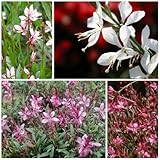
- Flower Characteristics: White 2-3 cm flowers with 4-5 petals in clusters (full detail in the Bloom guide).
Primary Uses & Landscape Value
- Functional & Ornamental Roles: Ornamental border, cottage-garden and container plant; drought-tolerant and pollinator-friendly.
Care Guide: Planting, Soil & Watering
Overview: Gaura longiflora is a wiry, drought-tolerant perennial that loves full sun and light, sandy, sharply drained soil. Once established it needs little water and dislikes wet feet, so good drainage matters far more than rich feeding.
Quick Care Requirements
| Requirement | Ideal Condition |
|---|---|
| Planting Season | Spring, extending later in warmer zones |
| Growth Rate | Fast (moderate in cooler or shadier spots) |
| Soil Type | Light, sandy, well-draining |
| Water Need | Low to moderate – let it dry between waterings, avoid overwatering |
Planting & Establishment
- Best Planting Season: Plant in spring in zones 6-7, spring to summer in zones 9-10a, spring through autumn in 10b-11a, and year-round in frost-free zones 11b and warmer.
- How to Plant:
- Hole Preparation: Dig a hole a little wider than the root ball but no deeper, and take care with the roots, which are brittle and resent disturbance.
- Soil Amendments: There is no need for rich soil – instead work in coarse sand or grit to sharpen drainage. In wet-climate or heavy-soil gardens, plant on a raised bed or mound so the crown never sits in water.
- Planting Depth: Set the plant at the depth it grew in its pot, keeping the crown at soil level and disturbing the fragile root system as little as possible.
- Growth Speed & Expectations: In full sun with a long, warm season and good drainage it grows fast, more moderately in cooler or shadier spots, reaching about 40-70 cm tall.
Soil, Watering & Drainage Care
- Soil Mix & Drainage Needs: Light, sandy or gritty soil is ideal, and a free-draining or sandy/cactus-type mix works in pots. A mulch helps in dry gardens but is best skipped where rainfall is heavy. Above all, make sure water drains away freely to prevent root rot.
- Watering Schedule & Technique:
- Young / Newly Planted: Water newly planted Gaura enough to settle it in and keep the soil lightly moist for the first few weeks while the roots take hold.
- Established: Once established it is very drought tolerant – water deeply but occasionally, letting the soil dry out between waterings and erring on the dry side.
- Seasonal Adjustments: It needs little or no extra water in cool or wet seasons; give the occasional deep soak in prolonged summer heat, and use raised planting to prevent flooding in very rainy spells.
Climate, Light & Hardiness
Gaura longiflora is a drought-tolerant North American prairie wildflower adapted to hot, dry, sunny climates, flowering best in full sun. Per the site's data it is hardy to approximately USDA zone 6.
Quick Climate Specifications
| Climate Zones | Mediterranean, desert, subtropics, temperate, tropics |
|---|---|
| USDA Hardiness Zones | Zone 6 and warmer |
| Optimal Temp Range | Approximately 16–31°C (61–88°F) during active growth |
| Cold Damage Begins | Around 0°C (32°F), when frost causes foliage and stem dieback |
| Approx. Survival Minimum | Approximately −23 to −18°C (−10 to 0°F) briefly for an established crown/root system, consistent with typical USDA zone 6 winter minimums |
| Frost Tolerance | Low to Moderate |
| Light Conditions | Full Sun to Half Shade |
| Wind Tolerance | High |
Sunlight & Light Exposure
Optimal Light Setup
Full sun produces the best bloom; fast growth is likewise tied to full sun, a long summer season, and good drainage.
Shade & Heat Management
Half shade is tolerated, with fewer flowers but fuller-looking foliage as a trade-off.
Best Exposure / Orientation
An open, unobstructed, full-sun site suits this species' upright, prairie-adapted habit.
Temperature Extremes & Hardiness
USDA Hardiness & Regional Limits
Rated hardy to zone 6 and warmer per the site's data.
Cold Damage & Winter Protection
Frost damages soft foliage and stems first; young seedlings and first-year transplants are more cold-sensitive than an established plant, so mulching through the first winter is worthwhile.
Frost Sensitivity
Tolerates occasional light frost once established but is not adapted to hard, prolonged freezes beyond zone 6.
Extreme Heat Tolerance
Strongly heat-adapted: the site notes seeds germinate best where soil and air temperatures exceed about 25°C (77°F), underscoring this species' preference for hot, sunny, warm-season conditions typical of drought-tolerant prairie wildflowers.
Wind, Humidity & Microclimate
Dry-Air Tolerance
Well suited to dry-air, arid climates and does not need elevated humidity.
Wind Tolerance
High, in keeping with the slender, airy stems typical of open-prairie Gaura species.
Rainfall & Seasonal Moisture
Prefers seasonally dry conditions; in rainy climates the site recommends raised beds so the root zone doesn't stay saturated.
Microclimate Recommendations
A sunny, well-drained, sandy site with good air movement best suits this species and limits winter crown-rot risk.
Growing in Pots, Balconies & Indoors
Gaura longiflora is a sun-loving perennial grown for its airy wands of flowers – a fine container plant for a sunny patio or balcony, but not a houseplant. It needs full sun and sharp drainage, and the grower confirms it will not grow indoors as a houseplant.
Quick Details
- Container Size: A pot about 70-130% larger than the root ball, at least 5-8 L (bigger is better); root-prune to keep it compact
- Indoor Suitability: Not a houseplant; needs full sun to bloom
- Best Spot: Full sun for the best flowering (light shade gives fewer flowers but better foliage)
- Soil & Drainage: Sharp-draining – a cactus or sandy potting mix; it dislikes wet feet
- Watering in Pots: A small-to-average amount; let it drain well and never leave it standing in water
Indoors & On the Windowsill
- Not a houseplant: The grower says it will not grow indoors as a houseplant; without full sun it will not flower.
- Windowsill: Only the very sunniest sill comes close to the light it needs, and even then flowering is far better outdoors.
- Overwintering: In cold climates a pot lets you move this tender-ish perennial to a sheltered, frost-free spot for winter, then back into the sun in spring.
On a Balcony or Patio
- Sun & wind: It loves sun and reflected heat, but the tall, airy stems flop and catch the wind – give a sheltered corner or light support on an exposed balcony.
- Drainage: Pots and wall heat dry it fast, which suits it; make sure water runs straight through, as standing wet is its main enemy in a container.
Choosing the Pot, Soil & Long-Term Care
- Pot & drainage: A pot with strong holes and a layer of gravel, lava rock or pebbles at the base; skip a standing saucer to avoid root rot.
- Potting mix: A free-draining cactus mix, ordinary potting mix or sandy soil – the sharper the drainage, the better.
- Feeding: Feed lightly through the growing season; potted plants lose nutrients faster as water flushes through.
- Repotting: Replace the mix every few years as its drainage breaks down, and root-prune to keep the plant compact.
Grower’s Container Tip
- Pot size & keeping it small: Choose a container 70-130% larger than the root ball (at least 5-8 L, but bigger is better). To hold the plant compact, trim the roots so they regrow, and refresh the mix every few years as its drainage fades. For sharp drainage add gravel, lava rock or pebbles at the base and use a cactus, potting or sandy mix.
Growing this plant in a greenhouse
A greenhouse can give gaura longiflora frost protection and cold protection.
Greenhouse at a glance
| Greenhouse suitability | Conditional - depends on your climate |
|---|---|
| Main benefits | frost protection, cold protection |
| Outdoor protection advisable below | about 0°C |
| Suitable types | unheated greenhouse, polycarbonate greenhouse |
| Heating | Heating is optional - useful mainly for winter growing in cold areas. |
Related greenhouse guides
- Greenhouses: How to Choose the Right Greenhouse
- Polycarbonate Greenhouses: What to Look for Before Buying
- Greenhouse Climate Control: Temperature, Ventilation and Humidity
Fertilizing & Feeding
A light feeder – this drought-tolerant wildflower, whether grown from seed or as an established perennial, is at home in lean sandy soil and flowers well without rich feeding.
Quick Fertilizing Specs
| Feeding Level | Light |
|---|---|
| young_feeding | Very light feeding for seedlings and young transplants once they show true growth, not at the moment of sowing |
| mature_feeding | Established plants need only occasional, restrained feeding through the growing season |
| Main Nutrient Priority | Balanced feeding rather than any single nutrient – this species is built for lean, sandy conditions |
| Best Feeding Period | Through the active growing and bloom season, tapering off as the season turns cooler |
| Soil pH | Tolerates a wide range of well-drained soils; shows no strong pH preference but prefers sandy, fast-draining ground |
| Reduce/Stop Feeding | Ease off as growth slows heading into cooler months, winter dieback, or the natural end of an annual cycle |
| Organic Options | Compost or aged organic matter worked into sandy soil at planting or transplanting time |
Feeding by Growth Stage
Seedling and young-plant establishment
Help seed-grown seedlings or a newly transplanted specimen root into well-drained soil before pushing top growth.
| Nutrient direction | Hold feeding light while roots establish; this species germinates and grows readily without needing rich soil. |
|---|---|
| Timing | After germination, once the seedling has its first true leaves, or shortly after transplanting. |
| Frequency | Skip fertilizer at the moment of sowing or transplanting; introduce only a light feeding once new growth confirms the plant has rooted in. |
| Fertilizer types | A light, balanced fertilizer once seedlings or transplants show clear new growth, Compost or aged organic matter mixed into sandy soil at planting |
| Precautions | Avoid fertilizing right at sowing or transplanting; feeding a stressed, unrooted seedling can do more harm than good. |
Extended bloom season
Support the long flowering display typical of this species without forcing excess soft growth.
| Nutrient direction | Continue a light, balanced feed; established plants rarely need heavy inputs to flower well. |
|---|---|
| Timing | Through the extended bloom period, which can run most of the growing season. |
| Frequency | Feed sparingly during bloom – this species flowers reliably on modest inputs. |
| Fertilizer types | A light, balanced fertilizer applied sparingly through the bloom season, Mulch to conserve moisture and moderate soil fertility around the root zone |
| Precautions | Too much nitrogen can push soft, floppy stems and fewer flowers on a plant suited to lean, well-drained sites. |
Winter dormancy or end-of-cycle decline
Let the plant rest through winter dieback where it behaves as a perennial, or complete its natural decline where it is grown as an annual, without pushing new growth.
| Nutrient direction | None – withhold fertilizer once the plant is dormant, has died back, or is finishing its annual cycle. |
|---|---|
| Timing | Late autumn through winter, or the natural end of the growing cycle for annual plantings. |
| Frequency | No feeding during this period. |
| Fertilizer types | No feeding at this stage – the plant is dormant, has died back, or is completing its natural cycle and does not need fertilizer. |
| Precautions | Do not fertilize dormant, dying-back, or end-of-cycle growth; for perennial plantings, resume light feeding only once new spring growth appears. |
Nutrient Deficiency Signs & Corrections
New leaves turning pale yellow between still-green veins
| Possible causes | Iron becoming less available in alkaline or high-pH garden soil, Overly wet, poorly drained soil limiting root uptake despite this plant’s drought tolerance, Root stress from soil that stays soggy after heavy rain without a raised bed |
|---|---|
| Appears first on | Newest leaves and stem tips |
| What to check | Soil pH and whether the bed leans alkaline, How well the site drains after rain, especially in heavier soil, Whether the plant is sited in a low spot that collects water |
| Possible correction | Improve drainage and confirm the site isn’t holding excess water first; a chelated iron product can help if chlorosis persists, applied per its label. |
Leaves yellowing or the plant wilting despite regular watering, on a species that prefers to dry out between waterings
| Possible causes | Overwatering a naturally drought-tolerant plant that dislikes constantly wet soil, Root rot from soil that stays soggy, especially in rainy sites without a raised bed, Excess feeding compounding stress on an already waterlogged root system |
|---|---|
| Appears first on | Lower and older leaves first, then spreading through the plant |
| What to check | Actual watering frequency versus this plant’s low water needs, Drainage, and whether the planting site was raised as recommended for wetter climates, Root condition at the base of the plant if it can be checked |
| Possible correction | Cut back watering and confirm drainage before considering any change to fertilizer; this species usually responds better to less water than to more feeding. |
Slow, pale seedling growth or poor establishment after germination
| Possible causes | Very lean, nutrient-poor sandy soil at the sowing site, Soil that dried out or stayed too wet during the sensitive seedling stage, Seedlings sown or transplanted too deep or too shallow for the soil conditions |
|---|---|
| Appears first on | Newly germinated seedlings and very young transplants |
| What to check | Soil moisture consistency since germination, Whether the sowing site is unusually lean even for this drought-tolerant species, Sowing depth and site conditions relative to what the species prefers |
| Possible correction | Correct watering consistency and sowing depth first; only add a light, balanced feed once seedlings show established true growth. |
Pruning, Training & Seasonal Maintenance
Gaura longiflora is a mid-sized (40–70 cm) wandflower grown as a perennial in milder climates and as an annual where winters are too cold for it to persist. It tolerates moderate-to-high pruning where it behaves as a perennial: an annual hard cutback in late winter/earliest spring plus routine deadheading through the bloom season keeps it compact and continuously flowering. Where grown as an annual, pruning is limited to deadheading and shaping for the single season.
Quick Pruning & Maintenance Specs
| Pruning Tolerance | Moderate–High (perennial climates); light touch only if grown as an annual |
| Primary Pruning Window | Perennial climates: late winter to earliest spring, before new growth |
| Secondary Maintenance Window | Deadheading through spring–autumn |
| Typical Frequency | One annual cutback where perennial; deadhead every 4–6 weeks while blooming |
| Main Objective | Keep an upright, mid-sized mound tidy and flowering rather than leggy |
| Young Plant Priority | Pinch tips to build a branched base |
| Mature Plant Priority | Annual cutback to 8–12 cm above the crown (perennial climates only); ongoing deadheading |
| Best Tool Type | Precision snips (deadheading), bypass secateurs (base cutback where perennial) |
| Avoid Heavy Pruning During | Peak summer heat and the month before first frost |
Pruning by Plant Age & Size
Newly Established
Prune only to remove damaged growth; roots are sensitive, so avoid disturbing them while the plant establishes, whether it will be grown as a perennial or an annual.
Young / Formative
Pinch stem tips once they reach roughly 15 cm to encourage a branched, self-supporting base. No formal training system applies.
Mature / Established
Where hardy enough to persist as a perennial, apply an annual reset cutback each late winter. Where grown as an annual, there is no multi-year framework – simply deadhead through the one growing season.
Seasonal Pruning Schedule
Pre-Growth / Early Spring (perennial climates)
Objective: reset the plant before new growth. Remove: prior season’s stems, cut to 8–12 cm above the crown. Do not remove: live wood with visible lower buds. Expected response: fresh basal growth within weeks. Flowering impact: brief delay, then a fuller flush.
Summer Canopy Management
Objective: sustain flowering. Remove: spent spikes as flushes fade. Do not remove: unopened buds. Expected response: prompt rebloom.
Ongoing Sanitary
Remove dead or pest-damaged tips (aphids, whitefly) as noticed.
Flowering & Fruiting Wood
Flowers on current-season growth; cutting back does not remove next season’s flower buds, it produces more flowering stems.
Structural Pruning & Training
Thin crossing or crowded stems at the base during the spring cutback to keep an open habit at this mid-size stature.
Special Growth to Remove
Recorded as invasive/aggressive with an established seed-sowing pathway (this entry also records sowing depth, spacing and germination details), so deadhead ahead of seed-set to limit unwanted spread, or allow a deliberate late flush to seed if self-sown replacements are wanted, particularly where the plant behaves as an annual.
Container & Small-Space Pruning
Suits a medium container at this size; use lighter, more frequent shearing rather than one severe cut, and where grown as an annual there is no need to preserve a crown for next year.
Tools
Precision snips for deadheading; bypass secateurs for the annual base cutback in climates where it persists as a perennial.
Tool Hygiene & Disease Risk
Routine: clean, sharp tools. Aphids/whitefly are not typically tool-spread.
Cut Placement & Technique
Cut back to a strong basal bud or the crown at the annual reset; deadhead to a node just below the spent cluster.
Heavy Pruning & Rejuvenation
Tolerated well where the plant persists as a perennial; not relevant where it is grown as an annual, since there is no crown to rejuvenate for a following year.
Post-Pruning Care
Water normally; skip extra fertilizer, this species is grown lean in well-drained soil. Watch new growth for aphids/whitefly.
Common Pruning Mistakes
Applying a hard perennial-style renewal cutback to a plant being grown as a one-season annual, which serves no purpose. Letting a perennial specimen go several years without any reset, producing a loose, sparsely-flowered plant.
When NOT to Prune
Avoid a hard cutback within about a month of first frost where the plant is meant to overwinter, and avoid disturbing roots right after transplanting.
Recommended Tools (by task)
- Deadheading spent spikes → precision_snips: clean single cuts on thin flower stems.
- Annual base cutback where grown as a perennial → bypass_secateurs: clean cuts at the crown without crushing.
Propagation Guide
Gaura longiflora is easiest to increase from spring stem cuttings, which the site notes root readily and guarantee a chosen shade within this species’ natural pink-to-white range; seed is a reliable alternative for the straight species and is what the site gives the most detailed instructions for. Both methods are easy, though roots are notably sensitive and need careful handling whenever young plants are moved.
Quick Propagation Specs
| Best Propagation Method | Stem cuttings (spring) |
| Alternative Methods | Seed sowing |
| Propagation Difficulty | Easy |
| Seed True-to-Type | Usually true-to-type (straight species); flower shade can vary naturally within the pink-to-white range |
| Vegetative True-to-Type | Yes – cuttings reproduce the parent plant’s exact flower shade |
| Best Propagation Season | Spring, for both seed sowing and cuttings |
| Seed Germination Time | 2–8 weeks |
| Germination Temperature | Above 25°C (77°F) |
| Seed Sowing Depth | 0.5–1 cm (0.25–0.5 in) |
Growing from Seed
Seed Handling & Viability
Store seed in a dark, dry location until sowing.
Sowing Season
Sow in spring.
Sowing Depth & Orientation
Cover seed about 0.5–1 cm (0.25–0.5 in) deep. Space seed sown directly in the ground about 30 x 40 cm (12–16 in) apart; if raising seedlings for later transplant, sow more closely at around 3 x 4 cm (1.2 x 2.2 in) and thin or transplant afterward.
Germination Conditions
Needs full sun and warmth above 25°C (77°F). Water generously – this species tends to germinate after heavy rain, so keep the seed bed well watered rather than just lightly moist.
Germination Time
2–8 weeks; germination can be uneven.
Seedling Care
Keep the soil moist with average watering, then cut back to less water once the seedling has its 5th true leaf. Handle young roots gently – they are notably sensitive to disturbance.
Stem Cuttings
Cutting Type
Stem (softwood) cuttings.
Best Timing
Spring.
Rooting Setup
Cuttings can be rooted either in water or set directly into soil. They need some humidity and consistently moist – but not waterlogged – conditions; avoid overwatering.
Rooting Hormone
Not indicated as necessary; the site describes cuttings as easy to root without extra intervention.
Rooting Time
Not specified by the site; expect roughly a few weeks under warm, humid conditions.
Bloom & Flower Guide
Quick Details
- Bloom Season: Most of the year in mild climates
- Flower Appearance: Small white to pale-pink flowers, about 2-3 cm across, with four to five petals, borne in airy clusters
- Edibility: Ornamental only — grown for its long, airy display
Detailed Blooming Overview
Gaura’s appeal is its lightness: slender stems carry small, four-to-five-petalled flowers in white ageing to soft pink, held so loosely that they seem to hover and dance in the slightest breeze. It flowers over a very long season, is happily drought-tolerant once settled, and its blooms are a steady draw for bees and butterflies.
Flower Characteristics
- Small flowers, roughly 2-3 cm across, with four to five petals.
- White fading to pink, giving a two-tone effect on the plant.
- Held in airy clusters on wiry stems.
Bloom Care & Thinning
- Prolonging the show: a light shear once flowering slows encourages a fresh flush over the long season.
- Sun for bloom: full sun gives the most flowers; it tolerates drought but rewards steady moisture.
Pests, Diseases & Troubleshooting
Overview: Gaura longiflora is a tough, drought-tolerant prairie perennial that is largely pest-resistant, so its main weakness is wet feet: root and crown rot in heavy, soggy or winter-wet soil is the usual cause of loss. Insect pests are light – chiefly flea beetles and aphids – and powdery mildew or rust can appear in humid, crowded plantings. Give it full sun and sharp drainage and it is easy and long-flowering.
Quick Troubleshooting Overview
| Issue / Pest | Main Symptom | Primary Solution |
|---|---|---|
| Flea beetles | Tiny ‘shot-hole’ pits in leaves; beetles jump | Tolerate on established plants; row cover seedlings |
| Aphids | Sticky, distorted shoot tips and buds | Hose off, predators, insecticidal soap |
| Whitefly | Tiny white flies, honeydew on soft growth | Yellow sticky traps, insecticidal soap |
| Powdery mildew | White powder on leaves in humid, still air | Space plants, improve airflow; sulfur if needed |
| Rust | Orange-brown pustules on leaf undersides | Remove affected leaves; airflow; avoid wet foliage |
| Root/crown rot | Wilting, blackened base in wet soil | Sharp drainage; don’t overwater; plant high |
Common Pests & Management
- Flea beetles (Altica / Chrysomelidae):
- Symptoms: Tiny dark beetles that jump like fleas when disturbed and pepper the leaves with small round ‘shot-hole’ pits, worst on young plants in warm, dry spells. Established clumps shrug off the cosmetic damage.
- Prevention & Control: Tolerate light feeding on mature plants. Protect vulnerable seedlings with floating row cover, keep plants vigorous, and use yellow sticky traps to monitor. Diatomaceous earth or a neem spray deters heavy infestations; encourage predatory beetles and birds.
- Aphids (Aphididae):
- Symptoms: Clusters of soft green or black insects on the wiry flowering stems and buds, causing sticky honeydew, sooty mould and some distortion of soft new growth.
- Prevention & Control: Blast off with a jet of water, encourage ladybirds, lacewings and hoverflies, and pinch out badly infested tips. Insecticidal soap or neem oil clears persistent colonies; avoid excess nitrogen that fuels soft growth.
- Whitefly (Trialeurodes vaporariorum):
- Symptoms: Tiny white flies rising from the foliage when disturbed, with honeydew and slight yellowing; mainly a nuisance on soft, sheltered or greenhouse-grown plants.
- Prevention & Control: Hang yellow sticky traps, hose the undersides, and encourage beneficials. Insecticidal soap or horticultural oil on leaf undersides manages build-ups; open, airy planting discourages them.
- Leafhoppers (Cicadellidae):
- Symptoms: Small wedge-shaped insects that hop or run sideways, causing pale stippling and, occasionally, transmitting plant pathogens. Usually minor.
- Prevention & Control: Encourage natural predators and keep weeds down. Row cover protects young plants; insecticidal soap or neem reduces heavy numbers if they appear.
Diseases & Fungal Issues
- Root & crown rot (Phytophthora, Rhizoctonia, Pythium):
- Symptoms: The main killer of Gaura: wilting, yellowing and a blackened, soft crown or rotted roots, caused by heavy, poorly drained or winter-wet soil. Plants often ‘melt out’ or fail to return after a wet, cold winter.
- Treatment & Management: Prevention is the cure – plant in full sun in sharply drained, even lean soil, on a slight mound in heavy ground, and never overwater. Avoid mulch piled against the crown. Remove rotted plants; there is no spray fix once the crown collapses. In wet climates, treat it as a short-lived perennial and renew from seed or division.
- Powdery mildew (Erysiphe / Golovinomyces):
- Symptoms: White powdery patches on leaves and stems in humid, crowded, or shaded conditions, especially late in the season, causing yellowing and early leaf drop.
- Treatment & Management: Space plants for good airflow, site in full sun, and avoid overhead watering. Remove affected foliage and cut back hard to refresh growth. Sulfur, potassium bicarbonate or a horticultural-oil spray manages outbreaks.
- Rust (Puccinia spp.):
- Symptoms: Orange to rusty-brown powdery pustules on leaf undersides with yellow flecking above, in damp, humid conditions; heavy infection weakens and defoliates.
- Treatment & Management: Remove and destroy infected leaves, avoid wetting foliage, and improve air circulation. Clear debris in autumn. Sulfur fungicide checks persistent rust; choose airy, sunny sites to prevent it.
- Leaf spot & downy mildew (Septoria, Peronospora):
- Symptoms: Brown or angular leaf spots, or greyish downy growth on leaf undersides in cool, wet weather, leading to yellowing and leaf loss.
- Treatment & Management: Sanitation and airflow are key – remove affected leaves and debris and water at the base. Copper fungicide helps in a wet season; well-drained, sunny sites rarely see it.
Growing Difficulties & Abiotic Problems
- Wet-soil root rot & winter loss:
- Cause & Symptoms: Gaura’s deep taproot hates sitting in cold, wet, heavy soil; waterlogging suffocates and rots the crown, and many plants simply fail to reappear after a soggy winter rather than from any disease.
- Correction Strategy: Plant in full sun in sharply drained (even poor, gravelly) soil, keep it on the dry side, and avoid rich, moisture-retentive ground. In wet-winter regions, improve drainage or grow in raised beds/containers and expect to renew plants periodically.
- Flopping & legginess:
- Cause & Symptoms: In rich soil, too much shade, or excess feeding and water, the wiry stems grow tall, weak and sprawl open, with fewer flowers.
- Correction Strategy: Grow lean and sunny, avoid heavy feeding, and give a ‘Chelsea chop’ (cut back by a third in early growth) or shear after the first flush to keep plants bushy and re-blooming. Choose compact cultivars for containers.
- Poor cold hardiness:
- Cause & Symptoms: Borderline hardy in colder zones; combined cold and wet, or a hard freeze, kills the crown and it fails to return.
- Correction Strategy: Improve winter drainage, mulch lightly (not over the crown), and site in a warm, sheltered, sunny spot. Grow as an annual or take seed/cuttings as insurance in cold-winter areas.
What Helps – Products & Tools
Gaura seldom needs much. Keep insecticidal soap, neem and horticultural oil for aphids and whitefly, diatomaceous earth and floating row cover for flea beetles on seedlings, and yellow sticky traps for monitoring. For disease, sulfur or potassium bicarbonate handles powdery mildew and rust, and copper fungicide covers leaf spot in wet spells. The most useful ‘tools’ here are sharp drainage, full sun and secateurs for the Chelsea chop. Follow the label and spray oils in the evening to protect pollinators.