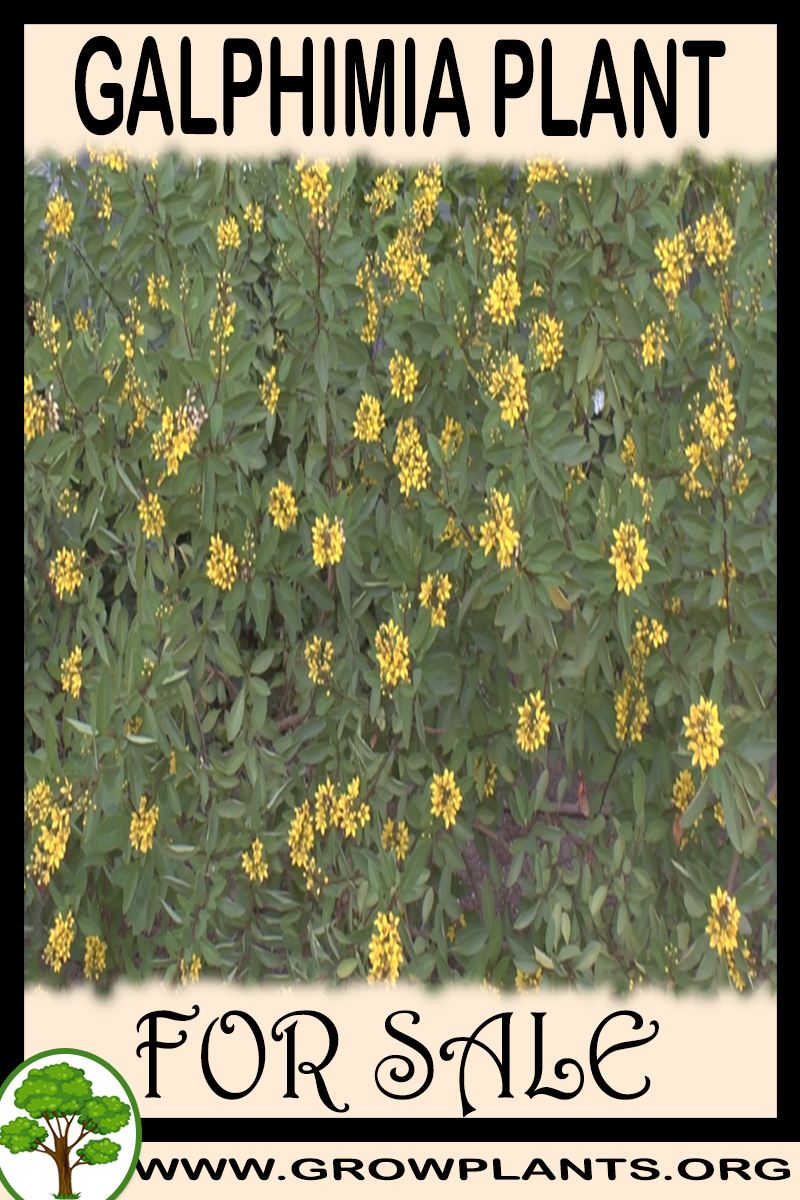
Plant Profile & Key Characteristics
Overview: An evergreen (cold-deciduous) ornamental shrub reaching about 1–2 m, with blue-green elliptic foliage. Grown mainly for its long display of yellow star-shaped flowers, it is drought-tolerant and also has traditional medicinal uses.
Quick Specifications
| Specification | Attribute |
|---|---|
| Plant Type / Life Cycle | Perennial (evergreen shrub) |
| Foliage Type | Evergreen (deciduous in cold winters) |
| Mature Size | 1–2 m (3–6 ft) tall, with a similar spread |
| Growth Rate | Moderate to fast |
| Hardiness | USDA zone 10 and warmer |
Growth Form & Structure
- Height & Spread: Rounded shrub 1–2 m tall and about as wide; stays smaller and neat in a large container.
- Growth Habit & Form: Bushy evergreen shrub with slender, arching reddish stems and a dense, rounded canopy.
- Lifespan & Maturity: A fast-growing, long-lived shrub that reaches flowering size within a couple of seasons.
Anatomy & Physical Features
- Leaves & Foliage: Blue-green, elliptic leaves, often carried on reddish stems.
- Flower Characteristics: Bright yellow, five-petalled star-shaped flowers carried in terminal clusters over a long season.
Primary Uses & Landscape Value
- Functional & Ornamental Roles: Ornamental flowering shrub for hedges, screens and borders; drought-tolerant and container-suitable, and used in traditional medicine.
Care Guide: Planting, Soil & Watering
Overview: Galphimia (golden thryallis) is a tough, drought-tolerant flowering shrub for warm climates. It grows best in full sun to part shade in rich, well-draining soil and needs only low to moderate water once established.
Quick Care Requirements
| Requirement | Ideal Condition |
|---|---|
| Planting Season | Warm season (spring to summer) |
| Growth Rate | Moderate to Fast |
| Soil Type | Rich, well-draining soil |
| Water Need | Low to moderate — drought tolerant once established |
Planting & Establishment
- Best Planting Season: Plant during the warm season, from spring into summer.
- How to Plant:
- Hole Preparation: Dig a hole about twice the width of the root ball to loosen the soil for the roots.
- Soil Amendments: Work in compost or organic matter to enrich the soil while keeping it free-draining.
- Planting Depth: Set the plant so the root collar sits level with the surrounding soil; do not bury the stem or crown.
- Growth Speed & Expectations: A moderate-to-fast grower that forms a rounded shrub about 1–2 m (3–6 ft) tall.
Soil, Watering & Drainage Care
- Soil Mix & Drainage Needs: Rich but sharply drained soil is ideal; avoid heavy, waterlogged ground that can rot the roots.
- Watering Schedule & Technique:
- Young / Newly Planted: Water regularly to establish the young shrub.
- Established: Once established, water moderately and let the soil dry between waterings; the shrub is drought tolerant.
- Seasonal Adjustments: Increase watering in prolonged heat and reduce in the cool season.
Climate, Light & Hardiness
Galphimia (golden thryallis) is a warm-climate flowering shrub for tropical, subtropical, Mediterranean and desert gardens, flourishing in full sun to half shade once established and shrugging off heat and dry air. Per site data it is hardy in zone 10 and warmer, and it is frost-tender - cold makes it drop leaves or die back.
Quick Climate Specifications
| Climate Zones | Tropical, subtropical, Mediterranean and desert |
|---|---|
| USDA Hardiness Zones | 10+ (site data) |
| Cold Damage Begins | Light frost causes leaf drop / dieback (cold-deciduous) |
| Approx. Survival Minimum | Established plants survive zone 10 winters (roughly −1 °C / 30 °F); may resprout after a light freeze |
| Frost Tolerance | Low |
| Light Conditions | Full sun to half shade |
| Wind Tolerance | Moderate |
Sunlight & Light Exposure
Optimal Light Setup
Full sun gives the heaviest flush of yellow star-flowers; light shade is tolerated, especially in the hottest desert climates.
Direct Sun Requirement
Yes for best flowering - it blooms most freely in strong, direct light.
Best Exposure / Orientation
A warm, sunny, well-drained position - ideally south- or west-facing - suits it; a little afternoon shade is welcome in extreme heat.
Temperature Extremes & Hardiness
USDA Hardiness & Regional Limits
Site data rates it zone 10+. Below that, winter cold limits outdoor culture: it is evergreen where frost-free but behaves as a cold-deciduous shrub at the edge of its range, and a hard freeze can cut it down.
Cold Damage & Winter Protection
Light frost strips the foliage and kills soft stem tips; established plants often resprout from the base after a mild freeze. Where light frost is possible, a sheltered, sunny microclimate helps it through. Cold tolerance varies with plant age and exposure.
Frost Sensitivity
Low frost tolerance - it is a frost-tender subtropical shrub.
Extreme Heat Tolerance
High - it is well adapted to hot, sunny, low-humidity conditions and flowers through the warm season.
Wind, Humidity & Microclimate
Dry-Air Tolerance
Good; as a drought-adapted shrub it copes well with dry air.
Wind Tolerance
Moderate; the flexible stems handle ordinary wind, though the shrub is bushiest in a reasonably sheltered spot.
Rainfall & Seasonal Moisture
Adapts to a wide rainfall range and tolerates dry spells once established, favouring warm conditions with good drainage.
Microclimate Recommendations
In marginal climates plant against a warm, sunny wall or in a frost-sheltered courtyard to buffer the occasional cold night.
Growing in Pots, Balconies & Indoors
Galphimia (gold shower) is a tender evergreen shrub with sprays of yellow flowers, and the grower does not list it as a houseplant – it needs strong sun to bloom well. It does make a fine container shrub for a sunny patio, and a pot lets you shelter it indoors over winter in cold climates.
Quick Details
- Container Size: A sturdy pot (about 15-30 L / 4-8 gal) as it matures into a shrub
- Indoor Suitability: Not a houseplant for a dim room; it needs full sun to flower, though a pot can be overwintered under bright light
- Best Spot: Full sun to half shade – most flowers in the brightest light
- Soil & Drainage: Free-draining, moderately rich mix
- Watering in Pots: Moderate – water when the top dries; it is fairly drought-tolerant once established
Indoors & On the Windowsill
- Not a room houseplant: The grower marks it unsuitable indoors. In poor light it will not flower and grows lank, so it is not a lasting houseplant.
- Overwintering indoors: Where it is too cold outside, move the pot to the brightest, frost-free spot for winter and return it outdoors once warm – a key reason to grow it in a container.
On a Balcony or Patio
- A sunny flowering shrub: A warm, sunny balcony brings out its long flowering; give it the brightest spot and shelter from cold wind.
- Watering & weight: Pots in sun dry quickly, so check often, and a maturing shrub in a large pot is heavy to move for winter.
Choosing the Pot, Soil & Long-Term Care
- Pot & drainage: Strong drainage holes and no standing saucer; terracotta dries faster, plastic holds moisture longer.
- Potting mix: Free-draining and organic-rich with perlite for aeration.
- Feeding: Feed regularly through the growing season to fuel flowering, more often in a pot where nutrients leach.
- Repotting: Pot on every couple of years and lightly prune to keep a bushy, floriferous shape.
Fertilizing & Feeding
A moderate feeder: steady balanced feeding through the long warm-season bloom keeps this shrub flowering, with feeding eased off as growth slows in cool weather.
Quick Fertilizing Specs
| Feeding Level | Moderate feeder |
|---|---|
| Main Nutrient Priority | Balanced feeding with adequate nitrogen; balanced feeding drives bloom, not high phosphorus |
| Best Feeding Period | Spring through the flowering season |
| Organic Options | Compost and other organic matter |
| Reduce/Stop Feeding | Ease off as bloom finishes and the plant rests |
| Micronutrients | Usually supplied by a complete fertilizer; correct only diagnosed problems |
| Soil pH | Slightly acidic to near neutral |
Feeding by Growth Stage
Spring growth before bloom
Build healthy leaves and stems to support the coming bloom.
| Nutrient direction | A balanced complete fertilizer with adequate nitrogen; balanced feeding, not a high-phosphorus bloom product, drives flowering. |
|---|---|
| Timing | As growth resumes in spring. |
| Frequency | A light feeding as active growth begins. |
| Fertilizer types | A balanced complete fertilizer, Compost or other organic matter |
| Precautions | Adequate nitrogen and balanced feeding support bloom; excess nitrogen pushes leaves at the expense of flowers. |
Flowering season
Sustain steady flowering through the bloom season.
| Nutrient direction | Continue balanced feeding to keep plants vigorous and blooming. |
|---|---|
| Timing | Through the flowering season. |
| Frequency | Light, steady feeding across the bloom period. |
| Fertilizer types | A balanced complete fertilizer |
| Precautions | Balanced, moderate feeding is best; excess fertilizer wastes nutrients rather than boosting bloom. |
Repeat bloom flushes
Support repeat flushes of bloom through a long season.
| Nutrient direction | Light balanced feeding sustains repeat flushes of flowers. |
|---|---|
| Timing | Between flushes across the long bloom season. |
| Frequency | Occasional light feeding to sustain the display. |
| Fertilizer types | A balanced complete fertilizer |
| Precautions | Deadheading and steady care matter as much as feeding for continued bloom. |
Dormancy or cool-season rest
Let the plant rest as growth and bloom slow for the season.
| Nutrient direction | None – withhold fertilizer while the plant rests. |
|---|---|
| Timing | As growth and bloom slow in the cool season. |
| Frequency | No feeding during this rest; resume only when active growth returns. |
| Fertilizer types | No feeding at this stage; hold off fertilizing until active growth resumes. |
| Precautions | Do not fertilize a resting plant; wait for new spring growth. |
Nutrient Deficiency Signs & Corrections
Older, lower leaves fade to pale green or uniform yellow and overall growth slows.
| Possible causes | low available soil nitrogen, nitrogen leaching from heavy watering or rain, thin soil low in organic matter |
|---|---|
| Appears first on | older, lower leaves |
| What to check | recent feeding history, soil organic matter, watering and drainage |
| Possible correction | Apply a nitrogen-containing complete fertilizer and build soil organic matter, then water evenly. |
Youngest leaves yellow between the veins while the veins themselves stay green.
| Possible causes | high soil pH reducing iron and manganese availability, waterlogged or poorly drained roots, genuinely low micronutrient supply |
|---|---|
| Appears first on | new, young leaves |
| What to check | soil pH and drainage, watering habits, whether symptoms are on the newest growth |
| Possible correction | Correct soil pH if high, improve drainage, and apply a chelated iron or manganese product per its label. |
Plenty of leafy growth but few flowers.
| Possible causes | excess nitrogen feeding favoring leaves over flowers, too little light for good bud set, a young or recently divided plant not yet settled |
|---|---|
| Appears first on | the whole plant, seen as leafy growth with sparse flowers |
| What to check | how nitrogen-heavy recent feeding has been, light exposure through the day, plant age and establishment |
| Possible correction | Ease back on nitrogen, shift to balanced feeding, and ensure adequate light; avoid high-phosphorus bloom-booster products. |
Pruning, Training & Seasonal Maintenance
Galphimia (Golden thryallis) is a fast, evergreen subtropical shrub that blooms on new growth almost year-round, so it takes pruning very well and is often kept as an informal flowering hedge — cutting simply produces fresh shoots that carry the next flush of yellow star flowers. Structural pruning is done in the cool season (autumn to winter), its natural rest, with light shaping possible any time.
Quick Pruning & Maintenance Specs
| Pruning Tolerance | High – shears well; flowers on new wood |
| Primary Pruning Window | Autumn to winter (cool-season shaping / cutback) |
| Secondary Maintenance Window | Light shaping through the growing season |
| Typical Frequency | One main cutback plus occasional shaping |
| Main Objective | Control the 1–2 m size, keep it dense and floriferous, shape shrub or hedge |
| Young Plant Priority | Tip-pinch to build a full, well-branched frame |
| Mature Plant Priority | Reduce size, renew flowering wood, keep the base clothed |
| Best Tool Type | Bypass secateurs; hedge shears if grown as a hedge |
| Avoid Heavy Pruning During | Just before or during cold snaps (frost-tender) |
Pruning by Plant Age & Size
Newly Established
Light tip-pinching to encourage branching; remove damaged shoots only.
Young / Formative
No rigid system — build a multi-stem bushy frame by repeated tip-pruning. For a hedge, shear lightly and often from young to thicken it.
Mature / Established
An annual cool-season cutback to control the 1–2 m size and remove old, twiggy or crossing wood. Because bloom is on new growth, this cutback reinvigorates flowering.
Seasonal Pruning Schedule
Dormant / Cool Season (autumn–winter)
Main structural prune — reduce height and spread and thin congested or woody stems. Growth and bloom pause here, so the spring regrowth is vigorous.
Summer Canopy Management
Light shearing or tip-pruning to shape and deadhead spent clusters keeps the flushes coming; do not remove all the new growth or you strip off the flowers-to-be.
Ongoing Sanitary
Remove dead or frost-damaged twigs as seen.
Flowering & Fruiting Wood
Flowers are borne on current-season growth and produced almost continuously, so pruning that stimulates new shoots increases bloom and there is no old flowering wood to protect. Time hard cuts for the cool season so that vigorous spring regrowth quickly carries the next flowers.
Structural Pruning & Training
Select a few strong main stems and remove crossing, rubbing and weak twiggy growth. Height and spread are easily controlled because it resprouts freely, and thinning improves airflow in a dense specimen.
Special Growth to Remove
Dead and frost-damaged wood, and spent flower clusters if deadheading. It is not grafted, so there are no rootstock suckers; low basal shoots can be kept to thicken the base or removed for a cleaner, more tree-like form.
Container & Small-Space Pruning
Stays smaller in a pot; pinch tips to keep it bushy and cut back after a flush to hold it compact. It responds to a hard container cutback with fresh flowering growth rather than sulking.
Tools
Bypass secateurs for stem-by-stem cuts and thinning; loppers for the occasional older basal stem; hedge shears only if it is grown and maintained as a clipped flowering hedge.
Tool Hygiene & Disease Risk
Routine — a generally trouble-free shrub with no notable pruning-borne disease, so clean, sharp blades are enough.
Cut Placement & Technique
Prefer thinning cuts back to a junction for a natural shrub; use heading cuts and shearing for hedge work. Cut just above an outward-facing node to steer growth outward and keep the centre open.
Heavy Pruning & Rejuvenation
Well tolerated — an overgrown plant can be cut back hard in the cool season and will resprout and flower on the new growth. Spread very severe cuts over the warm season if the plant is weak, and never cut hard just before frost.
Post-Pruning Care
Water in after a warm-season trim; a hard cool-season cutback needs little feeding, as spring growth is naturally vigorous. Watch for sunburn on newly bared inner branches in intense sun.
Common Pruning Mistakes
- Shearing off all the new growth and then wondering why bloom stops — the flowers are on that new growth.
- Pruning hard just before frost on a tender plant.
- Letting it get woody and bare at the base from never cutting back.
- Using hedge shears on a plant meant to be an informal shrub, giving a stubby look.
When NOT to Prune
Right before or during cold weather (frost-tender, cool-deciduous in marginal zones), and on a drought- or cold-stressed plant.
Recommended Tools (by task)
- bypass_secateurs — the main tool for shaping, thinning and deadheading soft-to-firm stems.
- loppers — for the occasional thicker old basal stem during a cool-season cutback.
- hedge_shears — only where it is grown as a clipped informal flowering hedge.
Pruning Troubleshooting
| Problem | Possible Cause | What to Check | Corrective Action |
| Poor flowering after pruning | Removed the new growth that carries bloom, or sheared too often | Whether flowers form on the most recent shoots | Prune less during the season; let new shoots mature to flower; do the main cut in the cool season |
| Bare, woody base | Only the top was ever tipped; never cut back or thinned | Whether the lower stems still carry leaves | Reduce height and thin to let light into the base; a hard cool-season cutback is tolerated |
| Frost dieback after pruning | Pruned late, pushing tender new growth into cold | Timing of the cut relative to first frost | Prune earlier or wait until the end of the cold season; remove damaged wood in spring |
Propagation Guide
Golden thryallis (Galphimia) is grown from seed or from semi-ripe stem cuttings, both listed on the site; seed is readily produced and germinates well in warmth, while cuttings give quicker, identical plants. Neither grafting nor any other special method is needed. It is of moderate difficulty.
Quick Propagation Specs
| Best Propagation Method | Seed, or semi-ripe stem cuttings |
| Alternative Methods | Whichever of the two is not chosen |
| Propagation Difficulty | Moderate |
| Seed True-to-Type | The species comes largely true |
| Vegetative True-to-Type | Yes |
| Best Propagation Season | Warm season, spring to summer |
Growing from Seed
Sowing Season & Conditions
Sow in the warm season into a free-draining mix and keep it warm and lightly moist. Being a warm-climate shrub it germinates best with steady heat; self-sown seedlings can appear near established plants.
Seedling Care
Grow the seedlings on in a bright, warm spot with good drainage until they are sturdy enough to plant out in spring or summer.
Stem Cuttings
Cutting Type & Timing
Take semi-ripe cuttings from firm current-season shoots in the warm season.
Rooting Setup
Insert into a gritty, free-draining mix kept warm and lightly moist with some humidity. Rooting hormone is beneficial but not essential.
Bloom & Flower Guide
Quick Details
- Bloom Season: Spring through summer into autumn – a long, generous display
- Flower Appearance: Bright yellow star-shaped flowers held in clusters at the stem tips
- Edibility: Ornamental – grown for its flowers, which are not eaten (the plant has traditional medicinal uses)
Detailed Blooming Overview
Golden thryallis is a tough, drought-tolerant shrub that flowers over a remarkably long season. Through the warm months its arching stems are tipped with airy clusters of small, clear-yellow star flowers, giving weeks of colour and drawing in butterflies and bees.
Flower Characteristics
- Bright yellow, five-petalled star-shaped flowers.
- Carried in loose clusters (racemes) at the ends of the stems.
Bloom Care & Thinning
- Site for best bloom: Full sun and free-draining soil bring the heaviest, longest flowering; it flowers well even in heat and drought.
- After flowering: A light trim keeps it neat and encourages fresh flowering wood; it takes harder pruning well.
- Pollination: A reliable magnet for butterflies and bees.
Pests, Diseases & Troubleshooting
Overview: Galphimia (goldshower / thryallis) is a tough, near pest-free tropical to subtropical shrub in the Malpighiaceae, valued precisely because it shrugs off most problems. When trouble does appear it is the usual soft-scale/sucking-insect complex on stressed or sheltered plants, plus minor leaf spot and — more importantly — root rot from overwatering and iron chlorosis on alkaline soils. Treat it organically and lightly: good drainage, sun and airflow prevent nearly everything, and it rarely needs spraying.
Quick Troubleshooting Overview
| Issue / Pest | Main Symptom | Primary Solution |
|---|---|---|
| Scale & mealybugs | Bumps or white cottony masses on stems/leaf axils, honeydew, sooty mold | Wipe off, horticultural oil, encourage predators |
| Aphids | Clusters on new growth, sticky honeydew | Water jet, insecticidal soap |
| Spider mites | Stippling and webbing in hot, dry conditions | Hose foliage, horticultural oil |
| Leaf spot | Brown/black spots on leaves in humid weather | Airflow, remove leaves, copper if persistent |
| Root rot | Yellowing, wilt, collapse in soggy soil | Improve drainage, reduce watering |
| Iron chlorosis | Yellow leaves with green veins on alkaline soil | Correct pH, chelated iron |
Common Pests & Management
- Scale insects (soft & armored; Coccidae / Diaspididae):
- Symptoms: Immobile brown, tan or white bumps along stems and leaf undersides; soft scales excrete honeydew that fuels black sooty mold, causing yellowing and weak growth.
- Prevention & Control: Rub off light infestations with a cloth or soft brush; encourage parasitic wasps and ladybirds; spray horticultural or neem oil to smother scale, repeating to catch crawlers.
- Mealybugs (Planococcus / Pseudococcus spp.):
- Symptoms: White cottony masses in leaf axils, stem joints and undersides; honeydew, sooty mold, stunted and distorted growth. Worse on sheltered or indoor plants.
- Prevention & Control: Spot-treat with an alcohol-dipped swab, wash off with water, encourage predators (mealybug destroyer, lacewings), and apply neem or insecticidal soap for persistent colonies.
- Aphids (Aphis spp.):
- Symptoms: Green or black colonies on soft new shoots and flower clusters; sticky honeydew and curled tips.
- Prevention & Control: Blast with water, encourage beneficials, and use insecticidal soap or neem on undersides if numbers climb.
- Spider mites (Tetranychus spp.):
- Symptoms: Fine pale stippling, dull bronzed leaves and webbing in hot, dry, dusty or indoor conditions.
- Prevention & Control: Raise humidity, hose foliage, and apply horticultural or neem oil to undersides, repeating weekly; avoid drought stress.
- Whitefly (Bemisia / Trialeurodes spp.):
- Symptoms: Tiny white flies rising in clouds from disturbed foliage; nymphs on undersides cause yellowing, honeydew and sooty mold.
- Prevention & Control: Yellow sticky traps monitor and reduce them; encourage parasitic wasps; spray soap or neem to undersides in the evening.
Diseases & Fungal Issues
- Leaf spot (Cercospora / Colletotrichum spp.):
- Symptoms: Small brown to black spots, sometimes with yellow halos, mostly in warm humid weather or where foliage stays wet; heavy spotting causes some leaf drop.
- Treatment & Management: Improve airflow, water at the base, remove spotted leaves and debris; copper fungicide protects new growth only if spotting is persistent. Rarely serious on this shrub.
- Sooty mold (secondary):
- Symptoms: Black superficial coating on leaves and stems, always following honeydew from scale, mealybugs, aphids or whitefly.
- Treatment & Management: Control the underlying sucking pest and the mold fades; wipe or rinse leaves to restore appearance.
- Root & collar rot (Phytophthora / Pythium):
- Symptoms: Yellowing, wilting despite moist soil, dieback and collapse; dark, rotten roots or stem base in poorly drained or overwatered soil.
- Treatment & Management: Prevent with free-draining soil and moderate watering; let the soil surface dry between waterings, plant high, and remove severely affected plants.
Growing Difficulties & Abiotic Problems
- Overwatering / root rot:
- Cause & Symptoms: The most likely killer — soggy soil suffocates roots, bringing yellowing, wilt and collapse.
- Correction Strategy: Plant in well-drained soil, water only when the surface dries, and never leave pots standing in water.
- Iron chlorosis on alkaline soil:
- Cause & Symptoms: On high-pH or limey soils new leaves yellow between green veins from iron lock-out.
- Correction Strategy: Lower pH with organic matter or sulfur, and apply chelated iron for a quick recovery.
- Cold / frost damage:
- Cause & Symptoms: A frost-tender tropical, it browns, drops leaves or dies back after cold snaps.
- Correction Strategy: Site in a warm, sheltered spot; protect or grow in containers to move under cover where frost occurs, and prune out cold-damaged wood in spring.
- Leggy or sparse growth:
- Cause & Symptoms: Too little light gives thin, open, poorly flowering growth.
- Correction Strategy: Grow in full sun to light shade and trim lightly after flowering to keep it dense and blooming.
What Helps — Products & Tools
This shrub needs very little: horticultural / neem oil and insecticidal soap cover scale, mealybugs, aphids, whitefly and mites; yellow sticky traps monitor whitefly; copper fungicide handles the occasional leaf spot; and chelated iron corrects chlorosis on alkaline soils. Its best defense is culture — sun, sharp drainage and restrained watering keep it essentially trouble-free.