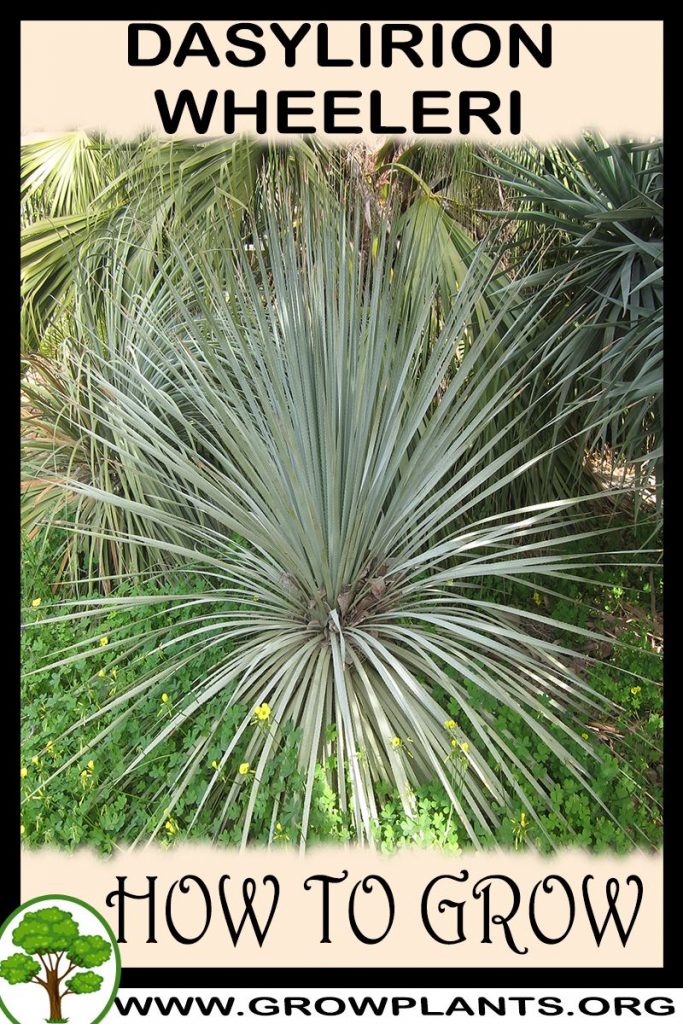
Plant Profile & Key Characteristics
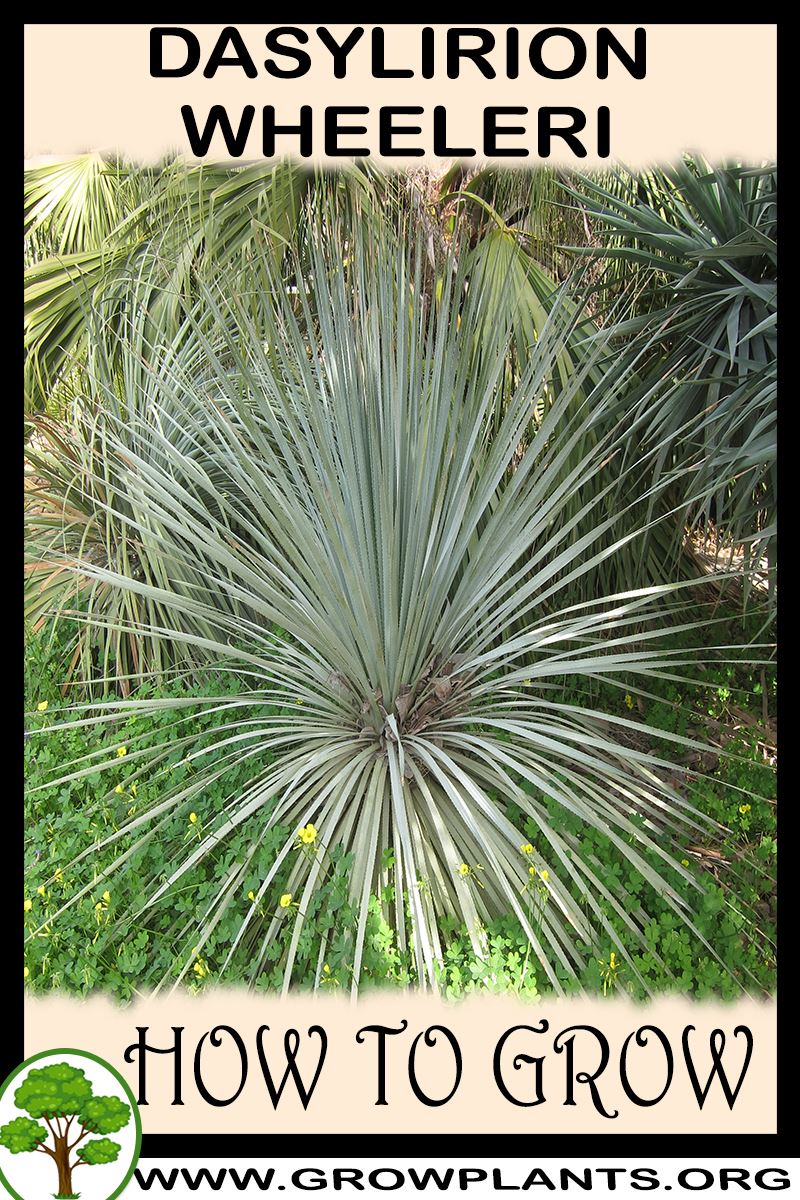
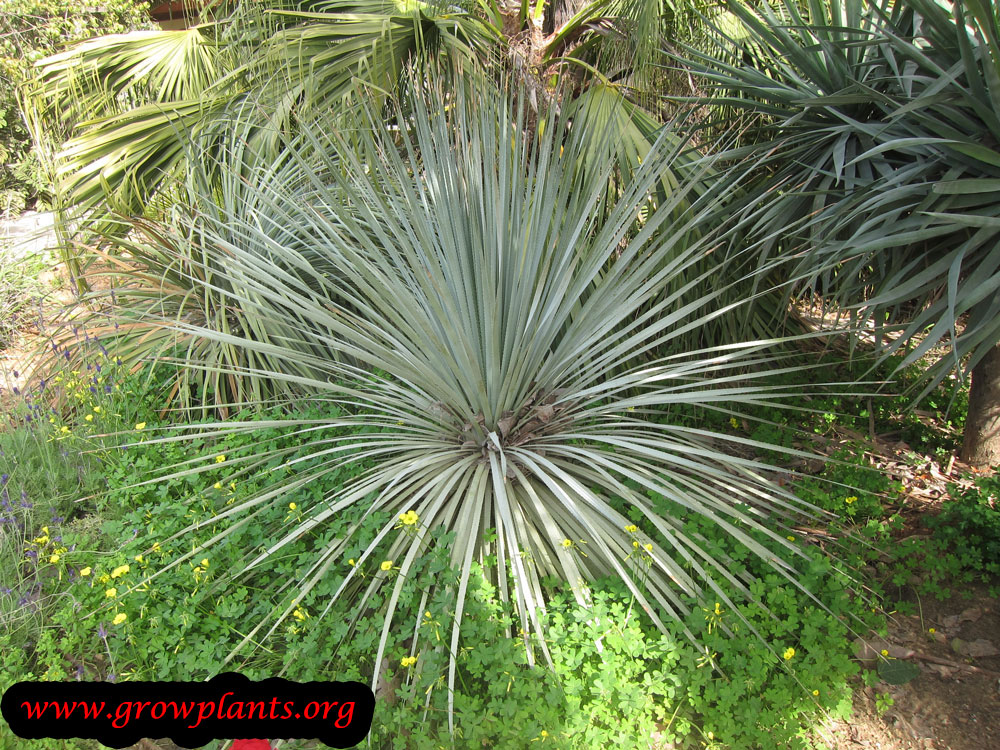
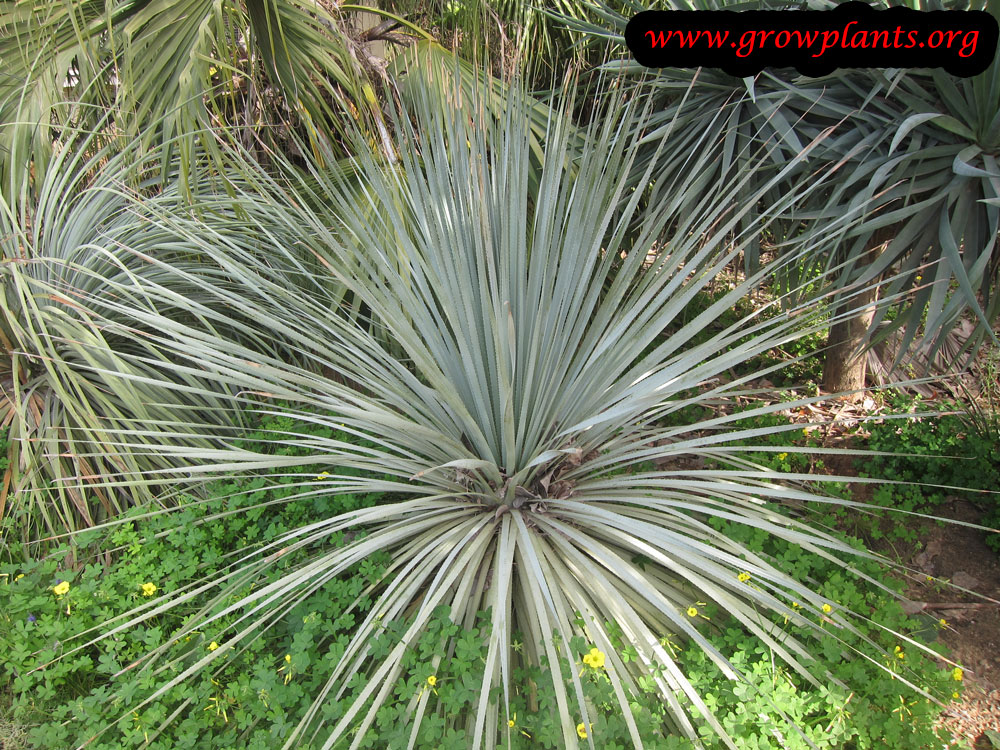
Overview: Dasylirion wheeleri (Desert Spoon) is an evergreen, drought-tolerant rosette succulent forming a dense ball of narrow, spine-edged leaves. It is grown as a sculptural, low-water ornamental for hot, dry gardens.
Quick Specifications
| Specification | Attribute |
|---|---|
| Plant Type / Life Cycle | Perennial (evergreen succulent) |
| Foliage Type | Evergreen |
| Mature Size | Height 1-2 m (40-80 in) |
| Growth Rate | Slow |
| Toxicity | Non-toxic |
| Hardiness | USDA zones 8-12 |
Growth Form & Structure
- Height & Spread: Reaches 1-2 m (40-80 in) tall and wide; can be grown in a large container.
- Growth Habit & Form: Rosette-forming succulent that builds a symmetrical ball of foliage, developing a short trunk with age.
- Lifespan & Maturity: Long-lived perennial; very slow-growing to full size.
Anatomy & Physical Features
- Trunk & Bark: Forms a stout, fibrous trunk beneath the rosette as it ages.
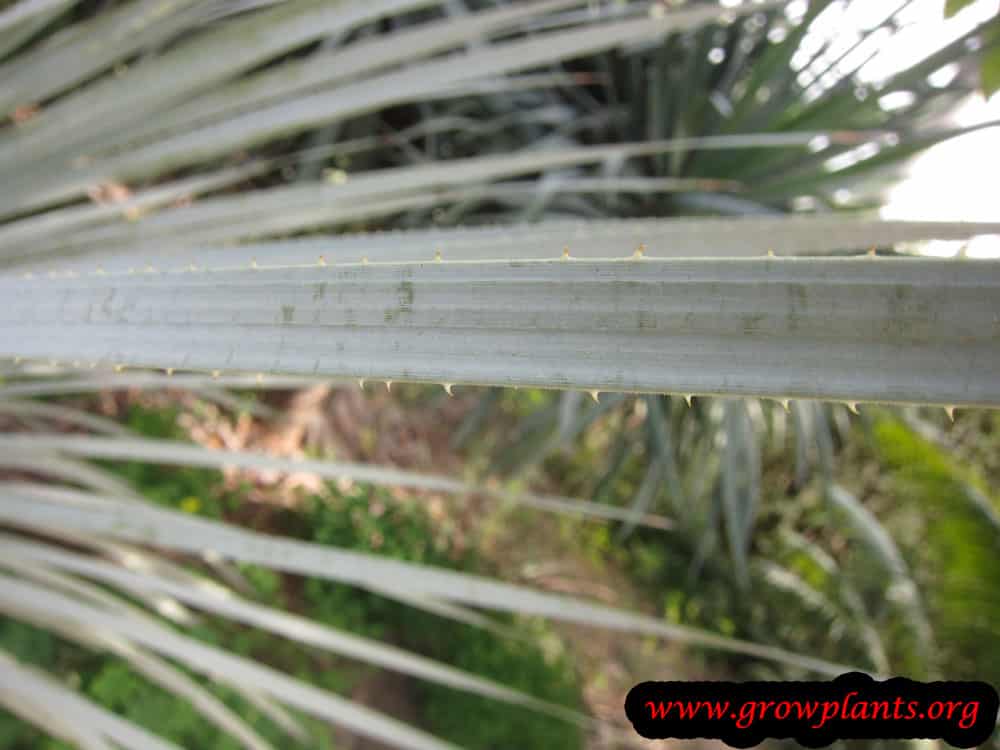
- Leaves & Foliage: Narrow grey-green leaves in a dense rosette, spear-shaped and sharp with a spiny margin; the tips fray into hair-like fibres.
- Flower Characteristics: Tall spikes of small greenish-yellow flowers rise above the rosette like an ice-pop (full detail in the Bloom guide).
Primary Uses & Landscape Value
- Functional & Ornamental Roles: Sculptural, drought-tolerant ornamental for xeriscapes, rock gardens and large containers; note the spiny leaves.
Care Guide: Planting, Soil & Watering
Overview: Desert spoon is a drought-tolerant succulent that demands sharply drained, sandy soil and full sun. It stores water in its base, so it needs only occasional deep watering and must never sit in wet soil.
Quick Care Requirements
| Requirement | Ideal Condition |
|---|---|
| Planting Season | Year-round, avoiding the coldest part of winter in cool areas |
| Growth Rate | Slow |
| Soil Type | Sandy, sharply well-draining soil |
| Water Need | Low – let the soil dry fully between waterings |
Planting & Establishment
- Best Planting Season: Plant at almost any time of year; in cold-winter areas avoid planting in winter.
- How to Plant:
- Hole Preparation: Dig the hole on a fast-draining, gritty site; raised or sloped ground helps shed water.
- Soil Amendments: Add coarse sand or grit to open up heavy soil; avoid rich, moisture-holding amendments.
- Planting Depth: Set the crown at or slightly above soil level so the base stays dry – never bury the crown.
- Growth Speed & Expectations: Slow-growing, forming a rounded rosette over years.
Soil, Watering & Drainage Care
- Soil Mix & Drainage Needs: A gritty, sandy, free-draining mix; excellent drainage is essential to prevent rot.
- Watering Schedule & Technique:
- Young / Newly Planted: Water occasionally to establish, letting the soil dry between waterings.
- Established: Deep but infrequent watering; highly drought-tolerant.
- Seasonal Adjustments: Minimal water in winter; a little more during prolonged summer heat.
Climate, Light & Hardiness
Dasylirion wheeleri (desert spoon) is a drought-tolerant rosette succulent for desert, Mediterranean, and subtropical climates. It wants full sun to half shade; site guidance suggests keeping it above roughly 3°C (37°F) for best condition, though cold tolerance can vary with exposure and plant maturity.
Quick Climate Specifications
| Climate Zones | Desert, Mediterranean, Subtropics |
|---|---|
| USDA Hardiness Zones | 8–12 |
| Optimal Temp Range | Typically 18–30°C (64–86°F) during active growth |
| Cold Damage Begins | Site guidance suggests foliage quality is best maintained above approximately 3°C (37°F) |
| Approx. Survival Minimum | Consistent with its USDA zone 8 cold edge, established plants in a sheltered, well-drained site may briefly tolerate colder lows, though cold tolerance varies with exposure and maturity |
| Frost Tolerance | Moderate–High |
| Light Conditions | Full Sun / Half Shade |
| Wind Tolerance | High |
| Salt / Coastal Tolerance | Moderate |
Sunlight & Light Exposure
Optimal Light Setup
Full sun gives the tightest, most compact rosette form.
Direct Sun Requirement
Handles full, intense desert sun without issue; also adapts well to half shade.
Shade & Heat Management
No shade is needed for heat protection; it is built for hot, sunny, arid conditions.
Best Exposure / Orientation
An open site allows the wide, spherical rosette to develop its natural symmetrical form.
Temperature Extremes & Hardiness
USDA Hardiness & Regional Limits
Hardy from USDA zones 8–12, suited to desert, Mediterranean, and subtropical gardens. Site care guidance is more conservative than the general genus entry, recommending protection below about 3°C (37°F) rather than assuming survival to much colder lows.
Cold Damage & Winter Protection
In borderline zone 8 gardens, plant in a sheltered, well-drained, south-facing spot and avoid low frost pockets; young plants especially benefit from winter protection.
Frost Sensitivity
Cold combined with wet soil raises the risk of rot at the base far more than dry cold alone.
Extreme Heat Tolerance
Excellent heat tolerance; thrives in intense desert summer heat.
Wind, Humidity & Microclimate
Humidity Preferences
Prefers the dry air typical of desert and Mediterranean climates.
Dry-Air Tolerance
Very tolerant of dry air and low humidity.
Wind Tolerance
Excellent wind tolerance thanks to its stiff, fibrous rosette leaves.
Coastal / Salt Tolerance
Generally moderate tolerance of coastal conditions; limit direct salt spray.
Microclimate Recommendations
Well-drained soil is essential, particularly where winter rain and cold coincide; a warm, sheltered microclimate helps in the cooler parts of its range.
Growing in Pots, Balconies & Indoors
Dasylirion (sotol) is a large, desert-hardy rosette plant with slender, saw-toothed leaves. It is not a houseplant, but it makes a striking, architectural container specimen for a hot, sunny patio, courtyard or balcony.
Quick Details
- Container Size: Large and sturdy – a heavy, wide pot of 30-50 L or more to balance the big rosette and long leaves
- Indoor Suitability: Not an indoor plant – it needs full sun, and the sharp-toothed leaves make it awkward indoors
- Best Spot: Full sun (tolerates a little shade), outdoors
- Soil & Drainage: Sharp, very free-draining gritty/sandy mix – it hates wet feet
- Watering in Pots: Little water – drought-tolerant; let the mix dry well between waterings
Indoors & On the Windowsill
- Houseplant limits: Not suited to indoor life – it needs strong, full sun a room cannot provide, and the stiff, toothed leaves are hazardous in a living space. A bright sunroom or greenhouse is the closest indoor option.
- Overwintering: In climates with hard frost, grow it in a pot so it can be moved into a bright, cool, frost-free space (unheated greenhouse or sunroom) for winter, then back out to full sun.
On a Balcony or Patio
- Light & wind: Give it the hottest, sunniest spot; it thrives on reflected heat from walls and paving and shrugs off wind and drought. Site it away from paths so nobody brushes the sharp leaf teeth.
- Practicalities: A big specimen in a soil-filled pot is heavy – use a stable, wide-based container on the ground or a dolly, and allow for free drainage runoff.
Choosing the Pot, Soil & Long-Term Care
- Pot & drainage: A large pot with strong drainage holes and no standing saucer. Terracotta suits it well, breathing and drying fast.
- Potting mix: A gritty, sharply draining cactus/succulent mix with extra sand, grit or pumice. A ready-made cactus and succulent soil mix provides that structure without mixing it yourself.
- Feeding: Very little – a light feed once in the growing season is plenty; these are slow, lean-soil plants.
- Repotting: Slow-growing, so pot up only every few years; refresh the top mix and handle with thick gloves because of the leaf teeth.
Fertilizing & Feeding
A light feeder: this true desert-spoon succulent is adapted to lean desert soil and needs only a weak, occasional feeding during active growth, with no feeding while it rests through cooler weather.
Quick Fertilizing Specs
| Feeding Level | Light feeder |
|---|---|
| Main Nutrient Priority | A dilute, low-nitrogen feed to support slow, sturdy rosette growth without softening the spiny foliage |
| Best Feeding Period | During the warm active growing season |
| Organic Options | A little compost worked into a gritty, fast-draining mix at planting |
| Reduce/Stop Feeding | Pause feeding as growth slows heading into cooler weather |
| Micronutrients | Usually met by a complete fertilizer; correct only a diagnosed issue |
| Soil pH | Tolerates a wide range in lean, well-drained desert soil |
Feeding by Growth Stage
Warm-season rosette growth
Support slow, sturdy growth of this true desert-spoon rosette succulent, prized for its narrow, spiny, fiber-edged foliage.
| Nutrient direction | A weak, well-diluted low-nitrogen feed is plenty; like other desert-adapted rosette succulents, it thrives on lean soil and does not want to be pushed into fast, soft growth. |
|---|---|
| Timing | During the warm growing season. |
| Frequency | Light, infrequent feeding is enough; established plants often need very little at all. |
| Fertilizer types | A dilute low-nitrogen liquid fertilizer, used sparingly, A little compost worked into a gritty, fast-draining mix at planting |
| Precautions | Avoid rich soil or heavy feeding, which produces soft, floppy leaves instead of the tight, sculptural rosette this plant is grown for; the spiny leaf margins call for care when working around the base. |
Cooler-season rest
Let the rosette rest through cooler weather without pushing tender growth.
| Nutrient direction | None – withhold fertilizer while the plant is resting. |
|---|---|
| Timing | During the cooler part of the year, especially in less mild growing areas. |
| Frequency | No feeding at this stage; resume only when active warm-season growth returns. |
| Fertilizer types | No feeding at this stage; do not fertilize until active growth resumes. |
| Precautions | Withhold fertilizer now; this plant is adapted to cooler weather and does not need feeding while growth is slow. |
Nutrient Deficiency Signs & Corrections
Older outer leaves fade to a duller gray-green and already-slow growth becomes very slow.
| Possible causes | low available nitrogen in a long-unfed, lean, rocky mix, nutrients leached from a fast-draining planting site, an old, exhausted planting bed or container mix |
|---|---|
| Appears first on | older, outer rosette leaves |
| What to check | how long since the last feeding, age and condition of the soil or mix, watering and drainage around the base |
| Possible correction | Apply a dilute, low-nitrogen fertilizer during active growth and refresh a long-unamended planting site. |
Leaf tips brown or scorch and the rosette looks stressed despite reasonable watering.
| Possible causes | fertilizer salt buildup in a container or raised bed, overfeeding or feeding too concentrated a solution for this lean feeder, poor drainage concentrating salts near the roots |
|---|---|
| Appears first on | leaf tips and margins |
| What to check | recent fertilizer strength and amount, drainage and bed or container condition, any visible salt crust on the soil surface |
| Possible correction | Ease off feeding, water thoroughly to flush accumulated salts, then return to lighter, less frequent feeding. |
Newest inner rosette leaves emerge pale or yellowish while surrounding foliage stays its normal gray-green.
| Possible causes | iron made unavailable by highly alkaline desert soil, waterlogged roots after unusually heavy irrigation or rain, not a true shortage of iron in the soil |
|---|---|
| Appears first on | newest inner rosette leaves |
| What to check | soil alkalinity and irrigation water quality, drainage and root health after wet periods, overall watering habits for this drought-tolerant plant |
| Possible correction | Correct drainage and avoid overwatering; where soil alkalinity is the cause, a chelated iron product applied per its label can help. |
Pruning, Training & Seasonal Maintenance
Dasylirion wheeleri, the desert spoon widely used in Southwest xeriscape landscaping, is a single-crown rosette succulent that tolerates only dead-material removal – never the cutting of live leaves. Because it is polycarpic (unlike the true century plant, Agave), removing a spent flower spike never harms the plant or a future bloom. Pruning can be done year-round.
Quick Pruning & Maintenance Specs
| Pruning Tolerance | Low – dead-leaf and spent-spike removal only |
| Primary Pruning Window | Year-round, as material fully dries |
| Typical Frequency | Roughly once a year, plus removing the flower spike after bloom |
| Main Objective | Tidy the dried leaf skirt and remove the finished bloom stalk |
| Young Plant Priority | None – young plants produce little dead material |
| Mature Plant Priority | Optional skirt trim + removal of the old flower spike at its base |
| Best Tool Type | Loppers for fibrous leaves; pruning saw for the flower stalk |
| Avoid Heavy Pruning During | Never cut into the green crown, at any time |
Pruning by Plant Age & Size
Newly Established
Leave all leaves untouched while roots are establishing.
Young / Formative
No structural training applies to this single-rosette succulent.
Mature / Established
Landscape specimens are commonly kept with their dried leaf skirt intact (a natural, low-water-use look) or trimmed close to the base for a more formal appearance – either is fine. Cut the flower spike out at its base once flowering/seed drop finishes.
Seasonal Pruning Schedule
Ongoing Sanitary
Objective: remove only fully dead material. Remove: brown dry leaves and the spent flower spike. Do not remove: any leaf still holding green color. Expected response: none required. Flowering impact: none – this species reblooms from the same crown in later seasons.
Special Growth to Remove
- Dead leaves – trim or leave as thatch, an aesthetic choice.
- Spent flower spike – remove at the base once bloom is over; it will not flower again itself.
Container & Small-Space Pruning
Grown in large containers outdoors (not typically as a houseplant); same rule as in-ground plants – remove only fully dried leaves, never green ones.
Tools
Loppers for the fibrous dead leaf bases; a pruning saw for the thick old flower stalk on a mature specimen. Wear heavy gloves and eye protection – the leaf margins are spiny.
Tool Hygiene & Disease Risk
Routine – clean tools are sufficient; no specific disease risk documented.
Cut Placement & Technique
Cut dead leaves near the base away from the crown; remove the flower stalk at its point of origin.
Heavy Pruning & Rejuvenation
Not tolerated – a single growing point means any cut into the crown is fatal to that rosette; there is no rejuvenation technique for this plant.
Post-Pruning Care
No extra watering or feeding needed; this is a very drought-tolerant landscape succulent.
Common Pruning Mistakes
- Tearing off dead leaves instead of cutting them.
- Trimming green leaves for a tidier look, which wounds the rosette.
- Confusing it with Agave and expecting it to die after flowering – it does not.
When NOT to Prune
Never remove living green leaves; otherwise no seasonal restriction is documented.
Recommended Tools (by task)
- loppers – cutting the tough fibrous dead leaves at the base.
- pruning_saw – removing the thick dried flower stalk on a mature plant.
Propagation Guide
Like other Dasylirion, Dasylirion wheeleri (desert spoon) is propagated mainly from seed rather than by division, since it forms a single trunked rosette that rarely offsets on its own. Seed set requires both a male and a female plant because the species is dioecious, and seedlings then take a long time to bulk up, so overall difficulty is Moderate.
Quick Propagation Specs
| Best Propagation Method | Seed |
| Alternative Methods | Basal offsets (occasional, when present) |
| Propagation Difficulty | Moderate |
| Seed True-to-Type | Usually true-to-type, with some variation typical of dioecious, cross-pollinated seed |
| Vegetative True-to-Type | Yes, where an offset is available |
| Best Propagation Season | Spring to summer sowing; avoid planting in the cold season |
Growing from Seed
Seed Handling & Viability
As a dioecious species, a female Dasylirion wheeleri needs a nearby male in flower to set fertile seed.
Sowing Season
Sow in spring to summer for the longest possible establishment period before cold weather.
Sowing Depth & Orientation
Sow in a gritty, fast-draining, sandy mix and cover only lightly.
Germination Conditions
Keep warm and lightly moist in a well-drained medium — this desert species will not tolerate a soggy seed bed.
Germination Time
Germination is often slow and can be uneven, and the resulting rosette grows slowly, so raising a plantable specimen from seed takes patience.
Division, Offsets, Pups & Suckers
Dasylirion wheeleri usually stays as a single rosette, but an older plant occasionally produces a basal offset, particularly if the growing point is damaged. Where one is present it can be separated with roots attached and potted on; most plants never produce one, so this is not a dependable primary method.
Bloom & Flower Guide
Quick Details
- Bloom Season: Summer
- Time to First Bloom: Only mature plants flower, typically after many years of growth
- Flower Appearance: Tiny green to yellowish flowers packed onto a tall spike that rises well above the foliage, giving the plant its “ice-pop on a pole” look
- Edibility: Grown as an ornamental – the flowers are not a culinary flower
Detailed Blooming Overview
Dasylirion wheeleri – the desert spoon – is a rosette-forming desert succulent. In summer a mature plant sends up a dramatic flowering spike, often several metres tall, crowded with small green-yellowish flowers. Plants are dioecious, so male and female flowers are carried on separate plants.
Flower Characteristics
- Small green to yellowish flowers densely set along a tall, narrow spike.
- The packed spike gives a distinctive club- or ice-pop-like shape on a bare stalk.
- Rich in nectar and worked by bees and other insects.
Bloom Care & Thinning
- Enjoy the spike: The tall flower stalk is the main event; no thinning is needed. Cut the spent stalk back once it dries and browns.
- Patience: Flowering signals a well-established, mature plant, so give it full sun and sharp drainage and let it settle in over the years.
- Pollination: Insects, especially bees, work the nectar-rich spike.
Fruit & Uses
Dasylirion wheeleri (common sotol) is the species most widely used to produce the distilled Mexican spirit sotol, made by roasting and fermenting its starchy basal crown; the same roasted crown was historically eaten as food, and the young flower-stalk core, sap and seeds have minor traditional food uses. Everything eaten from this plant is cooked or processed first, never eaten raw.
Quick Edible Specs
| Edible Parts | Crown/heart (basal stem tissue), core of the young flower stalk, sap, flowers, seeds |
|---|---|
| Main Use(s) | Primary source plant for the distilled spirit sotol; traditional roasted food; minor sap/seed use |
| Eaten Raw or Cooked | Cooked (crown); sap can be taken fresh |
| Preparation Required | Cook (long pit- or oven-roasting of the crown, historically around 24 hours) before eating or fermenting |
| Harvest Season | Crown harvested once mature, any season; flower-stalk core best taken as the bloom stem emerges in summer |
| Time to First Harvest | Only after full maturity – a slow-growing species, so first harvest is measured in years |
| Storage | Roasted crown pulp can be dried for storage; fresh crown does not keep |
| Safety/Toxicity Caveat | Raw crown is fibrous and unpalatable without roasting; harvesting the crown kills that rosette; home distillation of alcohol may be regulated or illegal depending on local law |
Roots & Tubers
The edible crown sits at the base of the rosette where the root mass meets the stem. It is dug up once mature, trimmed of its spiny leaves, and traditionally baked in an earth pit for roughly a day until soft. This species in particular is the standard raw material for commercial and artisanal sotol production in the Chihuahuan Desert region: the roasted crown is crushed, mixed with water, fermented and then distilled. Harvesting the crown is destructive and ends that plant’s growth, so it is a one-time rather than repeat harvest.
Flowers & Flower Buds
The young flowering stalk has a soft edible core before it hardens, usable in the same roasted-food tradition as the crown; the small flowers have a minor traditional food use. Harvesting the stalk for food removes the season’s bloom – see Pruning for routine spent-stalk removal.
Seeds, Pods & Nuts
Mature, fully dried seeds have a minor traditional use, generally ground rather than eaten whole.
Preparation, Uses & Safety
All edible use of D. wheeleri depends on long, slow roasting of the crown to break down its starches; raw tissue is tough and not palatable. Because harvest is destructive to the individual plant and distilling spirits at home is legally restricted in many regions, this is best understood as a traditional/commercial regional use rather than a casual home-garden edible. No part is reported toxic once properly cooked, but the leaf margins are sharply spined and a physical hazard during handling.
Pests, Diseases & Troubleshooting
Dasylirion (sotol / desert spoon) is a tough, xerophytic desert rosette in the Asparagaceae that is highly resistant to pests when grown hard and dry. Its overwhelming risk is not insects but crown and root rot from overwatering, poor drainage or wet, cold winters; sap-suckers such as scale and mealybug are occasional and minor. Sharp drainage, full sun and restraint with the hose are the whole management plan.
Quick Troubleshooting Overview
| Issue / Pest | Main Symptom | Primary Solution |
|---|---|---|
| Crown / root rot | Soft, discoloured base; collapse in wet soil | Sharp drainage, dry-side watering, gravel collar |
| Scale insects | Brown bumps on leaf bases; sticky film | Wipe/scrape off, horticultural oil |
| Mealybugs | White cottony tufts in the crown and leaf axils | Alcohol swab, horticultural oil |
| Agave snout weevil | Sudden collapse; grubs tunnelling the core | Remove/destroy affected plant, keep vigorous |
| Edema / cold-wet damage | Corky spots or soft patches after wet cold | Keep dry in winter, improve drainage |
Common Pests & Management
- Scale insects (Diaspididae / Coccidae spp.):
- Symptoms: Small brown, grey or tan limpet-like bumps cluster at leaf bases and along the stiff leaves, sometimes with sticky honeydew and sooty mould in the crown.
- Prevention & Control: Scrape or wipe off small infestations; prune out and destroy badly encrusted leaves; apply horticultural oil to smother scale, repeating for crawlers; keep plants unstressed and airy.
- Mealybugs (Pseudococcus / Planococcus spp.):
- Symptoms: White, cottony, waxy masses collect in the crown, leaf axils and among old leaf bases; heavy infestations weaken the plant and attract sooty mould.
- Prevention & Control: Dab with a cotton bud dipped in rubbing alcohol; blow or brush out debris where they hide; spray horticultural oil or insecticidal soap into the crown, repeating to catch new crawlers; check for root mealybugs in pots.
- Agave snout weevil (Scyphophorus acupunctatus):
- Symptoms: Adults lay eggs in the crown of stressed rosettes; grubs tunnel into the core, and the plant may suddenly wilt and collapse with a rotten, foul-smelling centre.
- Prevention & Control: Keep plants vigorous and unwounded, as weevils target stressed rosettes; remove and destroy infested plants and surrounding grubs to stop spread; avoid movement of infested nursery stock; soil drenches are a last resort in serious outbreaks.
- Spider mites (Tetranychus spp.):
- Symptoms: Rare; in very hot, dry, dusty sheltered spots leaves may show faint stippling and dullness.
- Prevention & Control: Usually needs no action; hose off dust and improve air movement, and use a light horticultural oil only in the rare persistent case.
Diseases & Fungal Issues
- Crown and root rot (Phytophthora / Pythium / Fusarium):
- Symptoms: The main killer: the base of the rosette and roots turn soft, brown and foul, leaves yellow and pull away easily, and the plant collapses – almost always from too much water or poor drainage, especially in cold wet spells.
- Treatment & Management: Prevention is decisive: plant in gritty, fast-draining soil, ideally slightly raised, with a gravel or grit collar around the base; water sparingly and let the soil dry fully between waterings; keep it dry in cold weather; remove and destroy rotted plants and improve the site’s drainage.
- Fungal leaf spot (Various fungi):
- Symptoms: Occasional brown or black spots on leaves in unusually wet, humid, crowded conditions; largely cosmetic on a healthy plant.
- Treatment & Management: Improve airflow and reduce overhead wetting, remove badly marked leaves, and clear debris from the crown; rarely needs a fungicide.
Growing Difficulties & Abiotic Problems
- Overwatering / poor drainage:
- Cause & Symptoms: Sotol is adapted to lean desert soils; excess water suffocates roots and invites rot, the commonest cause of death.
- Correction Strategy: Grow in sharply drained, gritty soil in full sun, water infrequently and deeply only when needed, and never let it sit wet, particularly over winter.
- Cold-wet / edema damage:
- Cause & Symptoms: Prolonged cold combined with wet can cause soft patches, corky edema spots or dieback on the leaves.
- Correction Strategy: Keep the crown dry through winter, improve drainage, and in marginal climates give overhead shelter from persistent cold rain; site against a warm, sunny aspect.
- Transplant/handling injury:
- Cause & Symptoms: The stiff, saw-toothed leaf margins wound the crown and hands; wounds at the base are entry points for rot and weevils.
- Correction Strategy: Handle with thick gloves, plant at the correct depth without burying the crown, and avoid nicking the base; let any wounds callus in dry conditions.
What Helps – Products & Tools
This desert plant needs almost no chemistry. Horticultural oil or insecticidal soap covers the occasional scale or mealybug, and the crown’s real protection is a gritty, fast-draining mix with a gravel collar and a very dry watering regime. Keep plants vigorous to deter agave snout weevil, and destroy any weevil-hit rosette rather than trying to treat it.