
Plant Profile & Key Characteristics
Overview: Cordia sebestena (Geiger tree) is an evergreen shrub to small tree, reaching 3-5 m (9-15 ft) as a shrub or 4-7 m (12-23 ft) as a tree. It is a perennial grown as a showy flowering ornamental for its clusters of red-orange blooms.
Quick Specifications
| Specification | Attribute |
|---|---|
| Plant Type / Life Cycle | Perennial |
| Foliage Type | Evergreen |
| Mature Size | 3-5 m (9-15 ft) as a shrub, 4-7 m (12-23 ft) as a tree |
| Growth Rate | Moderate to fast |
| Hardiness | USDA zones 10+ |
Growth Form & Structure
- Height & Spread: Grown as a large shrub at 3-5 m (9-15 ft) or trained to a small tree of 4-7 m (12-23 ft); not suited to container culture.
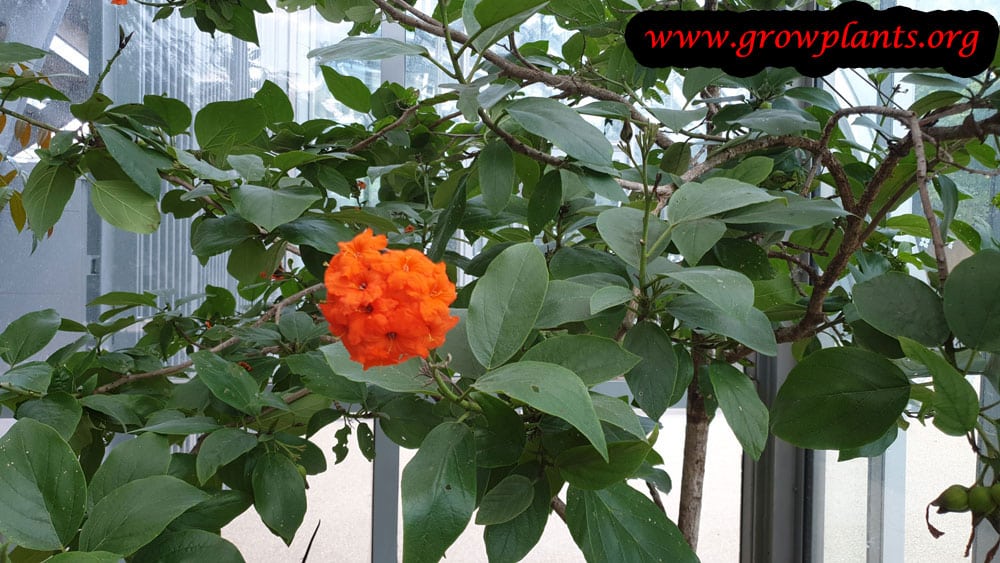
- Growth Habit & Form: Rounded, densely branched evergreen shrub or small flowering tree.
- Lifespan & Maturity: Moderate to fast-growing, flowering over a long season once established.
Anatomy & Physical Features
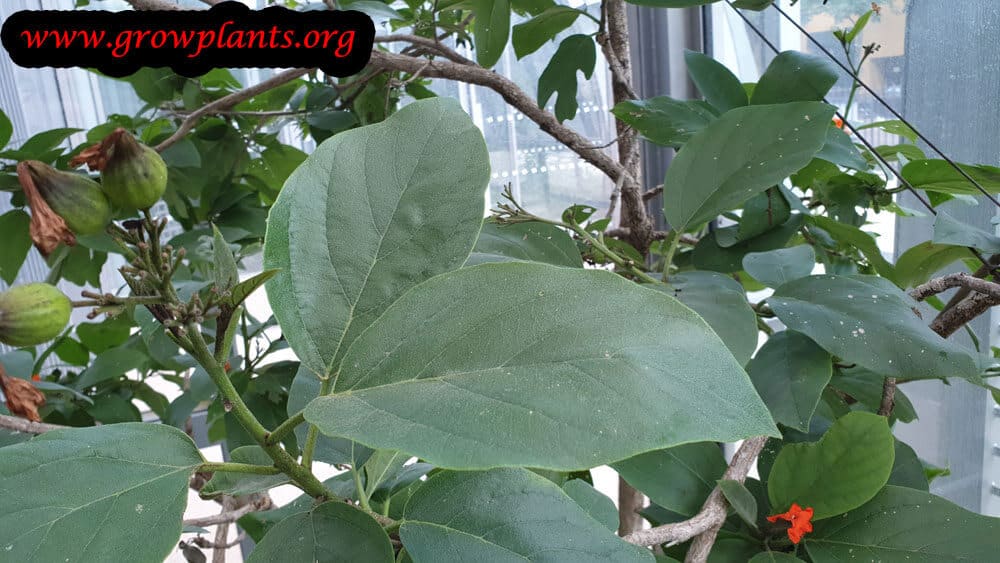
- Leaves & Foliage: Green, glossy oval leaves with a rough, sandpapery surface.
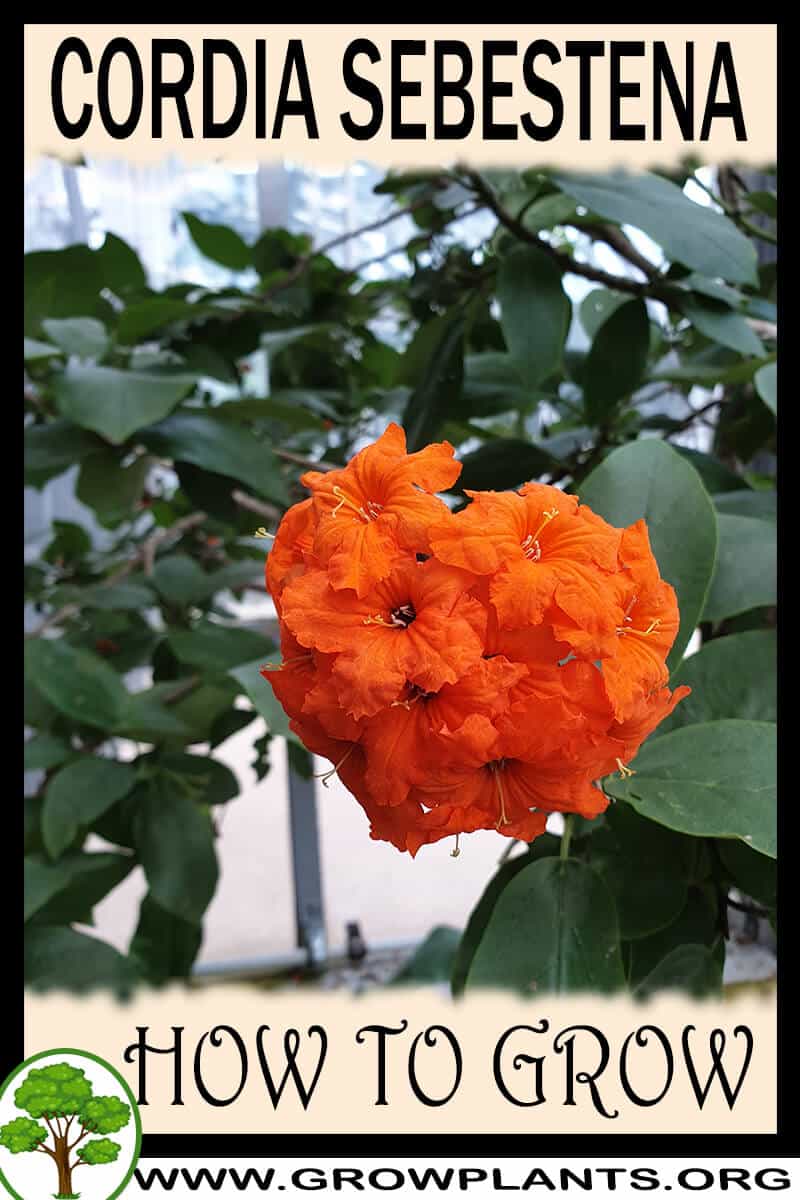
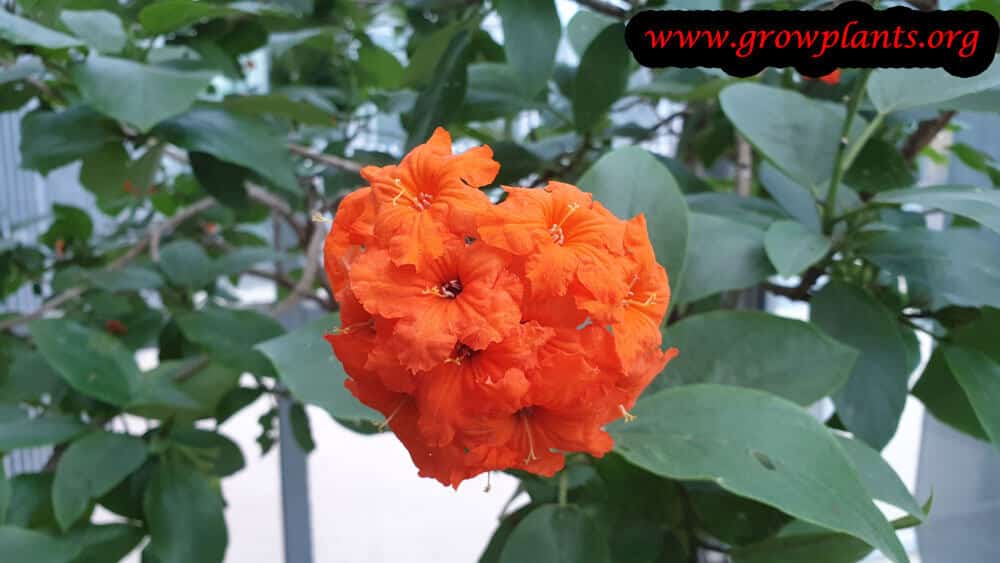
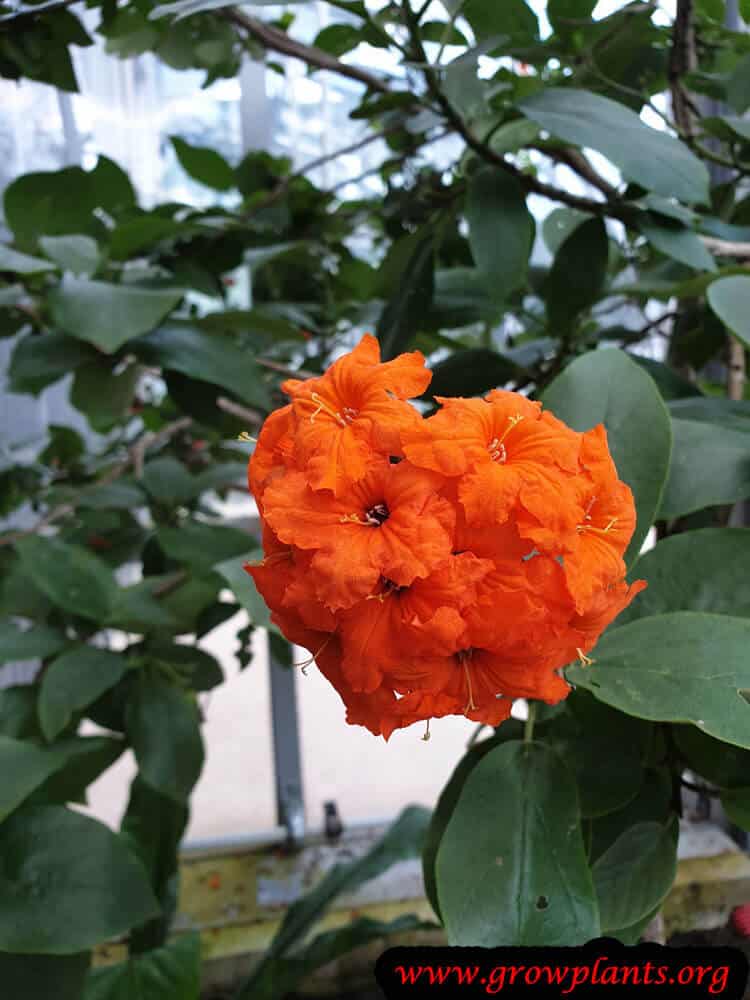
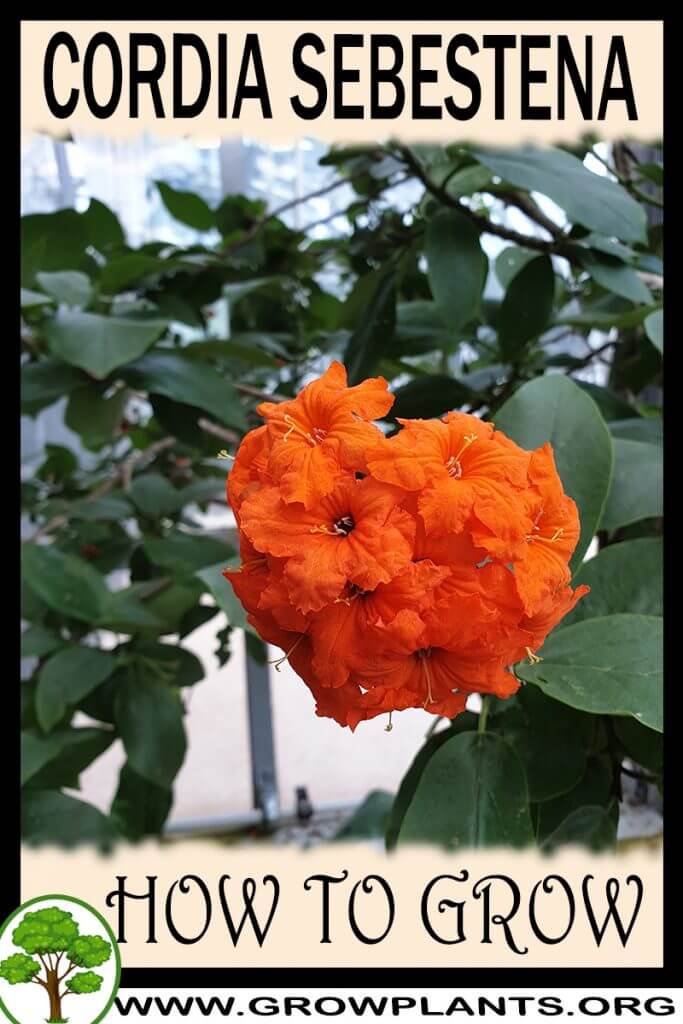
- Flower Characteristics: Showy six-petalled flowers in red to orange, borne in clusters.
Primary Uses & Landscape Value
- Functional & Ornamental Roles: Ornamental flowering shrub or small street/patio tree, valued in warm coastal gardens for its salt tolerance.
Care Guide: Planting, Soil & Watering
Overview: A tropical flowering shrub or tree for warm climates. It wants rich, moist, well-drained soil in sun to part shade, with regular watering.
Quick Care Requirements
| Requirement | Ideal Condition |
|---|---|
| Planting Season | In the warm season – spring through autumn (frost-free zone 10+) |
| Growth Rate | Moderate to Fast |
| Soil Type | Rich, moist, well-draining |
| Water Need | Moderate to High |
Planting & Establishment
- Best Planting Season: Plant from spring through autumn in frost-free climates.
- How to Plant:
- Hole Preparation: Dig a hole twice the width of the root ball and equally deep.
- Soil Amendments: Incorporate compost or other organic matter and apply mulch to enrich and retain moisture.
- Planting Depth: Set the root collar level with the soil and do not bury the trunk.
- Growth Speed & Expectations: Fast to moderate under warm, well-watered conditions.
Soil, Watering & Drainage Care
- Soil Mix & Drainage Needs: Fertile, moisture-retentive yet well-drained soil; it is best grown in the ground rather than long-term in a container.
- Watering Schedule & Technique:
- Young / Newly Planted: Water regularly to keep the soil moist while it establishes.
- Established: Water moderately to generously, deeply and on a regular schedule.
- Seasonal Adjustments: Water more in hot, dry weather and reduce in cooler months.
Climate, Light & Hardiness
Cordia sebestena, the Geiger tree, is a true tropical shrub-to-tree that thrives in full sun in hot, frost-free coastal and inland tropical gardens. It is prized in warm coastal landscapes for its resilience to wind and salt exposure, but it has essentially no cold hardiness and is reliably grown outdoors only in USDA zone 10 and above.
Quick Climate Specifications
| Climate Zones | Tropical, subtropical, mild Mediterranean |
|---|---|
| USDA Hardiness Zones | 10+ |
| Light Conditions | Full sun to half shade |
| Frost Tolerance | None to very low |
| Wind Tolerance | High |
| Salt / Coastal Tolerance | High |
Sunlight & Light Exposure
Optimal Light Setup
Full sun brings out its best growth rate and flowering; half shade is tolerated but is not the preferred setting for this naturally open, sun-loving tree.
Direct Sun Requirement
Needs strong, direct light for most of the day to grow and flower well – this is not a shade tree.
Best Exposure / Orientation
An open, unobstructed, sun-facing site is ideal; it is commonly planted as a stand-alone specimen or street/coastal tree for exactly this reason.
Temperature Extremes & Hardiness
USDA Hardiness & Regional Limits
Reliable outdoor growth is limited to zone 10 and warmer, truly frost-free climates; it is not suited to regions with regular winter freezes.
Cold Damage & Winter Protection
As a genuine tropical, it has little buffer against cold – any near-freezing exposure risks leaf and twig damage, and a hard freeze can kill the plant outright, particularly while young.
Frost Sensitivity
High – essentially no frost tolerance.
Extreme Heat Tolerance
Excellent – it is very much a hot-climate tree, thriving in the full tropical and subtropical sun and heat it is native to.
Wind, Humidity & Microclimate
Wind Tolerance
High – the Geiger tree is a well-known coastal landscape choice specifically for its resilience to strong, salt-laden onshore winds.
Coastal / Salt Tolerance
High – it is a classic beachfront and coastal-landscape species, tolerating salt spray considerably better than most flowering trees.
Microclimate Recommendations
Well suited to open, exposed coastal sites; the main limitation to watch for is cold rather than wind, salt, or heat.
Growing in Pots, Balconies & Indoors
The geiger tree is a warm-climate flowering tree (a shrub at 3-5 m / 9-15 ft, a tree at 4-7 m / 12-23 ft) grown for its bright orange flowers. There is no houseplant record for it, and the grower marks long-term container growing as not suitable – it really wants to be planted in the ground in a frost-free climate, in full sun to part shade.
You can keep a young plant in a large pot for a while, but it is not a lasting container or indoor subject and will need planting out to thrive.
Quick Details
- Container Size: Only a large pot for a young plant, and only temporarily; it is best planted in the ground.
- Indoor Suitability: Not an indoor plant – a sun-loving tree that outgrows containers.
- Best Spot: Full sun to half shade, outdoors in a warm, frost-free climate.
- Soil & Drainage: Rich, free-draining soil; it dislikes cold, wet roots.
- Watering in Pots: While young in a pot, water regularly – average to generous – but never waterlogged.
Indoors & On the Windowsill
- Not for indoors: There is no houseplant record for it, and as a sun-loving flowering tree it is unsuited to indoor life.
On a Balcony or Patio
- Only while young: A young plant can spend a season or two in a large pot on a sunny, sheltered terrace, but it will soon need planting out; the grower does not recommend it for long-term containers.
- Warmth: It is frost-tender, so in cool climates it can only be a temporary patio plant that must be planted out or protected in a warm region.
Choosing the Pot, Soil & Long-Term Care
- Pot & drainage: If you must pot a young plant, use the largest, most stable container you can, with strong drainage holes and no standing-water saucer.
- Potting mix: A light, aerated, organic-rich mix – potting soil, or peat/coir with perlite, enriched with a little humus or compost.
- Plan to plant out: Because it outgrows pots, plan to move it into the ground in a warm, frost-free spot rather than trying to keep it potted long-term.
Fertilizing & Feeding
A moderate feeder once established: nitrogen-forward feeding supports the spring growth flush, balanced feeding carries the plant through its showy bloom, and feeding is held while growth is slow.
Quick Fertilizing Specs
| Feeding Level | Moderate feeder once established |
|---|---|
| Main Nutrient Priority | Balanced feeding with adequate nitrogen for foliage and the showy flower clusters |
| Best Feeding Period | Warm-season active growth through the spring-summer bloom |
| Organic Options | Compost, humus, and organic matter worked into rich, mulched soil |
| Reduce/Stop Feeding | Ease off feeding wherever growth slows in cooler weather |
| Micronutrients | Usually supplied by a complete fertilizer; correct only a diagnosed deficiency |
| Soil pH | Tolerates a range of soil pH; performs best in rich, well-drained soil |
Feeding by Growth Stage
Establishment after planting
Let the root system settle into rich, mulched soil before it is asked to support new top growth.
| Nutrient direction | None – rely on organic matter and mulch while roots establish, not fertilizer. |
|---|---|
| Timing | The first weeks after planting. |
| Frequency | No feeding at this stage; watering and mulch matter far more than fertilizer now. |
| Fertilizer types | No feeding at this stage; organic matter and mulch support the roots instead. |
| Precautions | Do not fertilize a freshly planted tree or shrub; wait for clear signs of active new growth first. |
Spring flush of new growth
Fuel the flush of new stems and glossy foliage as the plant resumes active growth.
| Nutrient direction | A balanced, nitrogen-forward complete fertilizer supports the new flush of stems and leaves. |
|---|---|
| Timing | As new growth resumes in spring or at the start of the warm season. |
| Frequency | A light feeding as new growth begins, building toward the coming bloom season. |
| Fertilizer types | A balanced, nitrogen-forward complete fertilizer, Compost or organic matter worked into the root zone |
| Routine trace nutrients | iron |
| Precautions | Avoid heavy doses on young flushes; over-rich feeding produces soft, pest-prone growth. |
Spring to summer bloom
Sustain the showy red-to-orange flower clusters through the bloom period.
| Nutrient direction | A balanced fertilizer with steady nitrogen keeps flowering going through the warm season. |
|---|---|
| Timing | Through the spring-to-summer bloom season. |
| Frequency | Continue light, regular feeding through the active flowering months. |
| Fertilizer types | A balanced complete fertilizer, Compost or humus as a top-dressing |
| Routine trace nutrients | iron |
| Precautions | Keep feeding moderate; excess nitrogen can favor leafy growth over flowering. |
Cool-season slowdown
Let the plant coast through cooler weather without pushing tender new growth.
| Nutrient direction | None – growth is slow or paused, so supplemental feeding is not needed. |
|---|---|
| Timing | During the coolest part of the year, at the cooler edge of its hardiness range. |
| Frequency | No feeding during this rest period; resume only once active growth clearly returns. |
| Fertilizer types | No feeding at this stage; withhold fertilizer until active growth resumes. |
| Precautions | Withhold fertilizer now; feeding a plant that isn’t actively growing risks salt buildup and cold-tender new shoots. |
Nutrient Deficiency Signs & Corrections
Older leaves fade to pale green or yellow and overall growth and flowering slow.
| Possible causes | low available soil nitrogen, nitrogen leaching from heavy watering or rain, thin, low-organic-matter soil |
|---|---|
| Appears first on | older, lower leaves |
| What to check | recent feeding history, soil organic matter, overall vigor and leaf color |
| Possible correction | Apply a balanced, nitrogen-forward fertilizer and build soil organic matter. |
New leaves turn yellow between the veins while the veins themselves stay green.
| Possible causes | high soil pH limiting iron availability, poor drainage or waterlogged roots, low soil iron |
|---|---|
| Appears first on | newest growth at branch tips |
| What to check | soil pH and drainage, recent watering pattern, whether yellowing is interveinal or uniform |
| Possible correction | Where soil is markedly alkaline, work toward a more moderate pH and apply a chelated iron product per its label. |
Interveinal yellowing appears on older leaves while the veins stay green.
| Possible causes | low soil magnesium, high-potassium feeding competing with magnesium uptake, leaching in light, sandy soils |
|---|---|
| Appears first on | older, lower leaves |
| What to check | soil magnesium status, how potassium-heavy recent feeding has been, soil texture and leaching |
| Possible correction | Apply a labeled magnesium source such as Epsom salt or a dolomitic amendment and rebalance feeding. |
Pruning, Training & Seasonal Maintenance
Cordia sebestena (Geiger tree) is an evergreen shrub-to-small-tree grown for its showy orange-red flower clusters, and it needs only light, mostly cosmetic pruning to shape it and keep it tidy – heavy structural work is rarely required. It blooms on the current season’s new growth in spring and summer, so the recorded pruning window of autumn to winter is well timed: cutting before the spring flush shapes the plant without removing flowers that are already open or forming, and encourages the fresh growth that carries the next bloom.
Quick Pruning & Maintenance Specs
| Pruning Tolerance | Moderate – tolerates shaping and occasional hard cuts, but is not a heavily-pruned species |
| Primary Pruning Window | Autumn to winter, before the spring growth flush |
| Typical Frequency | Once a year, or as needed for shape/clearance |
| Main Objective | Maintain shape and clearance; encourage the next flowering flush |
| Young Plant Priority | Choose and train the framework – single-leader tree form or multi-stem shrub form |
| Mature Plant Priority | Remove crossing/rubbing growth; maintain canopy shape |
| Best Tool Type | Bypass secateurs and loppers, with a pruning saw for larger structural limbs |
| Avoid Heavy Pruning During | Spring to summer, while in active bloom |
Pruning by Plant Age & Size
Newly Established
Remove only damaged or crossing growth on a young plant; decide early whether it will be grown as a small multi-stemmed shrub (3–5 m) or trained up to a small tree (4–7 m), since the two forms are shaped differently from the start.
Young / Formative
For tree form, select and encourage a single leader and gradually remove lower competing branches to lift the canopy; for shrub form, leave multiple stems from the base and simply shape lightly. Either way, avoid heavy cuts while the plant is establishing.
Mature / Established
Remove crossing or rubbing branches, lightly shape the canopy, and control size if it is encroaching on a path, patio or structure.
Seasonal Pruning Schedule
Pre-Growth / Dormant (Autumn–Winter): objective is structural shaping and clearance before the spring flush. Remove dead, crossing or misplaced branches; avoid heavy heading cuts. Response is a strong flush of new growth in spring, which is also where the flowers form, so this timing supports rather than sacrifices bloom.
Flowering & Fruiting Wood
Flowers form on the current season’s new growth produced in the spring flush, not on old wood, so pruning in the dormant autumn/winter window – ahead of that flush – removes nothing that would have flowered and instead encourages more of the new growth the bloom depends on. Avoid heading cuts once spring growth and flower clusters are underway.
Structural Pruning & Training
Maintain whichever framework was chosen when young – a cleared single leader for tree form, or an open multi-stem base for shrub form – by removing crossing, rubbing or inward-growing branches and keeping the canopy from becoming congested. Height and spread can be controlled with restraint; this species does not need aggressive thinning to perform well.
Special Growth to Remove
No suckering habit is typically reported for this species; if the plant is cut back hard after storm or cold damage, remove weak or crossing basal resprouts if a clean tree form is wanted, or thin and retain the strongest if a fuller shrub form is preferred.
Tools
Bypass secateurs for small twiggy growth, loppers for medium branches, and a pruning saw for any larger structural limb; on a specimen trained up to full tree height, a pole pruner is useful for reaching upper canopy without a ladder.
Tool Hygiene & Disease Risk
Routine. This species is reported to have essentially no significant pest or disease pressure beyond occasional aphids, so ordinary clean, sharp tools are sufficient.
Cut Placement & Technique
Use thinning cuts back to a lateral branch or the trunk collar rather than blunt heading cuts, and cut just outside the branch collar on any larger limb to avoid flush cuts or long stubs. Stage the removal of large limbs (undercut first) to prevent bark tearing.
Heavy Pruning & Rejuvenation
The species tolerates a hard cutback if needed – for example after storm, frost or cold damage – and will resprout from remaining wood, but this is a recovery measure rather than a routine practice; avoid hard pruning purely for size control when lighter, more frequent shaping would do.
Post-Pruning Care
After opening up the canopy, watch newly exposed bark for sunscald in strong tropical/subtropical sun, and keep an eye out for aphids on the fresh flush of growth. Note that all parts of this plant are reported as toxic, so wear gloves and avoid contact with the sap when handling cut material.
Common Pruning Mistakes
- Topping or shearing the canopy into an unnatural shape instead of using selective thinning cuts, which spoils its naturally rounded form.
- Pruning hard during active spring/summer bloom and removing developing flower clusters.
- Handling cut stems and sap without gloves, given the plant’s reported toxicity.
When NOT to Prune
Avoid heavy pruning during the spring–summer bloom period, and avoid major cuts during periods of heat or drought stress.
Recommended Tools (by task)
- bypass_secateurs – small twiggy growth and light shaping.
- loppers – medium branches when thinning or controlling size.
- pruning_saw – larger structural limbs on a mature specimen.
- pole_pruner – reaching upper canopy on specimens trained to full tree height (4–7 m).
Pruning Troubleshooting
| Problem | Possible Cause | What to Check | Corrective Action |
| Sparse flowering | Pruned too late, removing the spring flush before it bloomed | Timing of the last prune relative to spring growth | Shift structural pruning to the autumn/winter dormant window |
| Dense, congested canopy | No selective thinning; crossing branches left in place | Crossing/rubbing growth and canopy density | Thin selectively at the dormant-season prune, removing crossing wood |
| Dieback or dead patches at cut ends | Flush cuts or torn bark from improper technique | Cut placement relative to the branch collar | Recut cleanly just outside the collar; avoid flush cuts and stubs |
Propagation Guide
Cordia sebestena grows well from seed, and the site notes that neither grafting nor vegetative propagation is required, making seed the standard way to start this species; germination can be slow and uneven because of the seed’s hard, corky coat, so scarifying or soaking seed before sowing can help. Semi-hardwood cuttings offer a workable alternative. Propagation is Moderate in difficulty, mainly because seed germination is often slow and irregular.
Quick Propagation Specs
| Best Propagation Method | Seed |
| Alternative Methods | Semi-hardwood stem cuttings |
| Propagation Difficulty | Moderate |
| Seed True-to-Type | Usually true-to-type |
| Vegetative True-to-Type | Yes |
| Best Propagation Season | Warm season, spring to summer |
Growing from Seed
Seed Handling & Viability
Seed comes from a hard, corky drupe; this plant is noted by the site as toxic, so handle seed and sap with care (gloves recommended) and avoid ingestion.
Dormancy & Pre-Sowing Treatment
The seed coat is hard and corky, which can make germination slow and irregular; scarifying (nicking the coat) or soaking the seed before sowing may improve and speed germination.
Sowing Season
Warm season, spring to summer.
Germination Conditions
Warm temperatures and a moist, well-drained mix.
Germination Time
Can be slow and uneven; allow anywhere from several weeks to a few months.
Stem Cuttings
Cutting Type
Semi-hardwood cuttings.
Best Timing
Warm season, spring to summer.
Rooting Setup
Warm, humid conditions with a free-draining rooting mix.
Rooting Hormone
May improve rooting consistency; not strictly required.
Rooting Time
Typically several weeks under warm, humid conditions.
Bloom & Flower Guide
Quick Details
- Bloom Season: Spring into summer (and on and off through the warm year in the tropics)
- Flower Appearance: Showy red to orange flowers with six crinkled petals, borne in clusters at the branch tips
- Edibility: Ornamental only — grown for its flowers, not for eating
Detailed Blooming Overview
The Geiger tree is grown for exactly this: clusters of vivid red-orange, crepe-textured flowers glowing against glossy dark leaves. The bloom is generous and long, carried at the branch tips where it shows off well, and it is a reliable magnet for butterflies and hummingbirds. In warm, frost-free settings it flowers over an extended season.
Flower Characteristics
- Red to orange, showy and crinkled, with six petals.
- Borne in clusters at the ends of the branches.
- Vivid against the glossy green foliage.
Bloom Care & Thinning
- Sun and warmth: full sun in a frost-free spot gives the most generous, longest flowering.
- Low-fuss bloom: little is needed beyond keeping the tree healthy; tidy spent clusters for looks if you wish.
Pests, Diseases & Troubleshooting
Overview: Cordia sebestena (the geiger tree) is a tough, salt- and drought-tolerant tropical flowering tree that is generally low-maintenance, with one signature pest: the geiger beetle (a tortoise beetle whose adults and larvae chew the foliage). Beyond that it gets scale, mealybugs, aphids and occasional thrips, plus sooty mold from their honeydew and root rot only in poorly drained soil. Sun, warmth and good drainage keep it healthy.
Quick Troubleshooting Overview
| Issue / Pest | Main Symptom | Primary Solution |
|---|---|---|
| Geiger beetle | Ragged chewed and skeletonized leaves | Hand-pick adults/larvae, Bt/spinosad if severe |
| Scale | Waxy bumps on stems/leaves; sooty mold | Prune, horticultural oil |
| Mealybugs | Cottony tufts in axils; honeydew | Alcohol swab, horticultural oil |
| Aphids | Sticky, curled new shoots | Water jet, insecticidal soap |
| Thrips | Silvery scarred, distorted new leaves/flowers | Blue sticky traps, insecticidal soap |
| Root rot | Wilt and dieback in wet soil | Improve drainage, water less |
Common Pests & Management
- Geiger beetle (Physonota alutacea / Eurypepla calochroma) — the signature pest:
- Symptoms: This tortoise beetle is the geiger tree’s classic pest: yellow-green adults and spiny larvae chew and skeletonize the rough leaves, sometimes defoliating branches; larvae often carry a shield of debris and cluster on leaf undersides.
- Prevention & Control: Hand-pick adults and larvae and knock clusters into soapy water; healthy trees regrow readily, so tolerate light feeding. For heavy outbreaks use Bacillus thuringiensis subsp. tenebrionis or spinosad, and encourage predatory bugs and birds.
- Scale insects (soft & armored scales):
- Symptoms: Immobile brown, tan or waxy bumps on stems and leaf veins; soft scales produce honeydew and sooty mold, weakening branches when heavy.
- Prevention & Control: Prune out encrusted twigs, smother crawlers with horticultural oil, and repeat; conserve parasitic wasps and lady beetles.
- Mealybugs (Planococcus/Pseudococcus spp.):
- Symptoms: Cottony white tufts in leaf axils and branch joints, with honeydew and sooty mold; worst on stressed or sheltered trees.
- Prevention & Control: Dab colonies with alcohol and treat with horticultural oil or insecticidal soap; improve airflow and inspect nursery stock.
- Aphids (Aphis spp.):
- Symptoms: Clusters on soft new shoots and flower buds, causing curling, yellowing and honeydew.
- Prevention & Control: Hose off and rely on beneficials; insecticidal soap handles heavy colonies, and lean feeding limits soft growth.
- Thrips (Frankliniella/Thrips spp.):
- Symptoms: Silvery scarring, stippling and distortion of new leaves and flowers, with tiny black frass specks; adults are slender and fast-moving.
- Prevention & Control: Use blue sticky traps to monitor, encourage predatory mites and minute pirate bugs, and spray insecticidal soap, neem or spinosad for heavy infestations.
Diseases & Fungal Issues
- Root rot (Phytophthora/Pythium spp.):
- Symptoms: Wilting, yellowing and dieback despite moist soil, with dark decayed roots, only in poorly drained or overwatered ground.
- Treatment & Management: Plant in well-drained soil, water established trees deeply but infrequently, and avoid waterlogging; prevention through drainage is the main defense.
- Fungal leaf spot & anthracnose (Cercospora/Colletotrichum):
- Symptoms: Brown or dark spots and blotches on leaves in warm, wet, crowded conditions; usually cosmetic on a vigorous tree.
- Treatment & Management: Improve airflow, avoid overhead wetting, and remove spotted leaves and debris; copper fungicide is rarely necessary.
- Sooty mold (secondary):
- Symptoms: Black film on leaves beneath scale, mealybug or aphid honeydew.
- Treatment & Management: Control the honeydew-producing insects and rinse off the film; it clears once the pests are gone.
Growing Difficulties & Abiotic Problems
- Cold / frost damage
- Cause & Symptoms: As a tropical tree, geiger drops leaves or suffers dieback below about frost temperatures.
- Correction Strategy: Grow only in warm, frost-free areas or a sheltered microclimate; it usually resprouts from wood after light cold.
- Root rot from overwatering
- Cause & Symptoms: Wet, heavy soil causes wilt and dieback on this drought-tolerant tree.
- Correction Strategy: Water deeply but infrequently once established and ensure sharp drainage.
- Chlorosis in alkaline soil
- Cause & Symptoms: Interveinal yellowing of leaves in high-pH or nutrient-poor soils.
- Correction Strategy: Mulch, feed lightly, and correct with chelated iron/manganese where soils are alkaline.
- Salt & wind tolerance (a strength)
- Cause & Symptoms: It shrugs off coastal salt and wind that damage other trees.
- Correction Strategy: Use its toughness — site it in exposed coastal spots where few flowering trees thrive; no correction needed.
What Helps – Products & Tools
Culture and hand control lead: sun, good drainage, and picking off geiger beetles keep the tree healthy. Insecticidal soap, neem and horticultural oil handle scale, mealybugs, aphids and thrips; blue sticky traps monitor thrips, and Bacillus thuringiensis (Bt, the beetle strain) or spinosad tackle heavy geiger-beetle outbreaks. A copper fungicide covers the rare leaf spot, and good drainage prevents root rot. Follow the label and protect pollinators.