Plant Profile & Key Characteristics
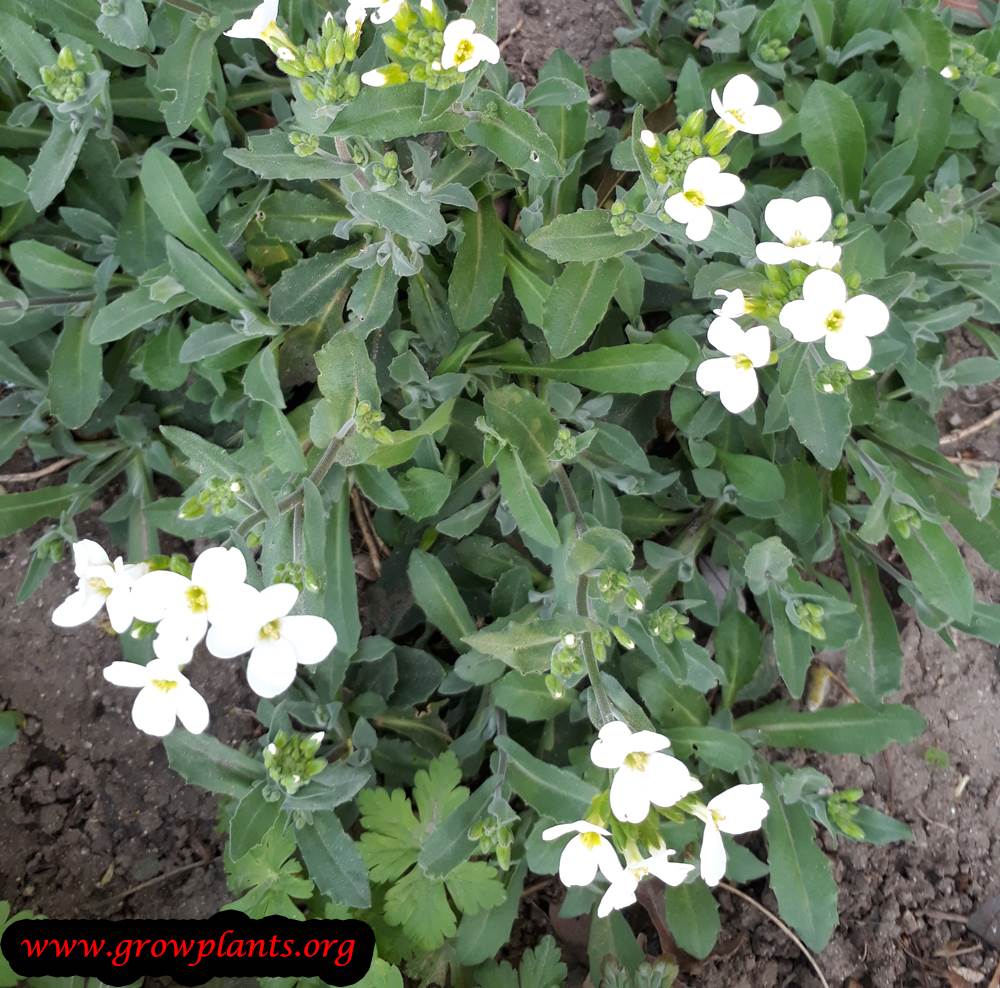
Overview: Arabis caucasica (rock cress) is a low, mat-forming evergreen perennial 20-50 cm across, with grey-green rosettes and masses of small white or pink cross-shaped flowers. It is grown as an ornamental groundcover.
Quick Specifications
| Specification | Attribute |
|---|---|
| Plant Type / Life Cycle | Perennial (can be grown as an annual) |
| Foliage Type | Evergreen (semi-evergreen) |
| Mature Size | 20-50 cm (8-20 in) |
| Growth Rate | Fast to Moderate |
| Hardiness | USDA zones 3-10a |
Growth Form & Structure
- Height & Spread: Low, spreading 20-50 cm (8-20 in); grows well in pots and rock crevices.
- Growth Habit & Form: Low, spreading, mat-forming groundcover.
- Lifespan & Maturity: Perennial that establishes quickly to form a dense mat.
Anatomy & Physical Features
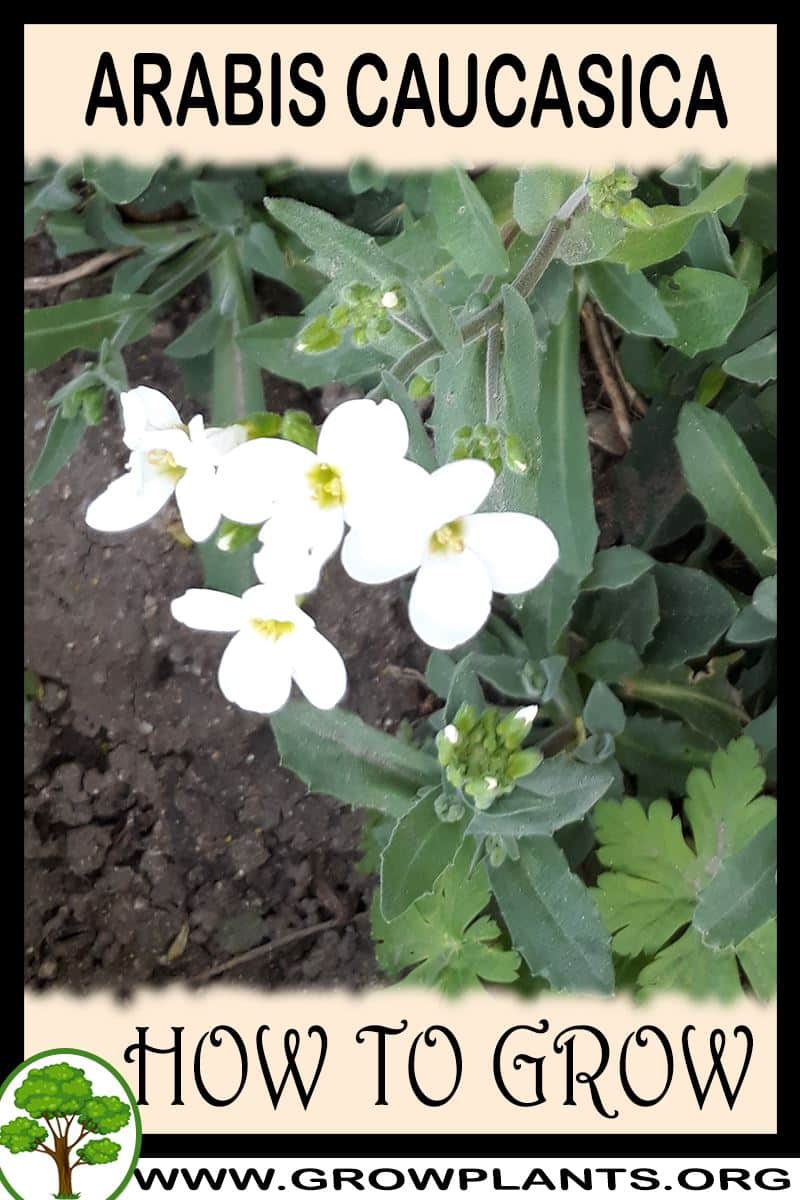
- Leaves & Foliage: Green, spatula-shaped leaves in low rosettes.
- Flower Characteristics: Masses of small four-petalled, cross-shaped flowers in white or pink with a yellow centre (see the Bloom accordion).
Primary Uses & Landscape Value
- Functional & Ornamental Roles: Groundcover for rockeries, walls, slopes and edging; also grown in containers.
Care Guide: Planting, Soil & Watering
Overview: Rock cress is a hardy, cool-climate alpine ground cover that needs gritty, sharply drained soil in full sun. It takes low to moderate water and dislikes wet, poorly drained ground, especially in winter.
Quick Care Requirements
| Requirement | Ideal Condition |
|---|---|
| Planting Season | Spring through autumn |
| Growth Rate | Moderate to Fast |
| Soil Type | Gritty, sharply drained |
| Water Need | Low to Moderate (sharp drainage essential) |
Planting & Establishment
- Best Planting Season: Plant from spring through autumn during cool weather.
- How to Plant:
- Hole Preparation: Dig a hole slightly wider than the root ball on a well-drained or raised site.
- Soil Amendments: Mix in coarse grit or sand plus a little compost to guarantee sharp drainage.
- Planting Depth: Set the crown at the soil surface and keep it clear of trapped moisture.
- Growth Speed & Expectations: Moderate to fast, spreading into a low, spring-flowering mat.
Soil, Watering & Drainage Care
- Soil Mix & Drainage Needs: Gritty, sharply drained soil is essential; wet winter soil causes crown and root rot.
- Watering Schedule & Technique:
- Young / Newly Planted: Water to establish, keeping the soil lightly moist without saturating it.
- Established: Moderate water – let the surface dry between waterings, as it tolerates dry spells better than wet feet.
- Seasonal Adjustments: Reduce water sharply in winter to prevent rot; a little more in summer heat.
Climate, Light & Hardiness
Arabis caucasica (rock cress) is a very cold-hardy, low-growing groundcover for temperate, mediterranean, and subtropical climates, needing full sun and cool weather to perform at its best. It is one of the hardiest plants in this set, reliable outdoors in USDA zone 3–10a.
Quick Climate Specifications
| Climate Zones | Temperate, mediterranean, subtropical |
|---|---|
| USDA Hardiness Zones | 3–10a |
| Frost Tolerance | High |
| Light Conditions | Full Sun |
Sunlight & Light Exposure
Optimal Light Setup
Full sun is needed for compact, dense growth and abundant spring flowering.
Direct Sun Requirement
Needs most of the day in direct sun.
Best Exposure / Orientation
An open, sunny rock garden, wall, or border edge suits its low, spreading habit (20–50 cm) and cool-climate preference.
Temperature Extremes & Hardiness
USDA Hardiness & Regional Limits
Exceptionally cold-hardy, reliable outdoors from USDA zone 3 through 10a – a true alpine/rock-garden plant that explicitly prefers cool weather over heat.
Cold Damage & Winter Protection
No winter protection is needed within its very broad hardy range; it is evergreen to semi-evergreen and shrugs off ordinary winter cold.
Frost Sensitivity
Highly frost-tolerant – this is one of its defining strengths.
Extreme Heat Tolerance
Limited – the source specifically calls out a preference for cool weather; performance can decline in the hottest, most humid part of zone 9–10a.
Wind, Humidity & Microclimate
Wind Tolerance
Good – its low, mat-forming habit is naturally wind-resistant, useful on exposed banks or walls.
Rainfall & Seasonal Moisture
Prefers average-to-generous moisture with good drainage; it does not tolerate being constantly waterlogged.
Microclimate Recommendations
A cool, sunny, well-drained spot – rock gardens, walls, and slopes – suits it well across its very broad hardiness range; in the warmer end of its range, some relief from the most intense summer heat helps.
Growing in Pots, Balconies & Indoors
Arabis caucasica (rock cress) is a low alpine mat the grower does not treat as a houseplant. It wants full sun, cool air and sharp drainage – ideal for a sunny trough, rock pot or the edge of a container, where it spills into a sheet of small flowers, but it dislikes a warm indoor room.
Quick Details
- Container Size: A shallow pot, trough or the rim of a larger container
- Indoor Suitability: Not a houseplant – a sun-loving outdoor container plant
- Best Spot: Full sun
- Soil & Drainage: Free-draining mix with plenty of holes
- Watering in Pots: Average – once established it takes some dryness; never let it sit wet
Indoors & On the Windowsill
- Houseplant limits: Not an indoor plant – it needs strong sun to grow and flower, more than a room can offer.
- Not for a warm room: It needs cool, airy, sunny conditions; a heated interior makes it soft and short-lived.
On a Balcony or Patio
- Light, wind & heat: Give it the brightest, sunniest spot; walls and paving throw heat back so pots dry quickly – check moisture daily in warm spells, and stake or shelter anything tall or exposed from wind. A drip irrigation kit with a timer can take over that watering check automatically.
- Practicalities: Perfect for a sunny trough or the front edge of a mixed pot, spilling over the rim.
Choosing the Pot, Soil & Long-Term Care
- Pot & drainage: Shallow and very free-draining – add grit; standing water rots the crown.
- Potting mix: A gritty, free-draining alpine mix – loam and grit rather than rich compost.
- Feeding: Feed sparingly; too much makes lax growth.
- Repotting: Divide and replant when the mat overgrows the pot.
Fertilizing & Feeding
A moderate feeder: balanced feeding supports the spring growth flush and bloom on this evergreen groundcover, with no feeding needed once summer heat slows it down.
Quick Fertilizing Specs
| Feeding Level | Moderate feeder |
|---|---|
| Main Nutrient Priority | Balanced feeding with adequate nitrogen; extra phosphorus is not needed to drive bloom |
| Best Feeding Period | Early spring growth through the spring-to-summer bloom period |
| Organic Options | Light compost worked into well-drained soil |
| Micronutrients | Usually adequate in well-drained soil with routine balanced feeding; correct specific issues only when diagnosed |
| Soil pH | Tolerates a range of well-drained soils; avoid soil that stays wet |
| Reduce/Stop Feeding | Taper off as bloom finishes and hold off through the hottest stretch of summer |
Feeding by Growth Stage
Spring growth flush
Support fresh growth on this evergreen groundcover as cool-season growth resumes in spring.
| Nutrient direction | A balanced complete fertilizer to support steady growth. |
|---|---|
| Timing | Early spring as new growth resumes, ahead of bloom. |
| Frequency | A light feeding as spring growth begins. |
| Fertilizer types | A balanced complete garden fertilizer |
| Precautions | Keep soil from staying soggy; good drainage suits this cool-weather groundcover better than rich, wet soil. |
Spring-to-summer bloom
Support this groundcover’s flush of small flowers during its bloom period.
| Nutrient direction | Continue balanced feeding with adequate nitrogen; extra phosphorus is not needed to drive flowering. |
|---|---|
| Timing | During the spring-to-summer bloom period. |
| Frequency | Light, steady feeding through bloom, tapering off as flowering finishes. |
| Fertilizer types | A balanced complete fertilizer |
| Precautions | Shear back after bloom to keep the mat tidy, and avoid feeding right before a hard shearing. |
Summer heat slowdown
Match feeding to this cool-weather plant’s naturally slower pace once summer heat sets in.
| Nutrient direction | None – withhold fertilizer during summer heat stress. |
|---|---|
| Timing | The hottest stretch of summer, once bloom has finished. |
| Frequency | No feeding at this stage. |
| Fertilizer types | No feeding at this stage – resume light feeding once cooler weather returns |
| Precautions | Do not fertilize a heat-stressed plant; feeding now adds stress rather than helping recovery. |
Nutrient Deficiency Signs & Corrections
The center of the mat thins, blackens, or rots, especially in humid or poorly drained spots.
| Possible causes | waterlogged or poorly drained soil, overwatering, especially in heavy soil, fungal pathogens favored by damp, crowded growth |
|---|---|
| Appears first on | the center or crown of the mat |
| What to check | soil drainage, watering frequency, density and crowding of growth |
| Possible correction | Improve drainage, thin crowded growth, and avoid feeding until the plant recovers. |
Overall pale, slow growth and a thin, sparse-looking mat.
| Possible causes | insufficient nitrogen in poor, sandy soil, root competition from nearby plants, waterlogged soil limiting root uptake |
|---|---|
| Appears first on | the whole mat, older growth first |
| What to check | soil richness, competition from nearby plantings, drainage |
| Possible correction | Apply a balanced fertilizer during the spring growth flush. |
Sparse or absent flowering despite healthy-looking foliage.
| Possible causes | insufficient sun for this full-sun plant, excess nitrogen favoring foliage over flowers, an old, overcrowded mat that hasn’t been divided or sheared |
|---|---|
| Appears first on | flower count across the mat |
| What to check | hours of direct sun, recent feeding balance, age and density of the planting |
| Possible correction | Move or thin to a fuller-sun spot, rebalance feeding, and divide overcrowded mats after bloom. |
Pruning, Training & Seasonal Maintenance
Arabis caucasica is a mat-forming evergreen perennial grown for rock gardens, edging and groundcover, valued for its compact, floriferous mat rather than any woody framework, so pruning is essentially shearing for shape and density. It tolerates being cut back hard and responds with dense, low regrowth, making a shear right after the main spring bloom the single most valuable cut of the year – it tidies the planting’s outline and encourages a compact, later flush of foliage.
Quick Pruning & Maintenance Specs
| Pruning Tolerance | High |
| Primary Pruning Window | Right after spring flowering, for the main shaping shear |
| Secondary Maintenance Window | Light tidy-ups any time through the year |
| Typical Frequency | One hard shear post-bloom, plus occasional light trims |
| Main Objective | Keep the mat compact and dense, control shape and spread |
| Young Plant Priority | Pinch to encourage low branching before flowering starts |
| Mature Plant Priority | Shear the whole mat back by up to a third after bloom |
| Best Tool Type | Precision snips or light hand shears (fine, wiry stems) |
| Avoid Heavy Pruning During | Peak spring bloom, and summer heat stress |
Pruning by Plant Age & Size
Newly Established
Pinch tips lightly to build a bushy base; hold off on any hard shearing in the first season.
Young / Formative
No structural training is needed for this spreading mat habit; light pinching is enough to build density.
Mature / Established
Give an annual post-bloom shear to renew density and keep the mat in bounds within its rock-garden or edging space.
Seasonal Pruning Schedule
Post-Flowering (Spring)
- Objective: renew compactness, control spread, encourage a tidy outline and possible light rebloom
- Remove: spent flower stems and up to a third of the mat’s outer growth
- Do not remove: below the current season’s green foliage line – avoid cutting into bare old stems, which regrow poorly
- Expected response: dense flush of new low growth
- Flowering impact: minimal – next spring’s bloom comes from this new growth
Ongoing Sanitary (all year)
- Objective: tidiness and edge shape
- Remove: dead or straggly stems
- Do not remove: actively flowering stems in spring
Structural Pruning & Training
Because this species is grown for a uniform mat or mound shape, light all-over shearing is the main structural tool; avoid letting any one section run ahead of the rest, which creates an uneven, leggy patch.
Special Growth to Remove
- Leggy, woody-based stems that have stopped flowering well, cut back hard to encourage fresh basal shoots
- Dead patches within the mat
Container & Small-Space Pruning
In troughs or rock-garden containers, shear lighter and more frequently to keep the mat in scale. Watch for the center of the mat thinning with age, and refresh it with cuttings or layered sections rather than expecting old growth to rejuvenate on its own.
Tools
- Precision snips for spot-shaping and deadheading
- Light hand shears for shearing the whole mat at once, given its small, wiry stems – true hedge shears are unnecessary at this scale
Tool Hygiene & Disease Risk
Routine. Aphids and the caterpillars of Pieris brassicae (cabbage white, since Arabis is a crucifer) are the main pest pressures recorded, and neither is spread by pruning tools.
Cut Placement & Technique
Shear just above the current season’s green growth; avoid cutting into bare, older stem sections, which resprout poorly.
Heavy Pruning & Rejuvenation
Tolerates a fairly hard cutback, up to about a third, right after bloom. Cutting harder into old bare wood is riskier and better spread over a couple of seasons if a planting has become very woody and gappy in the center.
Post-Pruning Care
Water normally after shearing; no extra feeding is needed beyond the plant’s normal light annual care.
Common Pruning Mistakes
- Shearing during peak spring bloom, sacrificing the flower display
- Cutting hard into old bare stems expecting quick regrowth
- Leaving the mat unclipped for years, leading to a woody, gappy center
When Not to Prune
Avoid shearing during the main spring flowering period, and avoid hard cutbacks during summer heat or drought stress.
Recommended Tools (by task)
- precision_snips – spot deadheading and shaping at any size
Propagation Guide
Arabis caucasica is most simply raised from seed, which comes true to type for the ordinary species, and vegetative propagation is not required, though division or cuttings are useful for keeping named or variegated cultivars identical to the parent. As a fast-spreading, mat-forming groundcover, this is an Easy plant to propagate by any of these methods.
Quick Propagation Specs
| Best Propagation Method | Seed |
| Alternative Methods | Division of rooted mat sections; softwood stem cuttings, especially for named cultivars |
| Propagation Difficulty | Easy |
| Seed True-to-Type | Usually true-to-type for the species; cultivar-dependent for named or variegated selections |
| Vegetative True-to-Type | Yes |
| Best Propagation Season | Spring, summer, or autumn, matching the plant’s own planting season |
| Seed Germination Time | Typically a few weeks under cool conditions |
| Cutting Rooting Time | Usually a few weeks |
| Germination Temperature | Cool, roughly 10–18°C (50–65°F), suiting this mountain-native rock-garden plant |
| Seed Sowing Depth | Surface-sow or barely cover, since the seed is fine |
Growing from Seed
Sowing Depth & Orientation
Scatter the fine seed on the surface of the growing medium and press in lightly rather than burying it deeply.
Germination Conditions
Cool temperatures and consistently moist soil suit germination best, in keeping with this plant’s preference for cooler weather.
Germination Time
Germination is usually complete within a few weeks.
Stem Cuttings
Cutting Type
Softwood tip cuttings.
Best Timing
After flowering, once new soft growth is available.
Rooting Setup
Root in a well-drained, gritty cutting mix kept lightly moist; this low, spreading plant roots readily.
Rooting Hormone
Not necessary, though it can speed rooting.
Rooting Time
Usually a few weeks.
Division, Offsets, Pups & Suckers
Because this plant spreads as a rooting mat, sections with their own roots can be lifted and separated in spring or autumn and replanted directly, re-establishing quickly with regular watering until settled.
Bloom & Flower Guide
Quick Details
- Bloom Season: Spring into early summer
- Flower Appearance: White, pink or purple four-petalled flowers in a cross shape with a yellow eye
- Edibility: Not grown for eating – an ornamental groundcover
Detailed Blooming Overview
Arabis caucasica (rock cress or Caucasian rockcress) is an evergreen, mat-forming perennial that carpets itself in flower early in the season. It thrives in temperate, Mediterranean and subtropical gardens across roughly zones 3-10a, and its early bloom is a valuable nectar source when little else is open.
Flower Characteristics
- Small four-petalled flowers arranged in a cross, typical of the cabbage family.
- White, pink or purple petals with a yellow center.
- Carried in loose sprays that smother the low cushion of grey-green foliage.
- Lightly fragrant and much visited by early bees and butterflies.
Bloom Care & Thinning
- After flowering: Shear the plant back lightly once the main flush fades to keep the mat dense and tidy and encourage fresh growth.
- Position: Full sun and sharp drainage give the most generous flowering.
- Pollination: Pollinated by bees and other early insects.
Pests, Diseases & Troubleshooting
Overview: Rock cress (Arabis caucasica) is a hardy alpine mat-former in the cabbage family, and it shares that family’s pests — flea beetles peppering the leaves, cabbage white caterpillars, mealy cabbage aphids and whiteflies — and diseases, chiefly white rust (Albugo candida), downy mildew and soil-borne club root. Its main non-living weakness is rotting out in wet, humid, heavy-soil conditions, since it wants sharp drainage and sun. A hard shear after flowering plus good drainage keep it dense and healthy.
Quick Troubleshooting Overview
| Issue / Pest | Main Symptom | Primary Solution |
|---|---|---|
| Flea beetles | Shot-hole peppering of leaves | Row cover, keep vigorous, soap/DE if heavy |
| Cabbage white caterpillars | Ragged holes, green caterpillars, droppings | Insect mesh, hand-pick, Bt if severe |
| Aphids | Curled rosettes, waxy grey colonies | Water jet, beneficials, soap if needed |
| White rust | White pustules on leaf undersides | Remove growth, rotation, copper fungicide |
| Club root | Wilting, swollen club-like root galls | Avoid infested soil, lime, drainage, rotation |
| Rot in wet | Centre rots out in humid/wet soil | Sharp drainage, full sun, shear after bloom |
Common Pests & Management
- Flea beetles (Phyllotreta spp.):
- Symptoms: Tiny dark beetles that jump when disturbed and pepper the leaves with countless small round ‘shot-holes’, worst on young plants in warm, dry spring weather.
- Prevention & Control: Keep plants vigorous, use floating row cover over young plants, and encourage beneficial ground beetles; a sticky trap or, for heavy attack, a light application of insecticidal soap or diatomaceous earth helps.
- Cabbage white caterpillars (Pieris brassicae / Pieris rapae):
- Symptoms: Velvety green or yellow-and-black caterpillars chewing ragged holes in the leaves, with dark green-black droppings; the white butterflies flutter over the plants laying eggs.
- Prevention & Control: Inspect leaf undersides and rub out egg clusters, hand-pick caterpillars, and cover with fine insect mesh to exclude the butterflies; Bacillus thuringiensis (Bt) gives selective control if numbers climb.
- Aphids (incl. mealy cabbage aphid) (Brevicoryne brassicae / Aphidoidea):
- Symptoms: Greyish, waxy-coated colonies tucked in the leaf rosettes and on flower stems, causing curling, distortion, honeydew and sooty mould.
- Prevention & Control: Hose off with water, encourage ladybirds, lacewings and hoverflies, and avoid over-feeding; insecticidal soap clears persistent colonies, spraying into the rosette.
- Whiteflies (Aleyrodidae):
- Symptoms: Tiny white insects rising in a cloud when the plant is disturbed, with honeydew and sooty mould on the leaves below.
- Prevention & Control: Use yellow sticky traps, encourage parasitoids, and hose undersides; insecticidal soap or oil controls heavy outbreaks.
Diseases & Fungal Issues
- White rust / white blister (Albugo candida):
- Symptoms: The classic brassica disease: shiny, raised white pustules on leaf undersides and swollen, distorted stems and flower parts; a real risk in this family.
- Treatment & Management: Remove and destroy affected growth at once, improve airflow and spacing, avoid overhead watering, and rotate away from other brassicas; copper fungicide protects under pressure.
- Downy mildew (Hyaloperonospora parasitica):
- Symptoms: Yellow blotches on the upper leaf with greyish-white downy growth beneath in cool, damp weather; young plants stunt and distort.
- Treatment & Management: Space for airflow, avoid overhead watering, remove infected leaves, and improve drainage; treatment is rarely needed if airflow is good.
- Club root (Plasmodiophora brassicae):
- Symptoms: Stunting, wilting in warm days and yellowing, with swollen, distorted, club-like galls on the roots; a persistent soil-borne brassica disease favoured by acid, wet soil.
- Treatment & Management: Do not plant into infested ground, improve drainage, and raise soil pH toward neutral with lime; rotate widely and never move contaminated soil, as the resting spores persist for years.
- Powdery mildew (Erysiphe cruciferarum):
- Symptoms: White powdery patches on leaves in crowded, dry-rooted plants, causing yellowing and early leaf loss.
- Treatment & Management: Give sun and airflow, keep roots from drying out, and remove affected growth; sulphur or potassium-bicarbonate spray checks it.
Growing Difficulties & Abiotic Problems
- Rot in wet, humid conditions:
- Cause & Symptoms: This alpine mat-former resents heat, humidity and wet soil, rotting out in the centre in muggy, poorly drained sites.
- Correction Strategy: Grow in gritty, sharply drained soil in full sun on a slope, wall or rockery, avoid overhead watering, and improve airflow around the cushion.
- Bare, woody centres after flowering:
- Cause & Symptoms: The mat becomes open, leggy and woody in the middle once the spring flowers fade.
- Correction Strategy: Shear the whole plant back hard immediately after flowering to keep it dense, tidy and long-lived.
- Poor performance in heat / heavy soil:
- Cause & Symptoms: In hot climates or clay soil it grows weakly, flowers poorly and is short-lived.
- Correction Strategy: Site in a cool, bright, well-drained spot, add grit to heavy soil, and treat as a cool-climate rockery plant.
What Helps — Products & Tools
Cultural measures dominate: sharp drainage, full sun, airflow and a hard post-flowering shear. Where pests warrant, suitable types are fine insect-exclusion mesh and Bacillus thuringiensis (Bt) for cabbage whites, insecticidal soap for aphids and whitefly, diatomaceous earth or soap for flea beetles, and copper fungicide for white rust; club root is managed by liming, drainage and rotation rather than any spray.