

Plant Profile & Key Characteristics
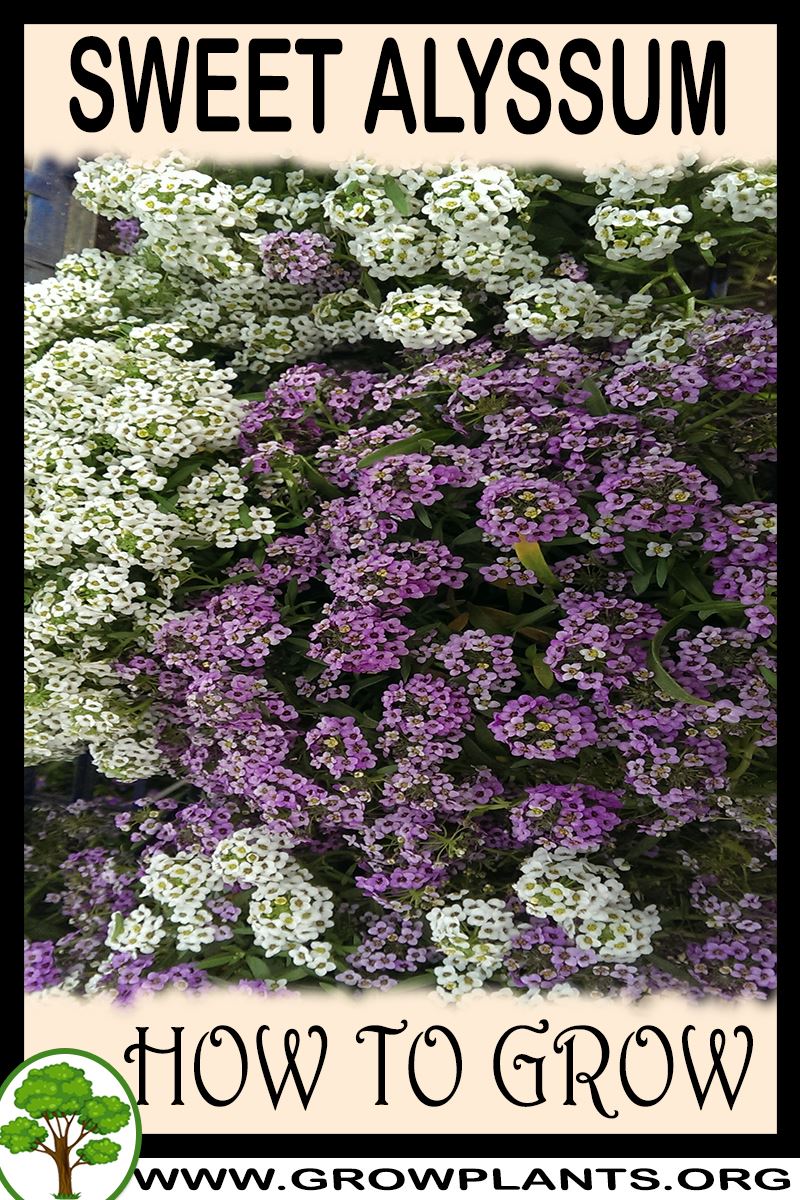
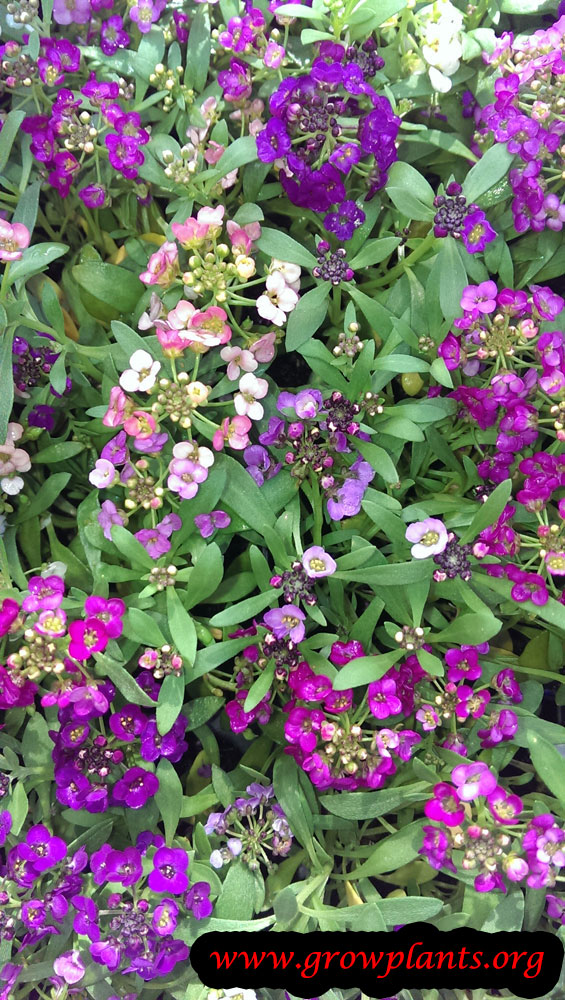
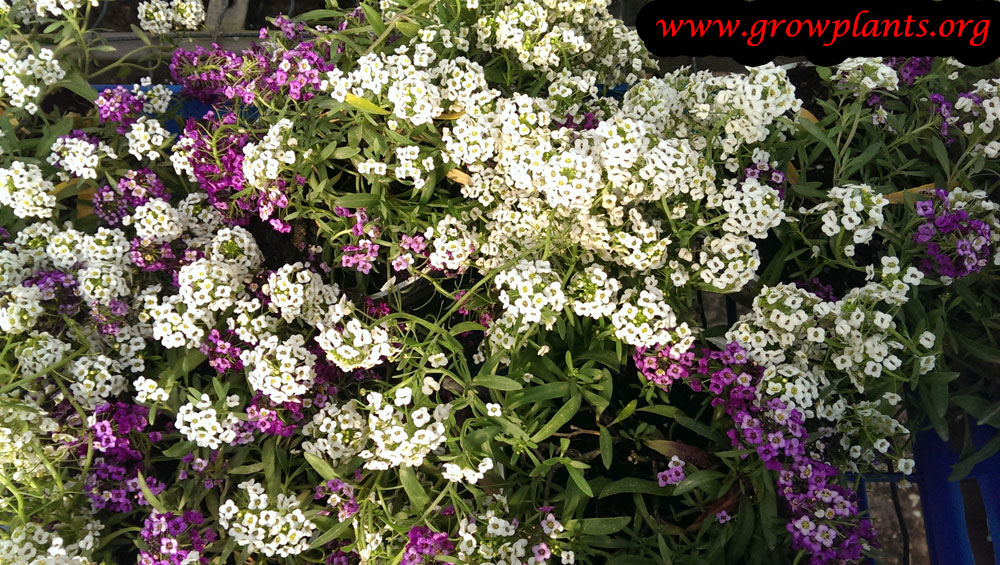
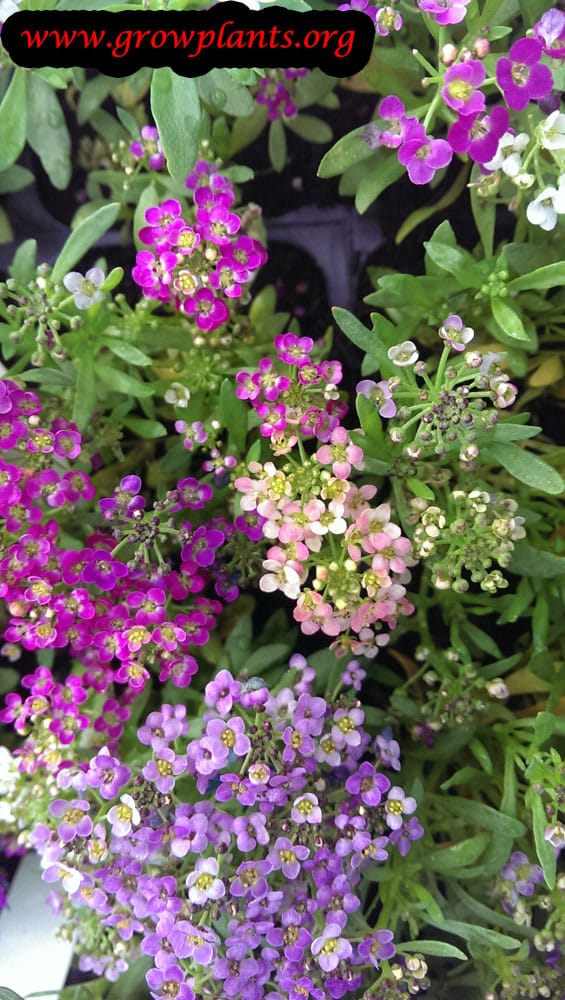
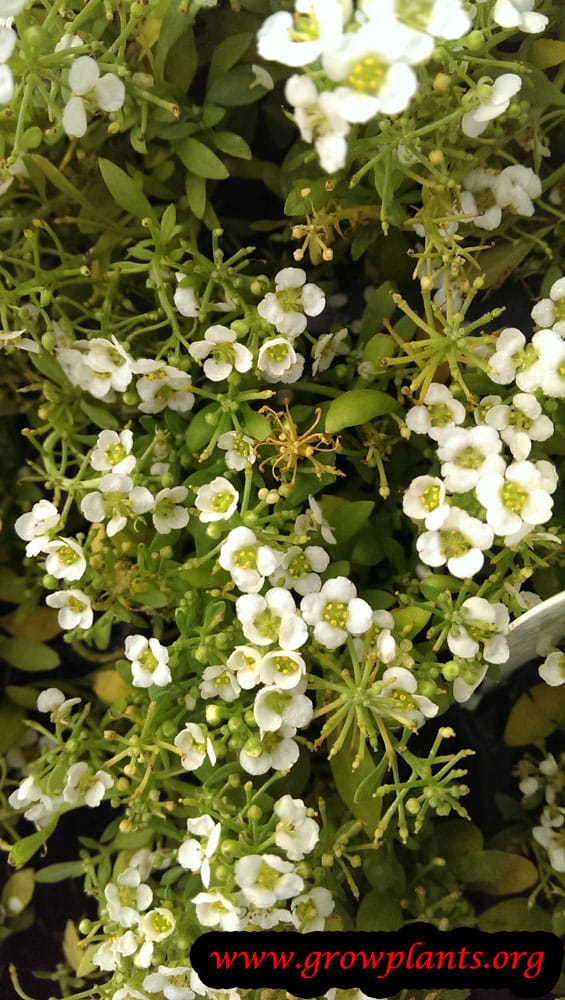
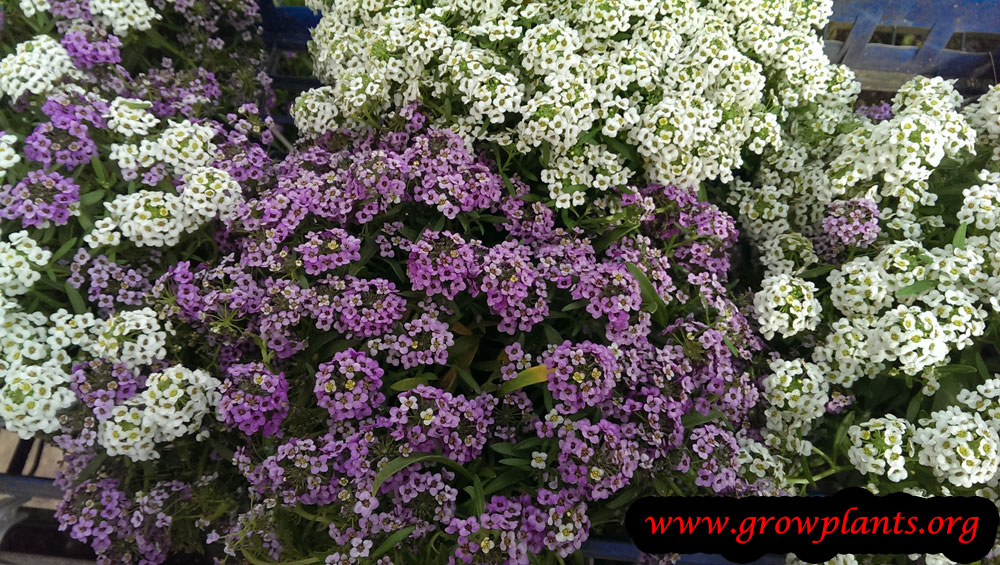
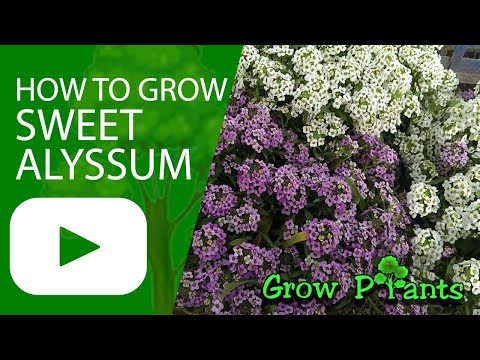
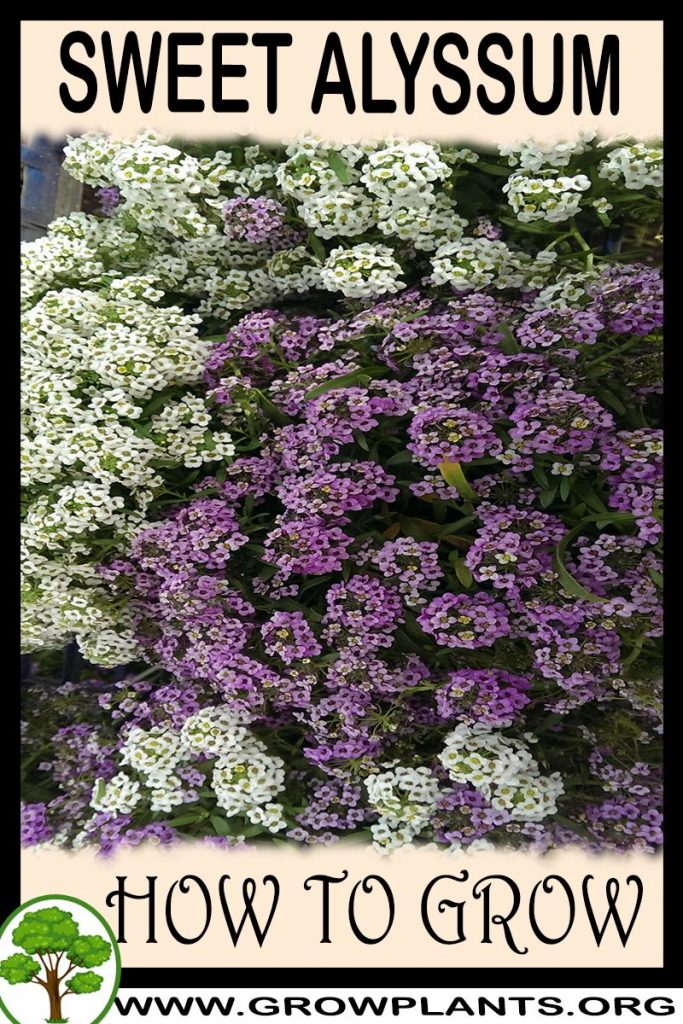
Overview: Sweet alyssum (Lobularia maritima) is a low, spreading annual or short-lived evergreen perennial 5-20 cm high, forming carpets of fragrant white, purple or pink flowers. Both the flowers and leaves are edible, and the blooms attract pollinators.
Quick Specifications
| Specification | Attribute |
|---|---|
| Plant Type / Life Cycle | Annual or short-lived perennial |
| Foliage Type | Evergreen |
| Mature Size | 5-20 cm tall (2-8 in), spreading wider |
| Growth Rate | Moderate to Fast |
| Toxicity | Non-toxic / edible (flowers and leaves are eaten) |
| Hardiness | USDA zones 3-11 |
Growth Form & Structure
- Height & Spread: Low, spreading mounds only 5-20 cm high that trail sideways; ideal for edging, baskets and container spilling.
- Growth Habit & Form: Dense, mounding to trailing groundcover of fine stems.
- Lifespan & Maturity: Flowers quickly from seed and can bloom nearly year-round in mild climates; short-lived and self-seeds.
Anatomy & Physical Features
- Leaves & Foliage: Small (1-5 mm), green, edible leaves.
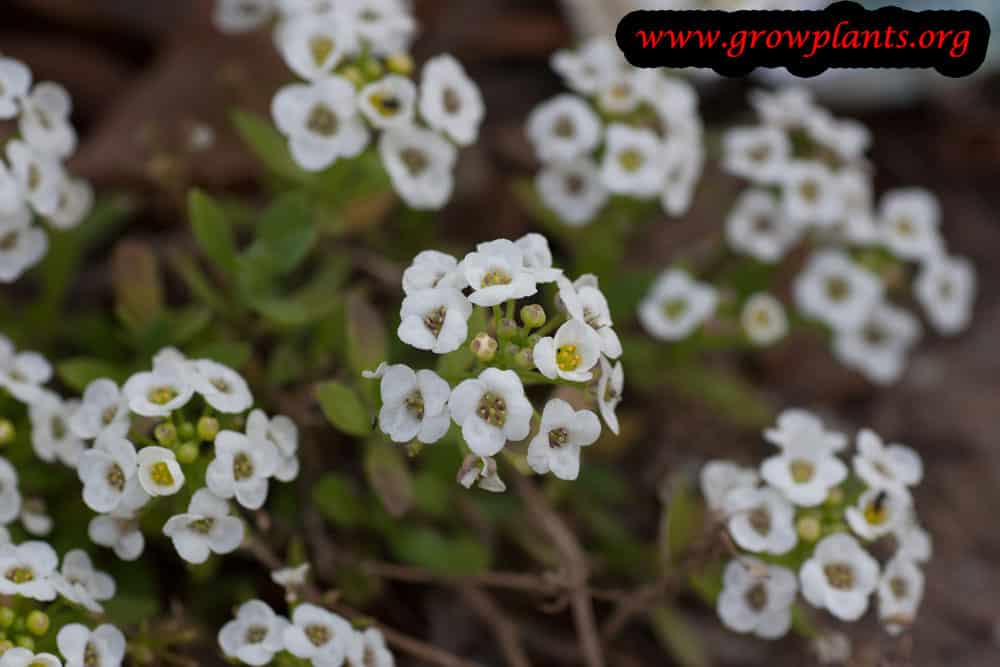
- Flower Characteristics: Clusters of tiny, fragrant, four-petalled flowers with yellow stamens in white, purple or pink; attract pollinators.
Primary Uses & Landscape Value
- Edible Uses: Both the flowers and the leaves are edible, used fresh in salads or lightly cooked.
- Functional & Ornamental Roles: Fragrant ornamental groundcover, edging, path softener, and basket/container spiller; strong pollinator draw.
Care Guide: Planting, Soil & Watering
Overview: Sweet alyssum is a fast, fragrant annual (or short-lived perennial) for full sun to half shade that needs only well-drained soil. It grows well on moderate watering and quickly forms a low carpet of bloom.
Quick Care Requirements
| Requirement | Ideal Condition |
|---|---|
| Planting Season | In spring to summer in cooler climates; in autumn to winter where winters are mild |
| Growth Rate | Moderate to Fast |
| Soil Type | Well-draining soil |
| Water Need | Moderate — keep the soil lightly moist, letting the surface dry between waterings |
Planting & Establishment
- Best Planting Season: Plant in spring to summer in cooler climates, and in autumn to winter in mild, warm-winter regions for cool-season colour.
- How to Plant:
- Hole Preparation: Dig a hole a little larger than the root ball and loosen the surrounding soil so young roots can spread easily.
- Soil Amendments: Work in compost or well-rotted organic matter to enrich the bed and improve both fertility and drainage.
- Planting Depth: Set the plant at the same level it grew in its pot, with the root collar at the soil surface — do not bury the stem.
- Growth Speed & Expectations: Expect moderate to fast growth in optimal conditions, filling out quickly through the warm season.
Soil, Watering & Drainage Care
- Soil Mix & Drainage Needs: Provide light, aerated, well-draining soil so water never pools around the roots; in containers use a quality free-draining potting mix and make sure the pot has drainage holes to prevent root rot.
- Watering Schedule & Technique:
- Young / Newly Planted: Water regularly after planting to keep the soil evenly moist while roots establish.
- Established: Water deeply and consistently, letting the surface dry slightly between waterings.
- Seasonal Adjustments: Water more often in summer heat and less in the cooler, wetter months.
Climate, Light & Hardiness
Sweet alyssum is a fast-cycling, fragrant ground cover grown across Mediterranean, subtropical, temperate, and tropical climates, usually as an annual though it can persist as a short-lived evergreen perennial in mild areas. It grows well in full sun to half shade across an unusually broad USDA range.
Quick Climate Specifications
| Climate Zones | Mediterranean, subtropical, temperate, tropical |
|---|---|
| USDA Hardiness Zones | 3–11 |
| Light Conditions | Full sun to half shade |
Sunlight & Light Exposure
Optimal Light Setup
Full sun gives the heaviest bloom; half shade is tolerated, especially in hotter climates.
Temperature Extremes & Hardiness
USDA Hardiness & Regional Limits
Grown as a cold-season annual in colder parts of its range (planted spring through summer), while in warm-winter climates it is planted autumn through winter and can flower nearly year-round; it may persist as a short-lived perennial where winters stay mild, from roughly zone 3 through 11.
Growing in Pots, Balconies & Indoors
Sweet alyssum (Lobularia maritima) is a low, spreading, sweetly scented annual – the grower does not rate it as a houseplant, but it is one of the best plants for pot edges, window boxes and hanging baskets on a sunny balcony or patio.
Quick Details
- Container Size: A shallow pot, window box, basket or trough with free drainage (the grower confirms container growing but gives no set size)
- Indoor Suitability: Not a houseplant; it needs bright sun to flower and stay compact
- Best Spot: Full sun to half shade
- Soil & Drainage: Light, free-draining potting mix
- Watering in Pots: Keep lightly moist; it dislikes both drought and soggy soil.
Indoors & On the Windowsill
- Houseplant limits: The grower marks it as not an indoor plant – in low light it grows leggy and flowers poorly.
- Windowsill option: A very bright, sunny sill can carry it for a while, but it flowers far better outdoors.
On a Balcony or Patio
- Light and habit: Give it a sunny spot; its low, trailing mounds are perfect spilling over pot rims, window boxes and hanging baskets. Small containers dry fast, so check moisture often.
- Keep it flowering: A light trim after the first flush of bloom encourages fresh flowers through the season.
- Practicalities: Ensure baskets and boxes are securely fixed and drain freely.
Choosing the Pot, Soil & Long-Term Care
- Pot and drainage: Choose a pot with strong drainage holes; if you stand it on a saucer, empty the saucer promptly so the roots never sit in water. Terracotta breathes and dries faster, while glazed or plastic pots hold moisture longer.
- Potting mix: Use a well-aerated, organic-rich mix – a good potting soil, or peat/coir blended with perlite or vermiculite for drainage and air.
- Watering: Water regularly to keep the mix evenly moist – pots dry out far faster than open ground, so check often in heat – but never leave it standing wet.
- Feeding: A light, regular feed keeps a container display blooming, since potted plants run through their soil faster because nutrients leach out with every watering, so feed a little more often than you would in open ground.
Fertilizing & Feeding
Sweet alyssum is a light feeder: balanced feeding through establishment and bloom keeps this fast-growing, low-mounding plant flowering well, but it doesn’t need heavy fertilizing and can turn leggy if overfed.
Quick Fertilizing Specs
| Main Nutrient Priority | Balanced feeding with adequate nitrogen; no need for a high-phosphorus bloom-booster product to get flowers |
|---|---|
| Best Feeding Period | From establishment through the main bloom period, plus lightly after shearing to encourage rebloom |
| Soil pH | Tolerates a wide range of soil; well-drained soil matters more than a precise pH |
| Reduce/Stop Feeding | Ease off and stop feeding if the plant stalls out from summer heat stress |
| Organic Options | Finished compost worked into well-drained soil at planting, plus light supplemental feeding through bloom |
Feeding by Growth Stage
Early Growth Before Flowering
Support quick establishment and the leafy growth that precedes this fast-growing plant’s first flush of bloom
| Nutrient direction | Balanced feeding to support steady early growth |
|---|---|
| Timing | From planting or germination through the start of flowering |
| Frequency | A light initial feeding at planting, then light regular feeding as growth picks up |
| Fertilizer types | A balanced, complete fertilizer for flowering annuals, or finished compost worked into well-drained soil |
| Precautions | Keep soil well-drained; this plant is a fast grower and can turn leggy if overfed with nitrogen-heavy products |
Peak Bloom
Support the plant’s dense flush of small, fragrant flowers
| Nutrient direction | Balanced feeding with adequate nitrogen supports strong bloom; there is no need to chase a high-phosphorus product for more flowers |
|---|---|
| Timing | Through the main flowering period |
| Frequency | Light, regular feeding through the bloom period |
| Fertilizer types | A balanced, complete fertilizer formulated for flowering plants |
| Routine trace nutrients | iron, manganese |
| Precautions | Very heavy nitrogen feeding here can push leafy growth at the expense of flowers; keep feeding light and steady instead |
Rebloom After Shearing
Support a fresh flush of growth and flowers after cutting back a plant that’s grown leggy or stopped flowering as heavily
| Nutrient direction | A light balanced feed alongside shearing helps push a fresh round of bloom |
|---|---|
| Timing | Right after cutting back leggy growth, whenever that falls in the growing season |
| Frequency | A single light feeding timed with the shearing is usually enough to kick off regrowth |
| Fertilizer types | A light application of a balanced, complete fertilizer for flowering annuals |
| Routine trace nutrients | iron, manganese |
| Precautions | Light feeding is usually enough here; this plant reblooms readily once cut back, without needing a heavy feed |
Summer Heat Slowdown
Let the plant coast through periods of heat stress when flowering naturally fades
| Nutrient direction | None – withhold fertilizer while growth and flowering have stalled from heat stress |
|---|---|
| Timing | During spells of high heat when growth and flowering have visibly stalled |
| Frequency | No feeding at this stage |
| Fertilizer types | No feeding at this stage; resume once cooler weather brings on fresh growth |
| Precautions | Do not fertilize a plant that has stalled from heat stress; feeding a struggling, heat-stressed plant does not help it recover |
Nutrient Deficiency Signs & Corrections
Overall pale, weak growth with a thin flush of flowers
| Possible causes | Insufficient nitrogen, Poor, depleted soil since this plant is often grown in containers or border edges without much amending, Waterlogged soil limiting root uptake |
|---|---|
| Appears first on | Whole plant, with older leaves paling first |
| What to check | Soil fertility and recent feeding history, Drainage, since this plant wants well-drained soil |
| Possible correction | Apply a light, balanced feed for flowering plants and confirm the soil drains well |
New leaves emerge pale yellow while the veins stay green
| Possible causes | High soil pH limiting iron availability, Waterlogged, poorly drained soil, General nutrient stress from lean soil |
|---|---|
| Appears first on | New growth |
| What to check | Soil pH and drainage |
| Possible correction | Correct pH toward neutral and improve drainage; a chelated iron product per its label can help if it persists |
Flowering fades and stems get long and sparse after the first flush of bloom
| Possible causes | Natural post-bloom fatigue in this fast-cycling plant, calling for shearing rather than more fertilizer, Heat stress reducing flowering regardless of feeding, Overly rich, nitrogen-heavy feeding pushing leafy growth over flowers |
|---|---|
| Appears first on | Stems throughout the plant, which grow long and sparse |
| What to check | Whether the plant has been sheared back recently, Recent weather and heat stress, Recent feeding balance, especially nitrogen-heavy products |
| Possible correction | Shear back leggy growth and follow with a light balanced feed rather than assuming heavier fertilizer will fix it |
Pruning, Training & Seasonal Maintenance
Sweet alyssum is a low, mounding annual (or short-lived perennial in mild climates) grown for its near-continuous fragrant bloom. It has no woody structure, so pruning is really light shearing and deadheading: when a flush of bloom fades or the mound starts to look thin and leggy, cutting it back lightly quickly triggers a fresh flush of flowers on new growth. This can be done whenever it’s needed through the bloom season, and the plant tolerates being cut back fairly hard without lasting harm.
Quick Pruning & Maintenance Specs
| Pruning Tolerance | Moderate–High – responds quickly to shearing with a fresh bloom flush |
| Primary Pruning Window | As needed, through the bloom season, whenever flowering slows or the mound gets leggy |
| Typical Frequency | Every few weeks during peak bloom, or after each major flush fades |
| Main Objective | Rejuvenate bloom; keep the mounding habit tidy and compact |
| Young Plant Priority | Light tip-pinching once established to encourage a fuller mound |
| Mature Plant Priority | Shear back by roughly a third when flowering fades or growth turns leggy |
| Best Tool Type | Precision snips for a few plants; hedge shears for a mass bedding planting |
| Avoid Heavy Pruning During | Extreme heat or drought stress, when regrowth is slow |
Pruning by Plant Age & Size
Newly Established
No cutting back; once young plants have a few sets of leaves, a light pinch of the growing tips encourages branching and a fuller mound from the start.
Young / Formative
No structural training system applies – it’s a low mounding/spreading habit by nature. Occasional tip-pinching is all that’s useful while it fills in.
Mature / Established
Shear the whole mound back lightly whenever a bloom flush fades or the centre starts to thin and open up; this is the main recurring task once the plant is established.
Special Growth to Remove
- Spent flower stems: shearing off the faded flush (rather than picking individual dead flowers) is the practical way to deadhead this many-flowered mound and prompts rapid rebloom.
- Dead leaves: remove for tidiness, as noted for this plant – they don’t affect flowering directly but can harbour rot in a dense mound.
Container & Small-Space Pruning
Sweet alyssum is a popular container and hanging-basket spiller; shear back trailing growth to control length and keep it within the container’s edge, which also keeps it flowering rather than running to seed along the trail.
Tools
Precision snips for a small planting or hanging basket; small hedge shears are practical for a non-selective shear-back across a mass bedding planting of many mounds at once.
Tool Hygiene & Disease Risk
Routine – clean, sharp tools are sufficient; sweet alyssum has no notable tool-transmissible disease risk.
Cut Placement & Technique
Shear across the mound to roughly a uniform height rather than hunting for individual stems; leave enough green foliage behind that the plant can quickly photosynthesise and resprout.
Heavy Pruning & Rejuvenation
Tolerates a fairly hard cutback (to about half its height) when it’s gotten sparse or woody-based with age; this reliably forces a fresh, denser flush of growth and bloom within a couple of weeks in favourable weather.
Post-Pruning Care
Water normally after shearing to support quick regrowth; no extra feeding is required purely because of the cut.
Common Pruning Mistakes
- Deadheading individual flowers one at a time instead of shearing the mound, which is slow and doesn’t refresh the whole plant.
- Letting the plant go fully to seed before cutting back, which can encourage unwanted self-seeding and reduces further bloom.
- Shearing hard during extreme heat or drought stress, when the plant is slow to recover.
When NOT to Prune
Avoid a hard shear-back during a heat wave or drought stress, when regrowth is slow and the plant is already under strain.
Recommended Tools (by task)
- precision_snips – for light deadheading or shaping a single plant or basket.
- hedge_shears – genuinely useful here for a fast, non-selective shear-back across a mass bedding planting of many mounding plants, unlike most plants where hedge shears would be the wrong tool.
Propagation Guide
Sweet alyssum is grown almost exclusively from seed – it germinates and matures quickly, and self-sows readily once established, which likely explains this site’s own note that the plant can be aggressive. Vegetative propagation is not needed, and seed can be sown direct in the garden or started as seedlings for later transplanting; difficulty is Easy.
Quick Propagation Specs
| Best Propagation Method | Seed |
| Propagation Difficulty | Easy |
| Seed True-to-Type | Usually true-to-type for open-pollinated strains; named color strains or hybrid seed mixes may not breed true from self-collected seed |
| Best Propagation Season | Spring or summer in cold climates; autumn-winter in warm climates |
| Seed Germination Time | Typically 1-2 weeks |
| Germination Temperature | Roughly 18-24°C (65-75°F) |
| Seed Sowing Depth | Surface-sow or barely cover – germination is generally improved by light |
Growing from Seed
Sowing Season
Spring or summer in cold climates; autumn through winter in warm climates, per this site’s recommended planting season.
Sowing Depth & Orientation
Sow on the surface or with only the lightest covering of soil; germination is generally improved by light exposure.
Germination Conditions
Germinates readily in warm, evenly moist conditions.
Germination Time
Typically about 1-2 weeks.
Seedling Care
Fast-growing once germinated; thin or space seedlings, and expect volunteer seedlings from self-sown seed once a planting is established – these can be transplanted while young if desired.
Bloom & Edible Flower Guide
Quick Details
- Bloom Season: Nearly year-round in mild climates; spring to autumn where winters are cold
- Time to First Bloom: Fast – often within 6 to 8 weeks of sowing
- Flower Appearance: Dense clusters of tiny four-petaled flowers in white, pink or purple, each with yellow stamens; honey-scented
- Edibility: Edible – the sweet, honey-scented flowers and young leaves can be eaten raw in salads or lightly cooked
Detailed Blooming Overview
Sweet alyssum is a generous, long-flowering little plant that can bloom almost continuously in a frost-free climate and from spring to autumn in colder gardens. The low mounds smother themselves in fragrant flowers that draw in bees and hoverflies all season. A light shear after the first big flush encourages fresh growth and keeps the blooms coming.
Flower Characteristics
- Tiny four-petaled flowers with yellow stamens, in white, pink or purple.
- Massed in rounded clusters over low, spreading mounds.
- Sweetly honey-scented and highly attractive to pollinators.
Bloom Care & Thinning
- Managing the bloom: Shear the plants back lightly after the first heavy flush to refresh them and prolong flowering.
- Pollination: By bees and other pollinators.
- In the kitchen: Use the fragrant flowers raw in salads, or lightly cooked, for a mild sweet-cabbage note.
Fruit & Uses
Sweet alyssum is grown chiefly as a fragrant ornamental bedding plant; its edible use is a minor, garnish-style one — the small flowers and young leaves can be added fresh to salads or used as a cooked garnish in modest amounts, not as a significant food crop.
Quick Edible Specs
| Edible Parts | Flowers, Leaves |
|---|---|
| Main Use(s) | Garnish/salad addition (minor use on an ornamental-first plant) |
| Eaten Raw or Cooked | Both (raw in salads is the more typical use) |
| Preparation Required | None — rinse before use |
| Harvest Season | Aligned with bloom season: all year in mild climates, spring–autumn elsewhere |
| Time to First Harvest | Usable as soon as the plant is established and flowering |
| Storage | Use fresh; not a storage crop |
| Safety/Toxicity Caveat | Use only in small, garnish-scale quantities from unsprayed plants — this is a minor edible use on an otherwise ornamental plant, not a documented staple food |
Flowers & Flower Buds
The small, fragrant, four-petalled flowers (white, purple, or pink) can be picked fresh and added to salads or used as a cooked garnish, in the same sparing way many edible-flower garnishes are used.
Leaves & Greens
The small (1–5 mm) green leaves can likewise be used fresh in salads or cooked, taken from the base of the plant; as with the flowers, this is a minor use alongside the plant’s primary role as an ornamental.
Harvesting
Pick flowers and leaves fresh as needed while the plant is in growth and bloom — there is no dedicated harvest season beyond the bloom period, and no curing or storage step.
Preparation, Uses & Safety
Both flowers and leaves are used raw (salads, garnishes) or lightly cooked, in small quantities. Because this plant’s primary role is ornamental and its culinary use is a minor, garnish-scale one rather than a documented staple food, use sparingly and only from plants grown without pesticide treatment.
Pests, Diseases & Troubleshooting
Overview: Sweet alyssum (Lobularia maritima) is an easy, fast carpeting annual, but as a member of the cabbage family it attracts crucifer pests – flea beetles, aphids, cabbage caterpillars and whitefly – and crucifer diseases such as downy mildew, white rust, clubroot and damping-off. It is otherwise resilient; good drainage, airflow and a mid-season shearing keep it flowering and healthy.
Quick Troubleshooting Overview
| Issue / Pest | Main Symptom | Primary Solution |
|---|---|---|
| Flea beetles | Shot-hole pitting on leaves | Mesh cover, keep plants vigorous, neem |
| Aphids | Sticky, curled shoots and flower heads | Water jet, insecticidal soap |
| Cabbage caterpillars | Chewed leaves and dark droppings | Handpick, Bt spray |
| Downy / white rust | Yellow blotches or white pustules on leaves | Airflow, remove debris, copper |
| Damping-off | Seedlings collapse at soil line | Clean mix, sow thinly, avoid wet cold |
Common Pests & Management
- Flea beetles (Phyllotreta spp.):
- Symptoms: Tiny shot-hole punctures peppering the leaves; the small beetles jump when disturbed and hit seedlings hardest in warm, dry weather.
- Prevention & Control: Cover young plants with fine mesh, keep them watered and growing quickly, use yellow sticky traps, and apply neem if damage mounts.
- Aphids (incl. cabbage aphid) (Brevicoryne brassicae & Myzus persicae):
- Symptoms: Grey-green waxy or green colonies on shoots and flower heads with honeydew, sooty mould and curled growth.
- Prevention & Control: Blast off with water, apply insecticidal soap or neem to the undersides, and support ladybirds, lacewings and hoverflies; control ants.
- Cabbage caterpillars (Pieris rapae & Plutella xylostella):
- Symptoms: Ragged, chewed leaves and flower heads with dark frass; green caterpillars (cabbage white) or small wriggling larvae (diamondback moth) feed on the foliage.
- Prevention & Control: Handpick, encourage parasitic wasps and birds, cover with insect mesh, and spot-treat with Bacillus thuringiensis (Bt), which spares beneficials.
- Whiteflies (Trialeurodes vaporariorum):
- Symptoms: Small white flying insects rising when disturbed, with honeydew and sooty mould.
- Prevention & Control: Use yellow sticky traps, encourage natural enemies, and spray insecticidal soap or neem repeatedly.
- Slugs and snails (Deroceras & Helix spp.):
- Symptoms: Grazed seedlings and holed foliage with slime trails in damp conditions.
- Prevention & Control: Hand-collect at night, use grit barriers, and scatter iron-phosphate bait around young plants.
Diseases & Fungal Issues
- Downy mildew (Hyaloperonospora parasitica):
- Symptoms: Yellow blotches on upper leaf surfaces with a greyish downy mould beneath in cool, wet, humid weather.
- Treatment & Management: Improve spacing and airflow, avoid overhead and evening watering, remove infected leaves, and use a copper fungicide only if it persists.
- White rust (Albugo candida):
- Symptoms: Raised, shiny white blister-like pustules on leaf undersides and distorted, swollen growth – a classic crucifer disease.
- Treatment & Management: Remove and destroy affected plants and debris, avoid wetting foliage, rotate away from crucifers, and use copper preventively if it recurs.
- Clubroot (Plasmodiophora brassicae):
- Symptoms: Stunted, wilting plants with swollen, distorted, club-like galls on the roots, worst in acidic, wet soils.
- Treatment & Management: Avoid planting in known-infested ground, improve drainage, raise soil pH with lime, and rotate away from all crucifers; there is no cure for infected plants.
- Damping-off (Pythium / Rhizoctonia spp.):
- Symptoms: Seedlings collapse at a pinched, water-soaked soil line soon after germination.
- Treatment & Management: Sow thinly in clean, free-draining mix, avoid overwatering and cold wet conditions, and give good ventilation.
Growing Difficulties & Abiotic Problems
- Mid-season heat decline:
- Cause & Symptoms: In hot weather plants become leggy, brown out in the centre and stop flowering.
- Correction Strategy: Shear the planting back by about a third to force a fresh flush, keep evenly moist in heat, and give light afternoon shade in hot climates.
- Root rot in wet soil:
- Cause & Symptoms: Heavy, waterlogged soil rots the shallow roots, wilting and yellowing the plants.
- Correction Strategy: Plant in free-draining soil in full sun, water moderately, and avoid soggy conditions.
- Sparse flowering in shade or rich soil:
- Cause & Symptoms: Too little light or excess nitrogen gives lush leaves but few flowers.
- Correction Strategy: Grow in full sun with only modest feeding for the densest, most fragrant bloom.
What Helps – Products & Tools
Sweet alyssum needs little: insecticidal soap or neem for aphids, flea beetles and whitefly, Bt for caterpillars, iron-phosphate bait for slugs, and a copper fungicide for downy or white rust if airflow and sanitation are not enough. Crop rotation and liming manage clubroot. Spray in the evening to protect the many pollinators it attracts, and follow the label.