
GrowPlants is reader-supported. When you buy through links on this page we may earn an affiliate commission, at no extra cost to you. Product suggestions are pulled from live listings — always check the current label, price and reviews before buying.
A blooming orchid spike can be tall, heavy and awkward — and without support it bends, snaps or tips the whole plant over. Clips, stakes and supports train the spike, show the flowers off, and steady newly potted plants and loose rhizomes. This guide covers the types, how to choose them, and how to stake an orchid without damaging it.
Quick recommendations
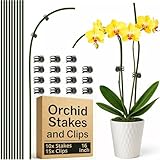


What orchid supports are for
- Training flower spikes upright (or into a graceful arch) as they grow.
- Holding heavy blooms so a top-heavy plant doesn’t tip.
- Stabilising a freshly repotted plant until new roots anchor it.
- Securing rhizomes of cattleyas and similar so new growth roots into the mix.
Types at a glance
| Type | Best for | Notes |
|---|---|---|
| Spike stake + clips | Phalaenopsis and other tall spikes | the classic combo; clip every few inches as the spike extends |
| Butterfly / looping clips | holding open blooms and buds | gentle, quick to reposition |
| Rhizome clips | cattleya, dendrobium, oncidium | pin the rhizome to the mix so new roots take hold |
| Stake kits (stakes + clips) | starting out / multiple plants | most economical way to cover a collection |
| Wire / rod supports | very tall or arching spikes | bend to shape; pad the tip to protect the spike |
How to choose
- Phalaenopsis: a single tall stake plus 3–5 clips per spike is usually enough.
- Cattleya / dendrobium / oncidium: add rhizome clips at repotting to steady the plant while it roots.
- Whole collection: a stake-and-clip kit is the cheapest way to standardise.
- Look, not just function: green stakes disappear into foliage; clear clips are least visible on show plants.
How to stake an orchid without damaging it
- Stake early, while the spike is young and flexible — an old spike is brittle and will snap if bent.
- Push the stake in at the pot edge, clear of the root ball; guide the spike, don’t force it.
- Clip loosely every few inches; the clip should hold, not pinch.
- Never pierce the crown or a pseudobulb, and keep clips off open flowers.
Common mistakes
- Staking too late — the spike has already set its direction and snaps when moved.
- Over-tightening clips — crushes the spike’s vascular tissue.
- Driving a stake through the roots — insert at the edge instead.
- Leaving clips on flowers — marks the petals; support the spike below the blooms only.
Related orchid guides
- All orchid supplies
- Orchid repotting tools & supplies — stake at repotting time
- Best orchid pots and orchid potting mix & bark
- Sphagnum moss & mounting supplies — for mounted orchids
Quick questions
When should I stake a Phalaenopsis spike? As soon as it is a few inches tall and still flexible — guide it upright and add clips as it extends.
What are rhizome clips for? They pin a cattleya-type rhizome firmly onto the mix so new roots can anchor after repotting.
Can I reuse stakes and clips? Yes — clean and, ideally, sterilise them between plants to avoid spreading disease (see the repotting-tools guide).
Related: general plant stakes, trellises & supports.