
GrowPlants is reader-supported. When you buy through links on this page we may earn an affiliate commission, at no extra cost to you. Product suggestions are pulled from live listings — always check the current label, price and reviews before buying.
The right support keeps a plant upright, shows off its flowers or fruit, and stops stems snapping in wind or under their own weight. This guide covers the main types of stake, trellis and support, and how to choose by plant and situation. For specialist supports see moss poles (aroids/climbers) and orchid clips & stakes.
Quick recommendations


Support types & what each is for
| Type | Best for |
|---|---|
| Single stakes (bamboo, metal, coated) | upright single-stem plants, young trees, top-heavy stems |
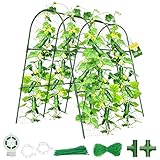
| Trellises | climbing plants (peas, clematis, jasmine, cucumbers) — vertical growing |
| Plant cages / rings / grow-through supports | bushy perennials and floppy clumps (peonies, tomatoes) held from within |
| Tomato cages / towers | heavy fruiting plants that need all-round support |
| Obelisks / tuteurs | ornamental vertical features for climbers in beds or pots |
| Support frames / linking stakes | rows and larger clumps; build the size you need |
| Ties & clips (soft ties, twist ties, plant clips, velcro) | attaching stems to supports without cutting in |
Trellises, cages & obelisks


How to choose by plant & use
- Climbing vs upright: climbers (vines, peas, clematis) want a trellis, obelisk or netting to climb; upright single stems want a stake; floppy clumps want a cage or ring.
- Heavy stems & fruiting plants: tomatoes, peppers, dahlias and the like need sturdy cages or stout stakes — thin canes bend under a fruiting load.
- Wind support: exposed sites need stronger, well-anchored supports; stake newly planted trees low and loosely so the trunk still flexes and thickens.
- Temporary vs permanent: annuals and seasonal crops suit reusable stakes/cages you store each year; long-lived climbers on a wall want a durable permanent trellis.
- Indoor vs outdoor: indoor climbers (pothos, philodendron, monstera) suit moss poles or slim trellises in the pot; outdoor use needs weather- and UV-resistant materials.
Ties, clips & rings


Height, strength & anchoring
- Choose a support taller/stronger than the plant’s expected mature size — a stake shorter than the plant is useless later, and set stakes deep enough (and firm enough) to hold.
- Match the support’s sturdiness to the plant’s weight and exposure; check the manufacturer’s own specifications where load matters rather than assuming a rating.
Attaching plants without damage
- Use soft, flexible ties (garden twine, soft plant ties, velcro, clips) — never wire or thin string that cuts into swelling stems.
- Tie in a figure-of-eight so the tie cushions between stem and stake rather than crushing the stem against it.
- Leave a little slack for growth and check ties through the season, loosening any that tighten as stems thicken.
- Attach stems to the support gently; don’t force a stem into an unnatural bend.
Related guides
- All pots, planters & supports
- Moss poles & plant supports (aroids/climbers) · orchid clips & stakes
Quick questions
Stake or cage? A single stake suits an upright single stem; a cage or grow-through ring suits bushy, floppy or heavy-fruiting plants that need all-round support.
What should I tie plants with? Soft, flexible ties in a figure-of-eight — never thin wire or string that cuts into growing stems.
How tall a stake? Taller than the plant’s expected mature height, and set deep/firm enough to hold it in wind.
See also: how to stake and support plants.