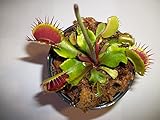
Venus flytrap (Dionaea muscipula) is native to a small area of coastal North and South Carolina, and its care needs come directly from that boggy, nutrient-poor native habitat. Most Venus flytrap deaths trace back to one of a handful of specific mistakes below – get these right and it’s a genuinely long-lived plant.
Water: the single most important rule
Only ever water with distilled water, reverse osmosis water, or clean rainwater – never tap water. Tap water contains minerals and salts that build up in the growing medium and slowly kill the plant. Keep the medium constantly moist to wet; many growers stand the pot in a shallow tray of water so it can draw up moisture as needed.
Growing medium
Use pure, unamended sphagnum peat moss, or a mix of equal parts peat moss and coarse sand or perlite. Never use regular potting soil, compost, or any fertilized mix – the added nutrients and minerals harm the plant. Unglazed clay pots are also best avoided, since minerals can leach from the clay into the soil; plastic pots are the safer choice.
Light
Venus flytraps need strong light – full sun to partial shade outdoors, or, if grown indoors, a very bright windowsill or dedicated grow lights running at least 14 hours a day.
Humidity
High humidity suits it best, consistent with its native bog habitat.
Feeding: is it necessary?
A healthy Venus flytrap growing outdoors or near an open window will usually catch enough insects on its own and doesn’t need manual feeding. Snapping shut on prey is metabolically costly for the plant – research has shown photosynthesis in a trap temporarily drops after it closes – so there’s no benefit to triggering traps needlessly or overfeeding. If you do feed a trap by hand, use a small live or freshly-killed insect appropriately sized for the trap; never feed it meat, cheese, or other human food.
Dormancy
Venus flytraps need a winter dormancy period to stay healthy long-term: at least 10 weeks at temperatures between 35-50°F (2-10°C). During dormancy the plant may look shabby or die back at the top – this is normal, not a sign of failure. It still needs to sit in water so the medium doesn’t dry out. Growers running plants year-round under strong dedicated grow lights (14+ hours daily) with regular feeding can sometimes skip dormancy, but for most home growers, allowing a natural dormant rest is the simpler, safer route.
Repotting
Repot every year or two, always into fresh, unfertilized sphagnum peat mix, and always water in with distilled or rain water afterward.
Common fatal mistakes
- Watering with tap water instead of distilled or rain water
- Using regular potting soil or adding fertilizer
- Letting the growing medium dry out
- Skipping winter dormancy year after year with no strong grow-light setup to compensate
- Repeatedly triggering traps for fun, or feeding human food
Quick questions
Do I need to feed my Venus flytrap? Not if it’s catching insects naturally outdoors or near a window – manual feeding is optional, not required.
Can I use tap water? No – use distilled water, reverse osmosis water, or rainwater only.
Does it really need a winter rest? Yes, for most home growers – a cold dormancy period of at least 10 weeks is part of its natural cycle and supports long-term health.
Related guides
- Venus Flytrap plant profile · plants for wet soil (for other bog-loving species) · increasing humidity for houseplants
If natural light is limited, see our guide to choosing a grow light.