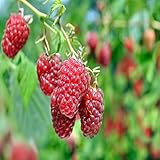
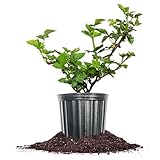
The olallieberry (also spelled olalieberry or olaliberry) is a human-made Rubus hybrid – a thorny, blackberry-type bramble grown as a shrub or trained as a vine, producing sweet purple-red berries. It is easy to grow and hard to grow well, and the difference between those two outcomes comes down almost entirely to understanding how its canes work.
The two-year cane cycle – read this first
An olallieberry plant is perennial, but its canes are biennial. Every year the crown sends up a new set of canes. Those canes spend their first year doing nothing but growing. In their second year they flower and fruit – and then they are finished.
This one fact explains nearly every olallieberry problem:
- Why a young plant does not fruit. Nothing is wrong; the canes simply have not reached year two yet.
- Why cutting everything back can wipe out a season. Shear the whole plant to the ground and you remove the one-year-old canes that were about to give you the crop. Reduce it hard after fruiting and you may remove the young canes carrying next year’s crop instead.
- Why the plant always looks like two plants. At any moment it holds this year’s fruiting canes and next year’s replacements side by side. Your job is to be able to tell them apart – which is exactly what trellising is for.
Climate: why olallieberries want a cold winter
Olallieberry is deciduous and suits temperate or cold-subtropical climates, growing reliably in hardiness zones 4 to 8, and in zone 9a with careful management. Zone 4 means winter lows down to around −34 °C (−30 °F), so cold is not the limiting factor – heat is.
The plant actively wants a little cold in winter. Like other brambles it needs a period of chilling to break dormancy properly and flower evenly in spring. In a climate that never gets cold enough, the plant survives but bud break is patchy and cropping suffers, which is why zone 9a is the practical warm edge rather than a comfortable home.
Site, soil and planting
Give olallieberries full sun to half shade and well-drained loamy soil. Drainage matters more than richness: brambles have shallow, fibrous roots that resent standing water. You can plant in winter, spring or summer.
- Dig a hole at least 50–100% larger than the root ball. Brambles spread sideways, so loosening a wide area pays off more than digging deep.
- Mix dead leaves, rich soil, organic matter and humus with the excavated soil.
- Set the plant in, backfill with the improved mix and firm gently.
- Put a stake or support in at planting time, not later. Driving a post next to an established bramble means damaging its roots, and by then the canes are already sprawling.
- Water in well and mulch.
In the first season, thin the bloom – remove flowers until the plant is properly established. A young plant that is allowed to fruit puts its energy into a handful of berries instead of into roots and canes, and pays for it for years.
Trellising and living with the thorns
The two genuine difficulties with this plant are the thorns and the need for continuous trellising. They are the same problem, really: an untrained olallieberry becomes a dense, arching thicket of armed canes that you cannot reach into, cannot pick from, and cannot prune safely.
The fix is to train as you go rather than fight it later. Tie new canes onto the support as they grow, ideally keeping the current season’s new canes on one side or one wire and the fruiting canes on another. Separating the two ages of cane means that at pruning time you never have to guess which cane is which, and at harvest time all the fruit is on one accessible plane. Long sleeves and thornproof gloves are not optional. Expect a plant of 1–2 m (3–6 ft), growing at a medium to fast rate.
Watering, feeding and mulch
Olallieberries need an average to large amount of water – steady moisture through the fruiting period especially, since a berry is mostly water and drought at ripening gives small, seedy fruit. Combine that with good drainage; wet and waterlogged are not the same thing. Feed once in early spring as growth starts, and keep the soil covered with mulch and organic matter, which holds moisture over the shallow roots and slowly feeds the soil.
Pruning: once a year, after the fruit
Prune once a year, and the best time is after fruiting – autumn or winter works too, once the plant has finished. What to cut:
- The canes that have just fruited. They will not fruit again. Removing them at the base immediately frees light, air and space for the young canes.
- Crowded inside branches. Thinning the interior improves airflow, which reduces disease pressure, and it is the single biggest thing you can do to make picking bearable.
- Shape. Prune consciously for a form that lets you reach the fruit, rather than letting the plant decide. A bramble you cannot pick is a bramble that feeds the birds.
Propagation: cuttings beat seed
Cuttings and vegetative reproduction (recommended)
Olallieberry is a hybrid, so seedlings do not come true – seed-raised plants are not always the same as the mother plant. If you want the fruit you tasted, you must propagate vegetatively. It is also faster: plants from cuttings bear in 1–2 years, against 2–3 years from seed.
The best moment is in spring after the last frost, just before the plant starts into growth – the stems are full of stored energy and about to become active, which is exactly what a rootless cutting needs. Two methods, both reliable:
- Direct into soil. Put the stem cutting straight into light, moist soil in a half-shade spot. Keep it wet but never sodden – a cutting with no roots drowns easily.
- In water. Stand the cutting in a glass of water and change the water every few days. Changing it matters: stagnant water goes short of oxygen and breeds the bacteria that rot the cut end.
The half shade is deliberate. A cutting cannot replace water lost through its leaves until it has roots, so reducing the sun load keeps it alive through the gap.
From seed
Seed works, with the caveat above. Store seed in a cool, dry, dark place until sowing, then sow in early spring into well-drained, moist soil in full sun, and keep the soil constantly moist through germination and early growth. Expect fruit in 2–3 years.
Growing olallieberries in a container
This is not a houseplant, but it does well in a pot outdoors.
- Start with a container 40–60% larger than the root ball, and pot up each time the roots fill it, until the plant reaches the size you want.
- Change the soil in mid-winter, while the plant is dormant and least disturbed by it. Potting soil loses its structure and viability over time, and refreshing it is more effective long-term care than simply feeding more.
- Water an average amount, with good drainage, and use water low in minerals where you can – salts accumulate in a pot in a way they never do in open ground.
- Mulch with pine, peat or another acid material mixed with humus and plenty of organic matter, to keep the root zone moist.
- Fit the support before the canes need it. A potted bramble still makes 1–2 m canes.
Flowering, harvest and uses
Olallieberries bloom in early spring, with white flowers 1–3 cm across carrying five petals, pollinated by bees and other insects. Fruit follows in late spring to early summer.
The berry is an aggregate fruit – many small cells packed into a rounded-oval shape – and it has one telling habit at harvest: the fruit comes away with the torus, the small white core, still inside it. That is the blackberry pattern, not the raspberry one, where the core stays on the plant and the berry is hollow. It also gives you a ripeness cue: an olallieberry that has to be tugged is not ready, while a ripe one detaches cleanly, core and all.
Use the fruit fresh, or for cakes, cooking, juice, jam and shakes. Because it ripens quickly and all at once, plan the jam pan before the crop arrives.
Pests and problems
- Redberry mite – a microscopic mite that feeds inside the developing fruit and prevents individual drupelets from ripening, so a berry ripens partly purple-black and partly hard and red. It is the classic cause of uneven, half-red brambles, and it overwinters in the canes – another good reason to remove spent canes promptly.
- Aphids – on soft new growth and shoot tips, distorting them and leaving sticky honeydew. Deal with them early on the young canes, because those canes are next year’s crop.
- Thickets – untrellised, unpruned plants get more disease, ripen less fruit and are miserable to harvest.
For the full plant profile see our Olallieberry growing page.
See also: rooting hormone for cuttings
See also: using rooting hormone