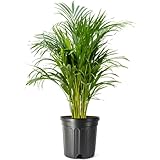
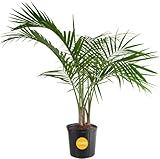
Areca palm (Dypsis lutescens) is one of the best palms for indoor growing – it’s not really suited to outdoor pots, but given bright indirect light and steady humidity it makes a graceful, easy-care houseplant for years.
Indoor light and placement
Give it bright, indirect light – a spot near a bright window but out of harsh, direct midday sun, which scorches the fronds. Too little light produces sparse, pale growth; too much direct sun causes visible leaf burn.
Watering
Keep the soil evenly moist – never bone-dry, never waterlogged. Water when the surface just starts to dry, and reduce watering somewhat in the cooler winter months when growth slows.
Humidity
Areca palm appreciates more humidity than typical indoor air provides, especially in centrally heated rooms in winter. Grouping plants together, standing the pot on a pebble tray, or misting occasionally all help; low humidity is one of the most common reasons for browning frond tips indoors.
Soil and drainage
Use a free-draining palm or houseplant mix in a pot with drainage holes, and avoid a standing water saucer. Areca palm resents being over-potted – a snug pot with good drainage suits it better than a large one with lots of surrounding wet soil.
Temperature
Normal indoor room temperature is fine. Keep it away from cold drafts, cold glass, and heating vents – it’s frost-sensitive and even brief chilling can brown the fronds.
Container growing
Areca palm grows slowly in a pot and can be kept well below its outdoor height for years. Repot only every couple of years when roots fill the container, moving up one size rather than into a much larger pot.
Brown tips and common indoor symptoms
Brown, dry leaf tips are the most common indoor complaint, and usually trace to low humidity, underwatering, or mineral buildup from tap water (this species is notably sensitive to fluoride and salts). Watering with rainwater or filtered water and flushing the pot occasionally to clear built-up salts often helps alongside raising humidity. Fine stippling or dulling on the fronds, especially in warm dry air, points to spider mites rather than a watering problem – rinse the fronds regularly to discourage them. Yellow-orange spotting on the oldest fronds is a classic potassium deficiency in this species, corrected with a balanced palm feed rather than by removing the affected leaves.
Quick questions
Why do my areca palm’s leaf tips keep going brown? Usually low humidity, underwatering, or mineral/fluoride buildup from tap water – raise humidity and try filtered or rainwater.
Can I grow areca palm outdoors in a pot? It’s best treated as an indoor plant; it isn’t recommended for permanent outdoor containers and is frost-sensitive.
How much light does an indoor areca palm need? Bright, indirect light – enough to avoid sparse pale growth, but out of harsh direct sun which scorches the fronds.
Related guides
If the plant needs repotting, see our guide to choosing the right pot or planter.