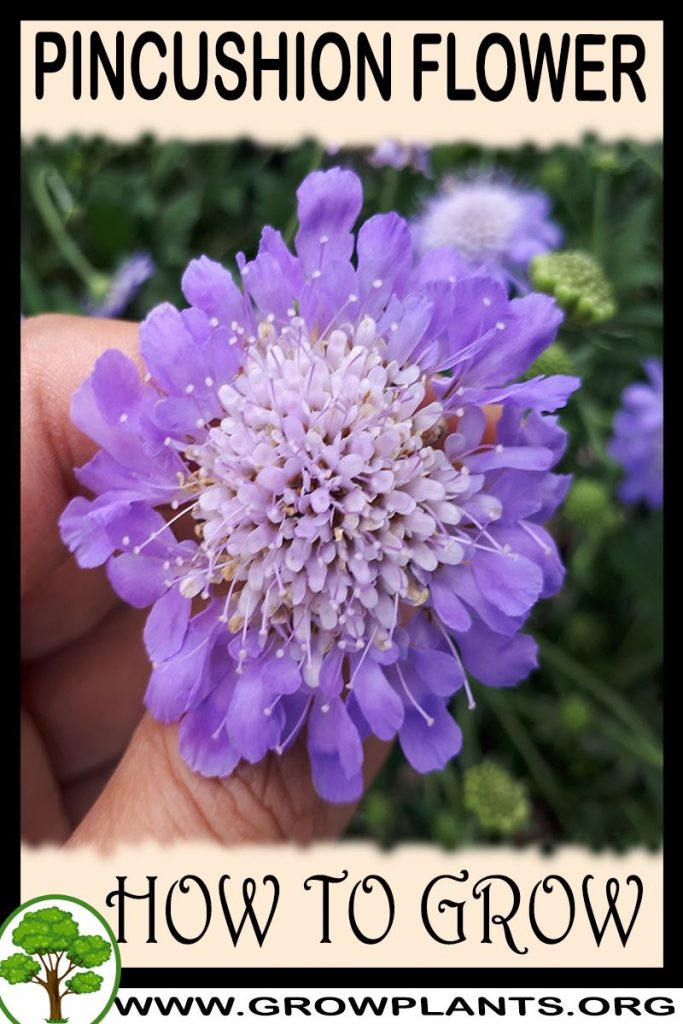
Plant Profile & Key Characteristics
Overview: A herbaceous perennial (or annual) 30-60 cm (12-24 in) tall, grown as an ornamental and cut flower for its distinctive pincushion flower heads. It is a favourite of bees and butterflies.
Quick Specifications
| Specification | Attribute |
|---|---|
| Plant Type / Life Cycle | Herbaceous perennial or annual |
| Foliage Type | Semi-evergreen (evergreen in mild winters) |
| Mature Size | 30-60 cm (12-24 in) tall |
| Growth Rate | Moderate to fast |
| Hardiness | USDA zones 3-11 |
Growth Form & Structure
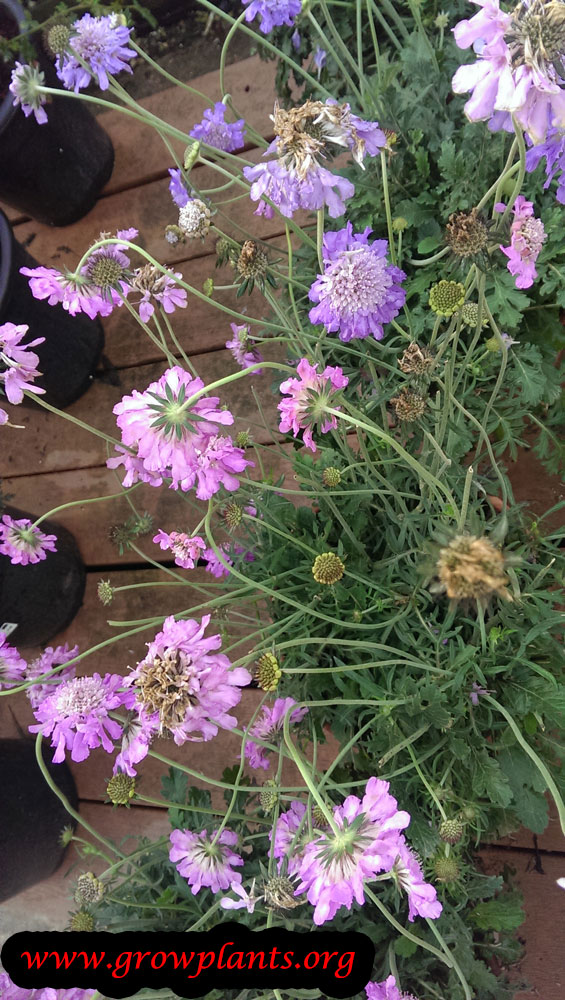
- Height & Spread: In the ground an airy plant 30-60 cm (12-24 in) tall, the flowers held on wiry stems above a low leaf clump; also grows well in containers.
- Growth Habit & Form: Clump-forming plant with a basal rosette of leaves sending up slender flowering stems.
- Lifespan & Maturity: Perennial forms return for several years; all types flower freely for most of the season and are prolonged by deadheading.
Anatomy & Physical Features
- Leaves & Foliage: Green, lobed, slightly hairy leaves forming a low basal clump.
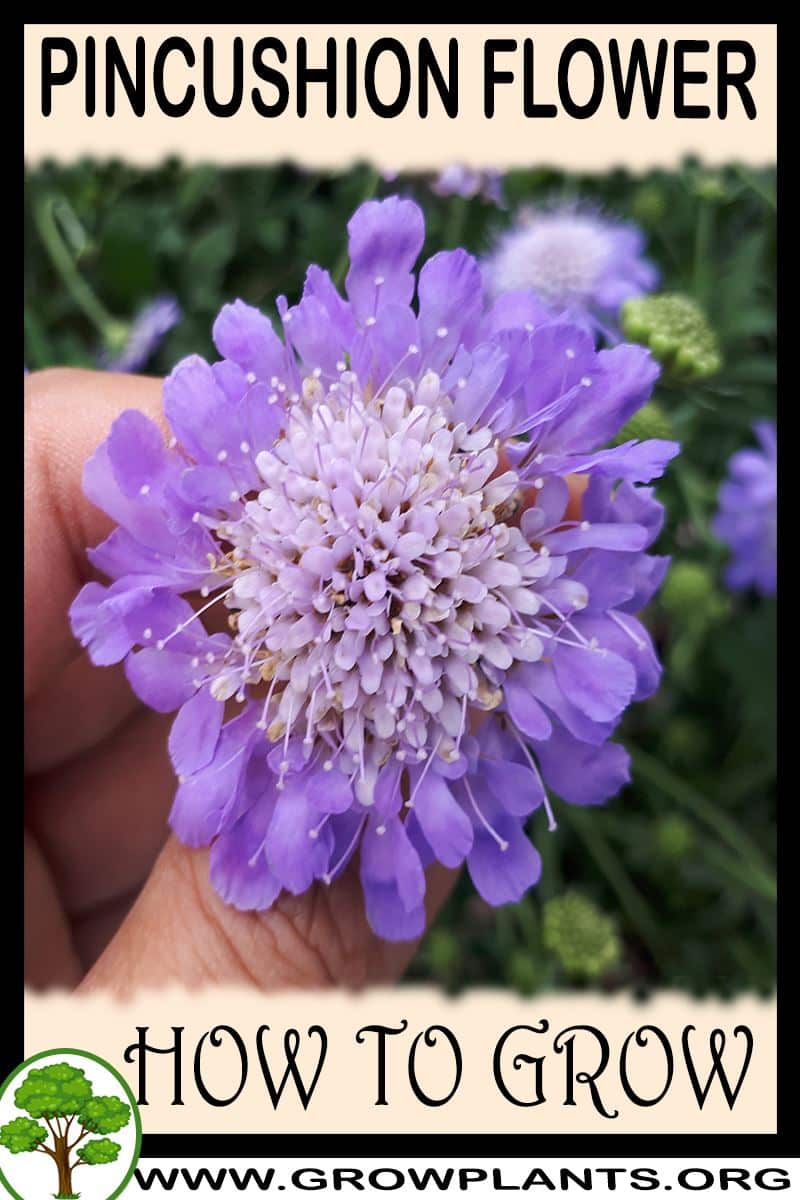
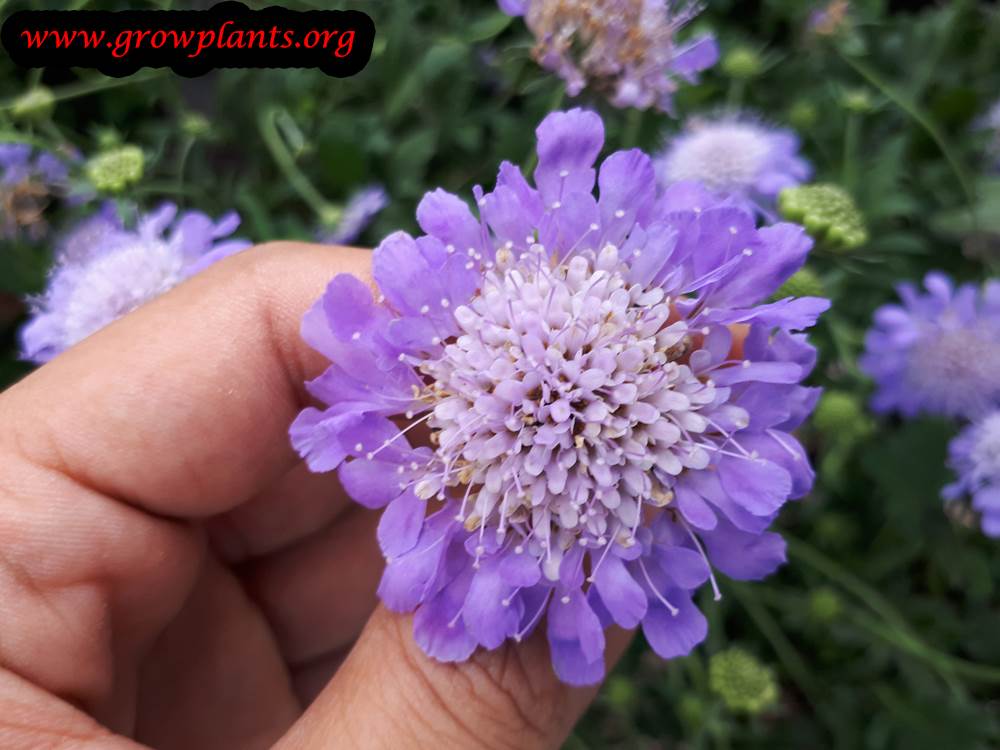
- Flower Characteristics: Domed, pincushion-like flower heads with protruding stamens in pink, red, purple, blue, white or near-black.
Primary Uses & Landscape Value
- Functional & Ornamental Roles: Border and cottage-garden ornamental and an excellent long-stemmed cut flower, strongly attractive to bees and butterflies.
Care Guide: Planting, Soil & Watering
Overview: Pincushion flower (Scabiosa) is a sun-loving perennial or annual grown as a pollinator-friendly cut flower in subtropical, Mediterranean, desert and temperate gardens (hardiness zones 3-11). It thrives in full sun to part shade in rich, well-draining soil and prefers frost-free conditions.
Quick Care Requirements
| Requirement | Ideal Condition |
|---|---|
| Planting Season | Spring to autumn (frost-free) |
| Growth Rate | Moderate to Fast |
| Soil Type | Rich, well-draining |
| Water Need | Low to moderate; let the top dry between waterings |
Planting & Establishment
- Best Planting Season: Plant from spring to autumn once frost has passed, in a sunny, open position with light shade tolerated.
- How to Plant:
- Hole Preparation: Dig a hole a little wider than the root ball and loosen the surrounding soil so the roots spread.
- Soil Amendments: Enrich the backfill with compost and organic matter while keeping the soil free-draining.
- Planting Depth: Set the plant at the depth it grew previously, keeping the crown level with the soil surface.
- Growth Speed & Expectations: A moderate-to-fast grower reaching about 30-60 cm (12-24 inches), flowering freely for cutting; some species can spread invasively.
Soil, Watering & Drainage Care
- Soil Mix & Drainage Needs: Give rich soil that still drains sharply so the roots never sit wet. It grows well in a container with open drainage holes.
- Watering Schedule & Technique:
- Young / Newly Planted: Keep the soil evenly moist while young plants establish.
- Established: Water moderately once established, letting the top of the soil dry before watering again.
- Seasonal Adjustments: Water a little more through summer flowering and reduce over cooler months.
Climate, Light & Hardiness
Pincushion flower (Scabiosa) grows in subtropical, Mediterranean, desert, and temperate climates, spanning a wide USDA hardiness range of zones 3 through 11 depending on species and whether it is grown as a perennial or annual. It prefers full sun to half shade, and tender types need frost-free conditions.
Quick Climate Specifications
| Climate Zones | Subtropical, Mediterranean, desert, temperate |
|---|---|
| USDA Hardiness Zones | 3–11 (varies by species/cultivar) |
| Frost Tolerance | Varies: hardy perennial types tolerate cold; some annual/tender types need frost-free conditions |
| Light Conditions | Full Sun to Half Shade |
Sunlight & Light Exposure
Optimal Light Setup
Grow in full sun to half shade for the best, longest-lasting bloom display.
Temperature Extremes & Hardiness
USDA Hardiness & Regional Limits
The genus spans a wide hardiness range, roughly USDA zones 3 through 11; hardier perennial species tolerate real winter cold, while some frost-tender types need consistently frost-free conditions and are grown as annuals in colder climates. Check the specific species or cultivar for its exact cold tolerance.
Frost Sensitivity
Frost tolerance varies considerably by species and cultivar - some are reliably cold-hardy perennials, while others are frost-tender and best treated as annuals or given winter protection outside frost-free zones.
Wind, Humidity & Microclimate
Rainfall & Seasonal Moisture
Prefers well-drained conditions and performs poorly in consistently soggy soil, consistent with its Mediterranean and desert-adapted background.
Growing in Pots, Balconies & Indoors
Scabiosa (pincushion flower) is a compact, sun-loving flowering perennial (30-60 cm / 12-24 in) and a lovely balcony, patio and cut-flower container plant. The grower does not rate it as a room houseplant – it needs good sun to flower – so indoors only a very bright, sunny sill will do.
Quick Details
- Container Size: A medium pot per plant, larger for a group (general guidance)
- Indoor Suitability: Not a deep-room houseplant; a compact plant can grow on a very bright, sunny sill
- Best Spot: Full sun to half shade – a sunny, airy balcony or patio is ideal
- Soil & Drainage: Aerated, organic-rich mix that drains freely
- Watering in Pots: Small to average – let the top of the mix dry between waterings; avoid waterlogging
Indoors & On the Windowsill
- Houseplant limits: The grower does not recommend it as a room houseplant – away from a window the light is too weak for good flowering.
- Windowsill growing: On the sunniest sill you have it can be grown; the more direct light, the more flowers.
On a Balcony or Patio
- Light & air: Give it a sunny, breezy spot; good airflow keeps it healthy. Deadhead regularly for a long display, and check moisture as pots dry fast in sun and wind.
Choosing the Pot, Soil & Long-Term Care
- Pot & drainage: A pot with strong drainage holes; skip a standing saucer to avoid root rot. Terracotta breathes and dries fast, which suits its dislike of wet feet.
- Potting mix: Use a well-aerated, organic-rich mix – potting compost with perlite or vermiculite (or peat/coir blended with grit) so water drains freely.
- Feeding: Potted plants are fed more often than those in the ground because nutrients wash out with each watering – a balanced liquid feed through the growing season keeps them going.
- Repotting: Refresh the mix or pot up about every two years; for perennials, lightly prune the root ball and top growth when you do.
Fertilizing & Feeding
A moderate feeder: this pollinator-attracting cut flower blooms over an unusually long season, so balanced feeding through spring establishment and repeated light feeding during its extended bloom period keeps the umbrella-shaped flower clusters coming.
Quick Fertilizing Specs
| Feeding Level | Moderate feeder |
|---|---|
| Main Nutrient Priority | Balanced feeding that sustains repeat flowering over a long bloom season |
| Best Feeding Period | Spring through summer and into autumn while the plant is actively blooming |
| Organic Options | Compost or well-rotted organic matter worked into rich, well-drained soil |
| Reduce/Stop Feeding | Feeding tapers off as blooming slows with the approach of frost or cold weather |
| Micronutrients | Usually adequate from a complete fertilizer in rich, well-drained soil |
| Soil pH | Prefers rich, well-drained, frost-free soil during active growth |
Feeding by Growth Stage
Spring establishment
Support establishment of the lobed, slightly hairy foliage before the plant comes into its first flush of bloom.
| Nutrient direction | A balanced fertilizer supports steady root and leaf establishment as the plant builds toward flowering. |
|---|---|
| Timing | In spring, at or shortly after planting. |
| Frequency | A light, regular feeding through establishment supports steady growth. |
| Fertilizer types | A balanced complete fertilizer, Compost or organic matter worked into rich soil |
| Precautions | Protect from frost while establishing, and watch for slugs, which favor tender new growth. |
First bloom flush
Support the first flush of small, umbrella-clustered flowers used for cutting and pollinator attraction.
| Nutrient direction | Continued balanced feeding supports strong initial flowering. |
|---|---|
| Timing | In spring and early summer as the first flowers open. |
| Frequency | Light, regular feeding through the first bloom flush is usually enough. |
| Fertilizer types | A balanced complete fertilizer, An organic feed worked lightly into the surface soil |
| Precautions | Deadhead spent flowers promptly, which also supports the plant’s tendency to rebloom. |
Repeat blooming through summer and autumn
Sustain this plant’s characteristic repeat flowering through summer and into autumn.
| Nutrient direction | Light, ongoing balanced feeding paired with deadheading keeps successive flushes of bloom coming through the extended season. |
|---|---|
| Timing | Through summer and into autumn as the plant continues to rebloom. |
| Frequency | Light feeding on an ongoing basis through the extended bloom season supports repeat flowering. |
| Fertilizer types | A balanced complete fertilizer, applied lightly, An organic feed worked lightly into the surface soil |
| Precautions | Continue deadheading to encourage further blooms, and avoid heavy feeding, which favors foliage over the plant’s repeat flowering habit. |
Cold-season rest
Let the plant rest through frost and cold conditions, which it does not tolerate well.
| Nutrient direction | None – withhold fertilizer during the cold-season rest. |
|---|---|
| Timing | Whenever frost or cold conditions halt active growth. |
| Frequency | No feeding at this stage. |
| Fertilizer types | No feeding at this stage – resume balanced feeding when active growth resumes in spring |
| Precautions | Do not fertilize during cold, frosty conditions; this plant is noted to prefer frost-free conditions for active growth. |
Nutrient Deficiency Signs & Corrections
Pale, sparse foliage and reduced flower production.
| Possible causes | low available soil nitrogen, leaching from watering in well-drained soil, root competition in poor or thin soil |
|---|---|
| Appears first on | older, lower leaves |
| What to check | recent feeding history, soil organic matter and richness, root health |
| Possible correction | Apply a balanced fertilizer through the growing season and monitor for improvement. |
New leaves look pale or yellowish while veins stay greener.
| Possible causes | high soil pH limiting iron availability, waterlogged or poorly drained soil, root stress from compacted soil |
|---|---|
| Appears first on | newest leaves |
| What to check | soil pH and drainage, standing water after watering, root health |
| Possible correction | Improve drainage and soil pH balance; apply a chelated iron product per its label if symptoms persist. |
Flowering slows or stops mid-season despite otherwise healthy foliage.
| Possible causes | spent flowers left undeadheaded, signaling the plant to stop producing new buds, insufficient light, feeding that has lapsed during the extended bloom season |
|---|---|
| Appears first on | whole-plant flowering pattern |
| What to check | deadheading consistency, light exposure, recent feeding history |
| Possible correction | Resume regular deadheading and light balanced feeding, and ensure full sun to half shade exposure. |
Pruning, Training & Seasonal Maintenance
Pincushion flower is an herbaceous, non-woody perennial (grown as an annual in colder zones) that tolerates frequent light cutting nearly year-round. The main objective is deadheading and periodic cutting back to keep it producing new flowering stems – since blooms form on new growth, cutting the plant back does not sacrifice future flowers the way pruning an old-wood shrub would.
Quick Pruning & Maintenance Specs
| Pruning Tolerance | Moderate to High |
| Primary Pruning Window | Ongoing through the active bloom period (spring–autumn) |
| Secondary Maintenance Window | Light rejuvenation cutback after a main flowering flush |
| Typical Frequency | Frequent, since pruning season is essentially year-round |
| Main Objective | Prolong continuous bloom and keep the clump compact |
| Young Plant Priority | Pinch once to encourage a bushier, multi-stemmed plant |
| Mature Plant Priority | Deadhead regularly; cut back hard after a flush to renew flowering |
| Best Tool Type | Precision snips |
| Avoid Heavy Pruning During | Extreme heat/drought stress or just before frost in marginal zones |
Pruning by Plant Age & Size
Newly Established
Remove only damaged growth; avoid cutting back young plants until they are actively growing.
Young / Formative
Pinching the growing tips once when young encourages branching, giving a bushier plant with more flowering stems rather than one that relies on a single central stem.
Mature / Established
Deadhead continuously as flowers fade, and give the whole plant a rejuvenating cutback (to a few inches) after each major bloom flush to trigger a fresh round of flowering stems.
Seasonal Pruning Schedule
Ongoing Sanitary
Objective: keep flowers coming. Remove: individual spent flower stems, cut back to the next set of leaves or a side branch rather than just the flower head. Do not remove: unopened buds or healthy foliage. Expected response: continuous new flowering stems.
Post-Flowering (renewal flush)
Objective: refresh the clump once a bloom flush slows down. Remove: the top growth cut back by roughly half. Do not remove: the crown or basal foliage. Expected response: vigorous new growth and a repeat bloom cycle within a few weeks.
Dormant/Winter (perennial types in cooler zones)
Objective: tidy the plant before winter dormancy. Remove: old flowering stems and dead foliage. Expected response: cleaner spring regrowth from the crown.
Flowering & Fruiting Wood
Pincushion flower blooms on current-season growth, not on persistent old wood, which is why deadheading and even a hard midseason cutback stimulate more flowers rather than removing next year’s crop.
Structural Pruning & Training
No branch framework to manage; the only structural technique is renewal pruning – cutting the whole plant back after a flush of bloom to stop it from becoming sparse and leggy at the base.
Special Growth to Remove
- Spent flower stems – deadhead back to a leaf node or side branch, not just the flower head, to prompt new flowering stems.
- Dead or yellowing basal foliage.
Container & Small-Space Pruning
In containers, pinch young plants and deadhead even more consistently than in-ground specimens, since pot-grown plants have less root volume to fall back on and benefit from being kept compact through regular light trims rather than one big seasonal cutback.
Tools
- Precision snips for deadheading and pinching.
- Soft ties/stakes for taller-stemmed selections grown for cutting, which can flop in wind or rain.
Tool Hygiene & Disease Risk
Routine: no significant tool-transmitted disease is noted for this plant (its main pest is slugs, not a pathogen spread by pruning cuts) – clean, sharp tools are sufficient.
Cut Placement & Technique
Deadhead by cutting the stem down to the next leaf pair or side shoot rather than snipping only the flower head, since that stub otherwise just sits without producing a new bloom.
Heavy Pruning & Rejuvenation
Tolerates a hard cutback to a few inches above the crown after a bloom flush or in early spring; this is the standard way to prevent the clump from becoming sparse and floppy in the center, and it recovers within a few weeks.
Post-Pruning Care
Water after a hard cutback to support fresh regrowth; watch new tender shoots for slug damage.
Common Pruning Mistakes
- Snipping off only the flower head instead of cutting back to a leaf node, which leaves bare stubs and doesn’t encourage new blooms.
- Letting spent flowers set seed, which slows continuous reblooming.
- Never cutting the clump back mid-season, leading to a leggy, sparse center.
When NOT to Prune
Hold off on a hard cutback during extreme heat or drought stress, and avoid major pruning in the weeks right before the first frost in marginal zones.
Recommended Tools (by task)
- Deadheading and pinching (any age): precision_snips – thin, soft stems need only a clean small cut.
- Supporting tall cut-flower stems (mature, exposed sites): soft_ties_stakes – keeps flowering stems upright in wind without cutting.
Pruning Troubleshooting
| Problem | Possible Cause | What to Check | Corrective Action |
| Flowering slows or stops mid-season | Spent flowers left to set seed, or no renewal cutback given | Old flower stems left uncut, seed heads present | Deadhead more consistently and give the clump a hard cutback after each flush |
| Sparse, floppy, or leggy center | No mid-season renewal pruning | Woody, open center with growth only at the edges | Cut the whole plant back hard to encourage fresh basal shoots |
Propagation Guide
Pincushion flower (Scabiosa) is most easily started from seed, which comes reasonably true to type for the species, and named colour selections are commonly kept true by dividing established clumps or taking basal cuttings; the site notes vegetative propagation is not required. Overall propagation is easy.
Quick Propagation Specs
| Best Propagation Method | Seed |
| Alternative Methods | Division of established clumps; basal cuttings |
| Propagation Difficulty | Easy |
| Seed True-to-Type | Usually true-to-type for the species; cultivar-dependent for named selections |
| Vegetative True-to-Type | Yes |
| Best Propagation Season | Spring through autumn, matching this plant’s planting season; divide in spring or autumn |
| Seed Germination Time | Commonly one to a few weeks |
| Cutting Rooting Time | Typically a few weeks |
| Germination Temperature | Moderate, roughly 18-21°C (64-70°F) |
| Seed Sowing Depth | Shallow; press onto the surface or cover very lightly, since light helps germination |
Growing from Seed
Sowing Season
Spring through autumn, following this plant’s own planting window.
Sowing Depth & Orientation
Sow shallowly, pressing seed onto the surface or covering only very lightly, since light helps germination.
Germination Conditions
Moderate warmth, around 18-21°C (64-70°F), with evenly moist soil.
Germination Time
Usually one to a few weeks.
Division, Offsets, Pups & Suckers
Established clumps can be lifted and divided in spring or autumn. Keep several shoots with healthy roots attached to each division, replant promptly, and water in well until re-established; very small pieces with few roots establish more slowly and are best avoided.
Stem Cuttings
Cutting Type
Basal, non-flowering shoots taken in spring.
Rooting Setup
Insert into a free-draining cutting mix and keep in bright, indirect light until rooted.
Rooting Hormone
Not necessary but can help results.
Rooting Time
Typically a few weeks; this route reliably keeps a named colour form true.
Bloom & Flower Guide
Quick Details
- Bloom Season: Much of the year in mild climates, peaking in spring and summer
- Time to First Bloom: Often the first season from a spring start
- Flower Appearance: Rounded, domed heads of many small flowers with protruding stamens like pins in a cushion, in pink, red, purple, blue, white or near-black
- Edibility: Ornamental only – grown as a cut flower, not for eating
Detailed Blooming Overview
Scabiosa (pincushion flower) earns its name from the domed flower heads studded with protruding stamens. Each head is really a cluster of many small flowers, held on wiry stems well above the foliage. It is one of the longest-blooming border plants, flowering through spring and summer and often well beyond in mild areas.
Flower Characteristics
- Domed, pincushion-like heads in pink, red, purple, blue, white or almost black
- Small flowers packed into each head, with prominent pin-like stamens
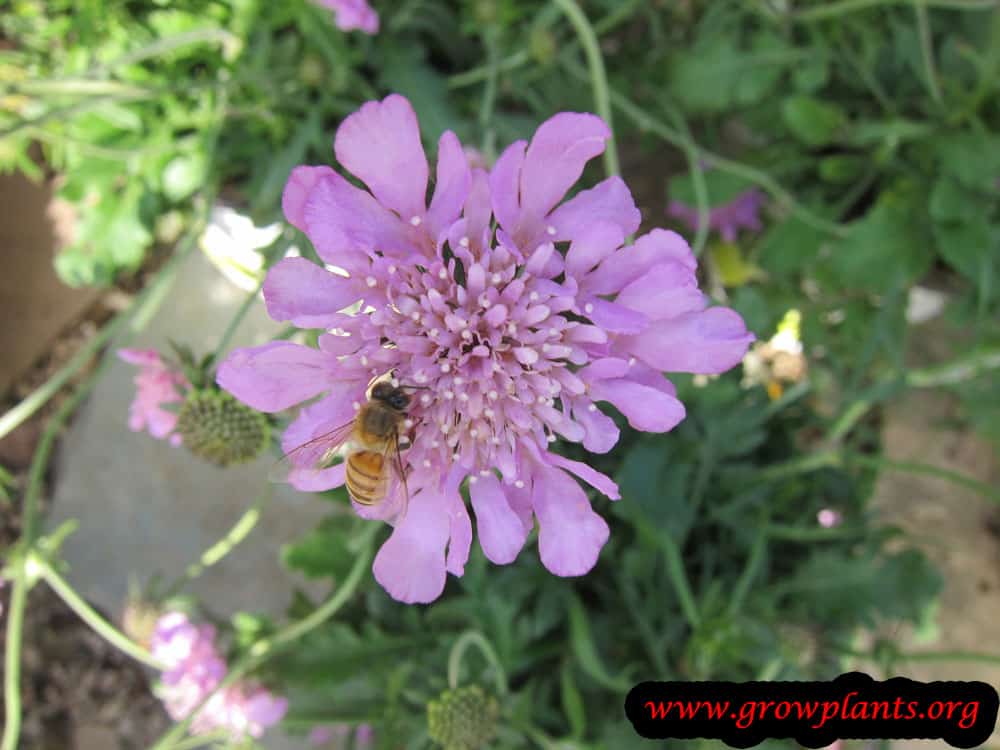
- An outstanding nectar source for bees and butterflies, and excellent for cutting
Bloom Care & Thinning
- Managing the bloom: deadhead regularly – few plants respond as generously, pushing out fresh flowers right through the season
- Site: full sun and free-draining, neutral to slightly alkaline soil suit it best
- Pollination: the open heads are a magnet for bees and butterflies
Bloom Health & Protection
- Powdery mildew: in crowded, humid conditions a white film can dull the foliage and buds; spacing plants for airflow helps, and a sulfur-based fungicide is an option if needed
Pests, Diseases & Troubleshooting
Overview: Pincushion flower is an easy, pollinator-magnet perennial (or annual) whose defining weakness is that it is short-lived on any soil that stays wet – crown and root rot in heavy, damp, especially winter-wet ground is what kills most plants. Pests are minor and routine: aphids, spider mites, slugs, thrips and whitefly, with powdery mildew the main disease. Sharp drainage, full sun, a neutral-to-alkaline soil and regular deadheading keep it healthy and flowering.
Quick Troubleshooting Overview
| Issue / Pest | Main Symptom | Primary Solution |
|---|---|---|
| Crown / root rot | Collapse & die-out in wet/heavy soil | Sharp drainage, neutral-alkaline soil |
| Powdery mildew | White powder on leaves in crowding | Space, airflow, sulphur/bicarb spray |
| Aphids | Sticky, distorted shoots & buds | Water jet, beneficials, insecticidal soap |
| Slugs & snails | Grazed young plants & basal leaves | Grit barriers, traps, evening patrols |
| Spider mite / thrips | Stippled leaves; spoiled flowers | Raise humidity, oil/soap, sticky traps |
| Flopping / chlorosis | Lax stems; yellowing on acid soil | Full sun, lean soil, lime if acidic |
Common Pests & Management
- Aphids (Aphis / Myzus spp.):
- Symptoms: Green or black colonies on soft shoots, buds and flower stems; sticky honeydew, distorted growth and possible virus spread.
- Prevention & Control: Rinse off with water and encourage ladybirds, lacewings and hoverflies; pinch infested tips. Treat heavy colonies with insecticidal soap, spraying in the evening to protect the many pollinators scabiosa attracts.
- Two-spotted spider mite (Tetranychus urticae):
- Symptoms: Fine stippling and bronzing of leaves with faint webbing in hot, dry conditions.
- Prevention & Control: Raise humidity and hose foliage in heat; treat persistent mites with insecticidal soap or horticultural oil on leaf undersides.
- Slugs and snails (Various spp.):
- Symptoms: Ragged holes and grazed young plants and basal foliage, with slime trails in damp weather.
- Prevention & Control: Clear hiding places, water in the morning, and use grit/copper barriers, traps or iron-phosphate pellets; hand-pick after dark. Young plants are most at risk.
- Thrips (Frankliniella occidentalis):
- Symptoms: Silvery flecking and distortion on leaves and, especially, spoiled, streaked flowers; tiny black specks on the tissue.
- Prevention & Control: Monitor with blue sticky traps, remove affected flowers, and treat with insecticidal soap or horticultural oil; encourage predatory mites. (Flower-specific thrips damage is also covered under bloom care.)
- Whitefly (Trialeurodes vaporariorum):
- Symptoms: Small white flies rising from disturbed plants with light honeydew, mainly in warm, sheltered or greenhouse conditions.
- Prevention & Control: Improve airflow, use yellow sticky traps, and spray insecticidal soap on leaf undersides if needed.
Diseases & Fungal Issues
- Powdery mildew (Erysiphe / Golovinomyces spp.):
- Symptoms: White powdery coating on leaves and stems, mainly in crowded, dry-root, humid conditions; foliage yellows and looks tired.
- Treatment & Management: Space and thin plants for airflow, keep roots evenly moist, and remove affected growth; a sulphur or potassium-bicarbonate spray helps at first signs.
- Crown and root rot (Phytophthora / Rhizoctonia / Sclerotinia):
- Symptoms: Wilting, blackening and collapse from the crown with dark, rotten roots, in wet, heavy or acidic soil – the reason most perennial scabious are short-lived.
- Treatment & Management: Grow in sharply drained, neutral-to-alkaline soil in full sun, avoid winter wet and burying the crown, and improve drainage with grit; remove and destroy rotted plants and divide healthy stock regularly.
- Aster yellows (phytoplasma):
- Symptoms: Distorted, greenish, stunted flowers and yellowed, deformed growth, spread by leafhoppers – occasional but incurable.
- Treatment & Management: There is no cure: remove and destroy affected plants promptly, control leafhoppers, and clear weed hosts; buy healthy stock.
- Leaf spot (various fungi):
- Symptoms: Brown or purplish spots on leaves in wet, crowded conditions.
- Treatment & Management: Remove affected leaves, improve airflow, and avoid overhead watering; rarely serious enough to need fungicide.
Growing Difficulties & Abiotic Problems
- Short-lived / winter crown rot – the defining problem:
- Cause & Symptoms: Perennial scabious is naturally short-lived and dies out over winter in heavy, wet or acidic soil, where the crown rots; plants collapse and fail to return in spring.
- Correction Strategy: Grow in full sun in sharply drained, neutral-to-alkaline soil, avoid winter wet and heavy mulch over the crown, and divide every couple of years to keep plants young; on heavy ground add grit or grow in raised beds/pots.
- Chlorosis on acidic soil:
- Cause & Symptoms: Yellowing leaves and poor growth on acidic soils, which scabious dislikes (it favours neutral to alkaline conditions).
- Correction Strategy: Grow in neutral-to-alkaline soil; lime acidic ground and improve drainage, and mulch with compost to support steady growth.
- Flopping and poor flowering:
- Cause & Symptoms: Lax, sprawling stems and fewer flowers in shade, on rich soil, or if not deadheaded.
- Correction Strategy: Grow in full sun on lean, free-draining soil, avoid excess nitrogen, support tall stems, and deadhead regularly to keep the long succession of pincushion blooms coming.
What Helps – Products & Tools
Scabiosa is easy but short-lived if grown wet: the key ‘products’ are good drainage and deadheading rather than sprays. Insecticidal soap or horticultural/neem oil handles aphids, mites, whitefly and thrips; a sulphur or potassium-bicarbonate fungicide controls powdery mildew; and slug traps/barriers protect young plants. The single best safeguard is a sharply drained, neutral-to-alkaline soil that prevents the winter crown rot which kills most pincushion flowers.