


Care Guide: Planting, Soil & Watering
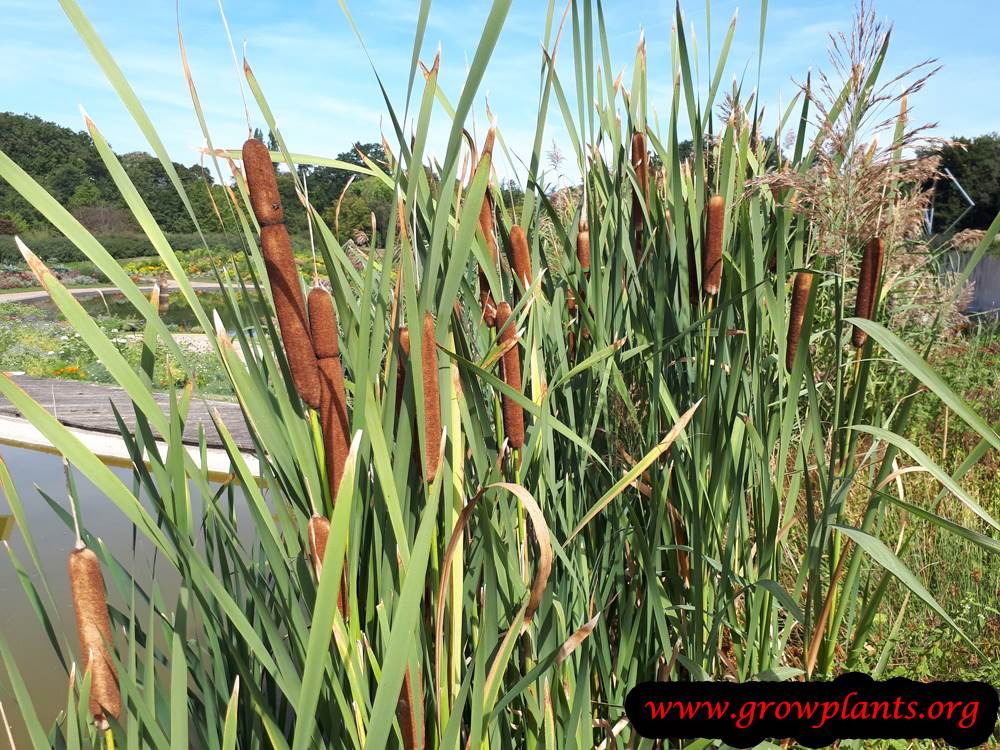
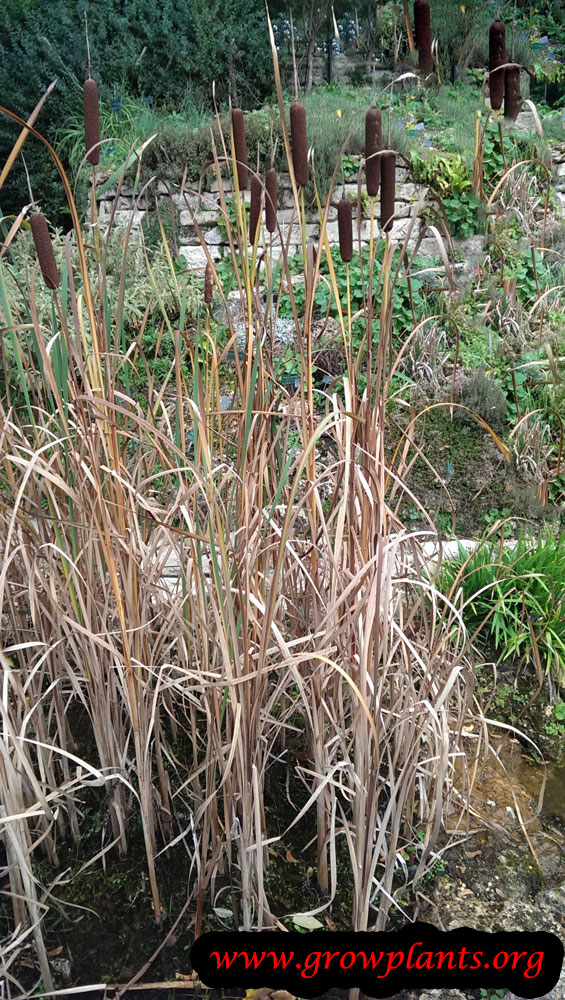
Overview: Cattails are aquatic marginal perennials that grow in full sun in wet ground or shallow standing water at a pond’s edge. They are vigorous and spreading, thriving in permanently wet, mucky soil.
Quick Care Requirements
| Requirement | Ideal Condition |
|---|---|
| Planting Season | Spring through autumn |
| Growth Rate | Fast |
| Soil Type | Wet, heavy, mucky soil at the water’s edge |
| Water Need | High; grow in saturated soil or shallow standing water |
Planting & Establishment
- Best Planting Season: Plant from spring through autumn into wet marginal ground or a submerged basket.
- How to Plant:
- Hole Preparation: Set the rhizome into wet marginal soil, or into a planting basket you can sink at the pond edge.
- Soil Amendments: Use heavy loam or mud that holds water; free-draining soil is not wanted here.
- Planting Depth: Place the crown at or just below the waterline, with a few centimetres of standing water above the soil.
- Growth Speed & Expectations: A fast, strongly spreading grower reaching 1-3 m (3-9 ft); best kept in a container to control it.
Soil, Watering & Drainage Care
- Soil Mix & Drainage Needs: Use heavy, water-retentive soil kept permanently wet; growing it in a submerged basket or lined container is the practical way to stop it colonising a whole pond.
- Watering Schedule & Technique:
- Young / Newly Planted: Keep the soil saturated from the start.
- Established: Maintain constant wet conditions or shallow standing water.
- Seasonal Adjustments: It stays wet year-round and tolerates cold winters at the water’s edge.
Climate, Light & Hardiness
Cattails are an aquatic marginal plant grown in Mediterranean, desert, subtropical, temperate, and tropical climates, requiring full sun and a consistently wet or submerged root zone. They are extremely cold-hardy for an aquatic species, growing from USDA zone 3 and warmer.
Quick Climate Specifications
| Climate Zones | Mediterranean, desert, subtropical, temperate, tropical |
|---|---|
| USDA Hardiness Zones | 3 and warmer |
| Light Conditions | Full sun |
| Frost Tolerance | High |
Sunlight & Light Exposure
Direct Sun Requirement
Needs full sun for vigorous growth; this is a marginal/aquatic plant grown at the water's edge or in shallow water, not in typical garden soil.
Temperature Extremes & Hardiness
USDA Hardiness & Regional Limits
Extremely cold-hardy, growing from zone 3 upward. Because it grows rooted in water or saturated soil, its effective winter hardiness is shaped by the water body as much as by air temperature: standing water buffers the root zone from extreme cold, and the rhizomes typically survive winter even under ice, resprouting once the growing season resumes even though top foliage dies back with cold.
Growing in Pots, Balconies & Indoors
Cattails (Typha) are large marginal-aquatic reeds (1-3 m) that the grower confirms can be grown in containers – but as a pond-margin or water-garden plant, not an ordinary pot plant. They are not houseplants: they need full sun, constant water and plenty of room, so grow them outdoors in a large, water-holding container or a sunken pot in a pond.
Quick Details
- Container Size: A large, sturdy, water-tight or lined container; a broad tub suits their spreading, water-loving roots
- Indoor Suitability: Not a houseplant; a full-sun bog/marginal plant far too large and wet-loving for indoors
- Best Spot: Full sun
- Soil & Drainage: Heavy, water-retentive soil – the opposite of free-draining; the container is meant to hold water
- Watering in Pots: Constant – grow it standing in water or permanently saturated; never let it dry out
Indoors & On the Windowsill
- Not a houseplant: The grower marks it ‘no’. It is a tall marsh reed needing full sun and standing water – unworkable indoors. Keep it outdoors.
- Containment: A pot is actually the smart way to grow it, because Typha spreads aggressively – a container keeps the running roots in check.
On a Balcony or Patio
- Light & water: On a balcony or patio grow it as a container water feature – a large tub or a pot standing in a saucer/reservoir kept topped up. Full sun all day is ideal.
- Weight & runoff: A water-filled tub is very heavy – make sure the balcony can take the load, and place it where overflow and splashing won’t cause problems.
Choosing the Pot, Soil & Long-Term Care
- Pot & ‘drainage’: Unlike most potted plants, cattails want a water-holding container with little or no drainage – line a pot or use a sealed tub, or sink a pot into a pond so the crown sits at or just below water level.
- Growing medium: A heavy, loamy aquatic soil (not a light, free-draining mix), topped with gravel to keep it in place; avoid rich composts that foul the water.
- Dividing: It bulks up fast – lift and divide the clump every year or two to keep it vigorous and contained.
Fertilizing & Feeding
As a vigorous wetland plant that grows rooted in saturated soil or shallow water, cattails rarely need supplemental fertilizer in a natural pond or wetland setting; in a contained water garden, light feeding through aquatic-safe substrate tabs during active growth is usually the most that’s needed, with feeding stopping entirely once growth slows for the year.
Quick Fertilizing Specs
| Feeding Level | Light feeder |
|---|---|
| Main Nutrient Priority | Balanced feeding delivered through aquatic-safe substrate tabs rather than surface-applied fertilizer |
| Best Feeding Period | Through the plant’s active warm-season growth |
| Organic Options | Nutrient-rich aquatic planting substrate at planting |
| Reduce/Stop Feeding | Feeding stops as growth slows heading into the cooler part of the year |
| Micronutrients | Rarely an issue in a natural wetland or pond setting |
| Soil pH | Grows rooted in consistently saturated soil or shallow water |
Feeding by Growth Stage
Establishment after planting
Help newly planted cattails root into saturated soil or shallow water and begin producing their first sword-shaped leaves.
| Nutrient direction | A light feeding at planting, delivered through the planting substrate, supports early root establishment. |
|---|---|
| Timing | At planting, into a nutrient-rich aquatic planting substrate. |
| Frequency | A single light feeding at planting is usually enough while the plant establishes. |
| Fertilizer types | An aquatic-safe substrate tab or nutrient-rich planting substrate worked in at planting |
| Precautions | Use only aquatic-safe fertilizer products in or near water to avoid harming fish or other wildlife. |
Active warm-season growth
Support this vigorous wetland plant’s rapid leaf and stem production through its main growing season.
| Nutrient direction | Light, balanced feeding delivered through substrate tabs supports steady growth, though established plantings in a naturally nutrient-rich pond or wetland setting often need very little supplemental feeding. |
|---|---|
| Timing | Through the warm active growing season. |
| Frequency | Feed sparingly; an occasional aquatic-safe substrate tab is usually the most this vigorous grower needs. |
| Fertilizer types | An aquatic-safe substrate tab used sparingly, A nutrient-rich aquatic planting substrate that reduces the need for additional feeding |
| Precautions | Avoid surface-applied fertilizer in or near water, which can encourage algae growth; use aquatic-safe substrate products only if feeding at all. |
Cool-season rest
Let the plant rest as growth slows heading into the cooler part of the year.
| Nutrient direction | None – withhold fertilizer once growth clearly slows for the year. |
|---|---|
| Timing | As growth slows heading into the cooler part of the year. |
| Frequency | No feeding is needed during this rest period. |
| Fertilizer types | No feeding at this stage; allow the plant to rest without fertilizer until active growth resumes. |
| Precautions | Do not fertilize during the rest period, and avoid any fertilizer application in or near water outside the active growing season. |
Nutrient Deficiency Signs & Corrections
Leaves are noticeably paler green and the stand grows more sparsely than expected.
| Possible causes | low available nutrients in a contained water garden or planting basket, very low natural nutrient input into the water, leaching or dilution from frequent water changes |
|---|---|
| Appears first on | older, lower leaves |
| What to check | whether the planting is in a natural wetland or pond versus a contained water garden, recent feeding history if grown in a container, overall stand density compared to a typical season |
| Possible correction | In a contained water garden, apply an aquatic-safe substrate tab; in a natural wetland setting, feeding is rarely warranted. |
New leaves emerge pale yellow while the veins stay green.
| Possible causes | high pH in the planting substrate or water limiting iron availability, an alkaline water source, a planting substrate that has depleted over time |
|---|---|
| Appears first on | newest leaves |
| What to check | water and substrate pH if testable, water source, age of the planting substrate if container-grown |
| Possible correction | Consider a less alkaline water source and apply an aquatic-safe chelated iron product per its label if the pattern continues. |
Older leaves show yellowing between the veins while the veins remain green.
| Possible causes | low magnesium in the water or planting substrate, dilution from frequent water changes, a depleted planting substrate in a long-established container |
|---|---|
| Appears first on | older, lower leaves |
| What to check | water source and change frequency, age and condition of the planting substrate, whether nearby wetland plants show a similar pattern |
| Possible correction | In a contained water garden, refresh the planting substrate or apply an aquatic-safe product that supplies magnesium. |
Pruning, Training & Seasonal Maintenance
Cattails are herbaceous, rhizome-spreading marginal aquatic/wetland plants with no woody structure, so pruning tolerance is high but the objective is narrow: remove dead stalks for tidiness and manage the plant’s naturally aggressive spread, rather than shape a form. Cutting can be done at any point in the year as stems die back, and it has no effect on flowering the following season since new flowering stalks are produced fresh from the rhizome each year.
Quick Pruning & Maintenance Specs
| Pruning Tolerance | High (herbaceous, regrows readily from rhizomes) |
| Primary Pruning Window | Whenever stems die back; can be done year-round |
| Typical Frequency | Ongoing as needed, plus an annual clearance of dead stalks |
| Main Objective | Remove dead stalks and control the plant’s spreading growth/structure |
| Young Plant Priority | None — let new plantings establish |
| Mature Plant Priority | Clear dead stalks; thin/contain rhizome spread |
| Best Tool Type | Loppers or a pruning saw for tough basal stems; precision snips for seed heads |
| Avoid Heavy Pruning During | No strict restriction, though working in a pond margin is easiest outside peak breeding-season disturbance for wildlife using the stand |
Pruning by Plant Age & Size
Newly Established
No pruning — let new plantings establish a stand before removing anything.
Young / Formative
No structural training applies; the priority instead is containing spread early — e.g. planting in a submerged container/barrier — since this genus is aggressive and hard to control once established directly in open ground or pond edges.
Mature / Established
Cut back dead stems as they die off, and periodically thin the stand by removing whole culms (with attached rhizome sections where spread needs active control) to keep it within its intended footprint.
Seasonal Pruning Schedule
Ongoing Sanitary
Objective: clear dead material and manage density. Remove: stems once they have died, cut at the base. Do not remove: living green stems, since they are still photosynthesizing and provide habitat value/structure. Expected response: a tidier stand; removal does not check the plant’s next flush of growth, which comes from the rhizome regardless.
Special Growth to Remove
- Dead stalks — the main routine removal, per this plant’s own care notes.
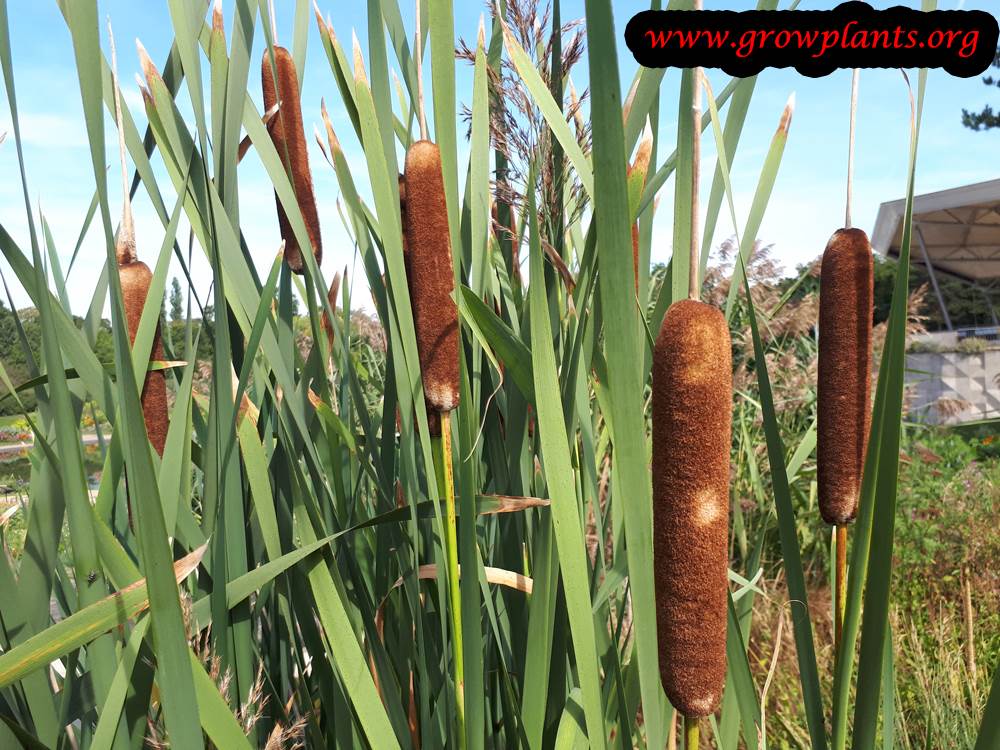
- Spent flower/seed heads (the characteristic brown cone-shaped spikes) — remove before they shatter if reducing self-seeding and spread is a priority, since this genus is noted as invasive/aggressive.
- Rhizome runners extending beyond the intended planting area — cut/dig out to keep the stand contained.
Container & Small-Space Pruning
Best managed in a submerged planting basket/container even within a larger pond, specifically to limit the aggressive rhizome spread this genus is known for; contained specimens still need the same dead-stalk clearance, just at a smaller scale.
Tools
- Loppers or a pruning saw – cattail stems are tough and fibrous at the base, generally too stiff for hand snips once mature.
- Precision snips – for removing individual seed heads.
Tool Hygiene & Disease Risk
Routine — no notable transmissible disease risk for this species; clean tools are sufficient. Rinse tools after working in pond water to prevent transferring rhizome fragments or other aquatic plant material between water bodies.
Cut Placement & Technique
Cut dead stems near the waterline/base rather than leaving tall stubs, which can be a hazard and don’t regreen once dead.
Heavy Pruning & Rejuvenation
Well tolerated — a full stand can be cut back hard to control size and remove built-up dead material, and it regrows readily from the rhizome mat; this is a reasonable way to reset an overgrown, congested stand.
Post-Pruning Care
No special aftercare beyond normal water-level maintenance; avoid disturbing the rhizome bed itself if only clearing top growth.
Common Pruning Mistakes
- Leaving spent seed heads in place where spread is unwanted, allowing self-seeding on top of the already-aggressive rhizome spread.
- Planting directly in open pond substrate without any containment, making later control much harder.
When NOT to Prune
No strong seasonal restriction for this species; the main caution is ecological rather than horticultural — avoid clearing an entire stand during local bird nesting season if it is providing habitat.
Recommended Tools (by task)
- Clearing dead stalks (mature stand): loppers – stems are too fibrous/tough at the base for hand snips.
- Removing seed heads to limit spread: precision_snips – a finer cut on the thinner flower stalk.
Propagation Guide
Cattails are propagated almost entirely by dividing their spreading rhizomes rather than from seed, matching how the site frames this plant – vegetative propagation, not seed, is the practical route offered. Difficulty is easy, since rhizome sections root and establish readily in wet, saturated soil, though the same vigorous spread that makes propagation easy also makes this a plant to contain deliberately.
Quick Propagation Specs
| Best Propagation Method | Rhizome Division |
| Alternative Methods | Seed (naturally wind-dispersed in the wild; not a practical home propagation route) |
| Propagation Difficulty | Easy |
| Vegetative True-to-Type | Yes |
| Best Propagation Season | Spring to autumn (active growth, avoiding hard winter) |
Rhizomes, Tubers, Bulbs & Corms
Rhizome Division: Lift and divide the rhizome during the active growing season (spring through autumn), cutting sections so each division keeps at least one strong shoot and attached roots. Because cattails are aggressive, invasive spreaders once established, replant divisions directly into consistently wet, saturated soil or shallow water at the pond margin, and consider a submerged container or barrier to keep the spread of the new planting under control. Keep divisions continuously moist to wet through establishment, matching the wetland or aquatic-margin conditions this plant naturally needs.
Bloom & Edible Flower Guide
Quick Details
- Bloom Season: Summer
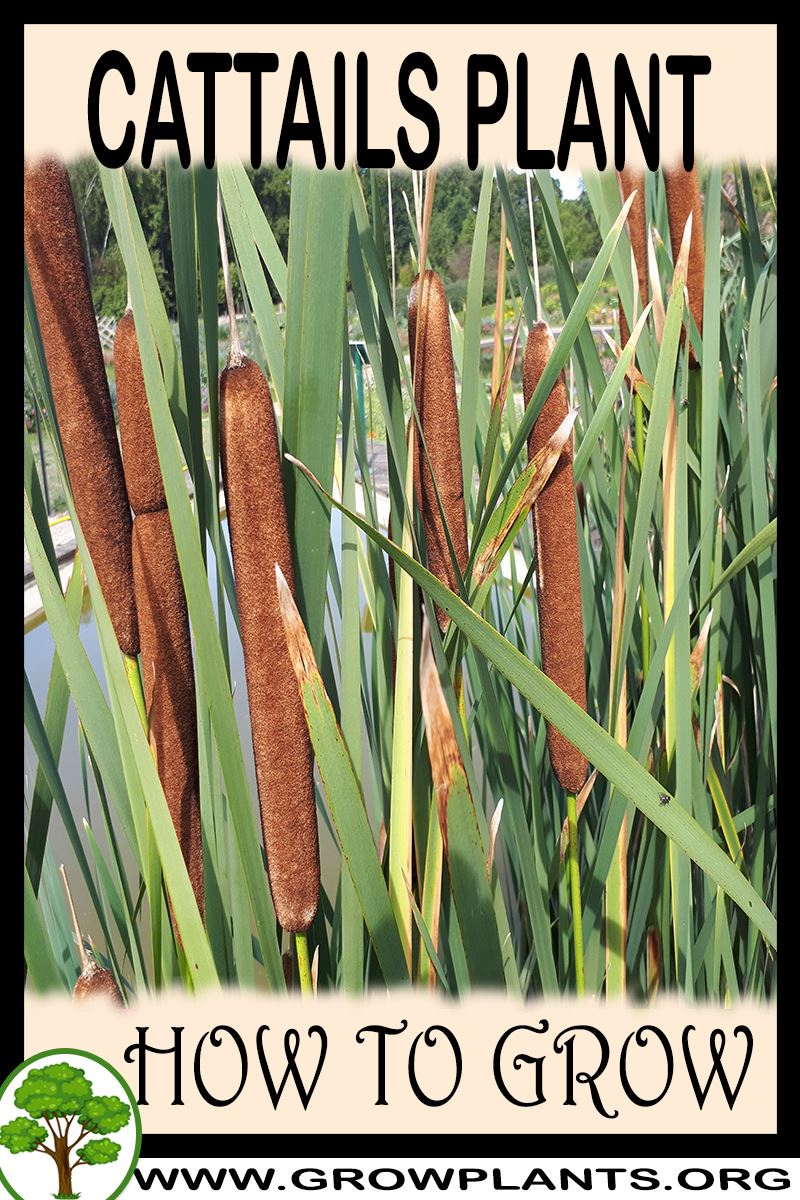
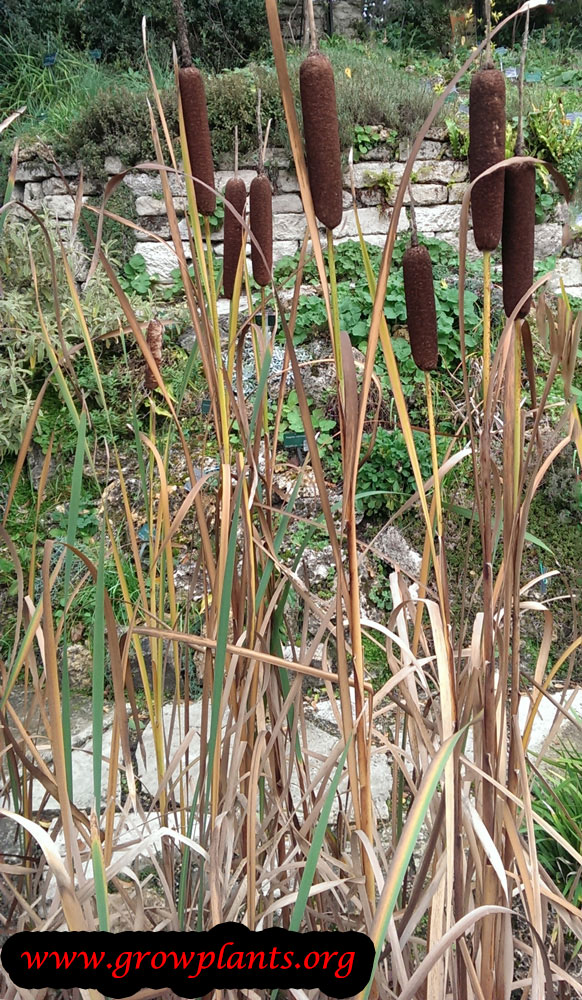
- Flower Appearance: A tall spike topped with tiny flowers – a slim yellow male section above the familiar brown cone of female flowers
- Edibility: The young male flower spikes and their pollen are edible – a well-known wild food
Detailed Blooming Overview
Cattails carry their flowers in the distinctive dense spike everyone recognizes: a narrow yellow band of male flowers sits above the fatter brown cylinder of female flowers. In early summer the young green male spikes can be cooked and eaten much like corn on the cob, and the abundant golden pollen is gathered as a flour. As a marshland plant, cattails are pollinated by wind rather than insects.
Flower Characteristics
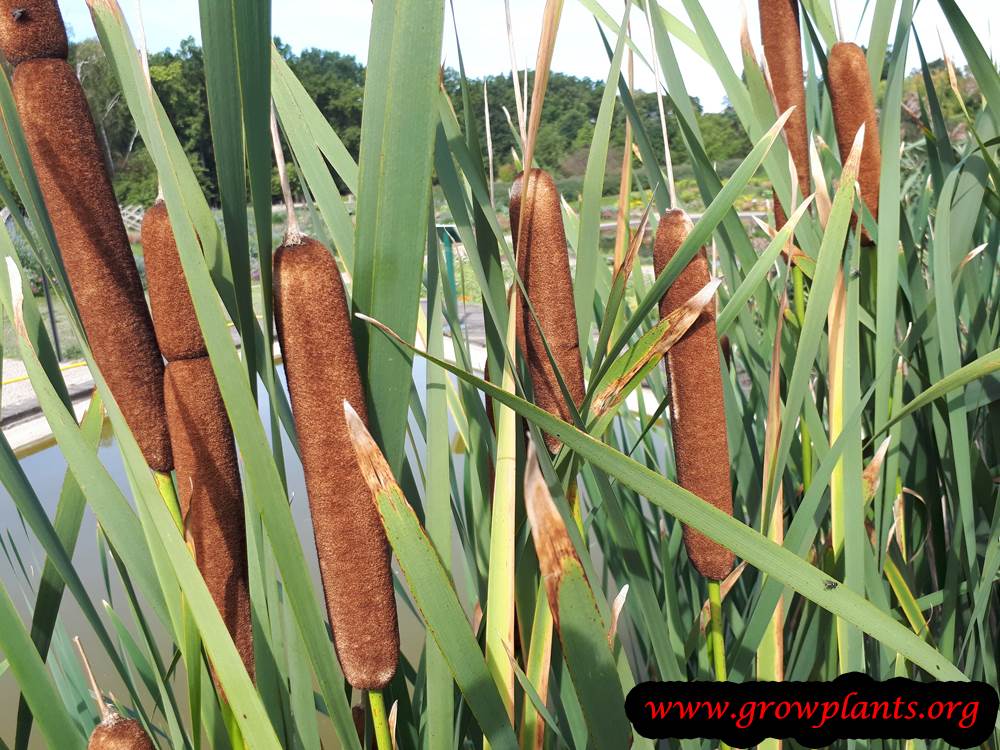
- Tiny flowers packed into a dense spike; slim yellow male portion above, brown cone-shaped female portion below
- The male spikes and pollen are the edible parts, best while young
Bloom Care & Thinning
- Wind pollination: Cattails release clouds of light pollen carried on the wind, not by insects.
- Foraging note: Harvest only from clean, unpolluted water, since these marsh plants take up whatever is in the water around them.
Fruit & Uses
Cattails (Typha) are one of the best-known edible wetland plants, though this site’s own data covers only its ornamental/landscape use. Several parts are traditionally eaten across the growing season: the young shoots in spring, the immature green flower spikes and pollen in summer, and the starchy rhizomes.
Quick Edible Specs
| Edible Parts | Young shoots, rhizomes (roots), immature flower spikes, pollen |
| Main Use(s) | Culinary – vegetable (shoots, flower spikes), starch/flour source (rhizomes, pollen) |
| Eaten Raw or Cooked | Young shoots – raw or cooked; flower spikes – cooked (boiled); rhizomes – cooked, or processed for starch; pollen – used raw as a flour additive |
| Preparation Required | Peel outer leaves from shoots; boil flower spikes; wash/cook rhizomes, or crush and rinse to extract starch |
| Harvest Season | Shoots – spring; immature flower spikes and pollen – summer, before/as flowering; rhizomes – any time the ground can be worked, traditionally autumn to spring |
| Storage | Best used fresh; dried pollen can be stored as a flour additive |
| Safety/Toxicity Caveat | Only harvest from clean, unpolluted water – cattails readily take up contaminants from the water and mud they grow in; wash all parts well before eating |
Shoots & Stems
In spring, the tender inner core of new shoots – sometimes called “Cossack asparagus” – is exposed by peeling away the tougher outer leaves at the base of the plant. It is eaten raw or lightly cooked, with a mild flavour similar to cucumber or a mild vegetable.
Flowers & Flower Buds
The cone-shaped flower spikes described on this page are eaten at two stages: while still green and immature (before the yellow-brown pollen forms) they can be boiled and eaten much like corn on the cob; once the male spike is shedding its fine yellow pollen, the pollen itself is collected and used as a nutritious flour additive in baking.
Roots & Tubers
The starchy rhizomes (roots) can be dug up, washed, and cooked like a root vegetable, or crushed and rinsed in water to separate out a fine starch that can be used similarly to flour.
Harvesting
Because cattails grow as an aggressive stand in wet ground, shoots and rhizomes can generally be harvested through much of the growing season without harming the overall patch; the flower spikes are only usable during their brief immature/pollen-shedding window in summer.
Preparation, Uses & Safety
Shoots and rhizomes should be well rinsed to remove mud; flower spikes need boiling before eating. The single most important safety point is water quality: cattails are known to concentrate pollutants and heavy metals from contaminated water, so only harvest from clean sources, and wash everything thoroughly before use.
Pests, Diseases & Troubleshooting
Overview: Cattails are vigorous emergent wetland reeds that are exceptionally robust and largely pest-free; their dense stands are more often controlled than protected. The specialists that do attack them are the cattail borer caterpillar, aphids, and cattail-specific rust and smut, while muskrats and waterfowl graze the roots and shoots. Abiotic problems are minimal beyond water-level management and their own invasiveness.
Quick Troubleshooting Overview
| Issue / Pest | Main Symptom | Primary Solution |
|---|---|---|
| Cattail borer / moth | Wilting, tunnelled stems and heads | Cut and remove infested stems, encourage predators |
| Aphids | Clusters on leaves, honeydew | Water jet, beneficials |
| Cattail rust | Orange pustules on leaves | Remove affected leaves, thin stands |
| Smut | Dark sooty masses on flower spikes | Remove and destroy infected heads |
| Muskrats / waterfowl | Grazed shoots, uprooted stands | Fencing/barriers where needed |
Common Pests & Management
- Cattail borer (cattail caterpillar) (Bellura obliqua):
- Symptoms: Caterpillars boring into the stems and flower heads, causing wilting, frass-filled tunnels and collapsing shoots.
- Prevention & Control: Cut and remove infested stems and seed heads, clear old dead growth over winter to reduce overwintering larvae, and encourage birds and predatory insects; Bt can be used on accessible larvae in managed plantings.
- Aphids (Aphidoidea (incl. Rhopalosiphum)):
- Symptoms: Colonies of aphids on leaves and stems with honeydew and sooty mould, sometimes heavy in still, warm conditions.
- Prevention & Control: Rely on the abundant lady beetles, lacewings and hoverflies of wetland habitats, blast off with water where reachable, and avoid insecticides that would harm the aquatic ecosystem.
- Cattail moth and armyworms (Simyra / Spodoptera spp.):
- Symptoms: Leaf-chewing caterpillars stripping foliage and leaving frass, occasionally defoliating patches.
- Prevention & Control: Tolerate in wild stands where birds and predators keep them in check, hand-remove in ornamental ponds, and use Bt only if damage is severe on managed plantings.
- Muskrats and waterfowl (Ondatra zibethicus / Anatidae):
- Symptoms: Grazed shoots, uprooted rhizomes and lodged stands where muskrats, geese and ducks feed on the starchy roots and young growth.
- Prevention & Control: Usually tolerated as part of the ecosystem; where cattails are a designed feature, use fencing or mesh barriers around plantings, though these animals also help limit cattail overgrowth.
Diseases & Fungal Issues
- Cattail rust (Uromyces typhae):
- Symptoms: Orange to brown powdery pustules on the leaf blades with yellowing, most visible in dense humid stands.
- Treatment & Management: Thin and cut back dense growth for airflow, remove heavily infected leaves and old debris; fungicides are neither practical nor appropriate in open water and it is generally tolerated.
- Smut (Ustilago spp.):
- Symptoms: Dark, sooty masses of spores replacing parts of the flower spike or forming on leaves.
- Treatment & Management: Cut and remove affected flower heads before spores disperse, and clear old growth; no chemical control is used in wetland settings.
- Leaf spot and blight (Cladosporium / fungal complex):
- Symptoms: Brown spots and blotches on leaves in crowded, humid stands, rarely serious on this vigorous plant.
- Treatment & Management: Thin stands and remove old dead foliage; treatment is seldom warranted.
Growing Difficulties & Abiotic Problems
- Water-level and drought stress:
- Cause & Symptoms: Cattails need consistently wet feet; a dropping water table or drying pond margin browns and thins the stand, while very deep flooding can drown young shoots.
- Correction Strategy: Maintain shallow standing water or saturated soil at the margin, and set plants at an appropriate depth for their establishment stage.
- Invasiveness and overcrowding:
- Cause & Symptoms: Aggressive rhizomes and prolific seed let cattails choke ponds and crowd out other wetland plants – usually the real management issue.
- Correction Strategy: Contain with pond baskets or liners, cut and remove seed heads, and thin stands regularly to keep them in bounds.
What Helps – Products & Tools
Cattails rarely justify any product, and open water rules out most sprays. Management is cultural: cut and remove borer- or smut-infested stems and heads, thin dense stands for airflow against rust, and use pond baskets or barriers to contain their spread. Bt is the only spray occasionally used, on accessible caterpillars in ornamental plantings.