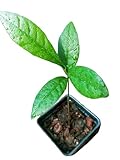
Miracle fruit is grown for one reason: a single small red berry rewires your sense of taste for the next half hour to two hours. The glycoprotein responsible, miraculin, binds to the sweet receptors on your tongue and switches them on in the presence of acid, so anything sour – lemon, vinegar, rhubarb – turns startlingly sweet. The effect wears off completely, and the same compound is used commercially as a sweetener.
Synsepalum dulcificum is a slow evergreen shrub, 1–2.5 m (40–100 in) tall, that can be trained as a small tree. It is not a hard plant to keep alive once you understand its two absolute requirements – acid soil and humidity – but it is genuinely a sensitive one, and starting it from seed adds a layer of difficulty that catches people out.
Why miracle fruit seed is different
Miracle fruit produces short-lived seed. Unlike a packet of tomato seed that will sit in a drawer for years, a miracle fruit seed begins losing viability almost as soon as it leaves the berry, and a seed that has been drying on a shelf for a month may simply never germinate.
This single fact drives everything about how you handle it: you sow immediately, you do not store, and you should be sceptical of seed that has travelled a long distance without care. It is also the reason so many people report total germination failure – the seed was already dead when it arrived.
How to plant miracle fruit seeds, step by step
- Clean the seed. Remove every trace of fruit pulp from around the seed. Leftover flesh is a food source for mould in exactly the warm, humid conditions germination requires.
- Soak in water – optional, not essential. A short soak can help, but it is not the step that decides success.
- Sow straight away. The sowing season is simply “as soon as you have the seed.” There is no better window than immediately.
- Use one pot per seed. Miracle fruit is slow and resents disturbance, so avoid the usual tray-then-prick-out routine. Sowing individually means the seedling never has to be moved before it is strong.
- Set the seed 1.5 cm below the surface.
- Use sterile, acid soil. Sterile because seedlings at this temperature and humidity are wide open to fungal problems; acid because that is what the plant needs from day one.
- Water sparingly. A small amount of water – the soil should be moist, never wet. The humidity does the work, not the watering can.
Germination conditions and how long it takes
- Humidity: 80%. This is not a nice-to-have. Without it, the seed dries out and stops.
- Temperature: 29 °C (84 °F) by day, 24 °C (75 °F) at night. The night drop is normal and does no harm; what the seed cannot tolerate is cold.
- Shade. Germinate out of direct sun.
- Patience: 3 to 16 weeks. That range is genuine, and it is why so many people throw out a pot that was about to work. Sixteen weeks is nearly four months of an apparently empty pot. Label it, keep it warm and humid, and leave it alone.
A propagator, a heated greenhouse or a clear plastic box on a warm windowsill will all hold the humidity and temperature needed. The seedling emerges slowly and stays small for a long time – this is a slow-growing plant at every stage.
After germination: the first year
Keep the seedling in shade at first. Once it has produced six leaves, begin exposing it to more light, gradually rather than in one move. Six leaves is the practical signal that the plant has enough leaf area to support brighter conditions; before that, more sun is a stress rather than a benefit.
Seed, cutting or a bought plant – an honest comparison
Growing from seed is rewarding, but it is worth being straight about it: if someone else has already done the hard part and will sell you a plant at a reasonable price, buying a plant is the better route. Seed-raised miracle fruit takes a very long time to reach fruiting size.
Cuttings
Cuttings are the middle path and give you a clone of a plant you know. They demand:
- Very high humidity – fog-like, which in practice means a greenhouse, a propagator or a sealed clear plastic box.
- Moist peat soil, which is acidic and therefore right for the species anyway.
- Sterile water, and rooting hormone.
- Temperature above 20–26 °C (68–79 °F).
- At least two months to root – start before the growing season begins so the rooted cutting has a full season ahead of it.
Grafting
Grafting is not necessary for miracle fruit, but a grafted plant will fruit sooner. Given how long a seedling takes, that is a real advantage if you can find grafted material.
Acid soil and water quality: the thing that kills most plants
Miracle fruit needs soil at pH 4.5–6. Outside that band it cannot take up nutrients properly, and the slow decline that follows is usually blamed on light or watering when the real problem is chemistry.
The complication is your tap water. Hard water is alkaline, and every time you water you push the soil pH upward. Left alone, the pH will keep rising, which is why a plant that was fine for a year can begin to fail for no obvious reason. Two responses:
- Use clean, soft water. Rainwater is ideal, and it should be at room temperature – cold water on the roots of a tropical plant is a shock it does not need.
- Acidify more often if your water is hard. This is maintenance, not a one-off fix.
Ways to acidify
- Pine mulch or pine needles – the gentlest method, and it improves the soil as it breaks down, but it works very slowly.
- Elemental sulfur – effective and gradual, since soil bacteria have to convert it.
- Iron sulfate or aluminium sulfate – faster acting.
- Vinegar – diluted, for a quick correction.
Alongside the pH, keep organic matter going into the soil, and feed at least once a year in spring.
Light and humidity: why full sun can burn the leaves
Light for miracle fruit cannot be discussed separately from humidity, because the two are linked:
- Full sun works only with very high, fog-like humidity. Without it, the leaves scorch. This is the single most misread instruction about this plant – people read “full sun” on a label, put it out in the open, and watch the foliage burn.
- Half shade with no sun at midday is the safe default for most growers.
- Full shade is also tolerated.
If you cannot supply constant high humidity, choose shade. The plant will be slower but healthy, which is a better trade than fast and scorched.
Watering
The requirement is a small to average amount of water combined with high humidity and consistently moist soil. In other words: never let the soil dry out, but do not drown it either. Water in modest amounts often, rather than heavily and rarely, and use mulch to steady the moisture level. Room-temperature, clean water every time.
Temperature, hardiness and overwintering
Miracle fruit is reliably outdoors in hardiness zone 11 and above, and can be grown in zone 10b with proper overwinter protection. Keep it above 10 °C (50 °F).
In zone 10b, protection needs to start earlier than you think – a cold autumn is already a risk, not just midwinter. Move containers under cover, or wrap and shelter plants in the ground, before the first genuinely cold nights rather than after.
When to plant, by zone
- Zone 12 and above: all year.
- Zone 11b: spring to autumn.
- Zone 11a: spring to summer.
- Zone 10b: spring only – the plant needs the entire warm season to establish before its first cold spell.
How to plant
- Dig a hole at least twice the size of the plant’s root ball.
- Mix organic matter, humus and dead leaves into the excavated soil, keeping the mix acidic.
- Set the plant in and backfill.
- Increase watering for the first two weeks – ideally until you see the first new leaf, which is the sign the plant has taken hold.
- Once it is established, begin fertilising.
Containers and growing indoors
Miracle fruit is one of the few fruiting plants that genuinely can be grown indoors as a houseplant, and its slow growth and modest final size are exactly why. Indoors also solves the light problem neatly: away from direct sun, the humidity demand becomes much easier to meet. Group it with other plants, stand the pot on a damp pebble tray, and keep it out of the path of heating vents, which are the fastest way to dry the air around it.
Pruning and shaping
Prune after fruiting, or in spring while the plant is young. Once a year is enough. Remove dead branches as a matter of course.
To train the natural shrub into a small tree, cut off the side stems as they appear and leave only the main trunk, letting the canopy develop at the top. Start this early – it is a shaping decision made over years on a slow grower, not a single pruning session.
Pests and problems
- Spider mites – the classic sign that the air around your plant is too dry. Fine stippling on the leaves and webbing in the leaf joints. On a plant that already needs high humidity, spider mites are a diagnosis as much as a pest.
- Mealybugs – white waxy clusters tucked into leaf axils, thriving in exactly the warm sheltered conditions this plant wants.
- Aphids – on soft new growth.
- Thrips – tiny and easily missed; look for silvery scarring on leaf surfaces.
Because miracle fruit is a sensitive plant, inspect it regularly rather than waiting for symptoms. A slow grower has little capacity to outgrow damage.
Flowering and fruit
The flowers are small and white, and the berries that follow are shiny red, 1–2.5 cm. Pick them fully ripe and eat them fresh – the taste-modifying effect is at its strongest in a fresh berry. Roll the pulp around your mouth so it coats the tongue, then try something sour. The effect lasts from half an hour to two hours and then disappears entirely.
If you want seed for sowing, take it from that berry and sow it the same day.
For the full plant profile see our Miracle fruit plant growing page.
For the equipment that makes propagating easier (heat mats, humidity domes, rooting hormone), see our propagation equipment guide.
For general seed-starting technique, see our seed germination guide.