


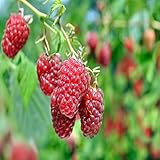


Plant Profile & Key Characteristics
Overview: A thorny, deciduous (semi-evergreen in warm areas) raspberry that scrambles as a vine 2-5 m (6-15 ft) or can be trained to a shrub. The ‘Dorman Red’ selection is grown for its red edible berries in mild-winter regions.
Quick Specifications
| Specification | Attribute |
|---|---|
| Plant Type / Life Cycle | Perennial cane fruit (biennial fruiting canes) |
| Foliage Type | Deciduous (evergreen in warm climates) |
| Mature Size | 2-5 m (6-15 ft) |
| Growth Rate | Moderate to fast |
| Root System | Shallow, spreading suckering roots |
| Toxicity | Non-toxic / edible fruit |
| Hardiness | USDA zones 4-10 |
Growth Form & Structure
- Height & Spread: Long canes reach 2-5 m (6-15 ft) and are best trellised; can be trained into a shrub or kept in a large pot with two mature canes plus daughter canes for the next year.
- Growth Habit & Form: Thorny, arching cane fruit, vine-like unless pruned to a bush.
- Lifespan & Maturity: Perennial crown with biennial canes; fruiting in about 2-3 years.
Anatomy & Physical Features
- Leaves & Foliage: Green, oval leaflets with serrated margins, some carried in groups of three.
- Flower Characteristics: White five-petalled flowers 1-3 cm across, pollinated by bees.
- Fruit Profile: Red aggregate berries that stay attached to the torus when picked.
Primary Uses & Landscape Value
- Edible Uses: Berries eaten fresh, cooked, in cakes and juice.
- Functional & Ornamental Roles: Warm-climate garden raspberry, trellised or trained as a hedge.
Care Guide: Planting, Soil & Watering
Overview: Dorman Red raspberry (Rubus Dorman red) is a vigorous, thorny raspberry-type bramble grown for its berries, best in full sun across hardiness zones 4-10. Plant it in rich, well-draining soil kept evenly moist, give it a trellis for its long canes, and allow generous spacing.
Quick Care Requirements
| Requirement | Ideal Condition |
|---|---|
| Planting Season | Cool to warm season (dormant winter through spring and into summer in mild zones) |
| Growth Rate | Moderate to Fast |
| Soil Type | Rich, humus-rich, well-draining; mulched |
| Soil pH | Slightly acidic to neutral (about 5.5-6.5) |
| Water Need | Moderate to high; keep evenly moist, never waterlogged |
Planting & Establishment
- Best Planting Season: Plant while the weather is mild – from the dormant winter period through spring, and into summer where summers stay cool. Hold off during peak heat.
- How to Plant:
- Hole Preparation: Dig a hole at least 50-100% wider than the root ball and loosen the surrounding soil so the roots spread easily.
- Soil Amendments: Mix plenty of organic matter into the backfill – compost, dead leaves, rich soil and humus – and set a stake or trellis at planting so the long canes have support from the start.
- Planting Depth: Set the plant at the depth it grew in its pot, keeping the crown at soil level and never burying the canes.
- Growth Speed & Expectations: A moderate to fast grower sending up canes of about 2-5 m; prune once a year after fruiting to keep it open and easy to harvest, with fruit within about 2-3 years.
Soil, Watering & Drainage Care
- Soil Mix & Drainage Needs: Give it rich, moisture-retentive, freely draining soil under mulch; the shallow roots rot in standing water, so never let them sit wet. In containers use a peat-and-humus mix with good drainage and average, low-mineral water.
- Watering Schedule & Technique:
- Young / Newly Planted: Water in well at planting and keep the young plant consistently moist for the first weeks while it roots in.
- Established: Once established, water deeply and regularly – these brambles like steady moisture, especially while flowering and fruiting.
- Seasonal Adjustments: Water more through summer heat and fruiting, and cut back in cool or wet weather while dormant.
Climate, Light & Hardiness
Dorman red raspberry is at home in temperate, Mediterranean, and warm subtropical climates that provide cool winters for dormancy and full sun through the growing season. It is a notably cold-hardy yet heat-tolerant selection, adapted across USDA zones 4 through 10.
Quick Climate Specifications
| Climate Zones | Temperate, subtropical, Mediterranean |
|---|---|
| USDA Hardiness Zones | 4–10 |
| Frost Tolerance | High for dormant canes; new spring growth and flowers are more frost-sensitive |
| Light Conditions | Full Sun |
Sunlight & Light Exposure
Optimal Light Setup
Needs full sun for strong cane growth and good fruit production; site the row or trellis where it gets direct sun for most of the day.
Direct Sun Requirement
Full sun is required – shaded canes produce fewer, weaker fruiting laterals and a smaller crop.
Temperature Extremes & Hardiness
USDA Hardiness & Regional Limits
Hardy from USDA zone 4 through 10, an unusually wide range for a raspberry: dormant canes tolerate hard winter cold at the northern end, while the cultivar's heat tolerance lets it also perform in warm-winter, hot-summer regions at the southern end.
Cold Damage & Winter Protection
Dormant, leafless canes withstand winter cold well within the hardiness range; damage is more likely to affect flowers and new spring growth if a late frost strikes after growth resumes.
Frost Sensitivity
Established dormant plants are quite frost-tolerant, but spring frosts after budbreak can injure young shoots and flowers, reducing that season's crop.
Extreme Heat Tolerance
Bred for warm-winter, hot-summer regions, Dorman red raspberry tolerates summer heat better than many northern raspberry cultivars, which is part of why it succeeds into zone 10.
Chilling Requirement
As a deciduous bramble fruit it needs some winter chill to break dormancy evenly, but this selection carries a comparatively low-to-moderate chilling requirement versus many raspberry cultivars, cold tolerance and chill needs vary somewhat with plant age and site exposure – part of the trait set that lets it fruit in milder-winter climates where classic northern raspberries perform poorly.
Growing in Pots, Balconies & Indoors
The Dorman Red raspberry is a vigorous bramble with canes reaching 2-5 m. It is not a houseplant, but it grows and fruits well in a large patio container with cane support – it just needs full sun and room for its canes.
Quick Details
- Container Size: Large – a 15 L pot holds 2 mature plants plus 1-2 young ones; start about 40-60% bigger than the root ball and pot up in stages
- Indoor Suitability: Not a houseplant – it needs full sun, cane room and a winter chill
- Best Spot: Full sun on a patio or balcony, with a trellis
- Soil & Drainage: Acidic, peat-based mix with humus and plenty of organic matter; good drainage
- Watering in Pots: Average; keep evenly moist with low-mineral water and good drainage
Indoors & On the Windowsill
- Not a houseplant: The grower marks it unsuitable indoors. The long canes need full outdoor sun and space, and the plant needs a winter rest to crop.
- Overwintering: Leave the pot outside so it gets its cold dormant period; re-growth and fruiting follow in the warm season.
On a Balcony or Patio
- Light & support: Full sun with a trellis or stakes for the canes; shelter from strong wind. Keep the mix moist – pots dry faster than the ground – and mulch with pine to hold moisture.
Choosing the Pot, Soil & Long-Term Care
- Pot & drainage: A large pot with strong drainage holes; blueberries and brambles both dislike stagnant water.
- Potting mix: Acidic peat or other acid soil with humus and lots of organic matter; pine mulch on top.
- Watering & refreshing: Average watering with low-mineral water and good drainage; refresh the soil in the dormant season, when the old mix has lost its vitality.
Grower’s Container Tip
- Planting density: In a 15 L pot the grower keeps two fully mature plants plus one or two daughter plants to carry the crop into next year.
Fertilizing & Feeding
A moderate feeding program: light, regular feedings through spring cane growth and flowering, easing off as fruit ripens and after harvest.
Quick Fertilizing Specs
| Feeding Level | Moderate – regular light feedings through the active growing season. |
|---|---|
| young_feeding | Newly planted canes need only a light, balanced feeding to help roots establish. |
| mature_feeding | Established canes benefit from a nitrogen-forward spring feeding that shifts toward balanced and potassium as fruit develops. |
| Main Nutrient Priority | Nitrogen for cane growth in spring, shifting toward potassium as fruit ripens. |
| Best Feeding Period | Early spring through flowering. |
| Organic Options | Compost, aged manure and organic mulch worked in at planting and refreshed each season. |
| Soil pH | Prefers a slightly acidic, well-drained soil. |
| Reduce/Stop Feeding | Ease off feeding once fruit is ripening and after harvest as the canes head toward dormancy. |
Feeding by Growth Stage
Establishment After Planting
Help newly planted canes settle in and build a strong root system before active fruiting begins.
| Nutrient direction | A balanced, moderate feeding to support root establishment and early cane growth. |
|---|---|
| Timing | Early spring at planting or as new growth begins. |
| Frequency | A light feeding at planting is usually enough to carry the plant through the first season. |
| Fertilizer types | A balanced, complete fertilizer formulated for berries or fruiting shrubs., Composted organic matter or aged manure worked into the planting area. |
| Routine trace nutrients | iron, manganese, zinc |
| Precautions | Keep fertilizer away from direct contact with young roots and canes, and water in well after feeding. |
Vegetative Cane Growth
Build vigorous new cane growth and healthy foliage ahead of flowering.
| Nutrient direction | A nitrogen-forward feeding to drive leafy, vigorous cane growth. |
|---|---|
| Timing | Early to mid spring as canes leaf out and extend. |
| Frequency | Light, regular feedings through the spring growth flush, tapering off as flowering approaches. |
| Fertilizer types | A nitrogen-leaning complete fertilizer suited to berries or fruiting shrubs., A top-dressing of compost or aged organic matter along the row. |
| Routine trace nutrients | iron, manganese, zinc |
| Precautions | Avoid heavy nitrogen once flower buds appear, since excess leafy growth can come at the expense of fruiting canes. |
Flowering and Fruit Development
Support flower set, fruit sizing and ripening on this season’s fruiting canes.
| Nutrient direction | Shift toward a balanced feeding with proportionally more potassium to support flowering and fruit quality. |
|---|---|
| Timing | From flowering through fruit ripening. |
| Frequency | A modest feeding as fruit begins to set, with feeding rarely needed once harvest is underway. |
| Fertilizer types | A balanced to potassium-leaning fertilizer formulated for fruiting berries., Mulch refreshed around the base to conserve moisture during fruit development. |
| Routine trace nutrients | iron, manganese, zinc |
| Precautions | Excess nitrogen at this stage can delay ripening and reduce fruit quality, so keep feeding modest. |
Nutrient Deficiency Signs & Corrections
Interveinal yellowing on newer leaves while the veins remain green.
| Possible causes | High soil pH limiting iron availability, Waterlogged or poorly drained soil restricting root uptake, A naturally alkaline or compacted planting site |
|---|---|
| Appears first on | Newest leaves near the growing tips. |
| What to check | Soil drainage and compaction around the root zone, Irrigation water source for high mineral content, Overall planting site pH and sun exposure |
| Possible correction | Improve drainage, work toward a more acidic soil pH with an appropriate amendment, and apply a chelated iron product per its label if chlorosis persists. |
Pale green to yellow older leaves and weak, thin cane growth.
| Possible causes | Insufficient nitrogen feeding for the season’s growth demand, Sandy or fast-draining soil leaching nutrients quickly, Root stress from poor establishment or root damage |
|---|---|
| Appears first on | Older, lower leaves first. |
| What to check | Recent feeding history and mulch or organic matter levels, Soil drainage and texture, Root health at the base of the canes |
| Possible correction | Resume a nitrogen-forward feeding suited to the growth stage and refresh organic mulch around the canes. |
Browning or scorching along leaf margins, most noticeable on fruiting canes.
| Possible causes | Low potassium availability in sandy or leached soil, Water stress reducing nutrient uptake, Heavy nitrogen feeding diluting the relative potassium supply |
|---|---|
| Appears first on | Leaf margins of mature, fruit-bearing canes. |
| What to check | Soil texture and drainage, Recent watering consistency, Balance of the feeding program relative to fruit load |
| Possible correction | Shift toward a balanced to potassium-leaning fertilizer during fruit development and keep watering consistent. |
Pruning, Training & Seasonal Maintenance
Dorman red raspberry is a vigorous, thorny caneberry that is trained as a vine along a trellis or support rather than left to sprawl as a free-standing shrub. It tolerates moderate-to-high routine pruning – in fact it depends on it, since fruit is borne on canes produced the previous season, and crowded, untrellised canes quickly become tangled, hard to pick around, and prone to disease. The safest and most effective window is after the summer–autumn harvest finishes, continuing through autumn and winter dormancy; pruning at this time removes the canes that have already fruited and shapes the plant for the following year's crop without sacrificing the current season's berries.
Quick Pruning & Maintenance Specs
| Pruning Tolerance | Moderate–High (annual pruning is required for productivity, not optional) |
| Primary Pruning Window | Post-harvest into autumn/winter dormancy |
| Secondary Maintenance Window | Spring – sucker and cane-tip management as new growth emerges |
| Typical Frequency | Once a year (main prune), plus light spring/summer sucker control |
| Main Objective | Remove spent canes, thin to the strongest new canes, and keep growth open on the trellis for easy picking |
| Young Plant Priority | Establish the support/trellis and let the plant fill in; minimal cutting |
| Mature Plant Priority | Annual renewal – out with fruited canes, in with well-spaced new ones |
| Best Tool Type | Bypass secateurs (canes are cut at or near ground level, not sheared) |
| Avoid Heavy Pruning During | Flowering and fruit development (spring–summer) |
Pruning by Plant Age & Size
Newly Established
In the first year, avoid cutting back the new canes themselves – only remove any damaged or broken growth from planting/handling. The priority is getting the support stake or trellis in place early so canes are guided upright from the start rather than sprawling and tangling on the thorny growth.
Young / Formative
As canes lengthen, tie or weave them onto the trellis (cane-selection / trellis training, not a central-leader or vase system). Choose the strongest, best-positioned canes to keep on the wires and remove weak, thin, or badly placed ones at ground level so the plant channels energy into productive canes rather than excess cane number.
Mature / Established
Once cropping, the annual cycle is: remove the canes that have just fruited, thin the new crop of canes to a well-spaced set on the trellis, and control root suckers that stray outside the row. This renewal keeps the planting productive and stops it collapsing into an impenetrable, thorny thicket.
Seasonal Pruning Schedule
Post-Harvest / Autumn
Objective: renew the planting for next year. Remove: the canes that carried this season's fruit – cut them out at ground level, since they will not fruit again. Do not remove: healthy current-season canes that have not yet fruited – these are next year's crop. Expected response: the plant redirects energy into the remaining canes and any new sucker growth. Fruiting impact: essential for next season's harvest – leaving old, spent canes in place wastes the plant's energy and increases disease pressure on the canes that matter.
Winter Dormancy
Objective: finish thinning and shaping. Remove: any remaining old cane stubs, crossing/inward-growing canes, and weak or thin canes so the trellis carries only well-spaced, vigorous canes ("inside branches" thinned out, as the plant naturally develops a tangled inner mass). Do not remove: more than needed to open the row – overthinning leaves too few canes to crop well. Expected response: an open, trellis-trained framework going into spring. Fruiting impact: sets up the following season's crop; this is the main structural prune.
Ongoing Sanitary
Through the growing season, remove any dead, broken, or clearly diseased canes as soon as they are noticed, and keep root suckers that emerge outside the intended row pulled or cut out so the planting doesn't spread into a wider thicket.
Flowering & Fruiting Wood
Dorman red raspberry fruits on canes that grew the previous season – this year's new canes are vegetative and will bear next year, while the current crop comes from canes that emerged the prior year. This is why the main prune happens after harvest (removing the now-spent, once-fruited canes) rather than before – pruning ahead of harvest would remove the wood that is about to flower and fruit. Heavy cutting of the current season's new canes should be avoided, since that wood is next year's crop.
Structural Pruning & Training
Because the plant grows as a thorny, semi-climbing cane rather than a self-supporting shrub, training onto a trellis or sturdy stake/wire support is the core structural task (as reflected in the plant's own care notes, which call for trellising and shaping for ease of picking). Select well-placed canes and remove crossing, inward-growing, or overcrowded ones – thinning genuinely helps this plant, since dense, un-thinned canes shade each other, reduce fruit quality, and make the thorny growth difficult and unpleasant to pick through. Cane renewal (out with fruited canes, in with new ones each year) is the ongoing structural principle, not one-time framework building.
Special Growth to Remove
Root suckers are common in Rubus and should be managed actively: keep only the suckers wanted as replacement canes within the row and remove/cut out the rest, especially any straying beyond the trellis footprint, or the planting will spread into an unmanageable thicket. Spent (post-fruit) canes, as covered above, are removed at the base each year rather than left to accumulate.
Container & Small-Space Pruning
Dorman red raspberry can be grown in a container, but it needs a correspondingly compact approach: start in a pot roughly 40–60% larger than the root ball and size up as roots fill it, refreshing the potting mix in mid-winter since container soil loses structure over time. In a roughly 15-litre pot, keep only about two mature canes plus one or two young replacement (daughter) canes for the following year – more than this crowds the limited root volume and reduces fruit quality. A short stake or small trellis is still needed even in a pot, since the plant does not stand upright unsupported.
Tools
Bypass secateurs are the main tool, for cutting individual canes at ground level and removing thin growth. Loppers are useful for older, thicker cane bases or where thorny density makes secateurs awkward to fit. A pruning saw and hedge shears are not appropriate – canes are selectively cut at the base, not sheared as a hedge.
Tool Hygiene & Disease Risk
Increased risk: Rubus canes are commonly affected by cane and spur blights and similar fungal cane diseases that spread readily on pruning cuts in damp conditions. Clean, sharp tools should be used for routine thinning, and blades should be wiped or disinfected between plants (or between cuts on visibly diseased canes) rather than only at the end of a session, since cutting through infected cane tissue and then healthy cane tissue is a direct infection pathway.
Cut Placement & Technique
Remove spent and unwanted canes with a clean cut at or very near ground level – leaving long stubs invites dieback and disease entry without benefiting the plant. When thinning inside growth, favor thinning cuts (removing whole canes at the base) over heading cuts partway up a cane, since heading a fruiting-type cane mid-length sacrifices the fruiting wood above the cut.
Heavy Pruning & Rejuvenation
An overgrown, neglected planting can be rejuvenated by cutting all canes to ground level during winter dormancy and letting the plant regrow entirely from the root system the following season. This sacrifices a full year's crop (since that year's fruit would have come from the removed canes) but is an accepted reset for a tangled, disease-prone thicket; afterward, thin the flush of new canes to a well-spaced set rather than letting all of them stand.
Post-Pruning Care
After the main post-harvest/winter prune, retie remaining canes to the trellis and re-mulch around the base; avoid feeding immediately after a hard rejuvenation prune since the plant is already being pushed to regrow from the roots. Watch new growth for aphids, and keep an eye on cut cane bases for signs of dieback or blight, removing any affected cane promptly rather than waiting for the next scheduled prune.
Common Pruning Mistakes
- Leaving spent (already-fruited) canes in place instead of cutting them out, which crowds the planting and wastes the plant's energy on wood that will not fruit again.
- Cutting back the current season's new canes, which removes next year's fruiting wood.
- Skipping the trellis/support and letting thorny canes sprawl, making both pruning and picking difficult and increasing scratches and cane damage.
- Over-thinning to only one or two canes per position, which reduces overall yield potential.
When NOT to Prune
Avoid cutting back canes during flowering and fruit development (spring into summer/autumn) – this is when the previous year's canes are producing the crop, and heavy cutting then removes the harvest in progress. The main prune should wait until after harvest finishes and the plant moves into dormancy.
Recommended Tools (by task)
- bypass_secateurs – for cutting individual canes cleanly at ground level, both spent floricanes after harvest and thinning of excess new canes.
- loppers – for thicker or awkwardly placed cane bases, especially where thorny density makes close secateur work difficult.
- soft_ties_stakes – for tying and training canes onto the trellis/support system this plant relies on.
- blade_disinfectant – to limit spread of cane blight/spur-blight type fungal issues common in Rubus when cutting diseased or suspect canes.
Pruning Troubleshooting
| Problem | Possible Cause | What to Check | Corrective Action |
| Poor fruiting despite healthy-looking canes | Previous season's new canes were cut back or damaged before they could carry this year's crop | Whether pruning was done before harvest instead of after, removing fruiting-age wood | Prune only after harvest/in dormancy; protect current-season canes through the growing season |
| Tangled, thorny, hard-to-pick thicket | Spent canes and root suckers not removed annually; no trellis training | Density of canes on the support, presence of old un-cut fruited canes | Remove spent canes at the base each year, thin to well-spaced canes, tie onto a trellis |
| Cane dieback after cutting | Fungal cane disease (e.g. cane/spur blight) entering through pruning wounds, often worsened by unclean tools or damp conditions | Discoloration or cankers near cut ends, weather at time of pruning | Cut affected canes well below visible damage, disinfect blades between cuts, avoid pruning in wet conditions |
| Planting spreading beyond the row | Root suckers left unmanaged | New cane growth emerging outside the trellis footprint | Cut or pull unwanted suckers regularly through the growing season |
Propagation Guide
Dorman Red raspberry is best propagated vegetatively, either by taking stem cuttings or by tip-layering a cane (bending it down and covering the tip with soil), since seed-grown plants are not reliable for keeping this cultivar’s characteristics. Vegetative propagation is easy and roots relatively quickly.
Quick Propagation Specs
| Best Propagation Method | Tip layering (bending a cane and covering it with soil) or stem cuttings |
| Alternative Methods | Root cuttings / root suckers (commonly used for Rubus generally) |
| Propagation Difficulty | Easy |
| Seed True-to-Type | No – not recommended; vegetative propagation is necessary to keep the cultivar’s traits |
| Vegetative True-to-Type | Yes |
| Best Propagation Season | Spring |
| Cutting Rooting Time | 2–3 weeks |
Growing from Seed
Seed propagation is possible but not recommended: since vegetative propagation is necessary to keep Dorman Red’s specific traits true, seedlings are unlikely to reproduce the same growth habit and fruit quality, so seed is generally left to breeding rather than standard propagation.
Stem Cuttings
Cutting Type
Cane/stem cuttings.
Best Timing
Spring.
Rooting Setup
Place the cutting on humid soil and keep it consistently moist.
Rooting Hormone
Not specified by site data; optional for this easily-rooted bramble.
Rooting Time
About 2–3 weeks.
Air & Ground Layering
Bend a flexible cane over and cover the tip section with soil (tip layering); when bending the cane it sometimes needs to be nicked or partly broken at the bend to encourage rooting. Do this in spring, and keep the covered section consistently moist. Roots typically form in about 2–3 weeks, after which the new plant can be severed from the parent cane and transplanted.
Division, Offsets, Pups & Suckers
Raspberries as a group commonly spread by root suckers arising from the crown, which can be dug with roots attached and transplanted while dormant; this is standard practice for Rubus generally, though the site does not document sucker propagation specifically for this cultivar.
Bloom & Flower Guide
Quick Details
- Bloom Season: Spring into summer
- Flower Appearance: Small white flowers, about 1-3 cm across, with five petals
- Edibility: Grown for its fruit – the blossoms themselves are not eaten
Detailed Blooming Overview
Dorman Red is a heat-tolerant red raspberry. Its white, five-petalled flowers open in spring and early summer on the canes, each bloom rich in nectar and a magnet for bees before the berries form.
Flower Characteristics
- White, five-petalled flowers, 1-3 cm across.
- Nectar-rich and well visited by bees.
Bloom Care & Thinning
- First-year thinning: It is common to remove the first season’s blooms so a young plant can settle in and build strong roots and canes before it starts fruiting.
- Pollination: Bees and other insects do the work; good pollination means fuller, better-formed berries.
- For the best flowering: Full sun and support for the canes.
Bloom Health & Protection
- Grey mould on blossoms: Botrytis can infect the flowers in wet weather and later rot the fruit – good airflow, avoiding overhead watering during bloom, and a suitable fungicide if needed keep it down.
Fruit & Uses
The fruit is the edible part of Dorman red raspberry: small red drupelets clustered into a rounded, slightly oval berry that separates cleanly from its central torus when picked. It is eaten fresh off the cane, and also used in cakes, cooked preparations and juice.
Quick Edible Specs
| Edible Parts | Fruit |
|---|---|
| Main Use(s) | Fresh eating, baking (cake), cooking, juice |
| Eaten Raw or Cooked | Raw or cooked |
| Preparation Required | None for fresh eating; rinse before use |
| Harvest Season | Summer to autumn |
| Time to First Harvest | Takes a couple of growing seasons after planting before the canes bear fruit (see Care/Propagation for planting details) |
| Storage | Best used fresh soon after picking; not a long-storage fruit |
| Safety/Toxicity Caveat | None – the ripe fruit is safe to eat |
Fruit
Berries form from clusters of small drupelets fused into a round-to-oval shape and turn red as they ripen. Because the fruit releases from the torus (the pale core) when fully ripe, a raspberry that lifts away cleanly at a light touch is ready to pick; berries can also be picked a little before full ripeness and left to finish ripening at home. Harvest runs from summer into autumn, and birds are the main competition for the crop, so netting or timely picking helps protect it. Once picked, the fruit is eaten out of hand, baked into cakes, cooked into preserves or sauces, or pressed for juice; no special handling is needed beyond normal care with soft fruit.
Harvesting
Harvest is repeated through the summer-to-autumn season as berries ripen in succession along the canes rather than all at once. Pruning canes for easy access (see Pruning) makes repeated picking simpler over the season.
Preparation, Uses & Safety
No preparation is required beyond rinsing – the fruit is safe to eat raw straight from the plant. Beyond fresh eating, the berries are commonly baked into cakes, cooked down for sauces or preserves, or juiced. There are no toxicity concerns with the ripe fruit.
Pests, Diseases & Troubleshooting
Overview: Dorman Red raspberry (Rubus ‘Dorman Red’) is a Rubus bramble whose canes, foliage and fruit attract a fairly predictable set of pests and fungal diseases; sap-feeding insects and cane-boring grubs are the main animal threats, while the biggest losses usually come from cane and fruit fungi in humid, crowded plantings. A heat-tolerant trailing red raspberry cultivar bred for warm climates, it is comparatively disease-tolerant but still needs airflow against cane fungi. Manage it culturally first – space and thin the canes for airflow, remove and burn spent floricanes, keep the row narrow and weed-free, and harvest cleanly – before reaching for oils, soaps or fungicides.
Quick Troubleshooting Overview
| Issue / Pest | Main Symptom | Primary Solution |
|---|---|---|
| Aphids | Curled new leaves, sticky honeydew, spread of viruses | Blast with water, encourage lady beetles, insecticidal soap |
| Spotted wing drosophila | Soft, collapsing ripe berries with tiny larvae inside | Harvest frequently, chill fruit fast, hang vinegar traps |
| Cane borers / crown borer | Wilting cane tips, swollen or dying canes | Prune out and destroy affected canes below damage |
| Cane blight / spur blight | Dark cankers on canes, buds fail, canes snap | Thin canes, improve airflow, remove old fruiting canes |
| Orange / yellow rust | Bright orange pustules on leaf undersides | Remove infected plants, avoid overhead water |
| Grey mould (Botrytis) | Fuzzy grey rot on berries in wet weather | Pick ripe fruit promptly, improve airflow, sanitation |
Common Pests & Management
- Aphids (Amphorophora / Aphis idaei):
- Symptoms: Clusters of small green or pinkish insects on shoot tips and leaf undersides, causing curled distorted new growth and sticky honeydew that turns sooty black; the most serious harm is their transmission of raspberry mosaic and leaf-curl viruses.
- Prevention & Control: Knock colonies off with a firm water jet, protect and attract lady beetles, lacewings and hoverflies with insectary flowers, and remove badly infested tips. Treat persistent colonies with insecticidal soap or a light horticultural oil, coating leaf undersides; avoid feeding excess nitrogen, which fuels soft aphid-prone growth.
- Spotted wing drosophila (Drosophila suzukii):
- Symptoms: A small vinegar-type fly whose females cut into ripening and ripe berries; fruit softens, weeps and collapses within a day or two, and tiny white maggots are found inside. Unlike common vinegar flies it attacks sound, ripening fruit, not just over-ripe.
- Prevention & Control: Harvest every one to two days and remove all over-ripe and dropped fruit to break the breeding cycle; refrigerate picked fruit immediately to kill eggs. Hang apple-cider-vinegar or yeast-sugar traps to monitor and reduce numbers, and keep the planting open and dry. Fine mesh netting can exclude the fly on smaller plots.
- Raspberry cane borer (Oberea bimaculata):
- Symptoms: Beetle that girdles cane tips with two rings of punctures, causing the top to wilt and blacken suddenly; larvae then tunnel down inside the cane. Look for the classic double ring of pin-pricks about a hand’s width below a wilting tip.
- Prevention & Control: Prune each wilting tip a few centimetres below the lower ring of punctures as soon as it appears and destroy the prunings to remove the grub inside. Routine winter removal of old canes reduces overwintering larvae; chemical control is rarely needed if tips are cut promptly.
- Raspberry crown / cane borer grubs (Pennisetia / Oberea spp.):
- Symptoms: Larvae bore into the crown and lower canes, so whole canes wilt, weaken and die; galls or swellings and sawdust-like frass may appear near the base. Affected canes often snap easily at the damaged point.
- Prevention & Control: Dig out and destroy badly infested crowns and canes; keep plants vigorous with good soil and even moisture so they outgrow minor attacks. Cultivate lightly around crowns in the dormant season and keep the area free of wild brambles that harbour the pest.
- Two-spotted spider mite (Tetranychus urticae):
- Symptoms: Fine pale stippling and bronzing of leaves, with delicate webbing on undersides in hot, dry, dusty conditions; heavy attacks cause leaves to dry and drop, reducing fruiting.
- Prevention & Control: Raise humidity and hose down foliage to disrupt mites and dust, mulch to keep roots cool and evenly moist, and conserve predatory mites by avoiding broad-spectrum insecticides. Spot-treat hot-spots with insecticidal soap or horticultural oil on leaf undersides.
- Japanese beetle / raspberry beetle (Popillia japonica / Byturus tomentosus):
- Symptoms: Adults skeletonise leaves and chew flowers and fruit; raspberry-beetle grubs feed inside the fruit, leaving dried, maggoty drupelets at the stalk end. Skeletonised leaves and grubby berries at harvest are the tell-tale signs.
- Prevention & Control: Hand-pick adults into soapy water in the cool of morning, and cultivate soil lightly in the dormant season to expose grubs. Encourage birds and ground beetles; where pressure is high, an oil or approved botanical spray at first flower-drop protects developing fruit – spray in the evening to spare pollinators.
Diseases & Fungal Issues
- Cane blight (Leptosphaeria coniothyrium):
- Symptoms: Dark brown-purple cankers spread up the canes, often from a wound; buds fail to break, leaves wither and canes become brittle and snap. Cutting a cane reveals discoloured, dead wood.
- Treatment & Management: Prune out and burn affected canes well below the canker, disinfecting tools between cuts; thin canes to open the row and speed drying. Avoid mechanical injury to canes and keep nitrogen moderate; a protective copper or approved fungicide at bud-break helps in wet climates.
- Spur blight (Didymella applanata):
- Symptoms: Purple-brown blotches form around buds and nodes on new canes, later turning silvery-grey with black dots; buds die and side-shoots fail the following season.
- Treatment & Management: Remove and destroy old fruiting canes and thin new canes for airflow; avoid overcrowding and excess nitrogen. Overhead irrigation late in the day worsens it – water at the base. Copper or an approved fungicide programme aids control where the disease is established.
- Anthracnose (Elsinoë veneta):
- Symptoms: Small purple spots on canes and leaves enlarge into sunken grey-centred pits with purple margins; heavily spotted canes crack and fruit may be malformed.
- Treatment & Management: Cut out the most affected canes, clear fallen debris, and keep the planting open and weed-free. Choose resistant cultivars where possible; a dormant copper or lime-sulphur spray plus in-season protectants reduces spread in humid regions.
- Orange / yellow rust (Phragmidium / Gymnoconia / Kuehneola spp.):
- Symptoms: Bright orange or yellow powdery pustules on leaf undersides in spring and summer; systemic orange rust distorts and stunts whole plants, which never recover.
- Treatment & Management: Systemically rust-infected plants should be dug out and destroyed – pruning does not cure them. For leaf rusts, remove infected leaves, improve airflow and avoid wetting foliage; sulphur or an approved fungicide gives partial protection.
- Grey mould / fruit rot (Botrytis cinerea):
- Symptoms: Ripening berries develop soft brown patches then a fuzzy grey mould, spreading rapidly in warm, humid or wet weather and in crowded canes; flowers may also blight.
- Treatment & Management: Pick fruit frequently and remove all rotting berries, open the canopy for airflow and light, and avoid overhead watering. Cool fruit quickly after harvest. Sanitation is the main control; a protectant fungicide at flowering helps only in persistently wet seasons.
- Phytophthora root rot (Phytophthora fragariae var. rubi):
- Symptoms: Canes are weak, leaves yellow or redden and wilt, and plants collapse in wet, poorly drained soil; roots are rotted with a red-brown core rather than white.
- Treatment & Management: Prevention is key – plant on raised, free-draining beds, never in waterlogged ground, and use clean stock and resistant cultivars. Improve drainage and avoid overwatering; there is no reliable cure for established infections, so remove and replace affected plants.
Growing Difficulties & Abiotic Problems
- Crumbly, seedy fruit:
- Cause & Symptoms: Berries fall apart into loose drupelets, often from incomplete pollination in poor weather, boron/zinc shortage, or raspberry-bushy-dwarf and other viruses building up in old plants.
- Correction Strategy: Ensure good bee activity and shelter from wind at flowering, correct micronutrient deficiencies with a balanced feed, and replace declining virus-affected stock with certified clean plants.
- Iron / manganese chlorosis:
- Cause & Symptoms: New leaves turn yellow between green veins on alkaline or waterlogged soils where iron and manganese are locked up.
- Correction Strategy: Improve drainage, add organic matter and mulch, and lower pH gradually with sulphur or acidic compost; apply chelated iron for a quick correction of severe cases.
- Sunscald and heat stress:
- Cause & Symptoms: Exposed fruit bleaches white or browns and leaf margins scorch during intense sun and heat, especially on the shaded-then-suddenly-exposed side.
- Correction Strategy: Maintain a healthy leaf canopy to shade fruit, mulch and water deeply and evenly in heat, and provide light afternoon shade in the hottest climates.
- Winter / cold injury:
- Cause & Symptoms: Canes brown internally, buds fail to break and cane tips die back after hard cold or fluctuating late-season temperatures.
- Correction Strategy: Grow cultivars suited to the local climate, avoid late-season nitrogen that delays hardening, and protect tender canes with mulch or by laying and covering them where winters are severe.
What Helps – Products & Tools
For this bramble the useful toolkit is insecticidal soap and light horticultural or neem oil for aphids, mites and beetles; apple-cider-vinegar or yeast-sugar traps for spotted wing drosophila; sharp, disinfected secateurs for cutting out borer-hit and canker-blighted canes; and copper or sulphur-based fungicides for cane blight, spur blight, anthracnose and rust in wet climates. Netting excludes fruit flies and protects ripening berries. Apply oils and any sprays in the evening to protect bees.


