Plant Profile & Key Characteristics
Overview: A deciduous cane fruit ranging from about 0.2 m to 3 m (8 in to 12 ft) whose biennial canes fruit in their second year, grown for its edible berries in a range of colours. This is the raspberry subgenus, covering many cultivated types.
Quick Specifications
| Specification | Attribute |
|---|---|
| Plant Type / Life Cycle | Perennial (woody shrub/cane fruit) |
| Foliage Type | Deciduous |
| Mature Size | 0.2-3 m (8 in to 12 ft) tall, spreading wider over a few years |
| Growth Rate | Fast |
| Root System | Suckering, rhizomatous root system |
| Toxicity | Non-toxic / edible |
| Hardiness | USDA zones 4-10 |
Growth Form & Structure
- Height & Spread: 0.2-3 m (8 in to 12 ft) tall, spreading wider over a few years in the ground, spreading wider over a few years; also grown in large containers (a pot of at least about 12 litres / 3 gallons), potted on as it fills the space.
- Growth Habit & Form: A thorny cane fruit: biennial canes grow one year and fruit the next, so new and cropping canes are always present; supported on a trellis and thinned by removing spent canes.
- Lifespan & Maturity: A perennial from the root/crown that renews its canes yearly; plants usually begin bearing fruit within about 2-3 years.
Anatomy & Physical Features
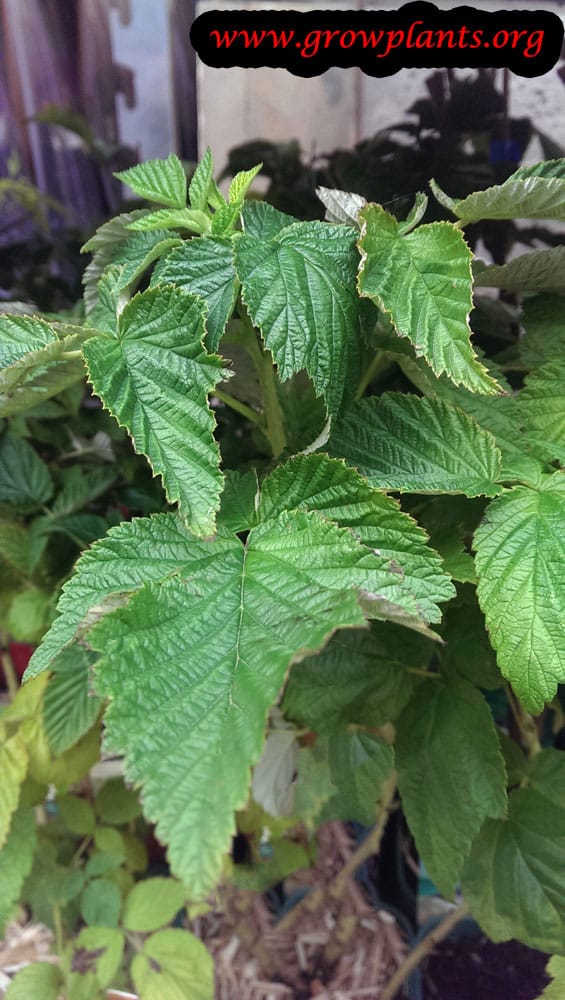
- Leaves & Foliage: Green leaves in groups of 3-5 leaflets, ovate with serrated edges; the leaves are used for a medicinal beverage.
- Flower Characteristics: Small white (occasionally purple-tinged) 5-petalled flowers, mostly in clusters, worked by bees.
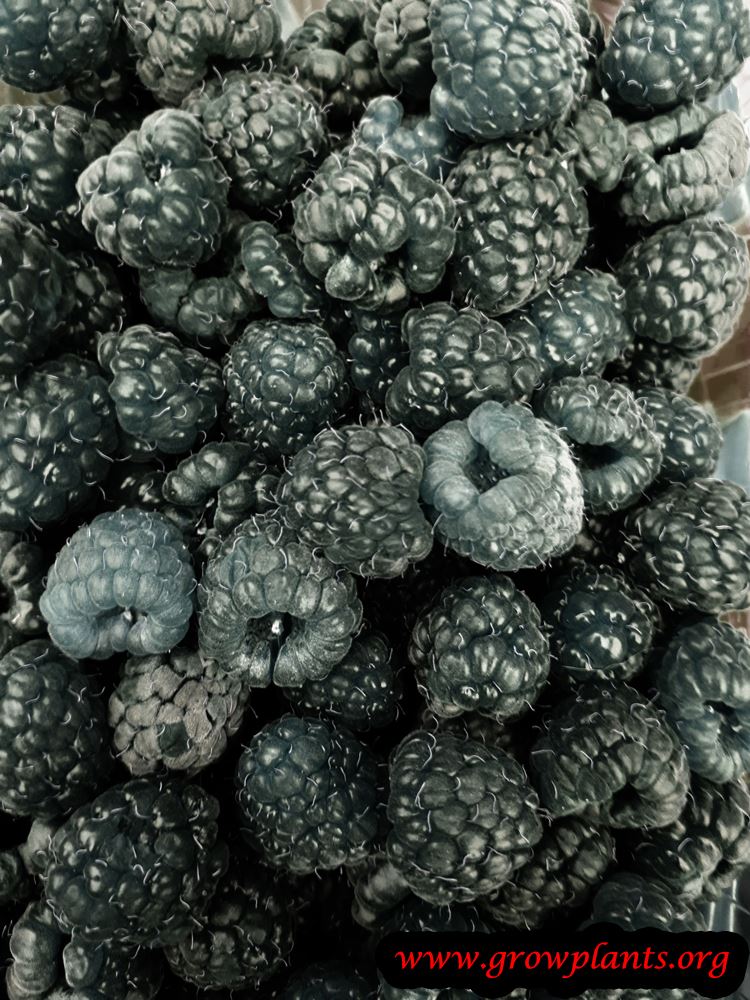
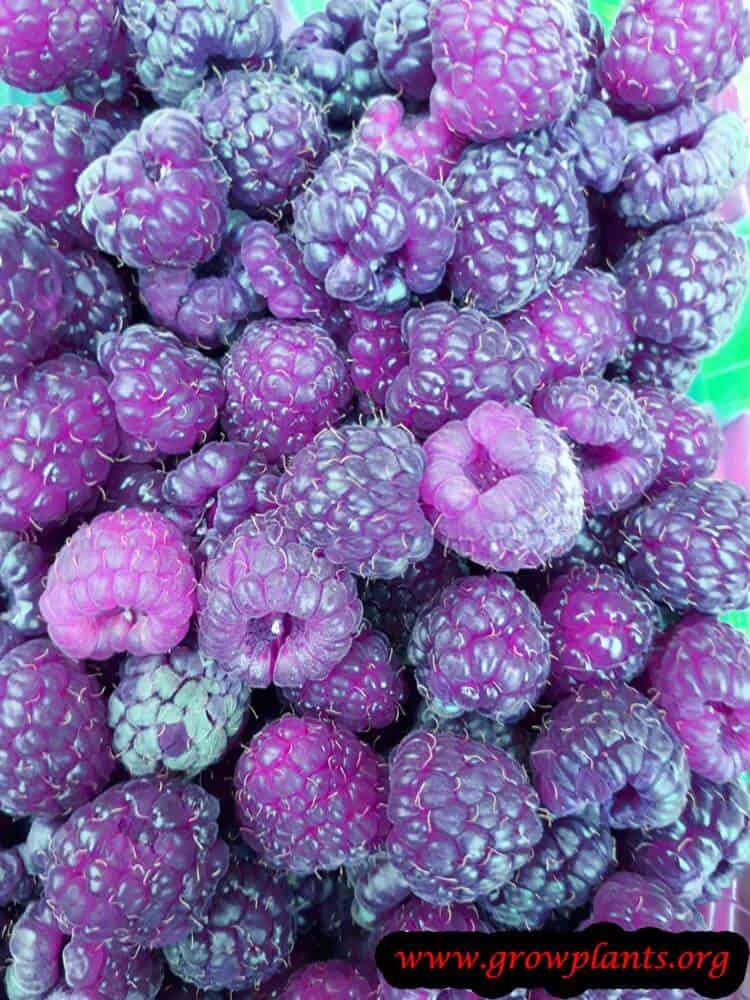
- Fruit Profile: Aggregate berries of many drupelets in red, blue, purple, black or golden-yellow depending on type; when picked the berry lifts off and the torus stays on the cane.
Primary Uses & Landscape Value
- Edible Uses: The berries are eaten fresh and used for cakes, cooking and juice; the young leaves are also used to make a herbal/medicinal beverage.
- Functional & Ornamental Roles: Grown as a fruit bush for fresh berries, cooking and juice; leaves are used for herbal tea. Can be invasive by suckering.
Care Guide: Planting, Soil & Watering
Overview: The raspberry (genus Rubus) is a vigorous cane fruit that grows best in full sun to half shade in rich, slightly acidic soil generous in organic matter and kept moist, and it needs a cold winter. It likes steady, plentiful watering through growth while still needing good drainage.
Quick Care Requirements
| Requirement | Ideal Condition |
|---|---|
| Planting Season | While dormant, from winter through spring into summer |
| Growth Rate | Fast |
| Soil Type | Rich, well-draining soil high in organic matter, kept mulched and moist |
| Soil pH | Slightly acidic (roughly 5.5–6.5) |
| Water Need | Moderate to High — keep the soil consistently moist |
Planting & Establishment
- Best Planting Season: Plant while dormant, from late winter through spring and into early summer; in hot climates avoid planting during the peak heat of summer.
- How to Plant:
- Hole Preparation: Dig a planting hole at least 50–100% wider than the root ball.
- Soil Amendments: Mix the backfill with rich soil, well-rotted leaves, compost, humus and plenty of organic matter.
- Planting Depth: Set the plant at the depth it grew before, keeping the crown at soil level, and firm it in; add a stake or trellis at the same time, since these canes benefit from support.
- Growth Speed & Expectations: A fast, vigorous grower whose biennial canes fruit in their second year; a cold winter (chilling hours) helps many cultivars crop.
Soil, Watering & Drainage Care
- Soil Mix & Drainage Needs: Give it rich, well-aerated soil that drains freely; in containers use a free-draining mix (peat or compost with a little perlite) rich in organic matter and mulched to stay moist, and make sure excess water drains away to prevent root rot.
- Watering Schedule & Technique:
- Young / Newly Planted: Water thoroughly at planting and keep the soil consistently moist while the young plant roots in — never let it dry out completely.
- Established: Water deeply and regularly through the growing season, especially as flowers and fruit develop, keeping the soil evenly moist while letting the very surface dry between waterings.
- Seasonal Adjustments: Increase watering in summer heat and while fruiting, and reduce it over the cooler, dormant months.
Climate, Light & Hardiness
Raspberry plant is at home in temperate, subtropical, and Mediterranean climates with a distinct winter chill and moderately cool summers, growing best in full sun to half shade. It is a cold-hardy, deciduous cane shrub reliably grown from USDA zone 4 up to about zone 10, though the warmest zones require low-chill cultivars and extra shade protection.
Quick Climate Specifications
| Climate Zones | Temperate, subtropical, Mediterranean |
|---|---|
| USDA Hardiness Zones | Approximately 4–10 (established, dormant canes; zone 10 needs low-chill cultivars) |
| Optimal Temp Range | Generally 15–25°C (59–77°F) during active growth |
| Cold Damage Begins | Around 0°C (32°F) on open blossoms and tender new spring shoots |
| Approx. Survival Minimum | Roughly −34°C (−29°F) briefly for dormant, established canes (zone 4 winters) |
| Frost Tolerance | High (dormant canes) / Low (blossoms and new growth) |
| Light Conditions | Full sun to half shade; about 70% shade recommended outside temperate climates |
| Wind Tolerance | Moderate (benefits from staking or trellising) |
Sunlight & Light Exposure
Optimal Light Setup
Full sun to half shade gives the strongest cane growth and fruiting.
Direct Sun Requirement
Full sun is preferred for maximum flowering and fruit yield, but the plant tolerates part shade without major decline.
Shade & Heat Management
In climates outside the cool temperate zone, growers typically provide around 70% shade to protect canes and fruit from excess heat and sun scald.
Best Exposure / Orientation
A site with morning sun and some afternoon relief in hot regions tends to reduce heat stress while still supporting good fruiting.
Temperature Extremes & Hardiness
USDA Hardiness & Regional Limits
Raspberry plant is generally suited to USDA zones 4–10. The zone 4 boundary reflects winter cold survival of dormant canes, while the zone 10 boundary is mostly about heat and insufficient winter chilling for reliable fruit set rather than the plant being unable to survive there.
Cold Damage & Winter Protection
Hard frost around or below freezing can injure open flowers and soft new cane growth in spring; established dormant canes are far more resilient than young plants or actively growing tips.
Frost Sensitivity
Dormant, mature canes have high frost tolerance; spring blossoms and emerging shoots have low frost tolerance and are the most vulnerable stage.
Extreme Heat Tolerance
Heat tolerance is moderate at best; in hot, non-temperate climates the plant benefits from substantial shade (around 70%) to avoid stress and poor fruit quality.
Chilling Requirement
Some cultivars need a winter chilling period of roughly 2–3 months to bloom and fruit properly; chilling needs vary by cultivar, which is why the warmest end of the hardiness range is cultivar-dependent.
Wind, Humidity & Microclimate
Humidity Preferences
The plant favors climates with consistently moist conditions through the growing season rather than prolonged dry spells.
Dry-Air Tolerance
Tolerance for very dry air is limited; sustained dryness stresses canes and reduces fruit quality.
Wind Tolerance
Wind tolerance is moderate; exposed canes are often staked or trellised to prevent wind damage and breakage.
Rainfall & Seasonal Moisture
Climates with reliable rainfall or moisture through spring and summer suit this plant best, mirroring its temperate-to-subtropical native range.
Microclimate Recommendations
Choose a sheltered site that avoids low-lying frost pockets during bloom, with some wind protection and, in hot climates, partial shade cover.
Growing in Pots, Balconies & Indoors
The raspberry (Rubus Idaeobatus) is a fruiting bramble of 0.2-3 m (8 in to 12 ft), widening over the years, not a houseplant, but it grows and crops well in a pot on a sunny balcony, patio or terrace when kept in check. It likes full sun to half shade and is best grown outdoors where it gets the light and seasonal chill it needs to fruit.
Quick Details
- Container Size: Start 40-60% bigger than the root ball and pot up in stages; about 15 L holds 2 mature plants plus 1-2 young ones
- Indoor Suitability: Not a houseplant – a fruiting bramble for outdoors
- Best Spot: Full sun to half shade outdoors
- Soil & Drainage: Acidic, organic-rich mix with good drainage; keep it moist under a mulch
- Watering in Pots: Average to generous with free drainage – never let the water sit; low-mineral water is better
Indoors & On the Windowsill
- Houseplant limits: The grower marks it as no for indoors – it needs open sun and room to cane, which a warm room and windowsill can’t give.
On a Balcony or Patio
- Light & wind: Give it a bright, open spot and tie in or support the canes. Walls and paving reflect heat, so pots dry quickly – check moisture in warm weather and keep the mulch topped up.
- Practicalities: A cropping bramble in a filled pot is heavy and can be thorny – stand it clear of walkways where you can water freely and let drainage run off.
Choosing the Pot, Soil & Long-Term Care
- Pot & drainage: A pot with strong drainage holes so water never sits; skip a standing water saucer to avoid root rot. Terracotta breathes and dries faster, glazed or plastic holds moisture longer.
- Potting mix: An acidic, organic-rich mix kept moist with a mulch of pine needles/bark or peat plus humus; refresh the soil in the dormant season as it loses vitality over time.
- Feeding: Potted brambles need feeding more often than those in the ground because nutrients leach with watering – feed through the growing season.
- Repotting: Pot up a size when the roots fill the pot and remove spent canes each dormant season, keeping a few young canes for next year’s crop.
Grower’s Container Tip
- Start bigger and pot up: Start in a pot 40-60% larger than the root ball and move up a size each time the roots fill it, until it reaches the size you want – this staged method keeps the plant healthy because potting soil loses vitality over time. Change the soil in the middle of the dormant (cold) season. Water with good drainage, ideally with low-mineral water, and keep the mix moist with an acidic mulch – pine needles or bark, peat or similar – plus humus and plenty of organic matter. In a 15 L pot it is better to keep about two mature plants plus one or two young ‘daughter’ plants for next year.
Growing this plant in a greenhouse
A greenhouse can give raspberry plant frost protection and cold protection. In the right climate it may also be kept growing through winter, depending on how much warmth and light are provided.
Greenhouse at a glance
| Greenhouse suitability | Conditional - depends on your climate |
|---|---|
| Main benefits | frost protection, cold protection |
| Season extension | earlier spring & later autumn |
| Outdoor protection advisable below | about 0°C |
| Suitable types | unheated greenhouse, polycarbonate greenhouse, lean-to |
| Heating | Heating is optional - useful mainly for winter growing in cold areas. |
Related greenhouse guides
- Greenhouses: How to Choose the Right Greenhouse
- Best Lean-To Greenhouses
- Polycarbonate Greenhouses: What to Look for Before Buying
Fertilizing & Feeding
Raspberry, across its red, black, purple, and golden-fruited types, is a moderate feeder: light, repeated feeding through the growing season supports cane growth and fruiting, without the heavy fertilizing that can push unwanted spread.
Quick Fertilizing Specs
| Main Nutrient Priority | Nitrogen to build new cane growth in spring, shifting toward balanced feeding as flowering and fruiting begin |
|---|---|
| Best Feeding Period | Early spring through the active growing season |
| Organic Options | Compost, aged manure, and organic mulch worked into the root zone support steady growth |
| Soil pH | Prefers slightly acidic soil |
| Reduce/Stop Feeding | Ease off feeding once fruiting finishes and cane growth slows toward the dormant season |
Feeding by Growth Stage
Establishment After Planting
Support root establishment and steady early cane growth across raspberry types without pushing excessive soft growth
| Nutrient direction | Light, balanced feeding focused on root development |
|---|---|
| Timing | At planting and through the first growing season |
| Frequency | A light feeding as new growth begins, then only as needed through the season |
| Fertilizer types | A balanced, complete fertilizer worked lightly into the root zone at planting, Compost or aged manure mixed into the planting hole along with rich soil |
| Precautions | Avoid heavy feeding right at planting, which can stress newly forming roots |
New Cane Growth
Build vigorous new canes each season, since older canes bear fruit and are removed after cropping
| Nutrient direction | A modest, nitrogen-forward feeding to drive new cane and leaf growth without fueling unwanted spread |
|---|---|
| Timing | Early spring as new growth resumes, alongside the seasonal mulch and organic matter refresh |
| Frequency | Light, repeated feedings through spring into early summer |
| Fertilizer types | A nitrogen-forward complete fertilizer applied around the root zone in modest amounts, Fresh mulch and organic matter worked in each spring |
| Precautions | Ease off nitrogen once canes are well established for the season; raspberries spread readily by suckers, and heavy nitrogen only adds to that vigor |
Flowering and Fruit Development
Support flower set and fruit fill across raspberry color types without encouraging excess leafy growth
| Nutrient direction | Shift toward a balanced to potassium-leaning feeding as flowers and fruit develop |
|---|---|
| Timing | From bloom through fruit ripening |
| Frequency | A light feeding at bloom, then minimal further feeding while fruit is ripening |
| Fertilizer types | A balanced or potassium-leaning fertilizer applied at bloom, Organic mulch maintained around the root zone through fruiting |
| Precautions | Avoid heavy nitrogen once flowering begins, which favors leafy growth over fruit quality |
Nutrient Deficiency Signs & Corrections
New leaves turn pale yellow between dark green veins while the veins themselves stay green
| Possible causes | High or alkaline soil pH limiting iron availability to the roots, Waterlogged, compacted, or poorly drained soil restricting root uptake, True iron shortage in very sandy or heavily leached soil |
|---|---|
| Appears first on | Newest leaves at the shoot tips first |
| What to check | Soil drainage and compaction around the root zone, Recent changes to soil pH such as lime application or hard irrigation water, Whether older leaves stay green while only new growth is affected |
| Possible correction | Improve drainage and correct soil pH toward a more acidic range first; apply a chelated iron product per its label only if pH correction alone does not resolve it |
Older leaves turn uniformly pale green to yellow and new cane growth is weak
| Possible causes | Insufficient nitrogen in the soil or feeding program, Sandy or fast-draining soil that leaches nutrients quickly, Dense sucker growth competing with itself for available nitrogen |
|---|---|
| Appears first on | Older, lower leaves first, moving upward if uncorrected |
| What to check | Overall cane vigor and leaf color compared to earlier in the season, Whether the row or patch has been thinned recently, Whether the last feeding was recent and adequate |
| Possible correction | Resume a light nitrogen-forward feeding during active growth and refresh organic mulch around the root zone |
Leaf margins on older leaves turn scorched or brown and fruit may be smaller than usual
| Possible causes | Low potassium availability in the soil, Very sandy soil that leaches potassium readily, Drought stress limiting nutrient uptake even when potassium is present |
|---|---|
| Appears first on | Margins of older, lower leaves first |
| What to check | Soil moisture consistency during fruit development, Whether scorch is confined to leaf edges rather than the whole leaf, Fruit size and fill compared to a typical season |
| Possible correction | Work a potassium-containing balanced fertilizer into the root zone and maintain even soil moisture through fruiting |
Pruning, Training & Seasonal Maintenance
Raspberry canes are biennial: each cane grows vegetatively in its first year (a primocane), overwinters, then flowers and fruits along its length in its second year (a floricane) before dying back completely. Pruning tolerance is high and annual removal of spent floricanes is essential – left in place they crowd the row, shelter cane borers and mites, and contribute nothing further. The safest and most productive window is dormancy (late winter into earliest spring, matching this plant’s noted pruning season), with a second pass right after harvest to strip out canes that have just finished fruiting. Timing matters directly for yield: cutting a floricane before it fruits removes that cane’s entire crop for the year.
Quick Pruning & Maintenance Specs
| Pruning Tolerance | High |
| Primary Pruning Window | Dormant – end of winter into earliest spring |
| Secondary Maintenance Window | Immediately post-harvest (remove spent floricanes); summer (thin/tip primocanes) |
| Typical Frequency | Annual |
| Main Objective | Remove 2-year fruited canes; thin and space new canes for next year’s crop and airflow |
| Young Plant Priority | Let primocanes establish; remove only winter-damaged tips |
| Mature Plant Priority | Annual floricane removal at the base + primocane thinning/renewal |
| Best Tool Type | Bypass secateurs (thorny canes – wear gloves) |
| Avoid Heavy Pruning During | Active flowering/fruit set on floricanes – sacrifices the current crop |
Pruning by Plant Age & Size
Newly Established
Minimal. Remove only damaged or dead cane tips; do not head back healthy young primocanes – they are next year’s fruiting wood.
Young / Formative
Cane selection: thin overcrowded primocanes to the strongest 4–6 per clump so remaining canes are sturdy rather than thin and whippy. Tie/train canes to a wire or stake support (this plant’s own planting notes call for trellising) rather than letting them sprawl.
Mature / Established
Remove fruited floricanes at ground level each year right after harvest; each dormant season, thin and lightly tip the retained primocanes before growth resumes.
Seasonal Pruning Schedule
Post-Harvest
Objective: clear spent wood. Remove: floricanes that have just finished fruiting, cut at the base. Do not remove: healthy current-season primocanes. Expected response: reduced disease/borer harborage, better light to the remaining canes. Flowering/fruiting impact: none – these canes are finished.
Dormant/Winter (end of winter–early spring)
Objective: set up next year’s crop. Remove: weak, thin, winter-damaged or overcrowded primocanes; tip back overly tall canes. Do not remove: the strongest, well-spaced primocanes – these are next year’s floricanes. Expected response: fewer but more productive fruiting canes. Flowering/fruiting impact: directly determines next season’s yield.
Ongoing Sanitary
Remove any cane showing dieback, mite damage or borer entry as soon as seen.
Flowering & Fruiting Wood
Fruit forms on second-year wood (floricanes), not on the current season’s new growth. A primocane produces no flowers in its first year; it becomes next year’s fruiting cane. Removing a cane in its first year therefore costs a full future crop, while removing it after its second-year fruiting costs nothing. (Some raspberry types are primocane-fruiting/”fall-bearing” and are instead mown to the ground every winter for a single simpler autumn crop; the source data here matches the classic summer-fruiting floricane pattern, so that is the default covered above.)
Structural Pruning & Training
Thin primocanes to the sturdiest canes per clump/row-foot rather than letting every sucker stand; train remaining canes onto wire or stake supports for airflow and easier harvest.
Special Growth to Remove
Root suckers (this species spreads readily by basal shoots) that emerge outside the intended row or bed – left unchecked the planting becomes an impenetrable thicket, matching this plant’s own “can be invasive” note.
Container & Small-Space Pruning
In pots, cane number must be actively limited – roughly 2 mature fruiting canes plus 1–2 daughter canes per 15L container, well below what the plant would produce in open ground. Remove excess suckers promptly rather than letting the pot fill with canes competing for a fixed root volume.
Tools
Bypass secateurs for all normal cane cuts (canes are pithy, not woody – no saw needed). Thick gloves are worth mentioning given the thorns.
Tool Hygiene & Disease Risk
Increased risk: cane borers and cane blight/spur blight can be spread on pruning cuts. Wipe or disinfect blades between plants if any cane shows dieback, discoloration, or borer entry holes.
Cut Placement & Technique
Cut spent floricanes flush at or near ground level – they will not regrow from that point; new growth comes from the crown/roots. When thinning primocanes, cut at the base rather than heading mid-cane.
Heavy Pruning & Rejuvenation
Beyond the annual floricane removal, hard rejuvenation (cutting the whole planting to the ground) is not routinely needed for this floricane type and would forfeit a full season’s crop; it is mainly used at establishment or as a last resort on a badly overgrown, disease-ridden planting.
Post-Pruning Care
Water newly cut-back plantings during establishment; mulch as already recommended for this plant; watch cut ends for borer entry. No extra feeding is needed beyond the normal early-spring fertilizing already called for.
Common Pruning Mistakes
Leaving spent floricanes standing too long (harbors cane borer and disease); over-thinning primocanes below a productive number; heading floricanes mid-cane instead of removing them at the base; failing to remove suckers straying outside the bed.
When NOT to Prune
Do not cut healthy first-year primocanes in summer – that removes next year’s entire crop. Avoid stimulating fresh regrowth with pruning right before a hard frost.
Recommended Tools (by task)
- bypass_secateurs – the workhorse for both floricane removal and primocane thinning; clean cuts on cane-diameter wood without crushing.
- soft_ties_stakes – for tying primocanes to wire/stake supports as this plant’s own planting guidance recommends trellising.
- blade_disinfectant – cane borer and cane-blight risk make blade hygiene worthwhile when cutting out symptomatic canes.
Pruning Troubleshooting
| Problem | Possible Cause | What to Check | Corrective Action |
| Little or no fruit despite healthy canes | Primocanes accidentally cut/headed the previous season | Whether last year’s canes were touched before they overwintered as floricanes | Leave all healthy primocanes untouched through their first winter |
| Thin, weak canes | Overcrowding – too many primocanes left unthinned | Cane density per clump/row-foot | Thin to the strongest 4–6 canes per clump each dormant season |
| Cane dieback at cut ends | Cane borer entry or blight at pruning wounds | Wilting tips, dark cankers near cuts | Cut well below the damaged section and dispose of prunings; disinfect tools |
| Bed spreading well beyond its row | Root suckers left unremoved | New shoots emerging outside the planned bed edge | Cut/dig out suckers at the base as soon as seen |
Propagation Guide
Raspberry plants are best propagated vegetatively, either by separating basal-shoot suckers or by rooting cuttings, both of which establish quickly and keep fruit quality consistent; seed is possible but not recommended since the many color forms (red, black, purple, golden) and named hybrids like Boysenberry or Marionberry won’t reliably reproduce from seed. Vegetative propagation is easy, while seed-growing is a slower, several-month process.
Quick Propagation Specs
| Best Propagation Method | Basal-shoot suckers or stem cuttings |
| Alternative Methods | Seed (possible, not recommended) |
| Propagation Difficulty | Easy (vegetative) – Moderate (seed) |
| Seed True-to-Type | Variable – color form and cultivar identity are not guaranteed from seed |
| Vegetative True-to-Type | Yes |
| Best Propagation Season | Spring |
| Seed Germination Time | 2–4 months |
| Cutting Rooting Time | 1–3 weeks |
| Seed Sowing Depth | Surface-sown, lightly pressed in |
Growing from Seed
Seed Handling & Viability
Store seed dry, in a dark place, preferably refrigerated, until sowing.
Sowing Season
End of winter into spring; in hardiness zone 10b it is better sown and grown indoors over winter.
Sowing Depth & Orientation
Sow on the soil surface without a deep covering, then press seed in lightly – the site notes both a surface-sow instruction and a general recommendation to bury seed, so a shallow press-in reconciles the two. Vermiculite or peat-based mixes work well as the sowing medium. Space seedlings roughly 3×4 cm (1.2×1.8 in) apart, or sow into individual pots for easier seedling control.
Germination Conditions
High humidity, moist soil, full sun; cover pots with plastic wrap to maintain humidity around the seed. Water moderately to generously with good drainage.
Germination Time
2–4 months.
Seedling Care
Keep seedlings in full sun and protect them from pests, wind, and cold snaps until established.
Stem Cuttings
Cutting Type
Stem cuttings.
Best Timing
Spring.
Rooting Setup
Moist soil in light shade.
Rooting Hormone
Not specified by the site; optional, may improve rooting consistency but is not required.
Rooting Time
1–3 weeks.
Division, Offsets, Pups & Suckers
Raspberry plants readily produce basal-shoot suckers. In spring, gently separate a rooted sucker from the mother plant, keeping its roots intact, for the fastest and most reliable way to start a new true-to-type plant.
Bloom & Flower Guide
Quick Details
- Bloom Season: Spring into summer
- Flower Appearance: White or purple five-petalled flowers, 1-3 cm across, borne in small clusters
- Edibility: Grown for its fruit; the flowers are the step before the berries rather than a food in themselves
Detailed Blooming Overview
Raspberry flowers are modest but important: small, five-petalled blooms of white or purple, 1-3 cm across, that open in clusters through spring and into summer. Each one that is pollinated becomes a berry, so a good bloom, well visited by bees, is the promise of a good crop. Bees and other pollinators do the essential work here.
Flower Characteristics
- Colour is white or purple.
- Five petals, each flower 1-3 cm across.
- Carried in small clusters on the canes.
Bloom Care & Thinning
- Holding the bloom: Flowers may drop or set poorly if the plant runs short of water or nutrients during flowering, so keep it evenly watered and lightly fed as it blooms.
- Pollination: Bees and other pollinators set the flowers – plant to welcome them for the best fruit set.
Fruit & Uses
Raspberry plant is the general raspberry growing guide, covering cultivars whose ripe aggregate berries can be red, black/purple or golden depending on variety; the fruit is picked from summer into autumn and eaten fresh or used in baking, jam and juice. The leaves are also gathered and dried for a traditional herbal tea; only the ripe fruit is eaten fresh, the leaves are used dried only.
Quick Edible Specs
| Edible Parts | Fruit (aggregate berries; colour varies by cultivar – red, black/purple or golden); leaves |
|---|---|
| Main Use(s) | Fruit – culinary (fresh eating, baking, juice); leaves – herbal beverage, traditionally used medicinally |
| Eaten Raw or Cooked | Fruit: raw or cooked; leaves: dried and infused only |
| Preparation Required | Fruit: none (rinse); leaves: dry and steep, not eaten fresh |
| Harvest Season | Fruit: summer–autumn; leaves: spring–summer |
| Time to First Harvest | Canes generally fruit from their second year onward (see Pruning/Care for cane-age details) |
| Storage | Very perishable once picked; best eaten fresh, frozen, or processed within a day or two |
| Safety/Toxicity Caveat | No significant toxicity; only dried leaves, not fresh raw leaves, are used for tea |
Fruit
Depending on the cultivar, the ripe berry can be red, black/purple or golden; whichever the colour, it forms the same way – small drupelets fused around a central torus that stays on the plant when the ripe fruit is picked, leaving a hollow berry behind. Birds readily take the crop, so netting the plants as fruit ripens is common (see Care). Once picked, berries are eaten fresh, baked, cooked into jam, or juiced.
Leaves & Greens
Young green leaves are harvested through spring and summer, cut from the base of the leaf and kept away from fruiting canes so picking doesn’t reduce the crop. They are dried and steeped as raspberry leaf tea, a well-known traditional herbal beverage, and are not eaten fresh as a green.
Preparation, Uses & Safety
Fruit needs no preparation beyond washing and is used fresh, baked, or cooked into jam and juice. Leaves must be dried before use and are taken only as an infusion; this is a traditional beverage use, not a medical treatment.
Pests, Diseases & Troubleshooting
Overview: Raspberries face aphids that spread mosaic viruses, cane and rednecked cane borers, spider mites and the increasingly dominant spotted wing drosophila, plus the fungal cane troubles — cane blight, spur blight and anthracnose. Managing them is mostly cultural: cut out old fruited canes yearly, keep rows open and airy, harvest often and cleanly, and plant only certified virus-free stock.
Quick Troubleshooting Overview
| Issue / Pest | Main Symptom | Primary Solution |
|---|---|---|
| Aphids | Curled tips, sticky honeydew, spread of virus | Protect predators, water jet, insecticidal soap |
| Cane borers | Wilting tips or swollen galls; canes die | Prune out and burn affected canes below damage |
| Spider / redberry mite | Stippled leaves; uneven, hard red drupelets | Hose foliage, horticultural oil, remove old canes |
| Spotted wing drosophila | Soft, collapsing, maggoty ripe fruit | Pick often, cool fast, sanitation, monitor traps |
| Cane & spur blight / anthracnose | Purple-brown cane lesions; buds die back | Prune out old canes, airflow, sanitation, copper |
| Grey mould (botrytis) | Fuzzy grey rot on ripening berries | Airflow, pick promptly, avoid wet dense canopy |
Common Pests & Management
- Aphids (Amphorophora agathonica / Aphis idaei):
- Symptoms: Colonies of small green aphids on shoot tips and leaf undersides cause curling and stunting, but the real danger is their role spreading raspberry mosaic and leaf-curl viruses from plant to plant; sticky honeydew and sooty mould follow.
- Prevention & Control: Because virus spread matters more than the direct feeding, keep plants vigorous and rogue out any virus-symptomatic canes. Protect ladybirds, lacewings and parasitic wasps, and knock aphids off with a water jet. Use insecticidal soap or light horticultural oil on undersides for heavy colonies, and start with certified virus-free stock.
- Spotted wing drosophila (Drosophila suzukii):
- Symptoms: Unlike common vinegar flies, this fruit fly lays eggs in sound, ripening fruit; berries soften, weep and collapse within a day or two and contain small white maggots. It is now the most serious pest of soft brambles in many regions.
- Prevention & Control: Harvest ripe fruit frequently and completely, and chill it immediately to stop larvae developing. Remove and destroy (do not compost) overripe and fallen berries to break the cycle. Keep the canopy open and pick clean. Monitor with vinegar/yeast cup traps; where pressure is severe, fine mesh netting or an evening-applied spinosad program per label may be needed.
- Raspberry cane borer (Oberea bimaculata):
- Symptoms: Shoot tips suddenly wilt and blacken in early season; look for two neat rings of punctures a short distance apart near the tip where the beetle girdles the cane to lay an egg. The grub then tunnels down the cane.
- Prevention & Control: As soon as a tip wilts, prune the cane a few centimetres below the lower ring of punctures and destroy it, removing the egg or grub before it bores deeper. Keep nearby wild brambles cleared, as they harbour the beetle. No spray is usually needed if wilting tips are cut out promptly.
- Rednecked cane borer (Agrilus ruficollis):
- Symptoms: Conspicuous cigar-shaped swellings (galls) several centimetres long form on canes; growth above the gall is weak and may die, and the cane can snap at the swelling.
- Prevention & Control: Cut out and burn galled canes during dormant pruning, below the swelling, to remove the overwintering larva. Remove wild brambles nearby. Maintaining vigorous, well-spaced canes and good sanitation keeps this beetle at low levels without insecticides.
- Two-spotted spider mite (Tetranychus urticae):
- Symptoms: Fine pale stippling, bronzing and webbing on leaf undersides in hot, dry, dusty conditions; heavy feeding yellows leaves and reduces fruit size and vigour.
- Prevention & Control: Avoid drought and dust stress and hose foliage undersides in hot spells. Protect and encourage predatory mites. Removing old fruited canes after harvest reduces overwintering sites. Horticultural oil or insecticidal soap on leaf undersides controls outbreaks; rotate products to avoid resistance.
Diseases & Fungal Issues
- Cane blight (Leptosphaeria coniothyrium):
- Symptoms: Dark brown-to-purple lesions develop on canes, often where they were wounded by pruning or borers; the bark cracks, canes become brittle and snap, and shoots above the lesion wilt and die, especially in the fruiting year.
- Treatment & Management: Prune only in dry weather with clean tools and avoid wounding canes. Cut out and burn infected canes well below the lesion. Keep rows open and airy, remove old fruited canes each year, and control cane borers that create entry wounds. A copper or labelled fungicide at pruning helps where blight is chronic.
- Spur blight (Didymella applanata):
- Symptoms: Purple-brown blotches appear around the buds and nodes on first-year canes, later turning silvery-grey with black dots; affected buds die or produce weak, unproductive laterals the next year.
- Treatment & Management: Thin canes to improve air movement and light penetration, and avoid excess nitrogen that causes soft, crowded growth. Remove and burn infected canes. Keep the base weed-free and mulch to reduce spore splash. Fungicides used for cane blight also help suppress spur blight.
- Anthracnose (Elsinoe veneta):
- Symptoms: Small purple spots on canes enlarge into sunken grey-centred pits with purple margins (“cat’s-eye” spots); leaves show small spots that drop out, and fruit can ripen unevenly. Black raspberries are especially prone.
- Treatment & Management: Start with clean stock and grow resistant types where available. Prune out and burn old and infected canes, thin for airflow, and avoid overhead irrigation. A dormant/delayed-dormant lime-sulfur or copper spray at bud break, repeated per label, is the mainstay where anthracnose is severe.
- Grey mould / fruit rot (Botrytis cinerea):
- Symptoms: A fuzzy grey mould rots ripening and picked berries, spreading fast in wet weather and dense canopies; infected flowers may fail to set.
- Treatment & Management: Open the canopy by thinning and trellising so fruit dries quickly, and pick ripe berries frequently and gently. Remove rotted and mummified fruit. Avoid overhead watering and excess nitrogen. Good airflow and sanitation usually suffice; a botrytis-labelled fungicide at bloom helps in persistently wet seasons.
- Phytophthora root rot (Phytophthora spp.):
- Symptoms: Canes are weak, leaves yellow or scorch and wilt despite moist soil, and the plant collapses; scraping the crown reveals reddish-brown dead tissue. It is worst on heavy, wet, poorly drained ground.
- Treatment & Management: Prevention is everything: plant on raised beds or ridges in free-draining soil and never let the crown sit waterlogged. Improve drainage and avoid overwatering. Choose tolerant cultivars. Once established the rot is very hard to cure, so remove badly affected plants and do not replant brambles in the same wet spot.
Growing Difficulties & Abiotic Problems
- Winter cane dieback:
- Cause & Symptoms: Canes brown and die back from the tip over winter, worst on tender or over-vigorous late growth and in exposed sites, reducing the next crop.
- Correction Strategy: Grow types hardy for your climate, stop feeding nitrogen late in the season so wood ripens, and shelter or lower canes where winters are harsh. Prune out dead tips back to healthy wood in late dormancy.
- Iron chlorosis on alkaline soil:
- Cause & Symptoms: Youngest leaves yellow between green veins on chalky or high-pH soils, where brambles (which prefer slightly acid soil) struggle to take up iron.
- Correction Strategy: Mulch with organic matter to acidify gradually, keep soil evenly moist, and apply chelated iron for quick green-up. Avoid over-liming and improve drainage, since waterlogging worsens chlorosis.
- Crumbly, seedy or sunscalded fruit:
- Cause & Symptoms: Berries fall apart into loose drupelets (crumbly fruit) or develop white, hard sunburned patches on the exposed side in intense heat; drought and poor pollination make it worse.
- Correction Strategy: Water evenly and deeply during fruit development and mulch to buffer moisture, and ensure good pollinator activity. Note that persistent crumbly fruit across a plant usually signals virus — replace with certified stock. Light shade or leaf cover on the hottest afternoons reduces sunscald.
What Helps — Products & Tools
For brambles the core toolkit is insecticidal soap and light horticultural or neem oil for aphids and mites, a delayed-dormant horticultural oil or lime-sulfur for redberry mite and anthracnose, and copper or lime-sulfur fungicide for cane and spur blight. Vinegar/yeast cup traps monitor spotted wing drosophila, fine mesh netting excludes it and birds, and evening-applied spinosad is a last resort for the fly. Chelated iron corrects lime chlorosis. The single most powerful tools, though, are cultural: removing and burning old fruited canes each year, thinning for airflow, frequent clean harvesting and starting with certified virus-free plants; always follow the label and protect pollinators.