Plant Profile & Key Characteristics
Overview: Curly (yellow) dock, an evergreen herbaceous perennial 20-50 cm (8-20 in) tall with edible young leaves. It is a hardy, deep-rooted plant often grown for greens and traditional medicine.
Quick Specifications
| Specification | Attribute |
|---|---|
| Plant Type / Life Cycle | Herbaceous perennial |
| Foliage Type | Evergreen |
| Mature Size | 20-50 cm (8-20 in) tall in leaf (taller in flower) |
| Growth Rate | Moderate to fast |
| Root System | Deep taproot |
| Toxicity | Young leaves edible but high in oxalic acid — eat in moderation |
| Hardiness | USDA zones 4-10 |
Growth Form & Structure
- Height & Spread: A leafy rosette 20-50 cm (8-20 in) tall throwing up taller flower stems; also grows in a deep container.
- Growth Habit & Form: Rosette-forming herbaceous plant anchored by a stout taproot; a vigorous self-seeder that can be invasive.
- Lifespan & Maturity: Long-lived perennial, quick to establish and leaves harvestable year-round.
Anatomy & Physical Features
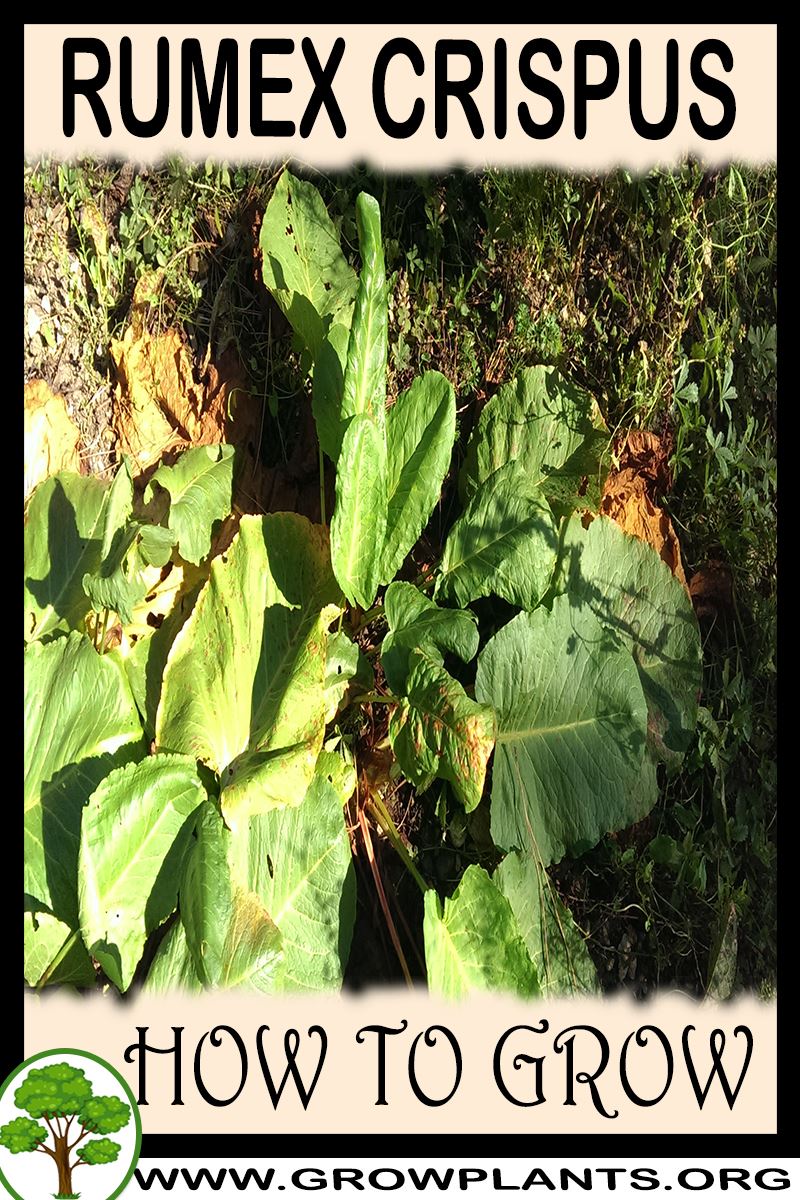
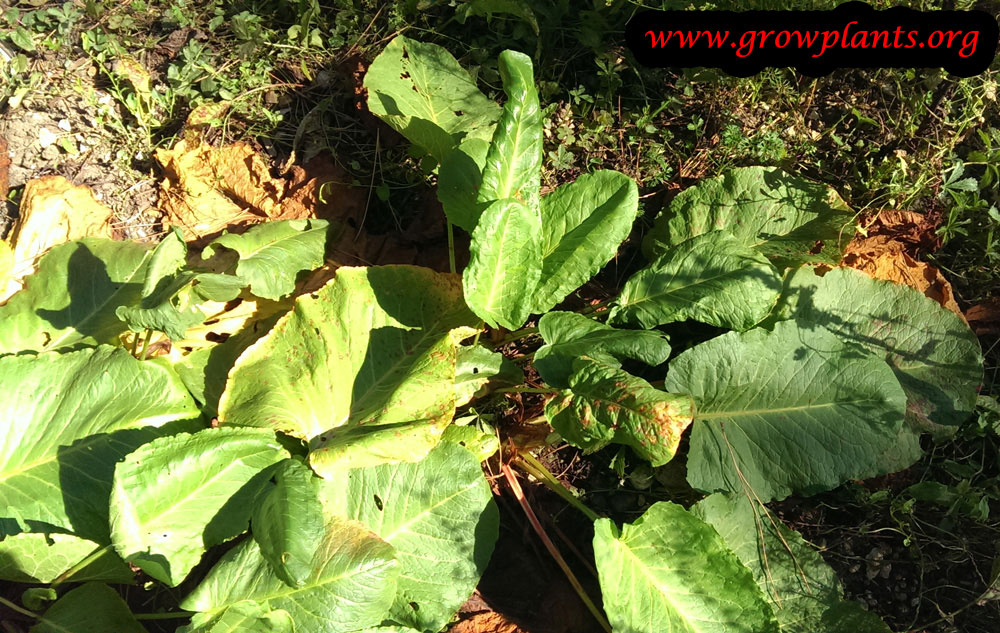
- Leaves & Foliage: Green, elliptic leaves 7-25 cm long with characteristically curled, wavy margins.
- Flower Characteristics: Small green flowers, red-edged, in tall inflorescences that ripen rusty brown.
Primary Uses & Landscape Value
- Edible Uses: Young leaves cooked as greens; long used as a medicinal herb.
- Functional & Ornamental Roles: Grown chiefly for edible young leaves and herbal use.
Care Guide: Planting, Soil & Watering
Overview: Rumex crispus (Rumex crispus), also known as curly dock or yellow dock, is a hardy, herbaceous dock grown for its edible or ornamental leaves, thriving in full sun to part shade across hardiness zones 4-10. It grows in rich, moist soil with moderate water and establishes quickly once settled.
Quick Care Requirements
| Requirement | Ideal Condition |
|---|---|
| Planting Season | Warm season – spring through summer |
| Growth Rate | Moderate to Fast |
| Soil Type | Rich, moist soil |
| Water Need | moderate water needs |
Planting & Establishment
- Best Planting Season: Plant during the growing season, from spring through summer (and into autumn in mild zones), once the soil has warmed.
- How to Plant:
- Hole Preparation: Dig a hole a little wider than the root ball and loosen the soil so the deep taproot can establish.
- Soil Amendments: Work organic matter into the backfill to enrich the soil, then firm the plant in gently.
- Planting Depth: Set the plant at the depth it grew in its pot, keeping the crown at the soil surface.
- Growth Speed & Expectations: A moderate to fast grower; it fills out quickly and can spread or self-seed vigorously, so manage it to keep it in bounds.
Soil, Watering & Drainage Care
- Soil Mix & Drainage Needs: Provide rich, moist soil that drains adequately so the crown does not rot; docks are adaptable and grow readily in containers with good drainage.
- Watering Schedule & Technique:
- Young / Newly Planted: Keep the soil evenly moist after planting so the young plant establishes without checking.
- Established: Once established, water regularly to keep the leaves tender; moderate water.
- Seasonal Adjustments: Increase watering through summer heat to prevent bitter, tough leaves, and reduce it in cool or wet weather.
Climate, Light & Hardiness
Curly dock is a widely adaptable, weedy perennial suited to temperate, Mediterranean, and subtropical climates, hardy through USDA zone 4–10. It grows readily in full sun to half shade.
Quick Climate Specifications
| Climate Zones | Temperate, Mediterranean, subtropical |
|---|---|
| USDA Hardiness Zones | 4–10 |
| Frost Tolerance | High |
| Light Conditions | Full sun to half shade |
Sunlight & Light Exposure
Optimal Light Setup
Grows well in full sun or half shade.
Temperature Extremes & Hardiness
USDA Hardiness & Regional Limits
One of the broader-ranging, more cold-hardy leaf plants on the site, comfortably spanning USDA zone 4–10.
Growing in Pots, Balconies & Indoors
Rumex crispus is a leafy, sun-to-part-shade plant, not a houseplant – it grows readily in a pot or planter outdoors, while indoors it lacks the light to do well.
Quick Details
- Container Size: A medium pot or planter with free drainage (the grower confirms container growing but gives no set size)
- Indoor Suitability: Not a houseplant; a bright spot outdoors suits it far better
- Best Spot: Full sun to half shade
- Soil & Drainage: Aerated, organic-rich mix that stays evenly moist yet drains freely
- Watering in Pots: Keep steadily moist – these leafy plants dislike drying out, but the pot must still drain.
Indoors & On the Windowsill
- Houseplant limits: The grower lists it as not an indoor houseplant – it grows leafier and healthier with real outdoor light.
- Windowsill option: A very bright sill can keep a small plant ticking over for cut-and-come-again leaves, but outdoors is better.
On a Balcony or Patio
- Light and shelter: A sunny to lightly shaded balcony spot is ideal; in strong heat a little afternoon shade keeps the leaves tender. Containers dry fast, so check moisture often.
- Practicalities: Watch the weight of a watered pot and manage drainage runoff with a tray or pot feet.
Choosing the Pot, Soil & Long-Term Care
- Pot and drainage: Choose a pot with strong drainage holes; if you stand it on a saucer, empty the saucer promptly so the roots never sit in water. Terracotta breathes and dries faster, while glazed or plastic pots hold moisture longer.
- Potting mix: Use a well-aerated, organic-rich mix – a good potting soil, or peat/coir blended with perlite or vermiculite for drainage and air.
- Watering: Water regularly to keep the mix evenly moist – pots dry out far faster than open ground, so check often in heat – but never leave it standing wet.
- Feeding: Potted plants run through their soil faster because nutrients leach out with every watering, so feed a little more often than you would in open ground.
- Repotting: Every couple of years, refresh part of the potting mix; for perennials you can lightly trim the roots and top growth at the same time to keep things in balance.
Fertilizing & Feeding
Curly dock naturally favors rich soil and grows vigorously once established; moderate, nitrogen-leaning feeding supports steady leaf production for harvest, though this already-aggressive plant rarely needs heavy feeding to perform well.
Quick Fertilizing Specs
| Feeding Level | Moderate feeder |
|---|---|
| Main Nutrient Priority | Balanced to nitrogen-leaning feeding that favors continuous, harvestable leaf growth |
| Best Feeding Period | Through the main growing season while leaves are being regularly harvested |
| Organic Options | Compost or well-rotted organic matter worked into rich, fertile soil |
| Soil pH | Adaptable to a range of garden soils without special pH adjustment |
| Reduce/Stop Feeding | Ease off feeding when growth slows in cooler weather, then resume as active growth returns |
| Micronutrients | Rarely an issue in fertile garden soil; address only if a specific deficiency appears |
Feeding by Growth Stage
Getting established after planting
Help newly planted or seeded curly dock build roots and settle into rich soil before regular leaf harvest begins.
| Nutrient direction | A balanced feeding at planting supports early root and leaf development in the fertile soil this plant prefers. |
|---|---|
| Timing | At planting and through the first stretch of active growth. |
| Frequency | A single balanced feeding is usually enough to help new plantings settle in before regular feeding begins. |
| Fertilizer types | A balanced complete fertilizer, Compost or well-rotted organic matter worked into the planting area |
| Precautions | Even in fertile soil, avoid overfeeding a new planting; this species establishes quickly and spreads readily once it has a foothold. |
Sustained leaf growth for ongoing harvest
Keep this vigorous grower producing tender, harvestable leaves throughout its long growing season.
| Nutrient direction | Moderate, nitrogen-leaning feeding supports the steady leaf renewal that repeated harvest demands from rich soil. |
|---|---|
| Timing | Through the main growing season while leaves are being regularly harvested. |
| Frequency | Feed at a moderate pace through the growing season, tapering off if growth becomes excessive. |
| Fertilizer types | A balanced to nitrogen-leaning complete fertilizer, A top-dressing of compost or well-rotted manure during active growth |
| Precautions | This plant is already considered aggressive; avoid heavy feeding that pushes it to spread beyond its intended area. |
Nutrient Deficiency Signs & Corrections
Older leaves turn pale green to yellow and new leaf production for harvest slows.
| Possible causes | low available soil nitrogen despite generally rich soil, depleted soil from repeated leaf harvest without replenishment, nitrogen leaching after heavy rain or watering |
|---|---|
| Appears first on | older, lower leaves |
| What to check | recent feeding and harvest history, soil organic matter level, drainage and watering pattern |
| Possible correction | Work in compost or well-rotted manure, or apply a balanced to nitrogen-leaning fertilizer, then watch new leaf growth for improvement. |
New leaves emerge pale yellow while the veins stay green.
| Possible causes | high soil pH limiting iron availability, waterlogged or compacted soil restricting root uptake, container growing in an alkaline potting mix |
|---|---|
| Appears first on | newest growth at the shoot tips |
| What to check | soil pH, drainage around the roots, whether the plant is container-grown in an alkaline mix |
| Possible correction | Improve drainage, work toward a more neutral soil pH, and apply a chelated iron product per its label if the pattern continues. |
Older, lower leaves show yellowing between the veins while the veins themselves stay green.
| Possible causes | low soil magnesium, heavy leaching from rich, frequently irrigated soil, competition from excess potassium applied during heavy feeding |
|---|---|
| Appears first on | older leaves lower on the plant |
| What to check | soil composition and drainage, recent feeding history and rates, whether nearby leafy plants show a similar pattern |
| Possible correction | Work organic matter into the soil and apply a complete fertilizer that supplies magnesium; reassess older leaves after new growth emerges. |
Pruning, Training & Seasonal Maintenance
Curly dock is a compact, deep-taprooted perennial rosette grown for its edible young leaves; it carries no woody growth, so maintenance is entirely leaf and flower-stalk removal. It tolerates leaf harvesting freely once established, and the priority cut is the flowering stem – curly dock is noted as aggressive and invasive, and its seed is notoriously long-lived in the soil, so stopping seed formation matters far more here than shaping the plant. Left unpruned it will simply flower, seed heavily, and decline in leaf quality; regular removal of old leaves and flower stalks keeps it compact and productive.
Pruning & the Edible Harvest
Once the plant is established, leaves can be trimmed freely – taking young outer leaves is the harvest itself. Removing the flower stalk as it emerges keeps the plant producing tender new leaf instead of running its energy into seed, which is also the single best way to limit this species’ well-known capacity to build a persistent weed seed bank.
Quick Pruning & Maintenance Specs
| Pruning Tolerance | High once established – leaves may be trimmed freely |
| Primary Pruning Window | Ongoing through the growing season; flower stalks cut as they rise in summer |
| Typical Frequency | Leaf harvest as needed; flower-stalk check every 1–2 weeks in bloom season |
| Main Objective | Tender-leaf supply and prevention of seed-driven spread |
| Young Plant Priority | Let the plant establish before harvesting hard |
| Mature Plant Priority | Remove dead leaves continuously; cut flower stalks at the base before seed forms |
| Best Tool Type | Precision snips or fingers |
| Avoid Heavy Pruning During | The first weeks after transplant, before the taproot is established |
Pruning by Plant Age & Size
Newly Established
Remove only damaged or slug-eaten leaves until the plant is clearly rooted in and growing away.
Young / Formative
No structural training – it is a low rosette. Begin light, repeated outer-leaf harvest once several mature leaves have formed.
Mature / Established
Trim leaves freely as needed for harvest; cut every flower stalk at its base as soon as it is visible unless seed is deliberately wanted.
Seasonal Pruning Schedule
Pre-growth / early spring: clear any tattered overwintered leaves as new growth resumes from the crown.
Summer (bloom): cut flower stalks at the base as they appear, before seed sets – the key control point for this aggressive self-seeder.
Ongoing sanitary: remove old or slug-damaged leaves as part of routine harvest.
Structural Pruning & Training
None – an unbranched taprooted rosette with no framework to build or thin.
Special Growth to Remove
Flower/seed stalks are the priority removal, cut at the base before seed matures, given the species’ documented aggressiveness and long-lived seed bank. Otherwise remove old or damaged leaves as harvested; no suckers or runners occur.
Container & Small-Space Pruning
Suits a pot well given its compact size; harvest leaves a little more conservatively than an open-ground plant, and still remove flower stalks promptly – seed can blow or wash out of a container bed just as it would from open ground.
Tools
Precision snips or fingers only – leaves and flower stems are soft and never need secateurs, loppers or a saw.
Tool Hygiene & Disease Risk
Routine. Slugs are the main reported problem (a pest, not a tool-borne disease); keep tools clean and sharp as general practice.
Cut Placement & Technique
Cut leaves at the base of the petiole without cutting into the crown. Cut flower stalks flush at the base – a stub left behind can still flower and set seed.
Heavy Pruning & Rejuvenation
A tired rosette can be cut back hard to the crown; the persistent taproot resprouts readily, best done in spring or right after the flower stalks are removed in summer.
Post-Pruning Care
Water in after a hard cut-back to support fast regrowth; no extra feeding is required just because leaves were removed.
Common Pruning Mistakes
- Leaving flower stalks to mature, which feeds this species’ well-documented weedy spread.
- Harvesting hard before the plant has properly established its taproot.
- Cutting flower stalks partway up instead of flush at the base, leaving a stub that can still seed.
When NOT to Prune
Avoid heavy leaf removal on a very young, newly transplanted plant. Do not let flower heads stand once seed is forming if controlling its spread is a priority.
Recommended Tools (by task)
- precision_snips – leaf harvest and flower-stalk removal on this plant’s soft tissue.
Propagation Guide
Curly dock is propagated from seed, which comes true to type; the site notes vegetative propagation is not necessary for this species, consistent with its deep taproot, which makes clump division impractical for most growers. It is a prolific, easy self-seeder – enough so to be considered aggressive/invasive – making it an Easy plant to start.
Quick Propagation Specs
| Best Propagation Method | Seed |
| Propagation Difficulty | Easy |
| Seed True-to-Type | Yes |
| Best Propagation Season | Spring, summer or autumn |
| Seed Germination Time | Typically a few weeks, can be uneven |
| Germination Temperature | Roughly 15–20°C (59–68°F) |
| Seed Sowing Depth | Shallow, lightly covering the small seed |
Growing from Seed
Sowing Season
Spring, summer or autumn.
Sowing Depth & Orientation
Sow shallowly, just lightly covered.
Germination Conditions
Keep evenly moist at mild temperatures in full sun to half shade; rich soil favors vigorous establishment.
Germination Time
Usually a few weeks, sometimes staggered.
Seedling Care
Thin crowded seedlings; this plant self-sows readily and is noted as aggressive/invasive, so remove unwanted volunteers where spread is unwanted.
Bloom & Flower Guide
Quick Details
- Bloom Season: Summer
- Time to First Bloom: Usually from its second year, once established
- Flower Appearance: Small green flowers finely edged with red, bell- to triangular in shape, in branched clusters on tall stems
- Edibility: Grown for its leaves – the flowers are not eaten
Detailed Blooming Overview
Curly (yellow) dock is a vigorous perennial that runs up tall, rusty-red flowering stems in summer. The flowers are small and wind-pollinated, shedding abundant pollen. Because a single plant can set thousands of seeds, cutting the stalks early keeps the leaves tender and stops it self-sowing everywhere.
Flower Characteristics
- Small green flowers narrowly edged in red, bell- to triangular in outline.
- Carried in dense, branched inflorescences that redden as seed ripens.
- Wind-pollinated and inconspicuous.
Bloom Care & Thinning
- Managing the bloom: Remove the flower stalks as they form to prolong the leaf harvest and prevent heavy self-seeding, unless you want to save seed.
- Pollination: By wind (insects play little part).
Fruit & Uses
Curly dock is grown for its edible leaves, which are cooked as a leafy green. Young leaves are milder and are preferred over older, more sour, fibrous growth.
Quick Edible Specs
| Edible Parts | Leaves |
|---|---|
| Main Use(s) | Culinary – cooked green, stuffed leaf wraps |
| Eaten Raw or Cooked | Cooked |
| Preparation Required | Cook; favor young leaves, as older leaves toughen and turn more sour |
| Harvest Season | All year |
| Time to First Harvest | Once the plant is established, leaves can be trimmed freely |
| Storage | Best used fresh |
| Safety/Toxicity Caveat | Like other docks, leaves contain oxalic acid – cook and eat in moderate portions, especially if prone to kidney stones or gout |
Leaves & Greens
Leaves are green and elliptic, 7-25 cm, with the characteristic curly (crisped) leaf margin. Once the plant is established, leaves can be trimmed freely; young leaves are cooked or used as a wrap for stuffing, while older leaves become tougher and more sour.
Preparation, Uses & Safety
Cooking softens the leaves and tempers the natural oxalic acid and sourness typical of this genus. Eat in moderate portions, particularly if prone to kidney stones or gout.
Pests, Diseases & Troubleshooting
Overview: Curly dock (Rumex crispus) is a hardy Rumex in the dock/sorrel family and is largely robust, but its broad leaves are a magnet for a few signature pests – above all the dock/beet leaf-miner and the metallic dock leaf beetle – plus foliar rust and downy mildew in damp weather. A widespread weedy dock and a classic host of the dock leaf-miner and dock beetle, with a deep persistent taproot. Because the leaves are usually eaten, keep control cultural and organic: pick clean, remove damaged and mined leaves, rotate and space plants, and reserve any spray for heavy pressure.
Quick Troubleshooting Overview
| Issue / Pest | Main Symptom | Primary Solution |
|---|---|---|
| Dock / beet leaf-miner | Pale blotchy blisters mined inside leaves | Pick and destroy mined leaves, row cover |
| Dock leaf beetle | Shot-holed, skeletonised leaves; shiny green beetles | Hand-pick adults and larvae, tolerate on non-crop |
| Aphids | Curled tips, honeydew on new growth | Water jet, beneficials, insecticidal soap |
| Flea beetles | Tiny shot-holes in young leaves | Row cover, keep plants vigorous |
| Slugs & snails | Ragged holes, slime on low leaves | Hand-pick, traps, iron-phosphate bait |
| Rust / downy mildew | Orange pustules or yellow-grey mould on leaves | Remove leaves, airflow, avoid wet foliage |
Common Pests & Management
- Dock / beet leaf-miner (Pegomya hyoscyami / Pegomya bicolor):
- Symptoms: Larvae tunnel between the leaf surfaces, producing pale, translucent blotchy mines that turn brown and blister; on edible sorrel and dock these ruin whole leaves, and several maggots may share one mine.
- Prevention & Control: Pick off and destroy mined and blistered leaves as soon as they appear to remove the maggots, and clear related weeds (fat-hen, chickweed) that host the fly. A floating row cover over young leafy crops excludes the egg-laying flies; keep plants cut and cropping fresh, tender growth.
- Dock leaf beetle (Gastrophysa viridula):
- Symptoms: Shiny metallic-green beetles and their dark, slug-like larvae chew leaves into shot-holes and skeletons, sometimes stripping whole plants; the swollen-bodied females and yellow egg clusters on leaf undersides are distinctive.
- Prevention & Control: Hand-pick adults, larvae and egg clusters into soapy water, and encourage ground beetles and birds. On ornamental or wild dock, moderate feeding can be tolerated; on leafy crops, cover young plants and remove egg batches promptly rather than spraying.
- Aphids (Aphis rumicis / Brachycaudus spp.):
- Symptoms: Dense colonies of dark or green aphids gather on shoot tips, flower stems and leaf undersides, distorting growth and leaving sticky honeydew and sooty mould; dock aphid can blacken flowering stems.
- Prevention & Control: Blast colonies off with water, support lady beetles, lacewings and hoverflies, and remove badly infested flowering stems. Insecticidal soap clears heavy infestations on leafy crops; wash harvested leaves well.
- Flea beetles (Chaetocnema / Phyllotreta spp.):
- Symptoms: Tiny jumping beetles pepper young leaves with small round shot-holes, worst on seedlings in warm dry spells; heavy feeding checks growth of tender crops.
- Prevention & Control: Protect seedlings with fine row cover, keep plants well watered and growing fast to outgrow damage, and clear weedy hosts. Yellow sticky traps and, if needed, a light organic dust help on severe outbreaks.
- Slugs and snails (Deroceras / Cornu spp.):
- Symptoms: Irregular ragged holes chewed in low, tender leaves with slime trails, worst in damp, shady, mulched sites and on seedlings.
- Prevention & Control: Hand-pick after dark, remove damp hiding places, and use beer or shelter traps; a grit barrier or iron-phosphate bait protects leafy plants. Encourage natural predators such as ground beetles, frogs and birds.
Diseases & Fungal Issues
- Rust (Puccinia phragmitis / Uromyces rumicis):
- Symptoms: Bright orange to reddish-brown powdery pustules dot the leaf undersides and stems, with yellow flecks above; heavy rust yellows and withers the foliage, spoiling leafy crops.
- Treatment & Management: Remove and destroy rusted leaves promptly, space plants and improve airflow, and avoid wetting foliage. Crop rotation and clearing wild dock reservoirs reduce carry-over; sulphur gives some protection on ornamentals, but on edible leaves rely on hygiene and picking clean.
- Downy mildew (Peronospora rumicis):
- Symptoms: Pale yellow blotches on the upper leaf with a grey-purple downy growth beneath in cool, wet conditions; affected leaves distort, yellow and die.
- Treatment & Management: Improve drainage and airflow, avoid overhead watering and dense stands, and remove infected leaves. Rotate crops and use wider spacing; copper can help on ornamentals in persistently wet weather.
- Leaf spot (Ramularia / Ascochyta spp.):
- Symptoms: Round brown or grey spots, sometimes with darker margins, form on the leaves and enlarge in warm humid weather, causing yellowing and leaf loss.
- Treatment & Management: Pick off spotted leaves, water at the base, and keep the planting open; clear debris at season’s end. Good hygiene usually controls it without fungicide on leafy crops.
- White smut / anther smut (minor) (Microbotryum / Ustilago spp.):
- Symptoms: Occasional swollen, powdery-black or white pustular deformities on stems, leaves or flowers, more a curiosity than a threat on cultivated sorrel and dock.
- Treatment & Management: Remove and destroy affected shoots, clear infected debris, and avoid saving seed from diseased plants; no other action is usually needed.
Growing Difficulties & Abiotic Problems
- Bolting and bitter, tough leaves:
- Cause & Symptoms: Long days, heat and drought push sorrel and dock into flowering stalks; leaves then turn tough, bitter and unpalatable, and self-seeding increases.
- Correction Strategy: Harvest young leaves regularly, remove flower stalks early to prolong tender leaf production, keep the soil evenly moist, and provide light shade in hot climates; sow in the cooler part of the season for the best leaves.
- Oxalic-acid sourness / over-strong flavour:
- Cause & Symptoms: The natural oxalic acid that gives sorrel its lemony tang becomes harsh and mouth-drying in old, stressed or over-mature leaves.
- Correction Strategy: Pick young, well-watered leaves for the mildest flavour, keep plants unstressed, and cut back old growth to force fresh leaves; eat sour-leaved Rumex in moderation.
- Aggressive self-seeding / weediness:
- Cause & Symptoms: Docks in particular seed prolifically and form deep taproots, escaping into surrounding ground and becoming hard to remove.
- Correction Strategy: Cut off seed heads before they ripen, remove unwanted plants including the taproot while young, and contain in beds; site vigorous docks where their spread is acceptable.
- Iron chlorosis on alkaline soil:
- Cause & Symptoms: New leaves yellow between green veins where iron is locked up in very alkaline or waterlogged soil.
- Correction Strategy: Improve drainage, add organic matter, and lower pH gradually with sulphur or acidic compost; a chelated-iron feed corrects acute cases.
What Helps – Products & Tools
For Rumex the practical kit is fine floating row cover and yellow sticky traps against leaf-miner and flea beetles; insecticidal soap for heavy aphid outbreaks; iron-phosphate bait and grit for slugs and snails; and, on ornamental (non-edible) plants only, sulphur or copper for rust and downy mildew. Because the leaves are usually eaten, favour picking, hygiene and barriers over sprays, and wash all harvested leaves.