Plant Profile & Key Characteristics
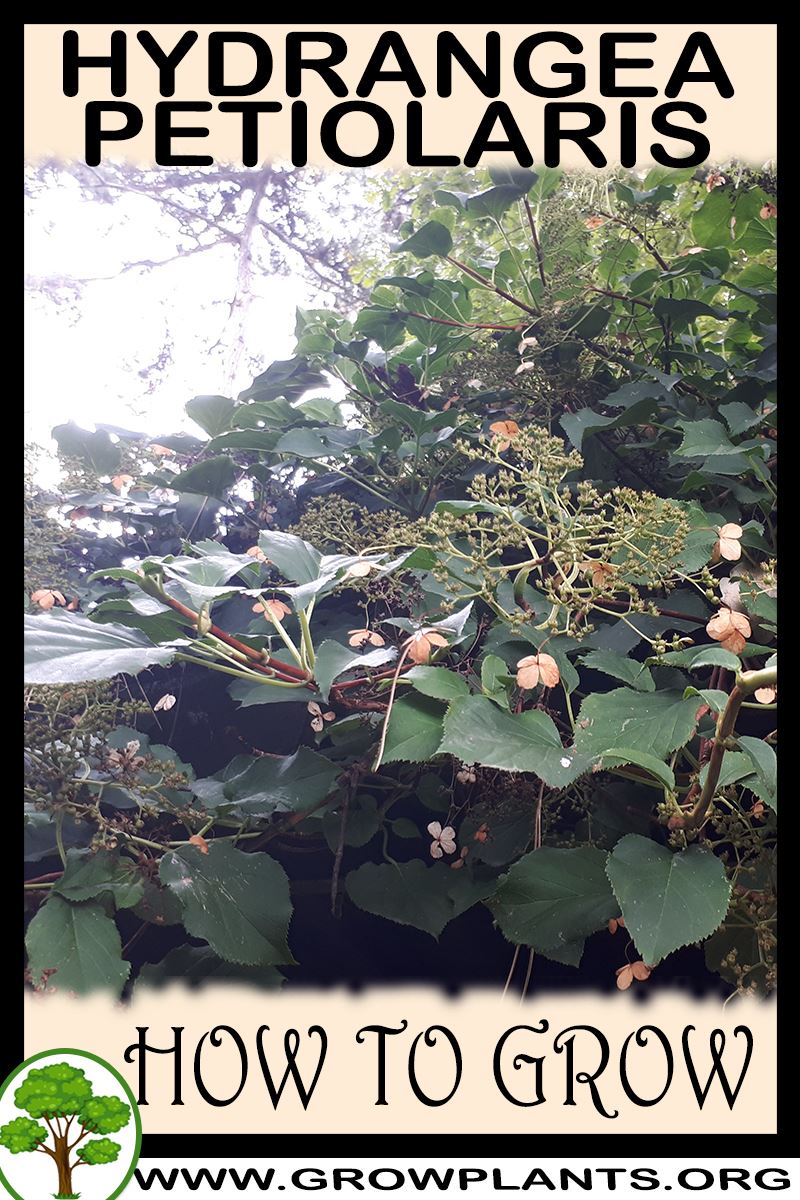
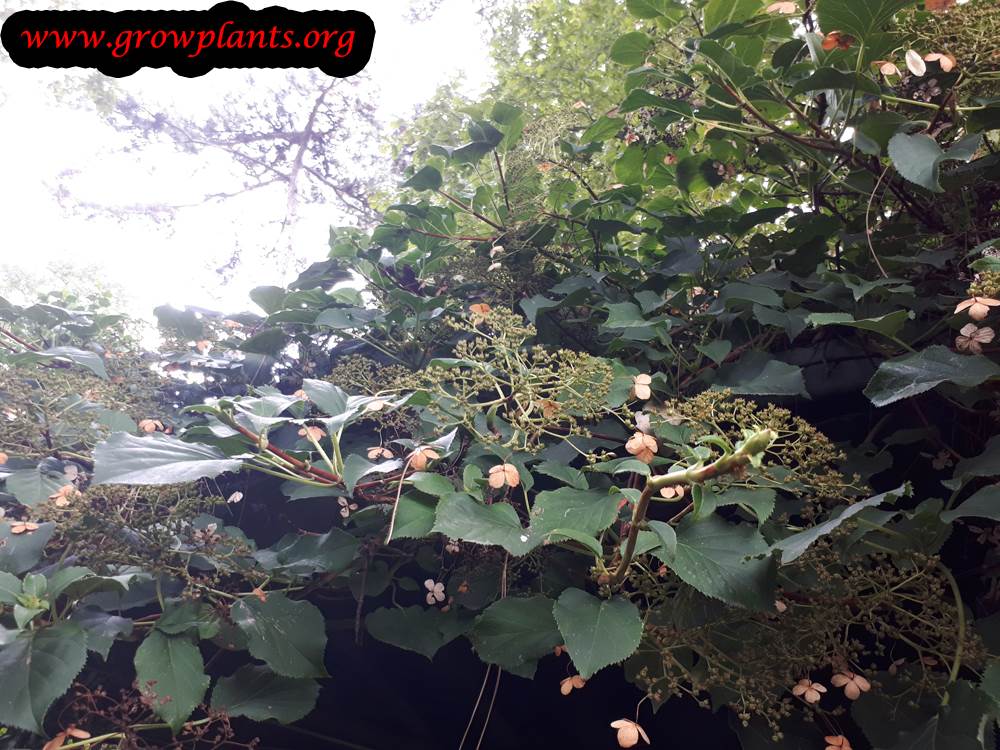
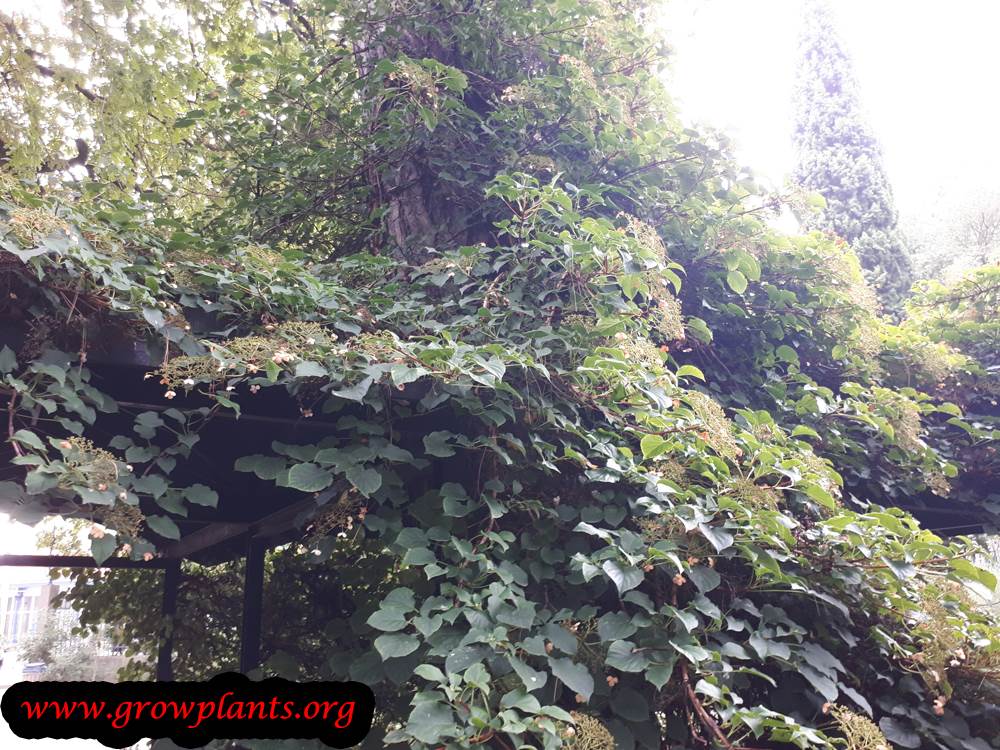
Overview: A vigorous woody climber reaching 10-20 m (30-60 ft), clinging to walls and trees by aerial rootlets. Grown as an ornamental perennial for shady positions, with foliage that is deciduous in most climates and its broad white lace-cap flower heads.
Quick Specifications
| Specification | Attribute |
|---|---|
| Plant Type / Life Cycle | Perennial (woody deciduous climber) |
| Foliage Type | Deciduous (semi-evergreen in mild climates) |
| Mature Size | 10-20 m tall (30-60 ft) |
| Growth Rate | Moderate to Fast (slow to establish) |
| Root System | Fibrous, plus aerial clinging rootlets on the stems |
| Toxicity | Toxic if ingested (cyanogenic glycosides) – keep away from pets and children |
| Hardiness | USDA zones 4-9 |
Growth Form & Structure
- Height & Spread: In the ground it climbs 10-20 m (30-60 ft) where support allows; in a container it stays far smaller and needs a trellis or wall to attach to.
- Growth Habit & Form: Self-clinging woody climber that attaches by aerial rootlets; can also sprawl as a groundcover where there is nothing to climb.
- Lifespan & Maturity: Long-lived perennial; slow to establish for the first couple of years, then grows quickly to fill its support.
Anatomy & Physical Features
- Leaves & Foliage: Green, oval leaves, deciduous, giving good light-green summer cover.
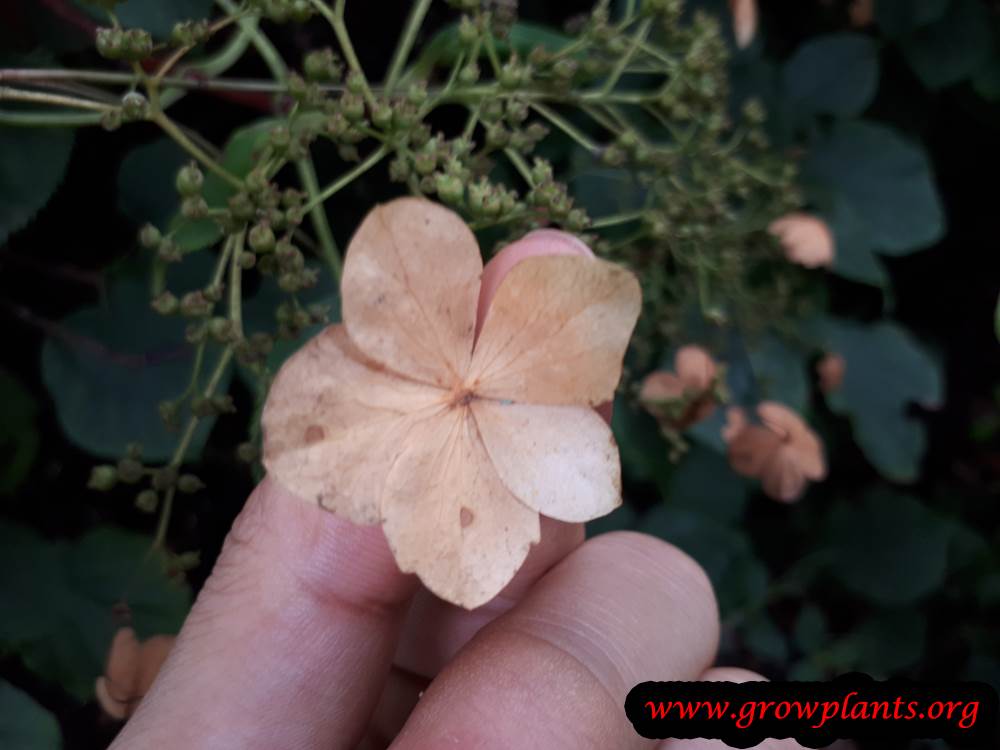
- Flower Characteristics: White lace-cap inflorescences in summer, with large showy sterile florets ringing smaller fertile flowers (see the Bloom guide).
Primary Uses & Landscape Value
- Functional & Ornamental Roles: Ornamental climber for covering shady walls, fences, pergolas and tree trunks; tolerates half to full shade.
Care Guide: Planting, Soil & Watering
Overview: Hydrangea petiolaris is a moisture-loving deciduous or evergreen climber (zones 4–9) that flowers best in partial shade with shelter from the hottest sun. It wants a rich, humus-filled soil kept consistently moist but well-drained, with regular, moderate watering — the genus name literally means ‘water vessel’.
Quick Care Requirements
| Requirement | Ideal Condition |
|---|---|
| Planting Season | Dormant to warm season — winter through spring and summer |
| Growth Rate | Moderate to Fast |
| Soil Type | Rich, humus-filled, moist but well-drained soil |
| Water Need | Moderate — keep the soil consistently moist |
Planting & Establishment
- Best Planting Season: Plant from the dormant season into the growing season — winter through spring and summer — ideally in cooler, moist conditions so the roots establish before summer heat.
- How to Plant:
- Hole Preparation: Dig a hole about twice the width of the root ball and no deeper, so the plant sits at its original level in loosened soil. Position it against a wall, fence or sturdy support to climb, as it clings by aerial rootlets.
- Soil Amendments: Work in generous compost or leaf mould to build the moisture-retentive, humus-rich soil hydrangeas love, while keeping drainage free.
- Planting Depth: Set the plant with the top of the root ball level with the soil surface; do not bury the stem base.
- Growth Speed & Expectations: Growth is moderate to fast in good conditions; plants fill out to their mature size over a few seasons.
Soil, Watering & Drainage Care
- Soil Mix & Drainage Needs: Provide rich, moisture-retentive but well-drained soil; hydrangeas have shallow roots that dislike both drought and waterlogging, so a mulch helps keep them evenly moist. Give the climber a solid support to scramble up as it grows.
- Watering Schedule & Technique:
- Young / Newly Planted: Water frequently and deeply to keep the soil consistently moist while the shallow roots establish.
- Established: Water regularly, especially in heat — hydrangeas wilt quickly when dry; keep the root zone evenly moist rather than letting it dry out.
- Seasonal Adjustments: Water more in summer heat and less during cool, wet or dormant winter periods.
Climate, Light & Hardiness
Climbing hydrangea (Hydrangea petiolaris) is a cold-hardy climbing shrub suited to Mediterranean, subtropical, and temperate climates, growing best in half to full shade. It is evergreen or deciduous depending on climate and is hardy through zone 4.
Quick Climate Specifications
| Climate Zones | Mediterranean, Subtropics, Temperate |
|---|---|
| USDA Hardiness Zones | 4–9 |
| Frost Tolerance | High |
| Light Conditions | Half Shade / Full Shade |
Sunlight & Light Exposure
Optimal Light Setup
Prefers half to full shade, well suited to shaded walls or structures it can climb.
Temperature Extremes & Hardiness
USDA Hardiness & Regional Limits
Hardy across zones 4–9, with the plant behaving as deciduous in cooler temperate zones and semi-evergreen to evergreen in the mildest, warmest parts of its range – a lifecycle distinction rather than a change in cold limit.
Cold Damage & Winter Protection
Normal winter dieback of leaves within colder parts of its zone range is not a sign of damage.
Frost Sensitivity
Very frost tolerant once established.
Wind, Humidity & Microclimate
Microclimate Recommendations
A trellised or wall-supported, shaded site with consistent moisture suits this climbing hydrangea best.
Growing in Pots, Balconies & Indoors
Climbing hydrangea (Hydrangea petiolaris) is a vigorous 10-20 m (30-60 ft) self-clinging vine, so it is not a houseplant and not a long-term pot plant. A young specimen can be grown in a large container for a few years against a shady wall, but it eventually needs the open ground.
Quick Details
- Container Size: A large, heavy-based pot while young; it will outgrow any container in time
- Indoor Suitability: Not a houseplant – too large and needs an outdoor cool/dormant season
- Best Spot: Part to full shade, against a wall or sturdy support it can climb
- Soil & Drainage: A well-aerated, organic-rich mix – potting mix, or peat/coir with perlite or vermiculite. Must drain freely
- Watering in Pots: Keep evenly moist – it likes an even, average supply and pots dry fast
Indoors & On the Windowsill
- Not for indoors: This is a woody climbing vine that wants to reach many metres and needs a cold dormant period – it will not settle as a room or windowsill plant.
- Overwintering: It is hardy and is left outdoors; no need to bring it in.
On a Balcony or Patio
- Light & support: Happy in shade or part shade against a balcony wall it can cling to. Give it a large, well-weighted pot for stability and check moisture often, as walls reflect heat and pots dry quickly.
Choosing the Pot, Soil & Long-Term Care
- Pot & drainage: Choose a pot with strong drainage holes; skip a standing-water saucer, or empty it promptly, so the roots never sit wet. Terracotta breathes and dries faster, while glazed or plastic pots hold moisture longer.
- Potting mix: A well-aerated, organic-rich mix – potting mix, or peat/coir with perlite or vermiculite.
- Feeding: Potted plants use up their soil faster because nutrients leach out with every watering, so feed a little more often than plants in open ground.
- Repotting: Refresh part of the mix and pot up every couple of years, lightly pruning the root ball and top growth to keep it in balance. Plan to move it into the ground once it starts to climb strongly.
- Safety: All hydrangeas are toxic if eaten – keep the plant away from children and pets.
Fertilizing & Feeding
A woody climber with a long bloom cycle; feed lightly and steadily through the growing season rather than in a single heavy dose, since next year’s flower buds are already forming and hard feeding late in the season can disturb them.
Quick Fertilizing Specs
| Feeding Level | moderate |
|---|---|
| young_feeding | Keep newly planted vines on the lighter side while roots establish and stems begin attaching to their support. |
| mature_feeding | Established vines need only modest feeding to sustain steady summer bloom. |
| Main Nutrient Priority | Balanced nutrition with adequate nitrogen for foliage and vine extension; no need to favor phosphorus to drive blooming. |
| Best Feeding Period | Spring through the start of the summer bloom. |
| Organic Options | Compost or well-rotted organic matter worked into the root zone supports steady, gentle feeding. |
| Micronutrients | Watch for iron chlorosis in alkaline or compacted soil. |
| Soil pH | Prefers slightly acidic to neutral soil. |
| Reduce/Stop Feeding | Taper off as bloom finishes and stop once the vine enters autumn dormancy. |
Feeding by Growth Stage
Spring Growth Flush
Support fresh foliage and vine extension as the climbing hydrangea breaks winter dormancy and begins attaching to its support.
| Nutrient direction | A balanced, nitrogen-adequate fertilizer to fuel new leaf and stem growth. |
|---|---|
| Timing | As new growth begins in spring. |
| Frequency | Light feeding through the spring growth period is usually enough; container-grown vines may benefit from a repeat feeding later in the season. |
| Fertilizer types | A balanced, complete fertilizer for flowering shrubs and vines, granular or liquid |
| Precautions | Keep early feeding modest on newly planted or young vines so soft growth has time to harden before it needs to grip its support. |
Summer Bloom
Maintain steady nutrition through the long summer bloom without pushing excess leafy growth that shades and competes with flowering.
| Nutrient direction | Balanced feeding continues at a lighter rate; skip a strong nitrogen boost once buds are forming. |
|---|---|
| Timing | During the summer bloom period. |
| Frequency | A light top-up is sometimes helpful once flowering is underway, but many established vines in good soil coast through bloom on the spring feeding alone. |
| Fertilizer types | A balanced, complete fertilizer for flowering shrubs and vines, applied sparingly |
| Precautions | Avoid a strong nitrogen boost during bloom; excess leafy growth can shade and reduce flowering. |
Autumn and Winter Rest
Let the vine harden off and enter dormancy without stimulating tender new growth that cold weather would damage.
| Nutrient direction | None – withhold fertilizer through the dormant season. |
|---|---|
| Timing | From autumn through winter, once active growth slows for the year. |
| Frequency | No feeding at this stage. |
| Fertilizer types | No feeding at this stage – resume only once new growth resumes in spring |
| Precautions | Do not fertilize during dormancy; late-season feeding can trigger soft growth that cold weather damages and can also injure the flower buds already set for next year. |
Nutrient Deficiency Signs & Corrections
New leaves turn yellow between veins that stay green.
| Possible causes | Iron unavailable to roots in alkaline or compacted soil, High soil pH locking out iron and other micronutrients, Poor drainage or waterlogged roots reducing uptake, Root stress after recent transplanting or from a tight container |
|---|---|
| Appears first on | Newest leaves near the growing tips |
| What to check | Test soil pH, Check drainage and root health around the base, Look for compacted or waterlogged soil |
| Possible correction | Correct soil pH toward the acidic-to-neutral range the vine prefers and apply a chelated iron product per its label if chlorosis persists. |
Overall pale to yellow-green foliage with smaller leaves and slowed vine extension.
| Possible causes | Insufficient nitrogen in the soil, Nutrients leaching away from heavy rain or frequent watering, Root competition from nearby trees or shrubs, Poor root establishment after transplanting |
|---|---|
| Appears first on | Older, lower leaves first, spreading upward if uncorrected |
| What to check | Review recent feeding history, Check for root competition from nearby woody plants, Assess watering frequency and drainage |
| Possible correction | Resume balanced feeding early in the growing season and confirm the vine is not competing heavily with nearby roots. |
Leaf margins turn yellow to brown while the leaf center stays green, most visible on older leaves.
| Possible causes | Low potassium availability in sandy or leached soil, Root stress from drought or heat, A nitrogen-heavy recent feeding pattern, Salt buildup from over-fertilizing |
|---|---|
| Appears first on | Older leaves, starting at the margins |
| What to check | Review fertilizer history for a nitrogen-heavy pattern, Check for drought stress or heat exposure, Flush the root zone if salt buildup is suspected |
| Possible correction | Switch to a balanced, potassium-inclusive complete fertilizer and correct any drought stress. |
Pruning, Training & Seasonal Maintenance
Climbing hydrangea is self-clinging (it grips its support with aerial rootlets) and flowers on short spurs off the previous year’s wood, so it needs almost no pruning while young and only light control once mature. The safest time to cut is immediately after flowering, while the plant is still cutting new spur wood for next year; pruning in the dormant season removes buds this slow-to-establish vine spent years setting.
Quick Pruning & Maintenance Specs
| Pruning Tolerance | Low while young, Moderate once mature and flowering |
| Primary Pruning Window | Immediately after flowering fades (mid-to-late summer) |
| Typical Frequency | None for the first several years; annual size control once established |
| Main Objective | Keep coverage within its support/space without removing next year’s flowering spurs |
| Young Plant Priority | Do not prune; guide and tie the vine to its support until aerial roots take hold |
| Mature Plant Priority | Shorten outward-growing shoots after bloom, keep growth off gutters, windows and wood siding |
| Best Tool Type | Bypass secateurs for shoot tips, loppers for old woody growth on a mature vine |
| Avoid Heavy Pruning During | Dormant season and any time before flowering – removes the flower buds |
Pruning by Plant Age & Size
Newly Established
No pruning. Focus entirely on tying the young growth to a sturdy support until the aerial rootlets engage and it begins climbing on its own; it can take three to five years before it flowers.
Young / Formative
Training is simply guidance, not cutting: point new shoots toward the support and give temporary ties until self-clinging takes over. No heading back or shaping cuts.
Mature / Established
Once flowering, shorten shoots that have grown out past their support right after bloom, and keep the plant clear of surfaces it could damage or block.
Seasonal Pruning Schedule
Post-Flowering (old-wood bloomer)
Objective: control size without losing next year’s flowers. Remove: shoots that have grown beyond the intended coverage area, cutting back to a strong bud. Do not remove: the short flowering spurs along the older wood. Expected response: new spur growth forms over the rest of the season and carries next year’s flowers. Flowering impact: minimal if done right after bloom; delaying into autumn or winter removes developing buds.
Flowering & Fruiting Wood
Flowers form on short lateral spurs off wood that is at least a year old. Because these spurs take a full season to develop, any pruning done in the dormant season or before flowering removes wood that was about to bloom, and a slow-establishing vine like this can then go a year or more without flowers.
Structural Pruning & Training
The main structural concern is spread, not shape: this vine can reach 10-20m and will climb onto roofs, gutters or wood siding if unchecked. Shorten outward shoots after flowering to keep it on its intended support, and keep it off surfaces its aerial roots could damage.
Special Growth to Remove
- Dead or winter-damaged shoot tips
- Growth heading into gutters, windows, roofing or wood siding
Container & Small-Space Pruning
Possible against a large, sturdy support in a big container, though this is a vigorous vine and root space should be generous. Prune on the same post-flowering schedule as an in-ground plant; do not hard-prune for compactness while it is still establishing, since that only delays its first bloom further.
Tools
Bypass secateurs for trimming flowered shoot tips; loppers for older woody growth on a mature vine; soft ties for guiding young growth to its support before it self-clings.
Tool Hygiene & Disease Risk
Routine – clean, sharp tools are sufficient; no elevated disease risk noted for this species.
Cut Placement & Technique
Cut flowered shoots back to a strong bud or leaf pair just after bloom. When guiding young growth, tie loosely rather than pinning stems tightly, so they are not damaged as they thicken.
Heavy Pruning & Rejuvenation
A mature vine tolerates a hard cutback to renew an overgrown or support-damaged plant, but expect it to take two to three years to rebuild enough wood to flower again. Where possible, rejuvenate in stages over a couple of seasons rather than removing the whole framework at once.
Post-Pruning Care
Normal watering after a routine post-flowering trim. After any hard rejuvenation cut, keep an eye on re-attachment to the support and re-tie new growth until it grips on its own.
Common Pruning Mistakes
- Pruning in the dormant season or before flowering, removing the coming season’s flower spurs
- Cutting back a young, non-flowering vine out of impatience – this species is naturally slow to reach blooming size
- Letting growth reach gutters, windows or roofing before doing any size control
When NOT to Prune
Avoid pruning in the dormant season or in the weeks before flowering; avoid disturbing a newly planted vine while it is still attaching to its support.
Recommended Tools (by task)
- bypass_secateurs – trimming flowered shoots back to a bud after bloom
- loppers – removing thicker old wood on a mature, overgrown vine
- soft_ties_stakes – guiding young growth to its support before aerial roots take hold
Pruning Troubleshooting
| Problem | Possible Cause | What to Check | Corrective Action |
| Vine never flowers | Still too young, or pruned in the dormant season | Age of the vine and timing of any past pruning | Be patient with vines under 3–5 years old; if pruning, do it only right after flowering in future |
| Damage to wall or siding | Aerial rootlets cling directly to the surface | Type of support the vine is climbing on | Grow it on masonry or a sturdy trellis rather than wood siding; trim spread away from vulnerable surfaces after bloom |
| Overgrown, blocking gutters or windows | No post-bloom size control | Extent of current coverage | Shorten outward shoots every year immediately after flowering |
Propagation Guide
Hydrangea petiolaris can be propagated vegetatively from stem cuttings and by layering established stems.
Quick Propagation Specs
| Primary Vegetative Methods | Stem cuttings; layering |
| Seed | Possible, but slower and variable |
| Grafting Required | No |
Stem Cuttings
Take healthy non-flowering stem material with viable nodes, remove lower leaves, and insert the cutting into a clean, airy, free-draining propagation medium. Maintain steady humidity without saturating the medium while roots develop.
Layering
Where a flexible stem can be brought to the soil, secure a node or short section beneath the surface while it remains attached to the parent. Separate and replant it only after an independent root system has formed.
Aftercare
Keep newly rooted plants protected from severe stress until active growth resumes, then increase exposure gradually.
Bloom & Flower Guide
Quick Details
- Bloom Season: Early to mid summer
- Time to First Bloom: Slow to settle in – it often takes a few years after planting before it flowers well
- Flower Appearance: Flat, lacecap-like white clusters with small fertile flowers ringed by larger showy sterile florets
- Edibility: Not edible – contains cyanogenic compounds and is mildly toxic if eaten
Detailed Blooming Overview
Climbing hydrangea clings to walls and trees with aerial roots and, once established, covers itself in flat white lacecap flowers in early summer. It is famously slow to start but well worth the wait.
Flower Characteristics
- White lacecap heads: small fertile flowers in the center ringed by larger sterile florets.
- Carried against the climbing, self-clinging stems.
Bloom Care & Thinning
- Pruning: It blooms on old wood, so prune only lightly and right after flowering.
- Patience: Expect a few quiet years while it establishes before it flowers freely.
Bloom Health & Protection
- Powdery mildew: In damp shade the leaves and blooms may show powdery mildew; improving airflow and, if needed, a neem oil or sulfur-based spray help.
Pests, Diseases & Troubleshooting
Overview: Hydrangeas are broadly tough but sap-sucking insects and leaf-spot fungi are their main weaknesses, especially in humid, crowded, or poorly-drained sites. Manage them culturally first — good airflow, morning sun, clean fallen foliage, and steady even moisture — and most problems never reach spray threshold.
Quick Troubleshooting Overview
| Issue / Pest | Main Symptom | Primary Solution |
|---|---|---|
| Aphids | Sticky new growth, curled shoot tips, sooty mold | Blast with water; insecticidal soap if persistent |
| Spider mites | Fine stippling and webbing on hot, dry, dusty leaves | Raise humidity, hose foliage, horticultural oil |
| Slugs & snails | Ragged holes in soft young leaves overnight | Iron-phosphate bait, hand-pick, remove mulch harborage |
| Cercospora leaf spot | Small purple-brown spots, tan centers on lower leaves | Remove litter, water at soil level, copper if severe |
| Powdery mildew | White powdery film on leaves in shade/damp | Improve airflow, avoid overhead water, sulfur spray |
| Leaf scorch / wilt | Browning margins, midday flagging in sun | Even moisture, afternoon shade, mulch roots |
Common Pests & Management
- Aphids (Aphis spp.):
- Symptoms: Clusters of soft green or black insects on shoot tips and flower buds; distorted, sticky new growth and black sooty mold on honeydew.
- Prevention & Control: Encourage ladybirds and lacewings; dislodge with a firm water jet; spot-treat heavy colonies with insecticidal soap or neem oil, sprayed in the cool of evening to protect pollinators.
- Spider mites (Tetranychus urticae):
- Symptoms: Fine pale stippling, a dull bronzed look, and fine webbing under leaves in hot, dry, dusty conditions; look-alike for early nutrient issues but confirmed by webbing.
- Prevention & Control: Keep plants unstressed and hosed clean; raise humidity; treat undersides with insecticidal soap or horticultural oil and repeat to catch new hatches.
- Slugs & snails (Gastropoda):
- Symptoms: Irregular holes chewed in soft young foliage, worst after rain or watering, with slime trails present in the morning.
- Prevention & Control: Remove damp hiding places, water in the morning, set beer or iron-phosphate baits, and use copper barriers around choice plants; hand-pick at night.
- Black vine weevil (Otiorhynchus sulcatus):
- Symptoms: Angular notches bitten from leaf margins by night-feeding adults; C-shaped white grubs chew roots of container plants, causing sudden wilt.
- Prevention & Control: Check leaf-notching, trap adults on boards at night, keep pots off soil, and drench with beneficial nematodes (Heterorhabditis) for grubs.
- Scale insects (Coccoidea (e.g. Pulvinaria hydrangeae)):
- Symptoms: Immobile brown or cottony-white bumps along stems and leaf veins; associated honeydew and sooty mold; the hydrangea scale lays white egg masses on bark.
- Prevention & Control: Prune out badly encrusted wood, scrub light infestations off, and apply horticultural oil to smother crawlers, timing sprays to the newly-hatched mobile stage.
Diseases & Fungal Issues
- Cercospora leaf spot (Cercospora hydrangeae):
- Symptoms: Small purplish to brown spots that enlarge with tan or grey centers, starting on lower leaves and moving up; heavy spotting causes early yellowing and leaf drop.
- Treatment & Management: Rake and destroy fallen leaves, water at the base to keep foliage dry, space for airflow, and apply a copper or chlorothalonil-type fungicide only if spotting is severe.
- Powdery mildew (Erysiphe/Golovinomyces spp.):
- Symptoms: White powdery patches on upper leaf surfaces, sometimes with purple blotching and distorted new growth, worst in shade with poor air movement.
- Treatment & Management: Open up the canopy, site in morning sun with good airflow, avoid excess nitrogen, and use sulfur or potassium-bicarbonate sprays on susceptible cultivars.
- Botrytis blight (Botrytis cinerea):
- Symptoms: Brown water-soaked blotches on flowers and leaves that fuzz over with grey mold in cool, wet, crowded conditions.
- Treatment & Management: Remove spent blooms and dead tissue promptly, improve ventilation, avoid overhead watering, and reserve fungicide for persistent wet-season pressure.
- Hydrangea rust (Pucciniastrum hydrangeae):
- Symptoms: Yellow spots on the upper leaf with matching orange-brown powdery pustules underneath; mainly affects smooth hydrangea types.
- Treatment & Management: Pick off and destroy infected leaves, avoid wetting foliage, ensure airflow, and use a labelled rust fungicide only under heavy pressure.
- Root & crown rot (Armillaria, Phytophthora spp.):
- Symptoms: Poor vigor, yellowing, wilting despite moist soil, and dark decayed roots in waterlogged ground.
- Treatment & Management: Plant in well-drained soil, never let roots sit in water, and remove and replace badly affected plants; correct drainage before replanting.
Growing Difficulties & Abiotic Problems
- Leaf & flower scorch:
- Cause & Symptoms: Brown crispy leaf margins and wilting in strong sun or drying wind, often with drought; hydrangeas transpire heavily.
- Correction Strategy: Provide dappled or afternoon shade, mulch to hold moisture, and water deeply and evenly, especially in heat.
- Bud loss / failure to bloom:
- Cause & Symptoms: Few or no flowers, usually from pruning at the wrong time (cutting off next season’s buds on old-wood types) or cold/late-frost bud damage.
- Correction Strategy: Learn whether the plant flowers on old or new wood and prune accordingly; shelter buds from late frost and avoid heavy late-season pruning. As a climbing hydrangea it blooms on old wood, so prune only right after flowering.
- Chlorosis (iron/manganese):
- Cause & Symptoms: Yellowing between green veins on new leaves, common in alkaline or waterlogged soil.
- Correction Strategy: Improve drainage, mulch with organic matter, and apply chelated iron; lowering pH also aids uptake.
- Flower color shift:
- Cause & Symptoms: Blue flowers turning pink or vice versa on bigleaf types, driven by soil pH and available aluminum, not disease.
- Correction Strategy: For blue, keep soil acidic and add aluminum sulfate; for pink, keep near neutral and add lime; white cultivars will not change.
What Helps — Products & Tools
Reach for the softest effective option first: a strong water jet and insecticidal soap for aphids and mites, horticultural/neem oil for scale and mite eggs, and iron-phosphate slug bait. For leaf spots and mildew, cultural sanitation comes first, then a copper fungicide (Cercospora, botrytis) or sulfur/potassium-bicarbonate (powdery mildew). Chelated iron corrects chlorosis.