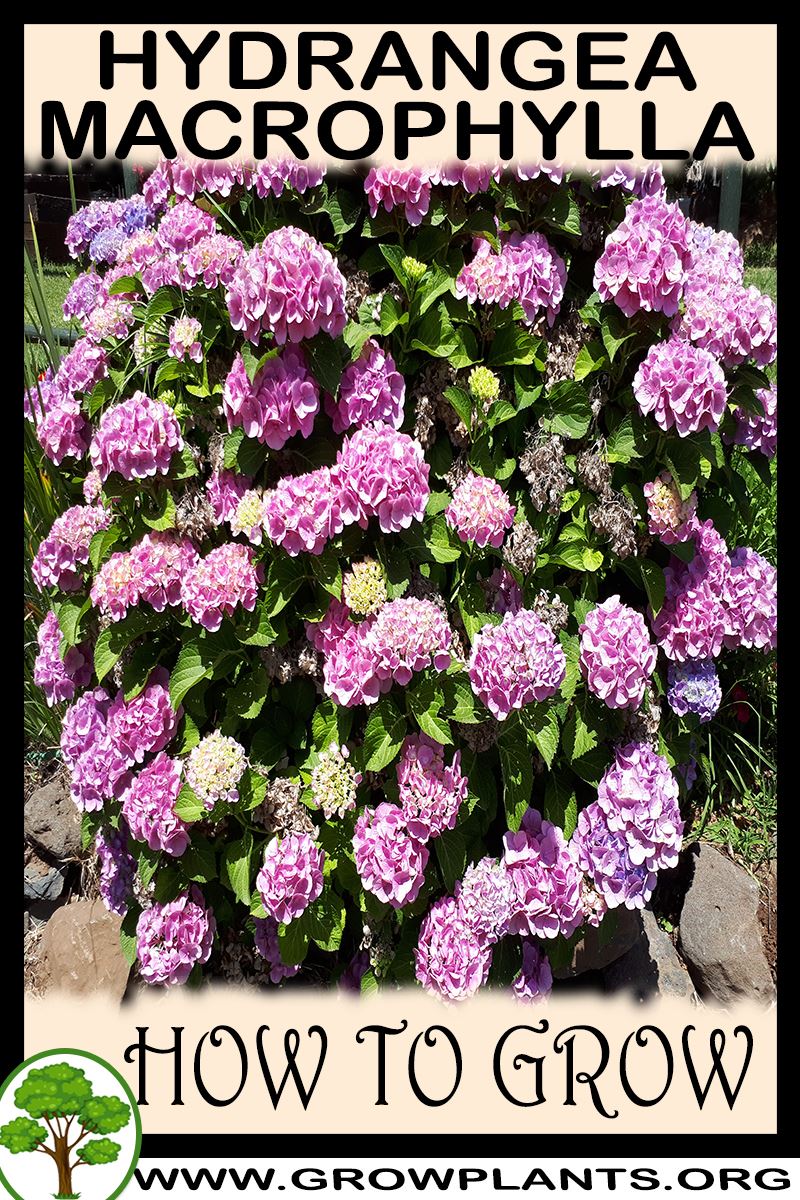
Plant Profile & Key Characteristics
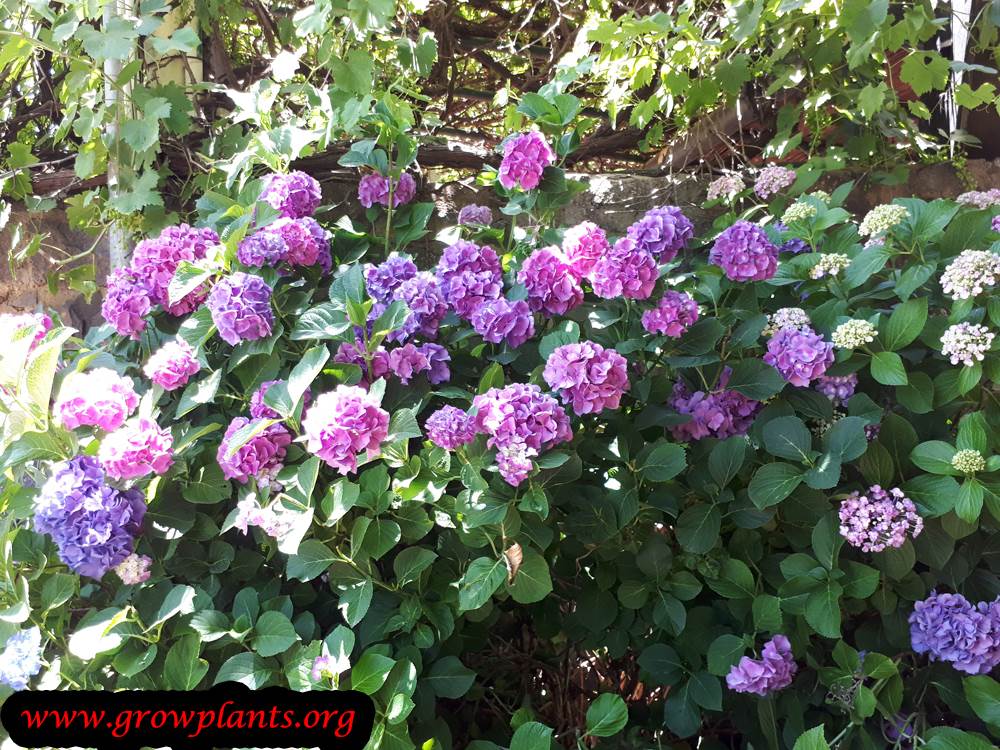
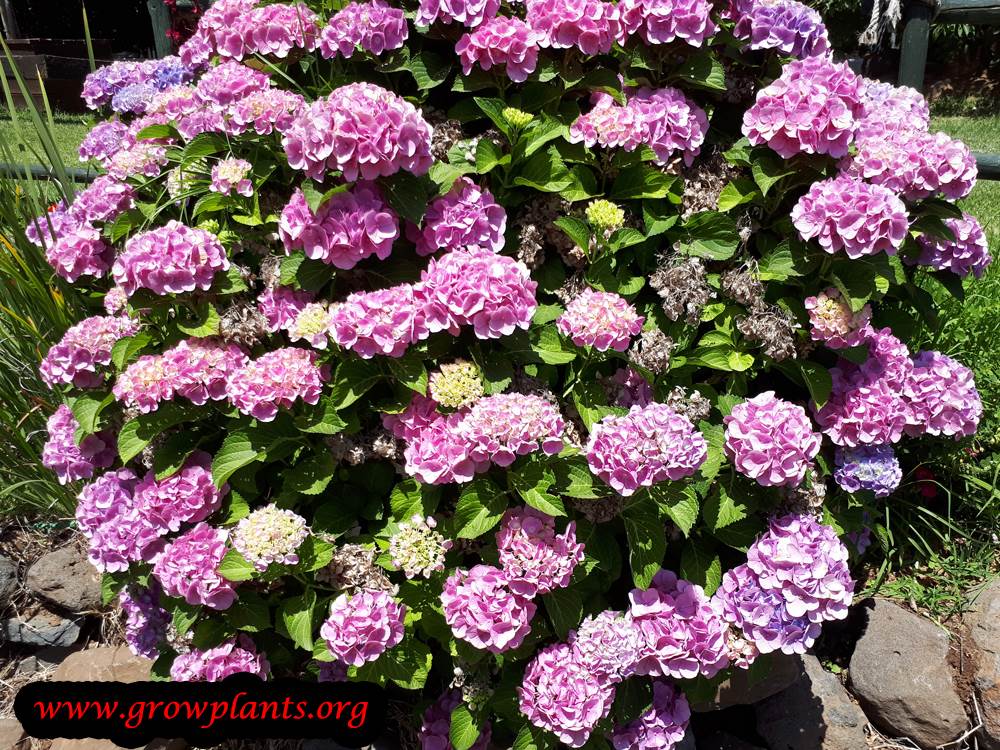
Overview: A deciduous flowering shrub reaching about 1.5-2.5 m (5-8 ft), grown as a showy ornamental for its large, long-lasting flower-heads. It is a classic border and container shrub for part shade.
Quick Specifications
| Specification | Attribute |
|---|---|
| Plant Type / Life Cycle | Perennial (shrub) |
| Foliage Type | Deciduous (evergreen in warm, frost-free climates) |
| Mature Size | 1.5-2.5 m (5-8 ft) tall |
| Growth Rate | Fast to moderate |
| Root System | Fibrous and shallow |
| Toxicity | Toxic to people and pets (contains cyanogenic glycosides) |
| Hardiness | USDA zone 4-10 |
Growth Form & Structure
- Height & Spread: 1.5-2.5 m (5-8 ft) tall in the ground; also suited to large containers.
- Growth Habit & Form: Rounded, multi-stemmed deciduous shrub with large flower-heads.
- Lifespan & Maturity: Long-lived shrub; flowers are held for much of the year, so prune with care to avoid removing next season’s buds.
Anatomy & Physical Features
- Leaves & Foliage: Large (10-18 cm) green leaves that can develop white margins.
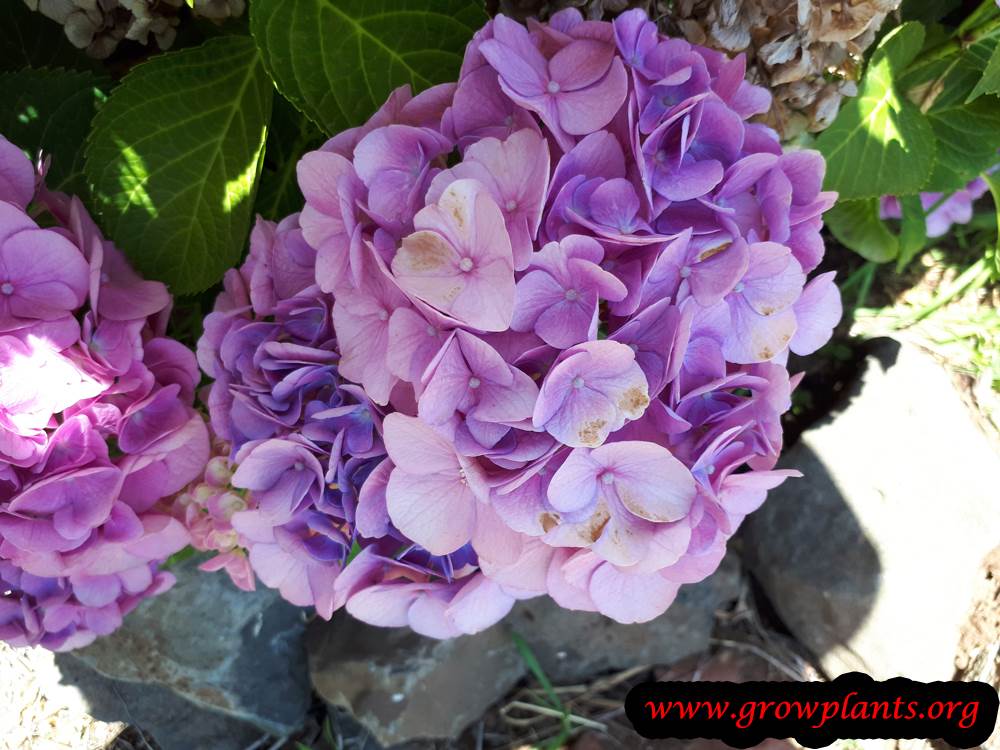
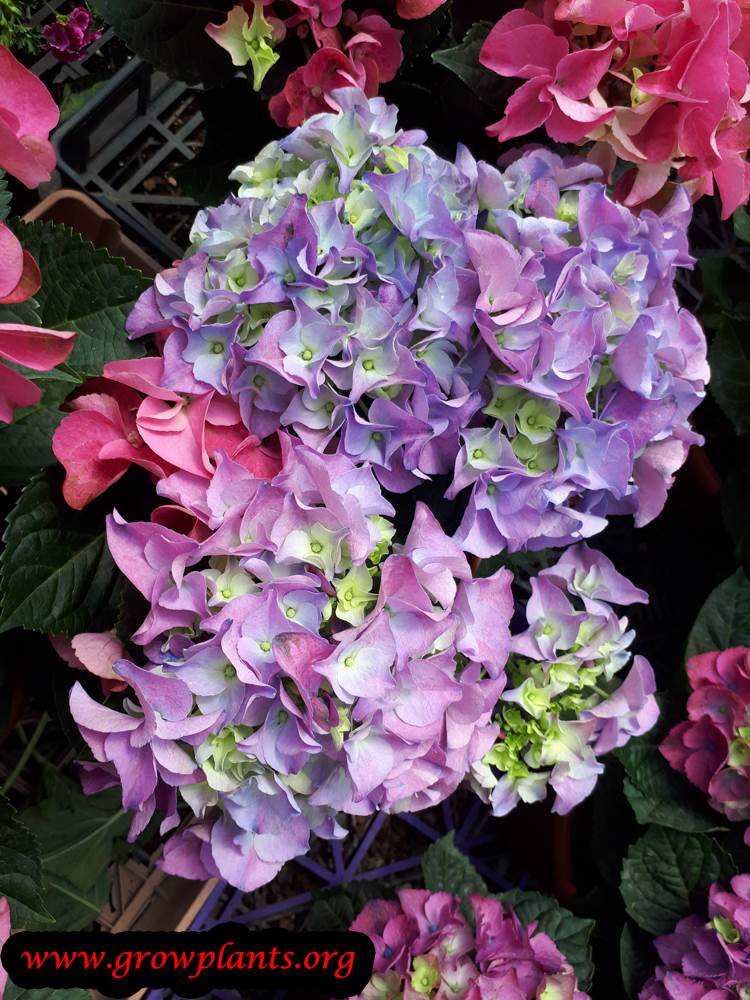
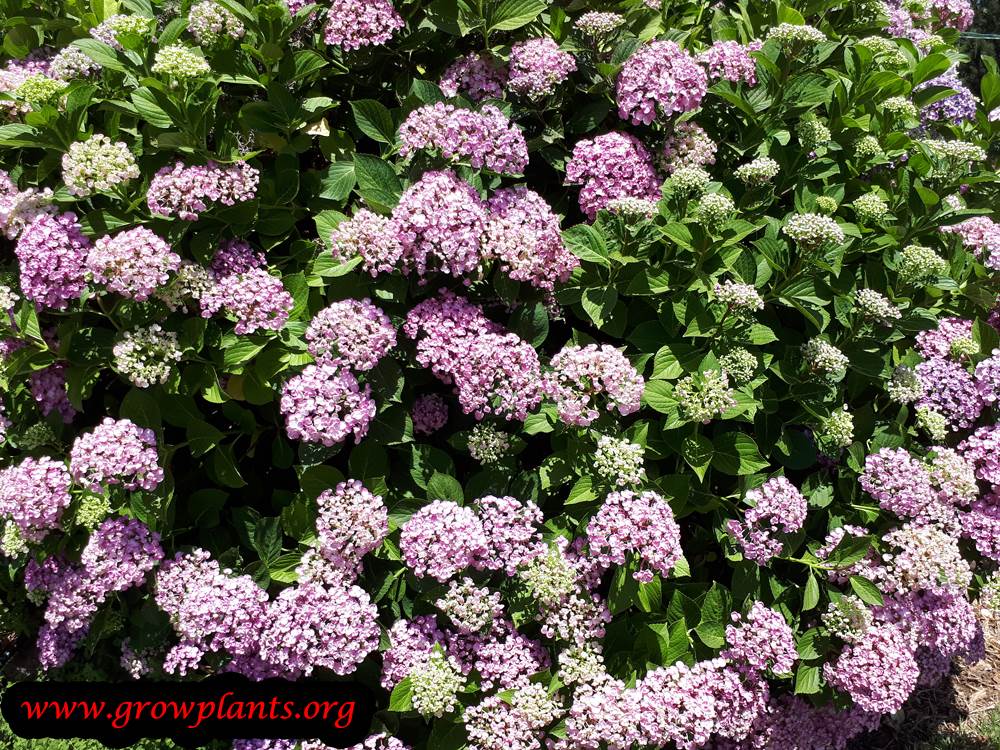
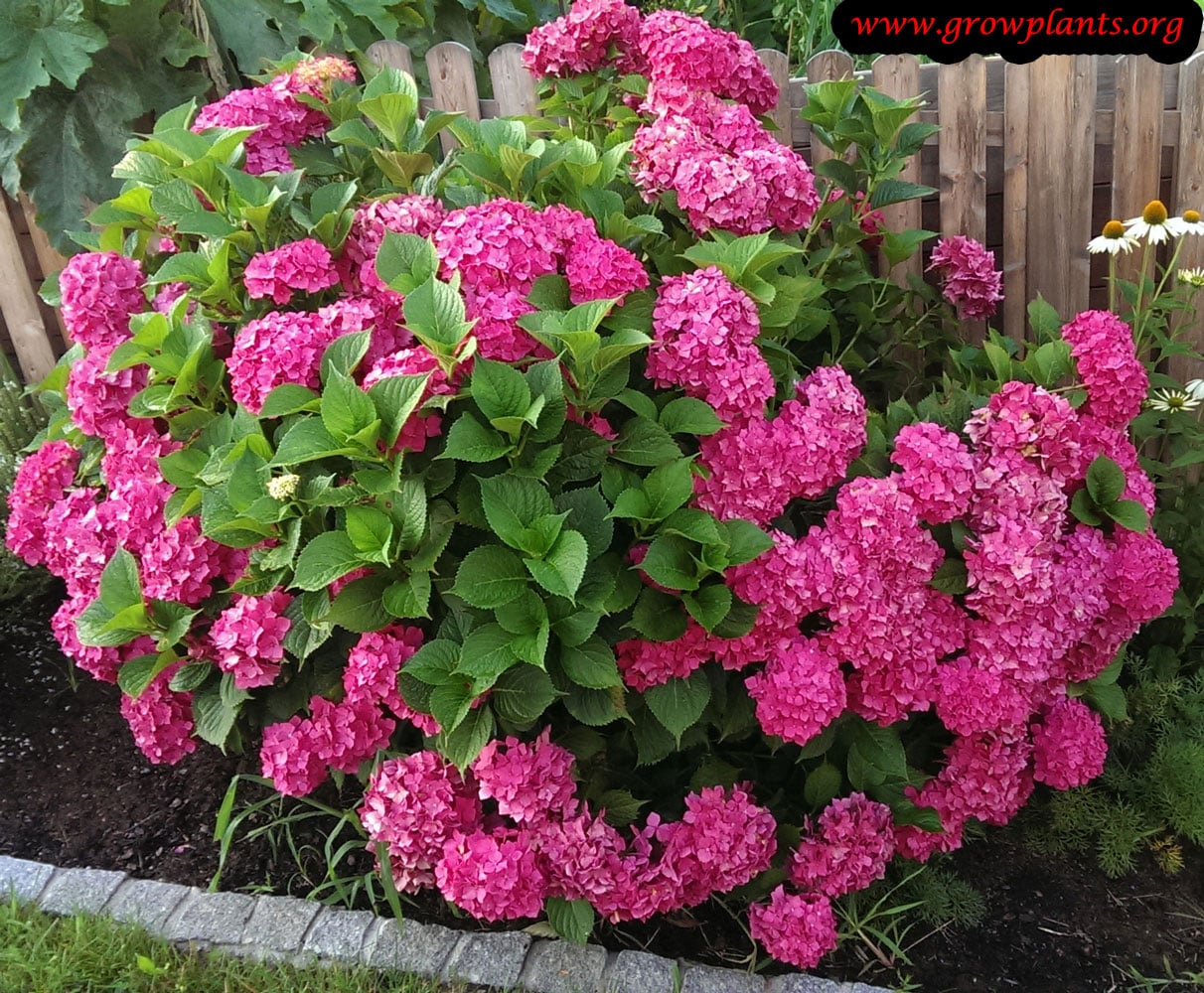
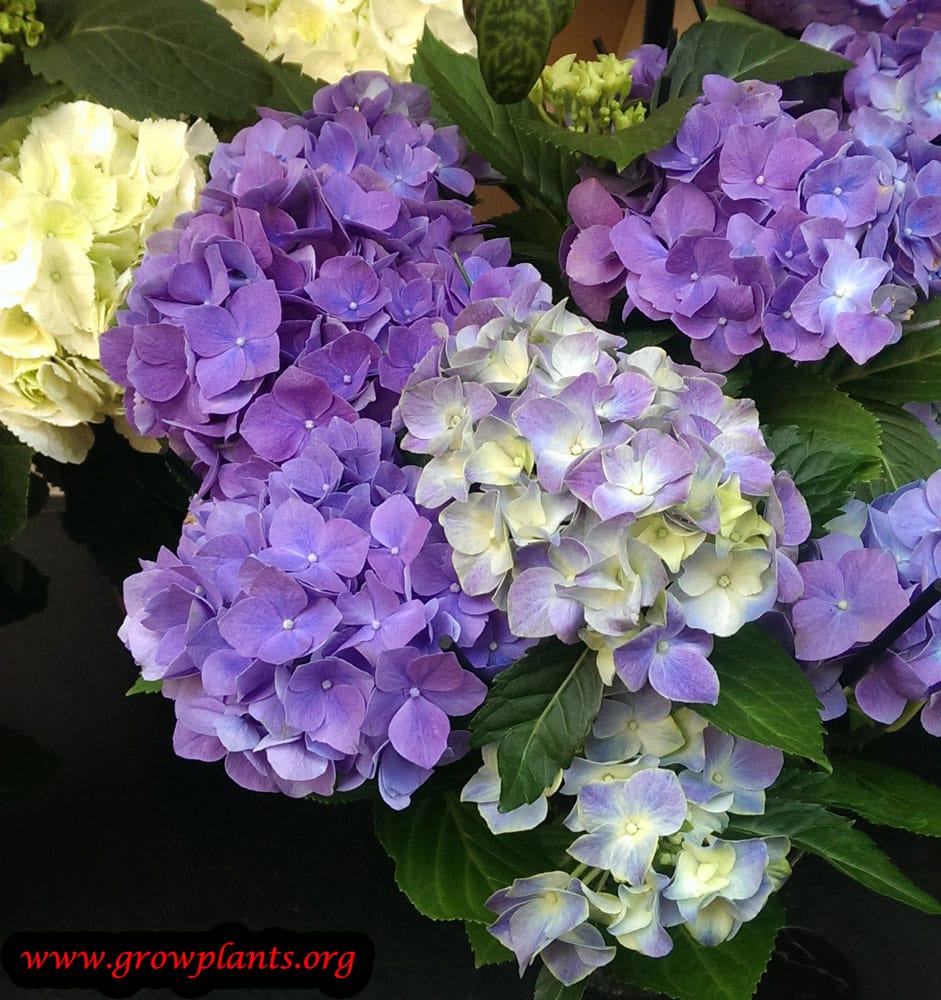
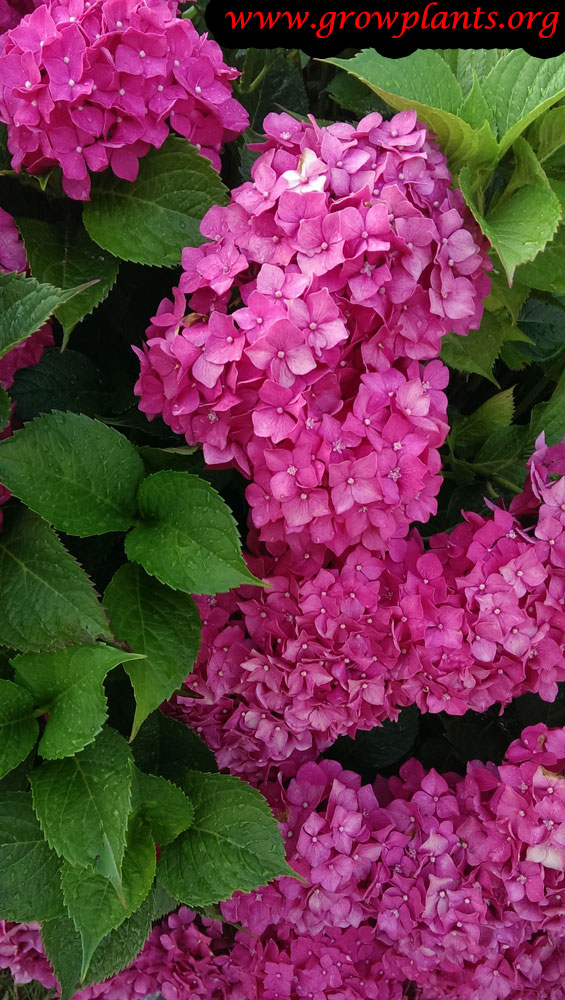
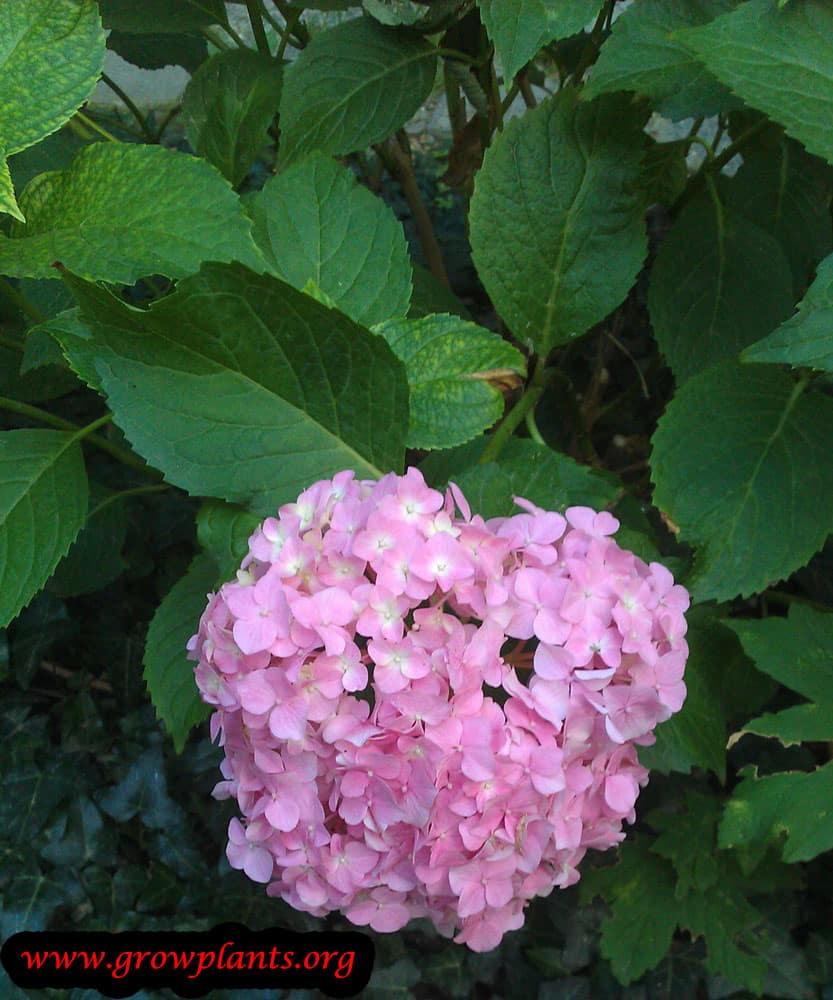
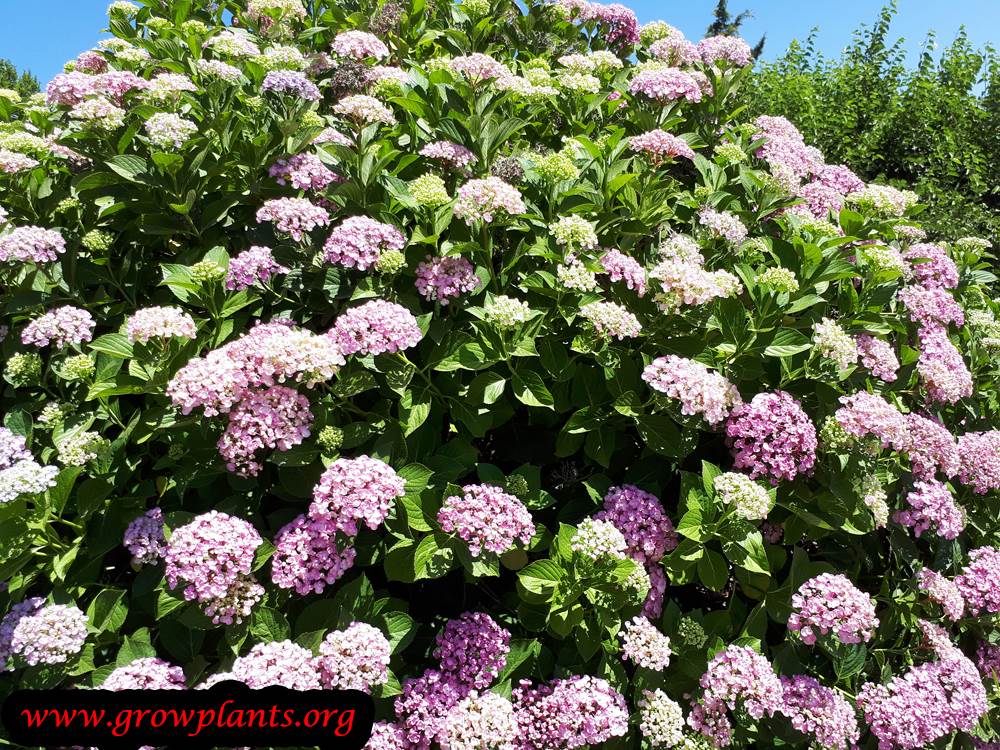
- Flower Characteristics: Rounded flower-heads whose colour follows soil pH – blue in acid, pink/red/purple in alkaline, white in neutral soil (full detail in the Bloom section).
Primary Uses & Landscape Value
- Functional & Ornamental Roles: Showy flowering ornamental for shaded borders, mass plantings, containers and cut/dried flowers.
Care Guide: Planting, Soil & Watering
Overview: Hydrangea macrophylla is a moisture-loving deciduous shrub (evergreen in warm climates), hardy in zones 4–10, that flowers best in partial shade with shelter from the hottest sun. It wants a rich, humus-filled soil kept consistently moist but well-drained, with regular, moderate watering — the genus name literally means ‘water vessel’.
Quick Care Requirements
| Requirement | Ideal Condition |
|---|---|
| Planting Season | Dormant to warm season — winter through spring and summer |
| Growth Rate | Moderate to Fast |
| Soil Type | Rich, humus-filled, moist but well-drained soil |
| Water Need | Moderate — keep the soil consistently moist |
Planting & Establishment
- Best Planting Season: Plant from the dormant season into the growing season — winter through spring and summer — ideally in cooler, moist conditions so the roots establish before summer heat.
- How to Plant:
- Hole Preparation: Dig a hole about twice the width of the root ball and no deeper, so the plant sits at its original level in loosened soil.
- Soil Amendments: Work in generous compost or leaf mould to build the moisture-retentive, humus-rich soil hydrangeas love, while keeping drainage free.
- Planting Depth: Set the plant with the top of the root ball level with the soil surface; do not bury the stem base.
- Growth Speed & Expectations: Growth is moderate to fast in good conditions; plants fill out to their mature size over a few seasons.
Soil, Watering & Drainage Care
- Soil Mix & Drainage Needs: Provide rich, moisture-retentive but well-drained soil; hydrangeas have shallow roots that dislike both drought and waterlogging, so a mulch helps keep them evenly moist.
- Watering Schedule & Technique:
- Young / Newly Planted: Water frequently and deeply to keep the soil consistently moist while the shallow roots establish.
- Established: Water regularly, especially in heat — hydrangeas wilt quickly when dry; keep the root zone evenly moist rather than letting it dry out.
- Seasonal Adjustments: Water more in summer heat and less during cool, wet or dormant winter periods.
Climate, Light & Hardiness
Hydrangea macrophylla (bigleaf hydrangea) is a broadly adaptable shrub suited to Mediterranean, subtropical, temperate, and tropical climates – deciduous in cooler areas but evergreen in warm climates. It grows best in half to full shade outside the bloom season and is moderately cold hardy.
Quick Climate Specifications
| Climate Zones | Mediterranean, Subtropics, Temperate, Tropics |
|---|---|
| USDA Hardiness Zones | 4–10 |
| Frost Tolerance | Moderate |
| Light Conditions | Half Shade / Full Shade (more sun tolerated outside the flowering season) |
Sunlight & Light Exposure
Optimal Light Setup
Prefers half to full shade, especially during the flowering season, when direct sun can stress the plant and flowers.
Shade & Heat Management
More sun is tolerated outside the bloom season, but consistent shade protection matters most in hot climates and during flowering.
Temperature Extremes & Hardiness
USDA Hardiness & Regional Limits
Hardy across zones 4–10, with the plant behaving as deciduous in cooler zones and evergreen in consistently warm climates – a lifecycle difference, not a change in cold limit.
Cold Damage & Winter Protection
Flower buds for the following season often form on old wood, so hard freezes or late-spring frosts in the colder part of its range can damage buds and reduce bloom even where the plant itself survives.
Frost Sensitivity
Tolerates typical zone 6–9 winter frost once established; in the coldest end of its range (zone 4–5) some bud or stem dieback is possible.
Wind, Humidity & Microclimate
Microclimate Recommendations
A shaded, sheltered site with even moisture suits this shrub best across its wide climate range.
Growing in Pots, Balconies & Indoors
Bigleaf hydrangea (Hydrangea macrophylla) is a shrub (1.5-2.5 m) famous for its mophead or lacecap blooms. The grower confirms it works both as a houseplant and a container plant – it is widely sold as a flowering pot plant and does well indoors in bright, indirect light, though it is happiest moved outdoors long-term. All parts are mildly toxic.
Quick Details
- Container Size: A large pot; it is a substantial shrub
- Indoor Suitability: A good potted/indoor plant in bright, indirect light
- Best Spot: Half shade to full shade (not in the flowering period, which needs more light)
- Soil & Drainage: Rich, moisture-retentive but free-draining mix
- Watering in Pots: Average amount – keep evenly moist; its big leaves wilt fast if dry
Indoors & On the Windowsill
- A good potted plant: The grower confirms it grows indoors; give it bright, indirect light and cool, humid air, and keep it evenly moist – it is thirsty.
- Windowsill: A bright sill out of hot direct sun suits it; more light supports flowering.
- Long term: It is deciduous and benefits from a cool dormancy, so many gardeners move it outdoors after flowering; protect the pot from hard frost in cold climates.
- Safety: All parts are mildly toxic if eaten – keep it away from children and pets.
On a Balcony or Patio
- Light, wind & heat: Give it the brightest spot it will tolerate; walls and railings reflect heat and dry pots quickly, so check moisture often and shelter or stake exposed growth.
- Shade & moisture: It prefers half to full shade outdoors and hates drying out; big-leaved and thirsty, it needs frequent watering in pots and shelter from hot afternoon sun and wind. A drip irrigation kit with a timer can take over that watering check automatically.
Choosing the Pot, Soil & Long-Term Care
- Pot & drainage: A large pot with strong drainage holes for a thirsty shrub. Use strong drainage holes and skip a standing-water saucer to avoid root rot. Terracotta breathes and dries faster; glazed or plastic holds moisture longer.
- Potting mix: A well-aerated, organic-rich mix – potting soil or peat/coir with perlite or vermiculite for free drainage.
- Feeding: Feed through the growing season; soil pH affects mophead colour (acidic tends blue, alkaline tends pink) in a container.
- Repotting & pruning: Refresh the mix every couple of years; prune with care, as pruning at the wrong time removes the coming season’s flower buds.
- Safety: All parts are mildly toxic – keep away from children and pets.
Fertilizing & Feeding
A moderate feeder: regular balanced feeding through spring and early summer supports the big leaves and large flower heads, tapering off as the season winds down since this shrub blooms mostly on the previous year’s wood.
Quick Fertilizing Specs
| Feeding Level | Moderate feeder |
|---|---|
| Main Nutrient Priority | Balanced feeding with adequate nitrogen and potassium to support foliage and large flower heads |
| Best Feeding Period | Spring into early summer as new growth and flower buds develop |
| Organic Options | Compost or well-rotted manure worked into the soil each year |
| Reduce/Stop Feeding | Feeding tapers off in late summer so new growth can harden before winter |
| Micronutrients | Usually met by a complete fertilizer and organic matter; correct only a diagnosed deficiency |
| Soil pH | Flower color shifts with soil pH – bluer in acidic soil, pinker in alkaline soil |
Feeding by Growth Stage
Spring flush of leaves and bud development
Fuel the flush of new leafy growth and developing flower buds as the season begins.
| Nutrient direction | A balanced fertilizer with adequate nitrogen supports the big leaves and sets up strong flower buds. |
|---|---|
| Timing | In spring as new growth begins. |
| Frequency | A light feeding at the start of spring growth is usually enough. |
| Fertilizer types | A balanced complete fertilizer, Compost or aged manure worked into the soil |
| Precautions | Avoid heavy nitrogen feeding, which can push leafy growth at the expense of flower buds. |
Summer flowering display
Support the shrub through its long summer flowering display.
| Nutrient direction | Continued balanced feeding maintains flower size and plant vigor through bloom. |
|---|---|
| Timing | Through early to mid summer while flowering continues. |
| Frequency | An occasional light feeding during bloom is usually sufficient. |
| Fertilizer types | A balanced complete fertilizer, A light organic top-dressing |
| Precautions | Ease off feeding as flowering peaks; overfeeding late in the season can delay wood from hardening before winter. |
Autumn hardening and winter dormancy
Let the shrub harden off and rest through autumn and winter.
| Nutrient direction | None – withhold fertilizer once the growing season winds down. |
|---|---|
| Timing | From late summer through winter dormancy. |
| Frequency | No feeding at this stage. |
| Fertilizer types | No feeding at this stage; hold off fertilizing until spring growth resumes. |
| Precautions | Do not fertilize late in the season or during dormancy; late feeding can produce tender growth that winter injures, sacrificing next year’s flower buds. |
Nutrient Deficiency Signs & Corrections
Leaves turn uniformly pale green to yellow, starting with the oldest leaves, and growth slows.
| Possible causes | low soil nitrogen, leaching from heavy rain or watering, competition from nearby tree or shrub roots |
|---|---|
| Appears first on | older, lower leaves |
| What to check | recent feeding history, soil organic matter, nearby root competition |
| Possible correction | Apply a balanced fertilizer with available nitrogen and refresh organic matter in the soil. |
New leaves turn yellow between dark green veins.
| Possible causes | high soil pH limiting iron availability, poor drainage or compacted soil, root stress from recent transplanting |
|---|---|
| Appears first on | newest growth |
| What to check | soil pH, drainage, recent transplant stress |
| Possible correction | Correct soil pH where practical or apply a chelated iron product per its label. |
Flower heads are smaller than usual and stems seem weak despite otherwise healthy-looking leaves.
| Possible causes | low soil potassium, excess nitrogen feeding relative to other nutrients, sandy soil that leaches nutrients quickly |
|---|---|
| Appears first on | flower heads and stems |
| What to check | balance of recent feeding, soil texture and drainage, stem strength versus leaf growth |
| Possible correction | Switch to a balanced fertilizer rather than a nitrogen-heavy one. |
Pruning, Training & Seasonal Maintenance
Hydrangea macrophylla (bigleaf hydrangea) typically sets its flower buds on old wood in mid-to-late summer, ready to open the following year, so the timing of any cut matters far more than the severity – this species tolerates only light, well-timed pruning, and it is one of the easiest hydrangeas to accidentally prune the flowers off entirely. The plant’s own care notes warn that pruning at the wrong time injures the future bloom, which is a direct sign of old-wood flowering biology. The safest approach is to leave the spent flowerheads in place over winter (they help protect the buds beneath from frost) and do any deadheading in early spring, reserving structural renewal cuts for immediately after flowering in summer.
Quick Pruning & Maintenance Specs
| Pruning Tolerance | Low |
| Primary Pruning Window | Early spring (deadheading only, once frost risk has passed) |
| Secondary Maintenance Window | Immediately after flowering in summer (structural renewal only) |
| Typical Frequency | Light annual deadheading; renewal thinning only every few years |
| Main Objective | Preserve next season’s already-set flower buds while tidying spent blooms |
| Young Plant Priority | Minimal – avoid cutting back young plants, which delays establishment of flowering wood |
| Mature Plant Priority | Remove only the oldest 1–3 stems at the base every few years to renew vigor |
| Best Tool Type | Bypass secateurs |
| Avoid Heavy Pruning During | Autumn, winter and early-to-mid spring (removes already-set flower buds) |
Pruning by Plant Age & Size
Newly Established
Avoid pruning beyond removing dead or damaged growth – young plants need to build up a framework of old wood before they will flower well.
Young / Formative
No structural training system applies; formative work is limited to leaving the plant largely alone to develop its rounded, multi-stemmed shrub form.
Mature / Established
Priority is renewal, not shaping: every few years remove one or two of the oldest, least productive stems at the base (right after flowering) to make room for vigorous new wood, while leaving the bulk of the old-wood framework intact for next year’s buds.
Seasonal Pruning Schedule
- Pre-Growth/Early-Spring: objective is tidying only – once new leaf buds are visible and hard frost has passed, cut off the previous year’s dead flowerheads back to the first strong, live bud pair; do not cut further down into the stem, since buds lower down were set the previous summer and will still flower; response is normal bloom from the retained buds; flowering impact is neutral if done correctly, negative if cuts go below the first live bud.
- Post-Flowering (renewal, summer): objective is to renew an overcrowded or aging shrub; remove up to a quarter of the oldest stems at ground level; do not remove young stems that have not yet flowered; response is fresh basal growth that will mature into next year’s flowering wood; minimal impact on the current year’s display since it is already finished.
Flowering & Fruiting Wood
This species blooms mainly on old wood – buds are set in mid-to-late summer on the current year’s stems, to open the following year. Any cut that removes stem tips or whole stems between late summer and early spring removes those already-formed buds and the coming year’s flowers. (Some modern reblooming cultivars flower on both old and new wood and are more forgiving of mistimed pruning, but this cannot be assumed without a named cultivar.)
Structural Pruning & Training
Little structural work is needed or advisable; renewal pruning of the oldest stems (see above) is the main structural intervention, done sparingly to avoid removing too much flowering wood at once.
Special Growth to Remove
- Spent flowerheads – remove in early spring, not autumn/winter, cutting to the first live bud pair below the old head.
- Dead, weak or winter-damaged stems – remove at their base once new growth makes the damage obvious in spring.
Container & Small-Space Pruning
In containers, resist the urge to prune for size control, since this reduces old-wood buds and thus bloom; instead choose a naturally compact cultivar and limit pruning to deadheading and occasional renewal of the very oldest stems.
Tools
- Bypass secateurs – deadheading and removing individual old stems at the base.
Tool Hygiene & Disease Risk
Routine care is sufficient for general deadheading – clean sharp tools. Where cercospora leaf spot (a documented disease risk for this species) is present, increase hygiene: remove and dispose of affected foliage/stems separately and wipe blades before moving to unaffected plants.
Cut Placement & Technique
Deadhead just above the first strong, live bud pair below the spent flowerhead; when removing an old stem for renewal, cut it flush at ground level rather than leaving a stub.
Heavy Pruning & Rejuvenation
Does NOT tolerate routine hard rejuvenation – cutting the whole plant back hard sacrifices one or more years of bloom, since flowers come from old wood. If a severely overgrown or damaged plant genuinely needs a hard reset, expect at least one, often two, bloom-free seasons while it rebuilds flowering wood.
Post-Pruning Care
No extra feeding is needed for routine deadheading. After any renewal removal of old stems, keep soil evenly moist to support the new basal growth, and watch for aphids and slugs on the fresh shoots.
Common Pruning Mistakes
- Cutting the whole shrub back in autumn or winter as general garden tidying, which removes next year’s already-set flower buds – this is the single most common mistake with this species.
- Removing spent flowerheads too early in autumn instead of leaving them over winter for frost protection.
- Treating it like a new-wood hydrangea (such as H. paniculata) and hard-pruning it on the same schedule.
When NOT to Prune
Do not prune in autumn, winter or early-to-mid spring beyond the light deadheading described above – this is exactly when the next season’s flower buds are dormant on old wood and vulnerable to removal. Also avoid pruning during active flowering, when the display is the point of the plant.
Recommended Tools (by task)
- bypass_secateurs – early-spring deadheading and periodic base-level removal of the oldest stems.
Propagation Guide
Hydrangea macrophylla is propagated mainly from softwood stem cuttings, which root easily and reliably reproduce a named plant – matching the site’s own note that vegetative propagation, while not necessary, is easy to do. Seed is possible but is mostly used for breeding new plants, since seedlings from named cultivars won’t reliably match the parent’s flower colour or form, so overall propagation is Easy by cuttings.
Quick Propagation Specs
| Best Propagation Method | Softwood stem cuttings |
| Alternative Methods | Simple ground layering; seed (mainly for breeding) |
| Propagation Difficulty | Easy |
| Seed True-to-Type | Cultivar-dependent – seedlings from named cultivars typically do not match the parent’s flower colour or form |
| Vegetative True-to-Type | Yes |
| Best Propagation Season | Early to mid-summer for softwood cuttings, from non-flowering shoots; general planting fits the site’s winter/spring/summer season |
| Cutting Rooting Time | Typically a few weeks under warm, humid conditions |
Growing from Seed
Seed is mainly used to raise new seedlings for breeding rather than to reproduce a specific plant, since named cultivars will not come true. Sow in a moist, well-drained mix at warm temperatures; germination is generally straightforward but seedlings will vary in flower colour and form.
Stem Cuttings
Cutting Type
Softwood tip cuttings taken from healthy, non-flowering shoots root most reliably; some nurseries also use single-node leaf-bud cuttings (a short stem section with one leaf and bud) to multiply limited material.
Best Timing
Early to mid-summer, once new growth has firmed slightly but before it hardens fully; avoid using flowering shoots.
Cutting Preparation
Take a cutting with two or three leaf nodes, remove the lower leaves, and reduce any very large remaining leaves to cut down on moisture loss while roots form.
Rooting Setup
A moist, well-drained cutting mix kept humid (for example under cover or misted) suits this species well.
Rooting Hormone
Optional – cuttings generally root well without it, though a rooting hormone can improve consistency.
Rooting Time
Typically a few weeks under warm, humid conditions.
Air & Ground Layering
A low, flexible stem can be bent to the ground, lightly wounded where it touches soil, and pinned down or covered with soil while still attached to the parent plant. Left through a growing season, the buried section typically develops its own roots and can then be severed and transplanted as a new plant – a slower but very reliable alternative to cuttings.
Bloom & Flower Guide
Quick Details
- Bloom Season: Late spring through summer, sometimes into autumn
- Time to First Bloom: Usually within a year or two of planting on healthy shrubs
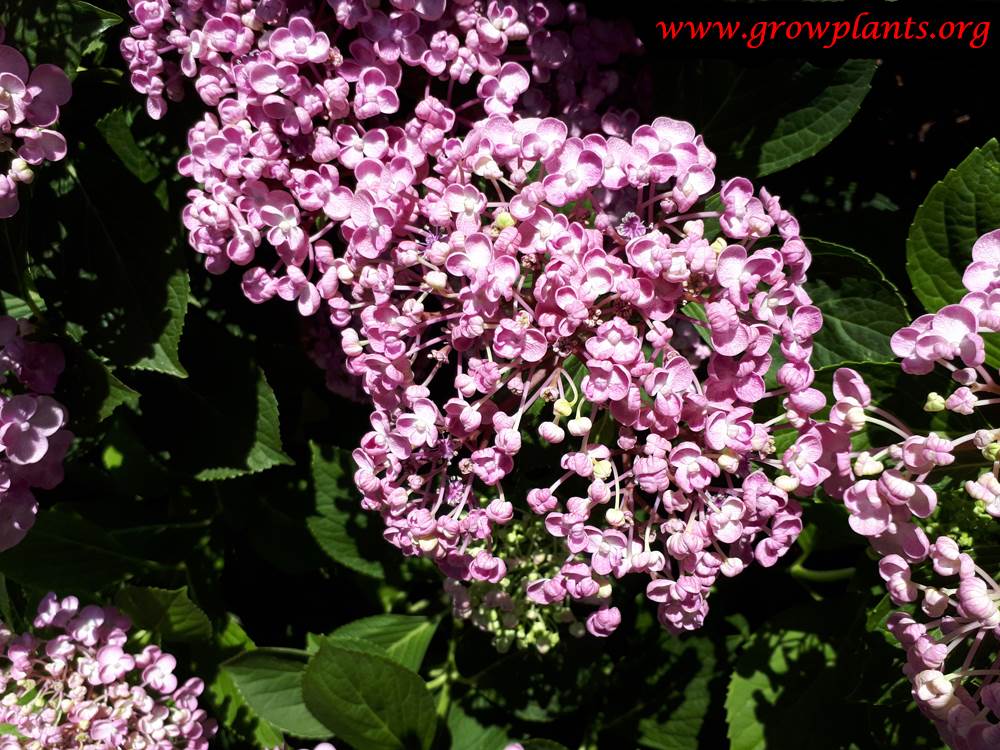
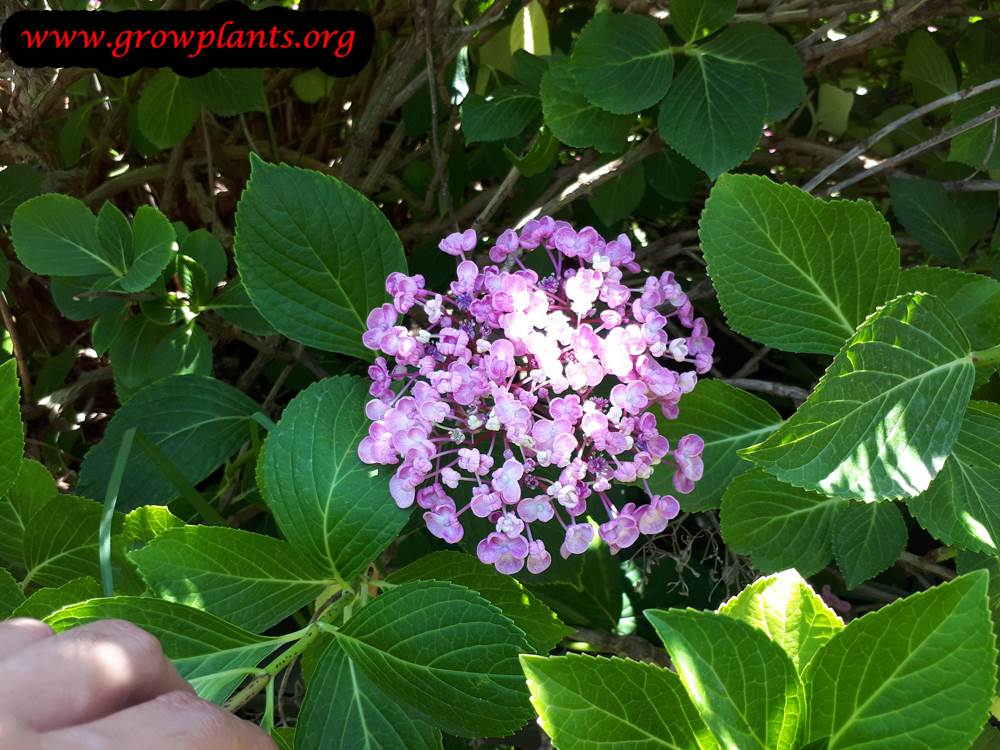
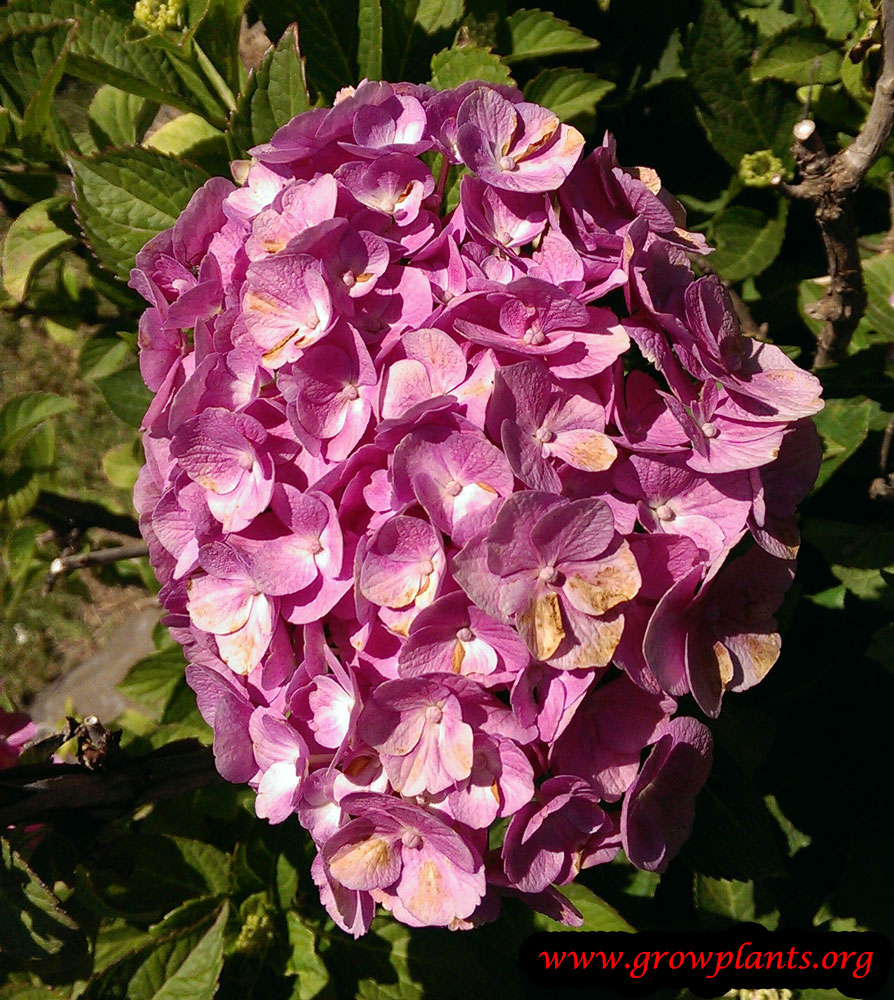
- Flower Appearance: Large rounded or lacecap heads of two flower types – larger showy florets around the outside and smaller fertile florets inside; color shifts with soil, blue in acid soil, pink to red or purple in alkaline soil, and white on neutral soils
- Edibility: Not edible – hydrangea flowers, buds and leaves contain cyanogenic compounds and are mildly toxic if eaten
Detailed Blooming Overview
Bigleaf hydrangea is the classic mophead or lacecap hydrangea whose flower color you can tune with soil chemistry – acid, aluminum-available soil for blue, alkaline soil for pink. The big outer florets are sterile and showy, while the small inner ones do the real pollinating work.
Flower Characteristics
- A two-tier head of showy sterile outer florets and smaller fertile inner florets.
- Color is pH-responsive: blue in acid soil, pink to purple in alkaline soil, white on neutral soil.
Bloom Care & Thinning
- Pruning: Most bigleaf hydrangeas bloom on old wood, so prune right after flowering, not in late winter, or you will cut off the flower buds.
- Steering color: Add aluminum sulfate to push blue or garden lime to push pink.
- Watering: Keep well watered – the big heads wilt quickly in heat.
Bloom Health & Protection
- Powdery mildew & gray mold: In humid conditions the flower heads and leaves can develop powdery mildew or botrytis (gray mold); improving airflow and spacing helps, and a neem oil or sulfur-based fungicide can keep it in check.
Pests, Diseases & Troubleshooting
Overview: Hydrangeas are shrubs bothered mainly by sap-sucking aphids, mites and scale, and by foliar fungal diseases in humid shade – powdery mildew, leaf spots and grey mould. The bigleaf/mophead hydrangea is the most powdery-mildew- and scorch-prone of the group and blooms on old wood, so late frosts and mistimed pruning often cost the flowers, while soil pH famously shifts the bloom colour. Reassuringly, their most alarming symptoms – sudden wilting, brown scorch and yellowing leaves – are usually abiotic, caused by heat, drought or soil chemistry rather than any pest, so correct culture solves most problems.
Quick Troubleshooting Overview
| Issue / Pest | Main Symptom | Primary Solution |
|---|---|---|
| Aphids | Curled, sticky new growth with sooty mould | Rinse off, insecticidal soap, encourage predators |
| Hydrangea scale | White waxy egg masses on stems and leaf undersides | Horticultural oil, prune, brush off |
| Spider mites | Fine stippling and bronzing in hot, dry conditions | Shower foliage, miticide if persistent |
| Powdery mildew | White powdery coating, especially in shade and humidity | Improve airflow, sulfur or bicarbonate, resistant varieties |
| Leaf spot | Purple-brown or tan spots and blotches on leaves | Remove affected leaves, avoid overhead watering |
| Wilting / scorch (abiotic) | Drooping and brown leaf edges in heat and drought | Water deeply, mulch, provide afternoon shade |
Common Pests & Management
- Aphids (Aphis spp.):
- Symptoms: Soft green or black insects massing on tender new shoots and flower buds, curling the leaves, coating growth in sticky honeydew and inviting sooty mould; most damaging to fresh spring growth.
- Prevention & Control: Blast off with water, then treat with insecticidal soap or neem; encourage ladybirds, lacewings and hoverflies; avoid excess nitrogen that fuels soft, aphid-prone growth.
- Hydrangea scale (Pulvinaria hydrangeae):
- Symptoms: Conspicuous white, waxy egg masses on the stems and leaf undersides in early summer, with flat brownish scales feeding on the sap, weakening the plant and producing honeydew and sooty mould.
- Prevention & Control: Brush or prune off egg masses, and spray horticultural oil to smother the vulnerable crawler stage after they hatch; repeat and inspect stems; encourage parasitic wasps and predators.
- Spider mites (Tetranychus urticae):
- Symptoms: Fine pale stippling that dulls and bronzes leaves, with faint webbing on undersides, worst in hot, dry, sheltered spots and on container plants.
- Prevention & Control: Shower the foliage and keep plants well watered, since drought stress invites mites; use horticultural oil or a miticide for outbreaks, covering leaf undersides, and avoid broad-spectrum sprays that kill mite predators.
- Vine weevil (Otiorhynchus sulcatus):
- Symptoms: Adults notch leaf margins at night, while the C-shaped grubs devour roots of container-grown plants, causing wilting and collapse.
- Prevention & Control: Check and drench the rootball of potted plants with beneficial nematodes in warm soil, hand-collect adults at night, and refresh container compost.
- Four-lined plant bug (Poecilocapsus lineatus):
- Symptoms: Sap-feeding bugs that leave rounded, sunken dark spots on the leaves, sometimes mistaken for a fungal leaf spot, mainly early in the season.
- Prevention & Control: Damage is usually cosmetic and self-limiting; remove affected leaves and tidy debris, and treat with insecticidal soap only during heavy early-season activity.
Diseases & Fungal Issues
- Powdery mildew (Erysiphe (Golovinomyces / Microsphaera) spp.):
- Symptoms: White, powdery fungal growth on leaves and shoots – sometimes with purple blotching on the upper surface – distorting growth in crowded, shaded, humid but dry-leaved conditions; bigleaf types are especially prone.
- Treatment & Management: Improve airflow by thinning and correct spacing, grow in better light, and remove infected leaves; spray sulfur, potassium bicarbonate or a suitable fungicide preventively where mildew recurs, and choose resistant varieties.
- Cercospora leaf spot (Cercospora hydrangeae):
- Symptoms: Small purple- to brown-bordered spots with tan centres, starting on lower leaves and spreading upward in warm, wet weather, causing yellowing and premature leaf drop but rarely killing the plant.
- Treatment & Management: Rake up and destroy fallen leaves, water at the base to keep foliage dry, mulch to stop soil splash, and improve airflow; a copper or general fungicide protects valued plants under heavy pressure.
- Anthracnose (Colletotrichum gloeosporioides):
- Symptoms: Large brown spots and blotches on leaves and, in wet years, sunken lesions on the flowers, worst in warm, wet, over-fertilised conditions.
- Treatment & Management: Remove infected leaves and flowers, avoid overhead watering and excess nitrogen, and improve airflow; fungicides are rarely needed with good sanitation.
- Botrytis blight (Botrytis cinerea):
- Symptoms: Brown, water-soaked flecks and fuzzy grey mould on flowers and buds in cool, damp, crowded conditions, spoiling the blooms.
- Treatment & Management: Remove faded flowers and dead material promptly, improve spacing and airflow, and avoid wetting the flowers; hygiene usually controls it.
- Bacterial leaf spot & wilt (Xanthomonas / Ralstonia solanacearum):
- Symptoms: Angular, water-soaked, dark leaf spots (bacterial leaf spot) or sudden wilting with vascular browning (bacterial wilt) in warm, wet conditions.
- Treatment & Management: Remove affected tissue, sanitise tools, avoid overhead watering and working plants when wet, and improve drainage; there is no cure for bacterial wilt, so destroy affected plants and avoid the site.
- Hydrangea ringspot / mosaic virus (Hydrangea ringspot virus):
- Symptoms: Faint ring patterns, mottling or distortion of leaves and gradual loss of vigour, spread mainly by propagation from infected stock.
- Treatment & Management: Remove and destroy affected plants, propagate only from healthy stock, and sanitise cutting tools; there is no cure.
Growing Difficulties & Abiotic Problems
- Wilting & leaf scorch:
- Cause & Symptoms: The most common hydrangea complaint: leaves droop and margins brown in heat and drought because the large leaves lose water faster than the roots supply it, even when soil is not truly dry.
- Correction Strategy: Water deeply and consistently, mulch to keep roots cool and moist, and site in morning sun with afternoon shade; midday wilting that recovers by evening is normal in heat and does not always mean under-watering.
- Chlorosis (iron/manganese):
- Cause & Symptoms: Interveinal yellowing of younger leaves while the veins stay green, from iron or manganese lock-out in high-pH or waterlogged soil.
- Correction Strategy: Lower soil pH with acidic organic matter, improve drainage, and apply chelated iron or a micronutrient feed; keep bigleaf types in suitably acidic soil.
- Failure to bloom:
- Cause & Symptoms: Few or no flowers, usually because late frost or ill-timed pruning removed the flower buds, or from too much shade or nitrogen.
- Correction Strategy: Know whether your hydrangea flowers on old or new wood and prune accordingly, protect old-wood types from late frost, avoid heavy shade, and don’t over-feed with nitrogen.
- Frost damage to buds & new growth:
- Cause & Symptoms: Blackened new shoots and dead flower buds after late spring frosts, especially on old-wood bloomers.
- Correction Strategy: Site away from frost pockets, delay spring pruning until frost risk passes, and cover vulnerable plants with fleece when late frosts threaten.
- Flower colour shifting with pH:
- Cause & Symptoms: Not a disease at all: blooms turn blue in acidic soil (available aluminium) and pink in alkaline soil, and can be an unstable muddy shade in between.
- Correction Strategy: Adjust deliberately – acidify with sulfur/aluminium sulfate for blue or lime for pink – and accept that white cultivars do not change; this is cultural, not a problem to cure.
What Helps – Products & Tools
Work culturally first – deep watering, mulch, airflow and the right light do most of the job. Keep insecticidal soap and neem or horticultural oil for aphids, scale and mites; sulfur or potassium bicarbonate for powdery mildew; a copper fungicide for leaf spots and bacterial problems; and chelated iron for chlorosis. Beneficial nematodes handle vine weevil grubs in containers.