

Plant Profile & Key Characteristics
Overview: Tall verbena is an airy upright perennial (or cold-climate annual) growing 0.6-1.5 m (2-5 ft) tall, grown as a drought-tolerant, pollinator-friendly ornamental. It is evergreen in mild climates (USDA zone 7+) and grown as an annual in colder zones (3-7).
Quick Specifications
| Specification | Attribute |
|---|---|
| Plant Type / Life Cycle | Perennial (or annual in cold climates) |
| Foliage Type | Evergreen (in mild climates) |
| Mature Size | 0.6-1.5 m (2-5 ft) tall |
| Growth Rate | Fast to moderate |
| Hardiness | USDA zone 7+ as perennial; 3-7 grown as annual |
Growth Form & Structure
- Height & Spread: Tall and see-through at 0.6-1.5 m (2-5 ft) on slender, wiry stems; container-friendly.
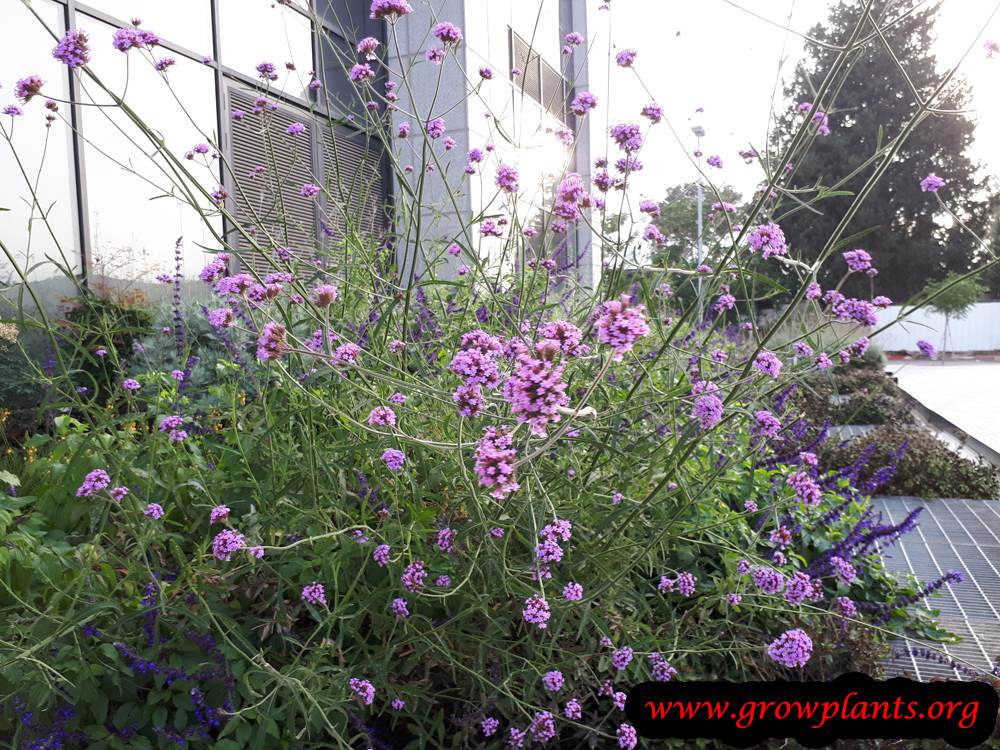
- Growth Habit & Form: Upright, open, airy clump-forming perennial.
- Lifespan & Maturity: Short-lived perennial that self-seeds freely.
Anatomy & Physical Features
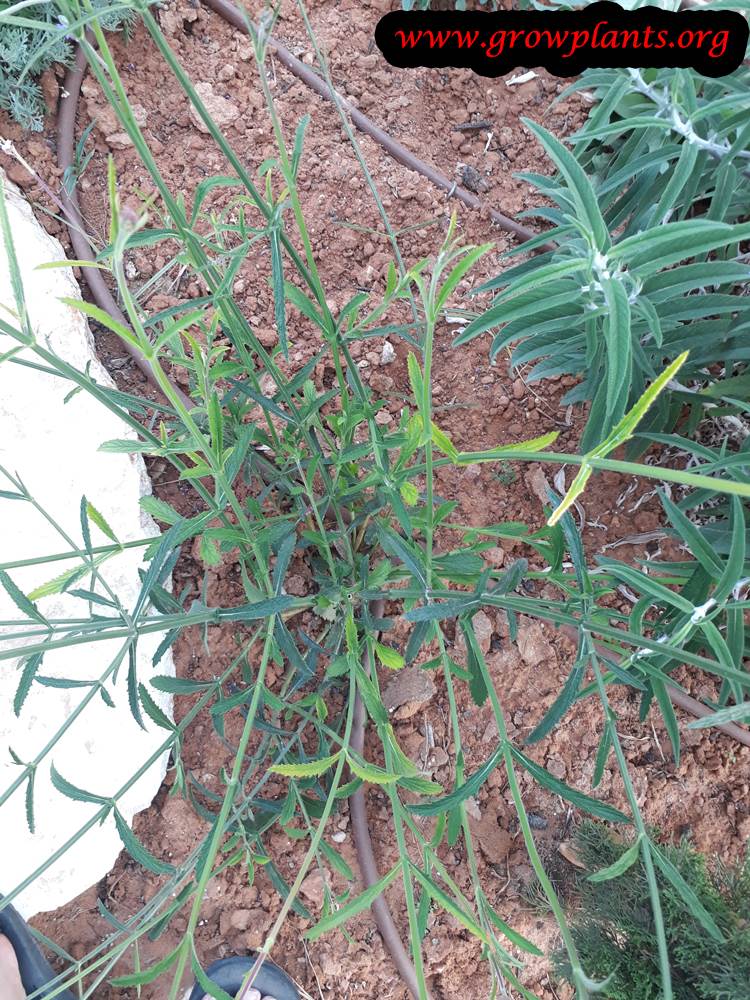
- Leaves & Foliage: Sparse green, linear to lance-shaped leaves with toothed margins.
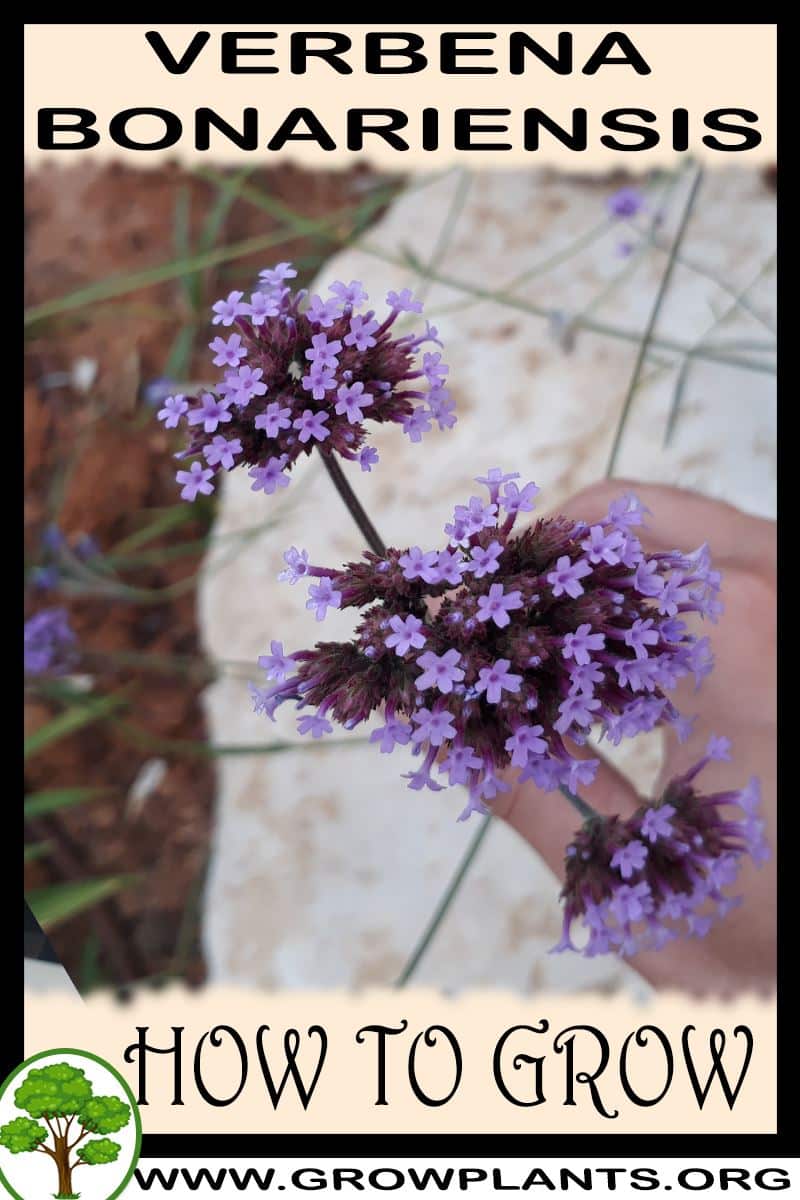
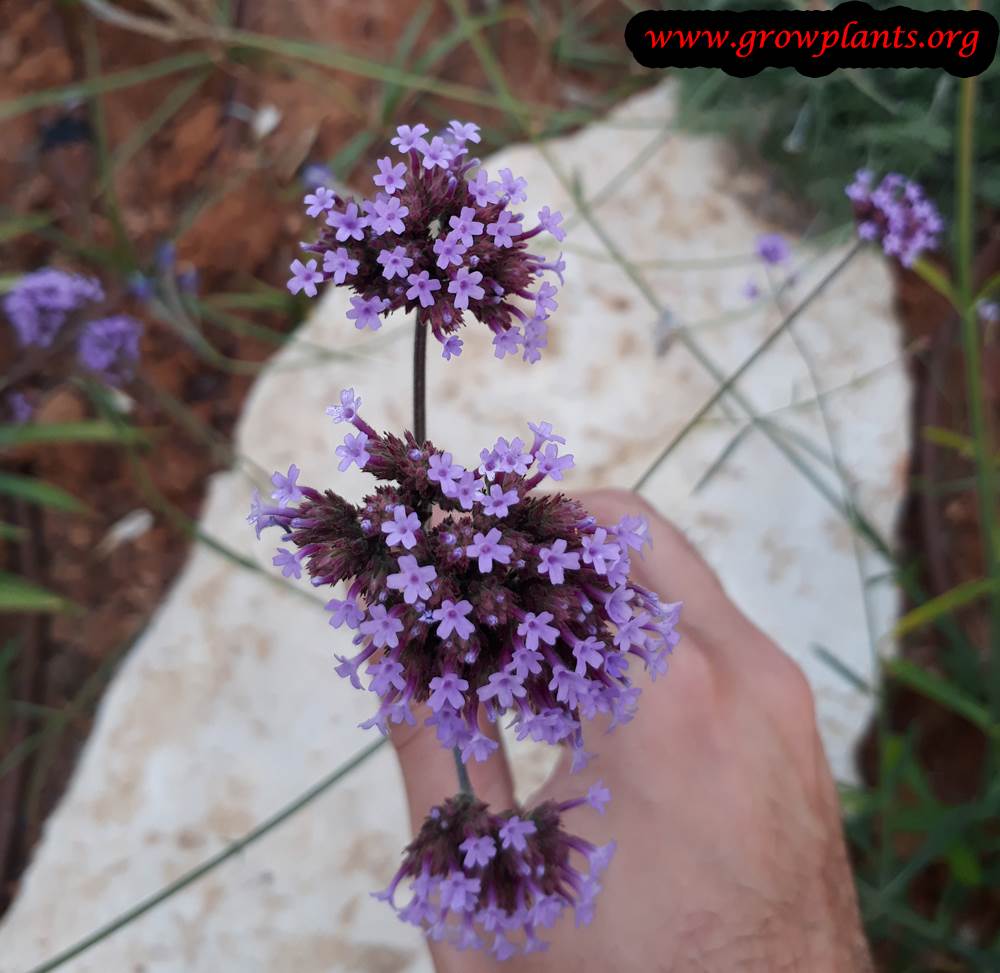
- Flower Characteristics: Fragrant purple flowers in small clustered heads atop branching stems.
Primary Uses & Landscape Value
- Functional & Ornamental Roles: Drought-tolerant ornamental and nectar plant for pollinators; excellent in naturalistic borders.
Care Guide: Planting, Soil & Watering
Overview: Verbena bonariensis (tall verbena) is an airy, drought-tolerant perennial (zone 7+; grown as an annual in colder zones) for full sun. It grows in most moist, well-drained soils and asks for only modest water once established.
Quick Care Requirements
| Requirement | Ideal Condition |
|---|---|
| Planting Season | In spring through autumn during the warm season |
| Growth Rate | Moderate to Fast |
| Soil Type | Moist, well-draining |
| Water Need | Low to Moderate |
Planting & Establishment
- Best Planting Season: Plant from spring through autumn once frost has passed.
- How to Plant:
- Hole Preparation: Dig a hole slightly wider than the root ball in loosened, free-draining soil.
- Soil Amendments: Add a little compost to poor soil; it is not fussy and self-seeds freely, so give it room.
- Planting Depth: Set the root ball level with the surface and keep the crown at soil level.
- Growth Speed & Expectations: A moderate-to-fast grower with tall, wiry stems to 0.6-1.5 m (2-5 ft).
Soil, Watering & Drainage Care
- Soil Mix & Drainage Needs: Needs moist but well-drained soil; good drainage prevents rot and helps it overwinter.
- Watering Schedule & Technique:
- Young / Newly Planted: Keep evenly moist while establishing.
- Established: Drought tolerant – water moderately, letting the top of the soil dry between waterings.
- Seasonal Adjustments: A little more in summer heat, much less in winter.
Climate, Light & Hardiness
Verbena bonariensis (tall verbena) is a drought-tolerant perennial suited to Mediterranean, desert, subtropical, temperate, and tropical climates, thriving in full sun to half shade. It is reliably hardy in mild-winter zones and widely grown as a cold-season annual elsewhere.
Quick Climate Specifications
| Climate Zones | Mediterranean, Desert, Subtropical, Temperate, Tropical |
|---|---|
| USDA Hardiness Zones | 7+ as a perennial; grown as an annual in zones 3–7 |
| Frost Tolerance | Moderate |
| Light Conditions | Full Sun / Half Shade |
Sunlight & Light Exposure
Optimal Light Setup
Full sun to half shade both work well; full sun typically produces the most compact, floriferous plants.
Temperature Extremes & Hardiness
USDA Hardiness & Regional Limits
Reliable as a perennial in zone 7 and warmer; in colder zones 3–7 it is commonly grown as a cool-season or self-seeding annual rather than relied on to overwinter.
Frost Sensitivity
Tolerates light frost typical of zone 7 winters; harder freezes in colder zones will kill top growth, which is why it is grown as an annual there.
Wind, Humidity & Microclimate
Dry-Air Tolerance
Well suited to dry conditions given its drought-tolerant nature and desert-climate adaptability.
Rainfall & Seasonal Moisture
Prefers moist, well-drained conditions but tolerates a range of rainfall patterns typical of Mediterranean and temperate climates.
Growing in Pots, Balconies & Indoors
Purpletop vervain (Verbena bonariensis) is a tall, airy, self-seeding perennial (0.6-1.5 m) with clusters of purple flowers that draw butterflies. The grower says it is not a houseplant but can be grown in a container – a see-through, sun-loving patio plant, though it self-seeds readily and can be invasive.
Quick Details
- Container Size: A medium-to-large, deep pot for its tall stems
- Indoor Suitability: Not a houseplant – an outdoor sun-lover
- Best Spot: Full sun to half shade, outdoors
- Soil & Drainage: Free-draining mix
- Watering in Pots: Small to average amount – drought-tolerant once established
Indoors & On the Windowsill
- Not a houseplant: The grower confirms it will not grow indoors; it is an outdoor perennial.
- Windowsill: Too tall and sun-hungry for a sill – grow it outside.
On a Balcony or Patio
- Light, wind & heat: Give it the brightest spot it will tolerate; walls and railings reflect heat and dry pots quickly, so check moisture often and shelter or stake exposed growth.
- Tall & airy: Its wiry stems sway in wind and look lovely on a sunny balcony; a deep pot gives stability. Deadhead to limit self-seeding.
Choosing the Pot, Soil & Long-Term Care
- Pot & drainage: A medium-to-large, deep pot with strong drainage holes. Use strong drainage holes and skip a standing-water saucer to avoid root rot. Terracotta breathes and dries faster; glazed or plastic holds moisture longer.
- Potting mix: A well-aerated, organic-rich mix – potting soil or peat/coir with perlite or vermiculite for free drainage.
- Feeding: Feed lightly; too rich a diet makes it floppy.
- Repotting: Refresh the mix and pot up about every two years; for perennials, lightly root- and top-prune the plant when you do.
Fertilizing & Feeding
A light feeder that flowers best in lean soil; a modest balanced feeding to help establishment and support the long bloom season is enough, since rich feeding tends to produce floppy, sparse-flowering growth.
Quick Fertilizing Specs
| Feeding Level | Light feeder |
|---|---|
| Main Nutrient Priority | Balanced feeding with adequate nitrogen to establish, then modest feeding through the bloom season |
| Best Feeding Period | Spring through the long summer-into-autumn bloom season |
| Organic Options | Compost or aged manure worked into the bed at planting |
| Reduce/Stop Feeding | Feeding tapers off as the plant heads into dormancy or winter die-back |
| Micronutrients | Rarely an issue in average garden soil; correct only a diagnosed deficiency |
| Soil pH | Tolerates a wide range of soil pH |
Feeding by Growth Stage
Spring establishment and early growth
Help new plants root in and put on sturdy early growth.
| Nutrient direction | A balanced fertilizer with adequate nitrogen supports establishment without pushing weak growth. |
|---|---|
| Timing | At planting in spring and through early growth. |
| Frequency | A light feeding at planting, repeated lightly as growth continues. |
| Fertilizer types | A balanced complete fertilizer, Compost or aged manure worked into the planting area |
| Precautions | Keep feeding light; overly rich soil tends to produce tall, floppy stems that need staking. |
Long summer-into-autumn bloom season
Sustain the extended flush of purple flower clusters that pollinators rely on.
| Nutrient direction | Modest balanced feeding maintains flowering without forcing excess foliage at the expense of blooms. |
|---|---|
| Timing | Through summer and into autumn while flowering continues. |
| Frequency | An occasional light feeding is usually enough to keep flowering going. |
| Fertilizer types | A balanced complete fertilizer used sparingly, A light organic top-dressing |
| Precautions | Avoid heavy nitrogen feeding, which favors leafy growth over the airy flower display this plant is grown for. |
Winter dormancy or die-back
Let the plant rest through cold weather without pushing tender new growth.
| Nutrient direction | None – withhold fertilizer while the plant is dormant or has died back for winter. |
|---|---|
| Timing | During winter dormancy, or after autumn frost where grown as a cold annual. |
| Frequency | No feeding at this stage. |
| Fertilizer types | No feeding at this stage; hold off fertilizing until active growth resumes in spring. |
| Precautions | Do not fertilize dormant or frost-killed growth; wait for new spring growth before feeding again. |
Nutrient Deficiency Signs & Corrections
Older leaves turn pale green to yellow and overall growth and flowering slow.
| Possible causes | low soil nitrogen, nutrient leaching after heavy rain or watering, poor, sandy soil low in organic matter |
|---|---|
| Appears first on | older, lower leaves |
| What to check | recent feeding history, soil organic matter level, drainage and recent rainfall |
| Possible correction | Apply a balanced fertilizer with available nitrogen and work organic matter into the soil. |
Stems grow weak and floppy and flower clusters are sparse or smaller than usual.
| Possible causes | low soil potassium, competition from excess nitrogen feeding, sandy soil that leaches nutrients quickly |
|---|---|
| Appears first on | flowering stems and new growth |
| What to check | balance of recent feeding, soil texture and drainage, staking needs versus stem quality |
| Possible correction | Switch to a balanced fertilizer rather than a nitrogen-heavy one and avoid overfeeding. |
Leaf edges brown or scorch and the plant wilts despite moist soil.
| Possible causes | fertilizer salts building up in the root zone, under-watering that concentrates salts, too-frequent or too-strong feeding |
|---|---|
| Appears first on | leaf margins |
| What to check | recent feeding amounts and frequency, watering consistency, soil drainage |
| Possible correction | Ease off feeding, water deeply to help flush salts, then return to a lighter feeding routine. |
Pruning, Training & Seasonal Maintenance
Verbena bonariensis is a herbaceous, wiry-stemmed perennial (grown as an annual in colder zones) with no woody framework, so ‘pruning’ here really means cutting back top growth and deadheading – it tolerates this well and it does not affect flower quality since new flowering stems are produced continuously through the season. The main objectives are shaping/height control and, importantly, controlling self-seeding, since this species is noted as invasive. Cutting back is safest and most effective in autumn/winter once the main flowering flush is over, or in early spring where the plant is left standing for winter structure.
Quick Pruning & Maintenance Specs
| Pruning Tolerance | High (herbaceous top growth) |
| Primary Pruning Window | Autumn / Winter cutback (or early spring in cold-winter areas) |
| Secondary Maintenance Window | Spring/Summer/Autumn deadheading |
| Typical Frequency | One main cutback per year, plus periodic deadheading through bloom |
| Main Objective | Prolong flowering, control size, limit self-seeding |
| Young Plant Priority | Pinch young plants once to encourage branching |
| Mature Plant Priority | Annual cutback of old flowering stems; deadhead to reduce volunteer seedlings |
| Best Tool Type | Precision snips / hand shears |
| Avoid Heavy Pruning During | Peak bloom (spring–autumn) if flowers are still wanted |
Pruning by Plant Age & Size
Newly Established
Pinch out the growing tip once when young to encourage a bushier, more branched plant with more flowering stems; otherwise leave alone while it establishes.
Young / Formative
No structural training applies (herbaceous, self-supporting wiry stems) – formative work is limited to the single pinch above.
Mature / Established
Established clumps benefit from an annual cutback of the previous year’s flowering stems to the base (or to a low framework of new basal growth) to keep the planting from becoming a tangle of old woody-feeling stems.
Seasonal Pruning Schedule
- Autumn / Winter (main cutback): objective is to remove the season’s spent flowering stems and tidy the clump; cut stems back to near the base (or to new basal shoots where present); do not cut into the crown itself; response is fresh basal growth the following spring; no flowering impact since this is post-bloom.
- Ongoing Sanitary (through the flowering season): deadhead spent flower clusters regularly to encourage further blooms and to significantly reduce self-sown seedlings, given this species’ noted invasiveness; do not remove non-flowering side shoots.
Special Growth to Remove
- Spent flower heads – deadhead through the season to prolong bloom and reduce unwanted self-seeding.
- Old, collapsed or frost-killed stems – cut to the base in the autumn/winter cutback.
Container & Small-Space Pruning
In containers, pinch more actively when young to keep the naturally tall, airy habit in better proportion to the pot, and deadhead promptly to prevent seedlings colonising neighbouring pots.
Tools
- Precision snips – deadheading and pinching the thin wiry stems.
- Hand shears/bypass secateurs – the one-time autumn/winter cutback of the whole clump.
Tool Hygiene & Disease Risk
Routine care is sufficient – clean sharp tools. Powdery mildew is a reported issue; if mildew-affected stems are cut out, wipe blades before moving to healthy plants to avoid spreading spores.
Cut Placement & Technique
Deadhead just below the spent flower cluster at a leaf node; for the seasonal cutback, shear the whole clump back to a few inches above the base or to visible new basal shoots.
Heavy Pruning & Rejuvenation
Tolerates being cut hard to the base each year as routine maintenance (this is normal practice for this species, not a rare rejuvenation measure); regrowth is fast and vigorous the following spring.
Post-Pruning Care
Water normally after cutback; no special aftercare is needed beyond monitoring for aphids on the fresh new growth.
Common Pruning Mistakes
- Cutting back too early in autumn and losing the winter seedhead structure/wildlife value some gardeners want.
- Skipping deadheading and letting the plant self-seed uncontrollably, worsening its invasive spread.
When NOT to Prune
Avoid a full cutback in the middle of the flowering season purely for tidiness, since it sacrifices the current bloom; where winter cold is a risk, leaving old stems in place until early spring can help protect the crown, so delay the hard cutback until then in marginal zones.
Recommended Tools (by task)
- precision_snips – deadheading individual flower clusters through the season.
- hedge_shears – quick whole-clump cutback of the thin wiry stems at season’s end (mass planting/border use).
Propagation Guide
Verbena bonariensis is easiest from seed, which it sets abundantly and often self-sows around the garden – a habit that lines up with the site’s note that the species can be invasive. Seed comes true to the species, and while stem cuttings work as an optional alternative for multiplying a particular plant, they are not necessary; overall this is an Easy plant to propagate.
Quick Propagation Specs
| Best Propagation Method | Seed |
| Alternative Methods | Softwood stem cuttings (optional) |
| Propagation Difficulty | Easy |
| Seed True-to-Type | Yes |
| Best Propagation Season | Spring, consistent with the plant’s spring/summer/autumn planting season; self-sown seedlings commonly appear through the warmer months |
| Seed Germination Time | Generally within a few weeks, though it can be somewhat uneven |
| Cutting Rooting Time | Typically a few weeks under warm, humid conditions |
| Seed Sowing Depth | Very shallow to surface-sown, pressed lightly into the mix rather than buried |
Growing from Seed
Sowing Season
Sow in spring, in line with the plant’s spring/summer/autumn planting window; where the species self-seeds, seedlings often turn up on their own during the growing season.
Sowing Depth & Orientation
Sow shallowly to on the surface, as the fine seed generally benefits from light exposure to germinate.
Germination Conditions
Keep the sowing medium consistently moist and in a bright, warm spot; germination can be somewhat irregular, so patience over a few weeks is normal.
Seedling Care
Grow seedlings on in Full Sun to Half Shade with modest to average watering once established, matching the plant’s drought-tolerant, low-to-average water needs.
Stem Cuttings
Cutting Type
Softwood tip cuttings from non-flowering shoots.
Best Timing
Spring to early summer, during active growth.
Rooting Hormone
Optional – not required, but can improve consistency.
Rooting Time
Typically a few weeks under warm, humid conditions.
Bloom & Flower Guide
Quick Details
- Bloom Season: Summer into autumn
- Time to First Bloom: In its first year from seed or planting
- Flower Appearance: Small, fragrant purple flowers clustered into flat-topped heads on tall, slender, branching stems
- Edibility: Not commonly eaten – grown as an ornamental
Detailed Blooming Overview
Tall verbena floats clusters of small purple flowers on airy, wiry stems well above the foliage – one of the best plants for drawing butterflies and bees into a garden.
Flower Characteristics
- Small, star-shaped, fragrant purple flowers.
- Gathered into flat-topped, umbel-like heads at the tops of tall stems.
Bloom Care & Thinning
- Prolonging bloom: Deadhead to extend flowering and to keep its generous self-seeding in check.
- Conditions: A superb pollinator plant that is drought tolerant once established.
Bloom Health & Protection
- Powdery mildew: Late in the season a white powdery film can appear on the stems and flower heads; better spacing and airflow, and if needed a neem oil or sulfur-based fungicide, keep it in check.
Pests, Diseases & Troubleshooting
Overview: This tall, airy perennial verbena is fairly tough but shares the genus’s Achilles heel, powdery mildew, along with spider mites in hot dry spells and occasional aphids, whitefly and thrips; root rot appears only in wet soil. Full sun, airflow and sharp drainage keep it clean and floriferous.
Quick Troubleshooting Overview
| Issue / Pest | Main Symptom | Primary Solution |
|---|---|---|
| Powdery mildew | White coating on leaves | Airflow; sun; bicarbonate/sulfur |
| Spider mites | Stippled, dull, webbed leaves | Humidity; oil/soap; predatory mites |
| Aphids & whitefly | Curled tips, honeydew, sooty mould | Beneficials; sticky traps; soap |
| Thrips | Silvered leaves, deformed buds | Sticky traps; sanitation; spinosad |
| Budworm caterpillars | Chewed buds and leaves | Hand-pick; Bt/spinosad |
| Root rot | Wilting in wet soil | Sharp drainage; avoid overwatering |
Common Pests & Management
- Spider mites (two-spotted mite) (Tetranychus urticae):
- Symptoms: Fine pale stippling or bronzing on upper leaf surfaces, later a dull sandblasted look; delicate webbing on undersides and shoot tips in hot dry spells. Confirm by tapping foliage over white paper and watching for moving specks.
- Prevention & Control: Mites thrive in hot, dusty, drought-stressed conditions, so keep plants well watered and raise humidity where practical; hose down foliage and remove badly affected leaves. Introduce predatory mites (Phytoseiulus) under cover. If needed, apply insecticidal soap or horticultural oil, ensuring thorough coverage of leaf undersides and repeating to catch newly hatched mites.
- Aphids (Aphidoidea):
- Symptoms: Clusters of small soft-bodied green, black or grey insects on new shoots, buds and leaf undersides; curled or distorted young growth, sticky honeydew and a black sooty mould film; ants farming the colonies. Look-alikes include whitefly nymphs (flat, static) and psyllids.
- Prevention & Control: Encourage and protect ladybirds, lacewings, hoverflies and parasitic wasps; knock colonies off with a strong jet of water and pinch out badly infested tips. Avoid excess nitrogen, which drives soft aphid-prone growth. If numbers stay high, treat with insecticidal soap or a horticultural/neem oil, spraying leaf undersides in the cool of the evening to protect pollinators.
- Whitefly (Aleyrodidae):
- Symptoms: Clouds of tiny white moth-like insects rising when foliage is disturbed; pale mottling, honeydew and sooty mould, with scale-like nymphs on leaf undersides. A vector of several plant viruses.
- Prevention & Control: Use yellow sticky traps to catch adults and monitor build-up; encourage Encarsia parasitic wasps and predatory beetles, especially under cover. Remove heavily infested lower leaves. Insecticidal soap or horticultural oil sprayed to leaf undersides, repeated every few days, breaks the life cycle.
- Thrips (Thysanoptera):
- Symptoms: Silvery-white flecking and streaking on leaves and petals, tiny black frass dots, and distorted new growth; slender pale-to-dark insects that dart away when disturbed. Thrips can also spread viruses.
- Prevention & Control: Remove weeds and spent flowers that harbour them, and use blue sticky traps to monitor and reduce adults. Encourage predatory mites, minute pirate bugs and lacewings. Where control is needed, spinosad or insecticidal soap applied to growing points in the evening helps; rotate products to avoid resistance.
- Budworm / leaf-tier caterpillars (Noctuidae larvae):
- Symptoms: Chewed, rolled or webbed leaves and eaten buds and flowers, with dark frass; small caterpillars tucked into shoot tips, most troublesome on bedding verbena.
- Prevention & Control: Hand-pick caterpillars and remove rolled leaves, and encourage birds and parasitic wasps. For persistent attacks, an organic caterpillar spray (Bacillus thuringiensis) or spinosad on the young larvae in the evening controls them.
Diseases & Fungal Issues
- Powdery mildew (Erysiphales):
- Symptoms: White to greyish powdery patches on upper leaf surfaces, stems and sometimes buds; leaves may yellow, distort and drop in severe cases. Worst in warm days, cool nights and crowded, shaded plantings.
- Treatment & Management: Improve airflow with correct spacing and thinning, site in good light, and avoid wetting foliage late in the day; water at the roots. Remove and destroy affected leaves and clean up debris. Resistant varieties help. Organic sprays of potassium bicarbonate, sulfur or a diluted horticultural oil check spread if applied early and repeated.
- Grey mould / Botrytis blight (Botrytis cinerea):
- Symptoms: Fuzzy grey-brown mould on flowers, buds, soft stems and fruit, often starting on damaged or fading tissue; water-soaked spots that collapse in cool, damp, still conditions.
- Treatment & Management: Remove faded flowers, damaged tissue and debris promptly, improve ventilation and avoid overhead watering and overcrowding. Do not leave wet foliage overnight. Where pressure is high, an appropriate fungicide can be used, but sanitation and airflow are the main controls.
- Fungal leaf spot (Cercospora / Septoria etc.):
- Symptoms: Round to angular brown or purple-bordered spots on the leaves, sometimes merging into blotches; heavy spotting causes yellowing and early leaf drop in warm, wet conditions.
- Treatment & Management: Remove and destroy spotted leaves and fallen debris, water at the base to keep foliage dry, and space plants for airflow. Rotate annual plantings. A copper fungicide gives protection where the disease is persistent, but sanitation is the first line of defence.
- Root and crown rot (Phytophthora / Pythium spp.):
- Symptoms: Wilting despite moist soil, yellowing lower leaves, dark soft roots and a blackened crown; general decline and collapse. Waterlogged or poorly drained soil is the trigger.
- Treatment & Management: Prevention is decisive: plant in free-draining soil or raised beds, avoid overwatering, and never let containers stand in water. Remove and destroy badly affected plants. Improve drainage and let the surface dry between waterings; biological drenches (Trichoderma) can help protect healthy roots.
Growing Difficulties & Abiotic Problems
- Poor drainage and root rot:
- Cause & Symptoms: Wilting, yellowing and collapse in heavy, wet soil or overwatered containers; verbena resents wet feet.
- Correction Strategy: Grow in full sun in free-draining soil or gritty container mix, water when the surface dries rather than keeping it soggy, and avoid crowding; good drainage also reduces the mildew that thrives on stressed plants.
- Legginess and shy flowering:
- Cause & Symptoms: Sparse flowers and weak, drawn stems in shade or without trimming; old growth becomes bare and woody.
- Correction Strategy: Site in full sun, feed lightly, and shear or deadhead after flushes to keep plants bushy and blooming; adequate light is the key to strong flowering.
- Iron chlorosis:
- Cause & Symptoms: Yellowing between green veins on new leaves, mainly on alkaline soils or in tired container mix.
- Correction Strategy: Maintain a slightly acidic to neutral, free-draining medium, refresh container mix, and correct with an iron chelate and balanced feed if chlorosis appears.
What Helps — Products & Tools
Verbena management centres on powdery mildew: full sun, airflow and potassium bicarbonate or sulfur sprays, backed by insecticidal soap and horticultural/neem oil for spider mites, aphids and whitefly, blue sticky traps and spinosad for thrips, and Bacillus thuringiensis for budworm. Sharp drainage prevents the root rot and the stress that invites mildew.