![Greenwood Nursery: Live Perennial Plants - 'Homestead Purple' + Verbena Canadensis - [Qty: 2X Pint Pots] - (Click for Other Available Plants/Quantities)](https://m.media-amazon.com/images/I/61EXfOfxnfL._SL160_.jpg)

Plant Profile & Key Characteristics
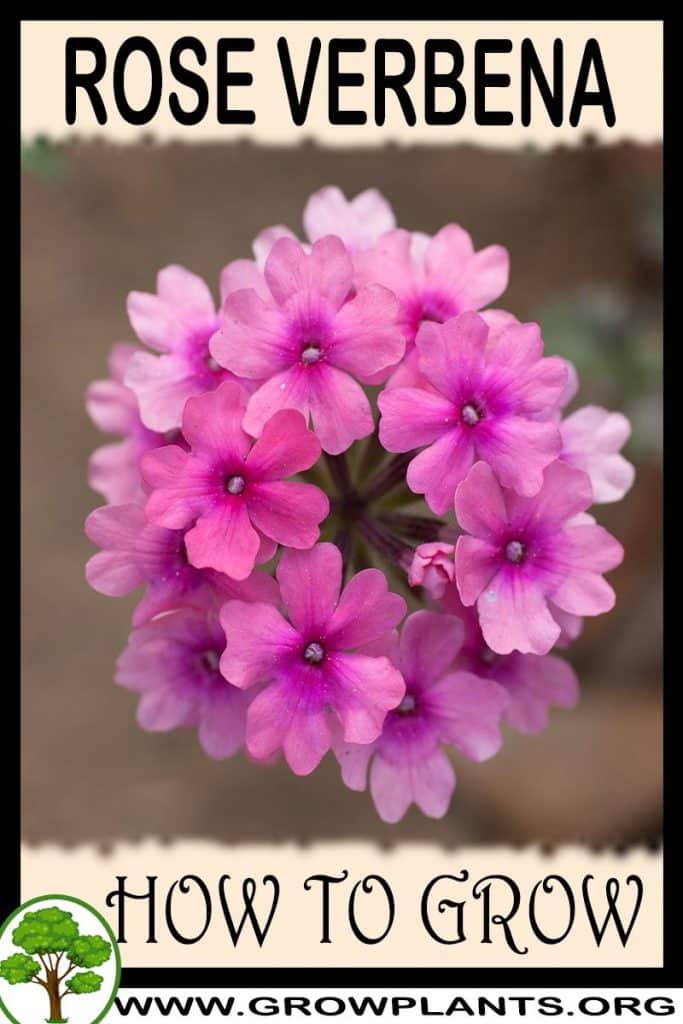
Overview: Rose verbena (Glandularia canadensis) is a low, spreading evergreen perennial 15-30 cm (6-12 in) tall, grown as an ornamental groundcover and treated as an annual in cold climates. It carries rounded clusters of purple-pink flowers over a long season.
Quick Specifications
| Specification | Attribute |
|---|---|
| Plant Type / Life Cycle | Evergreen perennial (grown as an annual in cold climates) |
| Foliage Type | Evergreen (in mild climates) |
| Mature Size | 15-30 cm (6-12 in) tall, spreading wider |
| Growth Rate | Fast |
| Root System | Spreading; stems root at the nodes where they touch the soil |
| Hardiness | USDA zones 6+ as a perennial; grown as an annual in zones 2-6 |
Growth Form & Structure
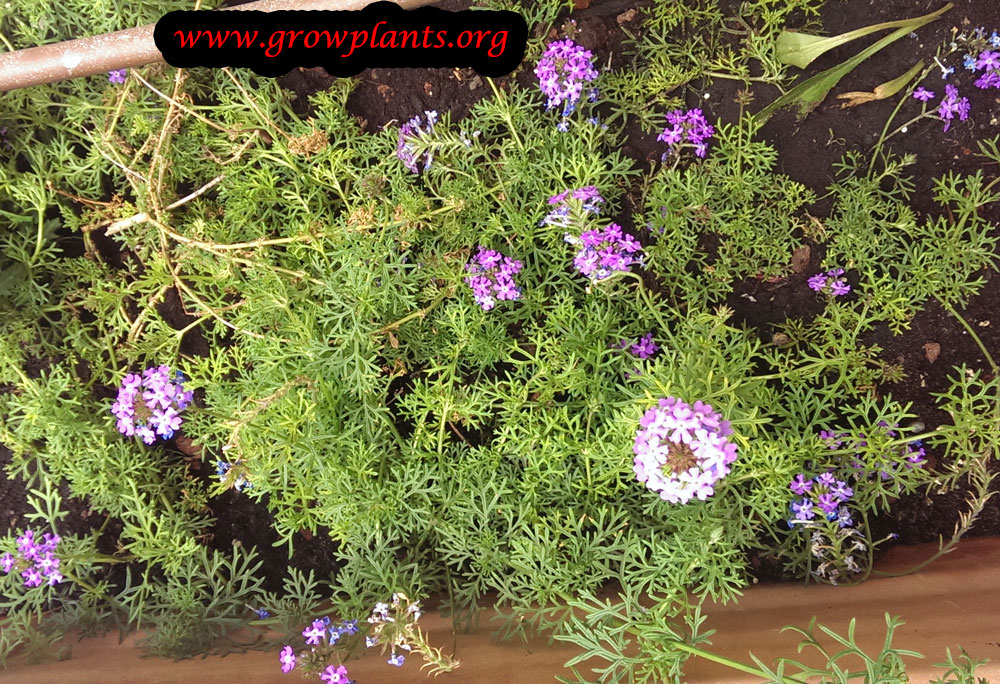
- Height & Spread: Low, 15-30 cm (6-12 in) high but spreading well beyond that as a mat; excellent in pots, baskets and as a trailing container plant.
- Growth Habit & Form: Prostrate, mat-forming groundcover with trailing stems.
- Lifespan & Maturity: A short-lived perennial that spreads quickly and flowers for most of the year in mild climates.
Anatomy & Physical Features
- Leaves & Foliage: Green, triangular, deeply cut (shredded) leaves.
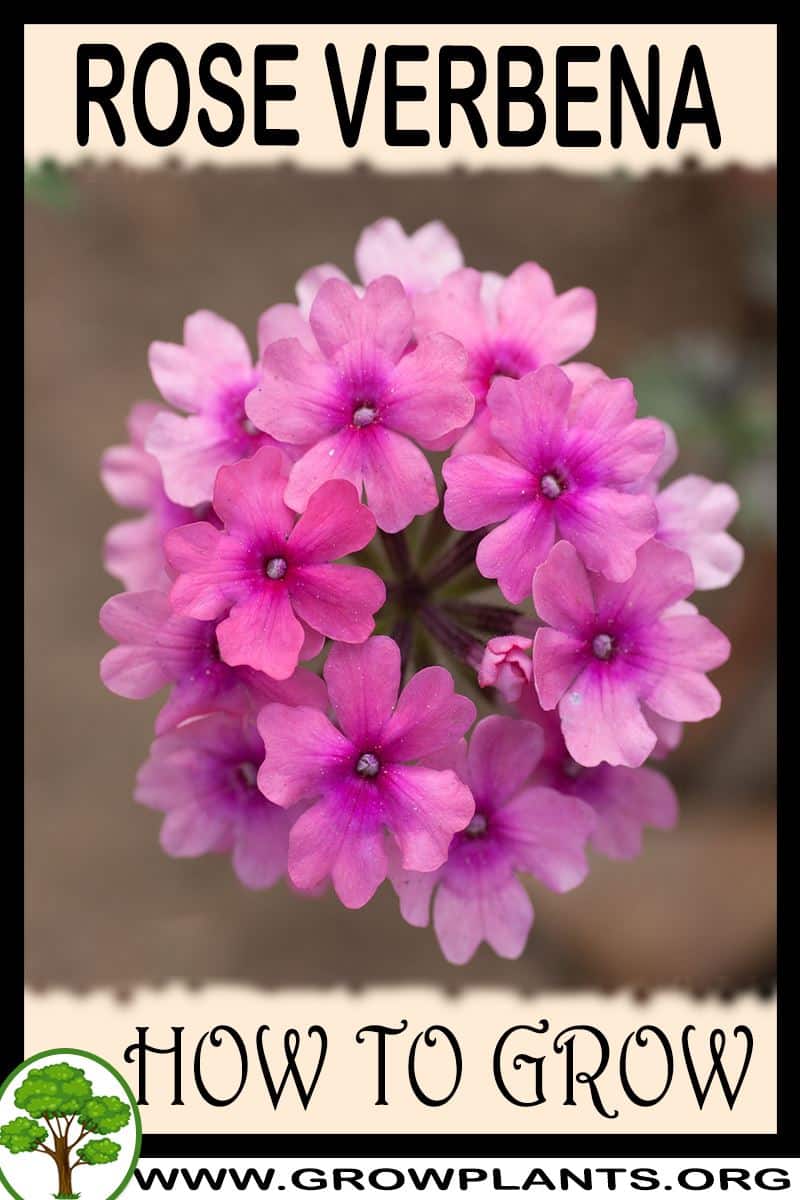
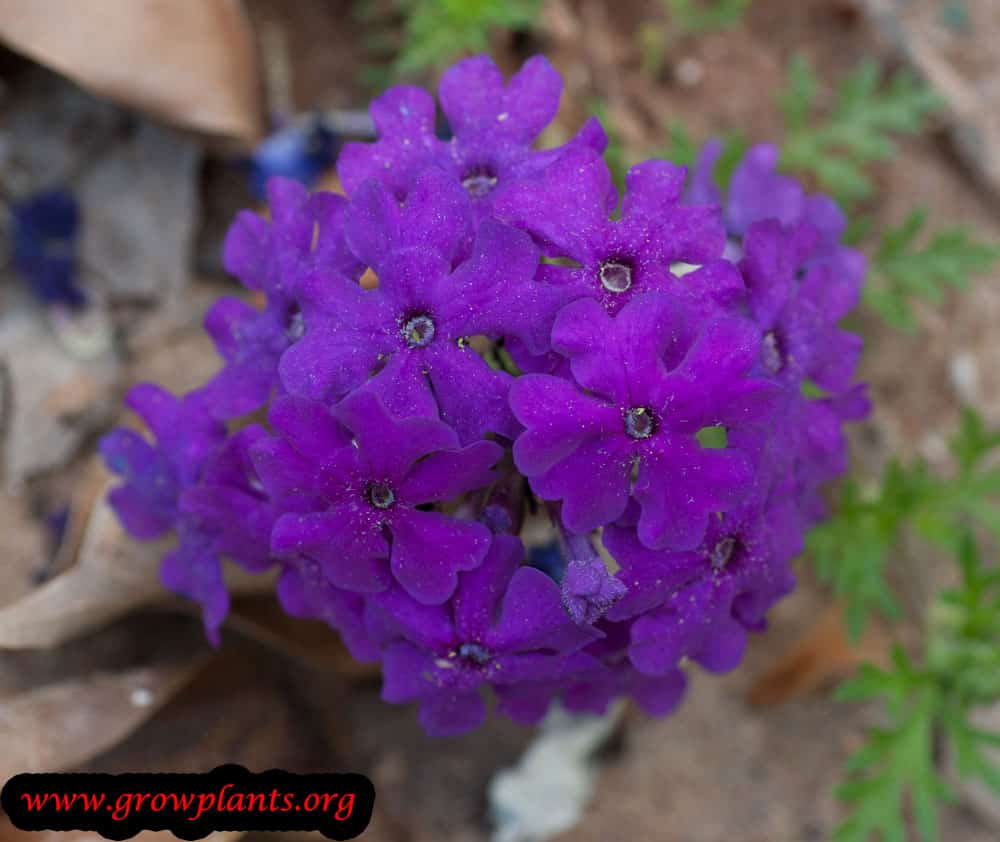
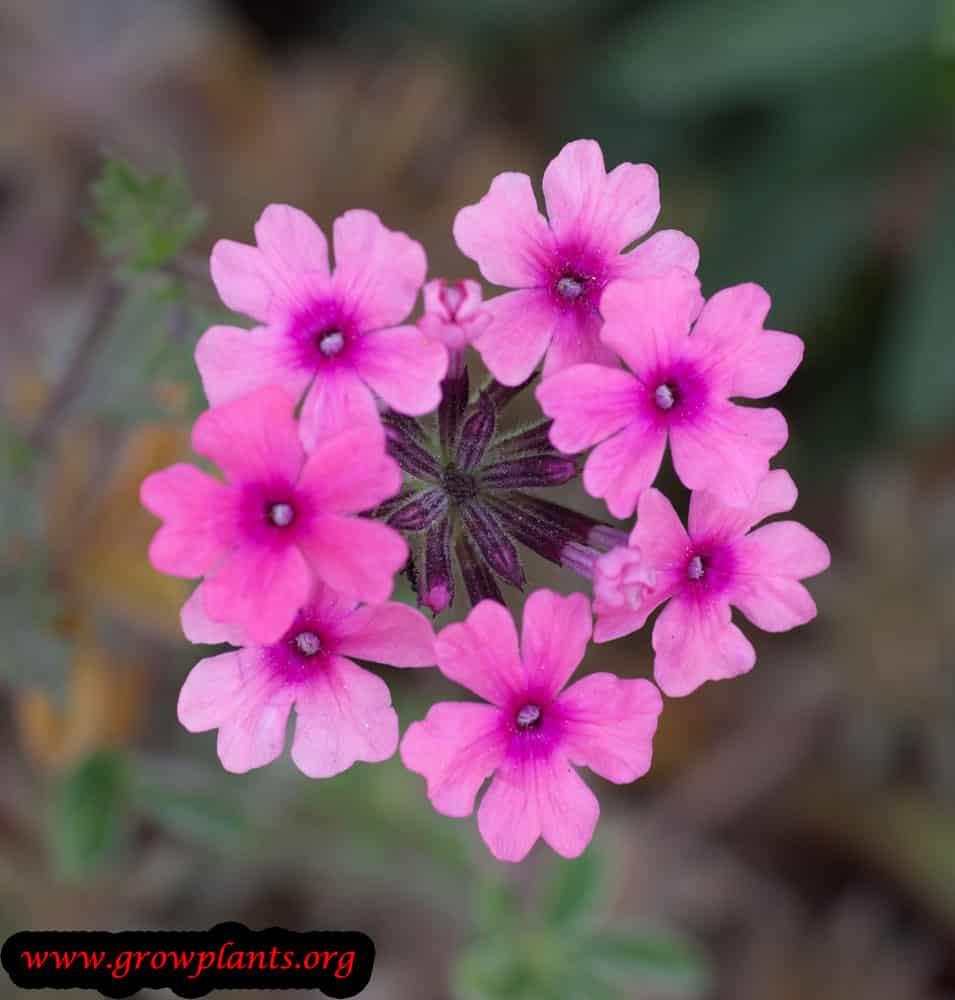
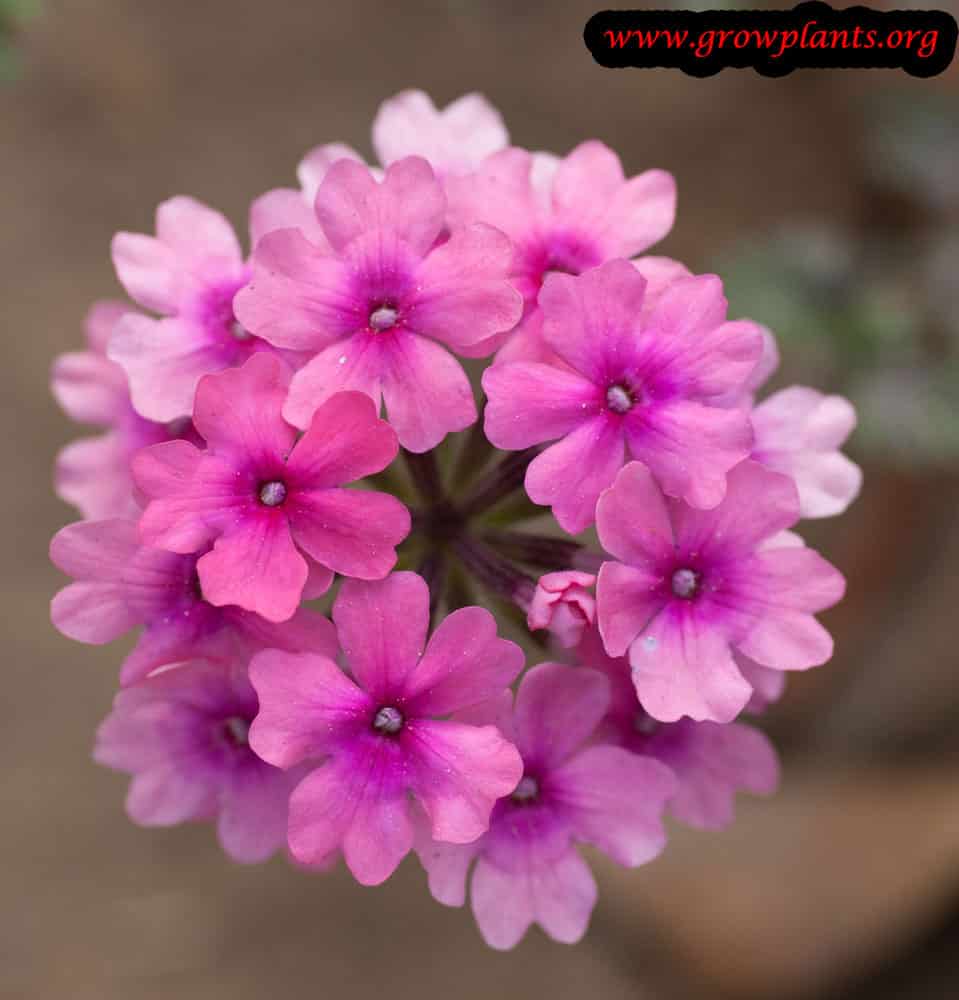
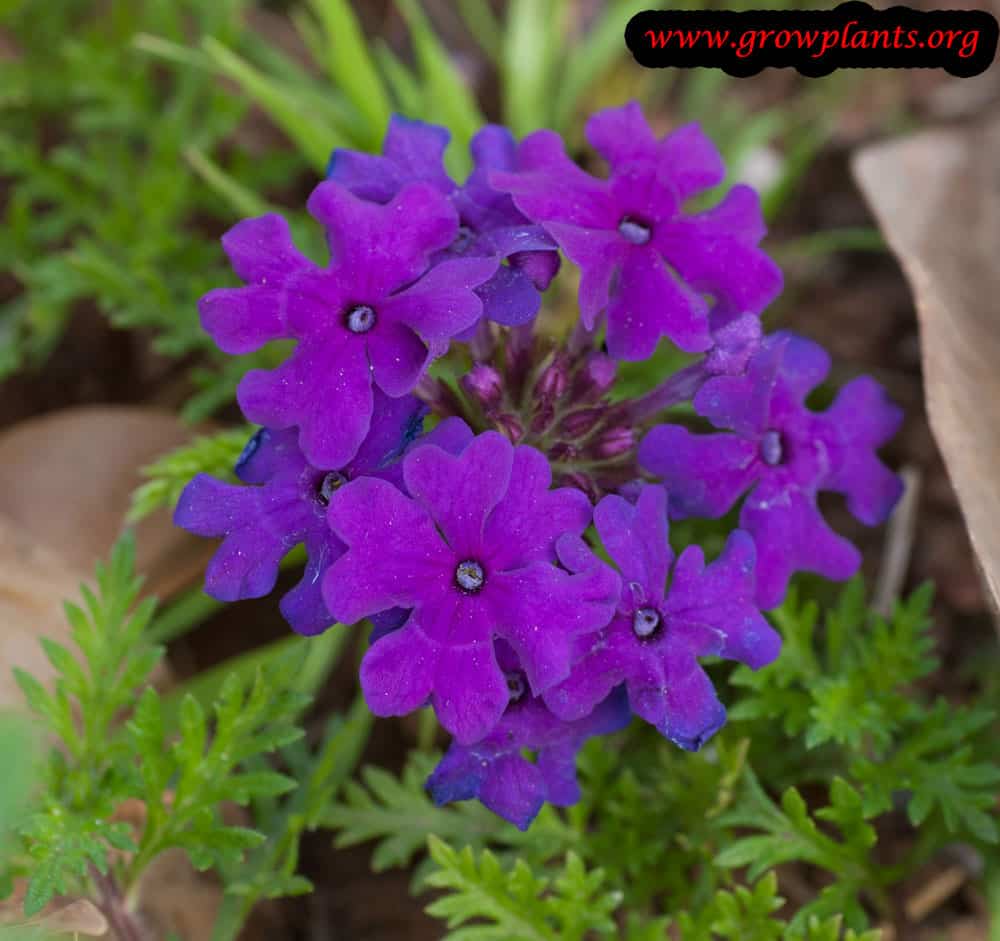
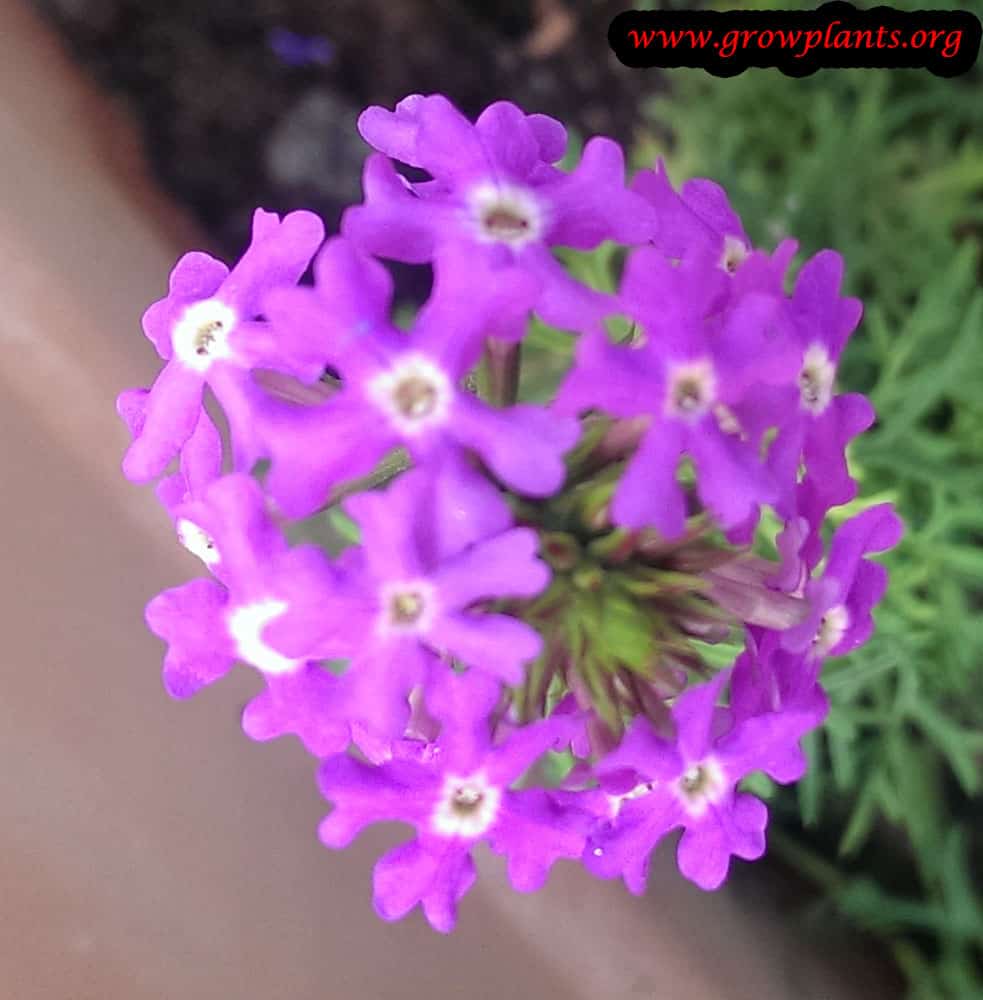
- Flower Characteristics: Rounded, umbel-like clusters of five-petalled flowers in purple to pink.
Primary Uses & Landscape Value
- Functional & Ornamental Roles: Groundcover, edging, rockery, hanging-basket and container ornamental for long-season colour; attracts pollinators.
Care Guide: Planting, Soil & Watering
Overview: Rose verbena (Glandularia canadensis) is a fast-growing, low, spreading perennial (hardiness zone 6+, grown as an annual in colder zones) for full sun and light, well-drained soil. It takes moderate water but, once established, tolerates some drought and dislikes soggy ground.
Quick Care Requirements
| Requirement | Ideal Condition |
|---|---|
| Planting Season | Warm season — spring, summer or autumn |
| Growth Rate | Fast |
| Soil Type | Light, well-draining soil |
| Water Need | Moderate — let the surface dry between waterings |
Planting & Establishment
- Best Planting Season: Plant in the warm months of spring through autumn in zone 6 and warmer; treat it as a spring-planted annual where winters are hard.
- How to Plant:
- Hole Preparation: Dig a hole about twice the width of the root ball and the same depth.
- Soil Amendments: Lighten heavy soil with compost and grit to keep it open and free-draining.
- Planting Depth: Set the crown level with the soil surface; don’t bury the spreading stems.
- Growth Speed & Expectations: Fast — quickly forms a low, spreading mat of foliage and flowers.
Soil, Watering & Drainage Care
- Soil Mix & Drainage Needs: Give it light, sharply drained soil and good air circulation; a free-draining potting mix suits containers and hanging baskets.
- Watering Schedule & Technique:
- Young / Newly Planted: Water regularly to settle the roots and keep the soil lightly moist while it establishes.
- Established: Water when the top few cm dry out; established plants shrug off short dry spells.
- Seasonal Adjustments: Cut back watering in cool winter weather and water more often during heat.
Climate, Light & Hardiness
Rose verbena grows across tropical, mediterranean, desert, subtropical, and temperate climates, persisting as an evergreen perennial where winters are mild and behaving as a cold-hardy annual further north. It needs full sun and tolerates a wide range of winter conditions.
Quick Climate Specifications
| Climate Zones | Tropics, Mediterranean, desert, subtropics, temperate |
|---|---|
| USDA Hardiness Zones | 6 and warmer as a perennial; grown as an annual in zones 2–6 |
| Light Conditions | Full Sun |
Sunlight & Light Exposure
Optimal Light Setup
Full sun is needed for good flowering and compact growth.
Temperature Extremes & Hardiness
USDA Hardiness & Regional Limits
Persists as a perennial in USDA zone 6 and warmer; in colder zones 2–6 it is grown as a cold-tolerant annual since it cannot survive harder freezes outdoors year-round.
Growing in Pots, Balconies & Indoors
Rose verbena is a low, fast-spreading perennial (only 15-30 cm / 6-12 in) that the grower does not treat as a houseplant – it wants full sun. In a pot it makes a lovely trailing edge for a bright, sunny windowsill, balcony rail or patio rather than a plant for deep indoors.
Quick Details
- Container Size: A wide, shallow pot or trough – it spreads more than it climbs
- Indoor Suitability: Not a true houseplant; happiest on a very sunny windowsill or outdoors
- Best Spot: Full sun – the brightest spot you have
- Soil & Drainage: Aerated, organic-rich mix that drains freely
- Watering in Pots: Keep the mix lightly moist – pots dry faster than open ground; water once the surface starts to dry.
Indoors & On the Windowsill
- Houseplant limits: Not grown indoors by the grower – deep in a room the light is too weak and growth goes thin and floppy.
- Windowsill growing: On a bright, sun-drenched sill it can trail happily; give it the most direct light in the home.
- Overwintering: In cold-winter areas a potted plant can be brought into a cool, bright spot to overwinter, then moved back out once frost has passed.
On a Balcony or Patio
- Light & wind: A sunny balcony rail or patio suits it well – let it spill over the edge. Pots and shallow troughs dry fast in reflected heat, so check moisture often.
- Practicalities: Because it spreads sideways, a wide trough gives the best show; trim it back to keep it tidy.
Choosing the Pot, Soil & Long-Term Care
- Pot & drainage: A deep pot with strong drainage holes; skip a standing-water saucer to avoid root rot. Terracotta breathes and dries faster, while glazed or plastic hold moisture longer.
- Potting mix: Well-aerated, organic-rich mix – peat or coir with perlite and a little organic matter; it must drain freely.
- Feeding: Potted plants use up their food faster because nutrients leach out with each watering, so feed a little more often than plants in open ground.
- Repotting: Refresh part of the mix and pot up every couple of years; for established plants, lightly prune the root ball and top growth when you repot.
Fertilizing & Feeding
Rose Verbena is a fast-growing groundcover verbena that flowers best on lean to average soil; light, steady feeding through the growing season supports its long flowering display without pushing soft, overly leafy growth.
Quick Fertilizing Specs
| Feeding Level | Light; this groundcover verbena flowers best without heavy feeding. |
|---|---|
| Main Nutrient Priority | Balanced nutrition with an emphasis on steady growth rather than heavy nitrogen, which can favor foliage over flowers. |
| Best Feeding Period | Through the spring, summer and autumn growth and bloom period. |
| Organic Options | Compost worked into well-drained soil suits this plant well. |
| Reduce/Stop Feeding | Ease off feeding as growth slows in cooler weather, or where the plant is grown as a cold-season annual. |
Feeding by Growth Stage
Establishment
Help a newly planted Rose Verbena root into well-drained soil and put out its first flush of triangular, shredded leaves.
| Nutrient direction | Light, balanced nutrition to support root and early leaf growth. |
|---|---|
| Timing | In the weeks after planting. |
| Frequency | A light feeding at planting is usually enough to help this plant establish. |
| Fertilizer types | A balanced complete fertilizer used lightly, Compost worked into well-drained soil |
| Precautions | Avoid heavy feeding right at planting, which can stress young roots before they spread into the surrounding soil. |
Spring through autumn growth and bloom
Support fast-growing stems and the clustered purple or pink umbel-shaped flowers this plant produces over much of the growing season.
| Nutrient direction | Steady, balanced nutrition; keep nitrogen moderate so the plant keeps flowering rather than growing mostly leafy stems. |
|---|---|
| Timing | Through the main spring, summer and autumn growth and flowering period. |
| Frequency | Light, regular feedings through the growing season support continued bloom better than infrequent heavy doses. |
| Fertilizer types | A balanced complete fertilizer used at a light rate, For container-grown plants, a diluted balanced liquid feed |
| Precautions | Too much nitrogen encourages lush foliage at the expense of flowers; keep feeding light. |
Winter rest or annual decline
Let growth slow where winter cold ends active growth, including where this plant is grown as a cold-climate annual.
| Nutrient direction | None – withhold fertilizer while growth is not active. |
|---|---|
| Timing | Through the cold part of the year, or toward the end of the season where grown as an annual. |
| Frequency | No feeding at this stage. |
| Fertilizer types | No feeding – resume light feeding on perennial plantings once active growth clearly resumes in spring |
| Precautions | Do not fertilize a dormant or declining plant; wait for clear new growth before feeding perennial plantings again. |
Nutrient Deficiency Signs & Corrections
Foliage looks pale and growth is thin and sparse rather than filling in as a spreading groundcover.
| Possible causes | A general nutrient shortage in poor or depleted soil, Too little light for compact, spreading growth, Root stress from waterlogged or compacted soil |
|---|---|
| Appears first on | New growth across the plant. |
| What to check | Recent feeding history, Light levels at the planting site, Soil drainage |
| Possible correction | Confirm the site gets good sun and drains well, then give a light balanced feeding if pale, sparse growth continues. |
Leaves yellow between the veins while the veins themselves stay green.
| Possible causes | High soil pH reducing iron availability, Waterlogged or compacted soil limiting root uptake, A genuine iron shortage in the soil |
|---|---|
| Appears first on | New, upper leaves. |
| What to check | Soil pH, Drainage and whether roots are sitting wet, Whether only the newest growth is affected |
| Possible correction | Correct soil pH and drainage first; if the pattern persists, apply a chelated iron product per its label. |
The plant grows leafy and spreads vigorously but produces few of its purple or pink clustered flowers.
| Possible causes | Excess nitrogen favoring leafy growth over flowers, Too little sun for good bud formation, Old, overgrown growth that has not been trimmed back |
|---|---|
| Appears first on | Overall flowering across the plant. |
| What to check | Recent nitrogen-heavy feeding, Sun exposure, Whether the planting has been cut back to refresh growth |
| Possible correction | Ease back on nitrogen, confirm adequate sun, and trim back leggy growth to encourage fresh flowering stems. |
Pruning, Training & Seasonal Maintenance
Rose Verbena is a low, fast-growing, mat-forming herbaceous perennial (grown as a cold annual in colder zones) that tolerates being cut back hard. Because it blooms nearly all growing season, shearing the mat back in late winter to very early spring is the safest reset, while light deadheading through the season keeps it flowering and prevents the centre from going bare and straggly.
Quick Pruning & Maintenance Specs
| Pruning Tolerance | High (herbaceous) |
| Primary Pruning Window | Late winter / very early spring, before regrowth (perennial zones) |
| Secondary Maintenance Window | Ongoing deadheading through the bloom season |
| Typical Frequency | One seasonal shear-back plus ongoing snips |
| Main Objective | Prevent a bare, woody centre; maintain a dense flowering mat |
| Young Plant Priority | None – let the planting fill in |
| Mature Plant Priority | Annual or seasonal shear-back of the whole mat |
| Best Tool Type | Precision snips or hand shears |
| Avoid Heavy Pruning During | Summer heat/drought stress |
Pruning by Plant Age & Size
Newly Established
No pruning needed – let the young planting fill in and spread.
Young / Formative
None – a spreading mat habit has no leader, vase or cane system to train.
Mature / Established
Where grown as a perennial, shear the whole mat back moderately hard in late winter/early spring to remove winter-worn or leggy growth and renew dense flowering. Where grown as an annual, no rejuvenation is needed – the planting is simply replaced each cycle.
Seasonal Pruning Schedule
| Stage | Objective | Remove | Do Not Remove | Expected Response | Flowering Impact |
| Pre-Growth/Early-Spring | Renew the mat, remove winter-worn or woody growth | Leggy, sprawled or tired stems | Healthy low crown growth | Dense flush of new flowering growth | None – sets up the coming season’s bloom |
| Ongoing Sanitary | Prolong bloom, tidy the mat | Spent flower clusters | Actively forming buds | Continued flowering, tidier mat | Extends bloom |
Structural Pruning & Training
No formal training applies to a groundcover. The main structural task is preventing a bare, woody centre by shearing the mat back periodically; trim back any stems sprawling and rooting down beyond the intended bed edge.
Special Growth to Remove
- Spent flower clusters – deadhead to prolong bloom and reduce legginess.
- Overextended sprawling stems rooting outside the intended planting area.
Container & Small-Space Pruning
As a spiller in pots, shear back by up to a third after the first flush to keep the plant dense rather than thin and trailing-bare – more frequent light trims than an in-ground planting.
Tools
Precision snips for deadheading; hand shears or snips for the seasonal cutback of the whole mat – never loppers or a saw on a herbaceous groundcover.
Tool Hygiene & Disease Risk
Routine – known issues are aphids and spider mites; clean, sharp tools are sufficient.
Cut Placement & Technique
Shear or snip just above a node or leaf pair; deadhead to the next flower bud or leaf junction.
Heavy Pruning & Rejuvenation
Tolerates being cut back hard, to a few centimetres, in late winter (perennial zones) to rejuvenate a woody, sprawling or thin-centred mat; new growth and bloom return within weeks once the growing season starts.
Post-Pruning Care
Water in after a hard shear-back; regrowth is quick. No special feeding is needed.
Common Pruning Mistakes
- Leaving the mat unpruned for multiple seasons until the centre goes bare and woody.
- Deadheading too infrequently and losing bloom continuity.
When NOT to Prune
Avoid a hard shear-back during hot, dry summer stress or in the depth of winter dormancy in perennial zones – wait for the safer early-spring window.
Recommended Tools (by task)
- precision_snips – the only tool this low herbaceous groundcover needs, for both the seasonal shear-back and ongoing deadheading.
Propagation Guide
Rose verbena is most easily increased from softwood stem cuttings, which root quickly and keep named flower-colour selections true; seed works for the species but germination can be slow and uneven, and named colours may not come true from seed. Overall propagation is Easy.
Quick Propagation Specs
| Best Propagation Method | Softwood stem cuttings |
| Alternative Methods | Seed; separating naturally node-rooted stem sections |
| Propagation Difficulty | Easy |
| Seed True-to-Type | Usually true-to-type for the species; cultivar-dependent for named flower-colour selections |
| Vegetative True-to-Type | Yes |
| Best Propagation Season | Spring through autumn for cuttings, matching this plant’s planting season; spring for seed |
| Seed Germination Time | Roughly 2–4 weeks, can be irregular |
| Cutting Rooting Time | Roughly 2–4 weeks |
| Germination Temperature | Roughly 18–24°C (65–75°F) |
| Seed Sowing Depth | Surface-sow or barely cover |
Growing from Seed
Seed Handling & Viability
No site-specific storage data; use reasonably fresh, small seed.
Dormancy & Pre-Sowing Treatment
Germination can be slow and uneven; a period of cold, moist stratification before sowing may help even it out, though this is not confirmed for this exact species.
Sowing Season
Spring.
Sowing Depth & Orientation
Surface-sow or just barely cover, as the fine seed may benefit from light exposure.
Germination Conditions
Warm (roughly 18–24°C / 65–75°F) with consistent moisture.
Germination Time
Roughly 2–4 weeks, but can be uneven.
Seedling Care
Space seedlings out as they grow and protect young plants from heavy rain until established.
Stem Cuttings
Cutting Type
Softwood tip cuttings, about 5–8cm (2–3in).
Best Timing
Spring to summer, during active growth.
Cutting Preparation
Cut just below a node and remove the lower leaves.
Rooting Setup
A moist, well-drained mix in bright, indirect light.
Rooting Hormone
Optional; this plant roots readily without it.
Rooting Time
Roughly 2–4 weeks.
Runners & Stolons
Rose verbena has a trailing, spreading habit, and its stems commonly root at leaf nodes where they touch moist soil. Once a node along a trailing stem has rooted, that section can be severed from the mother plant and transplanted as an independent plant; this is best done during the active growing season, spring through autumn.
Bloom & Flower Guide
Quick Details
- Bloom Season: Spring through autumn, and much of the year in mild-winter climates
- Flower Appearance: Small five-petalled flowers in rounded, umbel-like clusters
- Edibility: Ornamental – not eaten
Detailed Blooming Overview
Rose verbena is a low, spreading plant that flowers over a very long season – through spring, summer, and autumn, and nearly year-round where winters stay mild. Its clustered blooms sit just above the finely cut foliage, making a bright, weaving groundcover.
Flower Characteristics
- Each flower has five petals in shades of purple to pink.
- They are gathered into rounded, umbel-shaped clusters at the stem tips.
Bloom Care & Thinning
- Encouraging bloom: A light trim, including a tidy-up in winter, keeps the plant fresh and flowering freely.
- Light and water: Full sun and average watering give the most flowers.
Pests, Diseases & Troubleshooting
Overview: Rose verbena (Glandularia, the trailing perennial verbenas) is a heat-loving spreader whose defining problems are powdery mildew and spider mites, both worst in hot, dry, crowded or shaded conditions, plus the usual sap-suckers. Good drainage, full sun and airflow prevent most trouble, and a mid-season shearing keeps plants dense, floriferous and less disease-prone. Manage culturally first.
Quick Troubleshooting Overview
| Issue / Pest | Main Symptom | Primary Solution |
|---|---|---|
| Powdery mildew | White powdery film on leaves; worst in shade/crowding | Full sun, airflow, shear back; sulfur or bicarbonate spray |
| Two-spotted spider mite | Fine stippling, bronzing and webbing in hot dry spells | Hose foliage, raise humidity, predatory mites; oil if severe |
| Aphids | Sticky, distorted new growth | Hose off, encourage predators; soap or neem |
| Whitefly | Clouds of tiny white flies; sooty honeydew | Sticky traps, soap/neem, keep uncrowded |
| Verbena budworm/leaf-tier | Chewed, webbed shoot tips and buds | Hand-pick, Bt if needed; shear out damaged growth |
| Root rot (abiotic) | Wilt and decline in wet, poorly drained soil | Plant in sharp-draining soil, avoid overwatering |
Common Pests & Management
- Two-spotted spider mite (Tetranychus urticae):
- Symptoms: Fine pale stippling that bronzes and dries foliage, with fine webbing on undersides in hot, dry, dusty conditions; a major verbena pest.
- Prevention & Control: Raise humidity and hose leaf undersides, avoid drought stress, and release predatory mites; use horticultural oil or a labelled miticide for heavy infestations, rotating products.
- Aphids (Myzus / Aphis spp.):
- Symptoms: Soft-bodied colonies on tender shoot tips and flower stalks, causing distortion, honeydew and sooty mould.
- Prevention & Control: Wash off with water, support ladybirds and lacewings, and spot-treat with insecticidal soap or neem in the evening.
- Whitefly (Trialeurodes / Bemisia spp.):
- Symptoms: Tiny white flies rising from disturbed foliage, with honeydew and sooty mould from nymphs on leaf undersides.
- Prevention & Control: Use yellow sticky traps, keep plants uncrowded, and treat with insecticidal soap or neem, targeting undersides; encourage parasitoids under cover.
- Verbena budworm & leaf-tiers (Endothenia / other Lepidoptera):
- Symptoms: Caterpillars that web and chew shoot tips, buds and young leaves, spoiling flowering.
- Prevention & Control: Hand-pick larvae and shear out damaged tips; apply Bacillus thuringiensis (Bt) for heavier caterpillar pressure.
- Thrips (Frankliniella spp.):
- Symptoms: Silvery flecking and distorted buds, with slender insects hiding in flowers; can spoil blooms.
- Prevention & Control: Use sticky traps, remove infested buds, and encourage predatory mites; insecticidal soap or neem for active populations.
Diseases & Fungal Issues
- Powdery mildew (Golovinomyces / Podosphaera):
- Symptoms: White powdery patches on leaves and stems, the classic verbena disease, worst in shade, crowding, or humid nights with dry days; leaves yellow and thin.
- Treatment & Management: Site in full sun with good airflow, avoid crowding, and water at the base. Shear plants back to open them up, and apply sulfur or potassium-bicarbonate if it persists.
- Botrytis / grey mould (Botrytis cinerea):
- Symptoms: Fuzzy grey mould on faded flowers and damaged foliage in cool, humid, wet conditions.
- Treatment & Management: Deadhead and shear spent growth, improve airflow, and avoid overhead watering; a fungicide only under persistent wet.
- Root & crown rot (Pythium / Phytophthora / Rhizoctonia):
- Symptoms: Wilting, yellowing and collapse in heavy, wet or poorly drained soil.
- Treatment & Management: Plant in sharp-draining soil or raised beds, avoid overwatering, and do not mulch heavily against the crown; correct drainage before anything else.
- Bacterial & fungal leaf spot (Xanthomonas / Cercospora):
- Symptoms: Angular or round dark spots, sometimes with yellow haloes, in wet weather.
- Treatment & Management: Remove affected leaves, keep foliage dry, and improve airflow; copper for bacterial types, sanitation as the mainstay.
Growing Difficulties & Abiotic Problems
- Legginess & decline:
- Cause & Symptoms: Plants thin out, get woody and stop blooming in the centre by mid-season.
- Correction Strategy: Shear back by a third to a half after the first flush to force dense new growth and renewed flowering; feed lightly afterwards.
- Poor bloom in shade or wet feet:
- Cause & Symptoms: Sparse flowering, weak stretched growth and more mildew in shade or wet soil.
- Correction Strategy: Give full sun and sharp drainage; verbena flowers best hot, bright and on the dry side.
- Root rot from overwatering:
- Cause & Symptoms: Wilting despite moist soil, soft stems and collapse.
- Correction Strategy: Let soil dry between waterings, improve drainage, and grow in containers with free-draining mix if beds stay wet.
What Helps – Products & Tools
Cultural tools lead: shears for the rejuvenating cut-back, full sun and sharp drainage. For mites and sap-suckers, horticultural oil or insecticidal soap and neem in the evening; for powdery mildew, sulfur or potassium-bicarbonate; Bt for caterpillars; yellow sticky traps for whitefly monitoring.