Plant Profile & Key Characteristics
Overview: An evergreen herbaceous foliage plant, 20-60 cm (8-24 in) tall, grown as an easy ornamental and one of the most popular houseplants. It is a fast-growing perennial for Mediterranean, subtropical and tropical settings or indoors.
Quick Specifications
| Specification | Attribute |
|---|---|
| Plant Type / Life Cycle | Perennial (evergreen herbaceous) |
| Foliage Type | Evergreen |
| Mature Size | 20-60 cm (8-24 in) tall |
| Growth Rate | Fast to moderate |
| Root System | Fleshy, tuberous roots |
| Toxicity | Non-toxic (recognised pet-safe houseplant) |
| Hardiness | USDA zone 10+ |
Growth Form & Structure
- Height & Spread: 20-60 cm (8-24 in) tall; ideal for containers and hanging baskets.
- Growth Habit & Form: Clumping rosette that sends out arching stems bearing plantlets (‘spiderettes’).
- Lifespan & Maturity: Fast-growing, long-lived perennial.
Anatomy & Physical Features
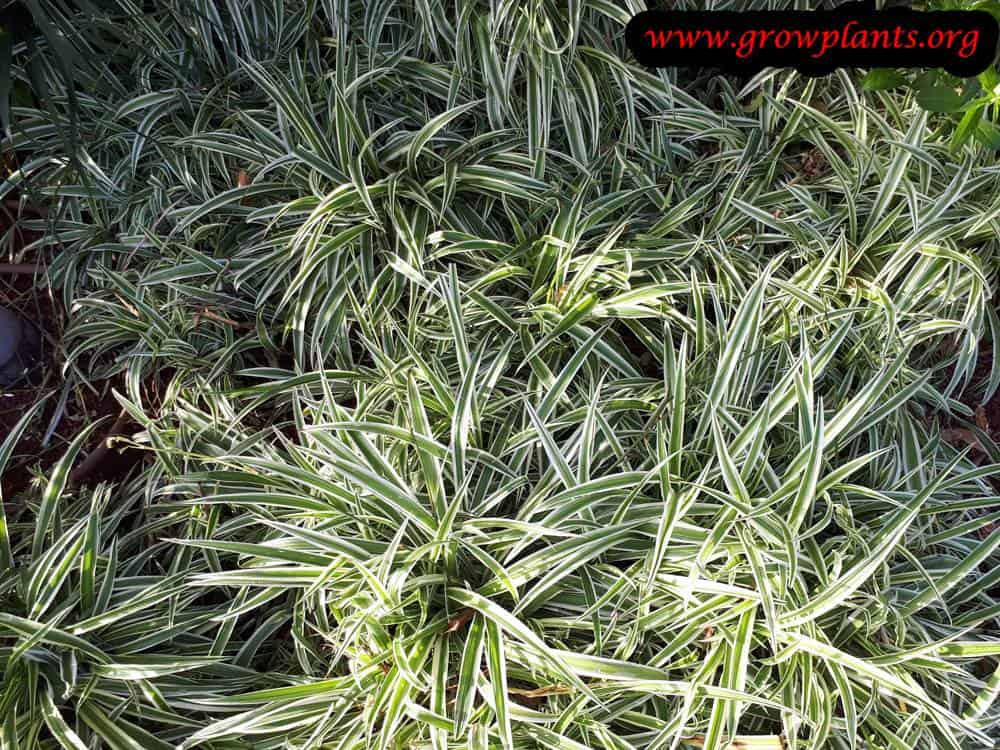
- Leaves & Foliage: Arching linear leaves, green or green-and-white variegated.
- Flower Characteristics: Small white six-petalled flowers on the arching stems (full detail in the Bloom section).
Primary Uses & Landscape Value
- Functional & Ornamental Roles: Easy-care houseplant and hanging-basket ornamental, popular as an air-purifying indoor plant.
Care Guide: Planting, Soil & Watering
Overview: This adaptable, easy-going evergreen is one of the most forgiving of houseplants, happy in bright indirect light to part shade. It grows in ordinary well-draining soil and tolerates a wide range of watering, from low to generous.
Quick Care Requirements
| Requirement | Ideal Condition |
|---|---|
| Planting Season | Year-round in frost-free areas; in spring elsewhere |
| Growth Rate | Moderate to fast |
| Soil Type | Adaptable, ordinary well-draining soil or potting mix |
| Water Need | Low to moderate – water when the top of the soil dries; tolerates occasional lapses |
Planting & Establishment
- Best Planting Season: Year-round in frost-free climates, or in spring in cooler areas.
- How to Plant:
- Hole Preparation: Dig a hole about twice the width of the root ball and just as deep, loosening the sides so young roots spread easily.
- Soil Amendments: Mix a few handfuls of compost or well-rotted organic matter into the backfill, adding grit or perlite if drainage is slow.
- Planting Depth: Set the plant so the root collar sits level with the surrounding soil; never bury the stem or trunk base.
- Growth Speed & Expectations: A moderate to fast grower forming an arching clump 20-60 cm across, sending out plantlets on runners.
Soil, Watering & Drainage Care
- Soil Mix & Drainage Needs: It is not fussy – any free-draining soil or standard potting mix suits it, provided excess water drains away. It is an outstanding container and hanging-basket plant, thriving indoors with little fuss.
- Watering Schedule & Technique:
- Young / Newly Planted: Water regularly at first to settle it in, keeping the soil lightly moist.
- Established: Once established it is very forgiving; water when the top of the soil dries and it will tolerate the odd missed watering.
- Seasonal Adjustments: Water a little more in warm growth and less in winter.
Climate, Light & Hardiness
Spider plant is an easy-going tropical/subtropical foliage perennial, popular as a houseplant, that tolerates a wide range of light from full sun to full shade. It is frost sensitive and needs consistently warm, frost-free conditions to grow well outdoors.
Quick Climate Specifications
| Climate Zones | Mediterranean, Subtropics, Tropics (also grown indoors) |
|---|---|
| USDA Hardiness Zones | 10+ |
| Frost Tolerance | Low |
| Light Conditions | Full Sun (can survive) / Half Shade / Full Shade |
Sunlight & Light Exposure
Optimal Light Setup
Very adaptable to light; grows well from bright indirect light through to full shade, and can survive in full sun though bright indirect light is usually preferred, especially indoors.
Temperature Extremes & Hardiness
USDA Hardiness & Regional Limits
Reliable as an outdoor perennial only in zone 10 and warmer; elsewhere it is grown as a houseplant year-round.
Frost Sensitivity
Frost sensitive – outdoor plants need protection or must be brought indoors before freezing weather.
Wind, Humidity & Microclimate
Microclimate Recommendations
Tolerant of typical indoor and warm-climate garden conditions; no special wind or humidity requirements are noted beyond avoiding cold drafts.
Growing in Pots, Balconies & Indoors
Spider plant (Chlorophytum comosum) is one of the easiest and most popular houseplants – a clumping foliage plant (20-60 cm) that throws arching plantlets on runners. The grower confirms it grows well both indoors and in containers, and it is famously forgiving of light and watering.
Quick Details
- Container Size: A medium pot; it enjoys being a little snug
- Indoor Suitability: An excellent, easy houseplant
- Best Spot: Very adaptable – full shade to some sun; bright indirect light is best
- Soil & Drainage: Free-draining potting mix
- Watering in Pots: Small to big amount – tolerant, but let the top dry between waterings
Indoors & On the Windowsill
- A classic houseplant: The grower confirms it thrives indoors. It tolerates a wide range of light, though bright, indirect light gives the best growth and plantlets.
- Windowsill: Happy on most sills out of harsh midday sun; it also does well in hanging pots where the plantlets can dangle.
- Easy care: Very forgiving of occasional missed waterings; it is a good beginner’s plant and is considered non-toxic to pets.
On a Balcony or Patio
- Light, wind & heat: Give it the brightest spot it will tolerate; walls and railings reflect heat and dry pots quickly, so check moisture often and shelter or stake exposed growth.
- Shade-friendly: It does well in a shaded or part-shaded spot outdoors in warm weather; keep it out of hot direct sun, which scorches the leaves.
Choosing the Pot, Soil & Long-Term Care
- Pot & drainage: A medium pot with drainage holes; it flowers and pups better when slightly pot-bound. Use strong drainage holes and skip a standing-water saucer to avoid root rot. Terracotta breathes and dries faster; glazed or plastic holds moisture longer.
- Potting mix: A well-aerated, organic-rich mix – potting soil or peat/coir with perlite or vermiculite for free drainage.
- Feeding: Potted plants use up their soil faster as nutrients leach out with watering – feed lightly and regularly through the growing season.
- Repotting: Refresh the mix and pot up about every two years; for perennials, lightly root- and top-prune the plant when you do.
Fertilizing & Feeding
A light feeder: this easygoing, adaptable foliage houseplant grows well on modest feeding through active growth and does not need fertilizer right after repotting or while growth is slow.
Quick Fertilizing Specs
| Feeding Level | Light feeder |
|---|---|
| Main Nutrient Priority | A dilute balanced feeding to keep leaves green and support plantlet production |
| Best Feeding Period | During active growth in the warmer, brighter part of the year |
| Organic Options | A general-purpose potting mix with organic matter, refreshed at repotting |
| Reduce/Stop Feeding | Hold off after repotting and again whenever growth slows |
| Micronutrients | Usually met by a complete houseplant fertilizer; correct only a diagnosed deficiency |
| Soil pH | Tolerant of typical general-purpose potting mixes |
Feeding by Growth Stage
Settling in after repotting or division
Let a freshly repotted plant or a newly potted plantlet establish roots before introducing fertilizer.
| Nutrient direction | None – allow roots to establish in fresh potting mix before feeding. |
|---|---|
| Timing | Immediately after repotting or dividing, or once a plantlet is first potted up. |
| Frequency | No feeding at this stage; resume once new growth shows the plant has settled in. |
| Fertilizer types | No feeding at this stage; hold off fertilizing until the plant is established in its fresh mix. |
| Precautions | Do not fertilize right after repotting; disturbed roots are easily burned by fertilizer salts before they settle in. |
Active growth and plantlet production
Support steady leaf growth and the arching stems of plantlets this easy-care houseplant is known for.
| Nutrient direction | A dilute, balanced feeding with adequate nitrogen keeps foliage green without forcing weak, floppy leaves. |
|---|---|
| Timing | While the plant is actively growing in the brighter, warmer part of the year. |
| Frequency | An occasional light feeding is plenty for this undemanding houseplant. |
| Fertilizer types | A dilute, balanced houseplant fertilizer, A general-purpose potting mix with organic matter |
| Routine trace nutrients | iron, manganese |
| Precautions | This plant is sensitive to certain water and fertilizer salts, which can show up as tip burn, so keep feeding light and infrequent. |
Slowdown in lower light or cooler conditions
Avoid stressing the plant with unused fertilizer when lower light or cooler temperatures slow growth.
| Nutrient direction | None – withhold fertilizer while growth is slow. |
|---|---|
| Timing | During periods of lower indoor light or cooler temperatures. |
| Frequency | No feeding at this stage; resume only once active growth returns. |
| Fertilizer types | No feeding at this stage; hold off fertilizing until active growth is clearly underway again. |
| Precautions | Do not fertilize a slow-growing plant; unused nutrients build up as salts that can cause the leaf-tip browning this plant is prone to. |
Nutrient Deficiency Signs & Corrections
Overall pale green or yellowing leaves and reduced plantlet production.
| Possible causes | low available nitrogen in old potting mix, infrequent feeding relative to active growth, nutrients leached out by regular watering |
|---|---|
| Appears first on | older, lower leaves |
| What to check | time since last feeding or repotting, potting mix condition, watering routine |
| Possible correction | Apply a dilute, nitrogen-containing houseplant fertilizer during active growth and refresh old potting mix. |
Brown, crisp leaf tips despite otherwise healthy-looking foliage.
| Possible causes | sensitivity to fluoride or salts in tap water, fertilizer salt buildup from feeding that is too frequent or too strong, low humidity concentrating salts at leaf tips |
|---|---|
| Appears first on | leaf tips |
| What to check | water source used for watering, recent fertilizer strength and frequency, how often the pot is flushed with water |
| Possible correction | Switch to filtered or rested water where practical, ease off feeding, and flush the potting mix periodically. |
New leaves emerge pale or yellow-green while older foliage stays a normal green.
| Possible causes | potting mix pH outside the plant’s preferred range, waterlogged mix limiting root uptake, naturally low iron availability in the mix |
|---|---|
| Appears first on | newest growth |
| What to check | potting mix drainage and moisture level, time since the mix was last refreshed, recent fertilizer history |
| Possible correction | Improve drainage, refresh the potting mix, and apply a chelated iron product per its label if the pattern persists. |
Pruning, Training & Seasonal Maintenance
Spider plant is a soft, clumping foliage perennial with no woody stems, so its maintenance is light and can be done any time of year: remove old, browned or dead leaves as they occur, and manage the long flowering/plantlet-bearing runners according to whether you want to propagate new plants or keep a tidier, more compact clump.
Quick Pruning & Maintenance Specs
| Pruning Tolerance | High for leaf/runner removal; there is no woody framework to protect |
| Primary Pruning Window | All year, as needed |
| Typical Frequency | Light, ongoing grooming rather than a scheduled seasonal cut |
| Main Objective | Remove dead/damaged leaves; manage runners for tidiness or propagation |
| Young Plant Priority | Minimal – let the clump fill in before removing much |
| Mature Plant Priority | Groom dead leaf tips; trim or root the plantlet-bearing runners |
| Best Tool Type | Precision snips (soft, thin leaves and runners) |
| Avoid Heavy Pruning During | Not applicable – no dormant/sensitive season to protect |
Pruning by Plant Age & Size
Newly Established
Leave a young clump alone beyond removing any damaged leaves from transplanting; it needs to fill in before grooming becomes relevant.
Young / Formative
No structural training applies to this rosette-forming foliage plant; simply remove any leaves damaged by handling or repotting.
Mature / Established
Snip off individual leaves that have browned, yellowed or dried at the tips (common with tap-water fluoride/salt sensitivity or low humidity) close to their base, and decide whether to leave, trim, or root the trailing runners.
Seasonal Pruning Schedule
| Ongoing Sanitary | Remove dead, browned or damaged leaves whenever noticed; this is the main recurring task since the plant grows and can flower/produce runners year-round in favorable conditions. |
Special Growth to Remove
The small white flowers appear directly on the long trailing runners that also produce the baby plantlets, so there is no separate flowering-wood logic to manage – simply choose whether to leave a runner to develop plantlets for propagation, snip it off at the base once plantlets have rooted and been separated, or trim it back for a tidier, more compact appearance if propagation is not wanted.
Container & Small-Space Pruning
As a plant grown almost entirely in pots/hanging baskets, regularly trim spent or overly long runners to keep the display neat, and remove dead leaves promptly since they are very visible in a container setting; repot or divide a crowded clump rather than trying to control its size through top pruning alone.
Tools
- Precision snips – the only tool needed for its soft leaves and thin runners
Tool Hygiene & Disease Risk
Routine care only – clean, sharp snips are enough; aphids are the only notable pest and are not spread by grooming cuts.
Cut Placement & Technique
Snip damaged leaves off close to their base at the crown rather than cutting mid-blade, which leaves an unsightly cut tip; cut runners close to where they emerge from the crown.
Heavy Pruning & Rejuvenation
Does not need or respond to hard structural rejuvenation in the way a woody plant would; an old, congested or leggy clump is better refreshed by dividing it at repotting than by cutting the existing foliage back hard.
Post-Pruning Care
No special aftercare needed beyond normal watering; if leaf-tip browning is the reason for trimming, consider using filtered or rain water going forward, since regular tap water is a common cause in this species.
Common Pruning Mistakes
- Cutting leaves mid-blade instead of removing the whole damaged leaf at its base
- Removing all runners immediately, when leaving a few is the easiest way to propagate new plants
- Assuming leaf-tip browning is a pruning/pest issue when it is usually a water-quality or humidity issue
When NOT to Prune
No specific restricted period – light grooming is safe at any time of year for this species.
Recommended Tools (by task)
- precision_snips – all routine leaf grooming and runner trimming
Propagation Guide
Spider plant is almost always propagated vegetatively – the site confirms this is necessary – using the plantlets it produces on runners, or by division of a crowded clump. Seed exists but is rarely used since variegated forms do not come true from it; this is an easy plant to propagate by either vegetative method.
Quick Propagation Specs
| Best Propagation Method | Plantlets from runners |
| Alternative Methods | Division of the clump |
| Propagation Difficulty | Easy |
| Vegetative True-to-Type | Yes – and the reliable way to keep variegated leaf patterns, which seed does not guarantee |
| Best Propagation Season | Can be done year-round; growth (and plantlet production) is generally strongest in spring and summer |
| Cutting Rooting Time | Plantlets often root within a couple of weeks once in contact with soil or water |
Runners & Stolons
Spider plant sends out long runners tipped with small plantlets (‘spiderettes’). These can be rooted while still attached – pin or rest the plantlet’s base onto moist potting mix (or set it in water) until roots form – then severed from the runner once established, or removed first and rooted the same way. Choose plantlets that already show small root nubs at the base for the fastest results.
Division, Offsets, Pups & Suckers
Mature clumps can be divided, particularly when repotting a pot-bound plant, matching the site’s own care note about switching the pot and trimming dead roots every few years. Lift the clump, gently separate sections that each keep a good portion of roots and leaves attached, and replant promptly in a free-draining, rich mix.
Bloom & Flower Guide
Quick Details
- Bloom Season: Summer to autumn, chiefly on established plants
- Time to First Bloom: On mature plants; slightly pot-bound plants flower more freely
- Flower Appearance: Small white, six-petalled star-shaped flowers spaced along long, arching stems
- Edibility: Not eaten, but the plant is non-toxic and safe around pets
Detailed Blooming Overview
Spider plants send out long, arching stems that first bear small white starry flowers and then form the baby plantlets the species is famous for, so a flowering stem is often the start of the next generation of plants.
Flower Characteristics
- Small white flowers with six petals in a star shape.
- Spaced along wiry, arching stems (stolons).
Bloom Care & Thinning
- For plantlets: Leave the flowering stems in place if you want plantlets to develop.
- Encouraging bloom: Bright, indirect light and a slightly snug pot encourage flowering.
Pests, Diseases & Troubleshooting
Overview: The spider plant is one of the easiest houseplants and is largely pest-free; when problems do appear they are the usual indoor sap-suckers, but its truly signature issue is brown leaf tips from fluoride, chlorine and salt build-up. Manage watering and water quality and it is almost trouble-free.
Quick Troubleshooting Overview
| Issue / Pest | Main Symptom | Primary Solution |
|---|---|---|
| Brown leaf tips | Crispy brown tips on otherwise healthy leaves | Filtered/rain water; flush salts; ease feeding |
| Spider mites | Fine stippling, webbing in dry heat | Rinse; humidity; oil/soap |
| Aphids | Clusters on flower stalks/plantlets | Water jet; soap |
| Mealybugs | White fluff in crown and leaf bases | Alcohol swab; oil |
| Scale | Brown bumps on leaves | Scrape; horticultural oil |
| Root rot | Mushy base, yellowing, collapse | Ease watering; drainage; repot |
Common Pests & Management
- Spider mites (Tetranychus urticae):
- Symptoms: Fine pale stippling on leaves, a dull bronzed look, and fine webbing on undersides in hot, dry conditions. Leaves dry and drop as numbers build.
- Prevention & Control: Raise humidity and hose down foliage to break the cycle; mites thrive on dry, dusty plants. Release predatory mites where practical, and treat with insecticidal soap or horticultural oil, coating leaf undersides over repeat applications.
- Aphids (Aphidoidea):
- Symptoms: Clusters of small green, black or grey soft-bodied insects on new shoots, buds and leaf undersides; curled distorted growth, honeydew and sooty mould.
- Prevention & Control: Blast off with a strong jet of water and squash colonies early. Encourage ladybirds, lacewings and hoverflies; avoid excess nitrogen that fuels soft growth. Use insecticidal soap or neem for stubborn outbreaks, sprayed in the evening to spare pollinators.
- Mealybugs (Pseudococcus / Planococcus spp.):
- Symptoms: White cottony tufts in growth tips, leaf joints and along stems; sticky honeydew and sooty mould follow. On succulents/cacti check the root zone too, where root mealybugs coat roots in white powder.
- Prevention & Control: Wipe or dab colonies with a cotton swab dipped in dilute alcohol; rinse plants and encourage predators (ladybirds, lacewings). For root mealybug, bare-root, wash the roots and repot in fresh mix. Follow up with horticultural oil or insecticidal soap.
- Scale insects (Coccidae / Diaspididae):
- Symptoms: Immobile brown, tan or white bumps on stems and leaf undersides; sticky honeydew and blackish sooty mould on soft scale. Growth slows and leaves yellow.
- Prevention & Control: Scrape off light infestations by hand and prune heavily-encrusted stems. Smother the rest with horticultural or neem oil, covering undersides; repeat to catch mobile crawlers. Conserve parasitic wasps and ladybirds.
- Whitefly (Trialeurodes / Bemisia spp.):
- Symptoms: Tiny white moth-like insects that flutter up in clouds when foliage is disturbed; honeydew, sooty mould and yellowing weaken the plant.
- Prevention & Control: Hang yellow sticky traps to monitor and trim heavy populations; encourage Encarsia parasitic wasps under cover. Spray insecticidal soap or horticultural oil to leaf undersides, repeating to catch new hatches.
Diseases & Fungal Issues
- Root & crown rot (Phytophthora / Pythium / Rhizoctonia spp.):
- Symptoms: Wilting despite moist soil, blackened mushy roots or stem base, yellowing lower leaves and collapse. Overwatering and heavy, poorly draining compost are the usual causes for a spider plant.
- Treatment & Management: This is a water-management disease first: plant in free-draining soil, avoid waterlogging and never let pots stand in saucers of water. Remove and destroy collapsed plants, improve drainage, and drench with a labelled biofungicide only as a support measure.
- Fungal leaf spot (Fungal (minor)):
- Symptoms: Occasional brown spots on leaves in persistently wet, humid, crowded conditions.
- Treatment & Management: Improve airflow, keep foliage dry when watering, and remove affected leaves; correct overwatering first – fungicides are rarely needed.
Growing Difficulties & Abiotic Problems
- Brown leaf tips (the signature issue):
- Cause & Symptoms: Crispy brown tips from fluoride and chlorine in tap water, salt/fertiliser build-up, low humidity or letting the plant dry out between waterings.
- Correction Strategy: Water with filtered, distilled or rain water, flush the pot occasionally to leach salts, ease off feeding, keep watering even and raise humidity; trim dead tips to a thin brown line for looks.
- Overwatering / root rot:
- Cause & Symptoms: Yellowing, wilting and a soft base from soggy compost, especially in low light.
- Correction Strategy: Water when the top of the mix dries, use a free-draining mix with drainage holes, and never leave the pot standing in water.
- Faded / scorched leaves & poor variegation:
- Cause & Symptoms: Bleached, scorched patches in harsh direct sun, or washed-out variegation in too little light.
- Correction Strategy: Grow in bright indirect light; variegated forms need good light to hold their stripes but not fierce midday sun.
What Helps – Products & Tools
Water quality and even watering solve most spider-plant complaints – reach for filtered or rain water before anything else. Keep insecticidal soap and neem/horticultural oil on hand for the occasional mite, aphid, mealybug or scale, and correct root rot by adjusting watering and drainage.