Plant Profile & Key Characteristics
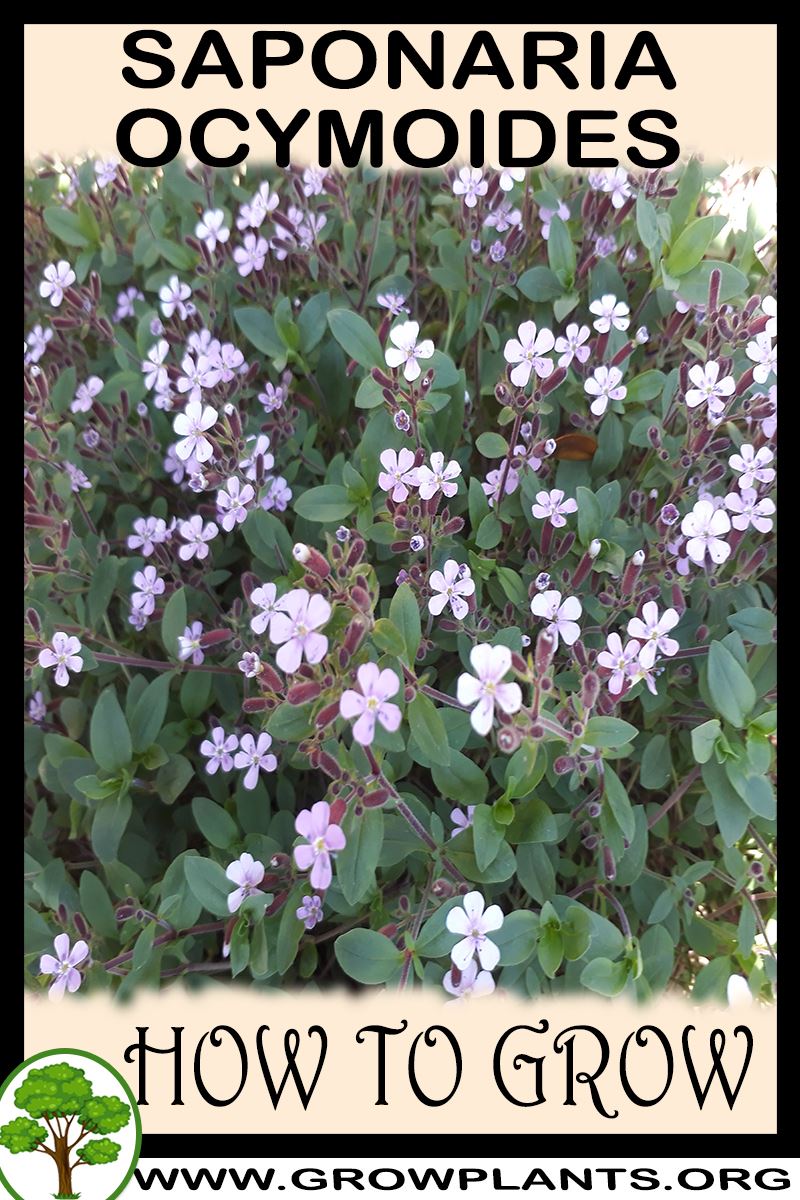
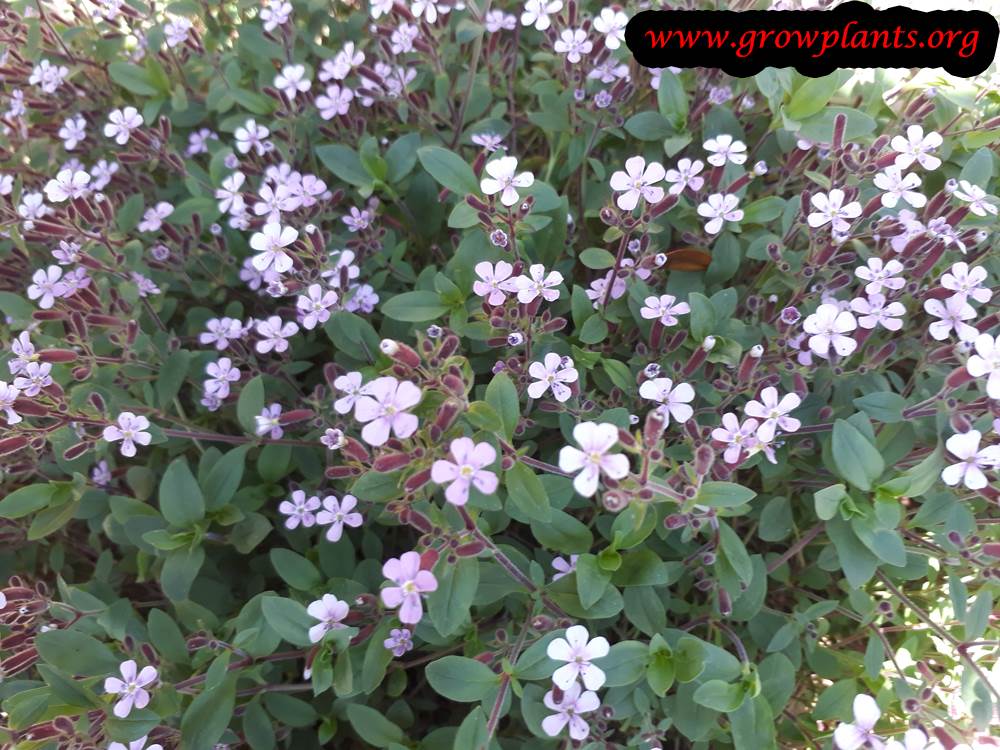
Overview: A low, trailing herbaceous perennial 10-40 cm (4-16 in) tall that forms a spreading mat smothered in small flowers. It is grown as an ornamental groundcover for rock gardens and wall tops.
Quick Specifications
| Specification | Attribute |
|---|---|
| Plant Type / Life Cycle | Herbaceous perennial |
| Foliage Type | Semi-evergreen (evergreen in mild winters, otherwise dies back) |
| Mature Size | 10-40 cm (4-16 in) tall, spreading wider as a mat |
| Growth Rate | Moderate to fast |
| Toxicity | Contains saponins (soapwort) and is mildly toxic if eaten in quantity |
| Hardiness | USDA zones 2-9 |
Growth Form & Structure
- Height & Spread: Low and trailing, 10-40 cm (4-16 in) tall but spreading much wider to form a mat; also grows in containers where it spills over the edge.
- Growth Habit & Form: Prostrate, mat-forming perennial with trailing stems that cascade over rocks and walls.
- Lifespan & Maturity: A perennial that quickly knits together into a groundcover mat and returns each year.
Anatomy & Physical Features
- Leaves & Foliage: Small green oval leaves densely clothing the trailing stems.
- Flower Characteristics: Masses of small flat five-petalled flowers in pink, purple, white or red covering the mat in bloom.
Primary Uses & Landscape Value
- Functional & Ornamental Roles: Rock-garden, wall-top and slope groundcover, prized for the sheet of colour it throws over the foliage in flower.
Care Guide: Planting, Soil & Watering
Overview: Saponaria ocymoides (Saponaria ocymoides) is a hardy soapwort grown as a perennial (evergreen or deciduous) for its clusters of flat, five-petalled flowers in temperate and subtropical gardens. It does best in full sun to part shade in average, well-draining soil kept lightly moist.
Quick Care Requirements
| Requirement | Ideal Condition |
|---|---|
| Planting Season | Spring, summer or autumn |
| Growth Rate | Moderate to Fast |
| Soil Type | Average, well-draining |
| Water Need | Moderate; keep the soil lightly moist |
Planting & Establishment
- Best Planting Season: Plant in spring, summer or autumn, choosing spring in colder areas so plants settle before winter. Full sun gives the best flowering, with light shade tolerated.
- How to Plant:
- Hole Preparation: Dig a hole a little wider than the root ball and loosen the surrounding soil so roots spread easily.
- Soil Amendments: Mix some compost or organic matter into the backfill; the plant is not fussy but appreciates a free-draining, moderately fertile soil.
- Planting Depth: Set the plant at the depth it grew previously, keeping the crown level with the soil surface.
- Growth Speed & Expectations: A moderate-to-fast grower reaching about 10-40 cm (4-16 inches); it fills out quickly to form a spreading mound of bloom.
Soil, Watering & Drainage Care
- Soil Mix & Drainage Needs: Give well-draining soil so the roots do not sit soggy. It grows happily in containers with open drainage holes.
- Watering Schedule & Technique:
- Young / Newly Planted: Keep the soil evenly moist while young plants establish.
- Established: Water moderately once established, keeping the soil lightly moist but never waterlogged.
- Seasonal Adjustments: Water a little more through summer heat and flowering, and cut back over the cooler dormant months.
Climate, Light & Hardiness
Saponaria ocymoides (rock soapwort) is a very cold-hardy, low-growing perennial well suited to temperate and subtropical climates, thriving in full sun to half shade. It tolerates a wide range of winter conditions from cold mountain climates to milder gardens.
Quick Climate Specifications
| Climate Zones | Temperate, Subtropical |
|---|---|
| USDA Hardiness Zones | 2–9 |
| Frost Tolerance | High |
| Light Conditions | Full Sun / Half Shade |
Sunlight & Light Exposure
Optimal Light Setup
Full sun to half shade both suit this low, spreading perennial.
Temperature Extremes & Hardiness
USDA Hardiness & Regional Limits
Exceptionally cold hardy for a garden perennial, surviving winters as cold as zone 2 through the milder zone 9.
Cold Damage & Winter Protection
As an alpine-type plant, it naturally tolerates hard freezes and snow cover; foliage may die back seasonally in the coldest zones and regrow from the root in spring.
Frost Sensitivity
Very frost tolerant, consistent with its native rocky/alpine habitat.
Wind, Humidity & Microclimate
Wind Tolerance
Well suited to open, exposed rockery or border sites typical of alpine-type perennials.
Growing in Pots, Balconies & Indoors
Rock soapwort (Saponaria ocymoides) is a low, trailing, mat-forming perennial (10-40 cm) smothered in pink flowers. The grower says it is not a houseplant but can be grown in a container – it is perfect spilling over the edge of a trough, pot or wall-top outdoors.
Quick Details
- Container Size: A shallow pot, trough or the edge of a mixed container
- Indoor Suitability: Not a houseplant – an outdoor rock-garden trailer
- Best Spot: Full sun to half shade, outdoors
- Soil & Drainage: Gritty, sharply drained mix
- Watering in Pots: Average to big amount in growth, but never waterlogged
Indoors & On the Windowsill
- Not a houseplant: The grower confirms it will not grow indoors; it is an outdoor rock-garden plant.
- Windowsill: Only a very sunny sill would suit it – it truly belongs outside in the light.
On a Balcony or Patio
- Light, wind & heat: Give it the brightest spot it will tolerate; walls and railings reflect heat and dry pots quickly, so check moisture often and shelter or stake exposed growth.
- Trailing beauty: Let it cascade over a pot rim or trough edge in full sun; sharp drainage matters more than rich soil.
Choosing the Pot, Soil & Long-Term Care
- Pot & drainage: A shallow pot or trough with strong drainage; add grit. Use strong drainage holes and skip a standing-water saucer to avoid root rot. Terracotta breathes and dries faster; glazed or plastic holds moisture longer.
- Potting mix: A gritty, free-draining mix – it dislikes sitting wet.
- Feeding: Feed sparingly; lean soil keeps it compact and floriferous.
- Repotting: Refresh the mix and pot up about every two years; for perennials, lightly root- and top-prune the plant when you do.
Fertilizing & Feeding
A light feeder: this low, spreading rock-garden perennial thrives on lean, well-drained soil and needs only modest feeding through its spring-into-summer bloom, then a rest as flowering finishes.
Quick Fertilizing Specs
| Feeding Level | Light feeder |
|---|---|
| Main Nutrient Priority | Balanced feeding kept light so the mat stays compact rather than sprawling |
| Best Feeding Period | Spring growth through the spring-into-summer bloom |
| Organic Options | A light top-dressing of compost worked around the base |
| Reduce/Stop Feeding | Ease off once bloom finishes and growth slows for the season |
| Micronutrients | Rarely an issue in typical garden soil; correct only a diagnosed deficiency |
| Soil pH | Prefers lean, well-drained soil; tolerant of typical garden conditions |
Feeding by Growth Stage
Spring growth of the trailing mat
Support fresh leafy growth as this low, spreading rock-garden perennial breaks its winter rest.
| Nutrient direction | A light, balanced feeding is enough to green up the mat without forcing soft, floppy growth. |
|---|---|
| Timing | As new growth begins in spring. |
| Frequency | A single light feeding as growth resumes is usually all that is needed. |
| Fertilizer types | A balanced complete fertilizer used sparingly, A light top-dressing of compost |
| Precautions | Keep feeding light; this rock-garden plant naturally favors lean soil and overfeeding causes loose, weak growth. |
Spring-into-summer bloom
Support the pink, purple, white, or red flowers that cover the mat through spring and into summer.
| Nutrient direction | Balanced feeding with adequate nitrogen sustains bloom without encouraging the mat to outgrow its neat habit. |
|---|---|
| Timing | Through the spring-into-summer flowering period. |
| Frequency | Minimal feeding is usually enough while flowers are open. |
| Fertilizer types | A balanced complete fertilizer used sparingly |
| Precautions | Do not reach for a high-phosphorus formula for more flowers; balanced feeding with adequate nitrogen drives bloom. |
Post-bloom rest
Let the mat rest once its main flowering push finishes and growth naturally slows.
| Nutrient direction | None – withhold fertilizer once active growth and bloom have wound down. |
|---|---|
| Timing | After the main bloom period finishes and through any cool-season rest. |
| Frequency | No feeding at this stage; resume only when active growth returns. |
| Fertilizer types | No feeding at this stage; hold off fertilizing until active growth resumes. |
| Precautions | Do not fertilize while the plant is resting; this lean-soil perennial does not need feeding outside its active growth window. |
Nutrient Deficiency Signs & Corrections
Older foliage pales to light green or yellow and the mat thins out.
| Possible causes | low available soil nitrogen, nitrogen leached by rain or watering, thin, low-organic-matter soil |
|---|---|
| Appears first on | older, lower leaves |
| What to check | recent feeding history, soil organic matter, watering and drainage |
| Possible correction | Apply a light, nitrogen-containing complete fertilizer and let soil organic matter rebuild. |
Wilting, mushy stems, or a collapsing mat despite moist soil.
| Possible causes | waterlogged or poorly drained soil, overfeeding pushing soft, disease-prone growth, root or crown rot pathogens |
|---|---|
| Appears first on | the crown and lower stems |
| What to check | soil drainage, recent watering and feeding amounts, signs of rot at the crown |
| Possible correction | Improve drainage, ease off both watering and feeding, and remove affected growth. |
New leaves yellow while their veins remain green.
| Possible causes | high soil pH limiting iron availability, compacted or waterlogged soil restricting roots, naturally low soil iron |
|---|---|
| Appears first on | newest growth |
| What to check | soil pH and drainage, root health, recent fertilizer history |
| Possible correction | Correct pH toward the plant’s preferred range and apply a chelated iron product per its label. |
Pruning, Training & Seasonal Maintenance
Rock soapwort is a low, spreading, mat-forming perennial with no woody structure to build – “pruning” here means shearing the whole mat back after its spring–summer flush to stop it from sprawling and going bare in the center, plus a light autumn/winter tidy of dead top growth. It tolerates this shearing well and reliably reflushes fresh foliage and a second, lighter bloom.
Quick Pruning & Maintenance Specs
| Pruning Tolerance | High for shearing the whole mat; not a plant for selective structural cuts |
| Primary Pruning Window | Immediately after the spring–summer bloom flush |
| Secondary Maintenance Window | Autumn/winter tidy of dead or straggly foliage |
| Typical Frequency | One post-bloom shear per year, plus an autumn/winter tidy |
| Main Objective | Keep the mat dense and compact; prevent a bare, woody center |
| Young Plant Priority | Pinch growing tips to encourage a wide, dense mat before the first shear |
| Mature Plant Priority | Annual post-bloom shear to about half height; divide if the center goes bare |
| Best Tool Type | Hand shears or precision snips (whole-mat shearing, not single-stem cuts) |
| Avoid Heavy Pruning During | Peak flowering and summer heat/drought stress |
Pruning by Plant Age & Size
Newly Established
In the planting season (spring/summer/autumn) let young plants fill in; pinch a few growing tips to encourage lateral branching rather than shearing a young, still-small plant.
Young / Formative
No structural training applies – the goal is simply a wide, even mat; light pinching of over-long trailing stems keeps growth balanced while it fills its space.
Mature / Established
Shear the whole mat back by roughly a third to half its height right after flowering finishes; this is the entire maintenance routine for an established planting.
Seasonal Pruning Schedule
| Post-Flowering | Shear the mat back to remove spent flower stems and tighten the habit; strong, dense regrowth follows and can bring a lighter second flush. |
| Dormant/Winter (Autumn/Winter) | Cut back or comb out dead and straggly foliage ahead of winter; do not cut into the crown. |
Structural Pruning & Training
None needed – this is a non-woody, mat-forming groundcover; spread and density are managed by shearing, not selective branch cuts.
Special Growth to Remove
Trim spent flower stems in the post-bloom shear; remove any dead, winter-damaged patches of foliage in the autumn/winter tidy.
Container & Small-Space Pruning
Grows well in a planter/trough; shear a little more lightly than an in-ground mat since container plants have a smaller root reserve to regrow from, and keep the mat from spilling over and shading its own crown.
Tools
- Hand/hedge-style shears or precision snips – the annual whole-mat shear
Tool Hygiene & Disease Risk
Routine care only – keep blades clean and sharp; aphids are the only noted pest and are not spread by shearing.
Cut Placement & Technique
Shear evenly across the mat rather than cutting individual stems to different lengths, which leaves an untidy, uneven surface.
Heavy Pruning & Rejuvenation
A hard post-bloom shear is the normal annual practice, not a special rejuvenation step; if the center of an old mat has gone bare and woody, it is better rejuvenated by division and replanting than by cutting back the old woody crown, which regenerates poorly.
Post-Pruning Care
Water lightly after shearing to support fresh regrowth; avoid shearing during a summer drought or heat spell when the plant is already stressed.
Common Pruning Mistakes
- Shearing too early, while it is still flowering, which removes the display for no benefit
- Never shearing at all, which leads to a sprawling mat with a bare, woody, non-flowering center
- Cutting into old bare wood at the crown expecting fresh shoots, when division is the better fix
When NOT to Prune
Avoid shearing while still in active bloom, and avoid a hard shear during summer heat or drought stress.
Recommended Tools (by task)
- precision_snips – light tip-pinching on young plants and tidying individual dead stems
Propagation Guide
Saponaria ocymoides is easiest and most commonly grown from seed, and the site notes vegetative propagation is not required; softwood cuttings or division of the spreading mat are simple alternatives when propagating a specific plant. This low, mat-forming perennial is an easy plant to propagate by any of these methods.
Quick Propagation Specs
| Best Propagation Method | Seed |
| Alternative Methods | Softwood stem cuttings; division of the mat |
| Propagation Difficulty | Easy |
| Seed True-to-Type | Usually true-to-type |
| Vegetative True-to-Type | Yes |
| Best Propagation Season | Spring (seed and division); spring to summer (cuttings) |
| Seed Germination Time | Typically one to a few weeks |
| Cutting Rooting Time | Often two to a few weeks under humid conditions |
| Germination Temperature | Around 15–21°C (59–70°F) |
| Seed Sowing Depth | Very shallow – surface-sow or just cover, as the seed is fine |
Growing from Seed
Sowing Season
Spring, or a cool-season sowing outdoors where mild winters allow.
Sowing Depth & Orientation
Sow on the surface or very lightly covered, in a free-draining mix.
Germination Conditions
A bright spot with cool to moderate temperatures and even light moisture suits germination.
Germination Time
Usually within one to a few weeks.
Seedling Care
Pot on small seedlings and grow in full sun to half shade in free-draining soil.
Stem Cuttings
Cutting Type
Short softwood tip cuttings.
Best Timing
Spring to summer, during active growth.
Cutting Preparation
Take short tip cuttings and trim just below a node, removing lower leaves.
Rooting Setup
Insert into a free-draining, gritty mix and keep humidity moderate.
Rooting Hormone
Not necessary for this easy-rooting plant, though it can be used to speed things along.
Rooting Time
Typically within a couple of weeks under humid conditions.
Division, Offsets, Pups & Suckers
As a spreading, mat-forming perennial, established clumps can be divided in spring. Lift a rooted section of the mat with roots attached, replant promptly, and keep it consistently moist until new growth shows establishment.
Bloom & Flower Guide
Quick Details
- Bloom Season: Late spring to early summer
- Time to First Bloom: In its first or second year, once it forms a spreading mat
- Flower Appearance: Masses of small, flat, five-petalled flowers in pink, purple, white or red
- Edibility: Not eaten – the plant contains soapy saponins that are mildly toxic if swallowed
Detailed Blooming Overview
Rock soapwort forms a spreading carpet that erupts into a sheet of small pink flowers in late spring, making it a favorite for rock gardens, walls and edging.
Flower Characteristics
- Small, flat, five-petalled flowers in pink, purple, white or red.
- Produced in profusion over trailing mats of foliage.
Bloom Care & Thinning
- Prolonging bloom: Shear the plant back lightly after the main flush to keep it compact and often prompt a lighter second show.
- Pollinators & safety: The flowers attract butterflies; note that the plant’s saponins make it mildly toxic if eaten.
Pests, Diseases & Troubleshooting
Overview: Rock soapwort is a tough, free-flowering alpine mat that is easy and largely pest-free. Its main risks are crown and root rot where drainage is poor, and it can look tired and sprawling after its flush of bloom. Occasional aphids, mites, slugs and powdery mildew round out a short problem list – manage with sharp drainage, sun and a hard shear after flowering.
Quick Troubleshooting Overview
| Issue / Pest | Main Symptom | Primary Solution |
|---|---|---|
| Powdery mildew | White powder on leaves in crowding | Space & thin, sulphur/bicarb spray |
| Crown / root rot | Browning centre, collapse in wet soil | Sharp drainage, avoid winter wet |
| Aphids | Sticky, distorted shoot tips | Water jet, insecticidal soap |
| Slugs & snails | Holed young shoots & seedlings | Traps, barriers, evening patrols |
| Flopping after bloom | Lax, untidy stems post-flowering | Shear back hard after flowering |
Common Pests & Management
- Aphids (Aphis spp. / Myzus persicae):
- Symptoms: Green or black colonies on soft new shoots and flower stems; sticky honeydew, distorted tips and, at worst, virus transmission.
- Prevention & Control: Hose off and encourage ladybirds and hoverflies; pinch infested tips. Insecticidal soap or light horticultural oil handles heavier colonies – spray in the evening to protect pollinators.
- Two-spotted spider mite (Tetranychus urticae):
- Symptoms: Fine stippling and bronzing of foliage with faint webbing in hot, dry conditions.
- Prevention & Control: Raise humidity and hose foliage in heat; treat persistent mites with insecticidal soap or horticultural oil, covering leaf undersides.
- Slugs and snails (Various spp.):
- Symptoms: Ragged holes and shredded young shoots and seedlings in spring damp, with slime trails.
- Prevention & Control: Clear hiding spots, water in the morning, and use grit/copper barriers, traps or iron-phosphate pellets; hand-pick after dark.
Diseases & Fungal Issues
- Powdery mildew (Erysiphe / Golovinomyces spp.):
- Symptoms: White powdery coating on leaves and stems in crowded, dry-root, humid-air conditions; foliage may yellow.
- Treatment & Management: Space and thin plants for airflow, keep roots from drying out, and remove affected growth; a sulphur or potassium-bicarbonate spray helps at first signs.
- Crown and root rot (Phytophthora / Rhizoctonia spp.):
- Symptoms: Browning and collapse from the crown, with dark, soft roots, in wet or poorly drained soil – especially over winter and on the alpine, cushion-forming types.
- Treatment & Management: Grow in sharply drained, gritty soil, avoid winter wet, and keep the crown dry and airy; remove and destroy rotted plants and improve drainage before replanting.
- Rust and leaf spot (minor):
- Symptoms: Occasional orange rust pustules on leaf undersides or brown leaf spots in humid, crowded conditions.
- Treatment & Management: Remove affected leaves, improve airflow, and avoid overhead watering; sanitation is usually enough, with sulphur available for persistent rust.
Growing Difficulties & Abiotic Problems
- Crown rot from wet / poor drainage:
- Cause & Symptoms: As a rock-garden alpine it resents sitting wet, especially in winter; the cushion browns out and rots at the centre in heavy, damp soil.
- Correction Strategy: Grow in gritty, sharply drained soil in full sun, ideally on a slope, wall or raised bed; avoid winter wet and heavy mulch over the crown.
- Flopping / untidiness after flowering:
- Cause & Symptoms: Stems become lax and the plant looks tired and open once the main flush of bloom is over.
- Correction Strategy: Shear the whole plant back hard immediately after flowering to encourage fresh, compact growth and often a second, lighter show.
- Sparse bloom in shade / rich soil:
- Cause & Symptoms: Fewer flowers and soft, floppy growth in too much shade or over-fertile soil.
- Correction Strategy: Grow in full sun on lean, well-drained soil and avoid heavy feeding; soapworts flower best grown a little hard.
What Helps – Products & Tools
Soapwort is easy and needs little: insecticidal soap or horticultural oil for occasional aphids and mites, slug traps or barriers for young growth, and a sulphur or potassium-bicarbonate spray for powdery mildew in crowded stands. The most useful ‘tool’ is shears for the after-flowering cut-back that keeps plants tidy and prevents flopping. Good drainage prevents the crown rot that affects the alpine types.