

Plant Profile & Key Characteristics
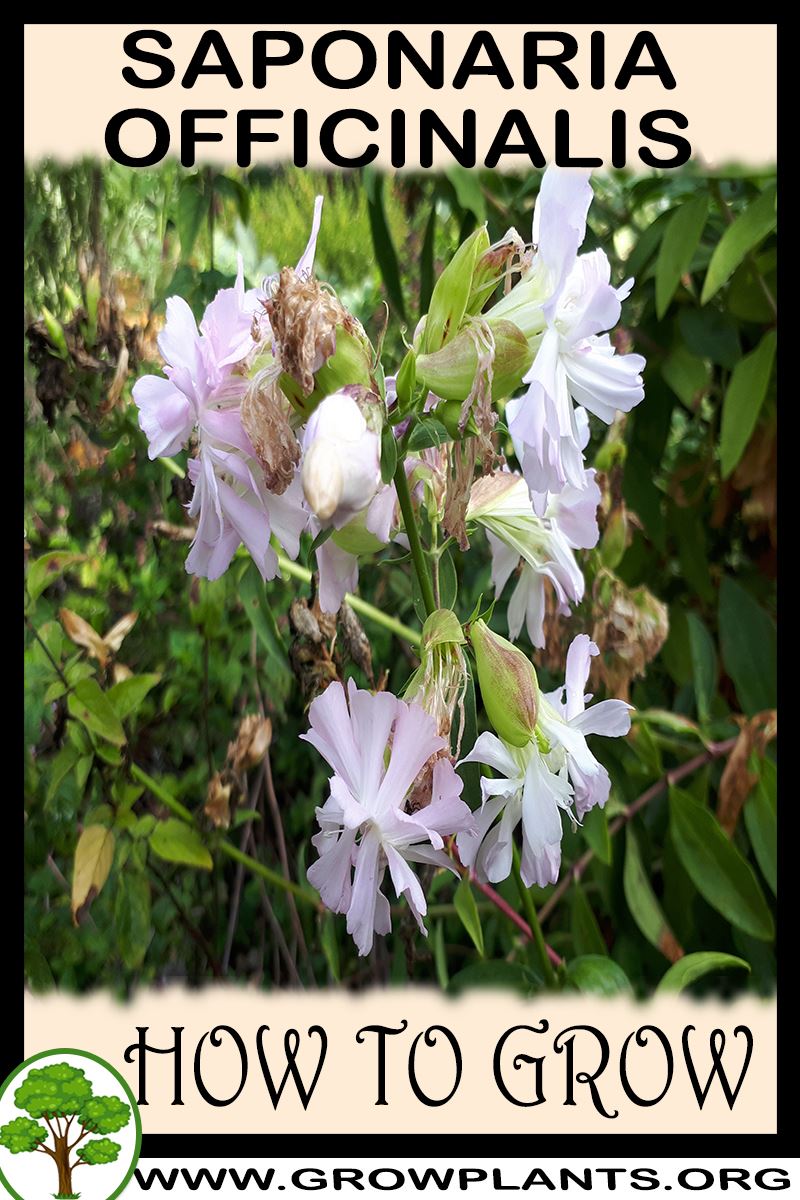
Overview: The true soapwort or bouncing Bet – an upright herbaceous perennial 20-70 cm (8-28 in) tall grown as an ornamental for its fragrant pink, purple or white flowers. It spreads readily by underground runners.
Quick Specifications
| Specification | Attribute |
|---|---|
| Plant Type / Life Cycle | Herbaceous perennial |
| Foliage Type | Semi-evergreen (evergreen in mild winters, otherwise dies back) |
| Mature Size | 20-70 cm (8-28 in) tall |
| Growth Rate | Moderate to fast |
| Root System | Rhizomatous – spreads by creeping underground rhizomes to form colonies, so it can become invasive |
| Toxicity | Contains saponins and is toxic if eaten in quantity; the root was historically used as a soap |
| Hardiness | USDA zones 2-9 |
Growth Form & Structure
- Height & Spread: In the ground an upright, spreading plant 20-70 cm (8-28 in) tall; also grows in containers, which helps limit its spread.
- Growth Habit & Form: Upright, clump-forming perennial that spreads outward by rhizomes into broad patches.
- Lifespan & Maturity: A tough, long-lived perennial that returns and expands each year from its rhizomes.
Anatomy & Physical Features
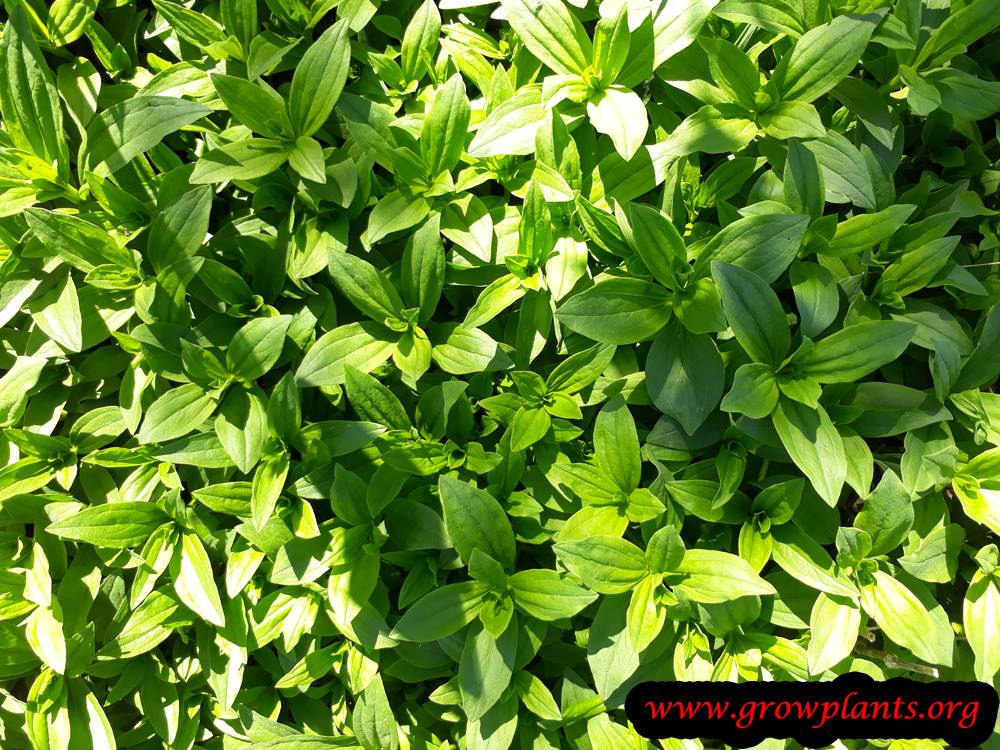
- Leaves & Foliage: Green oval leaves on upright stems.
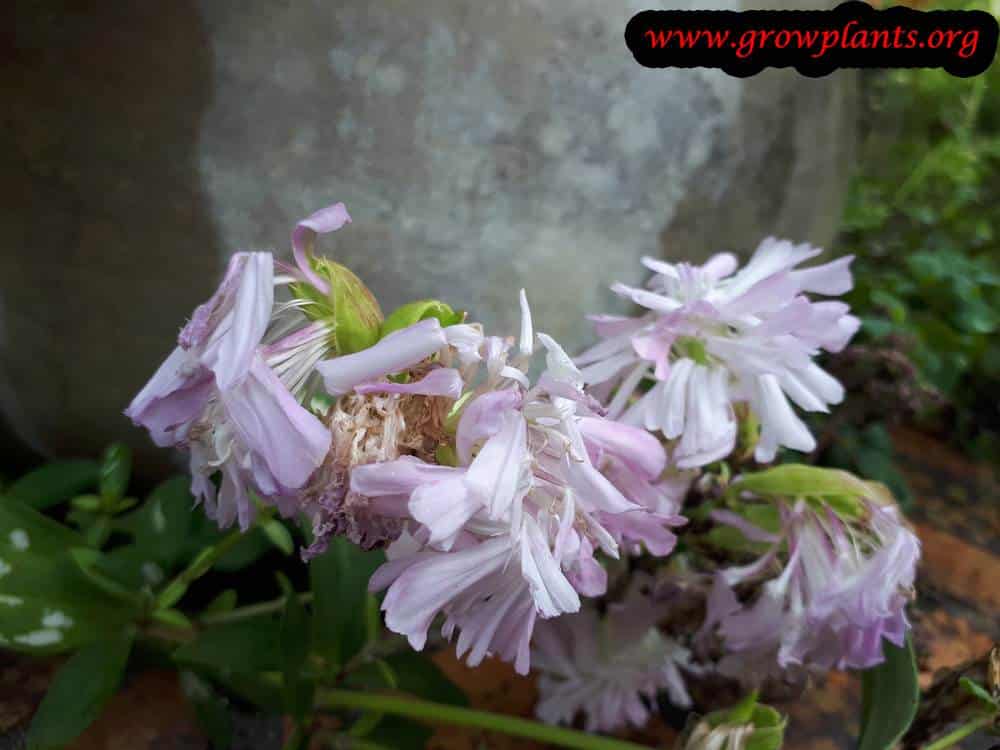
- Flower Characteristics: Fragrant, flat five-petalled flowers in pink, purple or white, borne in clusters and often scented in the evening.
Primary Uses & Landscape Value
- Functional & Ornamental Roles: Cottage-garden and naturalistic-planting ornamental; historically grown as a soap plant. Best contained, as it spreads vigorously.
Care Guide: Planting, Soil & Watering
Overview: Saponaria officinalis (Saponaria officinalis) is a hardy soapwort grown as a perennial (evergreen or deciduous) for its clusters of flat, five-petalled flowers in temperate and subtropical gardens. It does best in full sun to part shade in average, well-draining soil kept lightly moist.
Quick Care Requirements
| Requirement | Ideal Condition |
|---|---|
| Planting Season | Spring, summer or autumn |
| Growth Rate | Moderate to Fast |
| Soil Type | Average, well-draining |
| Water Need | Moderate; keep the soil lightly moist |
Planting & Establishment
- Best Planting Season: Plant in spring, summer or autumn, choosing spring in colder areas so plants settle before winter. Full sun gives the best flowering, with light shade tolerated.
- How to Plant:
- Hole Preparation: Dig a hole a little wider than the root ball and loosen the surrounding soil so roots spread easily.
- Soil Amendments: Mix some compost or organic matter into the backfill; the plant is not fussy but appreciates a free-draining, moderately fertile soil.
- Planting Depth: Set the plant at the depth it grew previously, keeping the crown level with the soil surface.
- Growth Speed & Expectations: A moderate-to-fast grower reaching about 20-70 cm (8-28 inches); it fills out quickly to form a spreading mound of bloom.
Soil, Watering & Drainage Care
- Soil Mix & Drainage Needs: Give well-draining soil so the roots do not sit soggy. It grows happily in containers with open drainage holes.
- Watering Schedule & Technique:
- Young / Newly Planted: Keep the soil evenly moist while young plants establish.
- Established: Water moderately once established, keeping the soil lightly moist but never waterlogged.
- Seasonal Adjustments: Water a little more through summer heat and flowering, and cut back over the cooler dormant months.
Climate, Light & Hardiness
Saponaria officinalis (soapwort) is a very cold-hardy perennial suited to temperate and subtropical climates in full sun to half shade. It is winter-hardy across an unusually wide USDA range, from about zone 2 through 9.
Quick Climate Specifications
| Climate Zones | Temperate, subtropical |
|---|---|
| USDA Hardiness Zones | 2–9 |
| Approx. Survival Minimum | Approximately −45.6°C to −40°C (−50°F to −40°F) at the zone 2 edge of its range |
| Frost Tolerance | High |
| Light Conditions | Full Sun to Half Shade |
Sunlight & Light Exposure
Optimal Light Setup
Full sun to half shade both work well for this adaptable perennial.
Temperature Extremes & Hardiness
USDA Hardiness & Regional Limits
Exceptionally cold-hardy, reliable from about zone 2 through 9; it needs a real winter dormancy and is well suited to climates with hard, extended frost.
Frost Sensitivity
Top growth dies back naturally with autumn frost as part of normal dormancy, with vigorous regrowth from the crown each spring.
Wind, Humidity & Microclimate
Rainfall & Seasonal Moisture
Adapts to a range of moisture conditions given well-drained soil.
Growing in Pots, Balconies & Indoors
Soapwort is a spreading, hardy garden perennial (20-70 cm) – not a houseplant, but it can be grown in a pot on a sunny to part-shaded balcony or patio.
Quick Details
- Container Size: A medium to large pot – it spreads
- Indoor Suitability: Not a houseplant – a hardy outdoor perennial
- Best Spot: Full sun to part shade
- Soil & Drainage: Free-draining mix
- Watering in Pots: Average to generous; let excess drain
Indoors & On the Windowsill
- Not a houseplant: It needs open-air sun and a winter rest and spreads readily, so it belongs outdoors.
- Safety: The plant contains saponins and is toxic if eaten – keep it away from children and pets.
On a Balcony or Patio
- Sun to part shade: A sunny or lightly shaded balcony suits it; a pot helps contain its vigorous, spreading roots.
- Light & heat: Walls, railings and paving reflect heat and wind dries pots fast, so check moisture often and water more in hot spells.
Choosing the Pot, Soil & Long-Term Care
- Pot & drainage: A medium to large pot with strong drainage; do not leave it standing in water.
- Potting mix: A light, free-draining mix – a good potting mix, or peat/coir blended with perlite or vermiculite.
- Feeding: Container plants use up food faster because watering washes nutrients out – feed a little and often through the growing season.
- Long term: Cut it back after flowering and divide the clump every couple of years.
Fertilizing & Feeding
A light feeder: this fast-growing, easy perennial blooms reliably in average garden soil with minimal supplemental feeding.
Quick Fertilizing Specs
| Feeding Level | Light feeder |
|---|---|
| Main Nutrient Priority | A balanced feeding that supports foliage and the pink, purple, or white flowers |
| Best Feeding Period | Spring through summer while actively growing and blooming |
| Organic Options | Compost worked into the bed at planting |
| Reduce/Stop Feeding | Ease off feeding as growth slows heading into autumn and winter |
| Micronutrients | Usually met by a complete fertilizer; correct only diagnosed issues |
| Soil pH | Tolerates a wide range in well-drained soil |
Feeding by Growth Stage
Spring growth flush
Support fresh foliage and stem growth as this fast-growing perennial breaks dormancy.
| Nutrient direction | A balanced complete fertilizer supports steady growth without forcing floppy stems. |
|---|---|
| Timing | As new growth resumes in spring. |
| Frequency | A light feeding at the start of active growth is usually enough. |
| Fertilizer types | A balanced complete fertilizer, Compost worked into the bed |
| Precautions | Keep feeding light; excess nitrogen produces weak, floppy stems on this fast grower. |
Summer bloom period
Sustain the flat, five-petaled pink, purple, or white flowers through the bloom season.
| Nutrient direction | Continue a light, balanced feeding; adequate overall nutrition supports steady bloom. |
|---|---|
| Timing | Spring through summer while the plant is in flower. |
| Frequency | An occasional light feeding through the bloom season is sufficient. |
| Fertilizer types | A balanced complete fertilizer at a light rate |
| Precautions | Avoid heavy feeding, which can encourage this vigorous grower to spread more than it blooms. |
Autumn and winter rest
Let the plant die back and rest through cooler weather without pushing new growth.
| Nutrient direction | None – withhold fertilizer while the plant is dormant. |
|---|---|
| Timing | Autumn through winter, alongside the plant’s natural die-back. |
| Frequency | No feeding at this stage. |
| Fertilizer types | No feeding at this stage; do not fertilize until active growth resumes in spring. |
| Precautions | Do not fertilize a dormant plant; unused nutrients simply build up in the bed over winter. |
Nutrient Deficiency Signs & Corrections
Overall pale, yellow-green foliage and thinner growth than expected for the season.
| Possible causes | low available soil nitrogen, nutrient leaching from heavy rain or watering, thin, low-organic-matter bed soil |
|---|---|
| Appears first on | older, lower leaves |
| What to check | recent feeding history, soil organic matter, bed drainage |
| Possible correction | Apply a balanced complete fertilizer at a light rate and work compost into the bed. |
New leaves show yellowing between the veins while the veins stay green.
| Possible causes | high or alkaline soil pH limiting iron availability, waterlogged, poorly drained bed soil, low soil iron |
|---|---|
| Appears first on | newest leaves |
| What to check | soil pH and drainage, recent watering pattern, root health |
| Possible correction | Improve drainage, correct pH toward the plant’s preferred range, and apply a chelated iron product per its label. |
Interveinal yellowing shows on older leaves while veins remain green.
| Possible causes | low soil magnesium, heavy potassium feeding competing with magnesium uptake, leaching in light, sandy soils |
|---|---|
| Appears first on | older, lower leaves |
| What to check | soil magnesium status, recent feeding balance, soil texture and drainage |
| Possible correction | Apply a labeled magnesium source such as a dolomitic amendment and rebalance the feeding program. |
Pruning, Training & Seasonal Maintenance
Saponaria officinalis (soapwort) is an herbaceous perennial with no woody stems, so pruning is entirely a maintenance and tidiness matter rather than a structural one. The plant’s own guidance describes cutting as “just for design,” meaning it is optional shaping rather than a requirement for health or flowering, best done in autumn to winter as the plant heads into its seasonal die-back. Because it is fast to medium growing, it recovers quickly from any cutback.
Quick Pruning & Maintenance Specs
| Pruning Tolerance | Moderate–High |
| Primary Pruning Window | Autumn to winter |
| Typical Frequency | Optional, once a year at most, for tidiness |
| Main Objective | Shape/tidy the clump and remove spent growth as it declines for the season |
| Young Plant Priority | Let the clump establish before any cutback |
| Mature Plant Priority | Autumn/winter cutback of declining top growth to tidy the clump for the next season |
| Best Tool Type | Precision snips or bypass secateurs for soft stems |
| Avoid Heavy Pruning During | Active spring–summer bloom, if uninterrupted flowering is wanted |
Pruning by Plant Age & Size
Newly Established
Leave a newly planted clump untouched until it is rooted in and actively growing.
Young / Formative
No structural training applies to this herbaceous species; light pinching of young growth can encourage a bushier habit if a fuller clump is wanted.
Mature / Established
An established clump can be tidied in autumn/winter as top growth declines, and deadheaded through the bloom season if repeat flowering or self-seeding control is desired.
Special Growth to Remove
- Spent flower stems, if extending bloom or limiting self-seeding is a goal.
- Declining, dying-back top growth in autumn/winter as the plant enters dormancy.
Container & Small-Space Pruning
In a container, keep the same light, optional shaping approach as in-ground; because pot space is limited, a slightly firmer autumn cutback helps keep the clump proportionate to the container rather than letting it flop over the pot’s edge.
Tools
- Precision snips – deadheading and light shaping through the growing season.
- Bypass secateurs – the autumn/winter tidy-up cutback of the whole clump.
Tool Hygiene & Disease Risk
Routine – clean, sharp tools are sufficient; this species’ listed pest (aphids) is not a pruning-transmitted disease concern.
Cut Placement & Technique
Deadhead spent flowers just below the faded bloom; for the seasonal tidy-up, cut stems back to near the base once they have died back rather than mid-stem.
Heavy Pruning & Rejuvenation
Tolerates a full cutback to the base in autumn or winter well, given its fast-to-medium growth rate, and returns reliably from the crown the following season.
Post-Pruning Care
Water normally after cutting back; no extra feeding is needed for a routine seasonal tidy-up.
Common Pruning Mistakes
- Treating the “design” cutback as mandatory and over-shaping a plant that doesn’t need it to perform.
- Cutting back hard in the middle of the bloom season purely out of habit, losing flower display unnecessarily.
When NOT to Prune
Avoid a full cutback while the plant is in active spring–summer bloom if continuous flowering is the goal; hold that cut for autumn/winter instead.
Recommended Tools (by task)
- precision_snips – deadheading and light in-season shaping.
- bypass_secateurs – the autumn/winter cutback of declining stems.
Propagation Guide
Saponaria officinalis is most easily increased by dividing the spreading clump or by seed, both straightforward since vegetative reproduction isn’t required to keep the species true. Stem cuttings from non-flowering shoots will also root. Overall this is an easy plant to propagate.
Quick Propagation Specs
| Best Propagation Method | Division |
| Alternative Methods | Seed; stem cuttings |
| Propagation Difficulty | Easy |
| Seed True-to-Type | Usually true-to-type |
| Vegetative True-to-Type | Yes |
| Best Propagation Season | Division: spring or autumn; seed: spring through autumn |
Growing from Seed
Sow during the spring–autumn growing season in well-drained soil. Germination is generally reliable in warm conditions, typically within a few weeks, though the site doesn’t record an exact time so treat this as an estimate.
Stem Cuttings
Non-flowering stem tip cuttings taken in spring to early summer root fairly easily in a moist, well-drained medium. Rooting hormone isn’t usually necessary.
Division, Offsets, Pups & Suckers
Soapwort forms a spreading clump that divides easily. Lift and split the clump in spring or autumn, keeping healthy roots attached to each division, and replant promptly, watering well until re-established.
Bloom & Flower Guide
Quick Details
- Bloom Season: Summer
- Flower Appearance: Flat five-petalled flowers in pink, purple or white, borne in clusters and often fragrant in the evening
- Edibility: Not edible – soapwort is rich in saponins (it was historically used as a soap) and is toxic if eaten
Detailed Blooming Overview
Soapwort is a charming old cottage-garden plant that opens clusters of flat, five-petalled flowers through summer, sweetly scented toward evening to draw in moths. Its name is a warning as much as a description: the plant is loaded with saponins – the same compounds that let it lather like soap – and is toxic if swallowed.
Flower Characteristics
- Flat, five-petalled flowers in pink, purple or white.
- Carried in clusters; often fragrant in the evening.
Bloom Care & Thinning
- Keep it in check: It can spread vigorously; cutting back after flowering keeps it tidy and can prompt more bloom.
- Safety: All parts are toxic if eaten – a plant to enjoy for its flowers only.
Pests, Diseases & Troubleshooting
Overview: Common soapwort (bouncing bet) is a vigorous, rhizomatous perennial that is virtually indestructible and untroubled by serious pests. Its ‘problems’ are mostly its own vigour – aggressive spreading and post-flowering flop – with occasional aphids, powdery mildew and rust. Contain the roots, cut back after flowering, and it looks after itself.
Quick Troubleshooting Overview
| Issue / Pest | Main Symptom | Primary Solution |
|---|---|---|
| Powdery mildew | White powder on leaves in crowding | Space & thin, sulphur/bicarb spray |
| Crown / root rot | Browning centre, collapse in wet soil | Sharp drainage, avoid winter wet |
| Aphids | Sticky, distorted shoot tips | Water jet, insecticidal soap |
| Slugs & snails | Holed young shoots & seedlings | Traps, barriers, evening patrols |
| Flopping after bloom | Lax, untidy stems post-flowering | Shear back hard after flowering |
Common Pests & Management
- Aphids (Aphis spp. / Myzus persicae):
- Symptoms: Green or black colonies on soft new shoots and flower stems; sticky honeydew, distorted tips and, at worst, virus transmission.
- Prevention & Control: Hose off and encourage ladybirds and hoverflies; pinch infested tips. Insecticidal soap or light horticultural oil handles heavier colonies – spray in the evening to protect pollinators.
- Two-spotted spider mite (Tetranychus urticae):
- Symptoms: Fine stippling and bronzing of foliage with faint webbing in hot, dry conditions.
- Prevention & Control: Raise humidity and hose foliage in heat; treat persistent mites with insecticidal soap or horticultural oil, covering leaf undersides.
- Slugs and snails (Various spp.):
- Symptoms: Ragged holes and shredded young shoots and seedlings in spring damp, with slime trails.
- Prevention & Control: Clear hiding spots, water in the morning, and use grit/copper barriers, traps or iron-phosphate pellets; hand-pick after dark.
Diseases & Fungal Issues
- Powdery mildew (Erysiphe / Golovinomyces spp.):
- Symptoms: White powdery coating on leaves and stems in crowded, dry-root, humid-air conditions; foliage may yellow.
- Treatment & Management: Space and thin plants for airflow, keep roots from drying out, and remove affected growth; a sulphur or potassium-bicarbonate spray helps at first signs.
- Crown and root rot (Phytophthora / Rhizoctonia spp.):
- Symptoms: Browning and collapse from the crown, with dark, soft roots, in wet or poorly drained soil – especially over winter and on the alpine, cushion-forming types.
- Treatment & Management: Grow in sharply drained, gritty soil, avoid winter wet, and keep the crown dry and airy; remove and destroy rotted plants and improve drainage before replanting.
- Rust and leaf spot (minor):
- Symptoms: Occasional orange rust pustules on leaf undersides or brown leaf spots in humid, crowded conditions.
- Treatment & Management: Remove affected leaves, improve airflow, and avoid overhead watering; sanitation is usually enough, with sulphur available for persistent rust.
Growing Difficulties & Abiotic Problems
- Aggressive rhizomatous spread:
- Cause & Symptoms: Spreads strongly by underground rhizomes and self-seeds, readily colonising beyond its intended area and becoming weedy.
- Correction Strategy: Site where it can roam or contain it with a root barrier or in a large pot; deadhead to limit seeding and dig out unwanted runners. Divide to control and rejuvenate.
- Flopping / untidiness after flowering:
- Cause & Symptoms: Stems become lax and the plant looks tired and open once the main flush of bloom is over.
- Correction Strategy: Shear the whole plant back hard immediately after flowering to encourage fresh, compact growth and often a second, lighter show.
- Sparse bloom in shade / rich soil:
- Cause & Symptoms: Fewer flowers and soft, floppy growth in too much shade or over-fertile soil.
- Correction Strategy: Grow in full sun on lean, well-drained soil and avoid heavy feeding; soapworts flower best grown a little hard.
What Helps – Products & Tools
Soapwort is easy and needs little: insecticidal soap or horticultural oil for occasional aphids and mites, slug traps or barriers for young growth, and a sulphur or potassium-bicarbonate spray for powdery mildew in crowded stands. The most useful ‘tool’ is shears for the after-flowering cut-back that keeps plants tidy and prevents flopping. Good drainage prevents the crown rot that affects the alpine types.