



Plant Profile & Key Characteristics
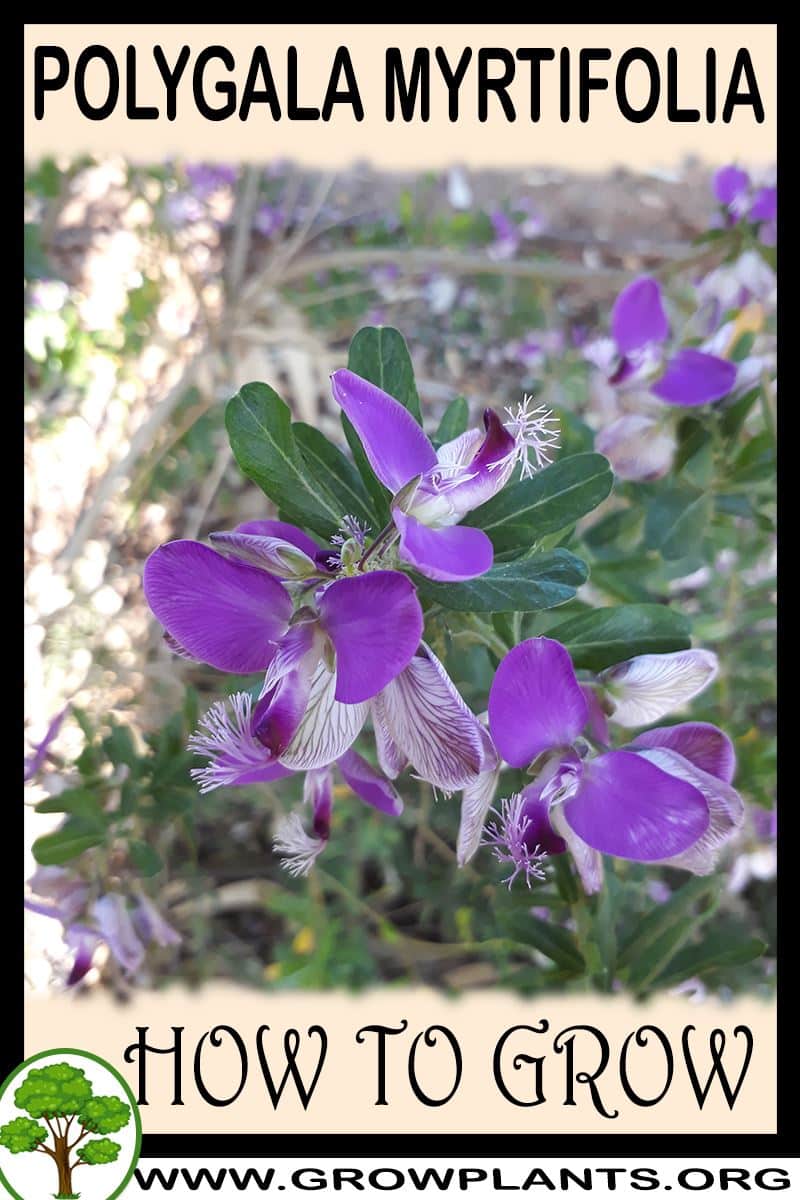
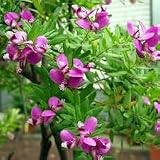
Overview: Polygala myrtifolia (myrtle-leaf milkwort, or sweet pea bush) is an evergreen shrub to small tree reaching 1.8-4 m (6-13 ft). This fast- to moderate-growing, drought-tolerant perennial is grown as an ornamental and hedge for its near-continuous pea-shaped flowers.
Quick Specifications
| Specification | Attribute |
|---|---|
| Plant Type / Life Cycle | Perennial (evergreen) |
| Foliage Type | Evergreen |
| Mature Size | 1.8-4 m (6-13 ft) |
| Growth Rate | Fast to moderate |
| Hardiness | USDA zone 9+ |
Growth Form & Structure
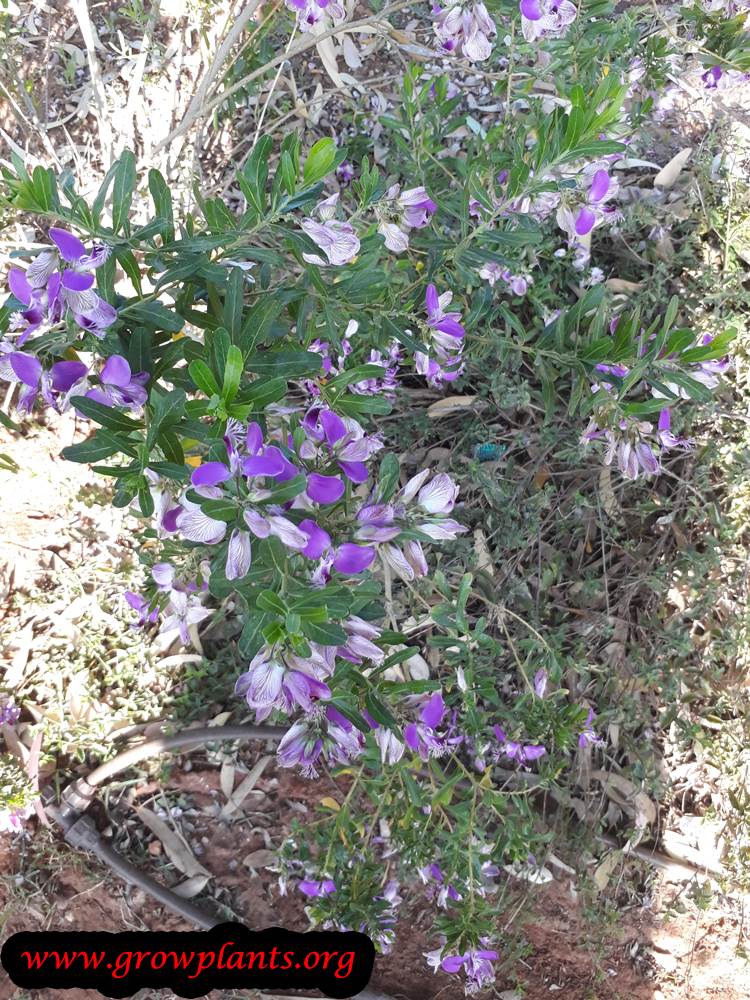
- Height & Spread: An upright, bushy shrub of 1.8-4 m (6-13 ft) that can be trained into a small tree; grows well in containers.
- Growth Habit & Form: Dense, rounded evergreen shrub with an upright habit.
- Lifespan & Maturity: Fast to establish; flowers almost year-round in mild climates.
Anatomy & Physical Features
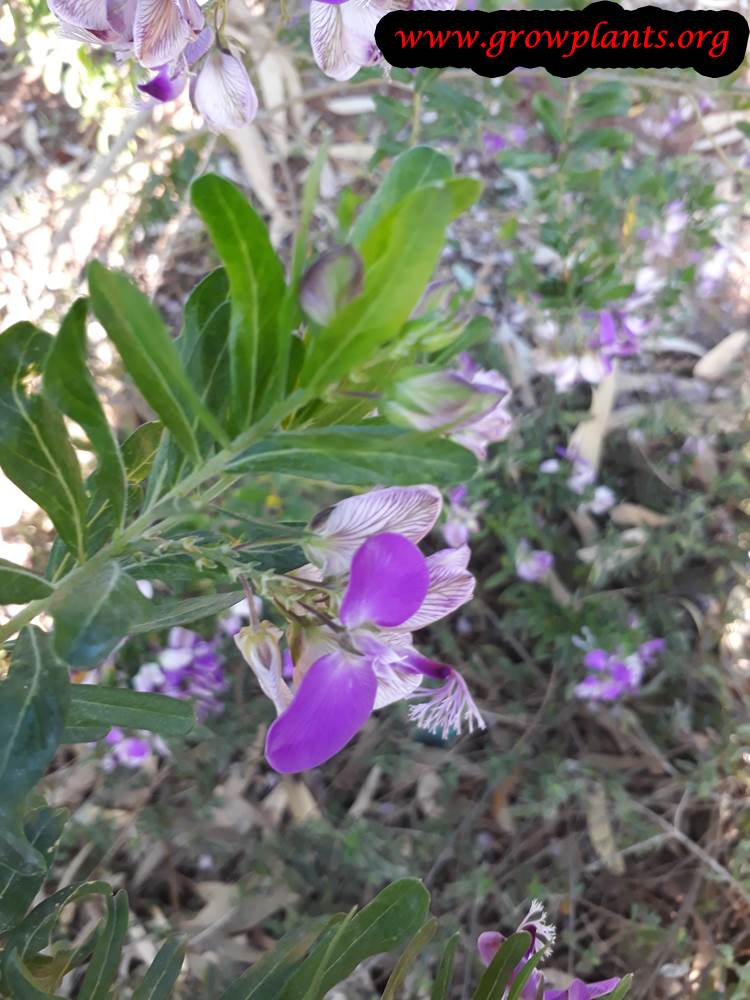
- Leaves & Foliage: Green, oval leaves resembling myrtle foliage.
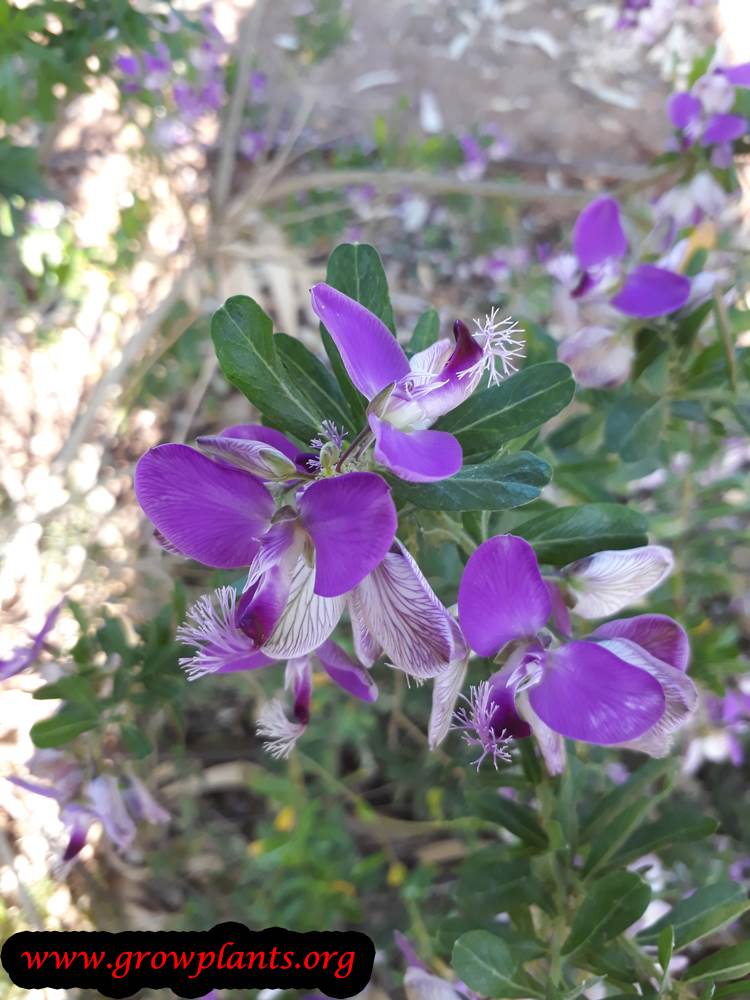
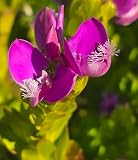
- Flower Characteristics: Purple, pea-shaped flowers with a distinctive brush-tipped keel, carried in clusters from winter through summer.
Primary Uses & Landscape Value
- Functional & Ornamental Roles: Ornamental flowering hedge and screen, drought-tolerant border shrub and container plant.
Care Guide: Planting, Soil & Watering
Overview: Sweet pea bush grows easily in full sun to light shade in ordinary, well-draining soil, and is drought tolerant once established. It needs only low to moderate watering and dislikes wet feet.
Quick Care Requirements
| Requirement | Ideal Condition |
|---|---|
| Planting Season | Spring through autumn in the warm growing season |
| Growth Rate | Moderate to fast |
| Soil Type | Ordinary, well-draining soil; tolerates poor ground |
| Water Need | Low to moderate — let the soil dry between waterings once established |
Planting & Establishment
- Best Planting Season: Plant in the warm season from spring through autumn, after frost, giving the shrub time to establish before cold or wet weather.
- How to Plant:
- Hole Preparation: Dig a hole about twice as wide as the root ball and just as deep, loosening the surrounding soil so young roots can spread.
- Soil Amendments: Mix a little compost into the backfill and add grit to heavy soils to sharpen drainage; it is not fussy about fertility.
- Planting Depth: Set the plant so the top of the root ball is level with the surrounding soil, keeping the root collar at grade and never burying the stem.
- Growth Speed & Expectations: A fast, free-flowering grower that quickly forms a bushy shrub — light pruning keeps it dense and tidy.
Soil, Watering & Drainage Care
- Soil Mix & Drainage Needs: Give it light, free-draining soil; in containers use a free-draining potting mix and empty saucers, as it resents soggy roots.
- Watering Schedule & Technique:
- Young / Newly Planted: Water regularly after planting to settle the roots, keeping the soil lightly moist for the first few weeks.
- Established: Once established, water deeply but sparingly, letting the top of the soil dry between waterings — it handles drought well.
- Seasonal Adjustments: Water occasionally in prolonged heat and very little in cool or wet weather.
Climate, Light & Hardiness
Polygala myrtifolia is a warm-climate shrub to small tree suited to Mediterranean, subtropical, temperate, and tropical conditions, growing best in full sun to half shade. It has good general hardiness for a zone 9+ shrub and modest water needs once established.
Quick Climate Specifications
| Climate Zones | Mediterranean, Subtropical, Temperate, Tropical |
|---|---|
| USDA Hardiness Zones | 9+ |
| Frost Tolerance | Low |
| Light Conditions | Full Sun / Half Shade |
Sunlight & Light Exposure
Optimal Light Setup
Full sun to half shade both suit this shrub, with full sun generally giving the heaviest flowering.
Temperature Extremes & Hardiness
USDA Hardiness & Regional Limits
Reliable as a perennial shrub from zone 9 upward; outside consistently mild-winter climates it is not considered fully hardy.
Cold Damage & Winter Protection
As a zone 9+ shrub, expect some risk of damage to soft growth during colder snaps near the bottom of its range; a sheltered site helps in marginal zone 9 locations.
Frost Sensitivity
Only lightly frost tolerant – hard or prolonged frost can damage or kill the plant, so it is best suited to mild-winter regions.
Wind, Humidity & Microclimate
Wind Tolerance
Adaptable to a range of garden conditions and generally tolerates open, breezy sites once established, consistent with its use as a hedge plant.
Growing in Pots, Balconies & Indoors
Sweet-pea shrub (Polygala myrtifolia) is a fast-growing evergreen shrub (1.8-4 m) with near year-round purple pea flowers. The grower says it is not a houseplant but can be grown in a container – a good large-pot patio shrub in a mild climate, though it will want a roomy tub or eventually the ground.
Quick Details
- Container Size: A large pot for a big, fast shrub
- Indoor Suitability: Not a houseplant – an outdoor shrub
- Best Spot: Full sun to half shade, outdoors
- Soil & Drainage: Free-draining mix
- Watering in Pots: Small to average amount – drought-tolerant once established
Indoors & On the Windowsill
- Not a houseplant: The grower confirms it will not grow indoors; it is an outdoor flowering shrub.
- Windowsill: Too large and sun-hungry for a sill – grow it outside.
On a Balcony or Patio
- Light, wind & heat: Give it the brightest spot it will tolerate; walls and railings reflect heat and dry pots quickly, so check moisture often and shelter or stake exposed growth.
- Sun & wind: Give it a sunny spot; being tall and fast, prune to shape and stake against wind on exposed balconies.
Choosing the Pot, Soil & Long-Term Care
- Pot & drainage: A large pot with strong drainage holes for a vigorous shrub. Use strong drainage holes and skip a standing-water saucer to avoid root rot. Terracotta breathes and dries faster; glazed or plastic holds moisture longer.
- Potting mix: A free-draining, moderately rich mix.
- Feeding: Feed lightly in the growing season; it is not a heavy feeder.
- Repotting: Refresh the mix and pot up about every two years; for perennials, lightly root- and top-prune the plant when you do.
Fertilizing & Feeding
A light feeder for a drought-tolerant hedge shrub that blooms across much of the year: a light balanced feeding in spring is usually enough to keep the near-continuous purple, pea-shaped flowers coming without pushing rangy, floppy growth.
Quick Fertilizing Specs
| Feeding Level | Light feeder |
|---|---|
| Main Nutrient Priority | Balanced feeding, kept light, to sustain repeat bloom without soft growth |
| Best Feeding Period | Spring as new growth resumes ahead of the main bloom flush |
| Organic Options | A light compost top-dressing is optional rather than essential |
| Reduce/Stop Feeding | Ease off feeding during any brief cool-season slowdown |
| Micronutrients | Rarely an issue for this low-input, drought-tolerant shrub |
| Soil pH | Tolerates a wide range of soil conditions |
Feeding by Growth Stage
Spring growth flush
Support fresh growth on this fast-to-medium growing shrub as it heads into its long bloom season.
| Nutrient direction | A light balanced fertilizer is enough; this shrub is drought-tolerant and does not need rich feeding to perform well. |
|---|---|
| Timing | Spring as new growth resumes. |
| Frequency | A single light feeding at the start of spring growth is usually sufficient. |
| Fertilizer types | A balanced, light-strength fertilizer, An optional light compost top-dressing |
| Precautions | Avoid heavy feeding, which can push soft, rangy growth that needs extra pruning to keep this hedge shrub’s shape. |
Repeat bloom through winter, spring, and summer
Sustain the pea-shaped purple flower clusters through the shrub’s unusually long, near-continuous bloom season.
| Nutrient direction | Feeding needs stay light through repeat bloom; balanced nutrition already in the soil generally carries flowering without added phosphorus. |
|---|---|
| Timing | Across winter, spring, and summer while flower clusters keep forming. |
| Frequency | An occasional light feeding at most during the extended bloom season, mainly if growth looks thin. |
| Fertilizer types | A light balanced fertilizer only if growth or bloom looks sparse |
| Precautions | Resist adding a high-phosphorus bloom booster; this shrub’s long bloom season is driven by its own vigor and full sun rather than extra phosphorus. |
Brief cool-season rest
Let the shrub coast through any short cool or dry lull between bloom flushes without unnecessary fertilizer.
| Nutrient direction | None – a brief resting period between bloom flushes does not need feeding. |
|---|---|
| Timing | Any short lull in growth during cooler or drier stretches. |
| Frequency | No feeding during this brief rest; resume light feeding once active growth or bloom picks back up. |
| Fertilizer types | No feeding at this stage – the shrub is resting between bloom flushes. |
| Precautions | Do not fertilize during this rest; feeding now wastes nutrients and won’t shorten the lull between bloom flushes. |
Nutrient Deficiency Signs & Corrections
Pale green foliage and thin, sparse growth well below this shrub’s normal fast-to-medium pace.
| Possible causes | very lean or depleted soil, nitrogen leaching after unusually heavy rain, root competition from a crowded hedge planting |
|---|---|
| Appears first on | older, lower leaves |
| What to check | how long since any feeding, soil fertility, spacing and competition within the hedge row |
| Possible correction | Apply a light balanced fertilizer once and monitor, since this shrub rarely needs ongoing feeding. |
New leaves emerge pale yellow while the veins stay green.
| Possible causes | high soil pH limiting iron availability, waterlogged roots from overwatering, compacted or poorly aerated soil |
|---|---|
| Appears first on | newest growth |
| What to check | soil drainage and pH, recent watering frequency, planting site compaction |
| Possible correction | Improve drainage and aeration first, then apply a chelated iron product per its label if needed. |
Healthy foliage but noticeably fewer flower clusters than expected for this normally free-flowering shrub.
| Possible causes | insufficient direct sun for flowering, excess nitrogen favoring leafy growth over bloom, pruning at the wrong time removing developing flower wood |
|---|---|
| Appears first on | whole-plant flowering pattern rather than a single leaf symptom |
| What to check | hours of direct sun the shrub receives, recent fertilizer nitrogen levels, timing of the last prune relative to bloom cycles |
| Possible correction | Confirm the shrub gets enough direct sun, moderate nitrogen, and time pruning to avoid cutting off developing flower wood. |
Pruning, Training & Seasonal Maintenance
Polygala myrtifolia is a fast, aggressive-growing evergreen shrub commonly grown as an informal or clipped hedge, with an unusually long bloom season spanning winter through summer. It tolerates frequent shaping trims well and, unlike many Mediterranean shrubs, also resprouts reliably from harder cuts into older wood, so both regular hedge maintenance and an occasional deeper renewal cut are realistic options. The main structural tidy is best placed in autumn–winter, in the relative lull between bloom flushes, while lighter shaping cuts can continue through most of the growing season.
Quick Pruning & Maintenance Specs
| Pruning Tolerance | High |
| Primary Pruning Window | Autumn–Winter structural trim and deadwood removal |
| Secondary Maintenance Window | Light shaping/hedge trims through the growing season |
| Typical Frequency | Several light shearings a year if kept as a formal hedge; one heavier tidy in autumn–winter |
| Main Objective | Maintain hedge/screen form; remove dead wood; control this species’ aggressive, leggy growth |
| Young Plant Priority | Pinch/trim early to build a dense base if grown as a hedge |
| Mature Plant Priority | Regular shearing to hold form, plus occasional renewal cuts into older wood if it thins out |
| Best Tool Type | Hedge shears for routine shaping; loppers or a saw for occasional older-wood renewal cuts |
| Avoid Heavy Pruning During | Whenever maximum flower display is the priority, given how continuously this shrub blooms |
Pruning by Plant Age & Size
Newly Established
Pinch or lightly trim young plants to encourage a dense, multi-stemmed base, especially important if the plant is destined for a hedge or screen line.
Young / Formative
For a formal or informal hedge: begin regular shaping cuts early to build density from the ground up. For a specimen shrub: little formal training is needed beyond correcting damaged growth, since the plant naturally forms a full rounded shape.
Mature / Established
Shear or trim regularly to hold hedge form (or informal shrub shape), remove dead wood as it appears, and periodically renew any stems that have become bare or leggy given this species’ noted aggressive growth habit.
Seasonal Pruning Schedule
Dormant/Winter
Objective: reset size and shape before the next major growth flush, in the part of the year with the least active bloom. Remove: dead wood, errant or overly vigorous shoots breaking the hedge line, and general overgrowth. Do not remove: all current flowering growth at once – bloom can appear across winter, spring, and summer, so a full strip risks losing display for an extended stretch. Expected response: renewed dense growth and continued flowering into spring.
Summer Canopy Management
Light shearing through the growing season maintains hedge form; some flower loss from each trim is an acceptable trade-off on a shrub that reflushes and reblooms this readily.
Flowering & Fruiting Wood
Flowers form on current-season growth, which is why this species can bloom across three seasons and why regular light trimming tends to stimulate further flowering flushes rather than remove a single discrete crop. A hard renewal cut will reduce flowering only temporarily, until fresh growth reflushes and buds again.
Structural Pruning & Training
Hedge/screen form is the dominant structural objective, matching this species’ common garden use. Beyond that, the priority is managing its aggressive growth habit – controlling height/spread and renewing stems before they go bare at the base rather than letting the shrub outgrow its space.
Special Growth to Remove
Remove dead wood as it appears and cut back any unusually vigorous shoots that break out beyond the hedge line or intended shrub outline, consistent with this species’ aggressive growth tendency.
Container & Small-Space Pruning
In a container, this shrub’s natural 1.8–4 m mature size will need more frequent trimming to stay in proportion to the pot; it takes regular size-control pruning well, so a container specimen can be kept considerably smaller than an open-ground hedge with consistent shaping.
Tools
Hedge shears for routine shaping of a genuine hedge or screen line; bypass secateurs for deadwood and precise cuts; loppers for thicker stems during an occasional older-wood renewal cut.
Tool Hygiene & Disease Risk
Routine – keep tools clean and sharp. The only recorded pest is aphids, which are not spread through pruning cuts.
Cut Placement & Technique
When shearing as a hedge, keep the form slightly wider at the base than the top so light reaches lower growth and the base does not go bare. For deadwood or renewal cuts, use thinning cuts back to a healthy lateral or the base rather than leaving stubs.
Heavy Pruning & Rejuvenation
Well tolerated – unlike some Mediterranean shrubs, Polygala myrtifolia resprouts readily even from harder cuts into older wood. If a plant has become leggy or bare-based from years of surface-only shearing, stage a deeper renewal cut into a portion of the old stems over one to two seasons to restore density without an extended bare period.
Post-Pruning Care
Water normally after trimming; avoid extra feeding purely to force regrowth, since this is already a fast, aggressive grower. Expect renewed growth and flowering fairly quickly given the species’ vigor.
Common Pruning Mistakes
Shearing so frequently that flower buds never get the chance to open on a shrub that blooms across three seasons; letting dead wood accumulate unnoticed inside a fast-growing hedge that quickly hides it with new growth; being overly cautious about a harder renewal cut out of habit from other Mediterranean shrubs, when this species actually tolerates it well.
When NOT to Prune
Avoid taking a full hard renewal cut all at once even though the plant recovers well – stage it instead to prevent an extended bare period on a shrub valued for near-continuous bloom; avoid heavy shearing right when peak flower display is wanted.
Recommended Tools (by task)
- hedge_shears – routine shaping of the hedge or screen line this species is commonly grown as.
- bypass_secateurs – deadwood removal and precise corrective cuts.
- loppers – thicker stems during an occasional older-wood renewal cut.
Pruning Troubleshooting
| Problem | Possible Cause | What to Check | Corrective Action |
| Bare, leggy lower stems | Repeated surface shearing with no renewal cuts into older wood | Whether the hedge interior is hollow/bare | Stage a deeper renewal cut into old wood over one to two seasons; this species recovers well |
| Reduced flowering after a trim | Heavy shearing removed most current-season growth right before a bloom flush | Timing of the last shear relative to bloom | Move the main structural trim to autumn–winter and keep in-season trims lighter |
| Hedge losing its clean line | Aggressive, fast growth outpacing the shearing schedule | Time since the last trim | Increase shearing frequency during the plant’s fastest growth periods |
Propagation Guide
Polygala myrtifolia is most commonly and easily raised from seed, and the site notes vegetative propagation is not required to grow it successfully – semi-hardwood cuttings are simply a fast, reliable alternative, especially useful for reproducing a particular flower-colour form. Both methods are straightforward, making this an easy shrub to propagate at home.
Quick Propagation Specs
| Best Propagation Method | Seed |
| Alternative Methods | Semi-hardwood stem cuttings |
| Propagation Difficulty | Easy |
| Seed True-to-Type | Usually true-to-type (species form); named colour selections are best kept true by cuttings |
| Vegetative True-to-Type | Yes |
| Best Propagation Season | Spring (seed); late spring to summer (cuttings) |
| Seed Germination Time | Typically a few weeks, can be uneven |
| Cutting Rooting Time | Often several weeks under warm, humid conditions |
| Germination Temperature | Around 18–24°C (64–75°F) |
| Seed Sowing Depth | Shallow – lightly cover the seed |
Growing from Seed
Sowing Season
Sow in spring once temperatures are reliably mild.
Sowing Depth & Orientation
Cover seed only lightly with a free-draining seed mix; deep sowing slows or prevents emergence.
Germination Conditions
A warm, bright spot with consistent light moisture suits germination best; avoid waterlogging, as this shrub prefers well-drained conditions even as a seedling.
Germination Time
Germination is generally within a few weeks but can be irregular from batch to batch.
Seedling Care
Once seedlings have a few true leaves, pot on into free-draining mix and grow in full sun to half shade before planting out.
Stem Cuttings
Cutting Type
Semi-hardwood tip cuttings from the current season’s growth root well.
Best Timing
Late spring through summer, when growth has firmed slightly but is not yet fully woody.
Cutting Preparation
Take cuttings a few nodes long, remove lower leaves, and trim just below a node.
Rooting Setup
Insert into a free-draining, gritty propagation mix; keep humidity moderate to high and avoid waterlogging.
Rooting Hormone
Optional – can improve rooting speed and consistency but is not strictly required.
Rooting Time
Roots typically form within a few weeks under warm, humid conditions.
Bloom & Flower Guide
Quick Details
- Bloom Season: Nearly year-round in mild climates, mainly from late winter through summer
- Time to First Bloom: Usually within a year or two of planting
- Flower Appearance: Purple, pea-shaped flowers with a distinctive brush-tipped keel, carried in small clusters
- Edibility: Not eaten – grown as an ornamental flowering shrub
Detailed Blooming Overview
Sweet pea bush is prized for its remarkably long season of purple, pea-like flowers. In frost-free gardens it can bloom almost continuously, with the heaviest flush from late winter into summer.
Flower Characteristics
- Purple, pea-shaped flowers, each with a fringed, brush-like keel.
- Borne in small clusters over a long season.
Bloom Care & Thinning
- Prolonging bloom: A light trim after the main flush keeps the shrub neat and encourages fresh flowers.
- Conditions: Full sun and good drainage give the best flowering; drought tolerant once established.
Pests, Diseases & Troubleshooting
Overview: Polygala myrtifolia (sweet-pea bush) is a fast, largely pest-free evergreen shrub, but its Achilles’ heel is Phytophthora root rot in wet or heavy soil, which causes sudden dieback and is the main reason plants are lost. Insects are minor — occasional aphids and whitefly on soft growth. Give it sun and sharp drainage, and it needs little more than the odd tidy prune.
Quick Troubleshooting Overview
| Issue / Pest | Main Symptom | Primary Solution |
|---|---|---|
| Phytophthora root rot | Sudden wilting, dieback of branches, plant collapse | Sharp drainage, never overwater, remove plant |
| Aphids | Curled shoot tips, honeydew on new growth | Hose off, insecticidal soap, predators |
| Whitefly | White flies from disturbed foliage; sticky leaves | Sticky traps, soap spray |
| Scale & mealybugs | Brown bumps / white fluff, sooty mold | Horticultural oil, alcohol swab |
| Legginess / short life | Open, woody, sparse shrub declining after a few years | Prune regularly, replace old plants |
Common Pests & Management
- Aphids (Aphis and Myzus spp.):
- Symptoms: Green or black colonies on soft new shoots and around buds, causing slight curling and stickiness with attendant ants; usually minor on this vigorous shrub.
- Prevention & Control: Blast off with water and encourage ladybirds, lacewings and hoverflies; insecticidal soap handles the occasional heavier flush. Rarely needs more.
- Whitefly (Aleyrodidae):
- Symptoms: Small white flies rising from disturbed foliage, leaving light honeydew and sooty mold on soft growth.
- Prevention & Control: Use yellow sticky traps and spray insecticidal soap to leaf undersides in the evening if numbers build; keep plants unstressed.
- Scale insects (Coccidae and Diaspididae):
- Symptoms: Brown, tan or white immobile bumps on stems and leaf undersides, with honeydew and sooty mold from soft scale.
- Prevention & Control: Scrape or prune off light infestations and spray horticultural oil to smother; manage attendant ants.
- Mealybugs (Pseudococcus spp.):
- Symptoms: White cottony masses in leaf axils and on stems, mainly on stressed or container plants, with honeydew.
- Prevention & Control: Swab with alcohol, hose off, and spray horticultural oil or insecticidal soap; keep plants vigorous and well-spaced.
Diseases & Fungal Issues
- Phytophthora root & collar rot (Phytophthora cinnamomi):
- Symptoms: Sudden wilting, yellowing and browning of foliage, dieback of whole branches and rapid collapse of an apparently healthy shrub, driven by a rotting root and collar system in wet, heavy or poorly drained soil; Polygala is a known susceptible host.
- Treatment & Management: Prevention is the only reliable control: plant in sharply drained soil or raised beds, never overwater, avoid piling mulch against the stem, and use clean stock. Remove and destroy collapsed plants, do not replant into the same infected spot, and protect valued specimens with a phosphonate drench or spray.
- Leaf spot (Cercospora / Alternaria spp.):
- Symptoms: Brown or grey spots on leaves in prolonged wet, humid weather; usually cosmetic.
- Treatment & Management: Remove affected leaves, water at the base, and improve airflow; rarely needs fungicide.
- Sooty mold (Capnodium spp. (secondary)):
- Symptoms: Black superficial coating on foliage wherever aphids, whitefly or scale have left honeydew.
- Treatment & Management: Control the sap-sucking pest, then rinse the film off; cosmetic but light-blocking.
Growing Difficulties & Abiotic Problems
- Root rot from wet/heavy soil:
- Cause & Symptoms: The single biggest killer: soggy or clay soil suffocates roots and invites Phytophthora, causing sudden dieback.
- Correction Strategy: Plant high in free-draining, gritty or sandy soil, water sparingly once established, and fix drainage before planting; this shrub prefers to run dry.
- Legginess & short lifespan:
- Cause & Symptoms: Polygala grows fast but becomes open, woody and sparse, and is naturally short-lived, declining after several years.
- Correction Strategy: Prune regularly, including a harder cut after the main flush, to keep it dense; take cuttings and plan to replace ageing plants.
- Frost damage:
- Cause & Symptoms: Cold snaps blacken soft growth; the shrub is only lightly frost-hardy.
- Correction Strategy: Grow in a sheltered, sunny spot or containers that can be protected; prune damage once growth resumes.
- Chlorosis:
- Cause & Symptoms: Yellowing on very alkaline or waterlogged soil where iron uptake falters.
- Correction Strategy: Improve drainage, mulch, and correct with chelated iron on strongly alkaline sites.
What Helps – Products & Tools
Sharp drainage and restraint with water matter more than any spray. Useful inputs are a phosphonate (phosphite) to protect against Phytophthora, insecticidal soap and horticultural oil for the occasional aphid, whitefly, scale or mealybug, yellow sticky traps for whitefly, and good pruning tools to keep the shrub dense and renew it.