Plant Profile & Key Characteristics
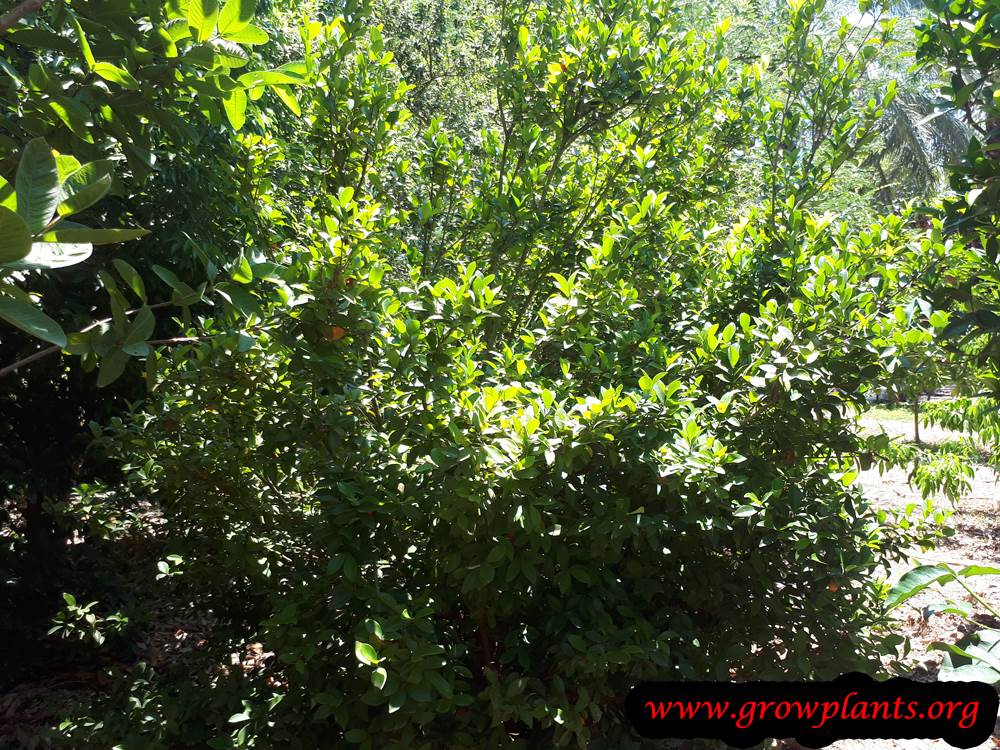
Overview: An evergreen fruiting shrub to small tree reaching 1-4 m, grown for its small sweet orange-red berries. It is salt- and drought-tolerant and also grown as an ornamental.
Quick Specifications
| Specification | Attribute |
|---|---|
| Plant Type / Life Cycle | Perennial (shrub to small tree) |
| Foliage Type | Evergreen |
| Mature Size | 1-4 m (3-12 ft) tall |
| Growth Rate | Moderate |
| Toxicity | Non-toxic (edible fruit) |
| Hardiness | USDA zone 10b+ |
Growth Form & Structure
- Height & Spread: A shrub to small tree 1-4 m (3-12 ft) tall; container-friendly and tolerant of coastal, sandy soils.
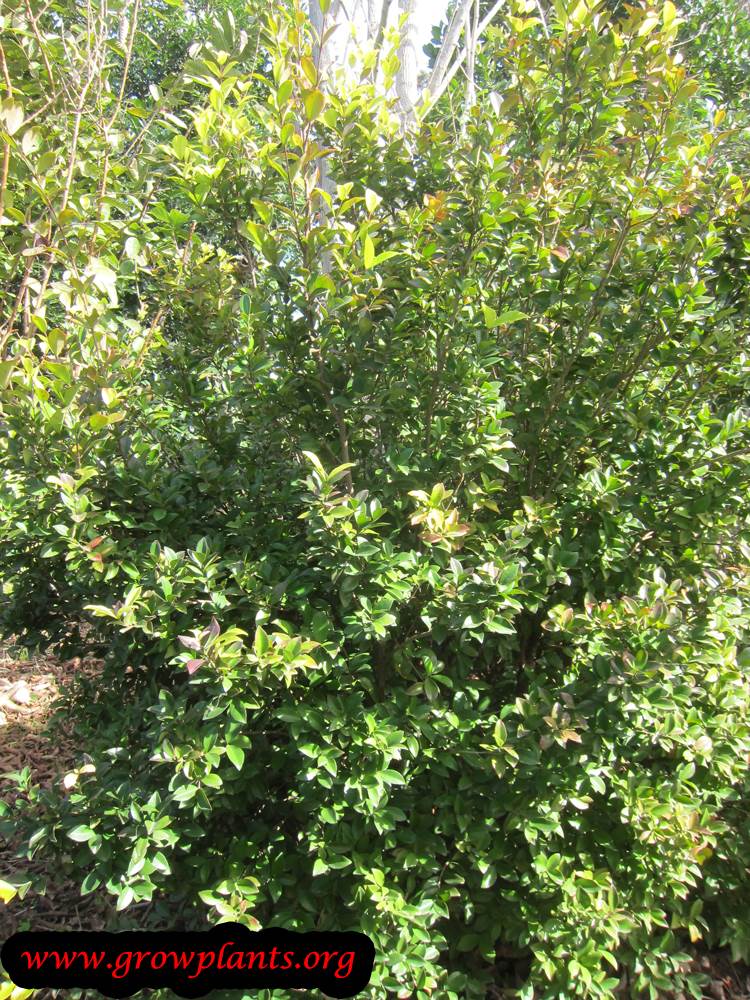
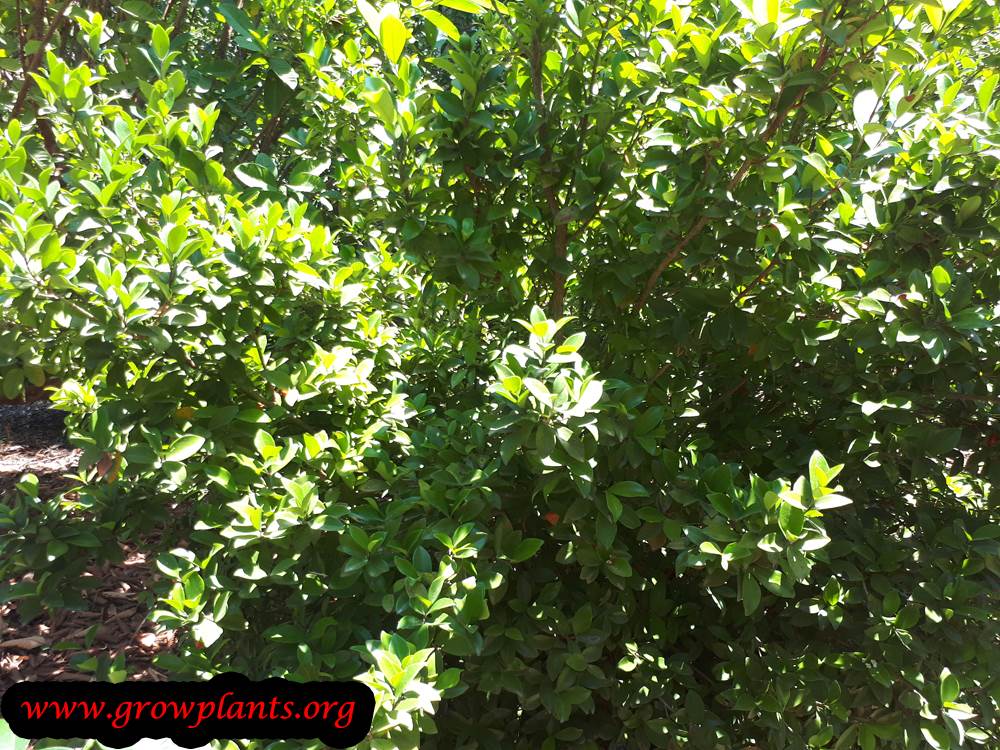
- Growth Habit & Form: Dense evergreen shrub that can be trained as a small tree.
- Lifespan & Maturity: Long-lived; bears fruit within about 2-4 years.
Anatomy & Physical Features
- Leaves & Foliage: Glossy green evergreen foliage.
- Flower Characteristics: White flowers about 1-2 cm across, bee-pollinated, in spring.
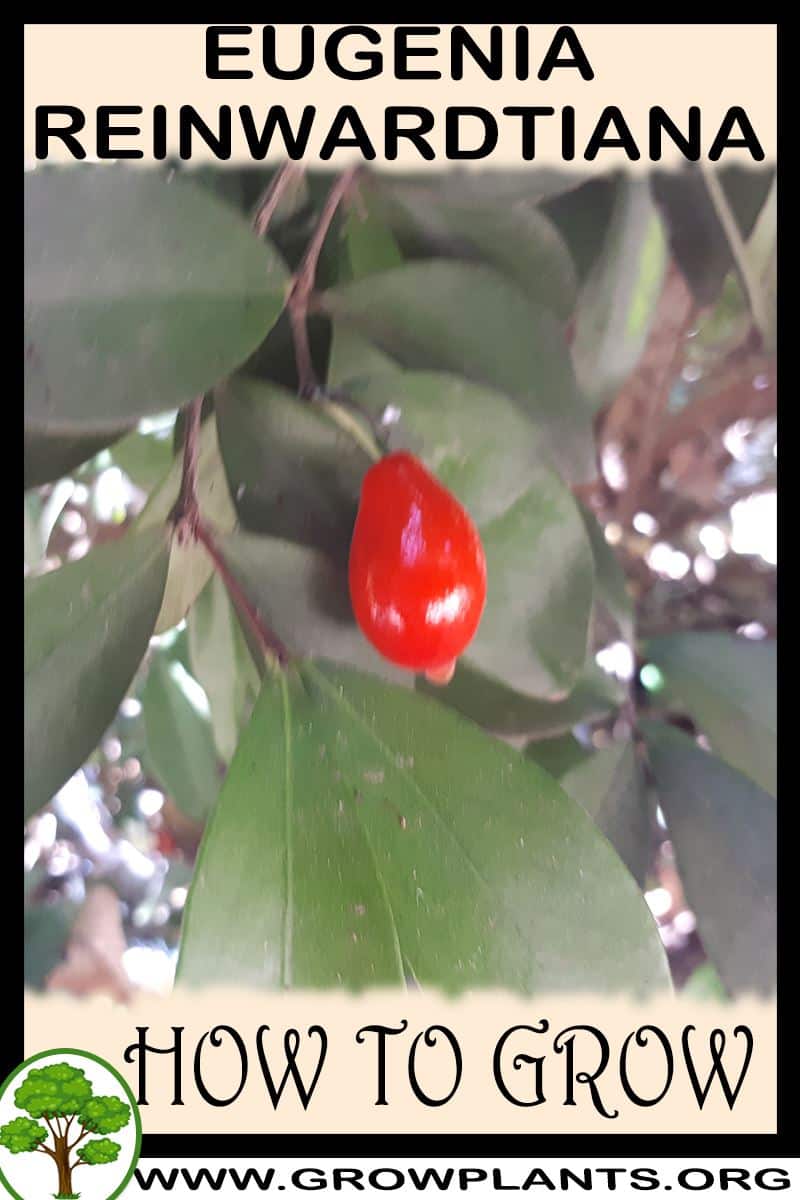
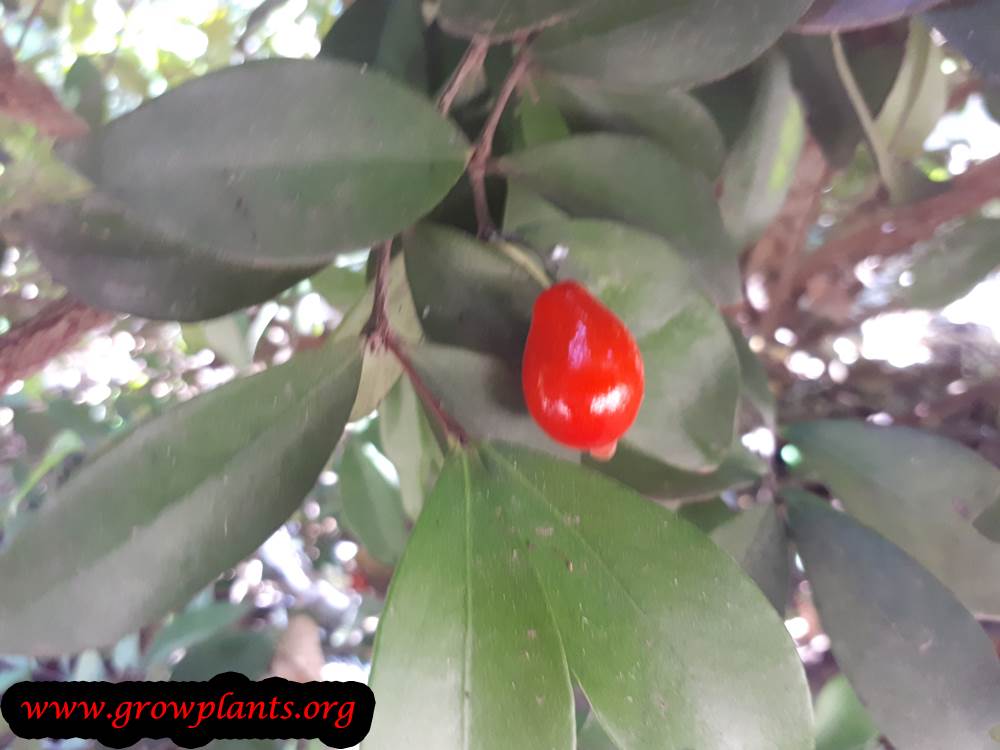
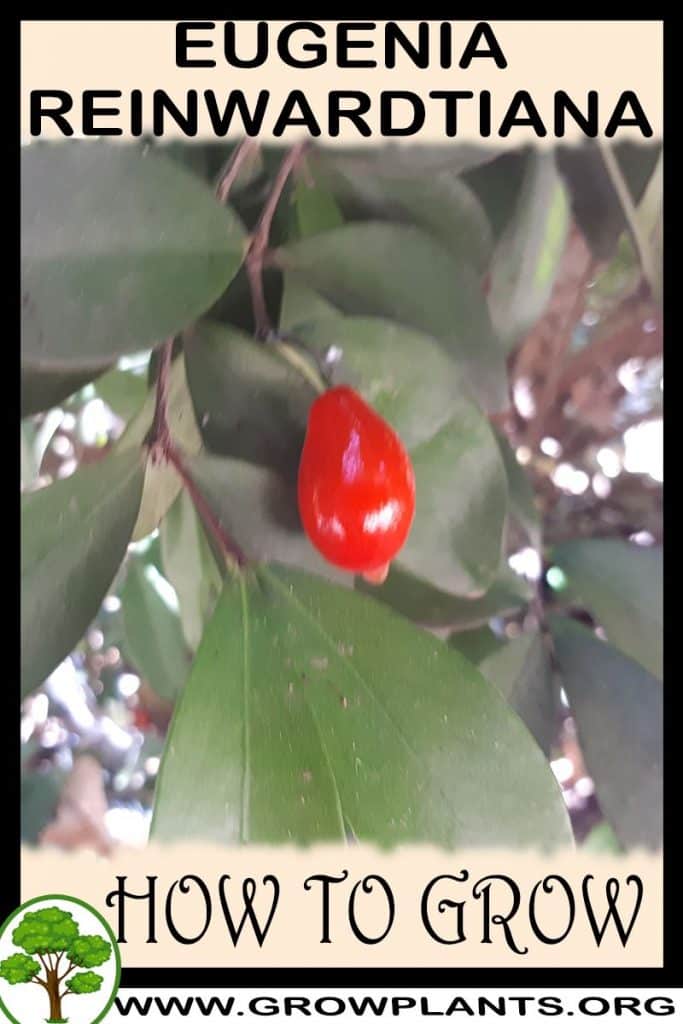
- Fruit Profile: Small orange-red fruit, sweet, some cultivars with a slight aftertaste; eaten fresh or made into juice and jam.
Primary Uses & Landscape Value
- Edible Uses: Fruit eaten fresh or used for juice, cake and jams.
- Functional & Ornamental Roles: Ornamental fruiting shrub, salt-tolerant enough for coastal gardens; container-friendly.
Care Guide: Planting, Soil & Watering
Overview: Eugenia reinwardtiana (Cedar Bay cherry) is a hardy coastal shrub-tree that thrives in sandy, sharply draining soil and even tolerates seaside conditions. It grows at a moderate pace and needs only moderate water once established.
Quick Care Requirements
| Requirement | Ideal Condition |
|---|---|
| Planting Season | Warm season – spring and summer (year-round in the tropics) |
| Growth Rate | Moderate |
| Soil Type | Sandy, well-drained (salt-tolerant) |
| Water Need | Moderate |
Planting & Establishment
- Best Planting Season: Plant in the warm season, spring to summer, or year-round in the tropics (roughly zone 10b and warmer).
- How to Plant:
- Hole Preparation: Dig a hole about twice the width of the root ball.
- Soil Amendments: In heavy ground add sand or grit to sharpen drainage; it naturally favours light, sandy soils.
- Planting Depth: Set the root collar level with the soil surface.
- Growth Speed & Expectations: Moderate and compact; responds well to pruning to stay small.
Soil, Watering & Drainage Care
- Soil Mix & Drainage Needs: Light, sandy, free-draining soil; excellent for coastal gardens and for containers with good drainage.
- Watering Schedule & Technique:
- Young / Newly Planted: Water regularly to establish the young plant.
- Established: Water moderately; it is fairly drought- and salt-tolerant once rooted, so let the surface dry between waterings.
- Seasonal Adjustments: More in summer, less in cool weather.
Climate, Light & Hardiness
Eugenia reinwardtiana (Cedar Bay Cherry) is a tropical-to-subtropical shrub or small tree for tropical, Mediterranean, and subtropical climates in full sun to half shade, and is notably tolerant of sandy, coastal conditions. Cold tolerance is limited, at roughly zone 10b and warmer.
Quick Climate Specifications
| Climate Zones | Tropical, Mediterranean, Subtropical |
|---|---|
| USDA Hardiness Zones | 10b+ |
| Approx. Survival Minimum | approximately 1.7°C (35°F) at the zone 10b boundary, briefly, for an established plant |
| Frost Tolerance | Low |
| Light Conditions | Full Sun / Half Shade |
| Salt / Coastal Tolerance | Moderate to High |
Sunlight & Light Exposure
Optimal Light Setup
Full sun to half shade.
Direct Sun Requirement
Beneficial but flexible.
Best Exposure / Orientation
A sunny, well-drained site, including sandy coastal locations.
Temperature Extremes & Hardiness
USDA Hardiness & Regional Limits
Zone 10b+ is typical of this batch's more cold-tender subtropical fruiting species.
Cold Damage & Winter Protection
Site in a warm, sheltered spot; protect young plants near the cold edge of the range.
Frost Sensitivity
Low frost tolerance.
Extreme Heat Tolerance
Good in genuinely warm climates.
Wind, Humidity & Microclimate
Coastal / Salt Tolerance
Site data notes it can grow right next to the sea in sandy, well-drained soil, indicating good tolerance of coastal exposure.
Rainfall & Seasonal Moisture
Wants well-drained, sandy-type soil; avoid waterlogging.
Microclimate Recommendations
A well-drained, sunny site works well, including coastal gardens where salt-spray exposure is a factor.
Growing in Pots, Balconies & Indoors
Eugenia reinwardtiana (Cedar Bay cherry) is a compact shrub of 1-4 m (3-12 ft). The grower confirms it can be grown in a container but is not a houseplant – keep it outdoors in a bright spot.
Quick Details
- Container Size: A 20-40 L (5-10 gal) pot, sized up as it grows
- Indoor Suitability: Not a houseplant; grow it outdoors
- Best Spot: Full sun to half shade
- Soil & Drainage: Rich, slightly acidic, free-draining mix
- Watering in Pots: Average – keep evenly moist, never waterlogged
Indoors & On the Windowsill
- Houseplant limits: Not a houseplant – it needs strong light for healthy growth and fruit.
- Overwintering: Its small size makes it easy to move to a bright, frost-free spot for the cool season in cold climates.
On a Balcony or Patio
- Light & exposure: Give it a bright, sheltered position. Pots dry fast, so check moisture regularly.
Choosing the Pot, Soil & Long-Term Care
- Pot & drainage: Use a pot with plenty of drainage holes; skip a standing water saucer to avoid root rot. Terracotta breathes and dries faster, while glazed or plastic pots hold moisture longer.
- Potting mix: A well-aerated, organic-rich mix – peat or coir with perlite or vermiculite; this plant prefers a slightly acidic, humus-rich soil.
- Feeding: Potted plants need feeding more often than those in the ground, as nutrients leach out with each watering – feed lightly through the active growing season.
- Repotting: Refresh the mix or pot up about every two years; for an established specimen, replace part of the soil and lightly prune the roots and top growth.
Fertilizing & Feeding
Cedar Bay Cherry is naturally suited to sandy, well-drained soil and tolerates coastal, salt-exposed sites, so it thrives on light, well-timed feeding rather than rich amendment, with steady nutrition carrying it from establishment through its small orange-red fruit crop.
Quick Fertilizing Specs
| Feeding Level | Moderate; naturally adapted to lean, sandy soil, so feeding is kept steady rather than heavy. |
|---|---|
| Main Nutrient Priority | Balanced nutrition through growth, shifting toward potassium as fruit develops. |
| Best Feeding Period | Through the warm growing season while the plant is actively putting out new growth. |
| Organic Options | A little compost helps sandy soil hold nutrients between feedings without changing its naturally fast drainage. |
| Reduce/Stop Feeding | Ease off as growth slows going into cooler weather. |
Feeding by Growth Stage
Newly planted
Establish a young plant in sandy, well-drained soil, which drains nutrients faster than richer soils.
| Nutrient direction | Light, balanced nutrition applied a bit more often than on richer soil, since sandy soil holds less between feedings. |
|---|---|
| Timing | In the weeks after planting. |
| Frequency | Light feedings, spaced closer together than on rich soil, suit establishment in fast-draining sand. |
| Fertilizer types | A balanced complete fertilizer used lightly and more frequently, Compost worked into the planting hole to help the sandy soil hold nutrients |
| Precautions | Avoid a single heavy feeding, since sandy soil won’t hold surplus fertilizer near the roots the way richer soil would. |
Young plant, building structure
Support steady branching and canopy fill while working with, not against, this plant’s preference for lean, well-drained soil.
| Nutrient direction | A nitrogen-leaning balanced feed, kept light given the plant’s natural adaptation to lean soil. |
|---|---|
| Timing | Through the main warm-season growth period. |
| Frequency | Light, regularly spaced feedings suit sandy soil better than infrequent heavy ones, which simply leach away. |
| Fertilizer types | A balanced, nitrogen-forward complete fertilizer applied lightly, A diluted liquid feed for container-grown plants |
| Routine trace nutrients | iron, manganese, zinc |
| Precautions | In coastal or salt-exposed sites, favor frequent light feeding over heavy applications, which can add to salt stress. |
Established, approaching first fruit
Carry the plant from its white flowers toward its first crop of small orange-red fruit.
| Nutrient direction | Balanced nutrition supporting both continued growth and the coming fruit set. |
|---|---|
| Timing | From flowering through early fruit development. |
| Frequency | Steady, moderate feeding through this period supports fruit set without overwhelming lean, fast-draining soil. |
| Fertilizer types | A balanced complete fertilizer with routine trace elements, applied lightly |
| Routine trace nutrients | iron, manganese, zinc |
| Precautions | This plant tolerates sandy, salt-exposed sites well, so feeding can stay light even near the coast. |
Mature and bearing
Support an established plant through its small, sweet orange-red fruit crop.
| Nutrient direction | Balanced feeding shifting toward potassium as fruit ripens. |
|---|---|
| Timing | Across the bloom-to-harvest cycle during the warm growing season. |
| Frequency | Light, evenly spaced feedings through fruit development suit this naturally lean-soil plant better than heavy doses. |
| Fertilizer types | A balanced to potassium-leaning complete fruiting fertilizer, applied lightly |
| Routine trace nutrients | iron, manganese, zinc |
| Precautions | Bird and fruit fly pressure on ripe fruit is best managed with netting, separate from feeding. |
Nutrient Deficiency Signs & Corrections
Leaves yellow between the veins while the veins stay green.
| Possible causes | High soil pH tying up iron, common on some coastal sands, Waterlogged pockets despite generally fast drainage, A genuine iron shortage |
|---|---|
| Appears first on | New growth toward the shoot tips. |
| What to check | Soil pH, Drainage consistency across the site, Whether only new leaves are affected |
| Possible correction | Correct soil pH first, then apply a chelated iron product per its label if yellowing continues. |
Growth is pale or thin despite regular watering.
| Possible causes | Nutrients leaching quickly through fast-draining sandy soil, Feeding spaced too far apart for lean soil, Salt stress in coastal sites limiting uptake |
|---|---|
| Appears first on | New growth across the plant. |
| What to check | Soil texture and drainage speed, Feeding frequency, Proximity to salt spray or salty irrigation water |
| Possible correction | Shift to lighter, more frequent feedings suited to sandy soil rather than increasing the amount per feeding. |
Flowering occurs but fruit set is light.
| Possible causes | Excess nitrogen favoring leafy growth over fruit, A boron shortage affecting fruit set, Wind or salt spray disrupting pollination near the coast |
|---|---|
| Appears first on | The current flowering flush. |
| What to check | Recent nitrogen-heavy feeding, Wind and salt exposure during bloom, Pollinator activity |
| Possible correction | Ease back on nitrogen, consider wind shelter near the coast, and consider a boron-containing product per its label if the pattern persists. |
Pruning, Training & Seasonal Maintenance
Eugenia reinwardtiana is a light-pruning, size-controlled shrub or small tree – its own guidance is simply to keep it compact, and it tolerates that kind of maintenance pruning well. Autumn into winter, ahead of the single spring bloom, is a safe and effective window for size-control cuts since it does not disturb flowering or the following spring/summer fruit crop. Coastal, sandy-soil grown plants can be a little more exposed to wind, so cuts should not strip the canopy bare.
Quick Pruning & Maintenance Specs
| Pruning Tolerance | Moderate |
| Primary Pruning Window | Autumn–Winter, ahead of spring bloom |
| Typical Frequency | 1x/year size-control maintenance |
| Main Objective | Keep the plant compact |
| Young Plant Priority | Begin size control early rather than letting it reach full size (1–4 m) unchecked |
| Mature Plant Priority | Maintain compact size; remove dead/damaged wood |
| Best Tool Type | Bypass secateurs, hedge shears if grown as a clipped screen |
| Avoid Heavy Pruning During | Spring bloom and the spring/summer fruiting period |
Pruning by Plant Age & Size
Newly Established
Remove only damaged growth; begin light tipping early if a compact size is the goal, rather than waiting until the plant is large.
Young / Formative
No formal training system is required; light pinching/tipping to encourage a dense, compact habit fits this species’ own ‘keep it small’ guidance better than a structural framework.
Mature / Established
Annual size-control pruning to hold the plant at the desired compact size, plus removal of any dead or damaged wood.
Seasonal Pruning Schedule
Dormant/Winter
Objective: size control and sanitation ahead of spring bloom. Remove: excess growth to maintain compactness, plus dead/damaged wood. Do not remove: so much canopy that the plant is left bare and more exposed to coastal wind. Expected response: renewed compact growth into spring. Flowering/fruiting impact: minimal, done ahead of the single spring bloom.
Structural Pruning & Training
Height and spread control is the main structural task for this species; thinning for airflow is secondary to simply keeping the plant within its intended size.
Container & Small-Space Pruning
Grows well in a container, which naturally reinforces the species’ own compact-size goal; container plants will need slightly more frequent light trims to stay in scale with the pot.
Tools
Bypass secateurs for routine size-control and sanitation cuts; hedge shears are appropriate only if the plant is being kept as a clipped screen rather than an informal compact shrub.
Tool Hygiene & Disease Risk
Routine risk – aphids and ants are the only reported pests, with no disease-transmission concern noted.
Cut Placement & Technique
Use clean bypass cuts just outside the branch collar for size-control and sanitation work; avoid flush cuts.
Post-Pruning Care
Water at the plant’s normal average rate; no special aftercare beyond routine monitoring is indicated for this light, size-focused pruning regime.
Common Pruning Mistakes
- Letting the plant grow to full size (up to 4 m) before starting size control, instead of shaping it compact from early on.
- Stripping the canopy too hard in a single session on a coastal, wind-exposed planting.
When NOT to Prune
Avoid pruning during spring bloom and while fruit is developing in spring/summer.
Recommended Tools (by task)
- bypass_secateurs – routine size-control and sanitation cuts.
- hedge_shears – only if maintained as a clipped screen rather than an informal shrub.
Propagation Guide
Eugenia reinwardtiana is grown from seed, which the site lists as the sole recommended way to start the plant; grafting or vegetative reproduction is not necessary, though the site notes it is possible if a grower wants to duplicate a particular plant. Propagation from seed is Easy.
Quick Propagation Specs
| Best Propagation Method | Seed |
| Alternative Methods | Cuttings (possible but not required) |
| Propagation Difficulty | Easy |
| Seed True-to-Type | Usually true-to-type – the site lists seed as the standard method |
| Vegetative True-to-Type | Yes |
| Best Propagation Season | Spring to summer; year-round in truly tropical conditions, per the site |
Growing from Seed
Seed Handling & Viability
The site does not give a specific storage or handling method for this entry.
Sowing Season
Spring to summer, or year-round in a truly tropical climate.
Germination Conditions
Warm, consistently moist, well-drained conditions, matching this coastal, sandy-soil-tolerant species.
Germination Time
Not documented for this species; expect a wait of several weeks or more.
Stem Cuttings
The site notes vegetative propagation is possible though not necessary; where used, semi-hardwood cuttings from healthy current growth, rooted warm and humid, would be the standard approach for a shrub of this type. Exact rooting time is not documented for this species.
Bloom & Flower Guide
Quick Details
- Bloom Season: Spring
- Flower Appearance: Small white flowers about 1–2 cm across, with a fluffy brush of stamens
- Edibility: Ornamental at the flower stage – Cedar Bay Cherry is grown for its fruit, so the blooms are not a food crop
Detailed Blooming Overview
Cedar Bay Cherry flowers in spring with small, neat white blooms about a centimeter or two across. As in most of the myrtle family, the showy part is the powder-puff of slender stamens, giving the flowers a soft, fluffy look before the fruit follows.
Flower Characteristics
- Small white flowers, 1–2 cm across.
- A prominent tuft of fine stamens gives each bloom a fluffy appearance.
Bloom Care & Thinning
- Pollination: Bees are the main visitors to the nectar- and pollen-rich flowers.
- Timing: Flowering is tied to the spring flush of new growth.
Fruit & Uses
Cedar Bay Cherry is grown for its small, orange-red fruit, the plant’s only edible part. Ripe fruit is sweet and eaten fresh, or made into cakes, juice and jam; some cultivars carry a mild aftertaste that a few people find off-putting.
Quick Edible Specs
| Edible Parts | Fruit |
| Main Use(s) | Culinary – fresh eating, cakes, juice, jam |
| Eaten Raw or Cooked | Raw (also cooked into cakes/jam) |
| Preparation Required | None |
| Harvest Season | Spring, summer |
| Time to First Harvest | A few years for young plants; see Propagation for details |
| Safety/Toxicity Caveat | None noted; some cultivars have a mild lingering aftertaste |
Fruit
Fruit is small, colouring to orange-red as it ripens, with a sweet flavour; some cultivars have a subtle lingering aftertaste, which the site notes can be a drawback for a minority of tasters, so sampling before committing to a large harvest is sensible. Ripe fruit is hand-picked through spring and summer and eaten fresh, or used in cakes, jam and juice; net the tree to protect the crop from birds and fruit flies.
Preparation, Uses & Safety
Fruit needs no preparation to eat fresh; it is also cooked into cakes, jam and juice. No toxic parts or safety cautions are noted.
Pests, Diseases & Troubleshooting
Overview: Cedar Bay cherry / beach cherry (Eugenia reinwardtiana) is a myrtle-family fruit tree whose main pests are fruit flies stinging the ripening berries and sap-suckers – scale, psyllids, aphids and thrips – on the foliage; the disease to watch above all is myrtle (guava) rust, an aggressive pathogen of the whole Myrtaceae family. Lead with fruit protection, sanitation and airflow, and stay alert for rust on soft new growth. This coastal, salt-tolerant species is otherwise typical of the genus.
Quick Troubleshooting Overview
| Issue / Pest | Main Symptom | Primary Solution |
|---|---|---|
| Fruit flies | Stung, maggoty fruit that softens and drops early | Bag fruit, hang bait traps, collect and destroy drops |
| Myrtle / guava rust | Bright yellow powdery pustules on new leaves and shoots | Remove infected tips, improve airflow, fungicide, resistant stock |
| Scale / psyllids | Bumps or leaf pit-galls with sooty mould | Horticultural oil, prune, biocontrol |
| Aphids / thrips | Curled new leaves with honeydew, or silvery flecking | Hose off, soap or oil, encourage beneficials |
| Anthracnose / leaf spot | Dark leaf and fruit lesions | Airflow, sanitation, copper if persistent |
| Iron chlorosis | Yellow leaves with green veins on alkaline soil | Acidify soil, apply chelated iron |
Common Pests & Management
- Fruit flies (Anastrepha suspensa / Ceratitis capitata):
- Symptoms: Adult flies sting the colouring fruit and lay eggs; maggots tunnel the sweet flesh, which browns, softens and drops early, often with a puncture and secondary rot – a classic and serious problem on Eugenia berries.
- Prevention & Control: Bag fruit clusters, hang protein-bait and lure traps as fruit begins to colour, and rigorously collect and destroy every fallen and over-ripe fruit to break the breeding cycle; harvest promptly at ripeness.
- Eugenia psyllid (Trioza eugeniae):
- Symptoms: Nymphs feed on flushing leaves and induce distinctive purple-red pit-galls and puckering on the new growth, disfiguring the foliage; most damaging on ornamental Eugenia/Syzygium hedges but seen on related species.
- Prevention & Control: Prune to synchronise and remove galled flushes, encourage the parasitic wasp Tamarixia and other natural enemies, and treat heavy infestations with horticultural oil or a systemic where warranted; well-grown trees tolerate light galling.
- Scale insects & mealybugs (Coccoidea / Pseudococcidae):
- Symptoms: Immobile bumps or cottony masses on stems and leaf undersides sap the tree and drip honeydew that blackens with sooty mould, dulling the glossy foliage; ants often attend them.
- Prevention & Control: Prune out heavily infested wood, apply horticultural oil to smother crawlers, control ants, and conserve the ladybirds and parasitic wasps that regulate scale; oil also cleans up sooty mould over time.
- Aphids (Aphididae):
- Symptoms: Colonies on tender new shoots curl and distort the flush and leave honeydew and sooty mould.
- Prevention & Control: Hose off, encourage natural enemies, and use insecticidal soap or horticultural oil on stubborn colonies; avoid over-feeding with nitrogen that drives soft, aphid-prone growth.
- Thrips (Thysanoptera):
- Symptoms: Silvery streaking, flecking and some leaf and flower distortion, with tiny slender insects and dark frass on close inspection.
- Prevention & Control: Encourage predatory mites and lacewings, use sticky traps and insecticidal soap or spinosad, and keep plants clean; damage is usually cosmetic on established trees.
Diseases & Fungal Issues
- Myrtle rust / guava rust (Austropuccinia psidii):
- Symptoms: The signature Myrtaceae disease: bright yellow-orange powdery pustules erupt on young leaves, shoots, flower buds and fruit, distorting and killing new growth; repeated attacks can defoliate and seriously weaken or kill susceptible trees.
- Treatment & Management: Inspect every new flush, prune out and bag infected growth (don’t shake spores about), improve airflow, avoid overhead watering, and apply a protectant fungicide on flushes where the disease is active; choose more resistant species/provenances, as susceptibility varies widely.
- Anthracnose & fruit rot (Colletotrichum gloeosporioides):
- Symptoms: Dark sunken spots on leaves, shoots and especially fruit, enlarging to rots with pink-orange spore masses in wet weather; causes twig dieback and post-harvest fruit rot.
- Treatment & Management: Rake up fallen leaves and fruit, prune for an open airy canopy, avoid wetting foliage, apply copper preventively in prolonged wet spells, and cool fruit promptly after a gentle harvest.
- Leaf spot (Cercospora / Pseudocercospora):
- Symptoms: Small brown to grey leaf spots, sometimes with a darker margin or yellow halo, coalescing and causing leaf drop in humid conditions.
- Treatment & Management: Improve airflow, remove fallen leaves, avoid overhead watering, and use copper if it becomes severe; vigorous, well-fed trees shrug off light infection.
- Root rot (Phytophthora spp.):
- Symptoms: Decline, yellowing and dieback with dark rotted roots in waterlogged or poorly drained soil.
- Treatment & Management: Plant in free-draining soil (or a raised mound), avoid overwatering and soil against the trunk, and improve drainage; remove severely affected trees.
Growing Difficulties & Abiotic Problems
- Iron / manganese chlorosis:
- Cause & Symptoms: New leaves yellow between green veins on alkaline or waterlogged soils where these micronutrients are locked up; Eugenia prefer slightly acidic soil.
- Correction Strategy: Improve drainage and organic matter, acidify soil where feasible (sulfur, acidic mulch), and apply chelated iron and manganese as a corrective.
- Fruit drop & sunburn:
- Cause & Symptoms: Erratic watering and heat cause premature fruit drop, and exposed fruit and thin bark can sunburn on the sunny side.
- Correction Strategy: Keep soil moisture even with mulch and regular deep watering, retain some canopy shade over fruit, and avoid drought-then-flood cycles that trigger drop and splitting.
- Cold sensitivity of young growth:
- Cause & Symptoms: Tender new flushes and young trees are damaged by cold snaps and frost in marginal climates, browning and dying back.
- Correction Strategy: Site in a warm, sheltered spot, protect young trees over cold nights, and prune out cold-damaged wood once the danger has passed.
What Helps – Products & Tools
Eugenia tools include protein-bait and lure fruit-fly traps and fruit bags/netting (fruit flies, birds), horticultural oil and insecticidal soap (scale, psyllid, aphids, thrips), copper for anthracnose and leaf spot, a protectant fungicide for myrtle rust on flushes, and chelated iron for chlorosis. Sanitation of fallen fruit and leaves, plus vigilant rust monitoring, does most of the work.