Plant Profile & Key Characteristics
Overview: Large tropical evergreen tree reaching 10-20 m, grown for its round edible fruit whose orange flesh tastes of apricot and orange, and valued as a shade and ornamental tree.
Quick Specifications
| Specification | Attribute |
|---|---|
| Plant Type / Life Cycle | Perennial (evergreen tree) |
| Foliage Type | Evergreen |
| Mature Size | 10-20 m (30-60 ft) |
| Growth Rate | Moderate |
| Toxicity | Ripe flesh edible; seeds, gum and unripe fruit contain toxic (insecticidal) compounds |
| Hardiness | USDA 10b+ |
Growth Form & Structure
- Height & Spread: 10-20 m (30-60 ft) in the ground; too large for container growing.
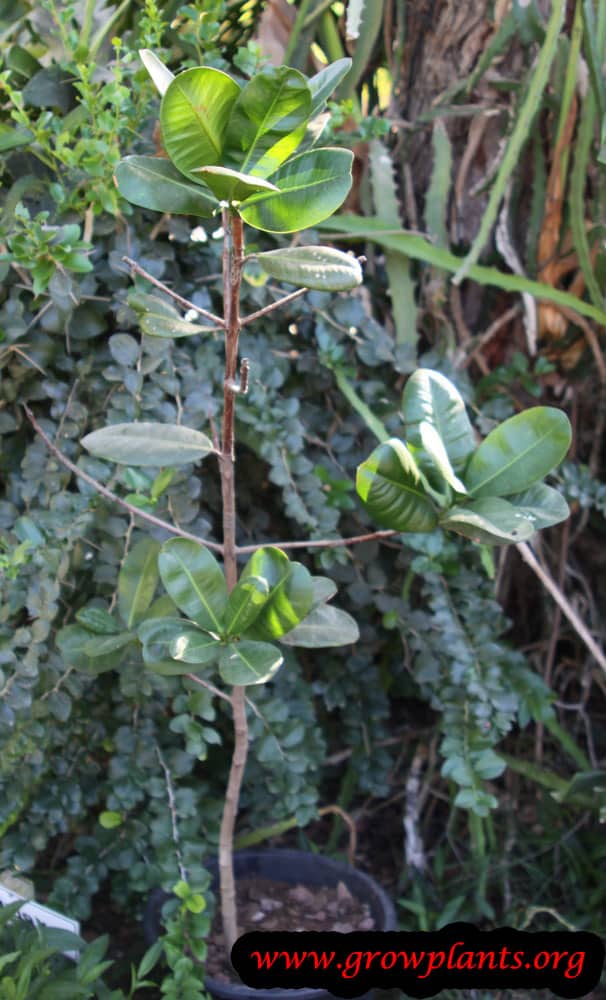
- Growth Habit & Form: Upright evergreen tree with a dense, rounded canopy of glossy foliage.
- Lifespan & Maturity: Long-lived tree; bears fruit in about 7-10 years.
Anatomy & Physical Features
- Leaves & Foliage: Glossy green, ovate to elliptic leaves.
- Flower Characteristics: White flowers with brown-yellow stamens borne on mature stems (see Bloom guide).
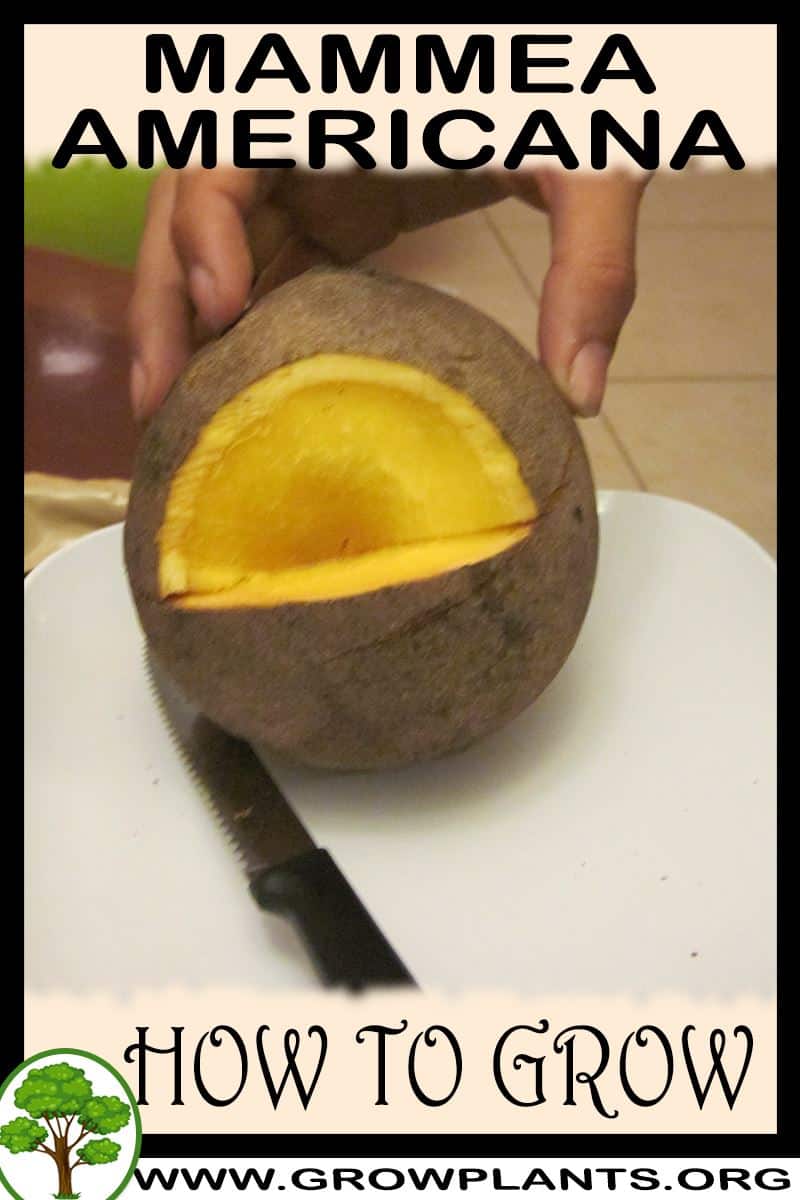
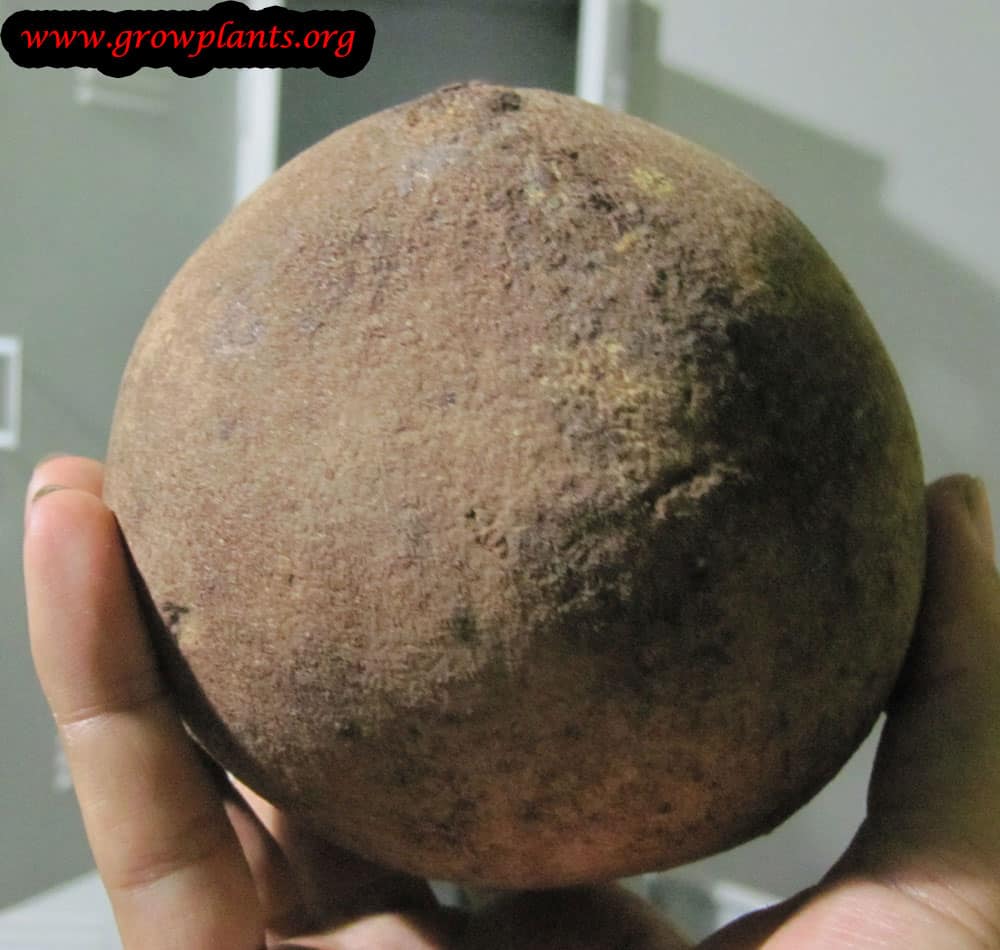
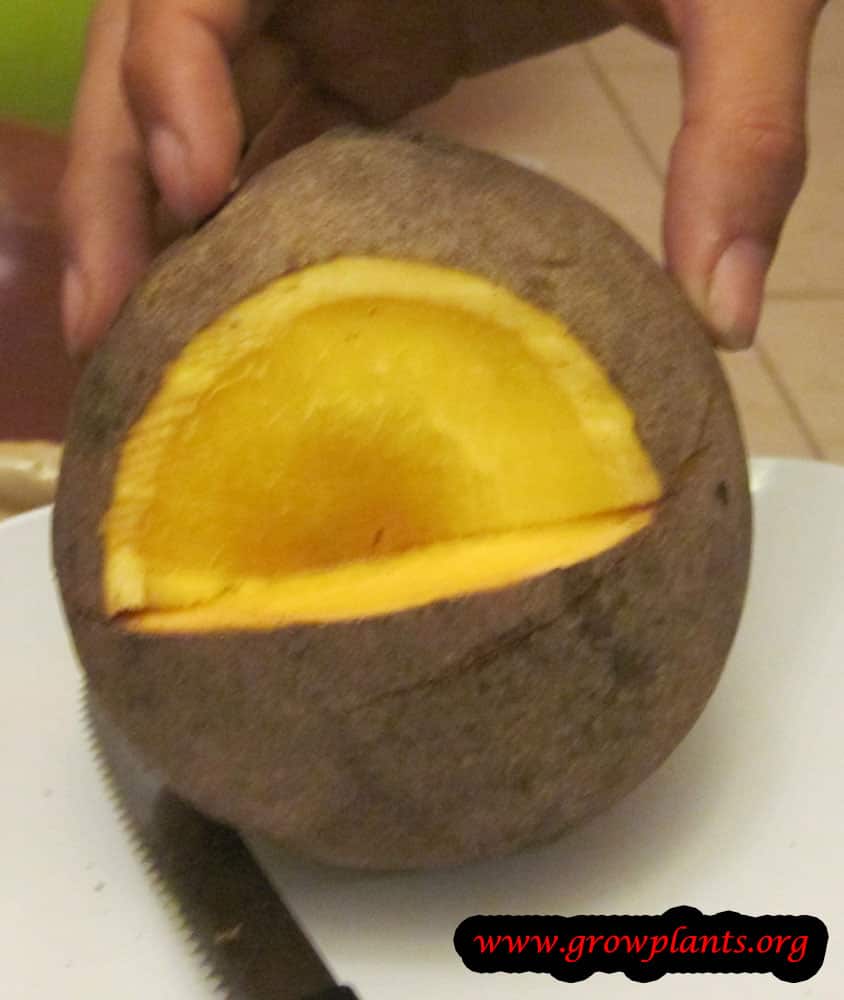
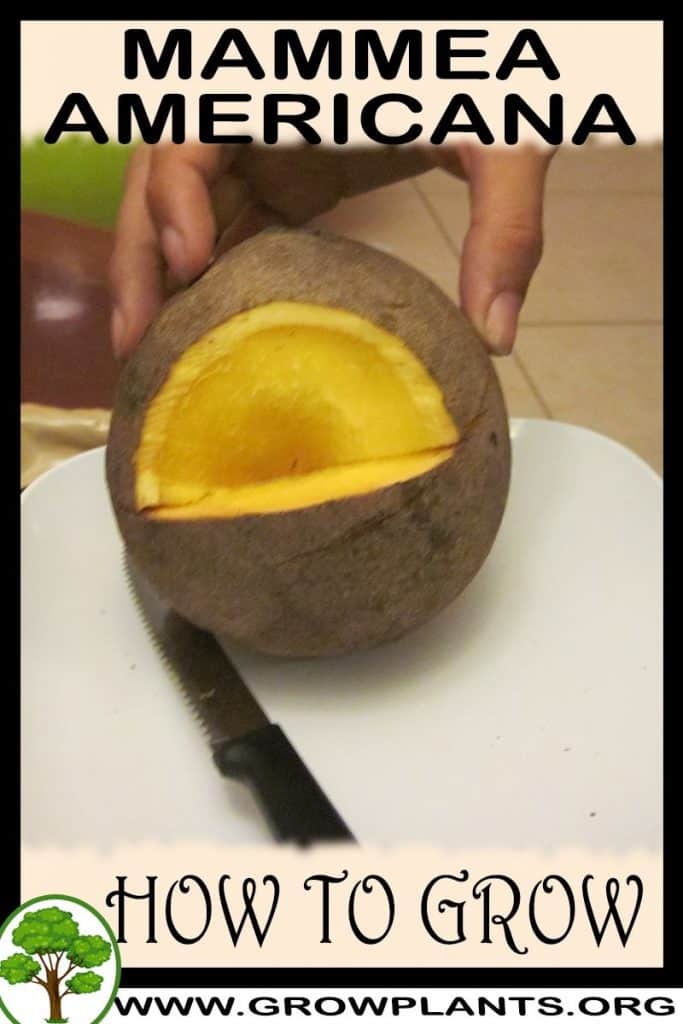
- Fruit Profile: Large round fruit with brown skin, orange flesh and a big seed; sweet, tasting of apricot and orange (see Fruit guide).
Primary Uses & Landscape Value
- Edible Uses: Ripe flesh eaten fresh, juiced or made into jams.
- Functional & Ornamental Roles: Shade and ornamental tree that attracts pollinators.
Care Guide: Planting, Soil & Watering
Overview: Mammee apple (Mammea americana) is a large, moderate-growing evergreen tropical fruit tree for warm, humid gardens (zone 10b+) in full sun to part shade. It thrives in a rich, moist, slightly acidic and well-drained soil with generous watering, and it will not tolerate frost.
Quick Care Requirements
| Requirement | Ideal Condition |
|---|---|
| Planting Season | Warm season, spring to autumn (year-round in the tropics) |
| Growth Rate | Moderate |
| Soil Type | Rich, moist, slightly acidic, well-drained |
| Water Need | Moderate to high |
Planting & Establishment
- Best Planting Season: Through the warm season, spring to autumn (year-round in true tropical climates), in a frost-free position (hardiness zone 10b+).
- How to Plant:
- Hole Preparation: Dig a hole about the depth of the root ball and twice as wide in a warm, humid, sheltered spot.
- Soil Amendments: Blend generous compost and organic matter into the backfill to build a rich, moisture-retentive yet free-draining soil.
- Planting Depth: Set the root collar level with the soil surface; do not bury the trunk, and mulch afterwards.
- Growth Speed & Expectations: A moderate grower that becomes a large shade tree; expect the first fruit about 7–10 years after planting.
Soil, Watering & Drainage Care
- Soil Mix & Drainage Needs: A deep, rich, slightly acidic soil that holds moisture but drains freely is ideal; keep it consistently moist in warmth and humidity. Too large for lasting container culture.
- Watering Schedule & Technique:
- Young / Newly Planted: Keep the soil consistently moist while the plant establishes, watering whenever the surface begins to dry.
- Established: Water deeply and regularly; don’t let the root zone dry out for long, especially in heat or while carrying fruit.
- Seasonal Adjustments: Reduce watering in winter and increase noticeably through summer heat and fruit set.
Climate, Light & Hardiness
Mammee apple is a tropical, subtropical, and mediterranean fruit and shade tree that needs warm, humid, largely frost-free conditions. It grows in full sun to half shade and does not tolerate cold below roughly 5°C (41°F).
Quick Climate Specifications
| Climate Zones | Tropical, subtropical, Mediterranean |
|---|---|
| USDA Hardiness Zones | Approximately 10b and warmer |
| Approx. Survival Minimum | Around 5°C (41°F) |
| Frost Tolerance | None |
| Light Conditions | Full Sun to Half Shade |
Sunlight & Light Exposure
Optimal Light Setup
Full sun to half shade suits this tree.
Temperature Extremes & Hardiness
USDA Hardiness & Regional Limits
Grown outdoors from roughly USDA zone 10b upward, requiring largely frost-free conditions.
Frost Sensitivity
Site data indicates temperatures should stay above about 5°C (41°F); colder conditions risk chilling injury even without frost, and true frost is likely to be damaging or fatal.
Wind, Humidity & Microclimate
Humidity Preferences
Prefers the consistently humid conditions typical of tropical and subtropical climates.
Growing in Pots, Balconies & Indoors
Mamey apple (Mammea americana) is a large tree, 10-20 m (30-60 ft), and the grower says it is neither a houseplant nor a container plant. Grow it in the ground; a pot only suits a young tree briefly.
Quick Details
- Container Size: Not suited to pots; a large pot only while young
- Indoor Suitability: Not a houseplant and not a container tree – too large
- Best Spot: Full sun to light shade
- Soil & Drainage: Aerated, organic-rich mix that drains freely
- Watering in Pots: Keep the mix consistently moist and water freely in warm weather – pots dry fast; make sure drainage is sharp so roots never sit wet.
Indoors & On the Windowsill
- Houseplant limits: No – far too large and light-hungry for indoor life.
- Windowsill growing: Not possible; this is a full-sized tree.
- Overwintering: A young potted tree could be sheltered frost-free, but it will soon outgrow any pot.
On a Balcony or Patio
- Only while young: A young tree can stand on a patio in a large pot for a season; plan to plant it out.
Choosing the Pot, Soil & Long-Term Care
- Pot & drainage: A deep pot with strong drainage holes; skip a standing-water saucer to avoid root rot. Terracotta breathes and dries faster, while glazed or plastic hold moisture longer.
- Potting mix: Well-aerated, organic-rich mix – peat or coir with perlite and a little organic matter; it must drain freely.
- Feeding: Potted plants use up their food faster because nutrients leach out with each watering, so feed a little more often than plants in open ground.
- Moving on: Refresh part of the mix and pot up every couple of years; for established plants, lightly prune the root ball and top growth when you repot. It will outgrow container life within a few years.
Fertilizing & Feeding
A large, long-lived tropical fruit tree that benefits from steady, standard fruit-tree feeding, especially since grafted trees are grown specifically for improved fruit quality.
Quick Fertilizing Specs
| Feeding Level | Moderate – a well-established tropical fruit tree feeding routine suits it. |
|---|---|
| young_feeding | A nitrogen-forward complete fertilizer while the tree builds its framework, before bearing. |
| mature_feeding | A balanced fertilizer with potassium and zinc attention once the tree is flowering and fruiting. |
| Main Nutrient Priority | Balanced feeding shifting toward potassium at fruiting, with zinc and boron support for reproductive growth. |
| Best Feeding Period | The warm, humid active growing season. |
| Organic Options | Compost or well-rotted organic matter worked into rich, consistently moist soil. |
| Micronutrients | Iron, manganese, and zinc are worth covering with a complete tropical fruit-tree fertilizer. |
| Soil pH | Prefers rich soil on the slightly acidic side, kept consistently moist. |
| Reduce/Stop Feeding | Ease off feeding as growth slows outside the warm growing season. |
Feeding by Growth Stage
Newly Planted Tree
Establish a young mammee apple’s roots in rich, consistently moist soil.
| Nutrient direction | Keep feeding light and balanced while the root system establishes. |
|---|---|
| Timing | The first growing season after planting, once new growth resumes. |
| Frequency | A few light feedings spread across the active growing season is enough at this stage. |
| Fertilizer types | A balanced, complete fertilizer for young trees, Compost worked into rich, moist soil |
| Precautions | Keep this warmth-loving tree protected from cold and drying winds while it establishes. |
Young, Non-Bearing Tree
Build a strong canopy and root system on this large, long-lived tree before it reaches bearing age.
| Nutrient direction | Favor a nitrogen-forward, complete fertilizer to support steady vegetative growth. |
|---|---|
| Timing | Through the tree’s active growing seasons, before it reaches bearing age, which for this species can take some years. |
| Frequency | Regular light feedings during warm-season growth flushes. |
| Fertilizer types | A nitrogen-forward complete fertilizer for young trees, Composted organic matter worked into rich soil |
| Routine trace nutrients | iron, manganese, zinc |
| Precautions | Grafted trees fruit sooner and with better-quality fruit than seedlings – feeding needs are the same either way. |
Established, Approaching Fruiting
Shift the tree onto balanced feeding as it matures toward flowering and its first fruit set.
| Nutrient direction | Move to a balanced, complete fertilizer rather than a heavily nitrogen-leaning one. |
|---|---|
| Timing | As the tree matures, in the growing seasons leading up to its first bloom. |
| Frequency | A modest, evenly spaced feeding routine through the growing season. |
| Fertilizer types | A balanced, complete fruit-tree fertilizer, Mulch renewed around, not against, the trunk |
| Routine trace nutrients | iron, manganese, zinc |
| Precautions | Keep soil consistently moist and rich; this tree does not do well in poor, dry conditions. |
Mature, Fruit-Bearing Tree
Support flowering and the development of the large, sweet fruit this tree is grown for.
| Nutrient direction | Keep a balanced feeding approach with potassium and zinc support as fruit develops. |
|---|---|
| Timing | Around the tree’s bloom window, continuing through its fruit-development period. |
| Frequency | A steady, moderate feeding routine through the growing season. |
| Fertilizer types | A balanced, complete fruit-tree fertilizer with potassium emphasis, Organic mulch to sustain soil fertility and moisture |
| Routine trace nutrients | iron, manganese, zinc |
| Precautions | Avoid heavy nitrogen at bloom time, which can favor leafy growth over flowering and fruit set. |
Nutrient Deficiency Signs & Corrections
New leaves turn yellow between the veins while the veins stay green.
| Possible causes | High soil pH limiting iron availability, Waterlogged or compacted soil restricting root uptake, A genuine iron shortfall in poor soil |
|---|---|
| Appears first on | the newest leaves |
| What to check | Soil pH if testable, Drainage around the root zone despite this tree’s need for consistent moisture, Whether older leaves stay green while new ones yellow |
| Possible correction | Improve drainage and moisture balance first; if pH is elevated, correct it gradually and consider a chelated iron product per its label. |
Small, narrow new leaves clustered in a rosette pattern at branch tips.
| Possible causes | Zinc lockout in high-pH soil, Sandy or nutrient-poor soil with low natural zinc, Root stress limiting overall nutrient uptake |
|---|---|
| Appears first on | new growth at branch tips |
| What to check | Leaf size and spacing on new growth compared with older growth, Soil pH if testable, Overall vigor and growth rate |
| Possible correction | Correct with a chelated zinc product per its label alongside a complete, balanced fertilizer program. |
Scorching or browning along the margins of older leaves during fruit development.
| Possible causes | Potassium depletion during fruiting, Drought stress reducing nutrient movement, Salt buildup interfering with potassium uptake |
|---|---|
| Appears first on | older leaves, at the margins |
| What to check | Whether scorch coincides with fruit development, Watering consistency through the growing season, Soil salinity if irrigated with hard water |
| Possible correction | Feed with a balanced, potassium-inclusive fertilizer and keep soil moisture consistent. |
Pruning, Training & Seasonal Maintenance
Mammee apple is a large, slow-maturing evergreen tree (10–20m / 30–60ft) that tolerates only light, mostly cosmetic pruning. Its flowers form directly on mature stems rather than on new shoots, so aggressive cutting removes future flowering wood; combined with a long 7–10 year juvenile period before first fruit, structural work should stay conservative. Pruning can be done in most months, but the safest window is right after harvest, and the main objective is shaping and height control rather than renewal.
Quick Pruning & Maintenance Specs
| Pruning Tolerance | Low–Moderate |
| Primary Pruning Window | Post-harvest (summer–autumn) |
| Typical Frequency | Once a year or less, light touch |
| Main Objective | Structure and height control, not renewal |
| Young Plant Priority | Establish one dominant leader; remove competing leaders |
| Mature Plant Priority | Remove dead/crossing wood; manage height/spread |
| Best Tool Type | Bypass secateurs and loppers; saw and pole pruner as the tree matures |
| Avoid Heavy Pruning During | Flowering (spring/summer) and fruit development (summer/autumn) |
Pruning by Plant Age & Size
Newly Established
Remove only damaged or broken growth from transplanting. Do not shape or head back a young tree while it is still establishing its root system.
Young / Formative
Train to a central leader: select one strong upright stem, remove competing co-dominant leaders, and space out scaffold branches. Because flowering happens on mature wood rather than new tips, formative cuts should prioritize a sound framework over stimulating fresh shoots.
Mature / Established
Limit work to removing dead, damaged, or crossing wood and correcting height/spread. Avoid forcing a flush of vigorous new wood that would come at the expense of the tree’s long fruit-set cycle.
Seasonal Pruning Schedule
Post-Harvest
Objective: correct structure while the tree carries no flowers or immature fruit. Remove: crossing/rubbing branches, deadwood, excess height. Do not remove: healthy mature wood that will carry the next flowering flush. Expected response: modest, non-disruptive regrowth. Flowering/fruiting impact: minimal if kept light.
Ongoing Sanitary
Objective: remove storm damage or dieback as it appears, any time of year. Remove: dead, diseased, or broken wood. Do not remove: living mature branches. Impact: none.
Flowering & Fruiting Wood
Mammee apple flowers on mature stems, not on the current season’s new growth. Heading back young shoots to tidy the tree therefore removes tomorrow’s flowering sites, and since the species already takes 7–10 years to bear its first fruit, aggressive cuts compound that delay. Keep structural corrections light and spread across seasons rather than removed in one heavy session.
Structural Pruning & Training
Maintain one central leader with evenly spaced scaffold branches; remove crossing, rubbing, or inward-growing wood. Because this tree can reach 10–20m, begin height management while the tree is young – reducing a large mature specimen later is a far bigger, riskier job. Canopy thinning for airflow is not a priority; the species tolerates full sun to half shade regardless of density.
Special Growth to Remove
Rootstock suckers (grafted trees): this species is typically grafted for fruit quality, so remove any growth arising below the graft union. Watersprouts: remove vigorous, vertical interior shoots that shade the canopy and rarely flower in their first seasons.
Tools
- Bypass secateurs – small deadwood and thin shoots on young trees.
- Loppers – 2–4cm structural branches during formative shaping.
- Pruning saw – larger structural limbs on established trees.
- Pole pruner – height control once the tree grows beyond reach.
Tool Hygiene & Disease Risk
Routine: clean, sharp tools are sufficient. No specific transmissible pathogen is documented for this species in the source data, so blanket disinfection between every cut is not warranted.
Cut Placement & Technique
Favor thinning cuts over heading cuts to preserve mature flowering wood. Cut just outside the branch collar, avoid flush cuts and stubs, and stage-remove large limbs in sections to prevent bark tearing as the tree grows large.
Heavy Pruning & Rejuvenation
Not recommended. Grower guidance describes pruning as strictly for design, and the long juvenile period means an aggressive rejuvenation cut would set fruiting back substantially. If a mature tree must be reduced significantly, spread the work over two to three seasons instead of removing large amounts of wood at once.
Post-Pruning Care
No extra feeding is needed after light structural cuts. Keep the root zone consistently moist, since this species prefers rich, moist soil, and pay attention to bark that is newly exposed to sun after any canopy opening. Monitor larger cuts for dieback.
Common Pruning Mistakes
Heading back young trees to force a bushier shape, which removes future mature-wood flowering sites; delaying height management until the tree is very large, forcing stressful cuts later; accidentally cutting desired scion growth while removing rootstock suckers.
When NOT to Prune
Avoid pruning during flowering (spring/summer) or while fruit is developing and ripening (summer/autumn), since this removes or stresses the current crop. Avoid major structural work on newly transplanted trees until they are established.
Recommended Tools (by task)
- bypass_secateurs – young tree, thin deadwood/crossing shoots: clean small cuts without crushing green wood.
- loppers – formative shaping, 2–4cm branches: reach and leverage for structural scaffold work.
- pruning_saw – mature tree, large structural limbs: needed once branches exceed lopper capacity.
- pole_pruner – mature tree, height control: this species reaches 10–20m, putting upper growth out of reach.
Pruning Troubleshooting
| Problem | Possible Cause | What to Check | Corrective Action |
| No flowers/fruit after years of growth | Still within the normal 7–10 year juvenile period, or over-pruning removed mature wood | Tree age; recent pruning history | Be patient with young trees; on older non-fruiting trees, stop heading cuts and let mature wood accumulate |
| Reduced fruit set after pruning | Structural cuts removed flowering-age wood | Whether cuts targeted current-season growth vs. older stems | Limit future cuts to dead/crossing wood only |
| Dieback after a large cut | Flush cut or oversized single cut on a large limb | Cut placement relative to the branch collar; wound size | Stage-remove large limbs in sections, cut outside the collar, avoid flush cuts |
Propagation Guide
Mammea americana can be started from seed, but the site’s own data recommends grafting or other vegetative reproduction in order to get better fruit, since seedling trees are more variable. Seed germination in this species is generally slow, and the large seed does not store well once removed from the fruit, so overall difficulty is Moderate by seed and higher for grafting, which requires more skill and material.
Quick Propagation Specs
| Best Propagation Method | Seed (for a straightforward new plant) |
| Alternative Methods | Grafting (recommended by the site for better fruit quality) |
| Propagation Difficulty | Moderate |
| Seed True-to-Type | Variable – fruit quality from seedlings is not guaranteed, which is why the site recommends grafting or vegetative reproduction for better fruit |
| Vegetative True-to-Type | Yes |
| Best Propagation Season | Spring, summer, or autumn; also possible in winter in fully tropical climates |
Growing from Seed
Seed Handling & Viability
The site does not give specific storage guidance for this species’ seed. As general caution, large tropical fruit-tree seeds of this kind often lose viability quickly once dried out, so sowing fresh, soon after removing the seed from the ripe fruit, is the safer approach rather than storing it.
Germination Time
Not specified by the site. As a general guide for this type of large tropical seed, germination is often slow, sometimes taking several weeks to a few months, so patience is needed before assuming a sowing has failed.
Seedling Care
The plant is described as needing rich, slightly acid, consistently moist soil with humidity and temperatures above 5°C (41°F), conditions that are also a reasonable basis for establishing young seedlings.
Grafting & Budding
Why Grafting Is Used
The site states that grafting or vegetative reproduction is recommended in order to get better fruit from this tree, since seedling trees can be more variable in fruit quality.
Rootstock
Not specified by the site; as general practice for tropical fruit trees of this kind, a seedling of the same species is typically used as rootstock.
Scion Selection
Scion wood should be taken from a tree already known to produce good-quality fruit.
Bloom & Flower Guide
Quick Details
- Bloom Season: Spring to summer
- Flower Appearance: White flowers with a brown-yellow center of stamens, borne on the mature stems
- Edibility: The flower is not eaten; the mammee apple is grown for its edible fruit and as an ornamental, pollinator-friendly shade tree
Detailed Blooming Overview
Mammea americana flowers on its older, mature stems rather than the newest growth. The white blossoms draw pollinators and are followed by the large mammee apple. Trees may carry male, female, or bisexual flowers, so a compatible tree nearby helps a good crop set.
Flower Characteristics
- White flowers with a brown-yellow inner cluster of stamens.
- Borne on mature stems and older wood.
- Trees may be male, female, or bisexual.
Bloom Care & Thinning
- Pollination: By insects such as bees; because trees can be single-sexed, a nearby pollen source improves fruit set.
Fruit & Uses
Safety note first: only the ripe orange flesh of mammee apple is eaten – the thick brown-orange rind and the large seed inside are bitter and are not meant to be eaten, so both must be fully cut away and discarded before the flesh is eaten raw or processed. Once cleaned, the flesh (tasting somewhere between orange and apricot) is eaten fresh or made into juice and jams.
Quick Edible Specs
| Edible Parts | Fruit (flesh only) |
|---|---|
| Main Use(s) | Culinary – fresh eating, juice, jams |
| Eaten Raw or Cooked | Raw (also cooked into juice/jams) |
| Preparation Required | Peel – remove all rind, and remove and discard the seed before eating |
| Harvest Season | Summer / autumn |
| Time to First Harvest | Trees take a notably long time to reach bearing age (see Propagation for detail) |
| Storage | Not specified on site; use fresh once ripe and peeled |
| Safety/Toxicity Caveat | Rind and seed are bitter/not food-safe and must not be eaten – flesh only |
Fruit
The fruit has a brown, fairly thick rind and bright orange flesh inside, with one or more large brown seeds. When ripe, the flesh is cut away from the rind and separated from the seed, then eaten raw for a flavor reminiscent of orange with apricot, or juiced and made into jams. Birds are the main pest competing for ripe fruit; no special work is needed to grow the fruit itself beyond normal care.
Preparation, Uses & Safety
Preparation is simple but important: peel away the rind completely and discard the seed – do not eat the rind or seed, as these parts are bitter and are not food-safe (the seed has traditionally been used as an insect/parasite treatment rather than eaten). Only the cleaned flesh is used for fresh eating, juice or jams.
Pests, Diseases & Troubleshooting
Overview: The mamey (Mammea americana) is a robust, largely trouble-free tropical fruit tree whose main pressures come from sap-sucking scale, mealybugs and aphids with their attendant sooty mould, and from fruit flies, birds and mammals raiding the ripening crop. Management centres on tree hygiene, encouraging natural predators, and protecting the fruit as it matures rather than routine spraying.
Quick Troubleshooting Overview
| Issue / Pest | Main Symptom | Primary Solution |
|---|---|---|
| Scale & mealybugs | Bumps or white fluff on twigs and leaf undersides; sticky honeydew and black sooty mould | Horticultural oil, prune infested twigs, control ants, protect predators |
| Aphids | Clusters on new flush; curled tips and honeydew | Hose off, insecticidal soap or neem; support beneficials |
| Fruit flies | Stung, prematurely dropping fruit with maggots inside | Bag fruit, sanitation, protein-bait/traps |
| Birds & mammals | Pecked or stripped ripening fruit | Bagging, netting, timely harvest |
| Anthracnose | Dark sunken spots on leaves and fruit in wet weather | Airflow, sanitation, copper fungicide if severe |
| Root rot | Wilting and dieback in waterlogged soil | Improve drainage, avoid overwatering |
Common Pests & Management
- Scale insects (Coccidae / Diaspididae):
- Symptoms: Brown, grey or waxy bumps encrust twigs, branches and leaf undersides; soft scale drip honeydew that blackens with sooty mould, and heavy colonies weaken shoots and reduce vigour.
- Prevention & Control: Prune out heavily infested twigs and spray horticultural oil to smother scale, repeating in a fortnight. Control the ants that farm and protect them, and conserve ladybirds and parasitic wasps by avoiding harsh broad-spectrum sprays.
- Mealybugs (Pseudococcus / Planococcus spp.):
- Symptoms: White cottony masses gather at shoot tips, leaf axils and on fruit stalks, with honeydew and sooty mould; feeding stunts new growth.
- Prevention & Control: Dislodge with a water jet, spot-treat with alcohol, and apply horticultural oil or insecticidal soap; manage ants and encourage predators.
- Aphids (Aphididae):
- Symptoms: Soft green or dark clusters on tender new growth and flower flush, causing curling and distortion plus sticky honeydew that attracts ants.
- Prevention & Control: Blast off with water and use insecticidal soap or neem if needed; natural enemies usually keep them in check, so spare beneficials.
- Fruit flies (Anastrepha spp. / Ceratitis capitata):
- Symptoms: Females sting maturing fruit; larvae tunnel the flesh, causing premature drop and internal breakdown — the key threat to the crop.
- Prevention & Control: Bag developing fruit, collect and destroy fallen fruit promptly to break the cycle, and hang protein-bait or lure traps; area-wide sanitation is the most effective measure.
Diseases & Fungal Issues
- Anthracnose (Colletotrichum spp.):
- Symptoms: Dark, sunken spots on leaves, flowers and fruit that enlarge in warm, wet, humid weather and can rot developing or stored fruit.
- Treatment & Management: Prune for airflow, remove fallen infected debris, and avoid overhead wetting; a copper fungicide applied protectively during prolonged wet spells limits spread.
- Algal leaf spot (Cephaleuros virescens):
- Symptoms: Raised orange-brown to grey-green velvety spots on leaves in humid conditions, mostly cosmetic but disfiguring on stressed trees.
- Treatment & Management: Improve air circulation and tree vigour; prune crowded growth and, where troublesome, a copper spray suppresses the alga.
- Root & collar rot (Phytophthora / Pythium):
- Symptoms: Wilting, canopy thinning and dieback with dark, decayed roots in heavy or waterlogged soil.
- Treatment & Management: Plant in deep, free-draining soil, keep the trunk base dry, and avoid overwatering; improve drainage rather than relying on chemicals.
Growing Difficulties & Abiotic Problems
- Fruit drop:
- Cause & Symptoms: Premature shedding of young fruit from irregular watering, heat stress or poor pollination.
- Correction Strategy: Keep soil moisture even, mulch to buffer the root zone, and maintain steady care through fruit set.
- Sunburn / heat stress:
- Cause & Symptoms: Bleached, scorched bark or fruit on exposed limbs after sudden heat or over-pruning.
- Correction Strategy: Avoid heavy exposure of previously shaded wood, shade young trees, and whitewash exposed trunks in intense sun.
- Nutrient deficiency:
- Cause & Symptoms: Generalised yellowing or poor growth on sandy, leached tropical soils.
- Correction Strategy: Feed with a balanced fruit-tree fertiliser plus minor elements and mulch organically to build fertility.
What Helps – Products & Tools
Care is mostly cultural — tree hygiene, ant control, drainage and fruit protection. Helpful products are horticultural oil and insecticidal soap for scale, mealybugs and aphids, neem oil for aphids, fruit-fly bait/traps and fruit bags or netting for the crop, and a copper fungicide for anthracnose and algal leaf spot.