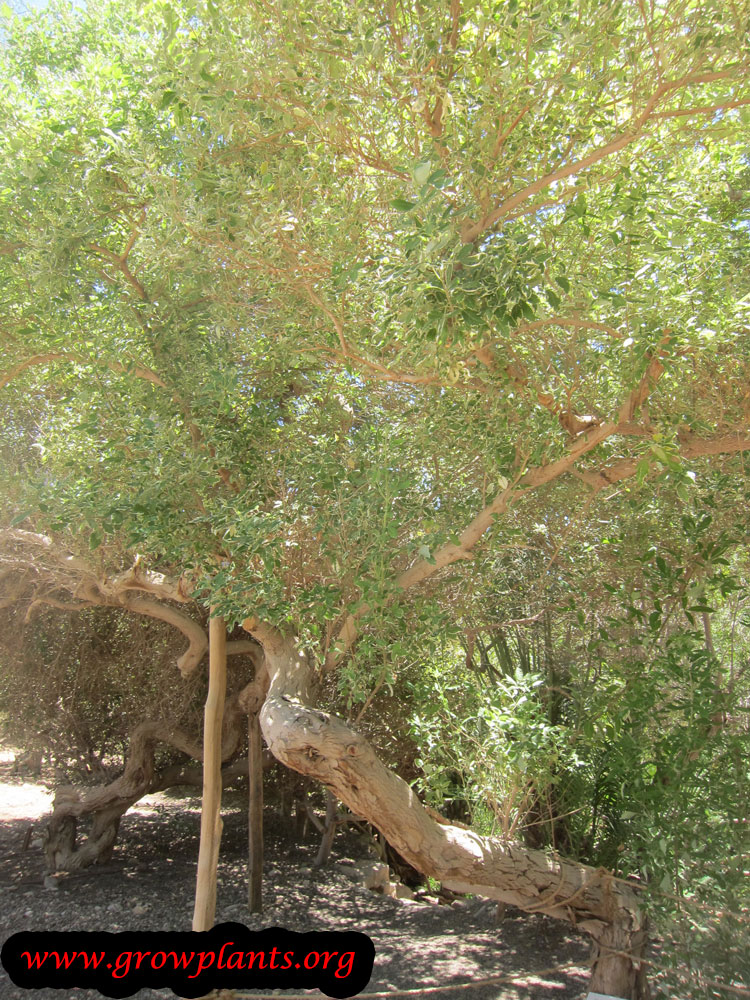
Plant Profile & Key Characteristics
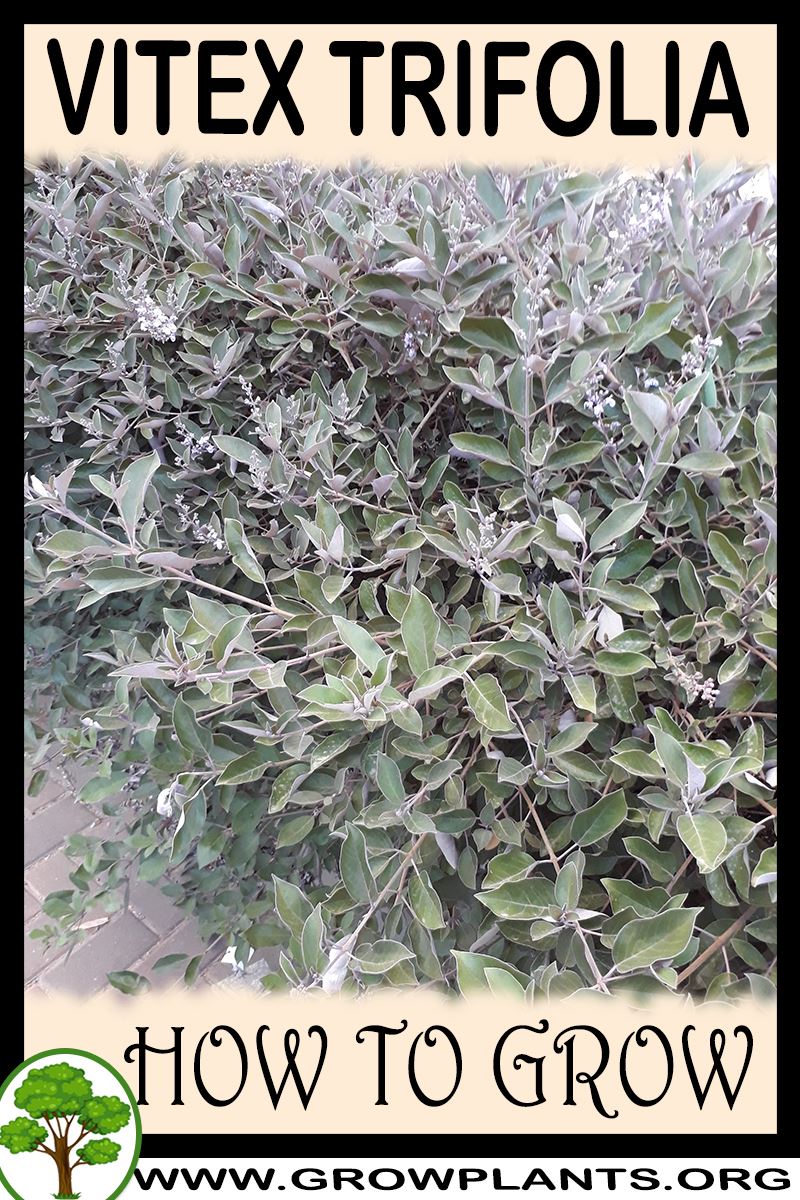
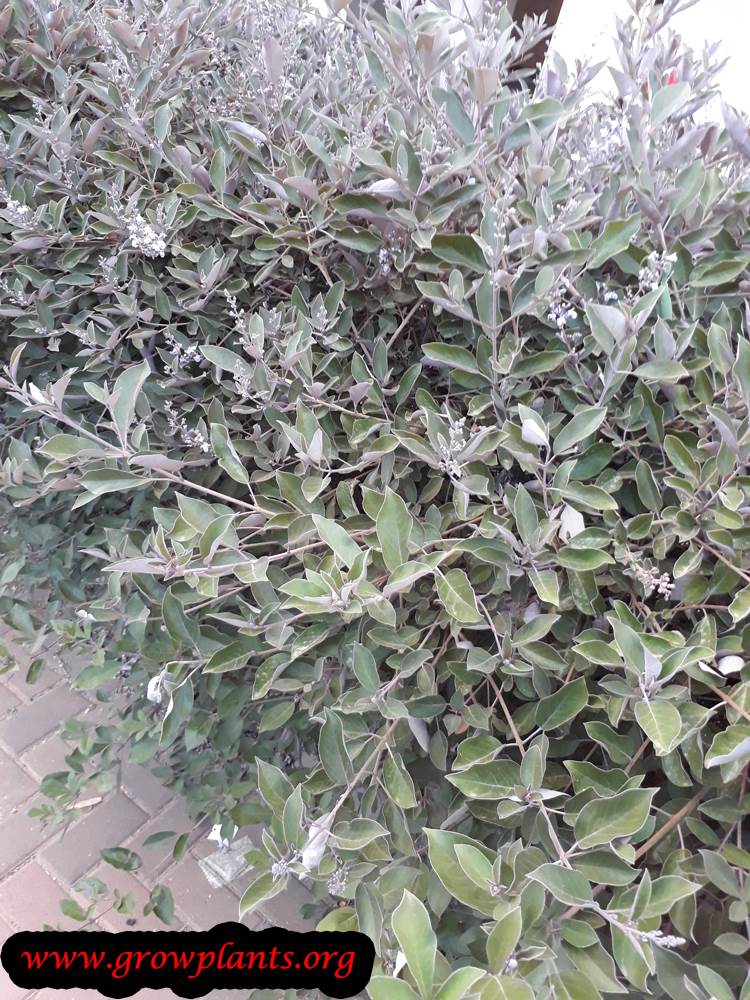
Overview: Vitex trifolia (simpleleaf chastetree) is a perennial shrub to small tree 2–4 m tall, evergreen to deciduous depending on climate. It is grown as an aromatic ornamental hedge and as a medicinal plant.
Quick Specifications
| Specification | Attribute |
|---|---|
| Plant Type / Life Cycle | Perennial |
| Foliage Type | Evergreen to semi-deciduous (climate dependent) |
| Mature Size | 2–4 m (6–12 ft) tall |
| Growth Rate | Moderate |
| Hardiness | USDA zone 10+ |
Growth Form & Structure
- Height & Spread: Large shrub or small tree 2–4 m tall in the ground; can also be kept in large containers.
- Growth Habit & Form: Multi-stemmed shrub to small tree, readily pruned and shaped into a hedge.
- Lifespan & Maturity: Moderate-growing woody perennial.
Anatomy & Physical Features
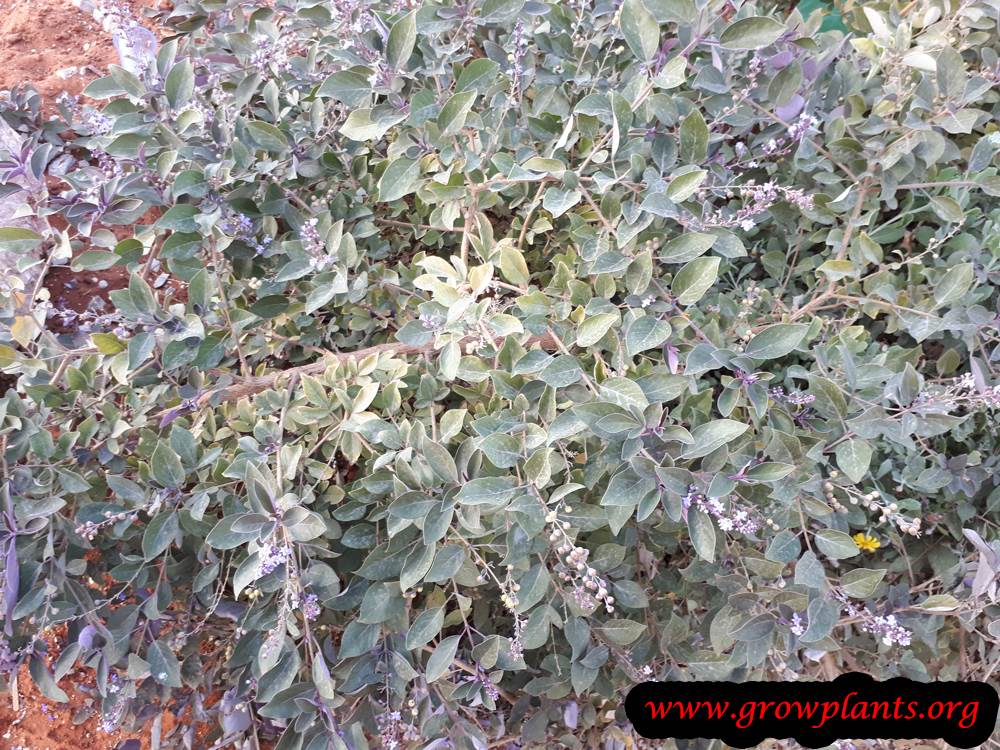
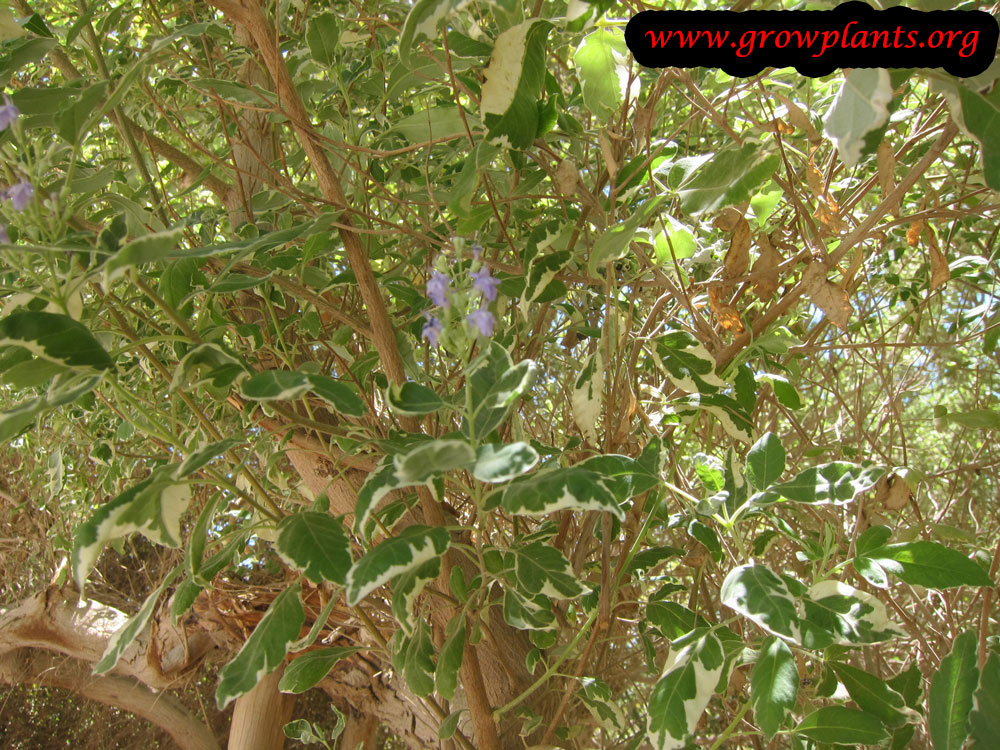
- Leaves & Foliage: Aromatic ovate green leaves, sometimes variegated with white or purple undersides.
- Flower Characteristics: Purple two-lipped flowers borne in clusters.
Primary Uses & Landscape Value
- Functional & Ornamental Roles: Aromatic ornamental and hedge shrub, also valued as a traditional medicinal plant.
Care Guide: Planting, Soil & Watering
Overview: Vitex trifolia (simpleleaf chastetree) is an evergreen-to-deciduous shrub or small tree (zone 10+) for full sun to part shade that tolerates no more than light frost. It grows in well-drained soil and likes moderate-to-generous water in the warm season.
Quick Care Requirements
| Requirement | Ideal Condition |
|---|---|
| Planting Season | In the warm season – spring through autumn |
| Growth Rate | Moderate |
| Soil Type | Well-draining |
| Water Need | Moderate to High |
Planting & Establishment
- Best Planting Season: Plant in the warm season, spring through autumn, in a frost-protected spot.
- How to Plant:
- Hole Preparation: Dig a hole a little wider than the root ball in loosened, free-draining soil.
- Soil Amendments: Work in compost to improve moisture retention while keeping drainage sharp.
- Planting Depth: Set the root ball level with the surface and keep the stem base at its original depth.
- Growth Speed & Expectations: A moderate grower reaching 2-4 m (6-12 ft), good as an informal hedge.
Soil, Watering & Drainage Care
- Soil Mix & Drainage Needs: Give well-drained soil; it rots in cold, wet ground, so ensure water drains away, especially in winter.
- Watering Schedule & Technique:
- Young / Newly Planted: Keep evenly moist while establishing.
- Established: Water moderately to generously through the warm season, letting the surface dry slightly between waterings.
- Seasonal Adjustments: More in summer heat, much less in cool weather.
Climate, Light & Hardiness
Simpleleaf chastetree is a tropical, subtropical, and mediterranean-climate hedge shrub to small tree. It grows in full sun to half shade and tolerates no more than light frost.
Quick Climate Specifications
| Climate Zones | Tropics, subtropics, Mediterranean |
|---|---|
| USDA Hardiness Zones | Approximately 10 and warmer |
| Frost Tolerance | Low |
| Light Conditions | Full Sun to Half Shade |
Sunlight & Light Exposure
Optimal Light Setup
Full sun to half shade suits both the shrub and small-tree forms.
Temperature Extremes & Hardiness
USDA Hardiness & Regional Limits
Grown from roughly USDA zone 10 upward, consistent with its tropical-to-mediterranean origin.
Frost Sensitivity
The site data specifies it tolerates no more than light frost; anything beyond a light, brief frost is likely to cause damage.
Growing in Pots, Balconies & Indoors
Vitex trifolia is a 2-4 m (6-12 ft) sun-loving shrub. The grower does not grow it as a houseplant, but it does well in a large container – making it a fine patio or balcony shrub rather than an indoor plant.
Quick Details
- Container Size: A large, deep container (grower didn’t state a size); bigger is better for a shrub this size
- Indoor Suitability: Not a houseplant; a patio or balcony container shrub
- Best Spot: Full sun to light shade
- Soil & Drainage: Aerated, organic-rich mix that drains freely
- Watering in Pots: Keep the mix consistently moist and water freely in warm weather – pots dry fast; make sure drainage is sharp so roots never sit wet.
Indoors & On the Windowsill
- Houseplant limits: Not a houseplant – it gets too large and needs strong sun that indoor light can’t match.
- Windowsill growing: Too big for a windowsill; keep it outdoors in a container or in the ground.
- Overwintering: In cold climates keep it potted so it can be moved to a bright, frost-free spot for winter.
On a Balcony or Patio
- Light & wind: Give it the sunniest spot on the balcony or patio. Walls and paving reflect heat and pots dry quickly, so check moisture often; shelter and stake exposed plants against wind.
Choosing the Pot, Soil & Long-Term Care
- Pot & drainage: A deep pot with strong drainage holes; skip a standing-water saucer to avoid root rot. Terracotta breathes and dries faster, while glazed or plastic hold moisture longer.
- Potting mix: Well-aerated, organic-rich mix – peat or coir with perlite and a little organic matter; it must drain freely.
- Feeding: Potted plants use up their food faster because nutrients leach out with each watering, so feed a little more often than plants in open ground.
- Repotting: Refresh part of the mix and pot up every couple of years; for established plants, lightly prune the root ball and top growth when you repot.
Fertilizing & Feeding
Vitex trifolia is grown as a flowering hedge or shrub and responds well to steady, balanced feeding through the growing season, tapering off where winter cold or light frost slows growth.
Quick Fertilizing Specs
| Feeding Level | Moderate; a hedge and flowering shrub that benefits from steady feeding while actively growing. |
|---|---|
| Main Nutrient Priority | Balanced nutrition to support both the ornamental foliage and the clustered purple flowers. |
| Best Feeding Period | Through the spring and summer growth and bloom period. |
| Organic Options | Compost or aged manure worked into well-drained soil suits this plant well. |
| Reduce/Stop Feeding | Ease off feeding as growth slows going into autumn and winter, especially where light frost is expected. |
Feeding by Growth Stage
Establishment
Help a newly planted Vitex trifolia root into well-drained soil and begin filling out as a hedge or specimen shrub.
| Nutrient direction | Light, balanced nutrition to support root establishment and early leaf growth. |
|---|---|
| Timing | In the weeks after planting. |
| Frequency | A light feeding at planting is usually enough to help this plant establish. |
| Fertilizer types | A balanced complete fertilizer used lightly, Compost worked into well-drained soil |
| Precautions | Avoid heavy feeding right at planting, which can stress fresh roots. |
Spring and summer growth and bloom
Support steady shoot growth, the ovate green (sometimes variegated) leaves and the purple clustered flowers this plant produces in spring and summer.
| Nutrient direction | Steady, balanced nutrition through the main growing season. |
|---|---|
| Timing | Through the spring and summer growth and flowering period. |
| Frequency | Regular light-to-moderate feedings through the growing season support steady growth and flowering. |
| Fertilizer types | A balanced complete fertilizer, Compost or other organic matter worked around the root zone |
| Precautions | Where grown as a clipped hedge, feed after pruning to support fresh regrowth rather than heavily before it. |
Cool-season rest
Let growth slow through the cooler months, when this plant may lose some leaves in areas that get light frost.
| Nutrient direction | None – withhold fertilizer while growth is not active. |
|---|---|
| Timing | Through the cooler part of the year in climates where growth slows. |
| Frequency | No feeding at this stage. |
| Fertilizer types | No feeding – resume feeding once active growth clearly resumes in spring |
| Precautions | Do not fertilize while the plant is dormant or has dropped leaves from cold; wait for new spring growth. |
Nutrient Deficiency Signs & Corrections
New leaves emerge pale green rather than the usual deep green.
| Possible causes | A general nutrient shortage in poor soil, High soil pH reducing iron availability, Root stress from waterlogged soil |
|---|---|
| Appears first on | Newest leaves at branch tips. |
| What to check | Recent feeding history, Soil pH, Drainage |
| Possible correction | Confirm the site drains well, then give a light balanced feeding; if pale new growth with green veins persists, treat as a possible iron shortage. |
The shrub grows vigorously but produces few of its purple clustered flowers.
| Possible causes | Excess nitrogen favoring leafy growth over flowers, Pruning at the wrong time removing developing flower wood, Insufficient sun for good bud formation |
|---|---|
| Appears first on | Overall flowering across the shrub. |
| What to check | Recent nitrogen-heavy feeding, Pruning timing and severity, Sun exposure |
| Possible correction | Ease back on nitrogen, time hedge trimming to avoid removing developing flower buds, and confirm adequate sun. |
Leaf margins brown and scorch, or leaves drop outside the normal cold-season pattern.
| Possible causes | Fertilizer or soil salt build-up in the root zone, Drought stress between waterings, Cold or frost injury |
|---|---|
| Appears first on | Margins of older leaves, or scattered across the shrub. |
| What to check | Recent fertilizer application rate, Watering consistency, Recent cold snaps or frost |
| Possible correction | Water thoroughly to move excess salts through the soil, even out watering, and keep feeding at a light-to-moderate rate. |
Pruning, Training & Seasonal Maintenance
Simpleleaf chastetree is a vigorous, fast-recovering shrub grown specifically as an ornamental hedge plant, and it tolerates being sheared hard and repeatedly. Its main structural cut falls in autumn–winter, and because it flowers on new growth, shearing does not sacrifice the next season’s bloom – it simply resets the display.
Quick Pruning & Maintenance Specs
| Pruning Tolerance | High |
| Primary Pruning Window | Autumn–winter (main structural/shape cut) |
| Secondary Maintenance Window | Light shearing through the growing season to hold the hedge line |
| Typical Frequency | One to two major shears per year, plus touch-ups |
| Main Objective | Maintain hedge form and density, control size |
| Young Plant Priority | Formative shaping into the desired hedge line from early on |
| Mature Plant Priority | Regular shearing to hold density and shape, prevent a bare interior |
| Best Tool Type | Hedge shears for line maintenance, bypass secateurs for selective thinning |
| Avoid Heavy Pruning During | Peak summer heat stress; just before any rare frost at the cool edge of its range |
Pruning by Plant Age & Size
Newly Established
Light shaping only – let the root system establish before serious shearing begins.
Young / Formative
The only relevant training here is hedge-line shaping: regular tip pruning from a young age builds the dense branching a hedge needs. No central-leader or vase system applies to a plant grown for a clipped form.
Mature / Established
Maintenance shearing to hold the hedge line and shape, with occasional selective thinning cuts to keep the interior and base from thinning out.
Seasonal Pruning Schedule
| Stage | Objective | Remove | Do Not Remove | Expected Response | Flowering Impact |
| Dormant/Autumn-Winter | Main structural/shape reset | Excess growth breaking the hedge line, crossing shoots | The general hedge framework | Even regrowth and re-shaping | None – well before the spring–summer bloom flush |
| Summer Canopy Management | Hold the hedge line during active growth | New growth extending past the line | Any current flowers where a bloom flush is wanted that cycle | Tight, formal shape | Can delay a flush if timed mid-bloom |
Flowering & Fruiting Wood
Flowers form on new growth produced after shearing, so a structural cut in autumn–winter only delays, not eliminates, the next bloom flush. Since the plant is grown mainly as a hedge/foliage feature, flowering is a secondary bonus rather than the objective, so shaping for form takes priority over preserving buds.
Structural Pruning & Training
Shaping and maintaining the hedge line is the core task; any crossing or wayward shoots that break the line should be removed. Repeated surface-only shearing over years can “shell out” the hedge (green growth only on the outer surface); occasional harder renovation cuts let light back into the interior so it leafs from inside, not just the surface.
Special Growth to Remove
No suckers or watersprouts are noted for this species – the only routine removal is wayward shoots breaking the hedge line.
Container & Small-Space Pruning
Where grown in a container as a smaller clipped specimen, shape/shear on the same autumn–winter timing but keep cuts lighter and more frequent to hold a smaller scale; a root-bound container specimen needs repotting or root attention rather than heavier top pruning to control size.
Tools
Hedge shears for routine line maintenance – a genuine use case, since this species is specifically grown and used as a hedge – and bypass secateurs for selective interior thinning cuts.
Tool Hygiene & Disease Risk
Routine – the only issue noted is aphids, with no disease flagged; clean, sharp tools are sufficient.
Cut Placement & Technique
Shear to a consistent line just outside the previous cut for routine hedge maintenance; use selective hand thinning cuts for any interior renovation work to avoid an all-surface green shell.
Heavy Pruning & Rejuvenation
Tolerates a harder renovation cut back into old wood if the hedge has become leggy or bare at the base, since it resprouts readily from older wood. Best done in the autumn–winter window, with a full season of vigorous regrowth expected to rebuild the form.
Post-Pruning Care
Water in after a hard renovation cut; watch the new flush for aphids. No extra feeding is required beyond routine care.
Common Pruning Mistakes
- Shearing only the surface every time and never doing an interior thinning cut, leading to a hollow, bare-centred hedge over years.
- Shearing repeatedly through a bloom flush and never letting the hedge flower.
- Uneven shearing depth producing an uneven hedge line.
When NOT to Prune
Avoid major shearing right before any rare frost risk at the cold edge of its range, and avoid heavy cuts during extreme summer heat stress.
Recommended Tools (by task)
- hedge_shears – for routine hedge-line maintenance; a genuine fit since this plant is specifically used as a hedge.
- bypass_secateurs – for interior thinning and renewal cuts that shears cannot make cleanly.
Pruning Troubleshooting
| Problem | Possible Cause | What to Check | Corrective Action |
| Hedge bare/hollow in the centre | Years of surface-only shearing | Look inside the canopy for leaf-free interior wood | Do a hard interior renewal cut back into old wood in the autumn–winter window |
| Little or no bloom | Sheared right before or through the spring–summer flush repeatedly | Timing of the last shear versus bloom season | Shift the main shear to just after a bloom flush finishes |
| Uneven hedge line | Inconsistent shearing depth | Growth vigor across the hedge | Reshear to a level guide line |
Propagation Guide
Simpleleaf chastetree is most reliably grown on from semi-hardwood stem cuttings, which root readily and are essential for keeping variegated leaf forms true, since seedlings do not reliably reproduce variegation. Seed works well for the plain green species but is slower and can germinate unevenly. Overall propagation is Easy.
Quick Propagation Specs
| Best Propagation Method | Semi-hardwood stem cuttings |
| Alternative Methods | Seed (plain-leaved species only) |
| Propagation Difficulty | Easy |
| Seed True-to-Type | Variable – variegated-leaf selections do not come true from seed |
| Vegetative True-to-Type | Yes |
| Best Propagation Season | Spring to summer for cuttings; spring through autumn for seed, matching this plant’s planting season |
| Seed Germination Time | Several weeks, can be irregular |
| Cutting Rooting Time | Several weeks under warm, humid conditions |
| Germination Temperature | Roughly 21–27°C (70–80°F) |
| Seed Sowing Depth | Shallow, about 0.5–1cm (0.2–0.4in) |
Growing from Seed
Seed Handling & Viability
No site-specific storage data is recorded for this species.
Dormancy & Pre-Sowing Treatment
Vitex seed generally has a hard coat that can slow water uptake; lightly nicking or sanding the seed coat before sowing may help and speed germination, though this is not confirmed as required for this species.
Sowing Season
Spring.
Sowing Depth & Orientation
Sow shallowly, about 0.5–1cm (0.2–0.4in) deep.
Germination Conditions
Warm (roughly 21–27°C / 70–80°F) and consistently moist.
Germination Time
Several weeks, and can be slow or uneven.
Seedling Care
Protect young seedlings from frost, given this plant’s hardiness zone 10+ preference.
Stem Cuttings
Cutting Type
Semi-hardwood tip cuttings, about 10–15cm (4–6in) – this is also the propagation method that keeps the white or purple leaf-variegation true.
Best Timing
Spring to summer, during active growth.
Cutting Preparation
Remove the lower leaves and cut just below a node.
Rooting Setup
A well-drained propagation mix under a humidity dome or mist, in bright, indirect light.
Rooting Hormone
Optional but beneficial; it can speed rooting.
Rooting Time
Several weeks under warm, humid conditions.
Bloom & Flower Guide
Quick Details
- Bloom Season: Spring to summer
- Flower Appearance: Small purple, two-lipped flowers in branched clusters
- Edibility: Ornamental and medicinal plant – the flowers are not eaten
Detailed Blooming Overview
Vitex trifolia flowers through spring and summer, carrying airy sprays of small purple blooms above its aromatic, sometimes white-variegated foliage. The flowers give a soft haze of colour over the shrub and are a good draw for bees.
Flower Characteristics
- Small purple flowers with a distinctive two-lipped shape.
- Carried in loose branched clusters at the stem tips.
Bloom Care & Thinning
- Pruning for bloom: Prune in autumn or winter to shape the shrub; flowering follows on the new growth.
- Pollination: The flowers are attractive to bees.
- Light and water: Full sun to half shade with average-to-generous watering supports flowering.
Pests, Diseases & Troubleshooting
Overview: Vitex trifolia is an aromatic, resilient coastal shrub that is largely trouble-free; its scented foliage deters many chewing pests, so its handful of problems come from sap-suckers in warm sheltered spots and from root rot in heavy, wet soil. Grow it in full sun with sharp drainage and it needs little intervention beyond occasional monitoring.
Quick Troubleshooting Overview
| Issue / Pest | Main Symptom | Primary Solution |
|---|---|---|
| Whitefly | Clouds of tiny white flies, sticky sooty leaves | Yellow sticky traps; insecticidal soap; encourage predators |
| Mealybugs | White cottony tufts in leaf axils | Wipe off; horticultural oil or soap; ant control |
| Spider mites | Fine stippling and webbing in hot, dry sites | Hose foliage; horticultural oil |
| Scale insects | Brown/waxy bumps on stems; sooty mold | Prune infested wood; horticultural oil |
| Root rot | Wilting, blackened roots in wet soil | Improve drainage; reduce watering |
Common Pests & Management
- Whitefly (Bemisia / Trialeurodes spp.):
- Symptoms: Tiny white moth-like insects rise in clouds when foliage is disturbed; their feeding yellows leaves and coats them in sticky honeydew that blackens with sooty mold.
- Prevention & Control: Hang yellow sticky traps to monitor and reduce numbers, hose foliage, and protect Encarsia parasitoids and lacewings. Insecticidal soap or light horticultural oil, sprayed on leaf undersides in the evening, controls heavy populations.
- Mealybugs (Planococcus / Pseudococcus spp.):
- Symptoms: White, cottony masses tucked into leaf axils and stem joints; heavy infestations weaken growth and produce honeydew and sooty mold. Ants often tend them.
- Prevention & Control: Wipe off small colonies with an alcohol-dipped swab, control the ants that farm them, and spray horticultural oil or insecticidal soap for wider outbreaks. Release Cryptolaemus beetles where practical.
- Spider mites (Tetranychus urticae):
- Symptoms: Fine pale stippling and a dull, bronzed cast to the leaves, with delicate webbing on undersides during hot, dry, dusty conditions.
- Prevention & Control: Raise humidity, hose the undersides of leaves, and keep plants unstressed. Predatory mites help; treat persistent colonies with horticultural oil or insecticidal soap.
- Scale insects (Coccidae / Diaspididae):
- Symptoms: Small brown, waxy, or armored bumps clinging to stems and leaf veins; sap loss causes yellowing and dieback, with honeydew from soft scale.
- Prevention & Control: Scrape off light infestations and prune out badly encrusted stems, then smother the rest with horticultural oil, covering stems and leaf undersides. Control attendant ants.
Diseases & Fungal Issues
- Root & crown rot (Phytophthora / Pythium spp.):
- Symptoms: Wilting despite moist soil, yellowing foliage, and dark, soft roots; strikes in heavy, poorly drained, or overwatered ground.
- Treatment & Management: Plant in free-draining soil, water only when the surface dries, and avoid waterlogging. Remove and destroy collapsed plants; there is no cure once roots are rotted, so prevention through drainage is key.
- Leaf spot (Cercospora / Alternaria spp.):
- Symptoms: Small brown or dark spots on leaves in warm, humid, crowded conditions; usually cosmetic and minor on a healthy shrub.
- Treatment & Management: Improve air movement by thinning, water at the base, and remove badly spotted leaves. Fungicide is seldom warranted; a copper spray is available if spotting becomes severe.
- Sooty mold (Capnodium spp.):
- Symptoms: A black, soot-like film coating leaves and stems, growing on the honeydew left by whitefly, scale, or mealybugs rather than infecting the plant.
- Treatment & Management: Control the sap-sucking insects producing the honeydew and the mold fades. Wipe or rinse off heavy deposits to restore light to the leaves.
Growing Difficulties & Abiotic Problems
- Overwatering / poor drainage:
- Cause & Symptoms: Yellowing, wilting, and root decline where the shrub sits in heavy or constantly wet soil; it resents wet feet.
- Correction Strategy: Grow in full sun with sharp drainage, let soil dry between waterings, and amend clay with grit. Raised beds or mounds suit it in high-rainfall areas.
- Cold / frost damage:
- Cause & Symptoms: Blackened shoot tips and leaf drop after cold snaps; it is a warm-climate, frost-tender shrub.
- Correction Strategy: Site in a sheltered, sunny spot, hold off feeding late in the warm season, and protect or move containers before cold. It usually re-shoots from the base after light frost.
- Chlorosis in alkaline/wet soil:
- Cause & Symptoms: Pale leaves with green veins where iron or manganese uptake is blocked by cold, waterlogged, or very alkaline soil.
- Correction Strategy: Improve drainage and warmth, and apply chelated iron with a light feed during active growth; correct soil pH over time with organic matter.
What Helps – Products & Tools
Useful, low-impact tools here are insecticidal soap and light horticultural or neem oil for whitefly, mealybugs, mites, and scale; yellow sticky traps for whitefly monitoring; and – rarely needed – a copper fungicide for leaf spot. The best insurance is sharp drainage against root rot. Apply oils in the evening to protect pollinators and follow the label.