

Plant Profile & Key Characteristics
Overview: Holmskioldia sanguinea (Chinese hat plant) is an evergreen shrub or small tree of 2-6 m grown as an ornamental and hedge, and valued for being drought tolerant. Its unusual cup-and-saucer flowers come in yellow, red and orange in zones 10+.
Quick Specifications
| Specification | Attribute |
|---|---|
| Plant Type / Life Cycle | Perennial (shrub or small tree) |
| Foliage Type | Evergreen |
| Mature Size | 2-6 m tall (6-20 feet) |
| Growth Rate | Fast to moderate |
| Hardiness | USDA zone 10+ |
Growth Form & Structure
- Height and Spread: Reaches 2-6 m (6-20 feet); grows in containers; not suited as an indoor houseplant.
- Growth Habit and Form: Large, somewhat scandent shrub with long, arching branches, often trained on supports or as a hedge.
- Lifespan and Maturity: Fast to moderate growing perennial shrub.
Anatomy & Physical Features
- Leaves and Foliage: Green, deltoid (triangular) leaves.
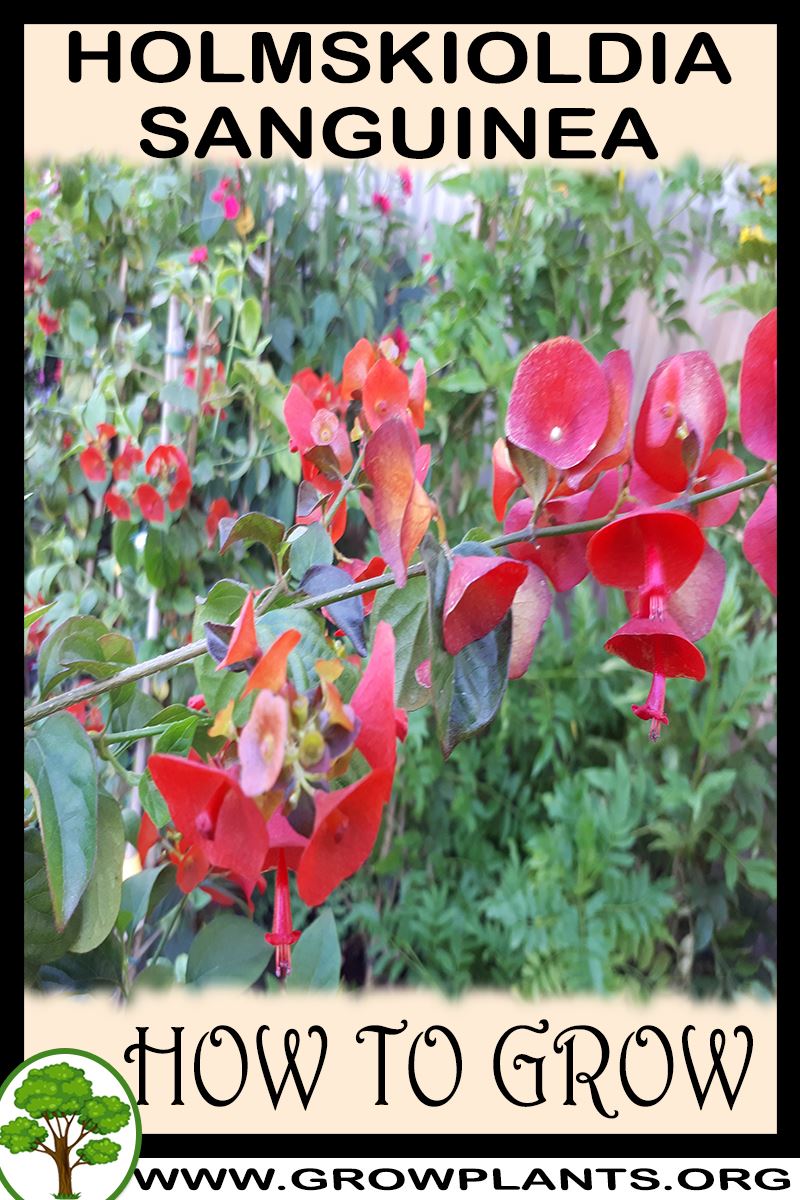
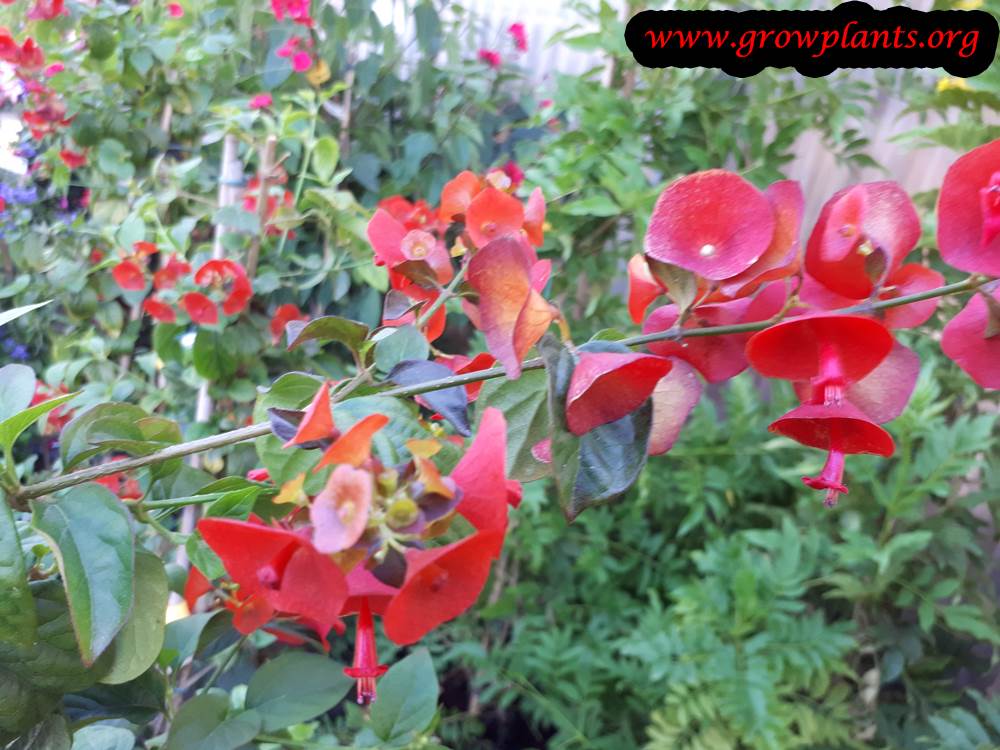
- Flower Characteristics: Distinctive cup-and-saucer flowers in yellow, red, orange or mixed tones, formed of a round base and a trumpet (full detail in the Bloom accordion).
Primary Uses & Landscape Value
- Functional and Ornamental Roles: Ornamental flowering shrub, hedge and drought-tolerant specimen; effective trained over walls and fences.
Care Guide: Planting, Soil & Watering
Overview: Chinese hat plant is a fast-growing subtropical shrub for full sun and well-drained soil. It is drought-tolerant once established and needs only light to moderate watering.
Quick Care Requirements
| Requirement | Ideal Condition |
|---|---|
| Planting Season | Spring to summer (warm season) |
| Growth Rate | Moderate to fast |
| Soil Type | Well-drained soil |
| Water Need | Low to moderate – water to establish, then let it dry between waterings |
Planting & Establishment
- Best Planting Season: Plant in the warm season, from spring to summer.
- How to Plant:
- Hole Preparation: Dig a hole a little wider than the root ball.
- Soil Amendments: Work some compost into free-draining soil; heavy enrichment is not needed.
- Planting Depth: Set the root collar at soil level without burying the stem.
- Growth Speed & Expectations: Moderate to fast – a vigorous shrub that can be pruned as a hedge.
Soil, Watering & Drainage Care
- Soil Mix & Drainage Needs: Well-drained soil; avoid soggy ground, and keep drainage sharp in containers.
- Watering Schedule & Technique:
- Young / Newly Planted: Water regularly to establish through the first season.
- Established: Water moderately, letting the top of the soil dry between waterings; it is drought-tolerant once settled.
- Seasonal Adjustments: More in summer heat, less in winter.
Climate, Light & Hardiness
Holmskioldia sanguinea (Chinese hat plant) is a drought-tolerant tropical/subtropical flowering shrub needing full sun to half shade and essentially frost-free conditions, hardy from about zone 10.
Quick Climate Specifications
| Climate Zones | Subtropical, Mediterranean, tropical |
|---|---|
| USDA Hardiness Zones | 10 and warmer |
| Frost Tolerance | Low to None |
| Light Conditions | Full Sun to Half Shade |
Sunlight & Light Exposure
Optimal Light Setup
Full sun gives the best flowering display.
Temperature Extremes & Hardiness
USDA Hardiness & Regional Limits
Zone 10 and warmer, essentially a frost-free requirement.
Cold Damage & Winter Protection
Little to no frost tolerance; in climates with any winter frost, grow it in containers and move it under cover for winter.
Extreme Heat Tolerance
Excellent; well adapted to tropical and subtropical heat given its drought tolerance.
Wind, Humidity & Microclimate
Dry-Air Tolerance
Good, consistent with its drought-tolerant nature.
Growing in Pots, Balconies & Indoors
The Chinese hat plant is a scrambling tropical shrub with curious little parasol-shaped flowers. The grower rates it for containers but not as an indoor houseplant – it needs strong light and warmth, so pot it for a sunny patio and shelter it from cold.
Quick Details
- Container Size: A large container, 30-50 L (8-13 gal); give the long, arching stems support
- Indoor Suitability: Not a houseplant (grower); a tender tropical for a sunny patio, sheltered over winter
- Best Spot: Full sun to partial shade; a bright spot with some direct sun is ideal.
- Soil & Drainage: Aerated, organic-rich mix (quality potting mix, or peat/coir with perlite or vermiculite); it must drain freely.
- Watering in Pots: Let the top few centimetres of mix dry between waterings; pots drain fast, so check often, but never leave it waterlogged.
Indoors & On the Windowsill
- Not a houseplant: The grower marks it unsuitable indoors; it is a vigorous, light-hungry scrambler that won’t thrive or flower well in a room.
- Overwintering: It is frost-tender, so a pot lets you move it into a bright, warm, frost-free space over winter in cold climates and return it outside once it warms.
On a Balcony or Patio
- Light & support: Give it the sunniest, warmest, most sheltered spot; the long arching stems need a trellis or railing to climb and to keep them off the ground.
- Watering: It prefers modest water and good drainage – let the surface dry between waterings, but check often in reflected wall heat.
Choosing the Pot, Soil & Long-Term Care
- Pot & drainage: A large tub with strong drainage holes; skip a standing-water saucer. Terracotta breathes and dries fast, which suits this drought-tolerant plant.
- Potting mix: Use a well-aerated, organic-rich mix – quality potting mix, or peat/coir blended with perlite or vermiculite.
- Feeding: As nutrients wash out of pots faster than open ground, feed potted plants regularly through the growing season with a balanced fertiliser.
- Repotting: Pot up or root-prune every couple of years, and prune the long stems to shape after flowering.
Fertilizing & Feeding
A moderate feeder: balanced feeding through the growing season fuels the long, repeated flush of colorful trumpet flowers, with feeding withheld once growth slows for winter.
Quick Fertilizing Specs
| Feeding Level | Moderate feeder |
|---|---|
| Main Nutrient Priority | Balanced feeding with adequate nitrogen to sustain repeated flowering |
| Best Feeding Period | Spring through autumn while the shrub is actively growing and blooming |
| Organic Options | Compost or well-rotted organic matter worked into well-drained soil |
| Reduce/Stop Feeding | Feeding is withheld once growth slows going into winter |
| Micronutrients | Usually met by a complete fertilizer; correct only diagnosed issues |
| Soil pH | Prefers well-drained soil; tolerates a range from slightly acidic to near neutral |
Feeding by Growth Stage
Spring flush of growth
Push out fresh growth on this fast-to-medium growing shrub as warm weather returns.
| Nutrient direction | Balanced feeding with adequate nitrogen supports vigorous new growth ahead of the first bloom flush. |
|---|---|
| Timing | As warm weather returns in spring. |
| Frequency | A light feeding as new growth begins. |
| Fertilizer types | A balanced complete fertilizer, Compost worked into the root zone |
| Routine trace nutrients | iron, manganese, zinc |
| Precautions | Avoid heavy nitrogen, which can push soft growth at the expense of flowering. |
First bloom flush
Support the initial flush of the distinctive two-part yellow, red, or orange trumpet flowers.
| Nutrient direction | Balanced feeding is favored over any high-phosphorus “bloom booster” product. |
|---|---|
| Timing | Spring into summer as the first flowers open. |
| Frequency | A modest feeding sustains the bloom flush. |
| Fertilizer types | A balanced complete fertilizer |
| Routine trace nutrients | iron, manganese, zinc |
| Precautions | Keep feeding moderate; overfeeding a shrub that is already blooming heavily can burn tender flower stems. |
Repeat blooming through summer and autumn
Sustain successive flushes of flowers across summer into autumn.
| Nutrient direction | Continued light, balanced feeding supports the extended repeat-bloom cycle. |
|---|---|
| Timing | Summer into autumn while the shrub continues to flower. |
| Frequency | An occasional light feeding through the extended bloom period. |
| Fertilizer types | A balanced complete fertilizer |
| Routine trace nutrients | iron, manganese, zinc |
| Precautions | Ease feeding back as autumn approaches so growth can harden off before cool weather. |
Winter slowdown
Let the shrub rest through its slowest growth period without pushing tender new shoots.
| Nutrient direction | None – withhold fertilizer while growth is inactive. |
|---|---|
| Timing | Winter, once flowering and active growth have stopped. |
| Frequency | No feeding during this rest period. |
| Fertilizer types | No feeding at this stage; do not fertilize again until spring growth resumes. |
| Precautions | Withhold fertilizer now; feeding during the winter slowdown wastes nutrients and can leave tender growth exposed to cold. |
Nutrient Deficiency Signs & Corrections
Foliage pales and the flush of trumpet flowers is sparse or weak.
| Possible causes | low available soil nitrogen, nitrogen leaching from watering or rain, thin soil low in organic matter |
|---|---|
| Appears first on | older, lower leaves |
| What to check | recent feeding history, soil organic matter, watering and drainage |
| Possible correction | Apply a balanced complete fertilizer with adequate nitrogen during the active growing season. |
Leaf edges scorch or yellow on older leaves and flower color or substance is weaker than expected.
| Possible causes | low soil potassium, heavy nitrogen feeding without balancing potassium, leaching in light, well-drained soil |
|---|---|
| Appears first on | older leaf margins |
| What to check | recent fertilizer balance, soil texture and leaching, overall bloom vigor |
| Possible correction | Switch to a balanced fertilizer that supplies adequate potassium alongside nitrogen. |
Leaf margins brown or scorch and growth stalls despite adequate watering.
| Possible causes | fertilizer salt buildup in the root zone, over-fertilizing during the extended bloom season, irregular watering that concentrates salts |
|---|---|
| Appears first on | leaf tips and margins |
| What to check | recent fertilizer amounts and frequency, watering consistency, drainage, especially in containers |
| Possible correction | Ease off feeding, water thoroughly to flush accumulated salts, then return to lighter feeding. |
Pruning, Training & Seasonal Maintenance
Holmskioldia sanguinea (Chinese hat plant) is a fast-growing, somewhat sprawling evergreen shrub whose trumpet-shaped flowers are produced on new growth, so pruning strategy is built around generating fresh shoots rather than protecting old wood. An annual cutback in late winter, just before the main spring flush, both controls its naturally loose, semi-scandent habit and maximizes the amount of new flowering wood produced that season.
Quick Pruning & Maintenance Specs
| Pruning Tolerance | Moderate–High |
| Primary Pruning Window | Late winter, before spring growth begins |
| Secondary Maintenance Window | Light shaping after a main bloom flush |
| Typical Frequency | Annual cutback plus occasional light shaping |
| Main Objective | Generate new flowering wood; control sprawling habit |
| Young Plant Priority | Pinch/cut back to encourage branching rather than a single lax stem |
| Mature Plant Priority | Annual late-winter cutback; support or restrain sprawling growth |
| Best Tool Type | Bypass secateurs; loppers for older woody stems |
| Avoid Heavy Pruning During | Peak bloom, and right before any cold snap in marginal parts of its range |
Pruning by Plant Age & Size
Newly Established
Remove only damaged growth; pinch the tip once established to start building a branched framework rather than one lax leader.
Young / Formative
No formal leader system — the plant has a naturally arching, semi-scandent habit. Stake or tie in main stems if a more upright shrub form is wanted, or let it sprawl against a support if used as an informal screen.
Mature / Established
Cut back the previous season’s growth by roughly a third in late winter to encourage a dense flush of new flowering shoots; follow with light shaping after the main bloom period to keep it from becoming too rangy.
Flowering Wood
Flowers are produced on current-season growth, so the late-winter cutback directly increases flowering wood for that year; pruning too late in spring or during active bloom removes developing flowers and wastes the current flush.
Structural Pruning & Training
Left unpruned it becomes loose and sprawling; annual cutback plus tying in of main stems (if trained upright or against a support) keeps a denser shrub shape. Where grown as an informal hedge, trim after the main flowering flush rather than shearing on a fixed formal schedule.
Container & Small-Space Pruning
Grows well in containers; an annual hard cutback is especially useful here to keep a naturally large, sprawling shrub to a manageable pot size.
Tools
Bypass secateurs for most shaping and pinching; loppers for the thicker older stems removed during the annual cutback.
Tool Hygiene & Disease Risk
Routine — aphids are the only pest noted; ordinary clean, sharp tools are sufficient.
Cut Placement & Technique
Make cuts just above an outward-facing bud to encourage an open, well-shaped framework; use thinning cuts on older interior stems to avoid a dense tangle of new shoots.
Heavy Pruning & Rejuvenation
Tolerates a fairly hard annual cutback well given its fast growth rate; an overgrown, leggy plant can be renovated more severely in late winter and will rebound with a strong flush of new flowering growth.
Post-Pruning Care
Water normally after cutting back; avoid heavy feeding immediately after a hard prune since regrowth is already vigorous.
Common Pruning Mistakes
Skipping the annual cutback and letting the shrub sprawl into a tangled, sparsely flowered mass; pruning during active bloom and losing the current flower flush; cutting back hard right before a cold snap in the cooler edge of its range.
When NOT to Prune
Avoid pruning during a heavy bloom period if the flower display is wanted, and avoid a hard cutback immediately before an expected cold spell.
Pruning Troubleshooting
| Problem | Possible Cause | What to Check | Corrective Action |
| Sparse flowering, mostly leaves | No annual cutback, so little fresh flowering wood formed | Amount of new growth produced since last prune | Cut back by about a third in late winter before growth resumes |
| Leggy, sprawling, floppy shrub | Lack of structural cutback or support | Stem density near the base | Hard cutback plus staking/tying if an upright form is wanted |
Recommended Tools (by task)
- bypass_secateurs – pinching, shaping, and light post-bloom trims.
- loppers – the annual late-winter cutback of thicker older stems.
Propagation Guide
Chinese hat plant is most easily and reliably grown from semi-hardwood stem cuttings, which root readily in warm, humid conditions and reproduce a particular flower colour (yellow, red, orange or mixed forms) reliably; seed is less commonly used in cultivation for this species. Overall propagation is easy from cuttings.
Quick Propagation Specs
| Best Propagation Method | Semi-hardwood stem cuttings |
| Alternative Methods | Seed |
| Propagation Difficulty | Easy |
| Seed True-to-Type | Variable – flower colour may not be reliably reproduced from seed |
| Vegetative True-to-Type | Yes |
| Best Propagation Season | Spring to summer, during active warm-season growth |
Growing from Seed
Seed propagation is possible but less commonly practiced for this species; site data does not specify sowing conditions, and the particular flower colour of a given plant is not guaranteed to come true from seed.
Stem Cuttings
Cutting Type
Semi-hardwood tip cuttings.
Best Timing
Spring through summer, while the plant is actively growing.
Cutting Preparation
Take a firm, healthy shoot section and remove the lower leaves.
Rooting Setup
Root in a free-draining mix under warm, humid conditions.
Rooting Hormone
Optional – beneficial for speeding rooting but not essential for this relatively easy-to-root shrub.
Rooting Time
Typically a few weeks under warm, humid conditions.
Bloom & Flower Guide
Quick Details
- Bloom Season: Spring through autumn
- Flower Appearance: A wide, flat circular calyx (the ‘Chinese hat’) with a small trumpet flower rising from its centre, in yellow, red, orange or blends
- Edibility: Ornamental only – grown for its curious hat-shaped blooms, not eaten
Detailed Blooming Overview
The Chinese hat plant is named for its flowers: each bloom sits on a wide, flat, circular calyx – like a little parasol or Chinese hat – with a small trumpet-shaped flower rising from its centre. They come in warm yellows, reds, oranges and blends, carried along the arching stems from spring through autumn, and their nectar draws hummingbirds and sunbirds.
Flower Characteristics
- Flowers built of two parts: a broad round calyx (the ‘hat’) and a central trumpet.
- Warm colours – yellow, red, orange or blends.
- Nectar-rich and attractive to nectar-feeding birds.
Bloom Care & Thinning
- Managing the bloom: Trim spent flowers and shape after the main flush; it flowers over a long, warm season.
Pests, Diseases & Troubleshooting
Overview: The Chinese hat plant (Holmskioldia sanguinea) is a scrambling tropical flowering shrub grown for its curious cup-and-saucer blooms. Like most tender ornamental shrubs its main problems are sap-sucking insects — aphids, whitefly, mealybugs, scale and spider mites — with the honeydew-driven sooty mould that follows, plus root rot in cold, wet soil. Vigorous, warm, airy growing conditions and organic controls keep it healthy.
Quick Troubleshooting Overview
| Issue / Pest | Main Symptom | Primary Solution |
|---|---|---|
| Aphids | Colonies on soft tips and buds; honeydew | Hose off; insecticidal soap; beneficials |
| Whitefly | Tiny white flies under leaves; sticky honeydew | Yellow sticky traps; oil/soap; Encarsia |
| Mealybugs & scale | Cottony masses or bumps; sooty mould | Alcohol/oil; control ants |
| Spider mites | Stippling and webbing in hot, dry air | Raise humidity; hose; horticultural oil |
| Root rot | Wilting and decline in cold, wet soil | Improve drainage; ease off watering |
Common Pests & Management
- Aphids (Aphis spp.):
- Symptoms: Soft-bodied aphids clustering on new shoots, buds and flower stalks with honeydew and sooty mould.
- Prevention & Control: Hose off, encourage ladybirds and lacewings, and use insecticidal soap or neem oil in the evening.
- Whitefly (Bemisia / Trialeurodes spp.):
- Symptoms: Clouds of tiny white flies under the leaves that scatter when disturbed, with honeydew and sooty mould.
- Prevention & Control: Use yellow sticky traps, spray oil or soap to leaf undersides, and introduce Encarsia formosa under glass.
- Mealybugs & scale insects (Pseudococcidae, Coccidae):
- Symptoms: White cottony masses in leaf axils (mealybugs) or brown/white bumps on stems and veins (scale), both with honeydew and sooty mould.
- Prevention & Control: Dab mealybugs with alcohol, wipe or scrape scale, treat with horticultural oil, and control the ants that farm them.
- Spider mites (Tetranychus spp.):
- Symptoms: Fine stippling, bronzing and webbing on leaf undersides in hot, dry conditions.
- Prevention & Control: Raise humidity, hose foliage, and use horticultural oil or insecticidal soap.
Diseases & Fungal Issues
- Leaf spot (various fungi):
- Symptoms: Brown or tan spots on leaves in warm, wet, humid conditions, sometimes with yellowing.
- Treatment & Management: Remove affected leaves, improve airflow, avoid overhead watering, and use copper fungicide if persistent.
- Sooty mould (secondary):
- Symptoms: Black, soot-like coating on leaves growing on the honeydew of aphids, whitefly, mealybugs and scale.
- Treatment & Management: Control the sap-sucking insects producing the honeydew; the mould then washes off or weathers away.
- Root & collar rot (Phytophthora / Pythium):
- Symptoms: Wilting, yellowing and dieback in cold, wet, poorly drained soil.
- Treatment & Management: Improve drainage, avoid overwatering (especially in cool weather), and grow in warm, free-draining conditions.
Growing Difficulties & Abiotic Problems
- Cold sensitivity:
- Cause & Symptoms: Leaf drop and dieback in frost or cold, as this is a frost-tender tropical shrub. Correction Strategy: Grow in a warm, sheltered, frost-free position or under cover, and protect in cool climates.
- Chlorosis:
- Cause & Symptoms: Yellowing leaves with green veins in alkaline or waterlogged soil. Correction Strategy: Improve drainage and apply chelated iron and a balanced feed.
- Legginess / poor flowering:
- Cause & Symptoms: Sparse, drawn growth and few flowers in too much shade. Correction Strategy: Give full sun to light shade and prune after flowering to keep it bushy.
What Helps — Products & Tools
Keep insecticidal soap and neem/horticultural oil for the sap-suckers, yellow sticky traps for whitefly, and copper fungicide for leaf spot. Controlling the honeydew-producing insects is the key to preventing sooty mould, while warm conditions and sharp drainage prevent root rot.