Plant Profile & Key Characteristics
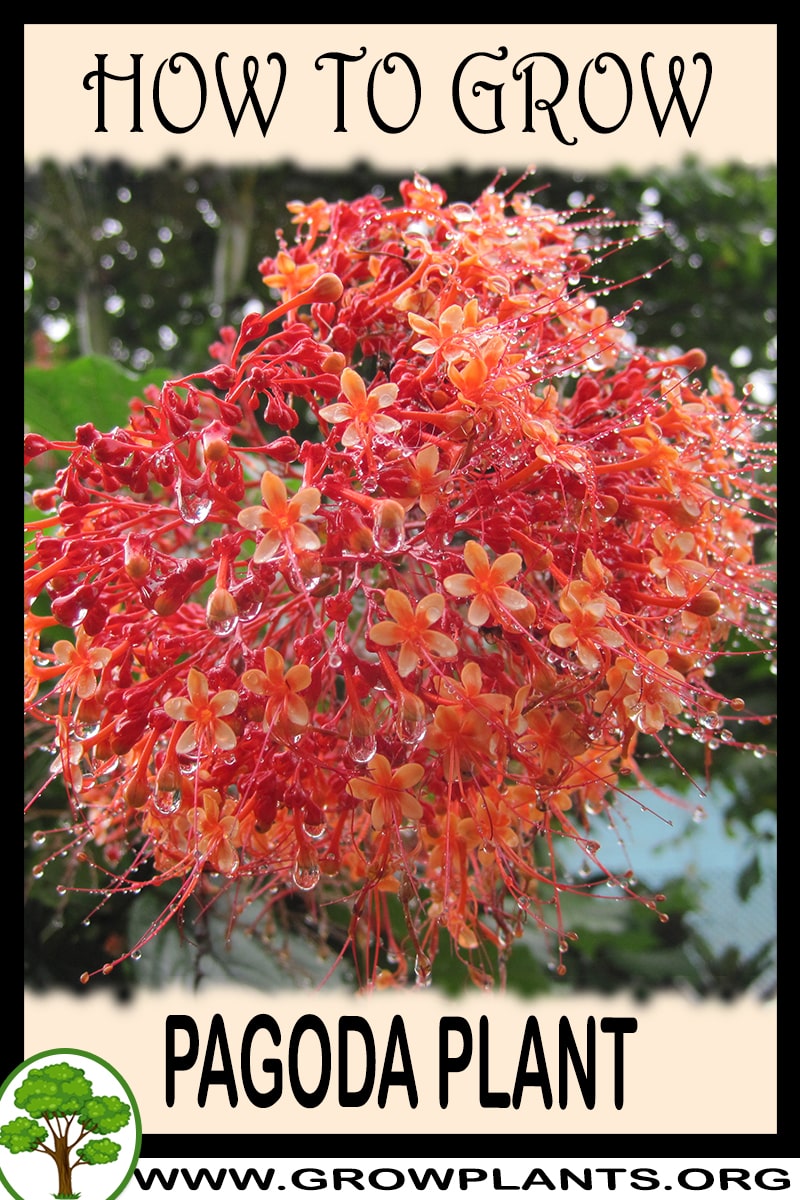
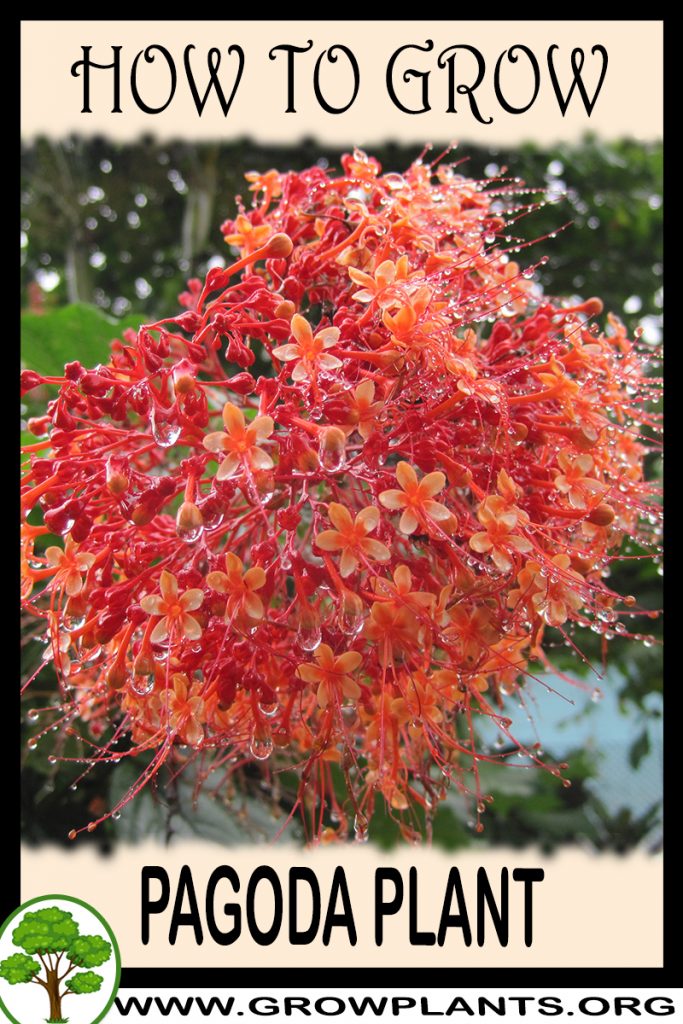
Overview: An upright multi-stemmed shrub reaching 1-2.5 m, grown for its large pyramidal (“pagoda”) heads of orange-red flowers and bold foliage. It is evergreen in warm climates and spreads by suckers.
Quick Specifications
| Specification | Attribute |
|---|---|
| Plant Type / Life Cycle | Perennial (evergreen to deciduous shrub) |
| Foliage Type | Evergreen in warm climates; deciduous where cool |
| Mature Size | 1-2.5 m (3-8 ft) |
| Growth Rate | Moderate |
| Root System | Suckering (spreads by root suckers) |
| Hardiness | USDA zone 8b+ |
Growth Form & Structure
- Height & Spread: 1-2.5 m (3-8 ft); can be container-grown, though suckers need managing in pots
- Growth Habit & Form: Upright multi-stemmed shrub that spreads by suckers and can become invasive in the tropics
- Lifespan & Maturity: Reaches size at a moderate pace and clumps up via suckers
Anatomy & Physical Features
- Leaves & Foliage: Large green heart-shaped leaves with lobed-to-serrated margins
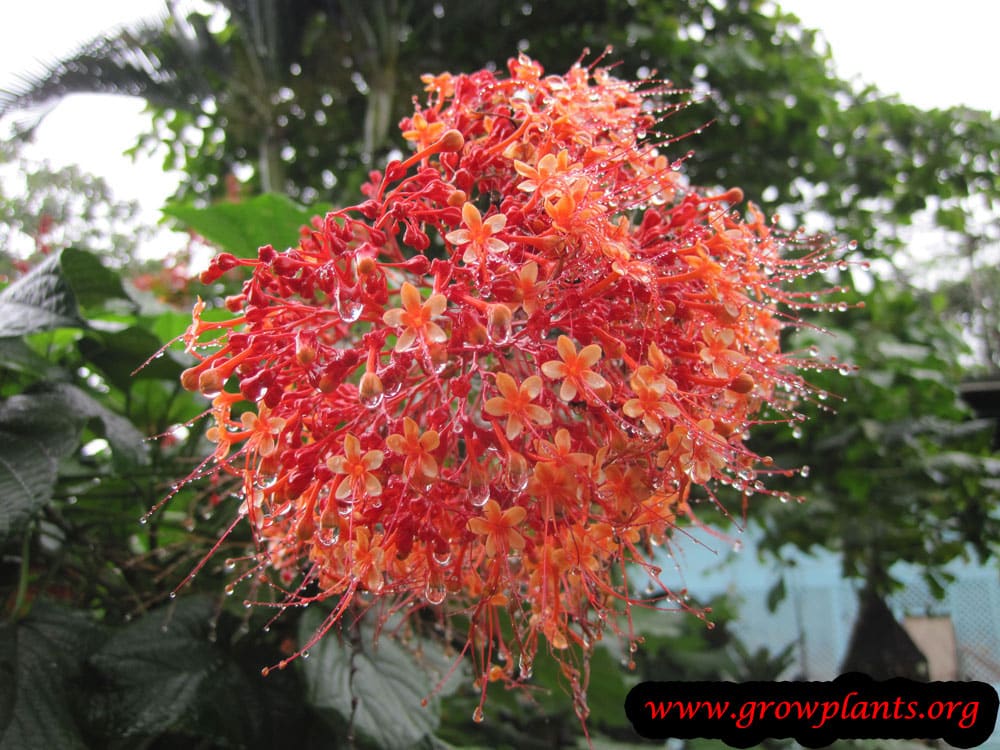
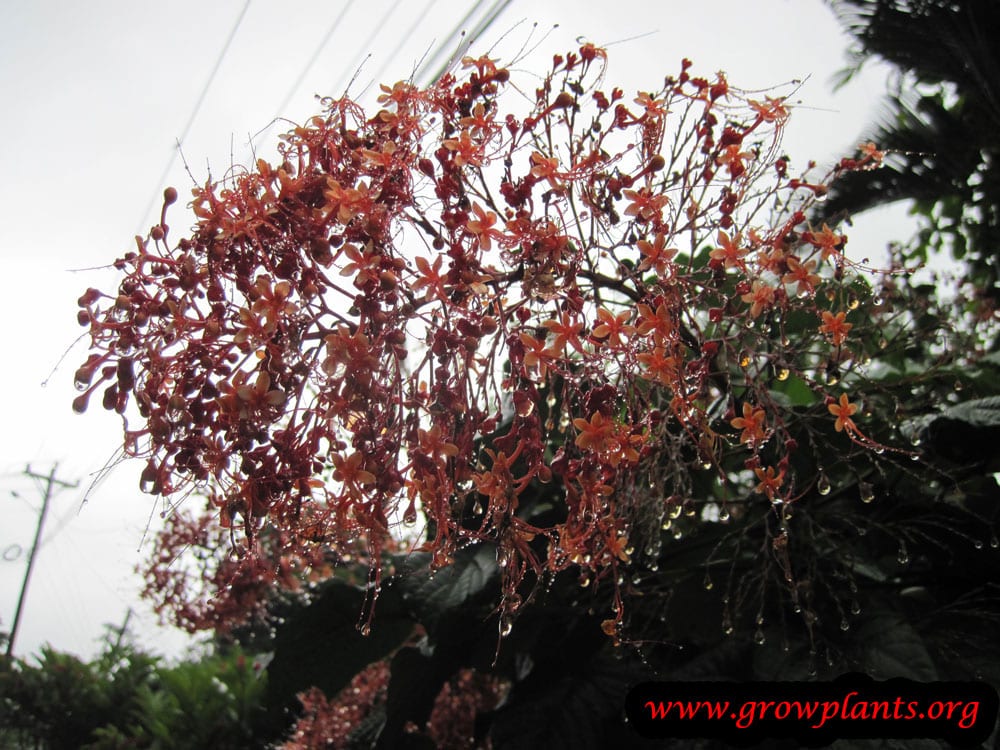
- Flower Characteristics: Large pyramidal panicles of small orange-red tubular flowers; attracts butterflies
Primary Uses & Landscape Value
- Functional & Ornamental Roles: Bold ornamental for tropical and subtropical gardens and large containers; a pollinator and butterfly plant
Care Guide: Planting, Soil & Watering
Overview: Pagoda plant is a medium-growing tropical shrub (hardy to about zone 8b) that flowers best in full sun to light afternoon shade. It wants rich, well-draining soil kept steadily moist, with organic matter and feeding a few times a year, especially before bloom.
Quick Care Requirements
| Requirement | Ideal Condition |
|---|---|
| Planting Season | Year-round in zone 12+, spring–autumn in 10b–11, spring–summer in 10a, spring in 8b–9 |
| Growth Rate | Moderate |
| Soil Type | Rich, organic, well-draining |
| Water Need | Moderate – keep evenly moist, adjust to drainage and wind |
Planting & Establishment
- Best Planting Season: Plant year-round in zone 12+, spring to autumn in 10b–11, spring to summer in 10a and in spring (or early summer) in 8b–9.
- How to Plant:
- Hole Preparation: Dig a hole wider than the root ball and loosen the sides.
- Soil Amendments: Blend in plenty of compost, humus and organic matter, and feed a few times a year — especially before flowering.
- Planting Depth: Set the root collar level with the surrounding soil and firm gently.
- Growth Speed & Expectations: A medium-paced grower reaching 1–2.5 m (3–8 ft); in zones 8b–10a mulch heavily in winter to protect it from the cold.
Soil, Watering & Drainage Care
- Soil Mix & Drainage Needs: Rich but sharply draining soil prevents root rot; in pots use a well-aerated potting mix and refresh it every few years.
- Watering Schedule & Technique:
- Young / Newly Planted: Water newly planted shrubs regularly to keep the soil moist while they establish.
- Established: Water deeply and regularly; the amount needed depends on soil drainage and drying winds.
- Seasonal Adjustments: More water in hot, windy weather; less in cool winter months.
Climate, Light & Hardiness
Pagoda plant grows across tropical, mediterranean, subtropical, and temperate climates as a warm-climate ornamental. It prefers full sun to half shade - with afternoon shade in very hot summers - and needs winter protection toward the cold edge of its range.
Quick Climate Specifications
| Climate Zones | Tropics, Mediterranean, subtropics, temperate |
|---|---|
| USDA Hardiness Zones | Approximately 8b and warmer |
| Light Conditions | Full Sun to Half Shade |
Sunlight & Light Exposure
Optimal Light Setup
Full sun to half shade; in very hot summer climates, morning sun with afternoon shade is recommended, which also allows growing it in desert conditions.
Shade & Heat Management
Afternoon shade helps prevent heat stress during intense summer sun.
Temperature Extremes & Hardiness
USDA Hardiness & Regional Limits
Grown from USDA zone 8b upward; toward the cooler end of this range (zone 8b–10a) it needs extra winter protection.
Cold Damage & Winter Protection
In zones 8b–10a, a heavy mulch covering over winter is recommended to protect the plant from cold.
Growing in Pots, Balconies & Indoors
The pagoda flower carries spectacular tiered, flame-orange flower heads and the grower rates it for containers. Indoors it is not recommended – it will survive and flower only weakly – so its main indoor use is overwintering a potted plant in cold climates.
Quick Details
- Container Size: A pot about 20% larger than the root ball (grower); manage the suckers
- Indoor Suitability: Not really an indoor plant (grower): possible but unimpressive; useful mainly for overwintering
- Best Spot: Full sun to partial shade; a bright spot with some direct sun is ideal.
- Soil & Drainage: Aerated, organic-rich mix (quality potting mix, or peat/coir with perlite or vermiculite); it must drain freely.
- Watering in Pots: Keep the mix evenly moist, letting the surface dry slightly between waterings; pots dry faster than open ground.
Indoors & On the Windowsill
- Not really a houseplant: The grower is candid: it can live indoors and bloom a little, but the display won’t be impressive – it really wants strong outdoor light to perform.
- Overwintering: Its useful indoor role is winter shelter: in cold climates bring the pot into a bright, warm, frost-free room over winter, then return it outside to flower once it warms.
On a Balcony or Patio
- Light & heat: Full sun to part shade; in very hot summers the grower recommends morning sun with afternoon shade, which even lets it succeed in desert conditions. Water relates to drainage and wind – keep it evenly moist.
- Suckering habit: It suckers freely – in a pot the suckers can fill the container and cut down flowering, so thin them out (see the grower’s tip below).
Choosing the Pot, Soil & Long-Term Care
- Pot & drainage: Per the grower, use a pot only about 20% larger than the root ball, with strong drainage holes; skip a standing-water saucer.
- Potting mix: A well-aerated, organic-rich mix that drains freely.
- Feeding: Feed through the growing season for the best flowering; potted plants leach nutrients quickly.
- Repotting: The grower advises refreshing part of the soil and cutting back some of the roots every few years; to keep it small, root-prune and remove the oldest stems after flowering.
Grower’s Container Tip
- Grower’s sucker control: In a container the suckers will fill the pot and choke off flowering – cut them back and leave just one or two, and remove old stems after bloom, to keep the plant compact and flowering well.
Fertilizing & Feeding
Pagoda flower is grown for its dramatic pyramid-shaped orange-red flower clusters that draw butterflies, and it does best on rich, well-drained soil with organic matter and steady feeding through its extended bloom season.
Quick Fertilizing Specs
| Feeding Level | Moderate; a showy bloomer that benefits from rich, well-fed soil. |
|---|---|
| Main Nutrient Priority | Balanced nutrition with organic matter to support the plant’s extended flowering display, especially ahead of and during bloom. |
| Best Feeding Period | Through the spring, summer and autumn growth and flowering period, with attention around the start of blooming. |
| Organic Options | Humus and other organic matter worked into rich, well-drained soil suit this plant especially well. |
| Reduce/Stop Feeding | Ease off feeding in cooler weather, and hold back where the plant is being protected over winter in marginal climates. |
Feeding by Growth Stage
Establishment
Help a newly planted sucker, cutting or seedling root into rich, well-drained soil and put out its first heart-shaped leaves.
| Nutrient direction | Light, balanced nutrition to support root and early leaf growth. |
|---|---|
| Timing | In the weeks after planting or transplanting. |
| Frequency | A light feeding once new growth is visible is usually enough to start. |
| Fertilizer types | A balanced complete fertilizer used lightly, Humus or other organic matter worked into rich, well-drained soil |
| Precautions | Move a newly transplanted sucker into full sun gradually, keeping it shaded and well watered at first, rather than trying to compensate with heavy feeding. |
Growth and extended bloom
Support the pyramid-shaped clusters of orange-red flowers that attract butterflies over an extended growing season.
| Nutrient direction | Steady, balanced nutrition with organic matter, giving a little extra attention as flowering approaches, to sustain the plant’s long bloom display. |
|---|---|
| Timing | Through the main spring, summer and autumn growth and flowering period, with particular attention as new flower clusters begin forming. |
| Frequency | Several light feedings spaced through the growing season, with attention around the start of each flowering flush, suit this plant well. |
| Fertilizer types | A balanced complete fertilizer used regularly through the season, Humus or compost worked in as an organic supplement |
| Precautions | In containers, watch for vigorous suckers crowding the pot; thin them rather than relying on extra fertilizer to compensate for overcrowding. |
Cool-season rest
Let growth slow or die back where winters are cool enough to interrupt active growth, especially in the cooler part of this plant’s hardiness range.
| Nutrient direction | None – withhold fertilizer while growth is not active. |
|---|---|
| Timing | Through the cooler part of the year, where winter protection such as mulch is used in marginal climates. |
| Frequency | No feeding at this stage. |
| Fertilizer types | No feeding – resume feeding once active growth clearly resumes in spring |
| Precautions | Do not fertilize a dormant or protected plant over winter; wait for new spring growth before feeding again. |
Nutrient Deficiency Signs & Corrections
Leaves look pale or new growth is thin and weak despite otherwise reasonable care.
| Possible causes | A general nutrient shortage on poor or depleted soil, Too little light for good vigor, Root stress from a container that has become too crowded with suckers |
|---|---|
| Appears first on | New growth across the plant. |
| What to check | Recent feeding history and soil richness, Light exposure at the site, Whether a container is overcrowded with suckers and roots |
| Possible correction | Thin overcrowded suckers or repot if needed, confirm adequate light, and support recovery with a balanced feeding. |
Leaf edges brown and crisp, particularly in very hot, sunny conditions.
| Possible causes | Excess heat and direct sun exposure rather than a nutrient problem, Underwatering or inconsistent soil moisture, Wind exposure stressing the foliage |
|---|---|
| Appears first on | Leaf margins on the most exposed foliage. |
| What to check | Sun exposure during the hottest part of the day, Soil moisture consistency, Wind exposure at the site |
| Possible correction | Provide afternoon shade in very hot climates, keep soil evenly moist, and avoid concentrated fertilizer applications during heat stress. |
The plant grows leafy and vigorous but produces few of its characteristic pyramid-shaped flower clusters.
| Possible causes | Excess nitrogen favoring leafy growth over flowering, Too many suckers competing for resources, especially in containers, Insufficient light for good bud formation |
|---|---|
| Appears first on | Overall flowering across the plant. |
| What to check | Recent nitrogen-heavy feeding, Number of suckers competing in the same container or planting spot, Sun exposure |
| Possible correction | Ease back on nitrogen, thin excess suckers, and confirm the plant gets adequate sun for good bud formation. |
Pruning, Training & Seasonal Maintenance
Pagoda plant is a soft-wooded, suckering evergreen (semi-deciduous at the cool edge of its range) shrub that tolerates a moderate-to-fairly-hard annual cutback. Because it flowers in flushes across spring, summer and autumn on new growth, the safest and most productive time for a structural cut is late winter into very early spring, before the new flush, with light deadheading of spent flower spikes year-round. Pruning here mainly manages size, shape and the plant’s strong suckering habit rather than protecting any woody fruiting structure.
Quick Pruning & Maintenance Specs
| Pruning Tolerance | Moderate–High |
| Primary Pruning Window | Late winter, before the spring flush |
| Secondary Maintenance Window | After each bloom flush (spring/summer/autumn) – deadhead |
| Typical Frequency | One hard cutback per year plus ongoing deadheading |
| Main Objective | Shape and size control, sucker management, rebloom |
| Young Plant Priority | Establish the desired number of main stems, remove excess suckers early |
| Mature Plant Priority | Renewal cuts, sucker thinning, spent-bloom removal |
| Best Tool Type | Bypass secateurs, loppers for old stems |
| Avoid Heavy Pruning During | An active summer bloom flush; any cold snap at the cool edge of its range (zone 8b–9) |
Pruning by Plant Age & Size
Newly Established
Minimal – remove only damaged growth and let the root system establish before any structural cutting.
Young / Formative
No formal leader system applies to this suckering shrub; the key formative task is deciding and limiting the number of main stems early, since suckers will otherwise fill the space on their own.
Mature / Established
Annual renewal: remove the oldest or weakest stems, thin excess suckers, and cut back after bloom flushes to maintain shape.
Seasonal Pruning Schedule
| Stage | Objective | Remove | Do Not Remove | Expected Response | Flowering Impact |
| Dormant/Winter | Main structural reset, size and shape control | Weak, crossing or overgrown stems; excess suckers | Well-placed young stems intended to carry the coming season’s flush | Full regrowth within the season | None – new flowering wood regrows before the spring–autumn bloom cycle |
| Post-Flowering (each flush) | Tidy and encourage the next flush | Spent flower spikes | Healthy leafy stems mid-flush | Cleaner plant, possible extended flowering | Minimal if timed after, not during, a flush |
Flowering & Fruiting Wood
Pagoda plant blooms on new growth produced after a cutback, so a late-winter hard prune forces the flush of stems that will carry that season’s flowers – this is the least costly time to cut hard. Cutting into the plant while it is actively flowering sacrifices that flush’s display.
Structural Pruning & Training
No formal framework is needed; the main structural task is limiting and shaping the number of stems and removing crossing or weak growth. Thinning excess suckers improves airflow and prevents the clump from becoming congested.
Special Growth to Remove
- Root suckers – explicitly a management issue for this species (it can become invasive in tropical settings and fills containers quickly); thin to the desired number of stems in-ground, or to just 1–2 stems in a pot.
- Spent flower stems – remove after each bloom flush.
Container & Small-Space Pruning
Container culture needs a heavier, more frequent regime than in-ground plants: cut back the root ball and remove old stems after bloom to keep the plant compact, thin suckers hard to just 1–2 per pot (otherwise they fill the container and suppress flowering), and every few years refresh the soil and cut back some of the roots.
Tools
Bypass secateurs for stems and spent flower spikes; loppers for thicker old stems on mature clumps.
Tool Hygiene & Disease Risk
Routine – known issues are aphids, mealybugs and spider mites rather than a transmissible canker or vascular disease, so clean, sharp tools are sufficient.
Cut Placement & Technique
Thinning cuts at the base for sucker removal; cut spent flower stems back to a healthy leaf node; avoid flush cuts on stems that are being kept.
Heavy Pruning & Rejuvenation
Tolerates a hard cutback well in late winter – an overgrown or leggy clump can be cut back to a low framework, with a full regrowth and rebloom flush expected by the following season.
Post-Pruning Care
Water in after a hard cutback; watch for the flush of new stems and suckers that follows and thin as needed. No extra feeding is required beyond the plant’s normal seasonal fertilizing.
Common Pruning Mistakes
- Letting suckers take over, which reduces flowering vigor and can make the clump weedy in warm climates.
- Hard-pruning mid-flush and losing that season’s flowers.
- Leaving container specimens for years without root and sucker renewal.
When NOT to Prune
Avoid hard structural cuts in the middle of an active bloom flush, and avoid pruning right before or during a cold snap at the cooler edge of its hardiness range.
Recommended Tools (by task)
- bypass_secateurs – the main tool for stem cuts, sucker thinning and deadheading spent flower spikes.
- loppers – for thicker old stems when doing a renewal cutback on a mature clump.
Pruning Troubleshooting
| Problem | Possible Cause | What to Check | Corrective Action |
| Few or no flowers | Over-thick sucker growth crowding the clump, or a hard cut made mid-flush | Stem density; timing of the last cut | Thin suckers to a few main stems; shift hard pruning to late winter |
| Leggy, sparse plant | No renewal cutback performed | Age of the oldest stems | Late-winter renewal cut |
| Suckers overwhelming a container | Not thinned regularly | Pot fill and root crowding | Cut the sucker mass back to 1–2 stems and refresh soil/roots |
Propagation Guide
Pagoda plant is most easily and reliably grown on from its own root suckers, which the site notes are simpler than starting from seed; seed is viable and not hard to sow but is uncommon to find. Vegetative propagation from suckers is the preferred, true-to-type method, and overall difficulty is Easy.
Quick Propagation Specs
| Best Propagation Method | Division of rooted root suckers |
| Alternative Methods | Seed (uncommon); softwood stem or root cuttings |
| Propagation Difficulty | Easy |
| Seed True-to-Type | Usually true-to-type (species) |
| Vegetative True-to-Type | Yes |
| Best Propagation Season | Spring, extending through summer and autumn in warmer hardiness zones, matching this plant’s planting-season window |
Growing from Seed
Seed Handling & Viability
Seed is rare to find but, per the site, not hard to sow once obtained.
Germination Conditions
Warm, consistently moist, humid conditions suited to this tropical/subtropical shrub.
Stem & Root Cuttings
Cutting Type
Softwood tip cuttings with a few leaf nodes; because this species naturally produces root suckers, sections of root can also be used as root cuttings, a common propagation option within the Clerodendrum genus.
Best Timing
Spring to summer, during active growth.
Rooting Setup
A moist, well-drained mix with warmth and humidity.
Rooting Hormone
Optional; may improve consistency but is not usually essential.
Rooting Time
Typically a few weeks under warm, humid conditions.
Division, Offsets, Pups & Suckers
Suckers are the plant’s own preferred and easiest propagation route. Pull a sucker away by hand together with its roots rather than cutting it, taking care not to injure the mother plant. It is best to wait until the sucker has reached at least 30cm (12in) before separating and transplanting it. After transplanting, increase watering so the young division does not dry out, and start it in shade before moving it gradually into sun. Not every sucker is a good candidate: use only suckers that already have their own roots, and be selective, since in containers this plant’s suckers can multiply enough to fill the pot and crowd out flowering – it is generally best to remove excess suckers and leave only one or two to grow on.
Bloom & Flower Guide
Quick Details
- Bloom Season: Spring through autumn
- Flower Appearance: Small orange-red tubular flowers massed in large pyramidal heads
- Edibility: Ornamental – not eaten
Detailed Blooming Overview
The pagoda flower is grown for its bold, tiered flower heads that rise like a pyramid or pagoda above the broad leaves. Blooming across the warm months, its fiery clusters are a strong draw for butterflies and give the plant real presence in a tropical or subtropical border.
Flower Characteristics
- Individual flowers are small, tubular, and orange-red.
- Dozens are packed into a large branched inflorescence that forms the distinctive pyramid shape.
Bloom Care & Thinning
- Pruning for bloom: Cut back spent flower stems and prune in winter or after flowering to keep the plant shapely and encourage fresh bloom.
- Feeding and light: Rich soil, feeding before the bloom, and full sun to half shade support the best flowering; in very hot spots, afternoon shade helps.
Bloom Health & Protection
- Aphids, mealybugs, and spider mites: These can build up on flowering shoots; insecticidal soap, horticultural oil, or neem oil keeps them in check.
Pests, Diseases & Troubleshooting
Overview: Clerodendrum – especially the tender tropical species – are magnets for whitefly and other greenhouse sap-suckers, which in turn bring sticky honeydew and sooty mold; mealybugs, mites, aphids and scale round out the cast. Keep plants vigorous in bright, humid, airy conditions, watch the leaf undersides, and treat sap-suckers early with soaps and oils.
Quick Troubleshooting Overview
| Issue / Pest | Main Symptom | Primary Solution |
|---|---|---|
| Whitefly | Clouds of white flies under leaves; sticky honeydew and sooty mold | Yellow sticky traps, insecticidal soap, oil |
| Mealybugs | White cottony masses in leaf axils and stems | Dab with alcohol, insecticidal soap, oil |
| Spider mites | Fine stippling and webbing in warm, dry air | Raise humidity, hose foliage, horticultural oil |
| Aphids | Clustered on soft shoot tips; distorted growth | Water jet, insecticidal soap |
| Scale | Brown or waxy bumps on stems; honeydew | Scrape off, horticultural oil |
| Leaf spot | Brown/black spots and yellowing leaves | Improve airflow, avoid wetting foliage |
Common Pests & Management
- Whitefly (Trialeurodes vaporariorum / Bemisia tabaci):
- Symptoms: Signature pest: tiny white flies rising in clouds when disturbed, with nymphs and honeydew on leaf undersides leading to sooty mold and weakened, yellowing growth.
- Prevention & Control: Yellow sticky traps to monitor; insecticidal soap or horticultural/neem oil to undersides in the evening, repeated to catch hatches; encourage Encarsia parasitic wasps under glass.
- Mealybugs (Planococcus citri / Pseudococcus spp.):
- Symptoms: White cottony tufts wedged in leaf axils, stem joints and undersides, with honeydew and stunted, distorted growth.
- Prevention & Control: Spot-treat with a cotton bud dipped in alcohol; insecticidal soap or oil for wider infestations; isolate new plants and check regularly.
- Two-spotted spider mite (Tetranychus urticae):
- Symptoms: Fine pale stippling, a bronzed dull cast to leaves, and fine webbing beneath in warm, dry indoor air.
- Prevention & Control: Raise humidity and hose or wipe foliage; horticultural or neem oil and insecticidal soap; predatory mites in enclosed spaces.
- Aphids (Aphis spp.):
- Symptoms: Clusters of soft insects on tender shoot tips and buds, causing curling, honeydew and ants.
- Prevention & Control: Dislodge with water, insecticidal soap or oil on heavy colonies; conserve natural predators.
- Soft/brown scale (Coccus hesperidum):
- Symptoms: Flat brown or waxy bumps along stems and leaf veins, with sticky honeydew and sooty mold.
- Prevention & Control: Scrape off light infestations; horticultural oil to smother, repeated; prune out badly encrusted stems.
Diseases & Fungal Issues
- Leaf spot (Cercospora / Phyllosticta):
- Symptoms: Brown to black spots that enlarge and merge, with yellowing and leaf drop in humid, still conditions.
- Treatment & Management: Improve airflow and spacing, avoid overhead watering, remove affected leaves; copper fungicide only if persistent.
- Sooty mold (secondary fungi on honeydew):
- Symptoms: Black sooty film coating leaves and stems wherever sap-suckers have left honeydew, blocking light.
- Treatment & Management: Control the underlying whitefly/scale/mealybug; wipe or wash off the mold once the pests are gone.
- Root rot (Pythium / Phytophthora):
- Symptoms: Wilting, yellowing and collapse from soggy soil; roots dark and mushy.
- Treatment & Management: Use free-draining mix, water only when the surface dries, and never leave pots standing in water.
Growing Difficulties & Abiotic Problems
- Chlorosis / leaf yellowing:
- Cause & Symptoms: Yellowing between veins from high pH, cold, or overwatering locking up iron and magnesium.
- Correction Strategy: Correct watering, feed with a balanced feed plus chelated iron/magnesium, and keep tender types warm.
- Leaf drop & poor bloom:
- Cause & Symptoms: Insufficient light, cold drafts or sudden change causes leaf drop and few flowers on tender species.
- Correction Strategy: Give bright light, steady warmth (avoid drafts) and even moisture; feed in the growing season.
- Sunburn:
- Cause & Symptoms: Scorched, bleached patches when a shade-acclimated plant is moved abruptly into strong sun.
- Correction Strategy: Acclimate gradually and provide light shade in the hottest part of the day.
What Helps – Products & Tools
Lead with cultural control – bright airy conditions, clean foliage, yellow sticky traps and isolating new plants. When needed, insecticidal soap and horticultural/neem oil manage whitefly, mealybug, scale, mites and aphids, and a copper fungicide addresses stubborn leaf spot.