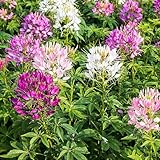


Plant Profile & Key Characteristics
Overview: A fast-growing herbaceous plant reaching 0.3-2 m, topped with airy clusters of fragrant spidery flowers. It is usually grown as an annual (perennial only in frost-free climates) for bedding and cutting.
Quick Specifications
| Specification | Attribute |
|---|---|
| Plant Type / Life Cycle | Annual or short-lived perennial (herbaceous) |
| Foliage Type | Herbaceous — evergreen in frost-free climates, otherwise grown as an annual |
| Mature Size | 0.3-2 m (1-6 ft) |
| Growth Rate | Fast |
| Root System | Taproot |
| Hardiness | USDA zone 5+ |
Growth Form & Structure
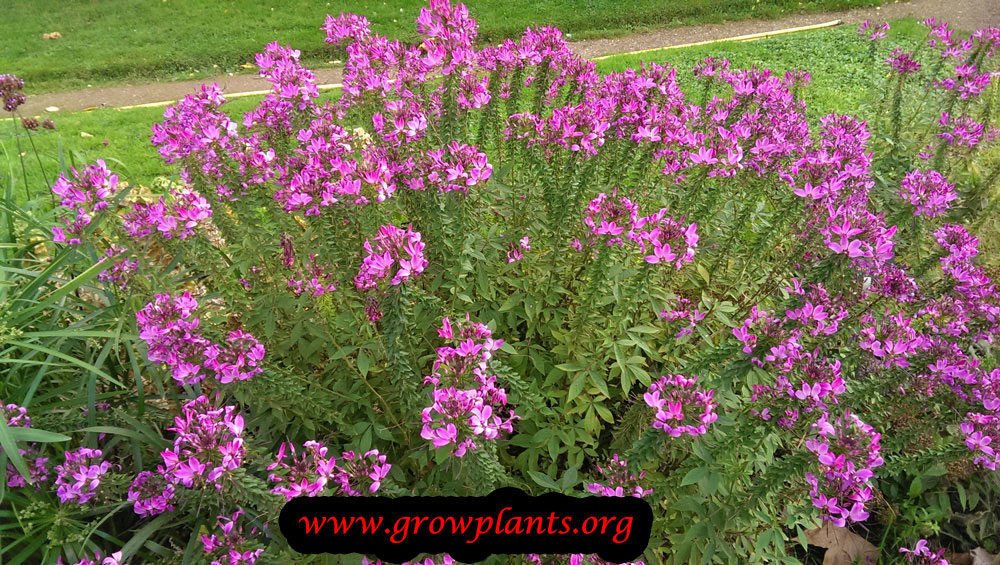
- Height & Spread: 0.3-2 m (1-6 ft); can be grown in containers and may need light support
- Growth Habit & Form: Upright branching herbaceous plant topped with airy flower clusters
- Lifespan & Maturity: Fast-growing; flowers in its first season and is usually grown as an annual
Anatomy & Physical Features
- Leaves & Foliage: Green palmately compound leaves with elliptic leaflets joined at the base like a hand with about seven fingers
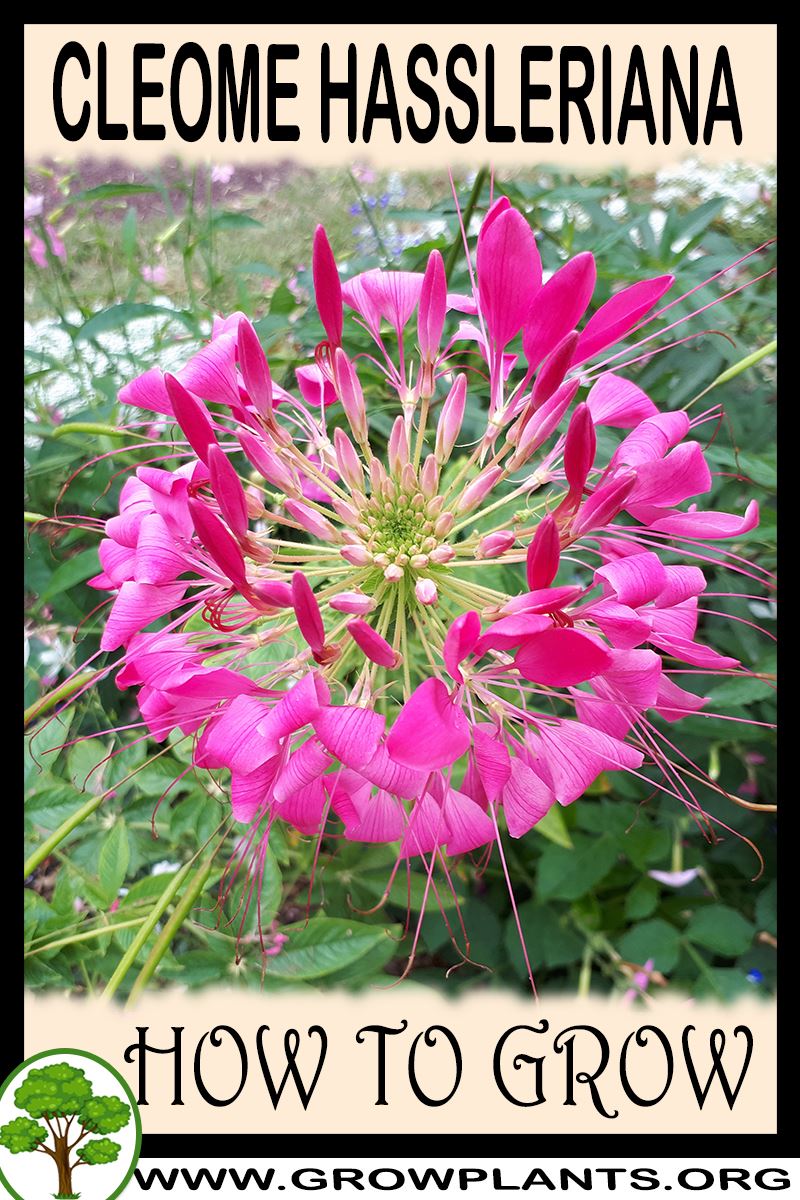
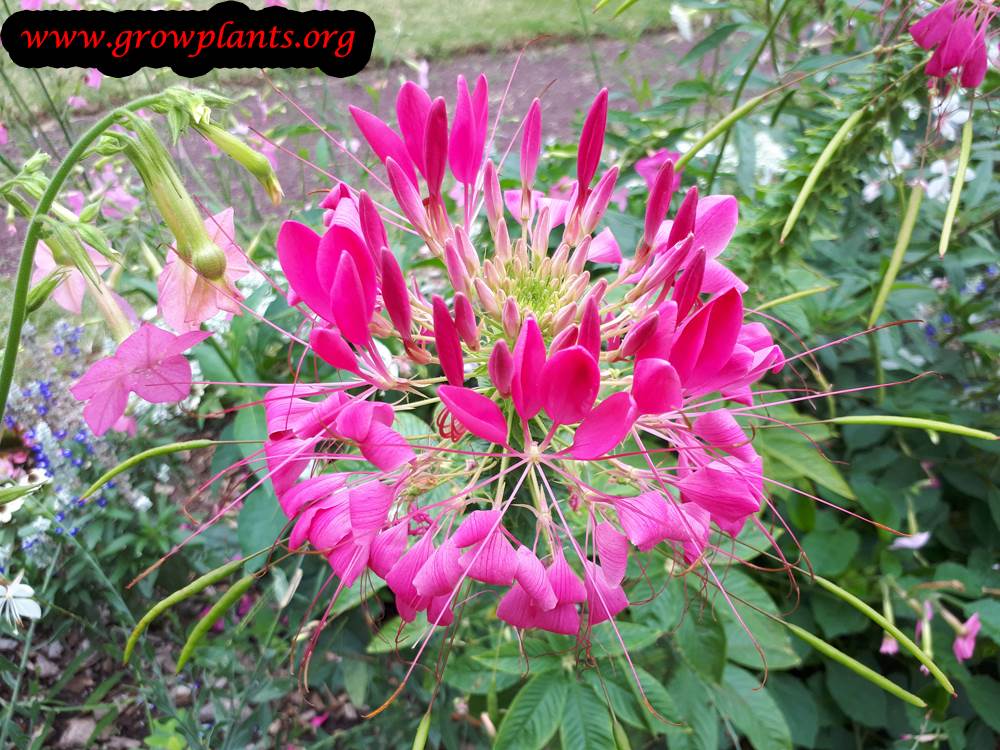
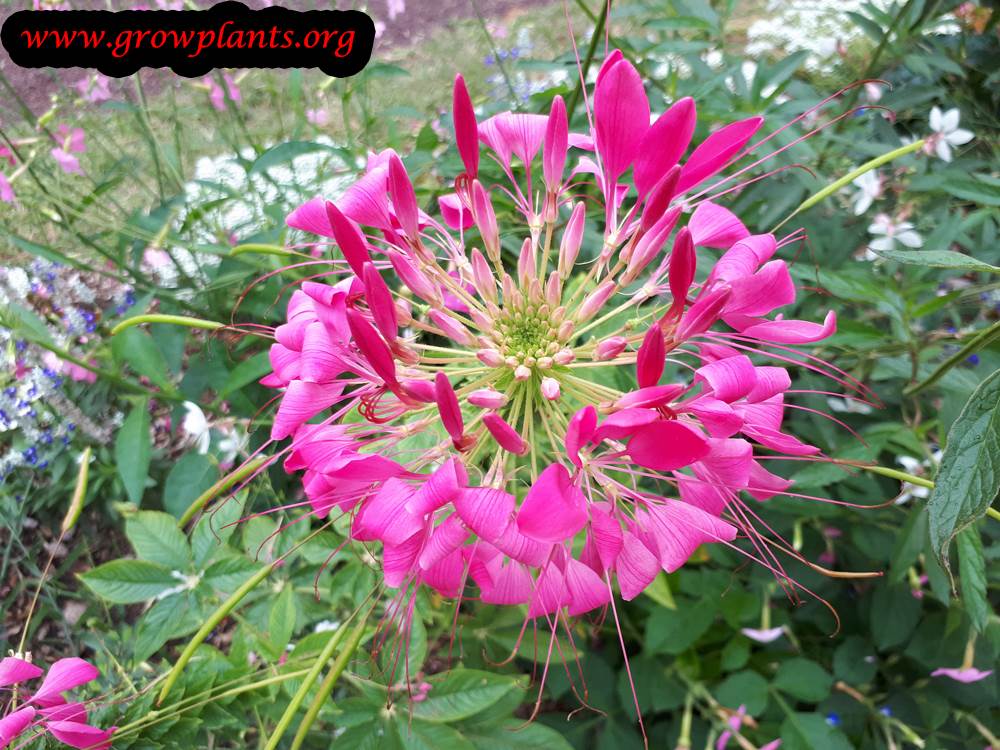
- Flower Characteristics: Fragrant spidery flowers in pink, white, purple, yellow or orange, with long protruding stamens
Primary Uses & Landscape Value
- Functional & Ornamental Roles: Ornamental bedding and cut flower; fragrant and attracts pollinators (can self-seed freely)
Care Guide: Planting, Soil & Watering
Overview: Cleome is a fast-growing warm-season annual (short-lived perennial in frost-free zones, hardy from about zone 5) that thrives in full sun to light shade. It performs best in average, well-draining garden soil and needs only moderate moisture, tolerating short dry spells once its deep roots establish.
Quick Care Requirements
| Requirement | Ideal Condition |
|---|---|
| Planting Season | In spring after the last frost (spring through autumn in warm zones) |
| Growth Rate | Fast |
| Soil Type | Average, well-draining garden soil; tolerates lean soil |
| Water Need | Moderate – let the top few cm dry between waterings |
Planting & Establishment
- Best Planting Season: Sow or transplant in spring once the soil has warmed and frost has passed; in frost-free areas it can also go in through summer and autumn.
- How to Plant:
- Hole Preparation: Dig a hole a little wider than the root ball so the loosened roots spread easily.
- Soil Amendments: Work a little compost into average soil; cleome is not fussy and over-rich ground encourages floppy growth.
- Planting Depth: Set the plant at the same depth it grew in its pot, keeping the root collar at soil level.
- Growth Speed & Expectations: A fast grower that reaches its 0.3–2 m (1–6 ft) height in a single warm season; tall plants may need a discreet support to lean on.
Soil, Watering & Drainage Care
- Soil Mix & Drainage Needs: Any free-draining soil suits it, and sharp drainage prevents root rot; in containers use a standard well-aerated potting mix.
- Watering Schedule & Technique:
- Young / Newly Planted: Keep newly sown or transplanted cleome evenly moist until it establishes over the first few weeks.
- Established: Water established plants deeply but infrequently, letting the top few cm dry out first — they are quite drought-tolerant.
- Seasonal Adjustments: Water more in peak summer heat and back off in cool, wet weather.
Climate, Light & Hardiness
Cleome is a warm-season plant grown as a perennial in frost-free climates and as a fast, heat-loving annual almost everywhere else; USDA zone 5 and above supports its use, since cold winters simply end the topgrowth each year rather than making the plant unsuitable.
Quick Climate Specifications
| Climate Zones | Mediterranean, subtropics, temperate, tropics |
|---|---|
| USDA Hardiness Zones | 5 and warmer |
| Frost Tolerance | Low |
| Light Conditions | Full Sun to Half Shade |
Sunlight & Light Exposure
Optimal Light Setup
Full sun gives the best flowering and sturdiest growth.
Temperature Extremes & Hardiness
USDA Hardiness & Regional Limits
Zone 5+ reflects where Cleome can be grown, not where it survives winter as topgrowth: in the cooler part of that range it is grown as a warm-season annual planted after frost danger passes, while in frost-free tropical and warm-subtropical climates it can persist and behave as a short-lived perennial.
Cold Damage & Winter Protection
Frost kills topgrowth, which is why cold-climate gardeners treat it as an annual.
Frost Sensitivity
Low; even a light frost typically ends the growing season.
Extreme Heat Tolerance
Very good; it is a genuine warm-season plant that thrives through summer heat.
Wind, Humidity & Microclimate
Wind Tolerance
Moderate; taller plants sometimes need support in exposed, windy sites, per the plant's own care notes.
Growing in Pots, Balconies & Indoors
Spider Flower (Cleome) is not a houseplant – the grower confirms – but it makes a bold container plant for a sunny balcony or patio, its airy spidery blooms rising through the warm season. It is a tall annual (0.3-2 m) that thrives on heat and sun and sometimes wants something to lean on.
Quick Details
- Container Size: A large, deep pot to support a tall plant and hold enough moisture
- Indoor Suitability: Not a houseplant; a sun-hungry annual that needs strong outdoor light
- Best Spot: Full sun to part shade
- Soil & Drainage: Well-drained potting mix
- Watering in Pots: Average – keep evenly moist through the warm growing season
Indoors & On the Windowsill
- Why not indoors: The grower does not rate it as a houseplant – it is a tall, sun-loving annual that grows leggy and flops without strong outdoor light.
- Seasonal plant: Grown fresh from seed each warm season, it is not kept on as a pot plant over winter.
On a Balcony or Patio
- Light & wind: Give it a hot, sunny spot; being tall it may need staking or a sheltered corner on a windy balcony. Pots dry fast in heat, so check moisture often.
- Practicalities: Use a large, stable pot and provide support as the plant gains height.
Choosing the Pot, Soil & Long-Term Care
- Pot & drainage: Use a large, deep pot with generous drainage holes and no standing-water saucer – this plant hates wet feet. Terracotta is ideal because it breathes and dries out fast.
- Potting mix: A gritty, free-draining mix – loam or potting soil cut with coarse sand, perlite or grit; avoid heavy, water-holding composts.
- Feeding: Feed only lightly through the growing season; container plants lose nutrients to leaching, but this one prefers lean conditions to soft, overfed growth.
- Repotting: Pot up or refresh the mix every couple of years once roots fill the pot; take the chance to check drainage and trim any dead roots.
Fertilizing & Feeding
A moderate feeder: this fast-growing warm-season bloomer benefits from steady light feeding through summer to keep its fragrant, multi-colored flower clusters coming until the season ends.
Quick Fertilizing Specs
| Feeding Level | Moderate feeder |
|---|---|
| Main Nutrient Priority | Balanced feeding with adequate nitrogen and potassium to support fast growth and continued blooming |
| Best Feeding Period | Through the warm growing season as the plant grows and flowers |
| Organic Options | Compost worked into the soil at planting |
| Reduce/Stop Feeding | Ease off feeding as the season ends and the plant naturally declines |
| Micronutrients | Usually adequate from a complete fertilizer in average garden soil |
| Soil pH | Tolerates a wide range of well-drained soil |
Feeding by Growth Stage
Establishment and early growth
Support fast early growth after planting seedlings or direct sowing in warm weather.
| Nutrient direction | A balanced fertilizer with adequate nitrogen fuels this plant’s naturally fast early growth. |
|---|---|
| Timing | After planting or once seedlings are established in warm weather. |
| Frequency | A light feeding at planting helps the fast-growing plant get going. |
| Fertilizer types | A balanced complete fertilizer, Compost worked into the planting soil |
| Precautions | Provide support for tall stems if needed rather than compensating with extra fertilizer. |
Summer to autumn bloom
Sustain the long run of fragrant, multi-colored flower clusters and their pollinator visits.
| Nutrient direction | Continued balanced feeding with adequate potassium supports steady flowering through the season. |
|---|---|
| Timing | Through summer and into autumn as flowers continue to open. |
| Frequency | An occasional light feeding through the bloom season keeps flowering steady. |
| Fertilizer types | A balanced complete fertilizer |
| Precautions | Avoid excess nitrogen late in the season, which can favor leafy growth over continued flowering. |
End-of-season decline
Let the plant finish its cycle as the warm season ends, whether grown as an annual or a declining perennial.
| Nutrient direction | No supplemental feeding is needed as the plant’s growing season closes. |
|---|---|
| Timing | As cooler weather arrives at the end of the growing season. |
| Frequency | No feeding during this end-of-season decline. |
| Fertilizer types | No feeding at this stage; the plant is finishing its cycle and no longer needs fertilizer. |
| Precautions | Withhold fertilizer as growth winds down; clear spent plants once they finish rather than feeding them further. |
Nutrient Deficiency Signs & Corrections
Growth is slow and stunted for this normally fast grower, with pale lower leaves.
| Possible causes | low soil fertility, leaching from watering in fast-draining soil, competition from crowded planting |
|---|---|
| Appears first on | older, lower leaves |
| What to check | soil fertility and feeding history, planting density, watering and drainage |
| Possible correction | Apply a balanced fertilizer with adequate nitrogen and thin overcrowded plantings. |
Leaf edges appear scorched or yellow while flowering slows.
| Possible causes | low soil potassium, heavy nitrogen feeding without balancing potassium, sandy soil prone to leaching |
|---|---|
| Appears first on | older leaf margins |
| What to check | balance of recent fertilizer used, soil texture and drainage, flowering compared to earlier in the season |
| Possible correction | Switch to a balanced fertilizer supplying adequate potassium alongside nitrogen. |
Leaf margins brown or the plant wilts despite regular watering.
| Possible causes | fertilizer salt buildup from frequent feeding, heat stress compounding root stress, inconsistent watering concentrating salts |
|---|---|
| Appears first on | leaf margins and tips |
| What to check | recent fertilizer amounts, watering consistency, ambient heat and stress |
| Possible correction | Ease off feeding, water thoroughly to flush salts, then resume lighter feeding. |
Pruning, Training & Seasonal Maintenance
Cleome is grown as a fast, tall annual (or short-lived tender perennial in frost-free climates) prized as a cut flower, and its pruning needs are correspondingly light: an early pinch of young plants to encourage bushier branching, ongoing deadheading through the bloom season to tidy spent flower/seed heads and curb the aggressive self-seeding which is invasive, and full removal at season’s end once frost kills the plant. There’s no woody framework or persistent flowering wood to manage – it blooms continuously at the top of each raceme as it elongates through the season.
Quick Pruning & Maintenance Specs
| Pruning Tolerance | Low–Moderate (grooming/pinching, not structural) |
| Primary Pruning Window | Pinch when young; deadhead through the bloom season; remove at season’s end |
| Typical Frequency | Pinch once early; deadhead every week or two while flowering |
| Main Objective | Encourage bushy branching, prolong bloom, limit self-seeding, end-of-season cleanup |
| Young Plant Priority | Pinch the growing tip once a few sets of leaves have formed, to force branching low down |
| Mature Plant Priority | Deadhead spent racemes regularly |
| Best Tool Type | Precision snips or fingers |
| Avoid Heavy Pruning During | None critical, though hold off on the first pinch until seedlings are well rooted |
Pruning by Plant Age & Size
Newly Established / Young
Pinch the growing tip once established, to encourage branching and a fuller, less leggy plant – the one formative step this species benefits from.
Mature / Flowering
Ongoing deadheading of spent racemes as they finish blooming and start forming seed pods, both to tidy the plant and to reduce the volume of self-sown seedlings the following year, since this species can behave invasively.
Seasonal Pruning Schedule
Ongoing Sanitary
Objective: prolong bloom and limit self-seeding. Remove: spent flower racemes/developing seed pods as they fade, before they fully set and drop seed. Expected response: continued flowering and fewer volunteer seedlings next year.
End-of-Season Removal
Once frost kills the plant (or, in frost-free climates where it persists longer, once the display fades), cut down and remove the dead material.
Special Growth to Remove
- Spent flower racemes/developing seed pods – removed regularly through the season to limit self-seeding and keep new buds coming.
- The whole plant at season’s end once frost-killed.
Container & Small-Space Pruning
Cleome gets tall (up to roughly 2m per the source size data) and can flop, so container specimens benefit from the same early pinch to keep growth bushier and more self-supporting, plus staking in exposed spots. Deadhead more diligently in small beds/containers where volunteer seedlings from dropped seed would be unwelcome.
Tools
Precision snips for deadheading and the formative pinch – note the stems and seed pods can be sticky and somewhat spiny, so light gloves are worth using even for this soft-stemmed annual.
Tool Hygiene & Disease Risk
Routine – clean tools are sufficient; no notable transmissible disease risk documented beyond the aphid/mealybug pressure already noted.
Cut Placement & Technique
Pinch just above a leaf node on young plants. Deadhead spent racemes back to the next side bud or leaf joint to keep the plant tidy and encourage continued branching.
Common Pruning Mistakes
- Skipping the early pinch and ending up with a single tall, leggy, flop-prone stem.
- Letting spent flowers go to seed unchecked, which – given this species’ documented invasive/self-seeding tendency – can produce a heavy volunteer-seedling problem the following year.
When NOT to Prune
No strong "don’t prune" window for this fast annual, though avoid pinching very young, not-yet-established seedlings. There’s no point pruning for renewal once frost has killed the plant – simply remove it.
Recommended Tools (by task)
- precision_snips – pinching young growth and deadheading spent racemes on this soft, fast-growing annual.
Propagation Guide
Cleome is propagated almost exclusively from seed, whether direct-sown or started as seedlings for transplanting, and this is the standard and only practical method for this fast-growing annual. It germinates and grows readily, and self-sows freely in the garden — part of why it can behave as an invasive self-seeder in favorable climates.
Quick Propagation Specs
| Best Propagation Method | Seed (direct sow or seedling transplant) |
| Propagation Difficulty | Easy |
| Seed True-to-Type | Usually true-to-type for open-pollinated types; mixed-color strains vary |
| Best Propagation Season | Spring, for annual planting; can also be sown in succession into summer |
| Seed Germination Time | Typically one to two weeks in warm conditions |
| Germination Temperature | Warm, roughly 21–27°C (70–80°F) |
| Seed Sowing Depth | Sow shallowly; the fine seed benefits from only a light covering |
Growing from Seed
Sowing Season
Sow in spring for annual display, once the warm season has arrived; in mild climates plants may continue setting seed into summer and autumn.
Sowing Depth & Orientation
Cover seed lightly — it does not need to be buried deep.
Germination Conditions
Cleome germinates best in warm soil; cool, wet conditions slow and reduce germination.
Germination Time
Usually within one to two weeks under warm conditions, though timing can vary with soil temperature and seed freshness.
Seedling Care
Space seedlings to allow for the plant’s eventual size, and be aware that self-sown seedlings often appear readily around existing plants the following season — remove unwanted volunteers where the plant’s self-seeding, invasive tendency is a concern.
Bloom & Flower Guide
Quick Details
- Bloom Season: Summer and autumn
- Flower Appearance: Airy heads of flowers with long, whiskery stamens (the ‘spider’ effect), in pink, white, purple, yellow or orange
- Edibility: Ornamental / cut flower – grown for its blooms, not eaten
Detailed Blooming Overview
Cleome, the spider flower, throws up airy, rounded heads of flowers through summer and autumn. Each bloom has long, whiskery stamens that stand well clear of the petals, giving the whole head a spidery, see-through look. Colours run pink, white, purple, yellow and orange, and the lightly fragrant flowers are good for cutting and much visited by bees and evening hawk moths.
Flower Characteristics
- Four upper oval petals with long, projecting stamens (the ‘spider’ effect).
- Colours pink, white, purple, yellow or orange; lightly fragrant.
- Carried in rounded heads that keep rising as new flowers open.
Bloom Care & Thinning
- Managing the bloom: Deadhead to prolong flowering and to limit heavy self-seeding.
Pests, Diseases & Troubleshooting
Overview: Cleome is a tough, fast-growing annual that most pests leave alone – its spiny stems and pungent, mustard-scented foliage deter browsers and many insects. Trouble is usually limited to sap-suckers in crowded, stressed plantings and a few foliar fungi where air is still and humid, so good spacing and airflow do most of the work.
Quick Troubleshooting Overview
| Issue / Pest | Main Symptom | Primary Solution |
|---|---|---|
| Aphids | Sticky, distorted new growth and flower stalks; clustered insects | Water jet, insecticidal soap |
| Spider mites | Stippled, dull leaves with webbing in heat and drought | Hose foliage, raise humidity, horticultural oil |
| Whitefly | Clouds of tiny white flies under leaves; sooty mold | Yellow sticky traps, insecticidal soap |
| Caterpillars | Chewed leaves; Cleome is a Brassicales relative and hosts cabbage-family larvae | Hand-pick, Bt (Bacillus thuringiensis) |
| Rust | Orange-brown pustules on leaf undersides | Remove affected leaves, improve airflow, sulfur |
| Leaf spot | Dark spots and yellowing on lower leaves | Space plants, avoid overhead watering |
Common Pests & Management
- Aphids (Aphis / Myzus spp.):
- Symptoms: Soft-bodied insects clustering on flower stalks and shoot tips, causing sticky honeydew, curled growth and attendant ants; can spread viruses.
- Prevention & Control: Hose off with water, repeat as needed; insecticidal soap or neem oil for heavy colonies; encourage ladybirds and hoverflies.
- Two-spotted spider mite (Tetranychus urticae):
- Symptoms: Fine pale stippling and a dusty, bronzed look, with delicate webbing beneath leaves in hot, dry conditions.
- Prevention & Control: Raise humidity and hose foliage; horticultural or neem oil and insecticidal soap; avoid drought-stressing plants.
- Whitefly (Trialeurodes vaporariorum):
- Symptoms: Tiny white flies rising in clouds when disturbed; nymphs on leaf undersides excrete honeydew that fosters sooty mold.
- Prevention & Control: Yellow sticky traps to monitor and trap; insecticidal soap or oil on undersides in the evening; encourage parasitic wasps.
- Cabbage-family caterpillars (Pieris / Trichoplusia / harlequin bug):
- Symptoms: Chewed, holed leaves; Cleome sits in the Brassicales and can host cabbage whites, loopers and harlequin bugs (it is even used as a trap crop).
- Prevention & Control: Hand-pick larvae and eggs, use Bt for caterpillars, and knock harlequin bugs into soapy water; row cover on young plants.
Diseases & Fungal Issues
- Rust (Puccinia spp.):
- Symptoms: Orange to reddish-brown powdery pustules, mainly on leaf undersides, with yellowing above.
- Treatment & Management: Remove affected leaves promptly, water at the base, improve spacing and airflow; sulfur spray if persistent.
- Leaf spot (Cercospora / Alternaria):
- Symptoms: Dark brown spots that enlarge and merge, yellowing and dropping lower leaves in humid weather.
- Treatment & Management: Avoid overhead watering, clear fallen debris, space plants for airflow; copper fungicide only if severe.
- Damping off (Pythium / Rhizoctonia):
- Symptoms: Seedlings collapse at the soil line and topple, roots thin and brown.
- Treatment & Management: Sow in sterile, free-draining mix, avoid overwatering and crowding, and ensure good light and airflow for seedlings.
Growing Difficulties & Abiotic Problems
- Leggy, floppy growth:
- Cause & Symptoms: Over-rich soil, too much shade or crowding produces tall weak stems that flop and need staking.
- Correction Strategy: Grow in full sun in lean-to-average soil, space adequately, and avoid heavy nitrogen feeding.
- Reduced bloom:
- Cause & Symptoms: Insufficient sun or excess nitrogen gives lush foliage but few of the airy flower heads.
- Correction Strategy: Site in full sun and use a balanced-to-low-nitrogen feed; deadhead lightly to prolong bloom.
- Root rot:
- Cause & Symptoms: Wet, heavy soil rots the roots, causing wilting and collapse.
- Correction Strategy: Plant in well-drained soil, water only when the top few centimetres dry, and avoid waterlogged sites.
What Helps – Products & Tools
Cultural steps – full sun, good spacing and airflow, base watering – prevent most issues. When needed, insecticidal soap or neem/horticultural oil handle aphids, mites and whitefly, Bt targets caterpillars, yellow sticky traps catch whitefly, and a sulfur fungicide checks rust.