


Plant Profile & Key Characteristics
Overview: Tilia europaea (Common lime / linden) is a large deciduous shade tree reaching 10-30 m (30-100 ft), grown for ornament and its fragrant, pollinator-friendly flowers. It is a long-lived temperate perennial whose leaves, flowers and sap are all edible.
Quick Specifications
| Specification | Attribute |
|---|---|
| Plant Type / Life Cycle | Perennial (deciduous tree) |
| Foliage Type | Deciduous |
| Mature Size | 10-30 m x broad crown (30-100 ft) |
| Growth Rate | Moderate to fast |
| Toxicity | Non-toxic / edible (leaves, flowers and sap) |
| Hardiness | USDA zones 3-8 |
Growth Form & Structure
- Height & Spread: A full-size 10-30 m (30-100 ft) shade tree with a broad crown; too large for container culture and not suited to indoors
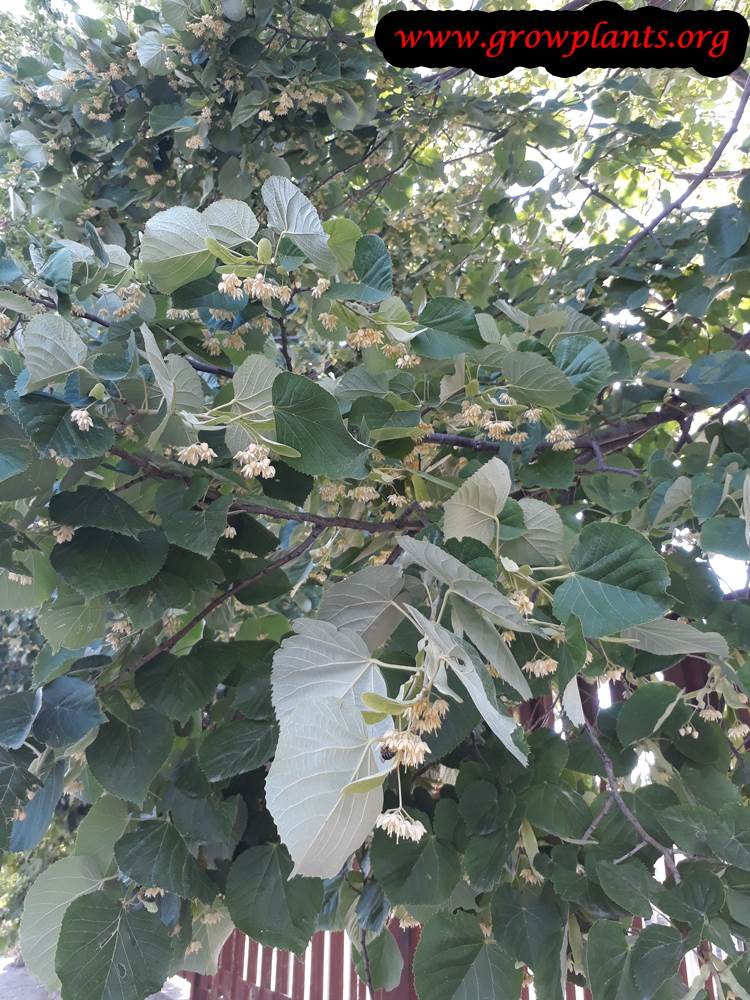
- Growth Habit & Form: Large deciduous tree with a straight trunk and dense, rounded to broadly domed canopy
- Lifespan & Maturity: Very long-lived (many decades to centuries); takes many years to reach full height
Anatomy & Physical Features
- Trunk & Bark: Single upright trunk with greyish, finely fissured bark; often produces basal suckers
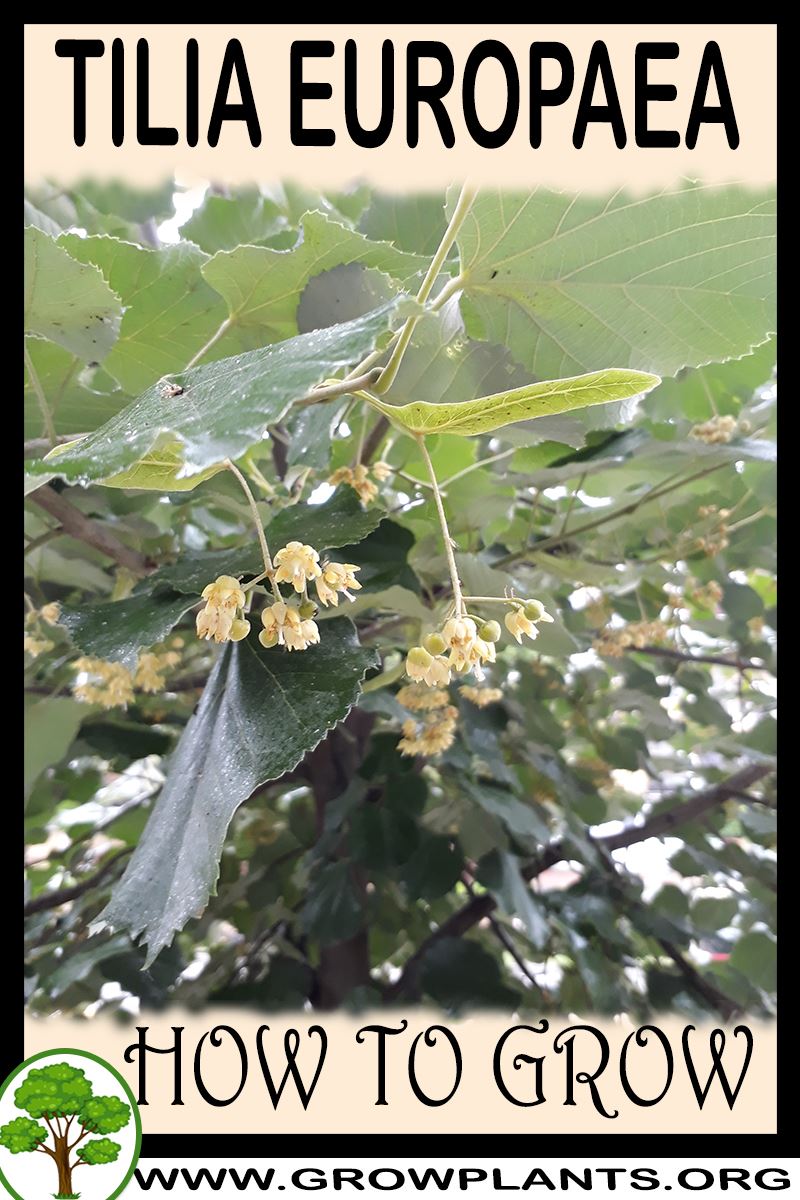
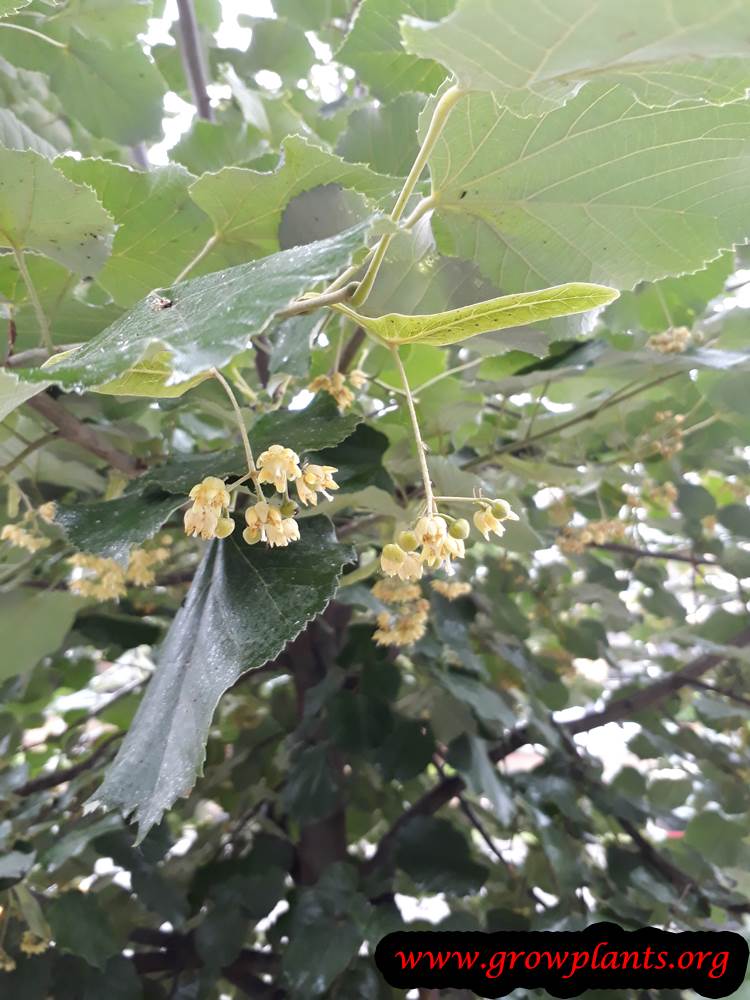
- Leaves & Foliage: Green, heart-shaped leaves with serrated margins; young leaves are edible
- Flower Characteristics: Small, fragrant yellow-white five-petalled flowers that strongly attract pollinators
Primary Uses & Landscape Value
- Edible Uses: Young leaves eaten raw or cooked; the fragrant flowers are used to make herbal tea and other beverages; the sap is edible and can be used as a sweetener
- Functional & Ornamental Roles: Ornamental shade and avenue tree, pollinator and nectar tree (valued for honey), and a source of edible leaves and flowers
Care Guide: Planting, Soil & Watering
Overview: Common lime (Tilia europaea) is a large, cold-hardy deciduous shade tree for temperate gardens (hardiness zones 3-8), happiest in full sun with room for its wide canopy. It grows best in deep, fertile, moisture-retentive but well-draining soil and appreciates steady moisture, especially while young.
Quick Care Requirements
| Requirement | Ideal Condition |
|---|---|
| Planting Season | While dormant, from late autumn to early spring |
| Growth Rate | Moderate to fast |
| Soil Type | Deep, fertile, moisture-retentive and well-draining |
| Water Need | Moderate to high; keep the soil evenly moist, especially when young |
Planting & Establishment
- Best Planting Season: Plant while the tree is dormant, from late autumn through early spring before growth resumes, avoiding frozen ground.
- How to Plant:
- Hole Preparation: Dig a hole as deep as the root ball and two to three times as wide, loosening the surrounding soil so the roots can spread out.
- Soil Amendments: Mix compost or well-rotted organic matter into heavy or poor soil to enrich it and improve moisture retention.
- Planting Depth: Set the tree so the root collar sits level with the surrounding soil – never bury the trunk – then firm and water in well.
- Growth Speed & Expectations: A vigorous grower that puts on height quickly in good conditions, ultimately forming a large 10-30 m shade tree, so allow it plenty of room.
Soil, Watering & Drainage Care
- Soil Mix & Drainage Needs: Prefers a deep, fertile loam that holds moisture yet drains freely; avoid waterlogged spots and mulch around the base to conserve moisture and keep the roots cool. It is not suited to container growing.
- Watering Schedule & Technique:
- Young / Newly Planted: Water deeply and regularly through the first few seasons to build a strong, deep root system.
- Established: Once established it is fairly self-reliant, but water deeply during prolonged dry spells.
- Seasonal Adjustments: More water through summer heat; little to none over the cold, dormant winter months.
Climate, Light & Hardiness
Common lime (linden) is a strictly temperate deciduous shade tree that needs full sun and a genuinely cold winter as part of its normal growth cycle. It is very cold-hardy across USDA zones 3–8.
Quick Climate Specifications
| Climate Zones | Temperate |
|---|---|
| USDA Hardiness Zones | 3–8 |
| Frost Tolerance | High |
| Light Conditions | Full Sun |
Sunlight & Light Exposure
Optimal Light Setup
Requires full sun for healthy growth as a large shade tree.
Temperature Extremes & Hardiness
USDA Hardiness & Regional Limits
Cold-hardy across USDA zones 3–8, requiring a real cold winter rather than a mild, frost-free one to grow and flower normally.
Cold Damage & Winter Protection
As a fully deciduous tree adapted to cold climates, it drops its leaves and goes completely dormant in winter, needing no winter protection once established.
Frost Sensitivity
Tolerates hard winter freezes without difficulty once dormant.
Extreme Heat Tolerance
At the warmer edge of its range (zone 7–8) summer heat combined with insufficient water is more limiting than winter cold.
Wind, Humidity & Microclimate
Rainfall & Seasonal Moisture
Prefers average to generous water availability through the growing season rather than a dry summer climate.
Growing in Pots, Balconies & Indoors
The common lime (Tilia europaea) is a large tree (10-30 m), so it is not a long-term container or indoor plant. The grower marks it as neither a houseplant nor a pot plant.
Quick Details
- Container Size: Not suited to containers long term
- Indoor Suitability: Not a houseplant – a full-size tree
- Best Spot: Full sun, open ground
- Soil & Drainage: a light, aerated potting mix – peat or coir blended with perlite or vermiculite, plus some organic matter/compost (for young/bonsai plants)
- Watering in Pots: Frequent while young in a tub – pots dry fast; avoid waterlogging
Indoors & On the Windowsill
- Not a houseplant: The grower marks it as unsuitable indoors – it is a full-size tree that needs open ground and full light.
On a Balcony or Patio
- Not for pots: The grower does not recommend container growing – it simply gets too large.
- Young plants: A large tub can hold a sapling for a short spell, but plan its final position in open ground with room to spread.
Choosing the Pot, Soil & Long-Term Care
- Young / bonsai only: If you grow it in a pot at all, keep it to the juvenile stage in a large, free-draining tub with drainage holes.
- Potting mix: a light, aerated potting mix – peat or coir blended with perlite or vermiculite, plus some organic matter/compost.
- Feeding & watering: Potted plants exhaust their feed faster because water washes nutrients out, so feed a little more often than plants in open ground during active growth; potted trees also dry out fast, so water more attentively than one in the ground.
- Repotting: Refresh the top of the mix each growing season and pot up or divide roughly every couple of years, trimming crowded roots – but recognise that a vigorous tree will soon need the open ground.
Fertilizing & Feeding
A moderate feeder: this large shade tree with fragrant, pollinator-friendly flowers grows well with balanced feeding while establishing, then needs only light maintenance feeding once mature, resting fully through winter dormancy.
Quick Fertilizing Specs
| Feeding Level | Moderate feeder while establishing, lighter once mature |
|---|---|
| Main Nutrient Priority | Balanced feeding with adequate nitrogen for steady canopy growth |
| Best Feeding Period | Spring through the active growing season |
| Organic Options | Compost or leaf mold worked into the root zone |
| Reduce/Stop Feeding | Stop feeding well before the growing season ends so growth can harden off before dormancy |
| Micronutrients | Usually met by a complete fertilizer; correct only a diagnosed deficiency |
| Soil pH | Tolerates a range of soils; performs best in fertile, well-drained ground |
Feeding by Growth Stage
Establishment after planting
Help a newly planted tree build roots and settle into the site.
| Nutrient direction | A balanced, nitrogen-forward fertilizer supports steady establishment growth. |
|---|---|
| Timing | Spring through the growing season in the first years after planting. |
| Frequency | Light, regular feedings during the growing season, tapering off as the tree matures. |
| Fertilizer types | A balanced complete fertilizer, Compost or leaf mold worked into the planting area |
| Precautions | Avoid heavy feeding, which can produce soft growth that draws in aphids and other sap-feeding pests. |
Established tree, active-season growth
Maintain healthy canopy growth and good flowering for pollinators on an established tree.
| Nutrient direction | Light, balanced feeding sustains steady growth without forcing excess soft foliage. |
|---|---|
| Timing | Spring into the warm growing season. |
| Frequency | An occasional light feeding is usually enough for an established tree. |
| Fertilizer types | A balanced complete fertilizer, used sparingly, A layer of compost or organic mulch over the root zone |
| Precautions | Keep feeding modest; overfeeding encourages lush, tender growth that is more attractive to aphids, and can also dilute the flavor of leaves or flowers harvested from the tree. |
Winter dormancy after leaf drop
Let the tree rest through winter dormancy without pushing new growth.
| Nutrient direction | None – withhold fertilizer while the tree is dormant. |
|---|---|
| Timing | From leaf drop in autumn through winter. |
| Frequency | No feeding during this dormant period. |
| Fertilizer types | No feeding at this stage; do not fertilize until new growth resumes in spring. |
| Precautions | Do not fertilize a dormant tree; feeding now risks salt buildup and can encourage tender growth that is vulnerable to cold. |
Nutrient Deficiency Signs & Corrections
Older leaves turn uniformly pale green or yellow and canopy growth slows.
| Possible causes | low available soil nitrogen, nitrogen leaching from heavy rain or irrigation, poor or compacted landscape soil |
|---|---|
| Appears first on | older, lower leaves |
| What to check | recent feeding history, soil organic matter, overall vigor and growth rate |
| Possible correction | Apply a nitrogen-containing balanced fertilizer during the growing season and improve soil organic matter. |
New leaves turn yellow while the veins stay distinctly green.
| Possible causes | high or alkaline soil pH tying up available iron, compacted or poorly drained soil limiting root uptake, naturally low soil iron |
|---|---|
| Appears first on | newest growth at branch tips |
| What to check | soil pH, soil drainage and compaction, planting site conditions |
| Possible correction | Correct pH toward neutral where testing warrants it and apply a chelated iron product per its label. |
Interveinal yellowing on older leaves while the veins themselves stay green.
| Possible causes | low soil magnesium, heavy potassium feeding competing with magnesium uptake, leaching in light, sandy soils |
|---|---|
| Appears first on | older, lower leaves |
| What to check | soil magnesium status, recent fertilizer balance, soil texture and drainage |
| Possible correction | Apply a labeled magnesium source such as Epsom salt or a dolomitic amendment and rebalance overall feeding. |
Pruning, Training & Seasonal Maintenance
Common lime is unusually tolerant of hard pruning for a large shade tree, with a long tradition of being pollarded or pleached in European streets and avenues as well as grown as a free-form specimen. The main objective depends on which form is chosen; either way, the safest window is the dormant season (autumn into winter), and because flowers form on the current season’s new growth, dormant pruning does not sacrifice that year’s bloom. A known trade-off of this species’ vigour is a strong tendency to throw dense basal and epicormic shoots, especially after any hard cut.
Quick Pruning & Maintenance Specs
| Pruning Tolerance | High — one of the more hard-pruning-tolerant trees in general cultivation |
| Primary Pruning Window | Autumn to winter (dormant season) |
| Typical Frequency | Free-form specimen: as-needed every few years. Pollard/pleach form: annual to every 1-3 years |
| Main Objective | Structure and size control as a free specimen, or maintaining a formal pollard/pleach if trained that way |
| Young Plant Priority | Decide and commit early to either a single-leader free form or a pollard/pleach framework |
| Mature Plant Priority | Manage the vigorous basal/epicormic regrowth this species is known for |
| Best Tool Type | Bypass secateurs and loppers for regrowth management; pruning saw and pole pruner for structural cuts on a tree reaching 10-30 m |
| Avoid Heavy Pruning During | Active spring growth and while the crown is in full leaf |
Pruning by Plant Age & Size
Newly Established
Remove only damaged or dead growth; decide the intended long-term form (free-standing shade tree vs. pollard/pleach) early, since retraining later is far harder.
Young / Formative
For a free-standing tree, train a single central leader and well-spaced scaffold branches. For a pollard or pleached form, begin heading cuts to the chosen framework height/line while stems are still young and manageable, establishing the knuckles or lateral framework that will be recut repeatedly.
Mature / Established
Free-form specimens need mainly deadwood removal and periodic thinning of the dense epicormic growth this species produces along the trunk and major limbs. Pollards/pleached trees need their regular recut cycle to keep the framework tidy and prevent overly long, weakly attached regrowth.
Seasonal Pruning Schedule
Dormant/Winter
Objective: main structural cuts, or the annual/periodic pollard recut, while the tree is leafless. Because flowers develop on new growth produced after this prune, dormant cuts do not remove the coming season’s bloom.
Ongoing Sanitary
Basal and epicormic shoots can be reduced or removed through the growing season as they appear, particularly around the trunk base and old pollard knuckles.
Flowering Wood
Lime flowers form on the current season’s new shoots, produced after winter pruning. This means structural or pollard pruning in the dormant season removes old wood without sacrificing that year’s flower and honeydew-favouring aphid display — flowering resumes on the fresh growth that follows.
Structural Pruning & Training
If grown free-form, prioritise a strong single leader and well-spaced scaffold. If maintained as a pollard or pleached screen — both traditional, well-suited uses for this species — structure is defined by the recut framework rather than natural branching, and heavy annual regrowth is expected and normal, not a fault.
Special Growth to Remove
Common lime is well known for producing abundant basal shoots at the trunk base and dense epicormic (watersprout-like) growth along the trunk and limbs, especially after any hard cut or pollard recut. Remove excess basal shoots to keep the trunk clean, and thin epicormic growth on free-form trees rather than letting it accumulate into a tangle.
Tools
Bypass secateurs and loppers handle the frequent basal- and epicormic-shoot removal this species needs. A pruning saw and pole pruner are needed for structural cuts and pollard recuts on a tree that reaches 10-30 m.
Tool Hygiene & Disease Risk
Routine: no major transmissible disease is documented, though this species does attract heavy aphid populations. Aphid infestation and the sooty mould it causes are a pest issue, not something pruning treats — clean, sharp tools are sufficient for routine cuts, and thinning dense epicormic growth for airflow may modestly help but will not resolve aphid pressure on its own.
Cut Placement & Technique
Cut just outside the branch collar on structural cuts, never flush. On an established pollard, recut at or very near the same knuckle each cycle rather than progressively higher, to keep the framework compact and strong.
Heavy Pruning & Rejuvenation
Well tolerated: this is one of the more hard-pruning-tolerant trees in this batch, capable of sustaining repeated pollarding for decades. If converting an overgrown free-form tree to a pollard, or renewing a neglected one, expect a vigorous flush of regrowth the following season.
Post-Pruning Care
No feeding is needed after pruning, since this vigorous species regrows readily on its own. After a hard pollard recut, watch for the expected dense regrowth and thin it selectively rather than leaving every new shoot.
Common Pruning Mistakes
Starting a pollard framework too late, once branches are already large, producing oversized wounds; letting basal and epicormic shoots accumulate for years instead of removing them regularly; assuming pruning will control the tree’s characteristic aphid/honeydew problem.
When NOT to Prune
Avoid heavy structural work while the tree is in full leaf during the growing season; prefer the dormant window.
Recommended Tools (by task)
- bypass_secateurs — removing basal shoots and small epicormic growth.
- loppers — thicker epicormic growth and small structural branches.
- pruning_saw — structural cuts and pollard recuts on larger wood.
- pole_pruner — elevated pollard/structural cuts once the tree approaches its mature 10-30 m height.
Pruning Troubleshooting
| Problem | Possible Cause | What to Check | Corrective Action |
| Dense mat of shoots at the trunk base year after year | Normal vigorous basal-sprouting habit of this species | Frequency of removal in past seasons | Remove basal shoots on a regular annual schedule rather than letting them accumulate |
| Sticky leaves and blackened sooty mould on foliage | Aphid infestation, not a pruning fault | Presence of aphids/honeydew rather than recent pruning history | Address the aphid population directly; pruning for airflow offers only minor relief |
| Overly tall, heavy pollard knuckles with weak regrowth attachment | Recutting progressively higher each cycle instead of at the same point | Height and diameter of the knuckle compared to previous seasons | Recut at the established knuckle line consistently; do not let the framework climb higher each cycle |
Propagation Guide
Tilia europaea (common lime) is a naturally occurring hybrid that sets little viable seed, so vegetative propagation is essentially required, as the site’s own data confirms. Grafting, layering, and cuttings are all used commercially, with layering (including traditional stool-bed layering) and grafting being the most reliable practical methods; overall difficulty is moderate.
Quick Propagation Specs
| Best Propagation Method | Grafting or layering |
| Alternative Methods | Softwood/semi-hardwood cuttings; rooted basal suckers where present |
| Propagation Difficulty | Moderate |
| Seed True-to-Type | Not a practical method – this hybrid produces little viable seed |
| Vegetative True-to-Type | Yes |
| Best Propagation Season | Late winter (grafting, while dormant); early-mid summer (softwood cuttings); growing season (mound layering) |
| Cutting Rooting Time | Several weeks under mist, with hormone treatment improving results |
Stem Cuttings
Cutting Type
Softwood to semi-hardwood tip cuttings.
Best Timing
Early to mid-summer.
Cutting Preparation
Take non-flowering shoot tips and remove the lower leaves.
Rooting Setup
Free-draining propagating mix under mist or high humidity.
Rooting Hormone
Beneficial – improves an otherwise moderate strike rate.
Rooting Time
Several weeks.
Grafting & Budding
Why Grafting Is Used
Because this hybrid lime sets little viable seed, grafting is a standard way to reliably propagate a true-to-type tree, consistent with the site’s own note that grafting/vegetative reproduction is necessary.
Preferred Grafting Methods
Whip-and-tongue or side grafting; chip budding.
Rootstock
Seedling lime rootstock, commonly small-leaved lime (Tilia cordata).
Scion Selection
Dormant budwood or scionwood from a known, healthy tree.
Best Grafting Season
Late winter for bench grafting, while dormant; late summer for budding.
Graft Aftercare
Protect the graft union and watch for rootstock suckering below the graft.
Air & Ground Layering
Tilia responds well to layering. A traditional nursery method is stool (mound) layering: a stock tree is cut back hard, and as new shoots regrow from the base, soil or mulch is mounded around their base through the growing season to encourage rooting; the rooted shoots are severed from the parent stool the following dormant season.
Division, Offsets, Pups & Suckers
Tilia is well known for producing vigorous basal shoots and root suckers around the trunk. Where a sucker has developed its own independent root system, it can sometimes be severed and transplanted during dormancy; however, many suckers remain attached to the parent tree’s root system without independent roots of their own and are not viable as standalone divisions unless a cleanly rooted section is separated.
Bloom & Edible Flower Guide
Quick Details
- Bloom Season: Summer
- Time to First Bloom: A tree that flowers only on mature growth, typically after many years
- Flower Appearance: Small yellow-white five-petalled flowers, sweetly fragrant, in hanging clusters
- Edibility: The flowers are edible and famously used to make a soothing tea (tisane)
Detailed Blooming Overview
Common lime, or linden, is a large shade tree whose summer flowering fills the air with sweet scent and the hum of bees. The small yellow-white flowers hang in clusters, each backed by a papery wing-like bract, and are the classic source of linden-flower tea.
Flower Characteristics
- Small yellow-white flowers with five petals, sweetly fragrant
- Borne in hanging clusters, each attached to a distinctive pale, wing-like bract
Bloom Care & Thinning
- Pollination: Richly scented and full of nectar, the flowers are heavily worked by bees (linden is a prized honey source).
- Harvesting for tea: Gather the flowers just as they open on a dry day, then dry them for a calming tisane.
Fruit & Uses
Common lime (linden) offers three edible parts: young leaves eaten as a mild salad green, fragrant flowers used fresh or dried for a classic herbal tea, and spring sap that can be tapped and used as a sweetener. All three are eaten raw or with only light preparation, and none require special processing.
Quick Edible Specs
| Edible Parts | Leaves, Flowers, Sap |
| Main Use(s) | Leaves – culinary (salad, cooked green); Flowers – beverage (linden tea); Sap – sweetener |
| Eaten Raw or Cooked | Leaves raw or cooked; Flowers infused as tea; Sap used fresh or reduced |
| Preparation Required | Leaves – none; Flowers – dry or steep for tea; Sap – collect, and reduce by gentle heat if concentrating |
| Harvest Season | Leaves – spring/summer, once the tree is established; Flowers – during summer bloom; Sap – late winter/early spring before leaf-out |
| Time to First Harvest | Leaves and flowers can be gathered once the tree is established and flowering; exact bearing age not specified on site |
| Storage | Flowers dry well for later tea use; leaves are best used fresh; sap is perishable and best used soon after collection or reduced for longer keeping |
| Safety/Toxicity Caveat | No significant toxicity reported for leaves, flowers or sap; avoid over-harvesting flowers each year so the tree can still support the bees that rely on its bloom |
Leaves & Greens
The heart-shaped leaves with serrated margins are edible and can be eaten raw in salads or cooked as a mild green. The site confirms both raw and cooked use, with the youngest, most tender spring and early-summer leaves giving the best texture. Established trees can be picked without harm, though heavy repeated stripping of foliage will reduce the tree’s vigor in the same way over-pruning would.
Flowers & Flower Buds
The small, fragrant yellow-white flowers are the tree’s most famous edible part, traditionally dried and steeped as “linden flower tea” – a beverage use the site itself notes. Flowers are picked once fully open during the summer bloom and are best dried promptly out of direct sun to preserve their scent for later infusions. Because bees rely heavily on linden blossom for pollination, it’s worth leaving most of a bloom for pollinators and only collecting a portion for tea.
Pseudostem / Cane / Sap
The site notes the sap is edible and usable as a sweetener. As with other sap-bearing deciduous trees, this generally means tapping the trunk in late winter/early spring while sap is running, before leaf-out, then using it fresh or gently reducing it by heat to concentrate the sweetness; the site gives no exact yield or sugar content, and none is invented here.
Preparation, Uses & Safety
Leaves need no preparation beyond washing and are eaten fresh or lightly cooked. Flowers are simply dried or used fresh as an infusion; no toxic compounds are associated with linden flowers, though very old or insect-affected flowers are best avoided for tea. Sap needs no processing to use fresh, though reducing it by gentle heat concentrates it as a sweetener. No part of common lime is reported to be toxic; it is a long-established, low-risk edible tree in European tradition.
Pests, Diseases & Troubleshooting
Overview: The common lime (linden) is a large, generally robust deciduous tree whose most notorious problem is its heavy summer aphid population and the sticky honeydew and sooty mould that rain down beneath it. Beyond that, gall mites, scale and a handful of leaf fungi and wilts affect it, but mature trees tolerate most of these well. Management on a large tree is mostly cultural – encourage natural predators and accept minor cosmetic damage.
Quick Troubleshooting Overview
| Issue / Pest | Main Symptom | Primary Solution |
|---|---|---|
| Lime / linden aphid | Sticky honeydew, sooty mould under the canopy | Encourage predators; wash small trees; tolerate on large ones |
| Lime nail-gall mite | Red finger-like galls standing up on leaves | Cosmetic only – no treatment needed |
| Sooty mould | Black film on leaves and anything below | Control aphids/scale; wash foliage where reachable |
| Scale insects | Brown bumps on twigs, honeydew, weak growth | Horticultural oil on small trees; encourage parasitoids |
| Caterpillars | Chewed, skeletonised leaves in spring | Tolerate; Bt for heavy defoliation on small trees |
| Powdery mildew / leaf spot | White coating or brown blotches on leaves | Rake leaves; improve air; usually cosmetic |
Common Pests & Management
- Lime (Linden) Aphid (Eucallipterus tiliae):
- Symptoms: Dense colonies of small yellow-green aphids on leaf undersides through summer, producing copious sticky honeydew that coats leaves, cars and paving below and blackens with sooty mould. The tree’s single most conspicuous pest.
- Prevention & Control: On established trees this is largely a cosmetic nuisance best tolerated – encourage ladybirds, lacewings, hoverflies and parasitic wasps, which usually bring numbers down. On small or young trees, wash foliage and apply insecticidal soap or horticultural oil; avoid broad-spectrum insecticides that kill the predators.
- Lime Nail-Gall Mite (Eriophyes tiliae):
- Symptoms: Distinctive red, finger-like galls standing upright on the upper leaf surface. Alarming in appearance but entirely harmless to the tree’s health.
- Prevention & Control: No control is needed or worthwhile – the galls do not affect vigour. Simply rake and remove fallen leaves if desired for tidiness.
- Scale Insects (Coccidae (e.g. Pulvinaria spp.)):
- Symptoms: Brown, tan or waxy bumps and cottony egg masses on twigs and branches, with honeydew, sooty mould and, when heavy, weak growth and dieback.
- Prevention & Control: Encourage parasitic wasps and predatory beetles. On small trees, apply horticultural oil in the dormant season and again as crawlers emerge, coating twigs thoroughly.
- Red Spider Mite (Eotetranychus / Tetranychus spp.):
- Symptoms: Fine bronzing and stippling of foliage with faint webbing in hot, dry summers, giving the canopy a dull, tired look.
- Prevention & Control: Usually self-correcting once weather breaks; encourage predatory mites. On small trees, hose foliage and apply horticultural oil if severe.
- Caterpillars (Defoliators) (e.g. Operophtera brumata / Lymantria spp.):
- Symptoms: Chewed, holed or skeletonised leaves in spring from winter-moth and other caterpillars; occasional heavy defoliation but rarely fatal to established trees.
- Prevention & Control: Tolerate light damage on large trees, which re-leaf easily. Use grease bands on trunks against winter-moth females, encourage birds, and apply Bacillus thuringiensis (Bt) to reachable foliage only for severe outbreaks on young trees.
Diseases & Fungal Issues
- Sooty Mould (Capnodium / Cladosporium spp.):
- Symptoms: A black sooty film coating leaves, twigs and any surface under the canopy. It is not a true tree disease but grows on the honeydew excreted by aphids and scale, blocking light and disfiguring foliage.
- Treatment & Management: Control the underlying sap-suckers to cut off the honeydew supply; the mould then weathers away. Wash foliage and surfaces where reachable.
- Powdery Mildew (Erysiphales):
- Symptoms: White powdery coating on leaves in warm, humid, still conditions, mainly late in the season and mostly cosmetic.
- Treatment & Management: Rake and remove fallen leaves, and accept it on large trees; it rarely warrants fungicide.
- Leaf Spot / Anthracnose (Cercospora / Apiognomonia spp.):
- Symptoms: Brown or black blotches and blighted patches on leaves, sometimes with early leaf drop in wet springs.
- Treatment & Management: Rake and destroy fallen leaves to break the cycle, and improve air circulation by sensible pruning. Fungicides are seldom justified on mature trees.
- Verticillium Wilt (Verticillium dahliae):
- Symptoms: Sudden wilting and dieback of individual branches, with dark streaking in the sapwood; a soil-borne vascular disease that can be serious in young trees.
- Treatment & Management: There is no cure – prune out affected limbs well below the streaking, sanitise tools, keep the tree vigorous with water and mulch, and avoid replanting susceptible species in known infected soil.
Growing Difficulties & Abiotic Problems
- Honeydew Nuisance:
- Cause & Symptoms: The sticky honeydew from summer aphids makes lime a poor choice over patios, parking and paths, coating everything below and encouraging sooty mould.
- Correction Strategy: Site the tree away from paving and parking, encourage aphid predators, and wash affected surfaces; accept it as inherent to the species.
- Drought Stress & Leaf Scorch:
- Cause & Symptoms: In hot, dry summers or restricted root runs, leaf margins brown and scorch and leaves may drop early.
- Correction Strategy: Mulch the root zone, water deeply during establishment and drought, and avoid compacting or paving over the root area.
- Epicormic / Basal Sprouting:
- Cause & Symptoms: Lime is prone to a dense thicket of suckers and epicormic shoots at the base and along the trunk.
- Correction Strategy: Rub or cut out sprouts regularly while soft; keep the tree healthy and avoid stress pruning that stimulates them.
- Compaction & Poor Establishment:
- Cause & Symptoms: Young trees in compacted or waterlogged soil establish poorly, with sparse pale canopies.
- Correction Strategy: Plant in well-prepared, free-draining soil, mulch, stake only as needed, and keep the root zone free of compaction.
What Helps – Products & Tools
On a mature lime, cultural tolerance and natural predators do most of the work. For small or young trees, horticultural oil and insecticidal soap manage aphids and scale, Bacillus thuringiensis (Bt) targets caterpillars, and grease bands stop winter-moth females. Leaf-fungi are handled by raking and sanitation rather than sprays. Mulch and steady watering are the best insurance.