Plant Profile & Key Characteristics
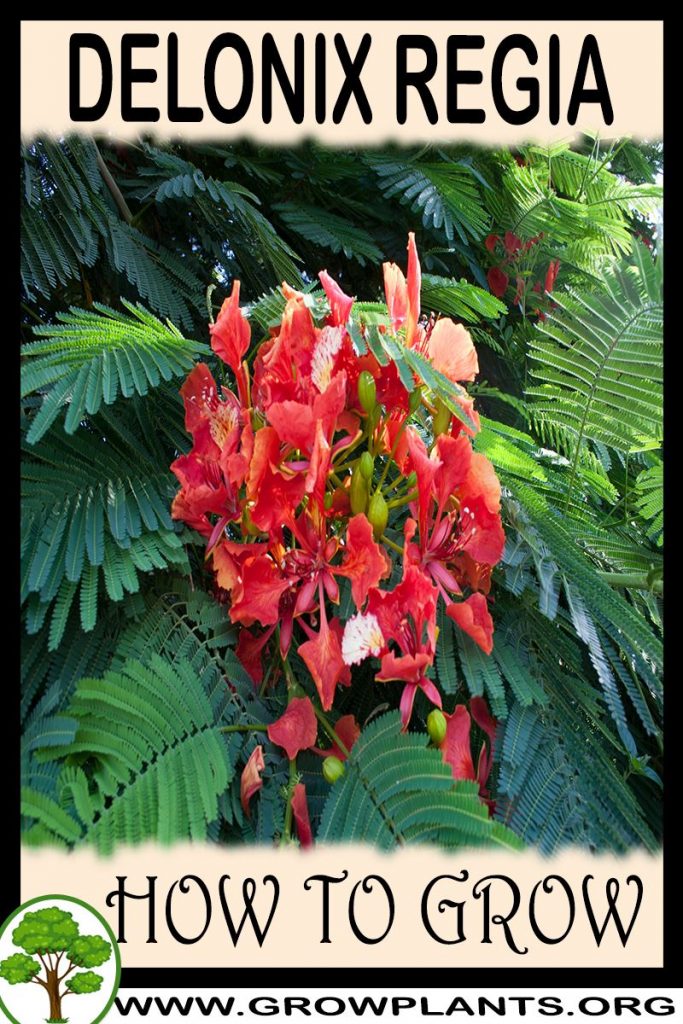
Overview: Delonix regia (Royal Poinciana / Flamboyant) is a fast-to-moderate flowering tree reaching 4-10 m with a broad umbrella canopy of fine, ferny foliage. It is a signature tropical ornamental and shade tree, evergreen to deciduous depending on climate.
Quick Specifications
| Specification | Attribute |
|---|---|
| Plant Type / Life Cycle | Perennial (tree) |
| Foliage Type | Evergreen to deciduous (drought/cold deciduous) |
| Mature Size | Height 4-10 m (12-30 ft), with a wider spreading canopy |
| Growth Rate | Moderate |
| Root System | Shallow, wide-spreading (aggressive surface roots) |
| Hardiness | USDA zones 10+ |
Growth Form & Structure
- Height & Spread: Grows 4-10 m (12-30 ft) tall with a canopy typically broader than its height; not suited to pots except when trained as a bonsai.
- Growth Habit & Form: Spreading shade tree with a flat-topped, umbrella-shaped canopy carried on a broad, buttressed trunk.
- Lifespan & Maturity: Long-lived tree; moderate growth to a large mature canopy.
Anatomy & Physical Features
- Trunk & Bark: Broad, buttressed trunk with smooth to lightly textured bark; surface roots can lift nearby paving.
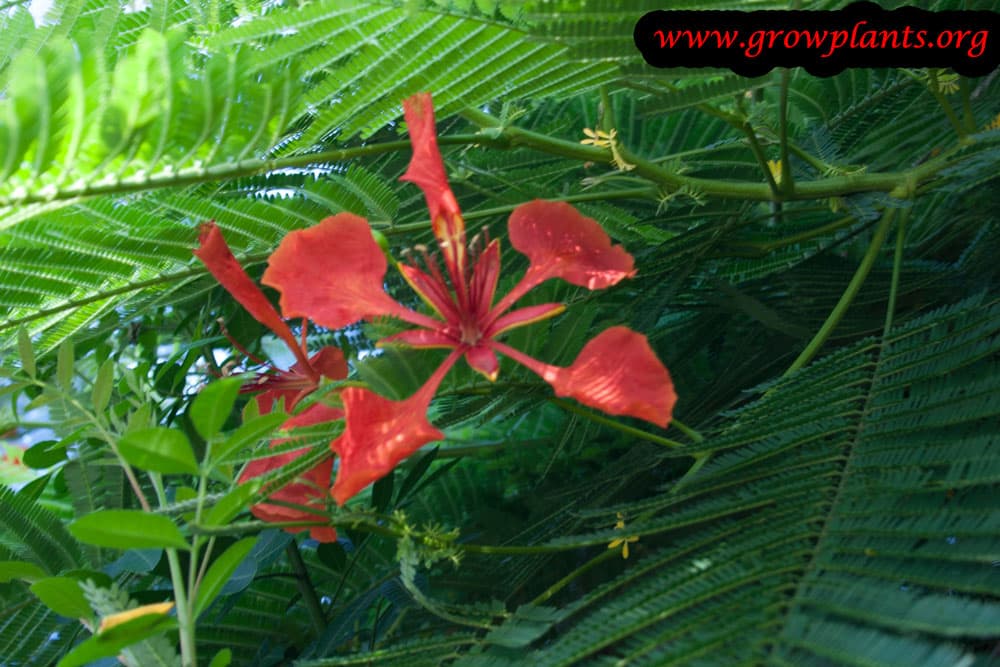
- Leaves & Foliage: Green, ovate leaflets carried in large, fern-like bipinnate leaves.
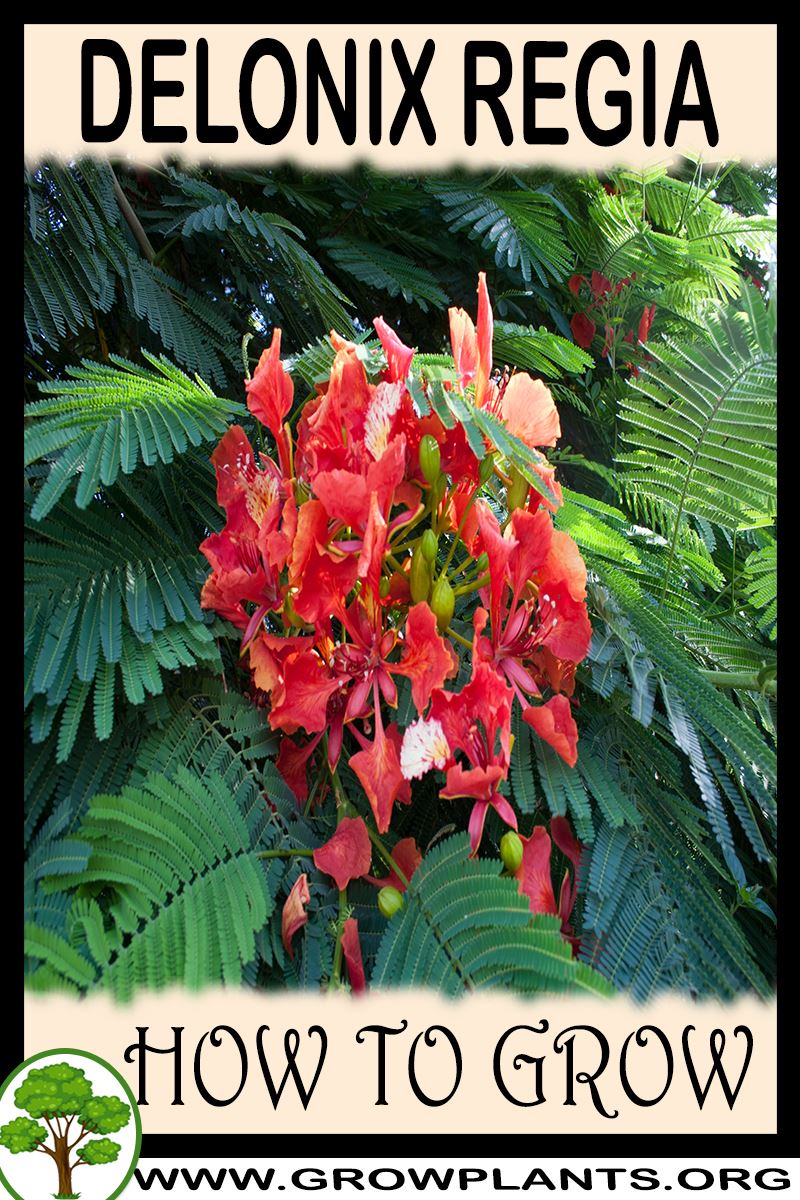
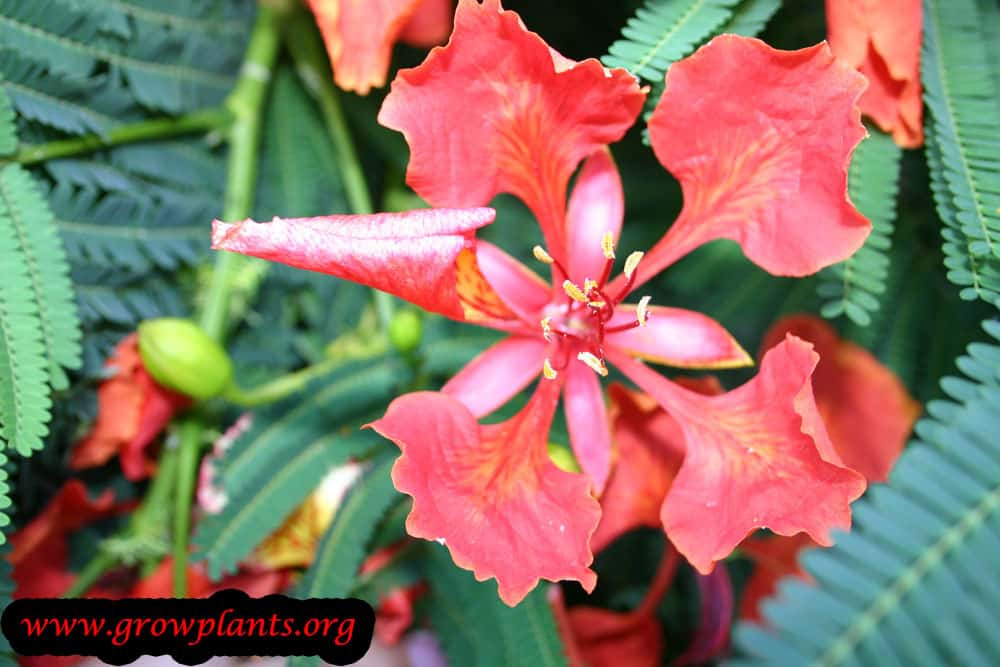
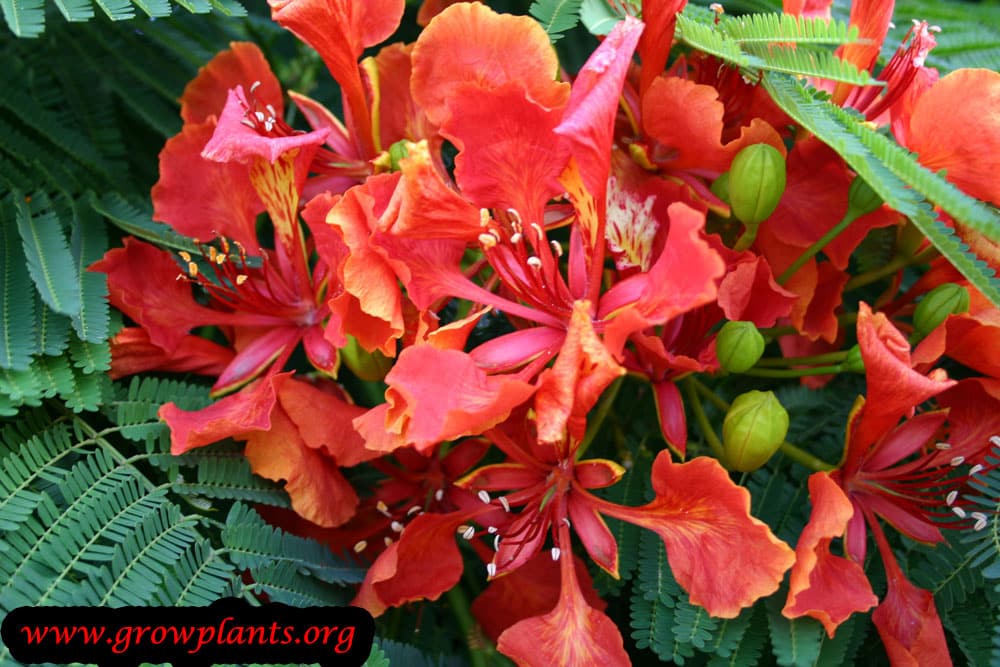
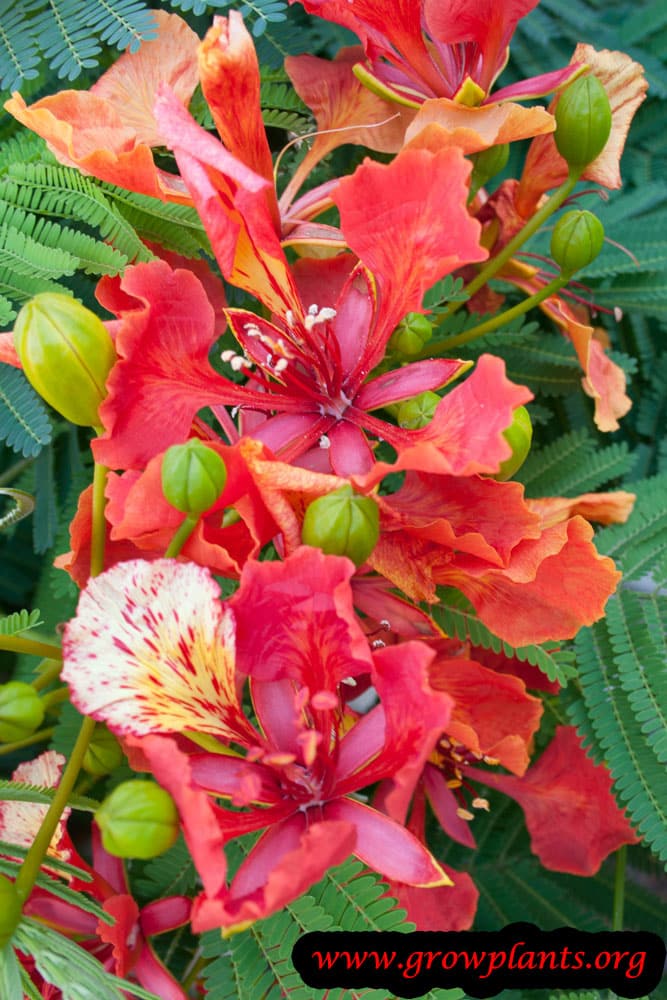
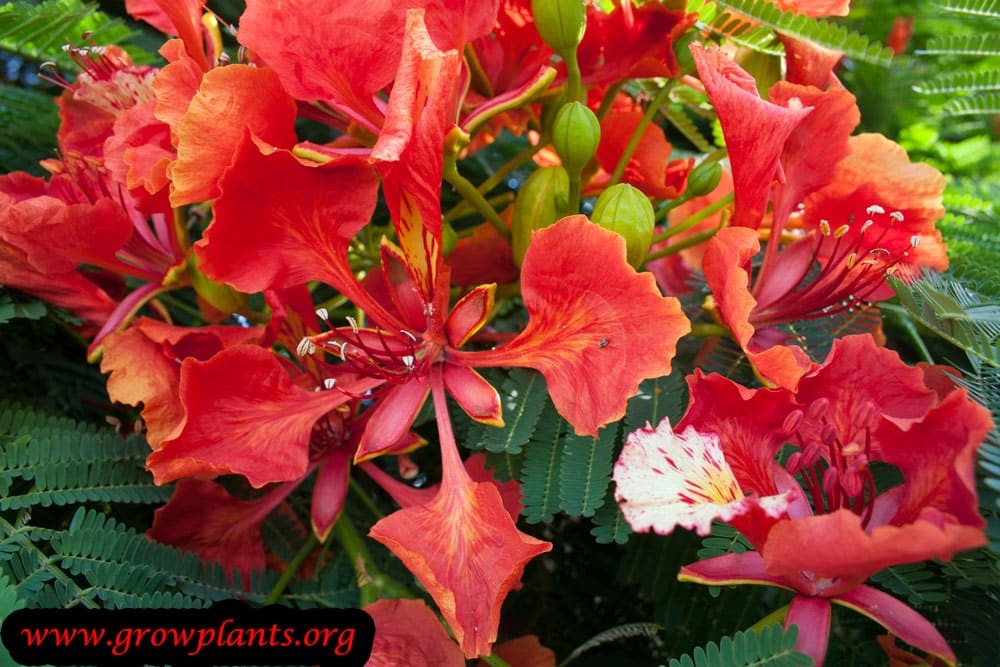
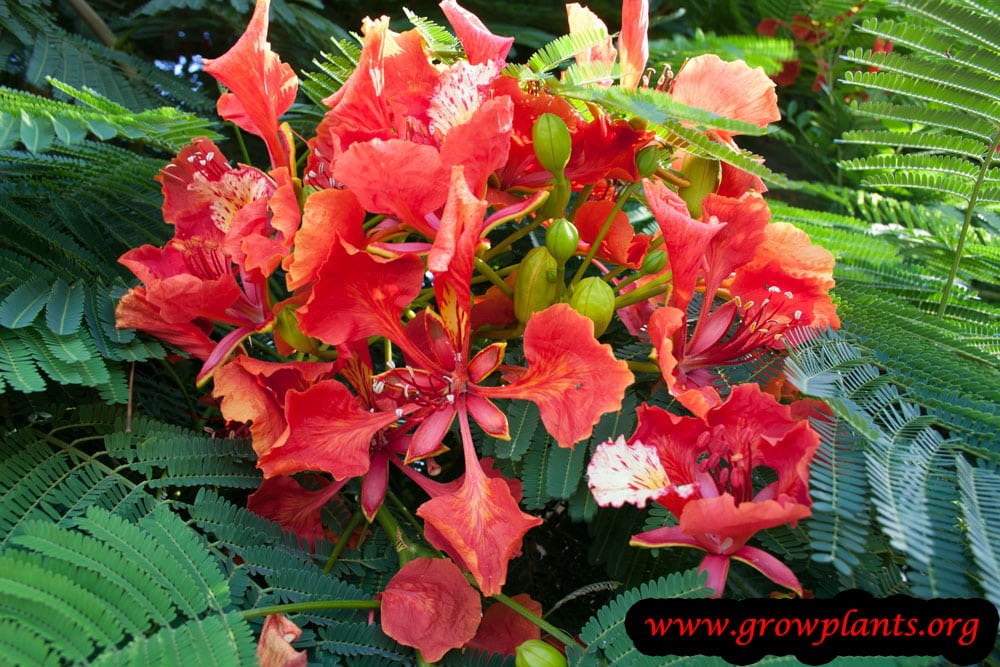
- Flower Characteristics: Showy five-petalled flowers in red, orange or yellow with a spoon-shaped, wavy-edged upper petal (full detail in the Bloom guide).
Primary Uses & Landscape Value
- Functional & Ornamental Roles: Ornamental flowering shade tree and avenue/specimen tree; also trained as bonsai. Roots can be invasive near paving and drains.
Care Guide: Planting, Soil & Watering
Overview: The royal poinciana is a tropical tree that needs full sun, warm temperatures and well-drained soil. Once established it is fairly drought-tolerant, needing only moderate watering, but it is frost-sensitive.
Quick Care Requirements
| Requirement | Ideal Condition |
|---|---|
| Planting Season | Year-round in frost-free (zone 10+) climates, ideally in the warm season |
| Growth Rate | Moderate |
| Soil Type | Well-draining soil |
| Water Need | Low to Moderate – let the soil dry somewhat between waterings |
Planting & Establishment
- Best Planting Season: Plant any time in frost-free climates; the warm season is best for establishment.
- How to Plant:
- Hole Preparation: Dig a hole two to three times wider than the root ball to loosen soil for the broad root system.
- Soil Amendments: Mix in compost or organic matter and ensure the site drains freely.
- Planting Depth: Set the root collar level with the surrounding soil – do not bury the trunk base.
- Growth Speed & Expectations: Moderate, developing a wide, spreading canopy.
Soil, Watering & Drainage Care
- Soil Mix & Drainage Needs: Well-drained soil; tolerates a range of soils but not waterlogging.
- Watering Schedule & Technique:
- Young / Newly Planted: Water regularly through the first seasons to establish the root system.
- Established: Moderate, deep watering; drought-tolerant once mature.
- Seasonal Adjustments: More in summer heat; less in cooler months; protect from frost.
Climate, Light & Hardiness
Delonix regia (royal poinciana) is a tropical to subtropical flowering tree that needs full sun and warm, essentially frost-free conditions year-round. It is evergreen in warm humid climates but can become deciduous under cooler or drier stress, and it is not tolerant of cold.
Quick Climate Specifications
| Climate Zones | Tropical, Subtropical, Mediterranean |
|---|---|
| USDA Hardiness Zones | 10+ |
| Optimal Temp Range | Above approximately 5°C (41°F) |
| Frost Tolerance | Very Low |
| Light Conditions | Full Sun |
Sunlight & Light Exposure
Optimal Light Setup
Needs full sun to flower well and maintain healthy, vigorous growth.
Temperature Extremes & Hardiness
USDA Hardiness & Regional Limits
Suited to USDA zone 10 and warmer, reflecting its tropical origin; it is not recommended for outdoor, year-round culture in cooler zones.
Cold Damage & Winter Protection
Generally prefers conditions that stay above approximately 5°C (41°F); cooler temperatures below this can cause stress and leaf drop even without frost.
Frost Sensitivity
Frost-sensitive and not considered cold-hardy - freezing conditions can seriously damage or kill the tree, so outdoor planting is only appropriate in essentially frost-free climates. Where marginal, container growing (including as a bonsai) allows the tree to be moved to shelter.
Extreme Heat Tolerance
Well suited to hot tropical and subtropical summer conditions.
Wind, Humidity & Microclimate
Rainfall & Seasonal Moisture
Tolerates small to average water availability, consistent with a tree adapted to seasonal tropical rainfall patterns rather than constantly saturated soil.
Growing in Pots, Balconies & Indoors
The flame tree (Delonix regia) is a large tree (4-10 m), so it is not a long-term container or indoor plant. The grower marks it as not a houseplant and not suited to pots except as a bonsai.
Quick Details
- Container Size: A large tub for young plants only
- Indoor Suitability: Not a houseplant – a full-size tree
- Best Spot: Full sun, open ground
- Soil & Drainage: a light, aerated potting mix – peat or coir blended with perlite or vermiculite, plus some organic matter/compost (for young/bonsai plants)
- Watering in Pots: Frequent while young in a tub – pots dry fast; avoid waterlogging
Indoors & On the Windowsill
- Not a houseplant: The grower marks it as unsuitable indoors – it is a full-size tree that needs open ground and full light.
On a Balcony or Patio
- Bonsai exception: The grower notes it is only suited to a pot when trained as a bonsai; otherwise it is too big for containers.
- Young plants: A large tub can hold a sapling for a short spell, but plan its final position in open ground with room to spread.
Choosing the Pot, Soil & Long-Term Care
- Young / bonsai only: If you grow it in a pot at all, keep it to the juvenile or bonsai stage in a large, free-draining tub with drainage holes.
- Potting mix: a light, aerated potting mix – peat or coir blended with perlite or vermiculite, plus some organic matter/compost.
- Feeding & watering: Potted plants exhaust their feed faster because water washes nutrients out, so feed a little more often than plants in open ground during active growth; potted trees also dry out fast, so water more attentively than one in the ground.
- Repotting: Refresh the top of the mix each growing season and pot up or divide roughly every couple of years, trimming crowded roots – but recognise that a vigorous tree will soon need the open ground.
Fertilizing & Feeding
A tropical ornamental flowering shade tree grown for its brilliant red-orange blooms: nitrogen-supported feeding helps it establish, but because it is already an aggressive, fast-spreading species in some regions, feeding is best kept moderate rather than pushed once established.
Quick Fertilizing Specs
| Feeding Level | Moderate feeder |
|---|---|
| Main Nutrient Priority | Nitrogen-supported feeding while establishing, then balanced, restrained feeding once established |
| Best Feeding Period | During the active growing season, especially while the tree is young |
| Soil pH | Prefers well-drained soil more than any particular pH range |
| Reduce/Stop Feeding | Avoid pushing feeding for extra vigor once established, given this species’ naturally aggressive growth habit |
Feeding by Growth Stage
Young tree establishment
Support root and canopy establishment in well-drained soil after planting.
| Nutrient direction | A nitrogen-supported, complete fertilizer helps a newly planted tree establish in the well-drained soil this species prefers. |
|---|---|
| Timing | During the active growing season while the tree is young. |
| Frequency | Feed through the growing season while establishment is underway. |
| Fertilizer types | A nitrogen-supported, complete fertilizer suited to establishing flowering shade trees |
| Routine trace nutrients | iron, manganese |
| Precautions | Ensure well-drained soil before feeding; this species does not tolerate waterlogged conditions well. |
Established tree growth and flowering
Maintain healthy canopy growth and the tree’s spoon-shaped red, orange, or yellow flowers on a mature specimen.
| Nutrient direction | A balanced, moderate feeding supports steady growth and flowering without adding to this species’ already aggressive growth habit. |
|---|---|
| Timing | During the active growing season for an established tree. |
| Frequency | Established trees generally need only modest, occasional feeding. |
| Fertilizer types | A balanced, complete fertilizer applied at a moderate rate, if growth or flowering suggest it is needed |
| Routine trace nutrients | iron, manganese |
| Precautions | Avoid overfeeding; this species is noted as invasive and aggressive in some regions, and extra fertility can encourage unwanted spread or excessive vigor. |
Nutrient Deficiency Signs & Corrections
Slow growth and pale, undersized foliage in a young tree.
| Possible causes | insufficient nitrogen during establishment, root stress after transplanting, poorly drained planting soil |
|---|---|
| Appears first on | new growth |
| What to check | recent feeding history, soil drainage, time since planting |
| Possible correction | Apply a nitrogen-supported feeding during establishment and confirm the site drains well. |
New leaves emerge yellowish with darker green veins.
| Possible causes | iron availability limited by soil pH, root stress from waterlogged or compacted soil, genuinely low soil iron |
|---|---|
| Appears first on | newest foliage |
| What to check | soil drainage and moisture, soil pH if known, root health |
| Possible correction | Improve drainage first; if chlorosis persists, apply a chelated iron product per its label. |
Healthy canopy growth but sparse or absent flowering.
| Possible causes | excess nitrogen favoring foliage over flowers, tree still too young or recently transplanted to flower well, insufficient sun exposure |
|---|---|
| Appears first on | flower buds and stems |
| What to check | recent fertilizer balance, tree age and time since transplanting, sun exposure |
| Possible correction | Moderate nitrogen inputs, ensure full sun exposure, and allow the tree time to mature before expecting heavy bloom. |
Pruning, Training & Seasonal Maintenance
Royal Poinciana is a fast-canopied, wide-spreading tropical shade tree whose main pruning need is structural, not cosmetic: the species is prone to weak, narrow-angled branch unions with included bark, which combined with its low, umbrella-like spreading habit makes it more susceptible than most shade trees to storm and wind branch failure. Early structural pruning to build well-spaced, wide-angled scaffold branches therefore matters more here than shaping for looks; established trees otherwise need little pruning beyond removing hazardous or damaged wood.
Quick Pruning & Maintenance Specs
| Pruning Tolerance | Moderate – structural pruning matters more than volume of cuts |
| Primary Pruning Window | Summer, during active warm-season growth |
| Secondary Maintenance Window | None significant beyond ongoing structural checks while young |
| Typical Frequency | Regular structural pruning through the first several years; infrequent thereafter |
| Main Objective | Build well-spaced, strongly attached scaffold branches; manage the low, wide-spreading canopy over structures and paths |
| Young Plant Priority | Select well-spaced, wide-angled scaffold branches early; avoid codominant stems with included bark |
| Mature Plant Priority | Remove weakly attached, crossing, or hazardous limbs; keep the canopy clear of structures, vehicles, and foot traffic |
| Best Tool Type | Loppers/pruning saw for structural cuts; pole pruner for the wide, spreading upper canopy |
| Avoid Heavy Pruning During | Active flowering (spring–autumn bloom season), since major cuts then remove the current season’s display for little structural benefit |
Pruning by Plant Age & Size
Newly Established
Minimal pruning; remove only damaged growth and let the young tree establish before selecting permanent scaffold branches.
Young / Formative
Open-center/multi-leader training suited to the species’ naturally low, spreading, umbrella-shaped canopy – deliberately select scaffold branches with wide angles of attachment and good spacing along the trunk, and remove or subordinate any codominant stems with tight, included-bark unions before they thicken into a structural weak point.
Mature / Established
Little routine pruning beyond removing dead, damaged, or weakly attached limbs. Because the canopy spreads low and wide, periodic clearance pruning keeps branches off structures, vehicles, and walkways.
Structural Pruning & Training
This is the core of the species’ pruning needs – correct branch spacing and angle selection while young materially reduces the well-documented risk of limb failure in wind and storms at maturity. Thin out crossing or rubbing branches and remove codominant leaders early, rather than after they have thickened.
Special Growth to Remove
Because the species is noted as invasive/aggressive and self-seeds readily in warm climates, watch for and remove unwanted volunteer seedlings around the parent tree.
Container & Small-Space Pruning
Not a long-term container tree in ground-grown form given its size and spreading habit. Where grown as bonsai, the aggressive structural corrective pruning described above is replaced by the much smaller-scale, ongoing shoot and root pruning typical of bonsai technique.
Tools
Loppers for young scaffold-branch selection and thinning; a pruning saw for larger structural cuts and removing codominant stems; a pole pruner for maintaining clearance under the wide, spreading mature canopy.
Tool Hygiene & Disease Risk
Routine – no specific elevated disease risk documented; clean, sharp cuts on the intended structural cuts are sufficient.
Cut Placement & Technique
Cut just outside the branch collar. When removing a codominant stem, cut back to a point that leaves one clearly dominant leader or branch. Stage larger limb removal to avoid bark tear given the canopy’s low spread.
Heavy Pruning & Rejuvenation
Not the goal here – structural correction while young is far more valuable than hard rejuvenation later. Heavy reactive pruning of a mature tree to fix poor branch structure is less effective and riskier than getting spacing and angles right early.
Post-Pruning Care
Water normally; monitor new growth for aphids and spider mites after pruning flushes, since fresh growth can attract them. No extra feeding is needed after routine structural pruning.
Common Pruning Mistakes
- Leaving codominant stems with tight, included-bark unions unaddressed while young, setting up future limb failure.
- Skipping structural pruning altogether because the tree ‘looks fine’ while small.
- Letting self-sown seedlings establish unchecked.
When NOT to Prune
During the extended spring–autumn bloom period, since major cuts then sacrifice the current flower display without a structural payoff; avoid heavy pruning right after transplanting.
Recommended Tools (by task)
- loppers – young scaffold-branch selection and thinning.
- pruning_saw – removing codominant stems and larger structural cuts.
- pole_pruner – clearance pruning under the mature, wide-spreading canopy.
Pruning Troubleshooting
| Problem | Possible Cause | What to Check | Corrective Action |
| Branch failure/splitting in wind or storms | Codominant stems with included bark left uncorrected while young | Branch unions for tight V-shaped attachments | On young trees, select and subordinate competing leaders early; on the affected tree, remove the weaker of a failed union and reduce end-weight on remaining large limbs |
| Canopy encroaching on structures/vehicles/paths | Species’ naturally low, wide-spreading habit left unmanaged | Clearance under the canopy | Periodic clearance pruning of low limbs over the affected area |
| Volunteer seedlings appearing nearby | Documented invasive/aggressive self-seeding | Ground around and beneath the canopy | Remove seedlings while small |
Propagation Guide
Delonix regia (Royal Poinciana) is most reliably propagated from seed, which germinates readily once its hard seed coat is treated; vegetative propagation by cuttings is possible but less consistent and mainly used when a specific tree’s form needs to be preserved. Seed comes reasonably true-to-type, and overall propagation difficulty is easy once the seed coat is addressed.
Quick Propagation Specs
| Best Propagation Method | Seed |
| Alternative Methods | Semi-hardwood cuttings |
| Propagation Difficulty | Easy (seed, once scarified); Moderate (cuttings) |
| Seed True-to-Type | Usually true-to-type |
| Vegetative True-to-Type | Yes |
| Best Propagation Season | Warm months; in frost-free/tropical areas can be sown year-round, matching the site’s all-year planting season |
| Seed Germination Time | Typically one to a few weeks once the hard seed coat has been treated; untreated seed germinates slowly and unevenly |
| Cutting Rooting Time | Several weeks under warm, humid conditions, with variable success |
| Germination Temperature | Warm, roughly 25–30°C (77–86°F) |
| Seed Sowing Depth | Shallow, about 1–2cm (0.4–0.8in) |
Growing from Seed
Seed Handling & Viability
Seeds are hard-coated and store reasonably well dry at room temperature; very old seed may germinate more slowly.
Dormancy & Pre-Sowing Treatment
The hard seed coat causes physical dormancy; nicking or filing the coat, or soaking seed in hot water and letting it cool for 24 hours, improves and speeds up germination.
Sowing Season
Sow in warm weather; can be sown year-round where frost-free, consistent with the site’s all-year planting season.
Sowing Depth & Orientation
Sow shallowly, about 1–2cm (0.4–0.8in) deep.
Germination Conditions
Warm temperatures and consistently moist (not waterlogged) growing medium favor germination.
Germination Time
Scarified seed typically germinates within one to a few weeks; unscarified seed can take much longer and germinate unevenly.
Seedling Care
Keep young seedlings warm and protected from cold until well established, given the tree’s tropical/subtropical preference.
Stem Cuttings
Cutting Type
Semi-hardwood cuttings.
Best Timing
Warm growing season.
Cutting Preparation
Take short sections from healthy, non-flowering side shoots and remove lower leaves.
Rooting Setup
Well-drained propagating mix kept warm and humid.
Rooting Hormone
Beneficial – can improve an otherwise inconsistent rooting rate.
Rooting Time
Several weeks, with success rates lower and more variable than seed propagation.
Bloom & Flower Guide
Quick Details
- Bloom Season: Mainly the warm season, spring through autumn in suitable climates
- Time to First Bloom: Usually begins flowering several years from seed (often around four to ten years)
- Flower Appearance: Large red, orange or yellow flowers with five spoon-shaped petals whose edges are wavy and slightly curly
- Edibility: Ornamental tree – the flowers are not eaten
Detailed Blooming Overview
The royal poinciana, or flamboyant tree, sets the canopy ablaze with scarlet, orange or yellow in the warm season, often flowering with or just before the fresh, ferny foliage. Each flower has five broad, spoon-shaped petals with crimped, wavy edges.
Flower Characteristics
- Five spoon-shaped petals, wavy and a little curly at the edges, in red, orange or yellow.
- Massed across the wide, umbrella-shaped crown for a spectacular display.
Bloom Care & Thinning
- Care: Minimal – full sun and warmth bring the heaviest flowering.
- Pollination: The showy flowers attract birds and large insects.
Pests, Diseases & Troubleshooting
Delonix regia, the royal poinciana or flamboyant tree, is a tough tropical Fabaceae tree that is generally robust and low-maintenance once established. Its main pests are sap-suckers such as scale and mealybug, leaf-eating caterpillars, and occasional stem borers, while diseases are minor and mostly tied to wounds or waterlogging. Good establishment, sound pruning and free-draining soil keep a mature tree largely self-sufficient.
Quick Troubleshooting Overview
| Issue / Pest | Main Symptom | Primary Solution |
|---|---|---|
| Scale insects | Brown/white bumps on twigs; honeydew, sooty mould | Prune out, horticultural oil, encourage predators |
| Mealybugs | White cottony masses on shoots and leaf axils | Hose off, horticultural oil, beneficials |
| Caterpillars | Chewed, skeletonised leaflets; frass | Hand-pick, Bt, encourage birds/wasps |
| Borers | Wilting branches, entry holes, sawdust (frass) | Keep tree vigorous, prune/destroy infested wood |
| Aphids | Sticky new growth, sooty mould on seedlings | Rinse off, insecticidal soap, beneficials |
| Leaf spot | Brown spots on leaflets in wet weather | Rake litter, improve airflow, copper if severe |
Common Pests & Management
- Scale insects (Coccidae / Diaspididae spp.):
- Symptoms: Brown, tan or white limpet- or shell-like bumps encrust twigs, leaf stalks and leaflet undersides; sticky honeydew and black sooty mould follow soft-scale infestations, and heavy loads cause yellowing and dieback.
- Prevention & Control: Prune out and destroy badly encrusted wood; encourage ladybirds and parasitic wasps that keep scale in check; spray horticultural oil to smother crawlers on smaller or young trees, repeating as needed.
- Mealybugs (Pseudococcus / Planococcus spp.):
- Symptoms: White, cottony waxy masses gather on new shoots, leaf axils and flower stalks, especially on young trees; honeydew and sooty mould accompany them.
- Prevention & Control: Hose off with water; support natural predators such as mealybug destroyer beetles; spray horticultural oil or insecticidal soap on accessible growth, targeting the crawlers and repeating.
- Caterpillars (Lepidoptera larvae (various)):
- Symptoms: Leaf-eating caterpillars chew and skeletonise the fine leaflets, leaving ragged, thinned foliage and dark frass; occasional outbreaks can partly defoliate young trees.
- Prevention & Control: Tolerate light feeding on a large tree; hand-pick on small trees; encourage birds and parasitic wasps; spray Bacillus thuringiensis (Bt) on young larvae where practical for organic control.
- Stem / wood borers (Cerambycidae / Buprestidae larvae):
- Symptoms: Larvae tunnel in trunk and branches, producing wilting or dying limbs, small entry/exit holes and expelled sawdust-like frass; badly bored branches may snap.
- Prevention & Control: Keep the tree vigorous and unwounded, as borers target stressed or damaged wood; prune out and destroy infested branches; avoid unnecessary bark injury and treat large wounds cleanly.
- Aphids (Aphididae spp.):
- Symptoms: Soft green or black insects cluster on tender new growth and seedlings, with curling, honeydew and sooty mould; mainly a nursery/young-tree issue.
- Prevention & Control: Rinse off with water, rely on ladybirds and lacewings, and spot-treat heavy colonies on young plants with insecticidal soap in the evening.
Diseases & Fungal Issues
- Leaf spot (Cercospora / Colletotrichum spp.):
- Symptoms: Brown or dark spots and blotches on the leaflets in warm, wet, humid weather, sometimes with premature leaf yellowing and drop.
- Treatment & Management: Rake up and remove fallen leaves, improve air movement by good spacing and pruning, and avoid overhead irrigation; a copper fungicide can be used on young or valued trees if spotting is severe.
- Root and collar rot (Phytophthora / Pythium):
- Symptoms: Roots and the trunk base decay in waterlogged or poorly drained soil, giving thin, yellowing canopies, dieback and sometimes sudden decline.
- Treatment & Management: Plant in free-draining soil, avoid deep planting and piled mulch against the trunk, and correct drainage; remove severely affected trees, and never keep the root zone waterlogged.
- Wilt / dieback (Fusarium / Lasiodiplodia (opportunistic)):
- Symptoms: Branch wilting and dieback, sometimes with internal staining, following stress, wounds or borer attack.
- Treatment & Management: Reduce stress with proper watering and mulching, prune out dead and dying wood back to healthy tissue, sanitise tools, and keep the tree vigorous to resist opportunistic fungi.
Growing Difficulties & Abiotic Problems
- Cold / frost damage:
- Cause & Symptoms: As a tropical tree it is frost-tender; cold snaps blacken foliage and kill young growth or whole young trees.
- Correction Strategy: Grow only in frost-free climates or large containers moved under cover; shelter young trees and site in the warmest available spot.
- Wind and limb breakage:
- Cause & Symptoms: Fast, somewhat brittle growth and a broad canopy make branches prone to splitting in storms.
- Correction Strategy: Prune young trees for strong, well-spaced scaffold branches and a sound structure; remove crossing and weak limbs, and avoid topping, which forces weak regrowth.
- Iron chlorosis:
- Cause & Symptoms: On alkaline or waterlogged soils new leaflets can yellow between green veins from iron deficiency.
- Correction Strategy: Improve drainage and soil organic matter, and correct with iron chelate suited to the soil pH; address the underlying alkalinity or waterlogging for a lasting fix.
- Surface roots / suckering:
- Cause & Symptoms: Vigorous shallow roots can lift paving and the tree may sucker, a siting rather than health issue.
- Correction Strategy: Plant well away from paths, walls and drains, give it room, and manage suckers by removal; choose the site with its eventual size in mind.
What Helps – Products & Tools
For this tree, favour cultural care and biological control: horticultural oil and insecticidal soap manage scale, mealybug and aphids on reachable growth, and Bt handles caterpillars. Copper fungicide covers occasional leaf spot, and iron chelate corrects lime-induced chlorosis. Most importantly, keep the tree vigorous and well pruned so borers and dieback find no foothold.