Plant Profile & Key Characteristics
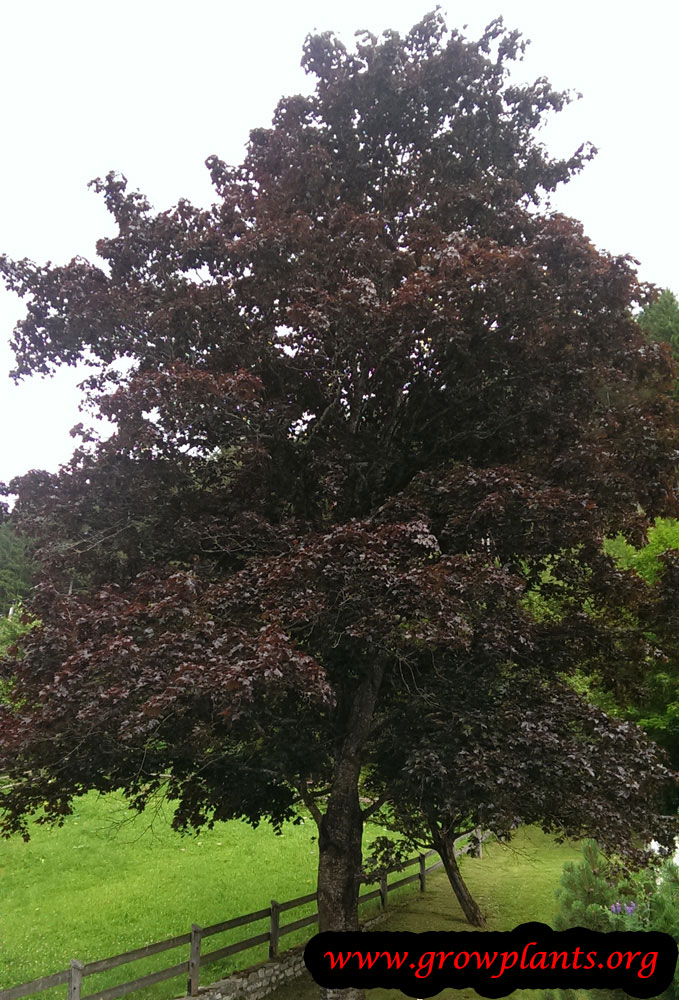
Overview: Crimson King maple is a deciduous shade tree, a purple-leaved cultivar of Norway maple (Acer platanoides) reaching 7–14 m. It is a hardy temperate ornamental grown mainly for its deep purple foliage and dense shade.
Quick Specifications
| Specification | Attribute |
|---|---|
| Plant Type / Life Cycle | Perennial (deciduous tree) |
| Foliage Type | Deciduous |
| Mature Size | H: 7–14 m (21–43 ft) |
| Growth Rate | Moderate |
| Root System | Shallow, spreading and vigorous – roots can lift paving and compete with nearby plants |
| Hardiness | USDA zone 2–8 |
Growth Form & Structure
- Height & Spread: 7–14 m tall with a broad, rounded crown casting dense shade.
- Growth Habit & Form: Upright deciduous tree with a dense, symmetrical canopy.
- Lifespan & Maturity: Long-lived tree; note that Norway maple is considered invasive in some regions and self-seeds freely.
Anatomy & Physical Features
- Trunk & Bark: Straight trunk with grey, shallowly furrowed bark.
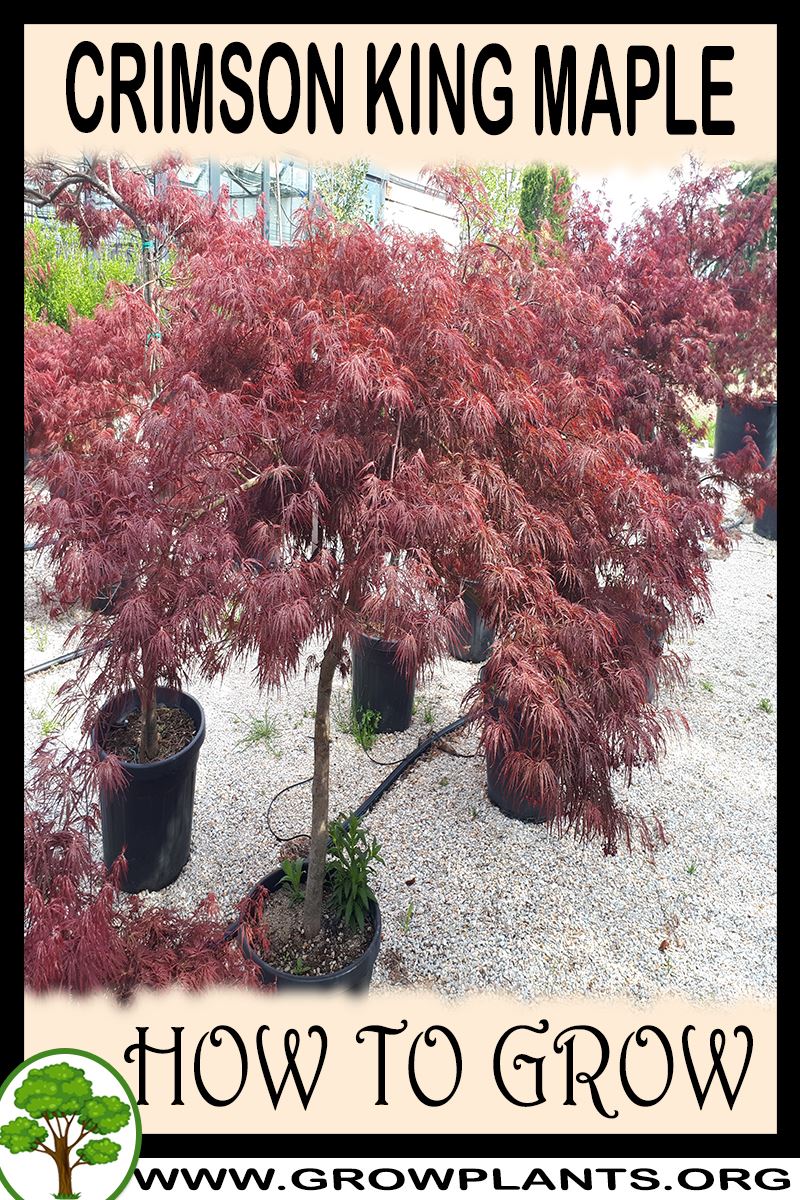
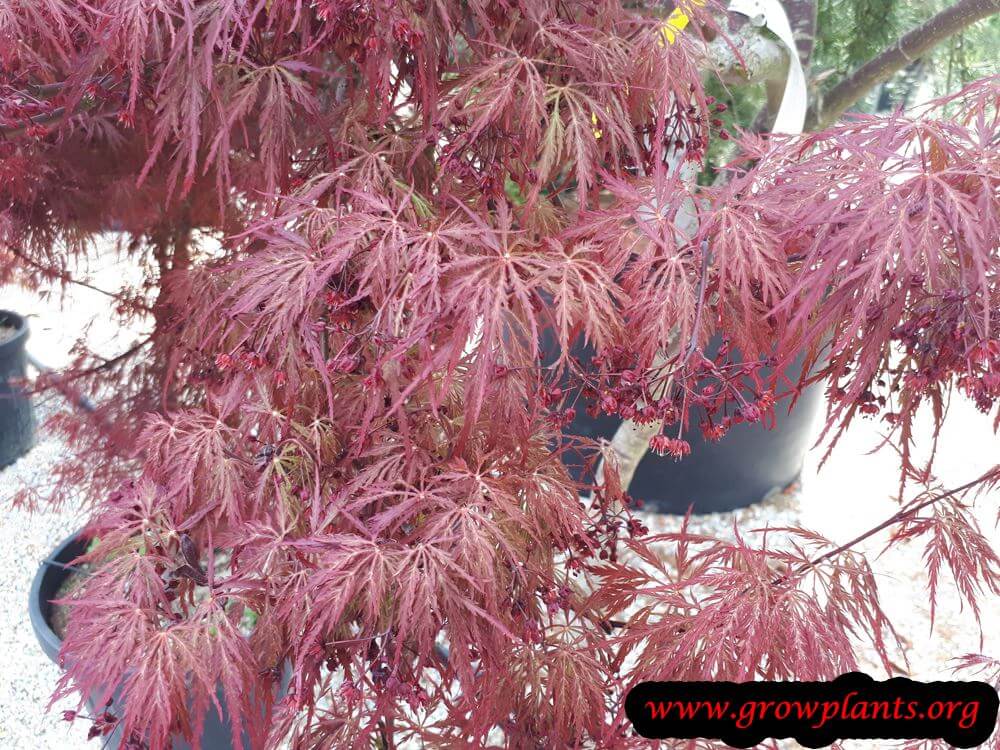
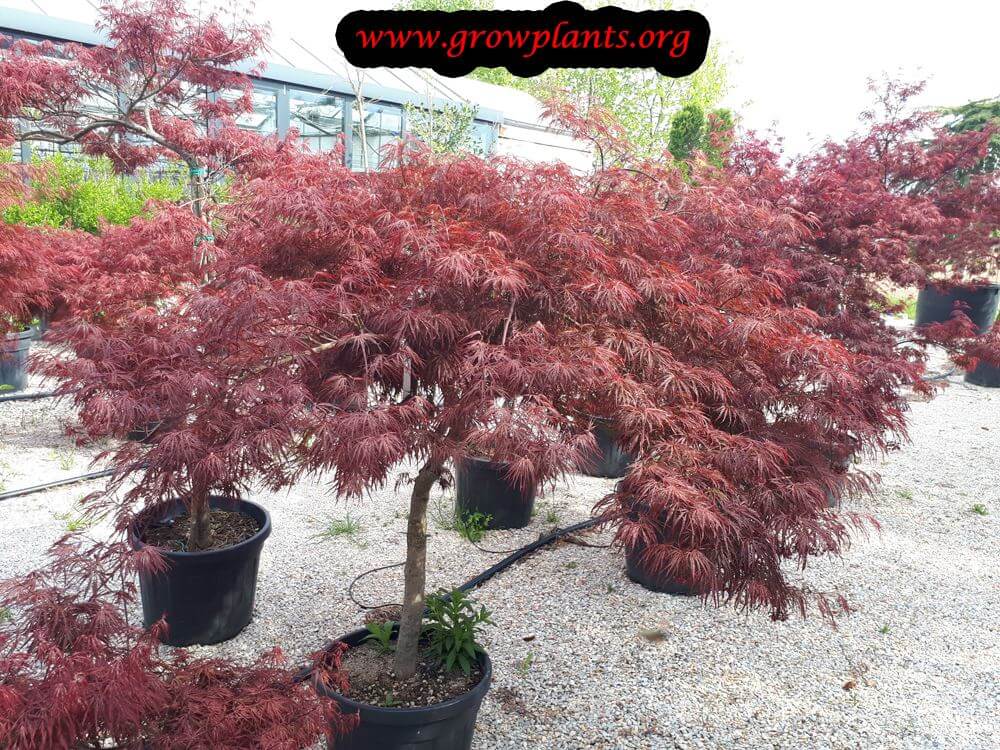
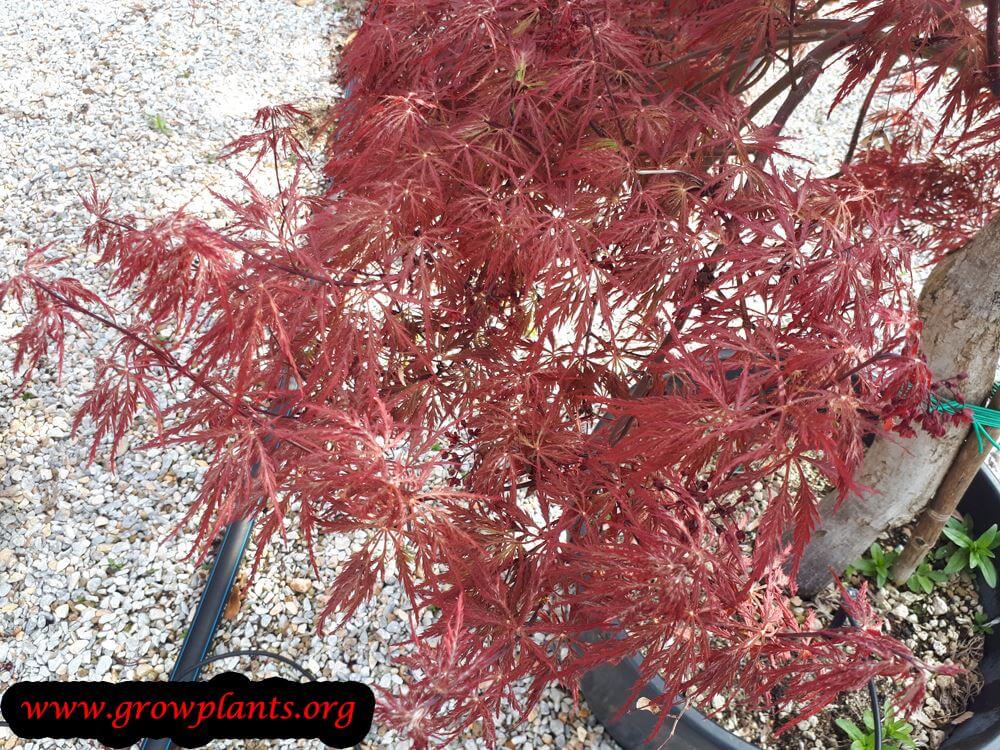
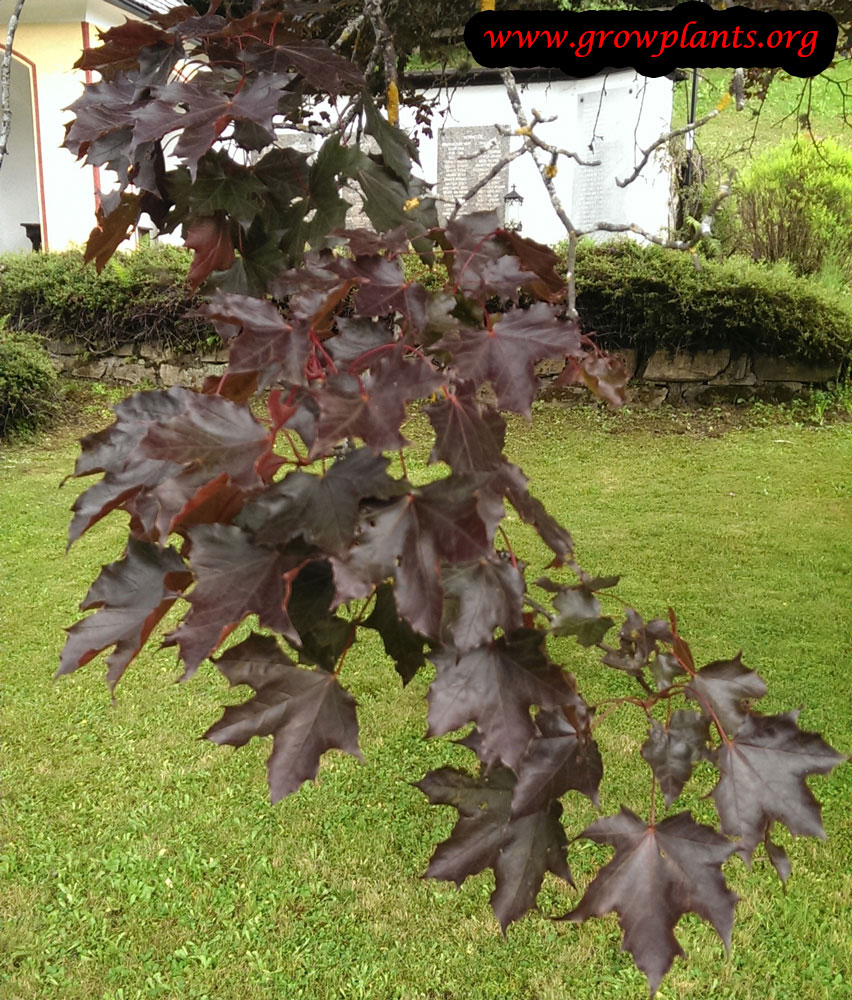
- Leaves & Foliage: Large, palmate, five-lobed leaves in deep crimson-purple through the season – the defining feature of this cultivar.
- Flower Characteristics: Small yellow-brownish flowers in clusters in spring.
Primary Uses & Landscape Value
- Functional & Ornamental Roles: Ornamental shade and specimen tree valued for its purple foliage; used as a street and lawn tree where its invasiveness is not a concern.
Care Guide: Planting, Soil & Watering
Overview: Crimson King maple (Acer platanoides) is a moderate-growing deciduous shade tree for temperate climates (hardiness zone 2–8) that adapts to most soils but performs best in deep, well-drained ground. It takes moderate to generous water, appreciating steady moisture while young and even watering once mature.
Quick Care Requirements
| Requirement | Ideal Condition |
|---|---|
| Planting Season | Dormant season — late winter to spring; also summer with adequate water |
| Growth Rate | Moderate |
| Soil Type | Well-drained soil; adaptable to a wide range |
| Water Need | Moderate to high — keep evenly moist, especially while young |
Planting & Establishment
- Best Planting Season: Plant during dormancy in late winter to early spring for easiest establishment, or through summer provided it is watered well; the tree is very cold-hardy.
- How to Plant:
- Hole Preparation: Dig a hole two to three times the width of the root ball but no deeper, so the roots can spread into loosened soil.
- Soil Amendments: This maple is undemanding, but loosening the backfill and adding some organic matter helps a heavy or poor soil; avoid over-rich amendments.
- Planting Depth: Set the tree with the root flare at or just above the soil surface — never bury the trunk base.
- Growth Speed & Expectations: Moderate-growing into a dense, rounded shade tree of around 7–14 m with deep purple foliage.
Soil, Watering & Drainage Care
- Soil Mix & Drainage Needs: Adaptable to most soils but wants reasonable drainage; loosen compacted ground at planting and keep a mulch ring (clear of the trunk) to conserve moisture.
- Watering Schedule & Technique:
- Young / Newly Planted: Water regularly to keep the soil evenly moist through the first few seasons while roots establish.
- Established: Water moderately but deeply once established, especially in prolonged dry spells; mature trees are reasonably self-sufficient.
- Seasonal Adjustments: More during summer heat and drought; little needed over the dormant winter.
Climate, Light & Hardiness
Crimson king maple is a strictly temperate deciduous shade tree that needs full sun and a genuinely cold winter as part of its normal growth cycle. It is exceptionally cold-hardy, tolerating some of the coldest USDA zones of any species covered here.
Quick Climate Specifications
| Climate Zones | Temperate |
|---|---|
| USDA Hardiness Zones | 2–8 |
| Frost Tolerance | High |
| Light Conditions | Full Sun |
Sunlight & Light Exposure
Optimal Light Setup
Requires full sun to grow well and to develop its characteristic deep purple-red foliage color; shadier sites typically produce weaker growth and duller leaf color.
Temperature Extremes & Hardiness
USDA Hardiness & Regional Limits
Exceptionally cold-hardy for an ornamental tree, reliably perennial across USDA zones 2–8 - this species is adapted to genuinely cold, snowy winters rather than mild ones.
Cold Damage & Winter Protection
As a fully deciduous temperate tree, it sheds leaves and enters dormancy with the onset of cold weather; no winter protection is needed once established, even at the colder end of its range.
Frost Sensitivity
Tolerates hard freezes without difficulty once dormant; young trees establishing over their first winter benefit from routine planting-season care but not special frost protection.
Extreme Heat Tolerance
At the warmer end of its range (upper zone 7–8), summer heat can be more limiting than winter cold, and consistent moisture becomes more important during hot spells.
Wind, Humidity & Microclimate
Rainfall & Seasonal Moisture
Prefers average to generous water availability through the growing season rather than a pronounced dry summer.
Growing in Pots, Balconies & Indoors
The crimson king maple is a large tree (7-14 m), so it is not a long-term container or indoor plant. The grower marks it as not a houseplant but notes it can be grown in a container – realistically only while young, as it becomes a full-size tree.
Quick Details
- Container Size: A large tub for young plants only
- Indoor Suitability: Not a houseplant – a full-size tree
- Best Spot: Full sun, open ground
- Soil & Drainage: a light, aerated potting mix – peat or coir blended with perlite or vermiculite, plus some organic matter/compost (for young/bonsai plants)
- Watering in Pots: Frequent while young in a tub – pots dry fast; avoid waterlogging
Indoors & On the Windowsill
- Not a houseplant: The grower marks it as unsuitable indoors – it is a full-size tree that needs open ground and full light.
On a Balcony or Patio
- While young only: The grower notes it can be started in a container – practical for a few early years in a large tub, after which it must go into the ground.
- Young plants: A large tub can hold a sapling for a short spell, but plan its final position in open ground with room to spread.
Choosing the Pot, Soil & Long-Term Care
- Young / bonsai only: If you grow it in a pot at all, keep it to the juvenile stage in a large, free-draining tub with drainage holes.
- Potting mix: a light, aerated potting mix – peat or coir blended with perlite or vermiculite, plus some organic matter/compost.
- Feeding & watering: Potted plants exhaust their feed faster because water washes nutrients out, so feed a little more often than plants in open ground during active growth; potted trees also dry out fast, so water more attentively than one in the ground.
- Repotting: Refresh the top of the mix each growing season and pot up or divide roughly every couple of years, trimming crowded roots – but recognise that a vigorous tree will soon need the open ground.
Fertilizing & Feeding
A vigorous, well-drained-soil-loving shade tree grown for its purple-red foliage: nitrogen-supported feeding helps it establish, but because this species is already naturally vigorous and regionally invasive in some areas, feeding is best kept moderate rather than pushed for maximum growth.
Quick Fertilizing Specs
| Feeding Level | Moderate feeder |
|---|---|
| Main Nutrient Priority | Nitrogen-supported feeding while establishing, then balanced, restrained feeding once established |
| Best Feeding Period | During the active growing season, especially while the tree is young |
| Soil pH | Prefers well-drained soil more than any particular pH range |
| Reduce/Stop Feeding | Avoid pushing feeding for maximum vigor once the tree is established, given this species’ naturally strong growth |
Feeding by Growth Stage
Young tree establishment
Support root and canopy establishment in well-drained soil after planting.
| Nutrient direction | A nitrogen-supported, complete fertilizer helps a newly planted tree establish, matched to this species’ preference for well-drained soil. |
|---|---|
| Timing | During the active growing season while the tree is young. |
| Frequency | Feed through the growing season while establishment is underway. |
| Fertilizer types | A nitrogen-supported, complete fertilizer suited to establishing shade trees |
| Routine trace nutrients | iron, manganese |
| Precautions | Ensure well-drained soil before feeding; this species does not tolerate waterlogged conditions well. |
Established tree growth
Maintain healthy canopy color and structure on a mature, already vigorous shade tree.
| Nutrient direction | A balanced, moderate feeding maintains healthy foliage color without pushing extra vigor in a species that already grows strongly on its own. |
|---|---|
| Timing | During the active growing season for an established tree. |
| Frequency | Established trees generally need only modest, occasional feeding. |
| Fertilizer types | A balanced, complete fertilizer applied at a moderate rate, if leaf color or growth suggest it is needed |
| Routine trace nutrients | iron, manganese |
| Precautions | Avoid overfeeding; this species is already fast to vigorous growing and regionally considered invasive, so extra fertility offers little benefit and can encourage unwanted spread. |
Nutrient Deficiency Signs & Corrections
Slow growth and undersized or pale foliage in a young tree.
| Possible causes | insufficient nitrogen during establishment, root stress after transplanting, poorly drained or compacted planting soil |
|---|---|
| Appears first on | new growth |
| What to check | recent feeding history, soil drainage, time since planting |
| Possible correction | Apply a nitrogen-supported feeding during establishment and confirm the planting site drains well. |
New leaves emerge yellowish with darker green veins rather than their normal purple-red to green color.
| Possible causes | iron availability limited by soil pH, root stress from waterlogged or compacted soil, genuinely low soil iron |
|---|---|
| Appears first on | newest foliage |
| What to check | soil drainage and moisture, soil pH if known, root health |
| Possible correction | Improve drainage first; if chlorosis persists, apply a chelated iron product per its label. |
Wilting, leaf scorch, or dieback despite an established feeding routine.
| Possible causes | soil that stays too wet for this well-drained-soil-preferring species, poor drainage compounding fertilizer salts around the roots, root rot from prolonged wet conditions |
|---|---|
| Appears first on | leaf margins and outer canopy |
| What to check | soil drainage and recent watering, signs of root rot, planting site grading |
| Possible correction | Improve drainage and adjust watering before considering any additional feeding. |
Pruning, Training & Seasonal Maintenance
Crimson King maple tolerates routine formative and corrective pruning well, but timing matters – like many maples it ‘bleeds’ heavily from cuts made as sap rises in late winter/early spring, so the safest, most effective pruning window is true dormancy in autumn/early winter (or after full leaf-out in summer), not late winter. While young, the main job is crown-raising – removing low branches – to develop the clear trunk and overhead canopy expected of a shade tree; once mature, pruning is mostly limited to structural upkeep rather than reshaping.
Quick Pruning & Maintenance Specs
| Pruning Tolerance | Moderate–High for structural pruning, but timing-sensitive due to sap bleed |
| Primary Pruning Window | Autumn/early winter, true dormancy |
| Secondary Maintenance Window | Mid-to-late summer, after full leaf-out, for minor corrective cuts |
| Typical Frequency | Regular formative pruning while young; infrequent once mature |
| Main Objective | Raise the crown and build strong scaffold structure while young; maintain structure once mature |
| Young Plant Priority | Remove low branches to raise the crown; select and keep a dominant central leader |
| Mature Plant Priority | Remove dead/crossing/rubbing wood; maintain overhead clearance; watch for self-sown seedlings |
| Best Tool Type | Loppers/pruning saw for branch removal; pole pruner for high canopy work on a mature tree |
| Avoid Heavy Pruning During | Late winter–early spring, when rising sap causes heavy bleeding from cuts |
Pruning by Plant Age & Size
Newly Established
Remove only damaged wood in the first season; avoid unnecessary cuts while the root system is establishing.
Young / Formative
Central-leader training – keep one dominant leader and systematically remove branches that grow low on the trunk to raise the crown for the clearance a shade tree needs over a lawn, path, or driveway.
Mature / Established
Maintain the cleared trunk height; remove dead, crossing, or rubbing branches. Only minor corrective shaping is otherwise needed.
Structural Pruning & Training
Crown-raise while young; maintain a single central leader; remove crossing or rubbing branches as the canopy fills in, to prevent bark damage at contact points.
Special Growth to Remove
Low branches on a young tree. Because the species self-seeds and is documented as invasive in some regions, also watch for and remove unwanted volunteer seedlings nearby rather than treating them as free trees.
Container & Small-Space Pruning
Young nursery-stock trees are often grown in containers before planting out; in a pot, watch for root circling in addition to the same low-branch removal – this is not a long-term container species given its 7–14 m mature size.
Tools
Loppers for young low-branch removal; a pruning saw for larger structural cuts as the trunk thickens; a pole pruner for higher canopy maintenance once the tree matures.
Tool Hygiene & Disease Risk
Routine – no specific elevated disease risk documented for this cultivar; clean, sharp cuts are sufficient.
Cut Placement & Technique
Cut just outside the branch collar, never flush. For low-branch removal on a young tree, take branches back to the trunk rather than leaving stubs. Stage larger limb removal to avoid bark tear.
Heavy Pruning & Rejuvenation
Not typically needed or advisable – this is a shade tree maintained by formative structural pruning while young, not hard rejuvenation. Avoid topping, which ruins the natural form and creates weak, bleed-prone regrowth.
Post-Pruning Care
Expect and accept sap ‘bleeding’ from cuts made outside the safe autumn/summer windows – it looks dramatic but is not harmful to the tree. No extra feeding is needed after routine pruning; water normally.
Common Pruning Mistakes
- Pruning in late winter/early spring and being alarmed by heavy sap bleed.
- Topping the tree instead of selectively raising the crown.
- Leaving low branches uncut on a young tree, delaying the clear trunk a shade tree needs.
When NOT to Prune
Late winter into early spring while sap is rising; avoid heavy cuts on stressed or newly transplanted trees.
Recommended Tools (by task)
- loppers – low-branch removal on young trees.
- pruning_saw – larger structural cuts as the trunk and scaffold branches thicken.
- pole_pruner – canopy maintenance once the tree reaches mature height.
Pruning Troubleshooting
| Problem | Possible Cause | What to Check | Corrective Action |
| Heavy sap ‘bleeding’ after a cut | Pruned during late winter–early spring sap rise | Timing of the cut relative to season | Not harmful; for future cuts, switch to autumn/early winter or full-summer timing |
| Low canopy clearance / branches in the way | Low branches not removed while the tree was young | Height of lowest scaffold branches | Gradually raise the crown over a few seasons rather than removing too much at once |
| Unwanted seedlings appearing nearby | Species self-seeds readily (documented invasive tendency) | Base of the parent tree and surrounding beds/lawn | Remove volunteer seedlings while small, before they establish |
Propagation Guide
Crimson King maple is a named cultivar; clonal propagation such as grafting or budding can preserve the cultivar, but this does not mean all maples require grafting.
Quick Propagation Specs
| Preferred Clonal Method | Grafting or budding for clonal cultivar fidelity |
| Seed | Seed does not preserve the named cultivar true-to-type. |
Clonal Propagation
Use healthy, correctly identified cultivar material and a compatible rootstock or vegetative method appropriate to the plant. The purpose of the clonal method is to preserve the characteristics of the named cultivar.
Seed
Seed does not preserve the named cultivar true-to-type.
Bloom & Flower Guide
Quick Details
- Bloom Season: Spring, before or as the leaves emerge
- Time to First Bloom: Typically begins flowering once well established, around ten or more years old
- Flower Appearance: Small yellow-green to brownish flowers borne in showy, upright clusters
- Edibility: Ornamental shade tree – the flowers are not eaten
Detailed Blooming Overview
Norway maple is one of the earlier maples to flower, its yellow-green clusters appearing in spring before the foliage. On the ‘Crimson King’ form the airy flower clusters stand out against the emerging dark red leaves, giving the tree a distinctive early-season look.
Flower Characteristics
- Small, yellow-green to brownish, gathered in rounded, upright clusters (corymbs).
- Appear before or with the unfolding leaves.
Bloom Care & Thinning
- Care: Little is needed – simply enjoy the early spring colour.
- Pollination: An early source of nectar and pollen for bees.
Fruit & Uses
Crimson King maple is grown as an ornamental shade tree, not as a food crop, but like most maples its late-winter sap can be tapped and boiled down into syrup. This is a minor, lesser-known use of the tree, not a substitute for dedicated syrup species, and the site’s own care notes flag this tree as invasive in some regions.
Quick Edible Specs
| Edible Parts | Sap (tapped and boiled into syrup) |
|---|---|
| Main Use(s) | Culinary – minor/secondary syrup source |
| Eaten Raw or Cooked | Sap must be boiled down (cooked) to concentrate it into syrup; raw sap is not a food product on its own |
| Preparation Required | Cook (long boiling to reduce sap into syrup) |
| Harvest Season | Late winter to early spring, during the same freeze-thaw window used for tapping other maples |
| Time to First Harvest | Only mature, established trees with sufficient trunk diameter should be tapped; not meaningful for young trees |
| Storage | Finished syrup stores like any maple syrup, refrigerated once opened; raw sap should be processed promptly as it spoils quickly |
| Safety/Toxicity Caveat | Sap itself is not toxic, but sugar content is notably lower than sugar maple, so this is a marginal, low-yield use rather than a reliable syrup source; this species can also be locally invasive, which is a landscape consideration rather than a food-safety one |
Pseudostem / Cane / Sap
In late winter, when nights are still freezing but days warm above freezing, the trunk can be tapped in the same way as sugar maple to collect a clear, watery sap. Because Acer platanoides sap has a lower natural sugar concentration than Acer saccharum, considerably more sap must be boiled down to yield the same amount of finished syrup, and the flavour is generally considered milder. This makes it a viable backyard curiosity rather than a practical syrup crop.
Harvesting
Tapping follows the same freeze-thaw seasonal window as other maples and only applies to mature, sizeable trees; sap flow is temperature-driven and collection typically continues intermittently over several weeks until the tree buds out, at which point the sap’s flavour turns off and tapping stops.
Preparation, Uses & Safety
Collected sap must be boiled down well past the point needed for sugar maple to reach syrup consistency, given its lower starting sugar content; use clean tapping equipment and process sap promptly since it ferments quickly at room temperature. No other part of this tree (leaves, flowers, samaras) is treated as edible here.
Pests, Diseases & Troubleshooting
Overview: Norway maple (Acer platanoides) is a tough, fast-growing shade tree whose worst enemy is Verticillium wilt, backed by tar spot and aphids (with their honeydew and sooty mould), plus girdling-root and leaf-scorch problems typical of the species. Prevention is cultural: keep the tree vigorous and well-sited, rake up fallen leaves, prune out diseased wood promptly, and avoid the shallow-root/girdling issues this species is prone to.
Quick Troubleshooting Overview
| Issue / Pest | Main Symptom | Primary Solution |
|---|---|---|
| Aphids | Sticky honeydew, sooty mould and curled leaves; dripping under the canopy | Tolerate/encourage predators; water jet or soap on small trees |
| Scale insects | Bumps or cottony masses on bark and twigs; honeydew and dieback | Horticultural oil (dormant and crawler stage); prune out heavy infestations |
| Verticillium wilt | Sudden wilting/dieback of branches; olive-green streaking in the wood | No cure: prune out, keep vigorous, avoid replanting maples in infected soil |
| Tar spot / anthracnose | Black tar-like spots or brown blotches along veins on leaves | Rake and destroy fallen leaves; usually cosmetic, improve airflow |
| Leaf scorch | Brown, crisp leaf margins in wind, heat or drought (esp. Japanese maple) | Shelter, mulch, water deeply; site out of harsh sun/wind |
Common Pests & Management
- Aphids (Drepanosiphum / Periphyllus spp.):
- Symptoms: Colonies of green or brown aphids on leaf undersides and shoots produce copious sticky honeydew that coats leaves and everything below with sooty mould; heavy feeding curls and distorts foliage.
- Prevention & Control: On established trees, tolerate aphids and let ladybirds, lacewings, hoverflies and parasitic wasps control them; on small or young trees hose off colonies or use insecticidal soap. Avoid high-nitrogen feeding that drives soft, aphid-prone growth.
- Scale insects (Pulvinaria / Lopholeucaspis spp.):
- Symptoms: Cottony maple scale shows as white cottony egg masses along the undersides of twigs; other scales appear as brown or grey bumps on bark and leaf veins. Honeydew, sooty mould and twig dieback follow heavy infestations.
- Prevention & Control: Encourage parasitic wasps and predatory beetles, prune out badly encrusted wood, and apply horticultural oil at the dormant stage and again when crawlers are active to smother them. Control ants that farm the scale.
- Gall mites (Eriophyid mites (e.g. Vasates spp.)):
- Symptoms: Tiny red, green or yellow bead-like galls (bladder or spindle galls) or felty patches on the upper leaf surface; alarming but essentially harmless to tree health.
- Prevention & Control: No control is needed; the galls are cosmetic. Rake up fallen leaves to reduce numbers if desired, but the tree is unharmed and sprays are unwarranted.
- Spider mites (Oligonychus / Tetranychus spp.):
- Symptoms: Fine stippling, bronzing and dulling of foliage in hot, dry, dusty conditions, sometimes with fine webbing; worst on drought-stressed trees.
- Prevention & Control: Keep trees well-watered and mulched, hose down dusty foliage, and treat serious outbreaks on small trees with horticultural oil or insecticidal soap, protecting predatory mites.
- Borers (flatheaded / longhorned borers):
- Symptoms: Sawdust-like frass, sap oozing, and D-shaped or round exit holes in the bark, with dieback of affected limbs; borers target stressed, sunburnt or wounded trees.
- Prevention & Control: Keep trees vigorous and unstressed (water, mulch, avoid trunk injury and sunscald), prune out and destroy infested wood, and protect thin bark from sunburn. Healthy maples largely resist borers.
Diseases & Fungal Issues
- Verticillium wilt (Verticillium dahliae / albo-atrum):
- Symptoms: One of the most serious maple diseases: branches suddenly wilt, yellow and die back, often on one side of the tree, and cutting an affected branch reveals olive-green to brown streaking in the sapwood. It is a soil-borne fungus entering through the roots.
- Treatment & Management: There is no cure. Prune out dead wood well below the streaking, sterilising tools between cuts, and keep the tree vigorous with water and balanced feeding to help it wall off the fungus. Do not replant a maple (or other susceptible host) in the same soil; choose resistant species when replacing.
- Tar spot (Rhytisma acerinum):
- Symptoms: Large, raised, shiny black spots like drops of tar on the leaves in late season (classic on Norway maple); striking but almost entirely cosmetic.
- Treatment & Management: Rake up and destroy fallen leaves to break the cycle, since the fungus overwinters on them. No spraying is needed on landscape trees; the tree’s health is not affected.
- Anthracnose (Discula / Kabatiella spp.):
- Symptoms: Brown, irregular blotches along leaf veins and leaf edges, some leaf curling and early leaf drop, especially after cool, wet spring weather.
- Treatment & Management: Rake and destroy fallen leaves, prune to improve airflow, and avoid overhead watering; the tree usually re-foliates and recovers. Fungicides are rarely justified on established trees.
- Powdery mildew (Erysiphe / Sawadaea spp.):
- Symptoms: A white powdery coating on leaves in late season, mainly cosmetic on maples.
- Treatment & Management: Improve air movement and rake up affected leaves; treatment is seldom needed.
Growing Difficulties & Abiotic Problems
- Leaf scorch:
- Cause & Symptoms: Brown, crisp leaf margins and bleached areas, especially on finely cut Japanese maples exposed to hot afternoon sun, drying wind, or drought; also caused by salt spray.
- Correction Strategy: Site sensitive maples in dappled shade with shelter from wind, mulch to keep roots cool and moist, and water deeply in dry spells; avoid de-icing salt and windy, exposed positions.
- Iron/manganese chlorosis:
- Cause & Symptoms: Yellowing leaves with green veins on alkaline or compacted soils where the tree cannot take up iron or manganese.
- Correction Strategy: Improve soil with organic matter, lower pH where practical, and apply chelated iron/manganese for a quick correction; choose species suited to your soil pH.
- Girdling roots & planting problems:
- Cause & Symptoms: Slow decline, sparse canopy and early autumn colour on one side, often from circling/girdling roots or too-deep planting (Norway maple is notorious for surface and girdling roots).
- Correction Strategy: Plant at the correct depth with the root flare exposed, tease out circling roots at planting, and cut any girdling roots on established trees where feasible; avoid deep mulch ‘volcanoes’ against the trunk.
- Frost & sunscald:
- Cause & Symptoms: Cracked, sunken bark on the trunk (especially on the south/west side of young thin-barked trees) from winter sun and frost cycles, and damage to new growth from late spring frosts.
- Correction Strategy: Protect young trunks from winter sun, mulch the root zone, and site frost-tender Japanese maples where cold air drains away; avoid pruning that suddenly exposes bark to full sun.
What Helps – Products & Tools
Maples are best managed with good siting and vigour rather than sprays: shelter and mulch to prevent leaf scorch, raking of fallen leaves for tar spot and anthracnose, and prompt removal of Verticillium-affected wood (there is no chemical cure). Keep horticultural oil for scale and mite outbreaks, insecticidal soap for aphids on small trees, and chelated iron for chlorosis on alkaline soils. Most galls and leaf spots are cosmetic and need no treatment.