Plant Profile & Key Characteristics
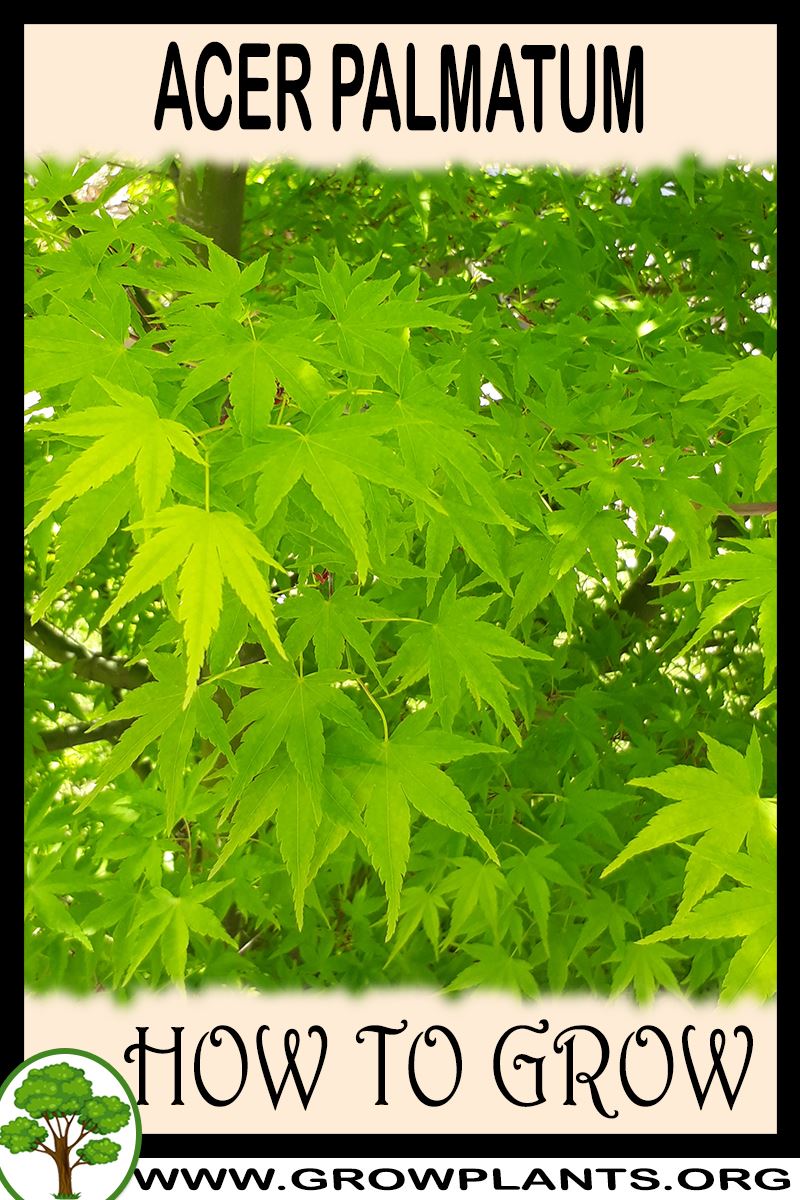
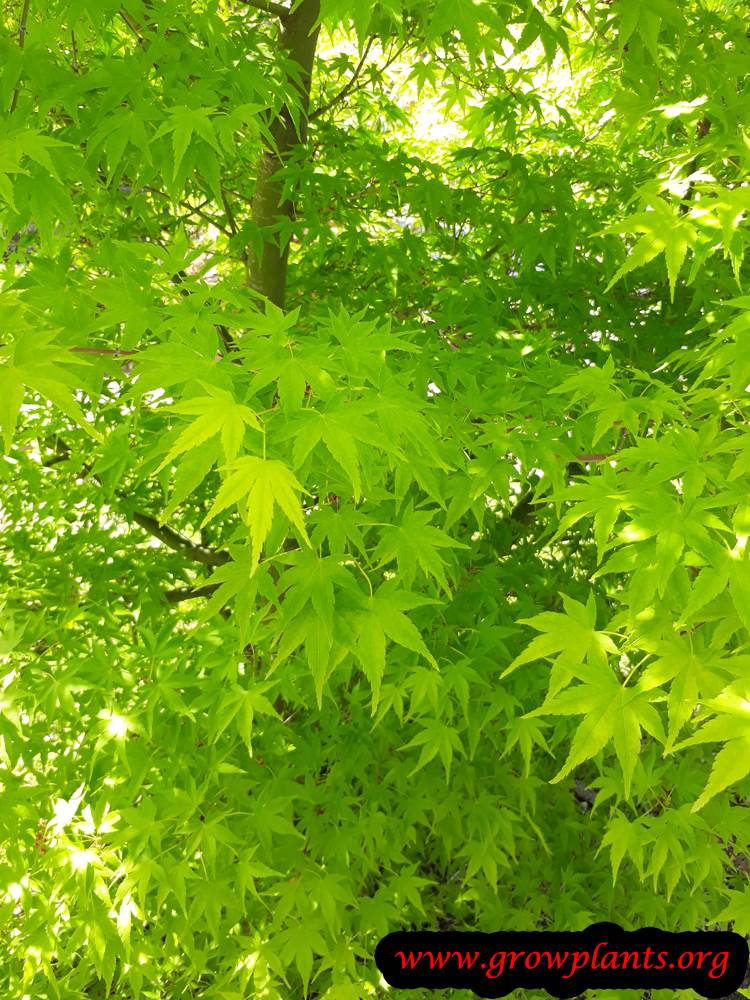
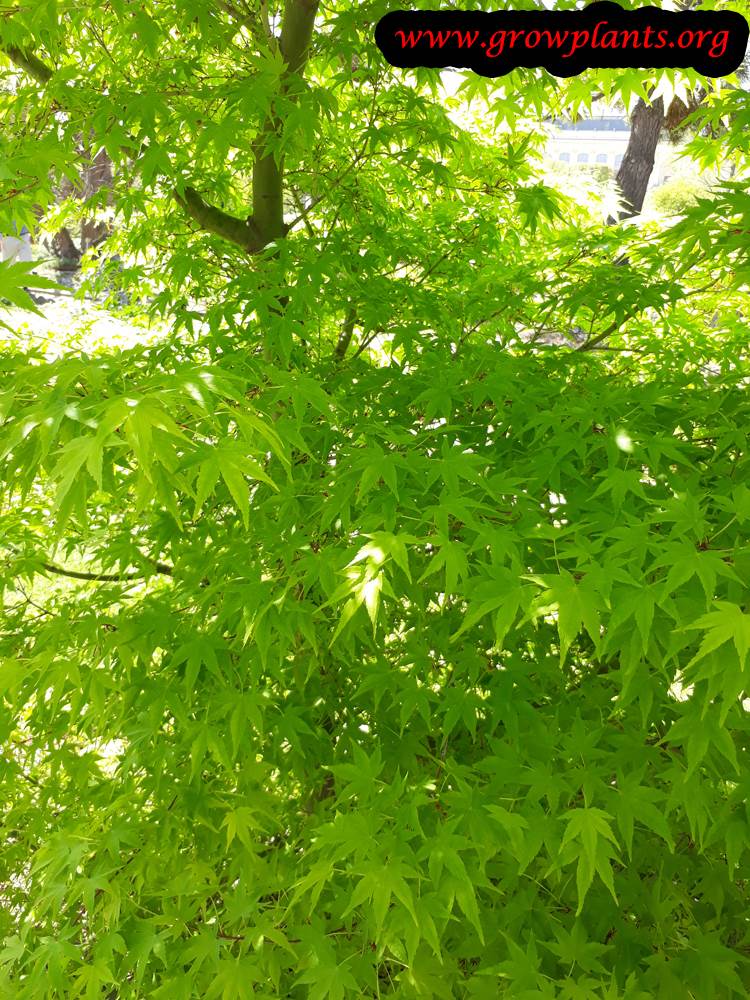
Overview: Acer palmatum (Japanese maple) is a small deciduous tree of 5–10 m, grown as an ornamental for its delicate palmate foliage and fine autumn colour. It is a hardy temperate tree suited to gardens and containers.
Quick Specifications
| Specification | Attribute |
|---|---|
| Plant Type / Life Cycle | Perennial (deciduous tree) |
| Foliage Type | Deciduous |
| Mature Size | H: 5–10 m (15–30 ft) |
| Growth Rate | Moderate |
| Root System | Fibrous and relatively shallow; non-invasive |
| Toxicity | Non-toxic |
| Hardiness | USDA zone 5–8 |
Growth Form & Structure
- Height & Spread: 5–10 m tall with a spreading, layered crown; naturally compact and well suited to large containers.
- Growth Habit & Form: Small deciduous tree or large shrub with a graceful, often rounded or cascading habit depending on cultivar.
- Lifespan & Maturity: Long-lived and slow to reach full size; prized for structure that improves with age.
Anatomy & Physical Features
- Leaves & Foliage: Delicate, deeply lobed palmate leaves that colour brilliantly in autumn.
- Flower Characteristics: Small yellow-brownish flowers in clusters in spring.
Primary Uses & Landscape Value
- Functional & Ornamental Roles: Premier ornamental specimen tree for gardens, courtyards and containers, grown for foliage form and autumn colour.
Care Guide: Planting, Soil & Watering
Overview: Japanese maple (Acer palmatum) is a slow-to-moderate deciduous ornamental tree for temperate climates (hardiness zone 5–8) that thrives in moist, well-drained, slightly acidic soil with shelter from harsh afternoon sun and wind. It likes steady, even moisture but resents both drought and waterlogging.
Quick Care Requirements
| Requirement | Ideal Condition |
|---|---|
| Planting Season | Dormant season — late winter to spring; also summer with careful watering |
| Growth Rate | Slow to moderate |
| Soil Type | Moist, well-drained, humus-rich soil |
| Soil pH | Slightly acidic to neutral (about 5.5–6.5) |
| Water Need | Moderate — keep evenly moist, never waterlogged |
Planting & Establishment
- Best Planting Season: Plant during dormancy in late winter to spring so roots settle before the growing season; summer planting is possible with attentive watering. Choose a sheltered spot out of harsh sun and drying wind.
- How to Plant:
- Hole Preparation: Dig a hole two to three times as wide as the root ball but no deeper, loosening the sides for the fine surface roots.
- Soil Amendments: Blend organic matter or leaf mould into the backfill to hold moisture and gently acidify; ensure the soil still drains freely.
- Planting Depth: Set the root flare level with the surrounding soil — planting too deep is a common cause of decline.
- Growth Speed & Expectations: Slow to moderate, developing a graceful, layered canopy over many years to around 5–10 m.
Soil, Watering & Drainage Care
- Soil Mix & Drainage Needs: Wants a moist but free-draining, humus-rich, slightly acidic soil; mulch to keep roots cool and evenly moist, and avoid heavy, waterlogged ground that causes root rot.
- Watering Schedule & Technique:
- Young / Newly Planted: Keep the soil consistently moist while young — the shallow roots dry out and scorch easily.
- Established: Water deeply and evenly in dry spells once established, letting the surface dry slightly but never allowing the root zone to bake or to sit wet.
- Seasonal Adjustments: More in summer heat to prevent leaf scorch; much less over the dormant winter.
Climate, Light & Hardiness
Acer palmatum (Japanese maple) is a cold-hardy deciduous tree for temperate climates, growing best in full sun. It is reliably hardy across USDA zones 5–8, losing its leaves each winter and going fully dormant.
Quick Climate Specifications
| Climate Zones | Temperate |
|---|---|
| USDA Hardiness Zones | 5–8 |
| Frost Tolerance | High |
| Light Conditions | Full Sun |
Sunlight & Light Exposure
Optimal Light Setup
Full sun brings out the strongest foliage color, especially in the many red-, purple-, and variegated-leaved cultivars.
Shade & Heat Management
In hot-summer climates near the warm edge of its range, some afternoon shade can help prevent leaf scorch, particularly on thinner-leafed cultivars.
Temperature Extremes & Hardiness
USDA Hardiness & Regional Limits
Hardy across USDA zones 5–8, a classic cool-temperate range. As a deciduous tree it drops its leaves - often in vivid autumn colors - and is fully dormant and cold-tolerant through winter within this range.
Frost Sensitivity
Established, dormant trees tolerate normal winter frost well within zones 5–8; young trees and fresh spring growth are more vulnerable to a late, hard frost.
Growing in Pots, Balconies & Indoors
Japanese maple (Acer palmatum) is a tree of 5-10 m (15-30 ft) that the grower grows in containers but not as a houseplant. It is one of the best trees for a large patio pot or for bonsai, but it is an outdoor tree that needs the seasons – not a houseplant.
Quick Details
- Container Size: A large tub (40 L+ / 10 gal+) while young, or train it as bonsai
- Indoor Suitability: Not a houseplant; it is an outdoor tree needing a cold winter
- Best Spot: Full sun, but shelter from harsh afternoon sun and drying wind that scorch the leaves
- Soil & Drainage: Free-draining, moisture-retentive mix; slightly acidic suits it
- Watering in Pots: Keep evenly moist – the fine roots scorch if they dry out; never waterlogged
Indoors & On the Windowsill
- Houseplant limits: Not a houseplant – it is deciduous and needs cold winters and outdoor light; indoors it declines.
- In a container: Enjoy it outdoors in a large pot while young, or keep it small long-term as bonsai.
On a Balcony or Patio
- Light & wind: A bright but sheltered balcony is ideal – protect the delicate foliage from scorching sun and drying wind, which brown the leaf edges.
- Practicalities: Account for the weight of a full pot and make sure drainage water can run away freely without staining the balcony.
Choosing the Pot, Soil & Long-Term Care
- Pot & drainage: Use a pot with strong drainage holes and skip a standing-water saucer to avoid root rot; terracotta breathes and dries faster, while glazed or plastic holds moisture longer.
- Potting mix: Well-aerated and organic-rich – a quality potting mix, or peat/coir with perlite or vermiculite.
- Feeding: Potted plants use up their soil faster as nutrients leach out with each watering – feed lightly through the growing season.
- Repotting: Pot on every couple of years while young, or root-prune and refresh the mix to keep it compact as bonsai.
Fertilizing & Feeding
Japanese maple is a naturally light feeder; keeping nitrogen light protects the delicate foliage from scorch and preserves good autumn leaf color.
Quick Fertilizing Specs
| Feeding Level | Light feeder |
|---|---|
| Main Nutrient Priority | Balanced feeding kept light, favoring steady rather than fast growth |
| Best Feeding Period | As new growth begins in spring, tapering off through summer |
| Organic Options | Compost or well-rotted organic matter worked lightly into the root zone, plus a mulch layer |
| Micronutrients | Usually supplied by a complete fertilizer and organic mulch; correct specific issues only when diagnosed |
| Soil pH | Prefers well-drained soil and is sensitive to poor drainage |
| Reduce/Stop Feeding | Taper off feeding by mid-to-late summer so growth can harden before the plant goes dormant |
Feeding by Growth Stage
Root and canopy establishment
Help a newly planted tree establish roots and settle into the landscape.
| Nutrient direction | A balanced, general-purpose fertilizer applied lightly to support root establishment without forcing top growth. |
|---|---|
| Timing | During the first growing seasons after planting. |
| Frequency | Light, infrequent feeding while the root system develops. |
| Fertilizer types | A balanced complete fertilizer, applied lightly, Compost or well-rotted organic matter as mulch |
| Precautions | Avoid heavy feeding right after transplanting, which can stress a still-developing root system. |
Spring and summer canopy growth
Maintain steady, well-hardened growth and preserve the delicate leaf color this tree is prized for.
| Nutrient direction | Keep nitrogen low; a light, balanced feeding supports steady growth without pushing soft, scorch-prone foliage. |
|---|---|
| Timing | Through spring and into summer while the canopy is actively growing. |
| Frequency | Light feeding is generally enough; established trees in good soil often need very little. |
| Fertilizer types | A balanced, low-nitrogen complete fertilizer, applied lightly |
| Precautions | Heavy or high-nitrogen feeding tends to scorch this tree’s delicate leaf margins and can dull autumn color. |
Autumn leaf drop and winter dormancy
Let the tree hold onto good autumn color and rest through winter as a deciduous plant.
| Nutrient direction | None – withhold fertilizer as leaves color and drop and the tree goes dormant. |
|---|---|
| Timing | From autumn leaf color through winter dormancy. |
| Frequency | No feeding at this stage. |
| Fertilizer types | No feeding at this stage – allow the tree to go dormant undisturbed |
| Precautions | Do not fertilize once leaves begin coloring; late feeding can push soft growth that fails to harden before cold weather. |
Nutrient Deficiency Signs & Corrections
New leaves emerge yellow with green veins remaining visible.
| Possible causes | high soil pH limiting iron availability, poorly drained or compacted soil, root stress from overly wet conditions |
|---|---|
| Appears first on | youngest leaves |
| What to check | soil pH, drainage around the root zone, recent watering pattern |
| Possible correction | Correct pH toward a more favorable range and apply a chelated iron product per its label if chlorosis persists. |
Leaf margins turn brown and crisp, especially on the side exposed to sun or wind.
| Possible causes | excess fertilizer or soil salt buildup, drought or root stress, exposure to strong sun, wind, or heat |
|---|---|
| Appears first on | leaf edges, especially on outer canopy |
| What to check | recent feeding amounts, soil moisture and watering consistency, exposure to sun and wind |
| Possible correction | Reduce feeding rate, water deeply and consistently, and improve site shelter from harsh sun or wind where possible. |
Interveinal yellowing on older leaves while veins stay green.
| Possible causes | low soil magnesium, high potassium levels competing with magnesium uptake, leaching in light, sandy soils |
|---|---|
| Appears first on | older, lower leaves |
| What to check | soil magnesium status, soil texture and drainage, recent feeding balance |
| Possible correction | Apply a labeled magnesium source such as Epsom salt or a dolomitic amendment per its instructions. |
Pruning, Training & Seasonal Maintenance
Japanese maple tolerates only moderate pruning — it is grown for its naturally layered, airy branch silhouette, and heavy or repeated cutting quickly damages that form. The main objectives are removing low or crossing branches while young to establish a clean structure, then light refinement to reveal branch architecture as it matures. The safest window is the dormant season after leaf drop in autumn/early winter, well before sap begins rising in late winter; pruning does not affect flowering (the flowers are small and non-ornamental) but timing strongly affects sap loss and wound healing.
Quick Pruning & Maintenance Specs
| Pruning Tolerance | Moderate |
| Primary Pruning Window | Autumn to early winter, after leaf drop |
| Secondary Maintenance Window | Mid-summer, for light corrective shaping only |
| Typical Frequency | Annual light shaping while young; occasional refinement once mature |
| Main Objective | Reveal and refine natural layered branch structure; remove low competing branches |
| Young Plant Priority | Remove low branches to establish clear trunk/canopy line; select scaffold branches |
| Mature Plant Priority | Remove dead, crossing or rubbing wood; light thinning to keep branch structure visible |
| Best Tool Type | Precision snips and bypass secateurs for twigs; pruning saw for larger limbs |
| Avoid Heavy Pruning During | Late winter/very early spring (heavy sap bleeding) and periods of active leaf-out |
Pruning by Plant Age & Size
Newly Established
Remove only damaged or broken growth in the first year or two; hold off on shaping cuts until the root system is established.
Young / Formative
No forced central-leader training — select and keep the branches that build the natural multi-tiered form, and remove branches that grow low and crowd the developing trunk line, matching this species’ typical training approach.
Mature / Established
Focus on removing dead, crossing or rubbing wood and light thinning to keep the layered branch structure visible; avoid re-shaping the whole canopy in one season.
Seasonal Pruning Schedule
Dormant/Winter
Objective: structural refinement while the branch form is fully visible. Remove: dead, damaged or crossing wood, and any low or competing branches. Do not remove: more than a light framework in one session. Expected response: clean healing with minimal bleeding if timed in autumn/early winter, well ahead of spring sap rise. Flowering impact: negligible — flowers are small, non-showy, and not a feature this species is grown for.
Summer Canopy Management
Objective: minor corrective trims once leaves reveal awkward vigorous shoots. Remove: stray shoots disrupting the tiered form. Do not remove: major structural wood (save for the dormant window). Expected response: no bleeding risk in summer, unlike late winter. Flowering impact: none.
Structural Pruning & Training
Branch selection favors an open, layered, multi-tiered silhouette rather than a single dense canopy. Remove crossing or rubbing branches promptly. Canopy density: thinning helps here — a too-dense canopy hides the branch architecture that is this species’ main ornamental feature, so selective thinning cuts (not shearing) are used to open the structure.
Special Growth to Remove
On grafted named cultivars (common in the nursery trade for this species), remove any suckers arising from the rootstock below the graft union as soon as they appear, since rootstock growth is typically plainer and more vigorous and will overtake the grafted cultivar if left. Remove strongly upright watersprout-type shoots that break the natural tiered form.
Container & Small-Space Pruning
Japanese maple is a popular container and bonsai subject. In pots, root pruning at repotting time is used alongside top pruning to keep the canopy in proportion to a restricted root zone; light pinching of new shoot tips through the growing season keeps container specimens compact and encourages the fine, dense branching prized in bonsai-style training.
Tools
- Precision snips for fine twig work on young or bonsai-trained specimens.
- Bypass secateurs for small-to-medium branches.
- Pruning saw for larger structural limbs on mature trees.
Never use hedge shears — shearing destroys the natural layered form that is the whole point of growing this species.
Tool Hygiene & Disease Risk
Increased risk: Japanese maple is susceptible to Verticillium wilt and various canker/dieback pathogens that can enter fresh pruning wounds. Clean tools between cuts on symptomatic wood, and avoid pruning in wet weather when infection risk is higher.
Cut Placement & Technique
Favor thinning cuts (removing a branch back to its point of origin) over heading cuts, which stimulate dense, unnatural regrowth that ruins the tiered silhouette. Cut just outside the branch collar, avoid flush cuts and stubs, and stage the removal of larger limbs to prevent bark tearing.
Heavy Pruning & Rejuvenation
Not recommended. Japanese maple responds poorly to hard rejuvenation or hat-racking — it produces weak, disease-prone regrowth and can permanently disfigure the tree’s characteristic form. A neglected or overgrown specimen should be corrected gradually over two to three seasons with selective thinning cuts, not a single hard cutback.
Post-Pruning Care
Watch cut sites over the following season for dieback or canker symptoms (a Verticillium indicator). Do not fertilize immediately after pruning. If a significant amount of canopy was opened, monitor previously shaded thin bark for sunscald.
Common Pruning Mistakes
- Pruning in late winter or very early spring, causing heavy, unsightly sap bleeding.
- Shearing the canopy into a ball or hedge shape instead of using selective thinning cuts.
- Removing too much interior structure in a single season instead of spreading corrections over years.
- Leaving rootstock suckers on grafted cultivars unremoved, letting the rootstock overtake the named variety.
When NOT to Prune
Avoid pruning in late winter/very early spring when sap is rising. Avoid major pruning immediately after transplanting. Avoid pruning during heat or drought stress, and avoid cutting in wet, rainy weather when canker pathogens are more likely to infect fresh wounds.
Recommended Tools (by task)
- Young tree, formative shaping, fine twigs — precision_snips: preserves the delicate branching pattern during early training.
- Young to mature tree, small-to-medium structural branches — bypass_secateurs: clean cuts on woody stems up to about pencil thickness.
- Mature tree, larger structural limbs — pruning_saw: for limbs too large for hand tools, cut in stages to avoid bark tearing.
Pruning Troubleshooting
| Problem | Possible Cause | What to Check | Corrective Action |
| Heavy sap bleeding after a cut | Pruned in late winter/early spring when sap is rising | Timing of the cut relative to season | Prune only in autumn/early winter dormancy or in summer; bleeding rarely kills the tree but avoid repeating the timing error |
| Dieback spreading from a pruning wound | Verticillium wilt or canker infection entering the cut | Streaking in the wood, one-sided wilting | Remove the affected branch well below visible symptoms, disinfect tools between cuts, avoid pruning in wet weather |
| Dense, congested, whip-like regrowth after a cut | Hard heading or rejuvenation pruning | History of pruning severity on that limb | Switch to thinning cuts; correct an overgrown tree gradually over several seasons instead of one hard cut |
| Plain-leaved, overly vigorous growth overtaking a named cultivar | Unremoved rootstock suckers below the graft union | Growth below the graft line for a different leaf color/shape | Remove rootstock suckers at their base as soon as noticed |
Propagation Guide
The straight species Acer palmatum is most practically raised from seed, which comes reasonably true-to-type for the species itself; named colored or dissected-leaf cultivars, however, are not grown from seed and must be grafted onto seedling rootstock to stay true. For the plain species shown here, seed propagation is easy to moderate, mainly limited by its dormancy requirement.
Quick Propagation Specs
| Best Propagation Method | Seed (for the species) |
| Alternative Methods | Grafting (required only to preserve named cultivars) |
| Propagation Difficulty | Moderate (seed dormancy makes timing important; straightforward once stratified) |
| Seed True-to-Type | Usually true-to-type for the species; cultivar-dependent for named forms |
| Vegetative True-to-Type | Yes (grafted cultivars only) |
| Best Propagation Season | Collect samara seed in autumn; sow after cold stratification for spring germination |
| Seed Germination Time | Germination is often staggered and can take from several weeks to a few months after stratification |
| Germination Temperature | Cool stratification near 1–5°C (34–41°F), then germinate at roughly 15–20°C (59–68°F) |
| Seed Sowing Depth | Shallow – cover lightly, about 1–2cm (0.4–0.8in) |
Growing from Seed
Seed Handling & Viability
Collect the winged samara seed in autumn once it browns; viability is best when seed is sown or stratified without prolonged dry storage.
Dormancy & Pre-Sowing Treatment
Seed has a cold-dormancy requirement typical of temperate maples; a period of cold-moist stratification (commonly cited as roughly two to four months) is generally needed to trigger even germination. Some growers also give seed a brief soak before stratifying.
Sowing Season
Sow after stratification, timed for spring emergence, or stratify outdoors over winter and let seed germinate naturally as temperatures rise.
Sowing Depth & Orientation
Cover lightly with about 1–2cm (0.4–0.8in) of soil.
Germination Conditions
Keep the medium moist and cool through stratification, then move to a bright, cooler-temperate spot as it warms; germination can be irregular and spread over weeks.
Germination Time
Variable and often staggered – commonly several weeks up to a few months once dormancy is satisfied.
Seedling Care
Grow seedlings on in light shade with consistent moisture before hardening off; seedlings of the plain species are usable as understock or garden plants, but any special leaf-color or dissected forms must later be grafted to be reproduced true.
Grafting & Budding
Why Grafting Is Used
Named Acer palmatum cultivars (colored, variegated, or dissected-leaf forms) do not come true from seed, so grafting onto seedling rootstock is the standard nursery method to preserve them – not required for the plain species itself.
Rootstock
Vigorous Acer palmatum seedlings are typically used as understock.
Best Grafting Season
Commonly done in late winter, using dormant scion wood on actively growing potted rootstock, or by chip/whip grafting in late summer.
Graft Aftercare
Keep grafted plants in protected, humid conditions until the union knits and the scion begins active growth.
Bloom & Flower Guide
Quick Details
- Bloom Season: Spring
- Time to First Bloom: Only once the tree is well grown – several years from a young plant
- Flower Appearance: Small yellow to greenish-brown flowers carried in little clusters, easy to overlook
- Edibility: Ornamental / none – maples are grown as shade and foliage trees, not for their flowers
Detailed Blooming Overview
Maples are grown for their foliage and form, and their spring flowers are modest by comparison. In spring, before or as the leaves unfold, the tree carries small clusters of yellow to greenish-brown flowers along the twigs. They are subtle up close but can give the whole crown a soft haze of colour, and they are the start of the familiar winged seeds (samaras) that follow.
Flower Characteristics
- Small flowers in yellow to greenish-brown tones.
- Borne in short clusters along the branches.
- Followed by the paired winged seeds typical of maples.
Bloom Care & Thinning
- Managing the bloom: No care is needed; the flowers open and pass on their own each spring.
- Pollination & wildlife: The early flowers offer nectar and pollen to bees before much else is out.
Fruit & Uses
Japanese maple is grown almost entirely as an ornamental tree, but in Japan its young leaves are used for a single niche traditional food: salt-cured, sugar-battered leaves that are deep-fried into a crisp sweet snack (momiji tempura). The leaves are never eaten fresh/raw as food – they are only consumed after an extended salt-curing step followed by cooking.
Quick Edible Specs
| Edible Parts | Young leaves only (niche/regional traditional use) |
| Main Use(s) | Traditional Japanese confection – salt-cured, batter-fried sweet snack; not a general food crop |
| Eaten Raw or Cooked | Cooked (deep-fried) only, after an extended salt-cure; not eaten raw |
| Preparation Required | Salt-cure/pickle the young leaves for a long period (commonly many months), then coat in a sweetened batter and deep-fry |
| Harvest Season | Young, tender leaves picked in spring to early summer, before autumn colour change |
| Time to First Harvest | Only relevant once the tree is established and producing a flush of young foliage – see Pruning/Care for general growth timing, no exact age implied |
| Storage | Leaves are stored salt-cured/pickled (often for an extended period) rather than kept fresh |
| Safety/Toxicity Caveat | This is a narrow regional specialty, not a general foraging food – leaves should not be eaten fresh or in quantity, and correct species identification and proper salt-curing are needed before any cooking |
Leaves
Only young, tender leaves (see Leaves description) are used. They are picked while still soft, layered in salt for a long cure to remove bitterness and soften the leaf, then dipped in a sweetened tempura-style batter and deep-fried until crisp. This is a specialty snack in parts of Japan rather than a routine culinary use of the tree.
Preparation, Uses & Safety
The only established edible use is this cured-and-fried leaf snack; the leaves are not eaten raw or used as a general leafy green. Because this relies on a long salt-cure and correct species, it should be treated as a niche traditional preparation rather than a general food source from this tree.
Pests, Diseases & Troubleshooting
Overview: This entry’s Latin name reads Acer platanoides (Norway maple) while its title says Acer palmatum (Japanese maple); the two share most of the maple pest/disease profile, so the guidance below applies to both, with Japanese maple being especially prone to leaf scorch and Verticillium wilt. Manage maples through good siting and vigour: shelter delicate foliage, rake fallen leaves, and prune out any Verticillium-affected wood, as there is no chemical cure.
Quick Troubleshooting Overview
| Issue / Pest | Main Symptom | Primary Solution |
|---|---|---|
| Aphids | Sticky honeydew, sooty mould and curled leaves; dripping under the canopy | Tolerate/encourage predators; water jet or soap on small trees |
| Scale insects | Bumps or cottony masses on bark and twigs; honeydew and dieback | Horticultural oil (dormant and crawler stage); prune out heavy infestations |
| Verticillium wilt | Sudden wilting/dieback of branches; olive-green streaking in the wood | No cure: prune out, keep vigorous, avoid replanting maples in infected soil |
| Tar spot / anthracnose | Black tar-like spots or brown blotches along veins on leaves | Rake and destroy fallen leaves; usually cosmetic, improve airflow |
| Leaf scorch | Brown, crisp leaf margins in wind, heat or drought (esp. Japanese maple) | Shelter, mulch, water deeply; site out of harsh sun/wind |
Common Pests & Management
- Aphids (Drepanosiphum / Periphyllus spp.):
- Symptoms: Colonies of green or brown aphids on leaf undersides and shoots produce copious sticky honeydew that coats leaves and everything below with sooty mould; heavy feeding curls and distorts foliage.
- Prevention & Control: On established trees, tolerate aphids and let ladybirds, lacewings, hoverflies and parasitic wasps control them; on small or young trees hose off colonies or use insecticidal soap. Avoid high-nitrogen feeding that drives soft, aphid-prone growth.
- Scale insects (Pulvinaria / Lopholeucaspis spp.):
- Symptoms: Cottony maple scale shows as white cottony egg masses along the undersides of twigs; other scales appear as brown or grey bumps on bark and leaf veins. Honeydew, sooty mould and twig dieback follow heavy infestations.
- Prevention & Control: Encourage parasitic wasps and predatory beetles, prune out badly encrusted wood, and apply horticultural oil at the dormant stage and again when crawlers are active to smother them. Control ants that farm the scale.
- Gall mites (Eriophyid mites (e.g. Vasates spp.)):
- Symptoms: Tiny red, green or yellow bead-like galls (bladder or spindle galls) or felty patches on the upper leaf surface; alarming but essentially harmless to tree health.
- Prevention & Control: No control is needed; the galls are cosmetic. Rake up fallen leaves to reduce numbers if desired, but the tree is unharmed and sprays are unwarranted.
- Spider mites (Oligonychus / Tetranychus spp.):
- Symptoms: Fine stippling, bronzing and dulling of foliage in hot, dry, dusty conditions, sometimes with fine webbing; worst on drought-stressed trees.
- Prevention & Control: Keep trees well-watered and mulched, hose down dusty foliage, and treat serious outbreaks on small trees with horticultural oil or insecticidal soap, protecting predatory mites.
- Borers (flatheaded / longhorned borers):
- Symptoms: Sawdust-like frass, sap oozing, and D-shaped or round exit holes in the bark, with dieback of affected limbs; borers target stressed, sunburnt or wounded trees.
- Prevention & Control: Keep trees vigorous and unstressed (water, mulch, avoid trunk injury and sunscald), prune out and destroy infested wood, and protect thin bark from sunburn. Healthy maples largely resist borers.
Diseases & Fungal Issues
- Verticillium wilt (Verticillium dahliae / albo-atrum):
- Symptoms: One of the most serious maple diseases: branches suddenly wilt, yellow and die back, often on one side of the tree, and cutting an affected branch reveals olive-green to brown streaking in the sapwood. It is a soil-borne fungus entering through the roots.
- Treatment & Management: There is no cure. Prune out dead wood well below the streaking, sterilising tools between cuts, and keep the tree vigorous with water and balanced feeding to help it wall off the fungus. Do not replant a maple (or other susceptible host) in the same soil; choose resistant species when replacing.
- Tar spot (Rhytisma acerinum):
- Symptoms: Large, raised, shiny black spots like drops of tar on the leaves in late season (classic on Norway maple); striking but almost entirely cosmetic.
- Treatment & Management: Rake up and destroy fallen leaves to break the cycle, since the fungus overwinters on them. No spraying is needed on landscape trees; the tree’s health is not affected.
- Anthracnose (Discula / Kabatiella spp.):
- Symptoms: Brown, irregular blotches along leaf veins and leaf edges, some leaf curling and early leaf drop, especially after cool, wet spring weather.
- Treatment & Management: Rake and destroy fallen leaves, prune to improve airflow, and avoid overhead watering; the tree usually re-foliates and recovers. Fungicides are rarely justified on established trees.
- Powdery mildew (Erysiphe / Sawadaea spp.):
- Symptoms: A white powdery coating on leaves in late season, mainly cosmetic on maples.
- Treatment & Management: Improve air movement and rake up affected leaves; treatment is seldom needed.
Growing Difficulties & Abiotic Problems
- Leaf scorch:
- Cause & Symptoms: Brown, crisp leaf margins and bleached areas, especially on finely cut Japanese maples exposed to hot afternoon sun, drying wind, or drought; also caused by salt spray.
- Correction Strategy: Site sensitive maples in dappled shade with shelter from wind, mulch to keep roots cool and moist, and water deeply in dry spells; avoid de-icing salt and windy, exposed positions.
- Iron/manganese chlorosis:
- Cause & Symptoms: Yellowing leaves with green veins on alkaline or compacted soils where the tree cannot take up iron or manganese.
- Correction Strategy: Improve soil with organic matter, lower pH where practical, and apply chelated iron/manganese for a quick correction; choose species suited to your soil pH.
- Girdling roots & planting problems:
- Cause & Symptoms: Slow decline, sparse canopy and early autumn colour on one side, often from circling/girdling roots or too-deep planting (Norway maple is notorious for surface and girdling roots).
- Correction Strategy: Plant at the correct depth with the root flare exposed, tease out circling roots at planting, and cut any girdling roots on established trees where feasible; avoid deep mulch ‘volcanoes’ against the trunk.
- Frost & sunscald:
- Cause & Symptoms: Cracked, sunken bark on the trunk (especially on the south/west side of young thin-barked trees) from winter sun and frost cycles, and damage to new growth from late spring frosts.
- Correction Strategy: Protect young trunks from winter sun, mulch the root zone, and site frost-tender Japanese maples where cold air drains away; avoid pruning that suddenly exposes bark to full sun.
What Helps – Products & Tools
Maples are best managed with good siting and vigour rather than sprays: shelter and mulch to prevent leaf scorch, raking of fallen leaves for tar spot and anthracnose, and prompt removal of Verticillium-affected wood (there is no chemical cure). Keep horticultural oil for scale and mite outbreaks, insecticidal soap for aphids on small trees, and chelated iron for chlorosis on alkaline soils. Most galls and leaf spots are cosmetic and need no treatment.